West Coast Private Collection
Golden Light, Timeless Beauty, Enduring Grace
Artist Spotlight · The Collection Editorial
There is a particular quality of light that defines the best nineteenth century academic painting, a warm, honeyed luminosity that seems to emanate from within the canvas rather than fall upon it from without. This is the light that greets visitors to the West Coast Private Collection, a thoughtfully assembled gathering of works that reads like a quiet love letter to the golden age of European academic and Victorian painting. Anchored by oils on panel and canvas that reward slow, contemplative looking, this collection speaks to a sensibility that values craft, narrative, and beauty without apology. The works gathered here span some of the most richly productive decades of the nineteenth century, a period stretching roughly from the 1870s through the early years of the twentieth century when European academies and their most gifted students were producing paintings of extraordinary technical refinement.
West Coast Private Collection
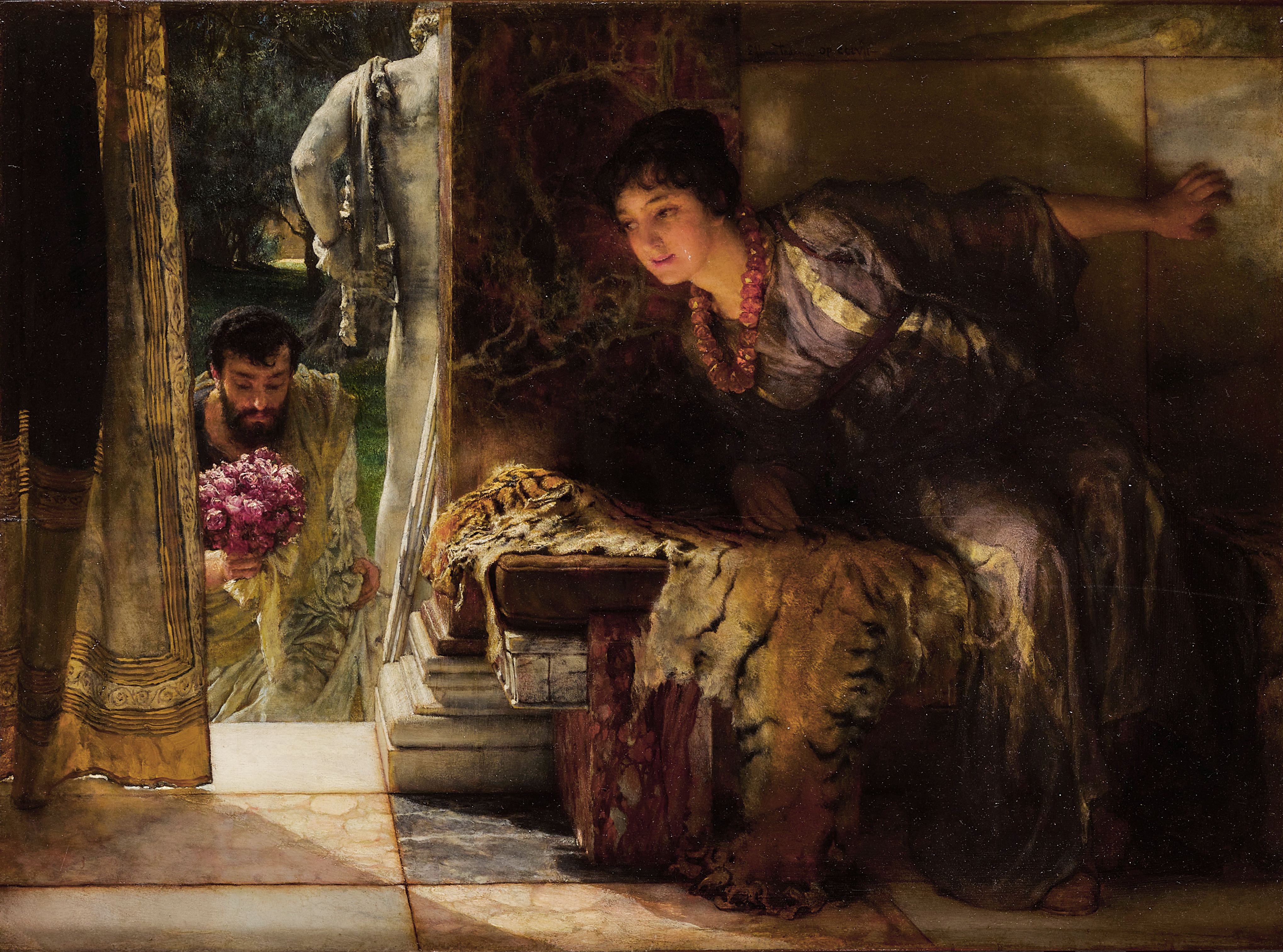
Welcome Footsteps (The Well-Known Footsteps), November 1883
The collector behind this ensemble has demonstrated a sure eye for works that balance technical accomplishment with genuine emotional warmth, choosing pieces that tell stories, invite the viewer in, and reveal new details with each encounter. This is collecting in the truest sense, pursued not for speculation but for the sustained pleasure of living with beautiful things. The crown jewel of the collection is a work dated November 1883 and carrying the evocative title Welcome Footsteps, also known as The Well Known Footsteps. Executed in oil on panel, the work belongs to a tradition of intimate domestic narrative that flourished in Britain and on the Continent during the final decades of the nineteenth century.
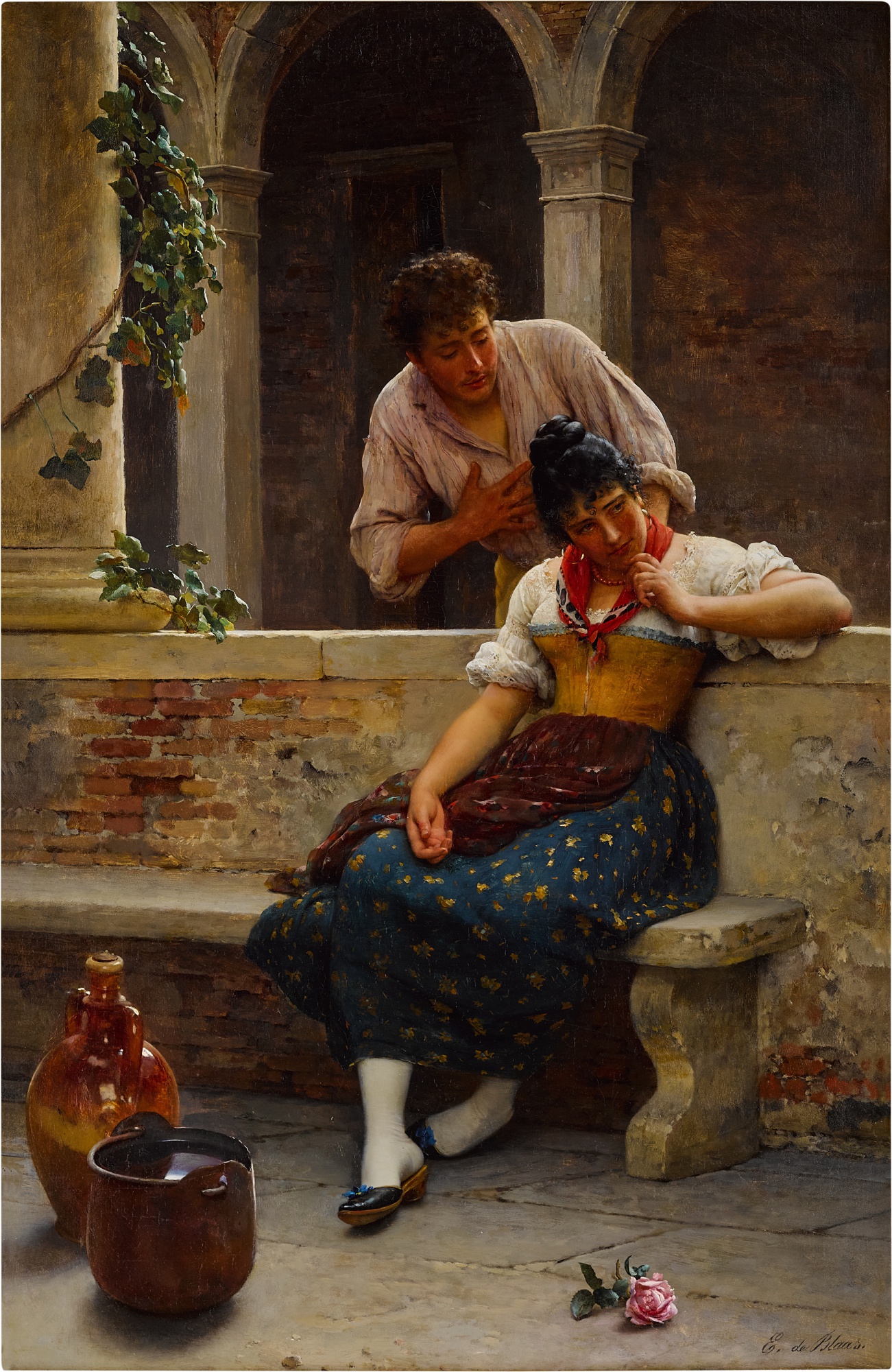
Victorian genre painters understood that the most affecting subjects were often the smallest ones, the moment of anticipation before a door opens, the recognition of a beloved step upon the stair. That this work is painted on panel rather than canvas speaks to an intention of permanence and preciousness, panel being the support of choice for works meant to be handled, cherished, and passed between generations. The Proposal and The Fairest Rose extend this vocabulary of intimate feeling into the language of courtship and femininity that dominated both the Royal Academy exhibitions and the Paris Salon during this period. The Proposal, rendered in oil on canvas, participates in a long tradition of paintings depicting the fraught, tender, socially loaded moment when a romantic declaration is made, a subject that engaged painters from David Wilkie through Edmund Blair Leighton and well into the Edwardian era.
West Coast Private Collection
The Proposal
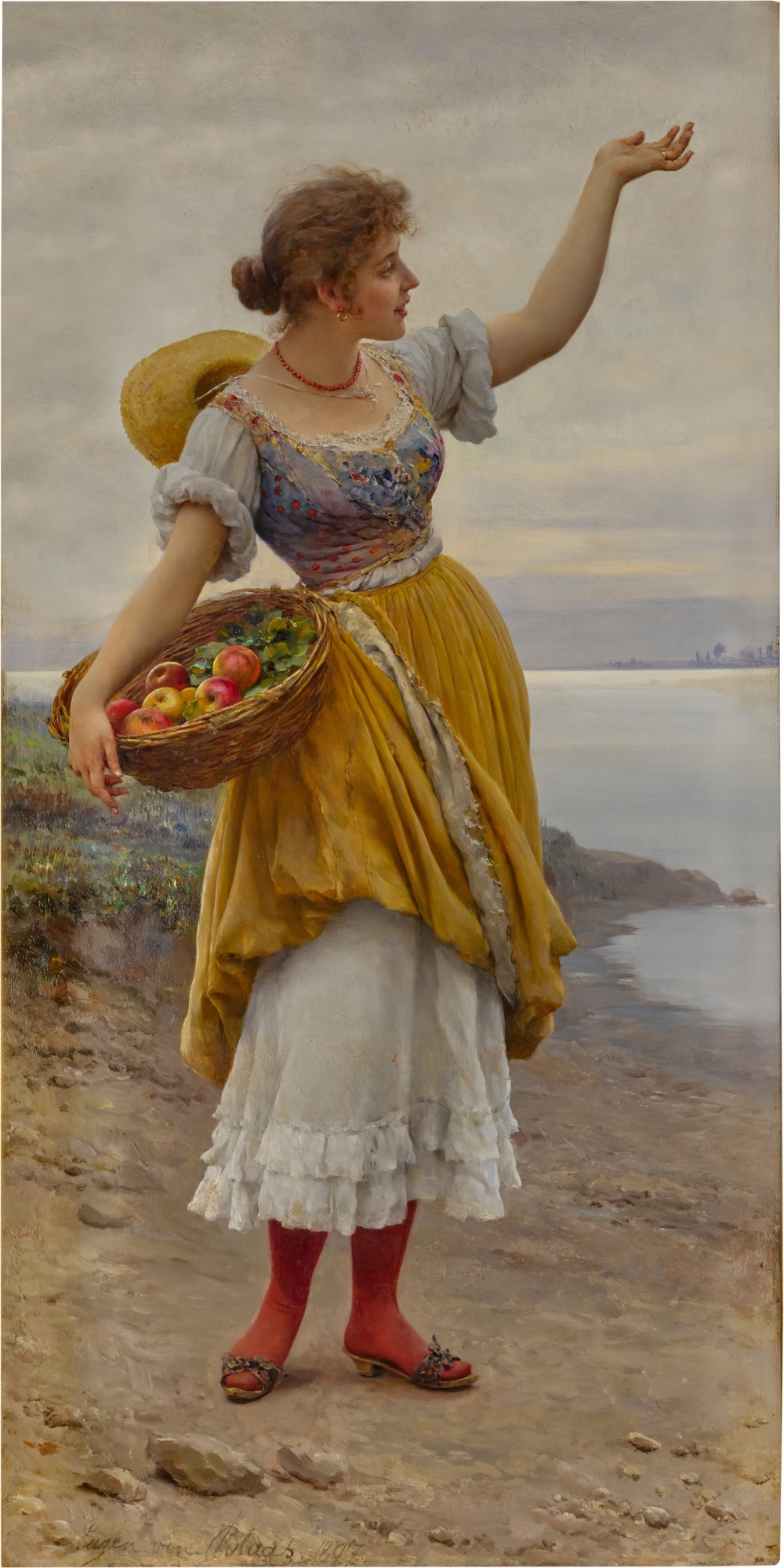
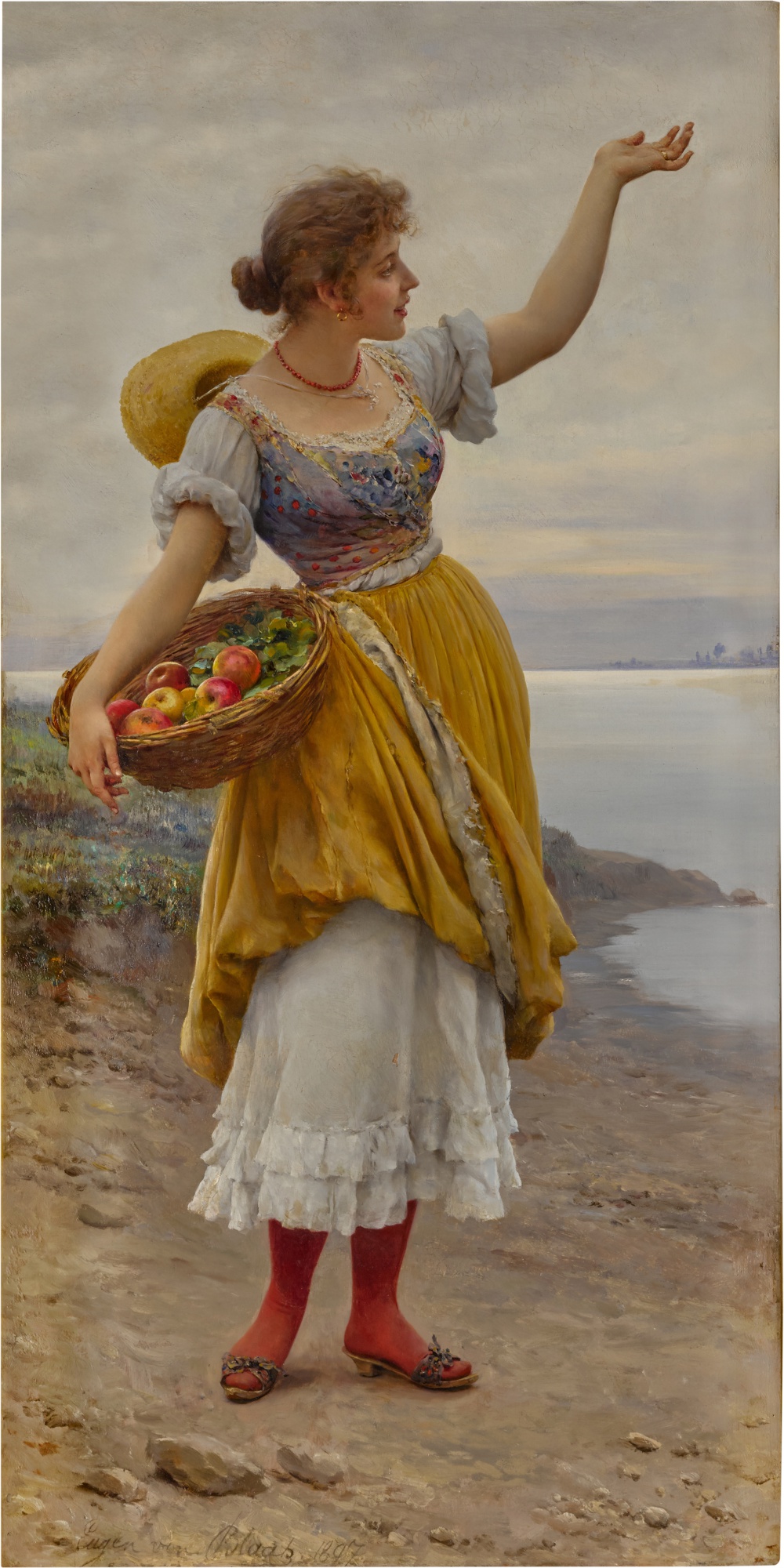
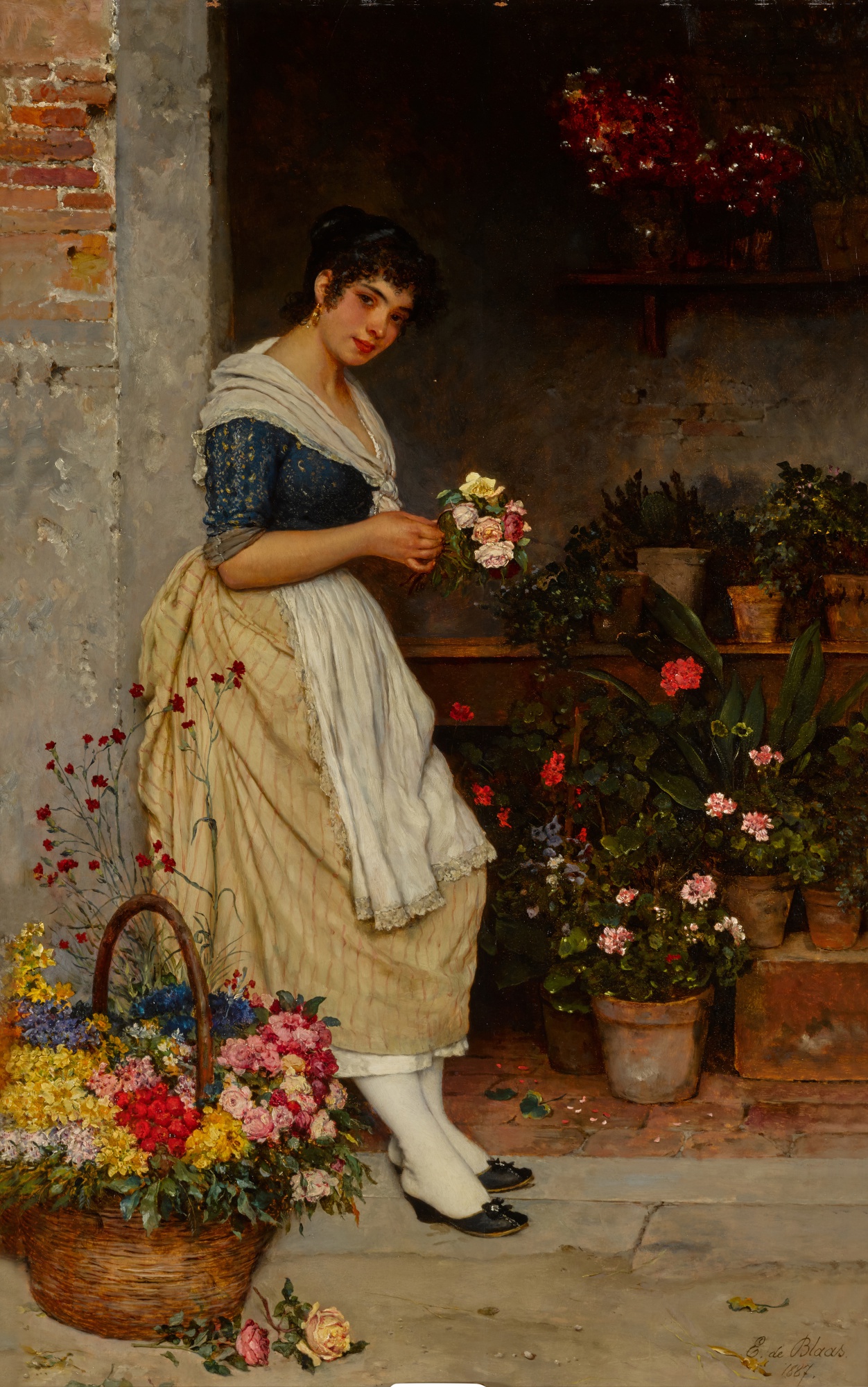
The Fairest Rose, on panel, suggests the influence of the aesthetic movement's habit of placing beautiful women in proximity to flowers and natural abundance, a compositional strategy associated with painters such as Lawrence Alma Tadema, Marcus Stone, and John William Godward. Woman with a Basket of Fruit brings a more earthy, continental sensibility to the collection. Works of this type, depicting women engaged in the quiet labor of the domestic or pastoral sphere, were enormously popular with bourgeois collectors across France, Belgium, and the Netherlands throughout the latter half of the nineteenth century, and command renewed attention today from collectors who recognize their connections to the broader tradition running from the Dutch Golden Age through the Barbizon school. The composition recalls the warmth of Jules Breton and Léon Augustin Lhermitte, artists who elevated rural subject matter to the level of serious painting without condescension or sentimentality.
Perhaps the most intellectually ambitious work in the collection is Cleobis and Biton, oil on canvas, which reaches back to classical antiquity for its subject. The story of the two brothers who pulled their mother's cart to the temple of Hera at Argos, and were rewarded by the goddess with the greatest gift she could bestow, namely a peaceful death in the fullness of their piety, was one that appealed strongly to the academic tradition's love of morally instructive ancient narrative. Painters trained in the French academic system, including students of the École des Beaux Arts, were expected to demonstrate their command of the human figure through precisely such mythological and historical compositions. The presence of this work in the collection suggests a collector with genuine intellectual range, someone equally at home with the intimate pleasures of Victorian genre painting and the grand ambitions of the academic tradition.
West Coast Private Collection
Woman with a Basket of Fruit
Venetian Melody, oil on canvas, closes the collection's internal conversation with a note of romantic reverie. Venice was perhaps the single most painted city of the nineteenth century, a subject that attracted artists from J.M.W.
Turner and John Singer Sargent to the countless academicians who exhibited Venetian scenes at the Salon and the Royal Academy year after year. A work with this title conjures gondolas at dusk, the sound of singing across still water, the particular quality of Venetian light diffused by lagoon mist. It places the collection in dialogue with one of the period's great obsessions and speaks to the collector's appreciation for the romantic imagination at its most lyrical. From a market perspective, nineteenth century academic and Victorian painting occupies a fascinating position today.
West Coast Private Collection
The Fairest Rose
After decades in which modernist taste effectively suppressed the reputations of the academic masters, the past thirty years have seen a sustained and serious reappraisal. Auction houses including Christie's and Sotheby's have dedicated specialist departments to Victorian and academic works, and collectors from North America, Europe, and the Gulf states compete actively for the finest examples. Works on panel in particular tend to hold value well, given their physical stability and the associations they carry with earlier collecting traditions. The West Coast Private Collection is positioned squarely within this renaissance of appreciation.
The collection also invites comparison with some of the great private assemblages of Victorian and academic painting built in the late twentieth century, collections that have since gifted or sold major works to institutions including the Victoria and Albert Museum, the Dahesh Museum of Art in New York, and the Fine Arts Museums of San Francisco. Those collectors understood what the builder of this West Coast collection clearly understands: that beauty and craft are not lesser virtues in painting, and that the best nineteenth century works can hold their own in any company. To encounter this collection is to be reminded that the pleasures of looking are ancient and renewable, and that somewhere on the West Coast, someone has made a very good room.