Wes Lang
Wes Lang: America's Visionary Myth Maker
Artist Spotlight · The Collection Editorial
In recent years, Wes Lang has moved from the edges of the contemporary art world toward its very center, earning the kind of sustained critical and collector attention that confirms a career built on genuine conviction. His 2023 print edition "Thoughts For The Free Life #15" arrived as a reminder that Lang continues to push his practice forward with restless energy, refining a visual vocabulary that feels as urgent today as it did when he first began drawing from the deep well of American mythology. Institutions and private collectors alike have taken notice, and the market for his work reflects a growing consensus that Lang occupies a singular position in the landscape of contemporary American painting. Lang was born in 1972 and came of age in an America saturated with the competing energies of rock and roll rebellion, tattoo culture, street art, and a mythology of the outlaw that stretched from the frontier all the way to the stadium.
Wes Lang
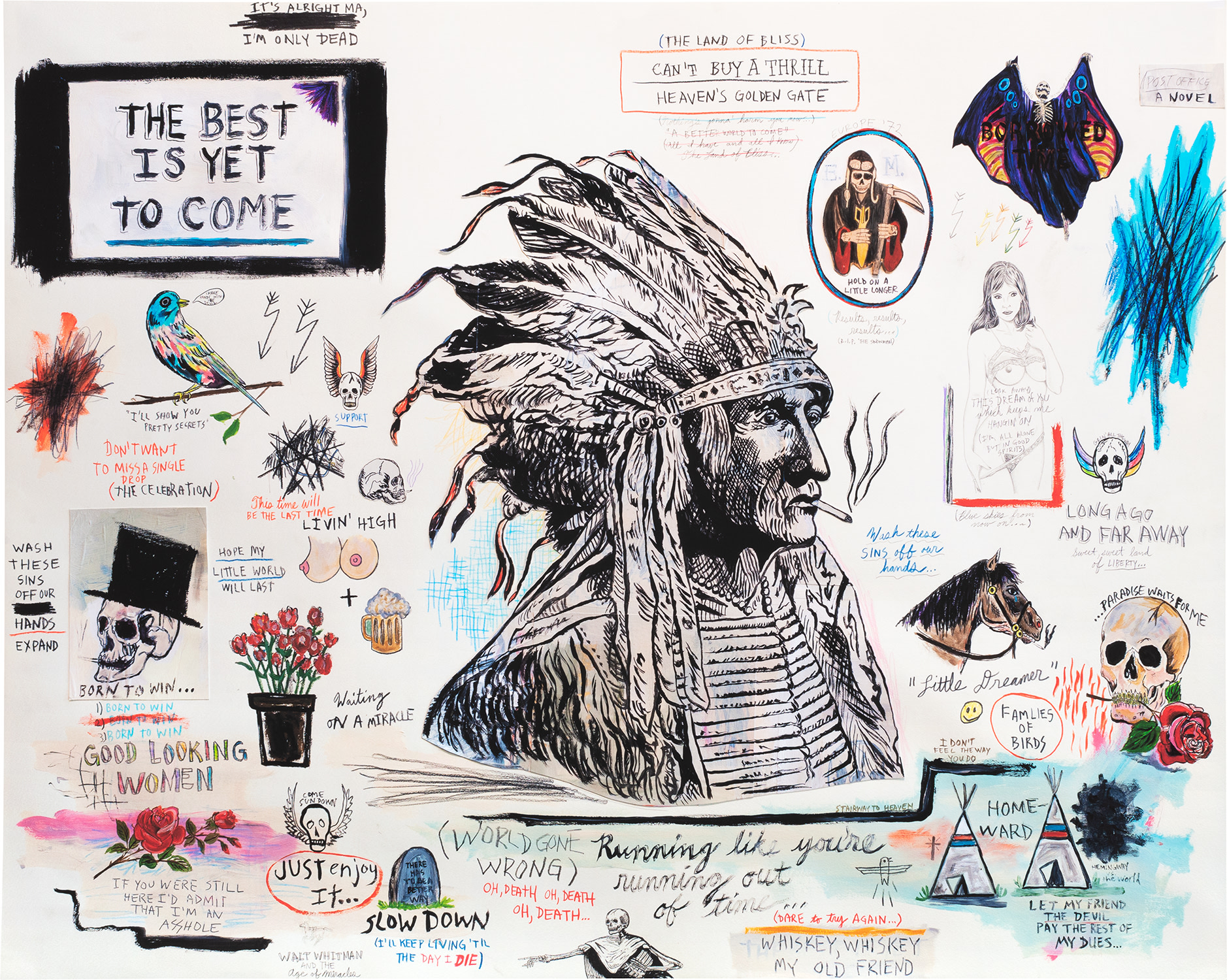
Flying Death
These were not passive influences absorbed from a distance. They were lived textures, the visual and spiritual language of a generation that understood the skull not as a symbol of death but as a declaration of presence, a refusal to disappear quietly into the mainstream. Lang absorbed all of it, and over decades of dedicated studio practice, he transformed those raw materials into something unmistakably his own. His artistic development unfolded through an intensive engagement with the full history of image making, from old master drawing techniques to the expressive immediacy of graffiti.
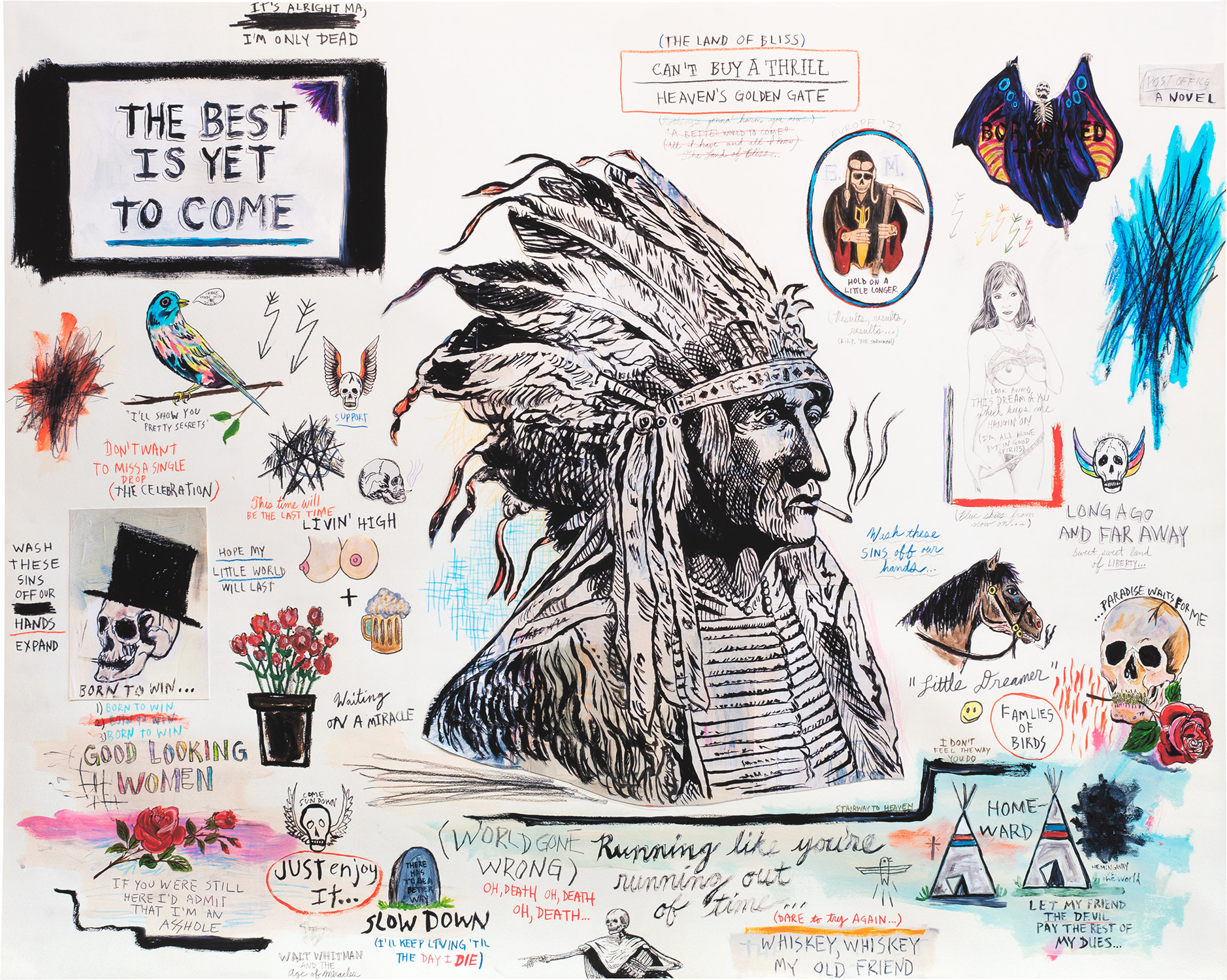
Lang has spoken of the importance of craft, of understanding what a line can do when it carries genuine feeling behind it. His works on paper are particularly revealing in this regard. A piece like "Living by Being" from 2011, executed in oil, graphite, coloured pencil, watercolour, oil stick and paper collage, demonstrates the extraordinary layering of materials and references that defines his approach. Nothing in a Lang work arrives without intention, and yet nothing feels labored.
Wes Lang
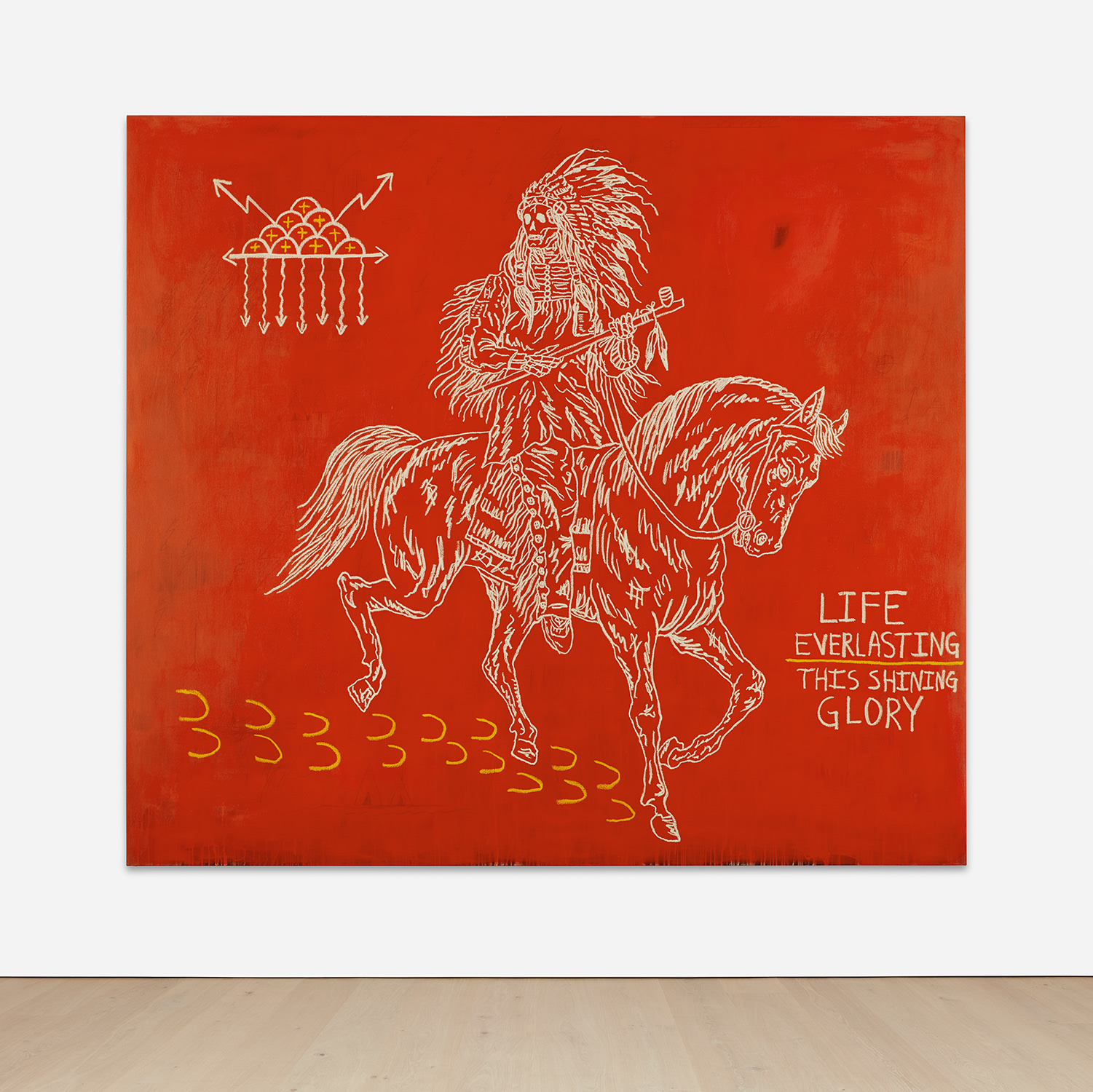
The Unity Within, 2017
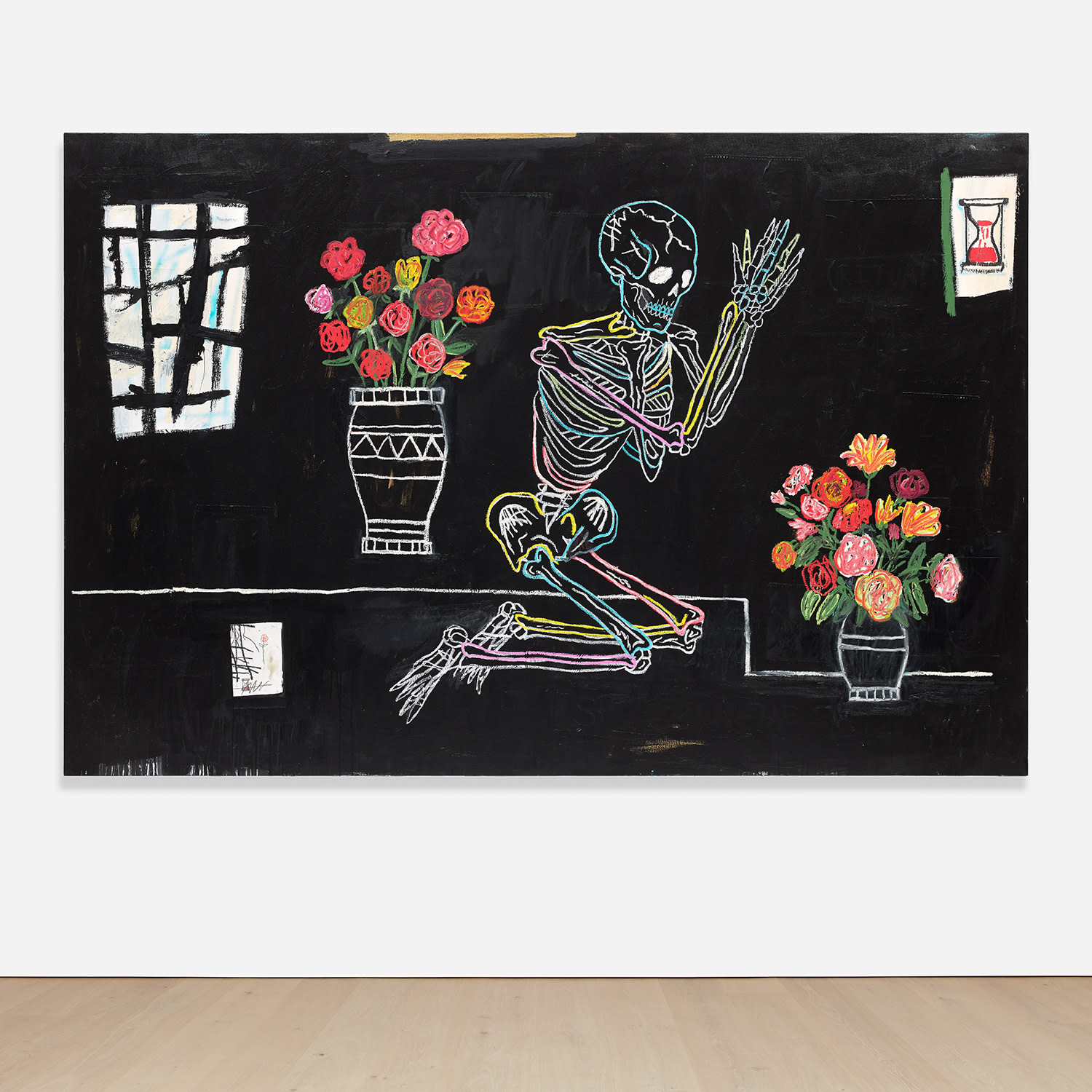
The surfaces breathe. The paintings confirm this command of scale and material. "The Unity Within" from 2017, made with acrylic, spray paint, oil stick and graphite on canvas, exemplifies how Lang moves fluidly between the monumental and the intimate within a single composition. "The Ritual" from 2015, combining acrylic, oil stick, colored pencil, and paper collage on canvas, carries the density of a cultural archive and the immediacy of a sketch made in a moment of clarity.
These are works that reward sustained looking, revealing new details and relationships the longer one spends in their company. Early canvases like "I'd like to buy the world a coke" from 2009 show the confidence and wit that were present even at the start of his mature period. Lang's signature imagery draws on a distinctly American iconography that is both specific and universal. Skulls, figures drawn from Native American visual traditions, references to rock mythology, and the coded imagery of outlaw culture appear throughout his work, not as decoration but as genuine inquiry.
Wes Lang
The Ritual, 2015
He is an artist genuinely grappling with what America is, what it celebrates and what it buries. Works like "Flying Death," a signed and numbered edition published by Exhibition A in New York, show how effectively his imagery translates across formats, from large canvas to intimate print, without losing any of its charge. "Bad Medicine," a unique colored pencil, ink and graphite drawing on a found book cover, demonstrates his instinct for working with existing objects and surfaces, adding meaning through accumulation rather than erasure. For collectors, the appeal of Lang's work is both aesthetic and conceptual.
His pieces function beautifully as objects in a room while simultaneously demanding intellectual engagement. The range of his output, from large scale painted canvases to intimate works on paper and carefully considered print editions, means that there are genuine points of entry across different stages of collecting. Auction results for his paintings have reflected steady appreciation, and his print editions have developed a committed following among collectors who respond to the accessibility of the format without any compromise in artistic seriousness. "We Did It" from 2021 and "The Words Fit the Picture" from 2010, a three part oil on panel, both illustrate the breadth of his ambition and the consistency of his vision across a decade of work.
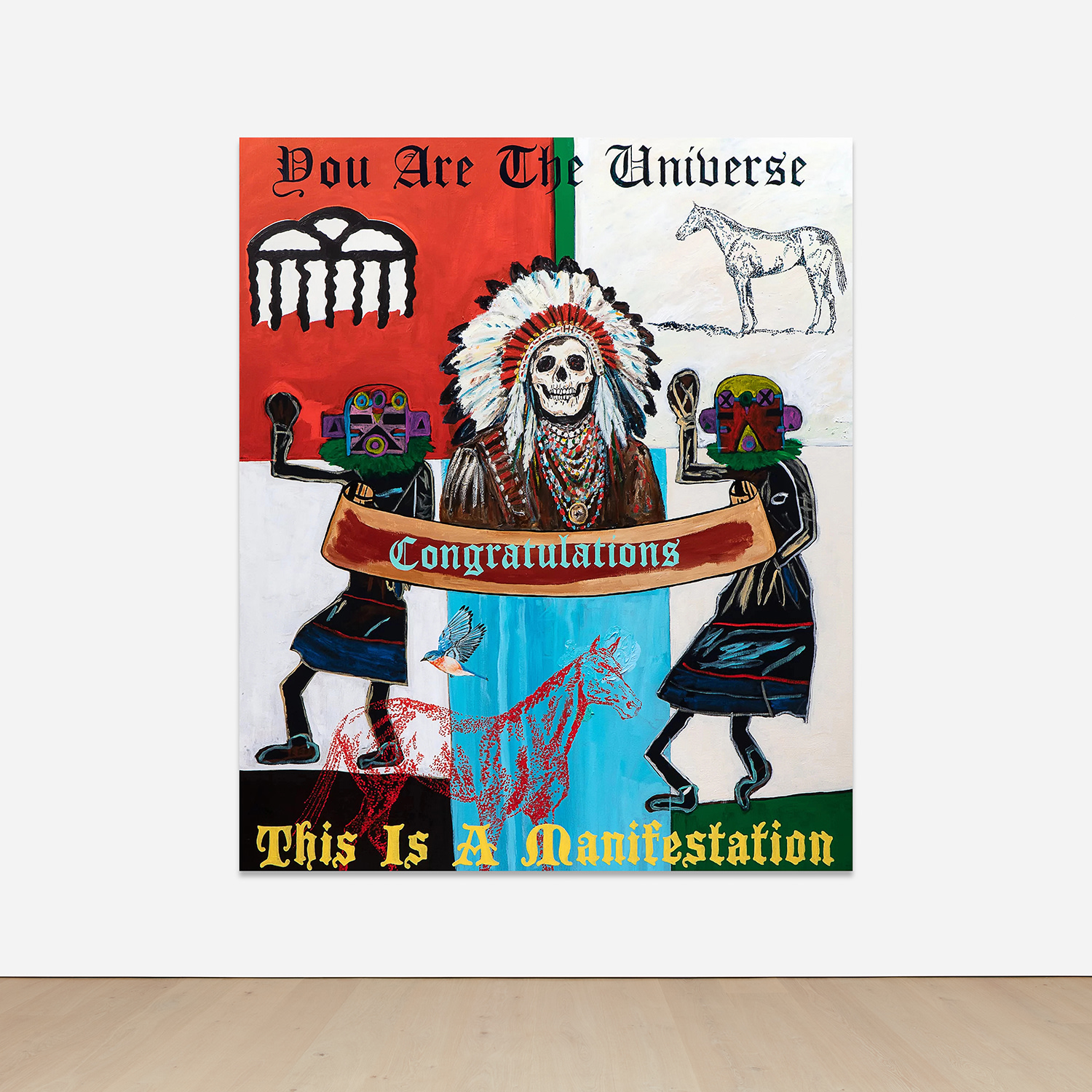
Wes Lang
We Did It!, 2021
Lang exists in productive conversation with a lineage of American artists who refused to accept the boundaries between fine art and popular culture, between the museum and the street. One thinks of the raw symbolic power in the work of artists like Raymond Pettibon, the mythological intensity of Jean Michel Basquiat, and the knowing engagement with American vernacular that runs through artists such as Ed Ruscha. Lang is his own creature, but he belongs to this honorable tradition of artists who understood that the stuff of everyday American life, its music, its icons, its anxieties, its freedoms, was worthy of the most serious artistic attention. His work also resonates with the tattooing and illustration traditions that fine art has too long dismissed, and he treats those traditions with the respect they deserve.
What makes Wes Lang matter now, perhaps more than ever, is the quality of attention he brings to the question of American identity. At a moment when that question feels genuinely open, when the myths and symbols that define the national self are being contested and reexamined, Lang's paintings function as both archive and meditation. He does not offer easy answers, but he offers something rarer: a sustained, honest, visually dazzling engagement with the materials of the culture. The collector who lives with a Lang work lives with a conversation that never quite ends, a presence on the wall that continues to generate meaning over years and decades.
That is the mark of an artist building something that will last.