Wahab Saheed
Wahab Saheed Paints the World Alive
Artist Spotlight · The Collection Editorial
Something is happening in contemporary Nigerian painting, and Wahab Saheed sits at the very center of it. In recent seasons, auction houses and gallery platforms focused on emerging African art have turned increasing attention toward his layered, luminous canvases, recognizing in them a voice that is at once deeply rooted in West African experience and thrillingly alive to the currents of global contemporary practice. His work arrives at a moment when the international art market has never been more genuinely curious about what is being made across Lagos and beyond, and Saheed rewards that curiosity generously, offering paintings that feel urgent, intimate, and unmistakably his own. Saheed was shaped by the particular energy of Nigerian urban life, that dense, kinetic world in which tradition and modernity are not opposites but constant, sometimes joyful, sometimes fraught conversation partners.
Wahab Saheed
Big Eighteen, 2022
Nigeria carries within it an extraordinary artistic inheritance, from the ancient bronze casting traditions of Benin to the bold graphic lineages of Yoruba textile and ceremonial arts, and Saheed grew up inside that inheritance whether consciously or not. The streets, the light, the faces, and the rhythms of West African daily existence became the raw material of his artistic imagination long before they became the subject matter of his canvases. As a painter, Saheed developed a practice built around a distinctive mixed media approach that refuses easy categorization. He works with acrylic, oil, charcoal, chalk, and pastel, layering these materials on canvas in ways that generate extraordinary surface complexity.
The charcoal gives his figures a kind of restless, searching quality, as though the image is still finding itself even as it settles into form. The pastels and chalk introduce warmth and breath. The acrylic and oil provide structural weight and depth. The result is a body of work that rewards close looking, where each pass of the eye across the surface reveals something new about how the image was made and what it is reaching toward.
Wahab Saheed
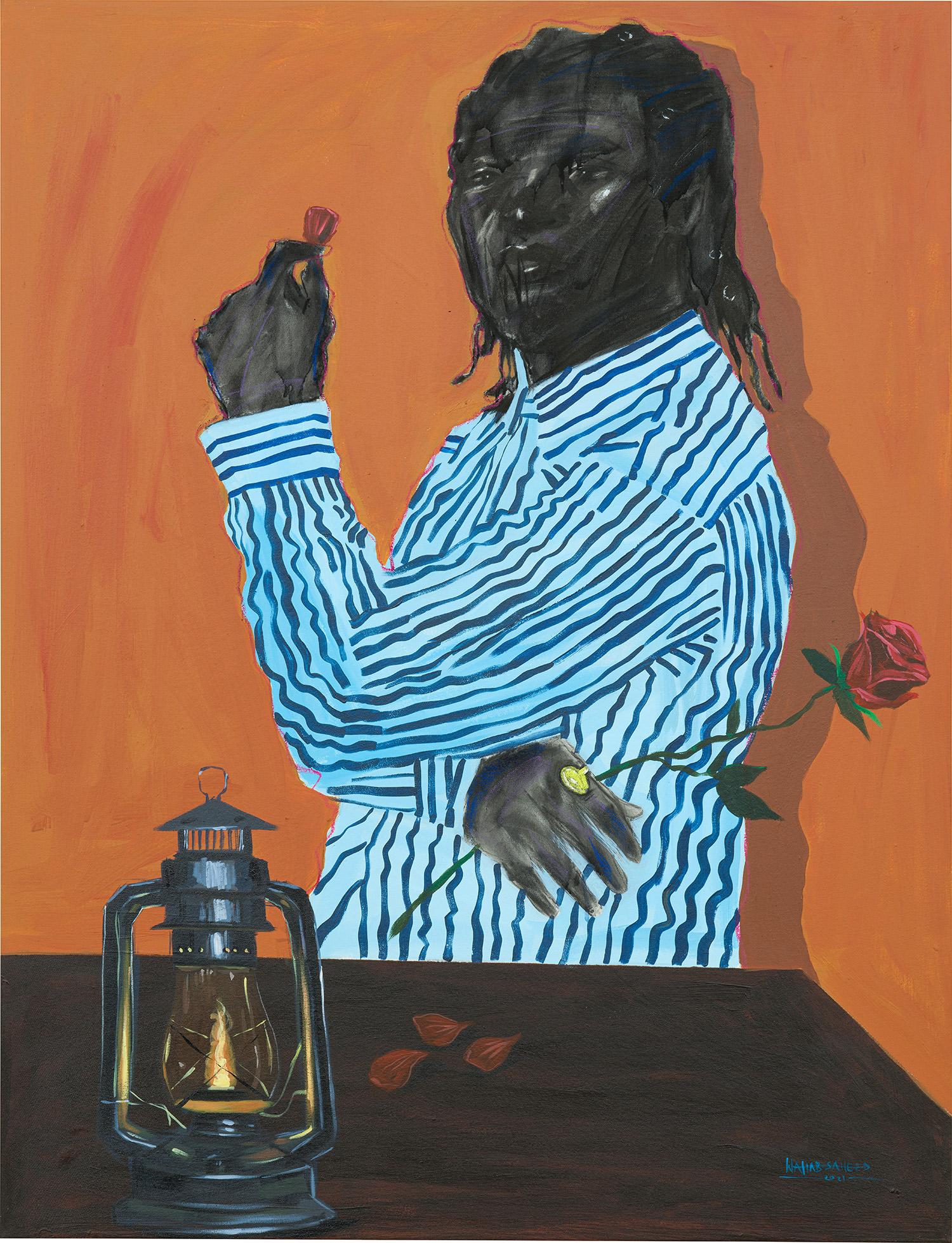
Night After Valentine's Day, 2021
Among his most celebrated works, Big Eighteen from 2022 demonstrates the full range of Saheed's formal ambition. Created with acrylic, charcoal, chalk, and pastel on canvas, the painting deploys a bold color palette to render its subject with expressive intensity, the figure neither simply observed nor simply invented but somewhere between testimony and vision. Night After Valentine's Day from 2021 is perhaps his most emotionally resonant work in recent years, a canvas that holds together romance, melancholy, and the particular loneliness that can follow collective celebration. Working with acrylic, oil, charcoal, and pastel, Saheed finds in this subject something genuinely universal while keeping it grounded in the specific texture of lived experience.
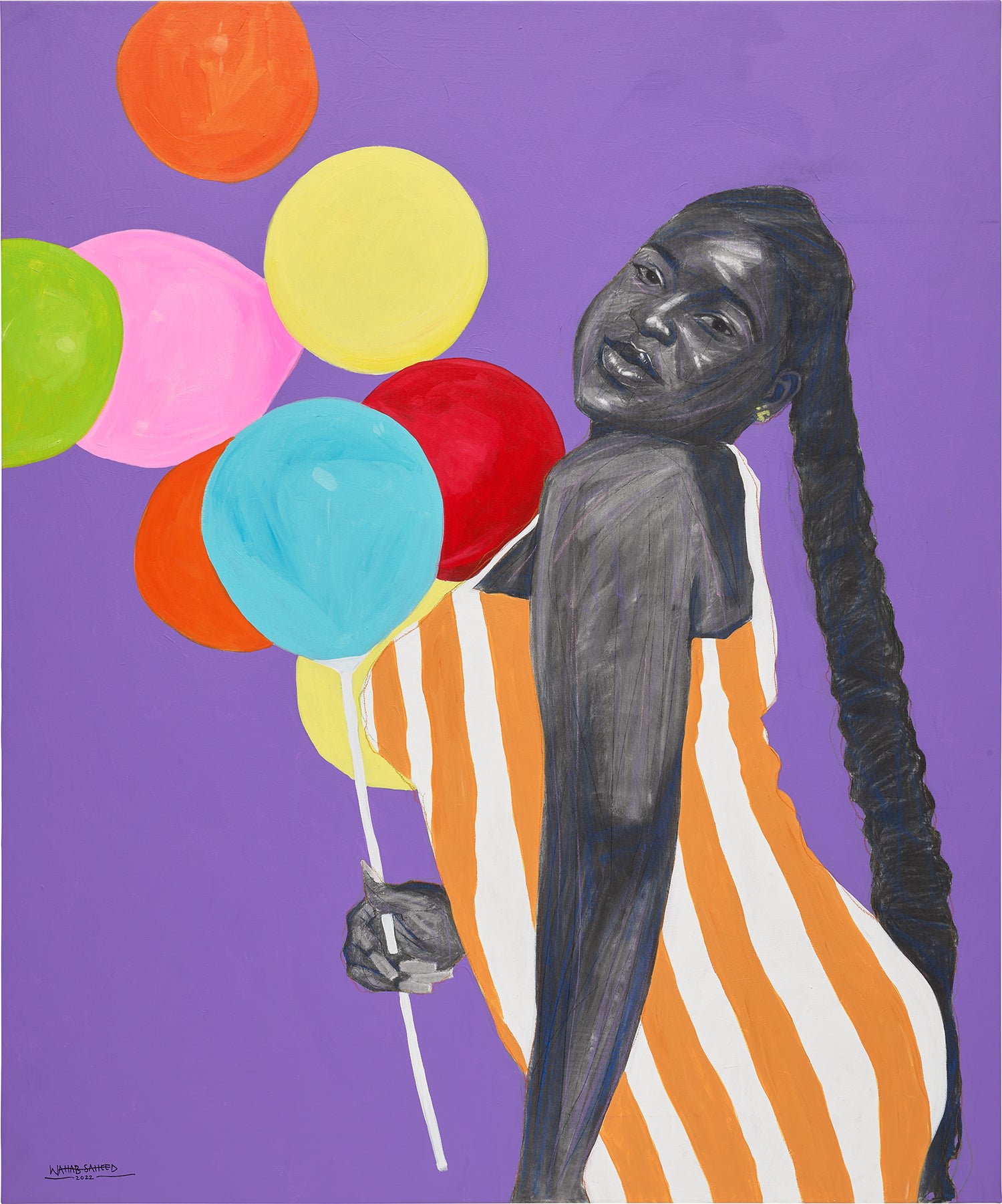
Up and Away, also from 2022, and Daytime Blues and Shadows of Yesterday, both from 2021, confirm the consistency and depth of his vision across this period, a sustained engagement with identity, time, and the human figure that marks a painter working at the height of his powers. The themes that animate Saheed's practice are as rich as the surfaces he creates. Identity sits at the center, that perennial and newly pressing question of who we are in relation to our cultural origins, our urban environments, our relationships, and our histories. He is interested in the condition of being a contemporary West African, not as an abstract demographic category but as a lived reality full of contradiction, beauty, aspiration, and loss.
Wahab Saheed
Up and Away, 2022
Urban life in his paintings is not merely backdrop but active participant, shaping the bodies and faces he depicts, pressing in on them with its demands and its gifts. There is a seriousness to this project that collectors and curators have rightly recognized as the mark of a lasting artistic intelligence. For collectors, Saheed represents an opportunity that comes rarely: a painter whose practice is already fully formed and whose market recognition is still growing to meet the quality of the work. Those who have been drawn to the generation of Nigerian painters who have reshaped perceptions of African contemporary art in recent years will find in Saheed a natural point of comparison and connection.
His work sits in productive dialogue with the broader movement of West African figurative painting that has attracted global attention, a tradition that prizes technical invention, psychological depth, and cultural specificity in equal measure. Collectors who prize works with genuine art historical grounding as well as present day emotional resonance will find his canvases deeply rewarding as long term acquisitions. Within the broader landscape of contemporary African and global art, Saheed occupies a position that continues to come into sharper focus. The interest in figurative painting that has defined so much of the most exciting gallery and auction activity of the past decade has created a context in which his concerns and methods feel entirely current.
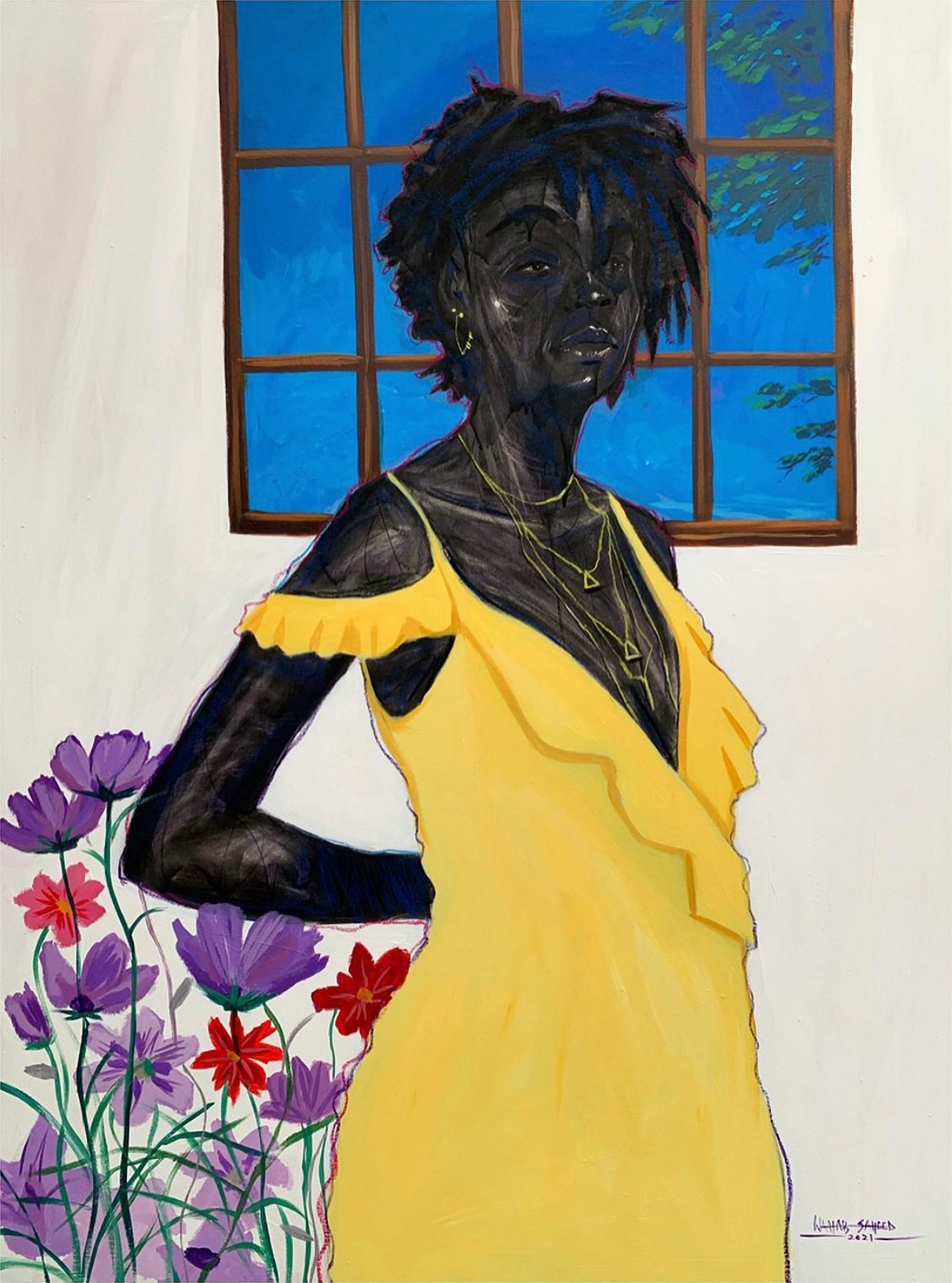
Wahab Saheed
Daytime Blues, 2021
Like other painters working across the African continent and diaspora who have brought rigorous formal thinking to bear on questions of black identity and urban experience, Saheed contributes a perspective shaped by the specifics of Nigerian life and culture. That specificity is not a limitation but his greatest strength, making his work irreplaceable within any serious survey of what contemporary painting is doing and where it is going. Wahab Saheed matters today because he is doing what only the most serious painters manage to do: he is making the world visible in a way it was not visible before. His canvases ask us to see Nigerian urban experience, and through it human experience more broadly, with new attention and new tenderness.
As his reputation continues its well deserved rise, those who encounter his work now will have the pleasure of having recognized something extraordinary early. The paintings themselves, layered with charcoal and pastel and oil and the residue of genuine feeling, will continue to earn that recognition for a very long time.