Vaughn Spann
Vaughn Spann Paints a World Anew
Artist Spotlight · The Collection Editorial
In the span of just a few years, Vaughn Spann has emerged as one of the most vital voices in contemporary American painting. His canvases arrive with an almost physical force, layering polymer paint, fabric, paper pulp, and mixed media into compositions that feel simultaneously urgent and deeply felt. Born in 1992, Spann belongs to a generation of painters who inherited a rich tradition of figurative art and then set about transforming it entirely, pushing portraiture and representation into new emotional territories that feel wholly their own. Spann grew up in New Jersey, and his formative years were shaped by a keen awareness of both the pleasures and pressures of Black American life.
Vaughn Spann
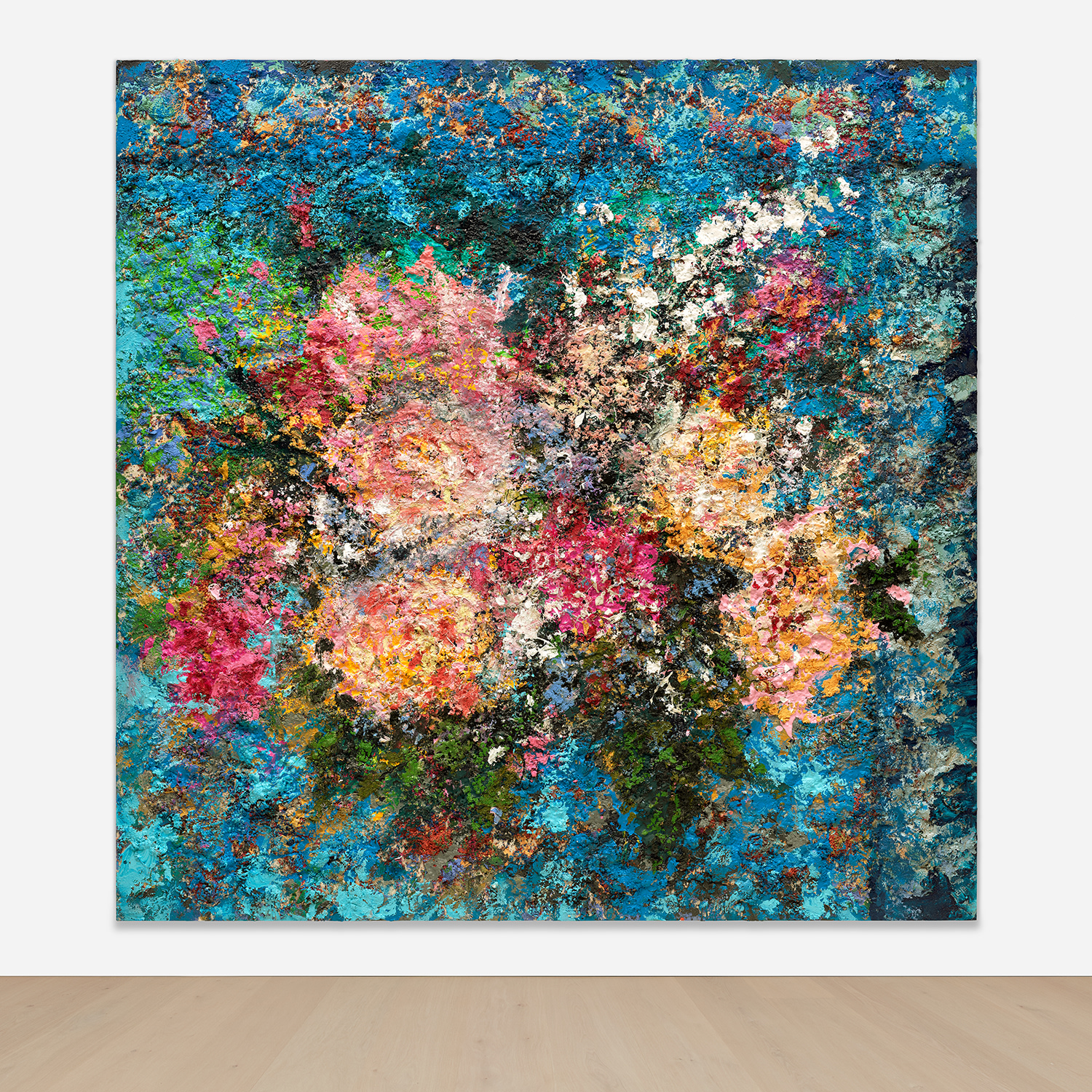
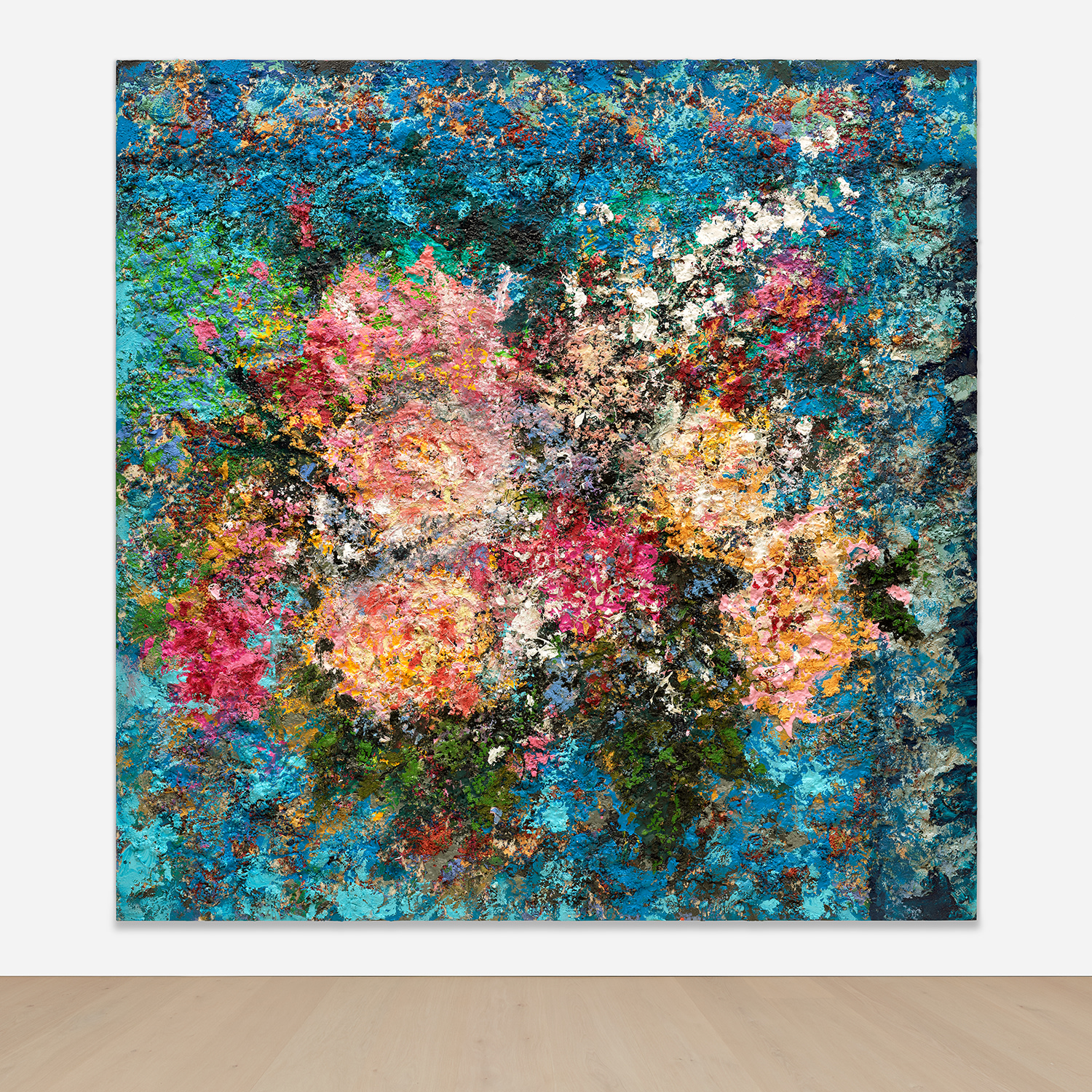
Underwater Bouquet (Love Lost), 2022
He went on to study at the Rhode Island School of Design, one of the most rigorous and creatively demanding programs in the country, and it was there that his painterly instincts began to crystallize. RISD gave him the technical foundation to work with confidence across materials and surfaces, but more importantly, it gave him the freedom to ask serious questions about what painting could be asked to carry. Those questions have never left his work. His practice developed rapidly after his studies, and Spann quickly found himself affiliated with Almine Rech gallery, where his profile grew substantially through a succession of solo exhibitions.
His early shows announced an artist already in command of a signature visual language: loose, expressive brushwork that builds texture and energy across the surface; a color palette ranging from bruised twilight blues to warm, skin saturated ochres; and a consistent commitment to depicting Black figures with tenderness, complexity, and an unguarded sense of life. Critics and curators noted immediately that Spann was not simply making paintings about representation. He was making paintings that felt like lived experience rendered in color and gesture. The works from 2019 stand out as a kind of breakthrough period in his output.
Vaughn Spann
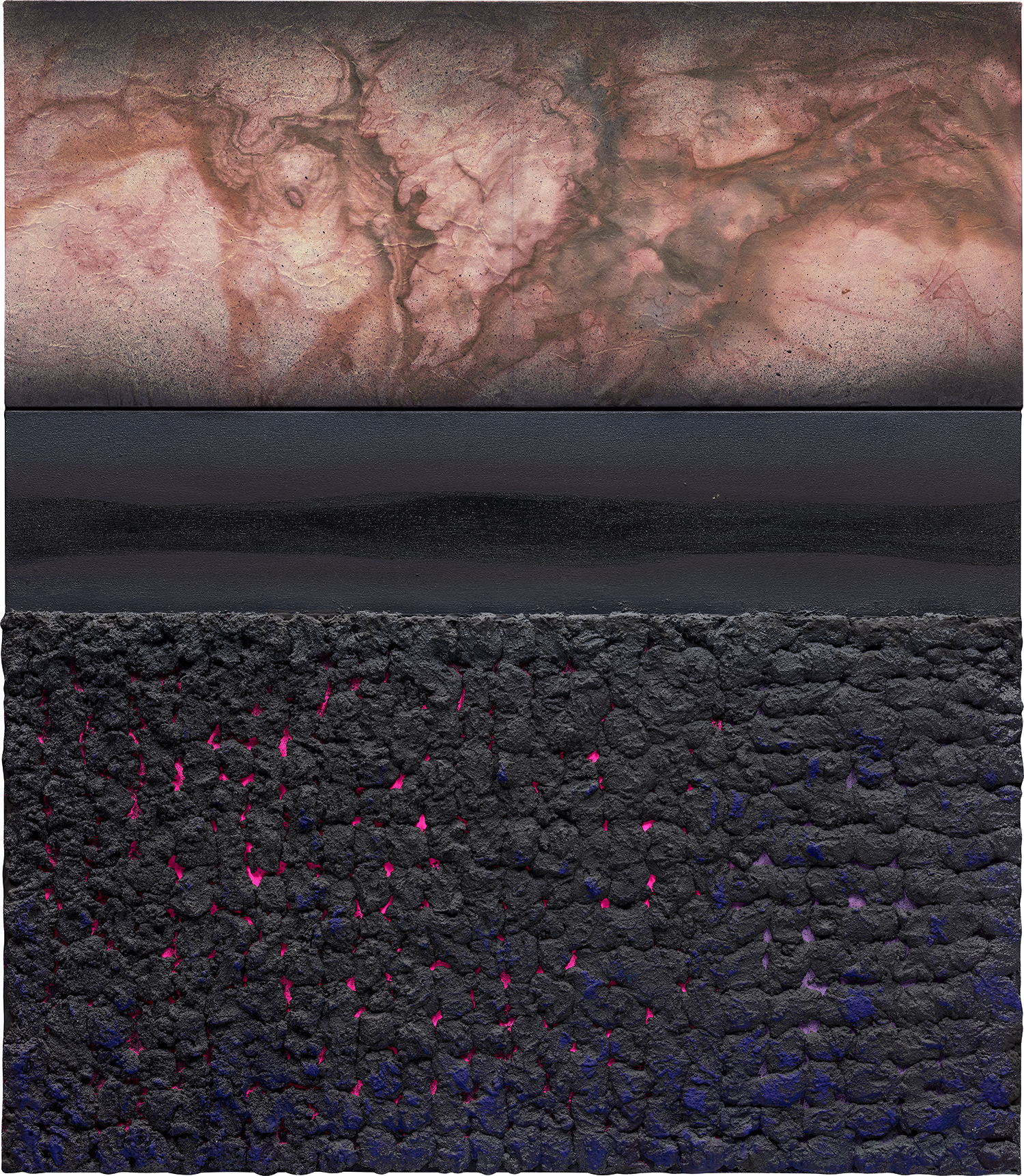
Deep Six (Night Blue), 2019
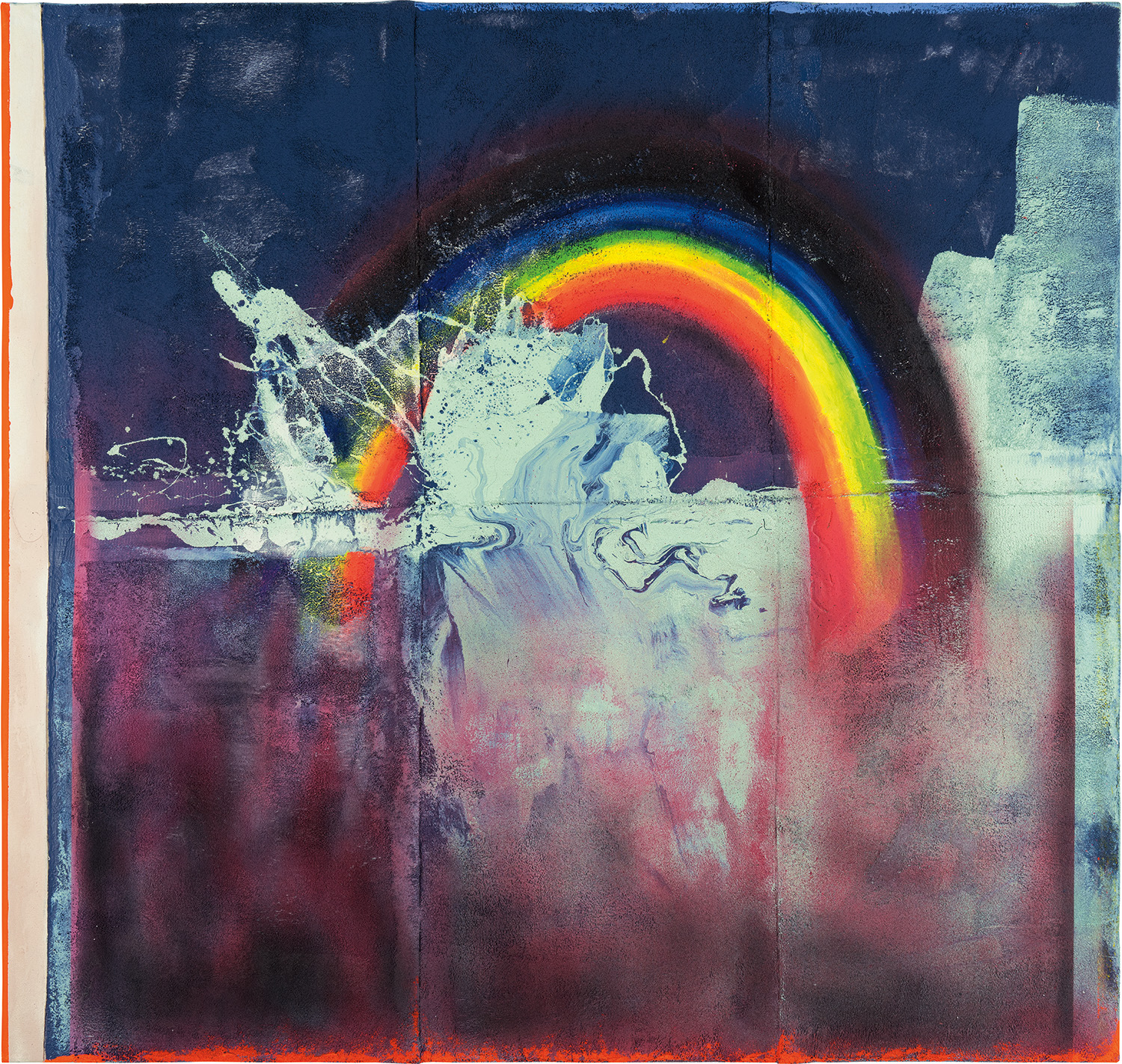
Pieces like Deep Six (Night Blue), a diptych made with polymer paint, fabric, and mixed media on canvas, demonstrate Spann's mastery of scale and layered material. The work arrives in two parts, a formal choice that mirrors the way memory and identity themselves are rarely whole, rarely singular. That same year he produced Big Black Rainbow (Deep Dive) and Dalmatian (Denim), works that pair playful, almost musical titling with serious painterly ambition. The rainbow as a subject carries cultural and political weight in his hands, becoming something both celebratory and complex, a symbol stretched across traditions of Black joy and Black struggle simultaneously.
Marked Man, also from 2019, is among the more charged titles in his body of work, pointing to the social realities that undergird even his most lyrical canvases. By 2021 and 2022, Spann had expanded his material experimentation further, working increasingly on wood panel and pushing his mixed media approach into new compositional terrain. Typhoon, from 2021, carries the energy its name suggests: swirling, pressurized, and alive with movement. His 2022 works, including Underwater Bouquet (Love Lost) and Double Marked Men, a two panel work on wood panel, show an artist deepening his investigation of intimacy and loss.
Vaughn Spann
Big Black Rainbow (Deep Dive), 2019
The bouquet submerged beneath water is an image of tender melancholy, a gesture toward things beautiful and unreachable. Across these works, Spann demonstrates a rare ability to hold tenderness and tension in the same frame, allowing the viewer to sit inside contradiction rather than resolve it. Collectors have responded to Spann with considerable enthusiasm, and his work has found homes internationally, with institutions and private buyers drawn to the emotional immediacy and technical ambition of his canvases. Part of what makes his work compelling from a collecting perspective is its material richness.
The use of polymer paint alongside fabric and paper pulp means that each work carries its own physical history, a surface that records the process of its own making. For collectors attuned to the current moment in figurative painting, Spann represents a considered long term acquisition: an artist still in his early thirties whose practice has already demonstrated remarkable consistency and growth. His wood panel works in particular offer a different physical presence than his canvas works, with the rigidity of the support lending the surface a kind of sculptural gravity that rewards close looking. Spann's work belongs to a broader conversation in contemporary painting that includes artists such as Jordan Casteel, Tschabalala Self, and Toyin Ojih Odutola, all of whom have brought renewed seriousness and invention to the question of how Black life is pictured in paint.
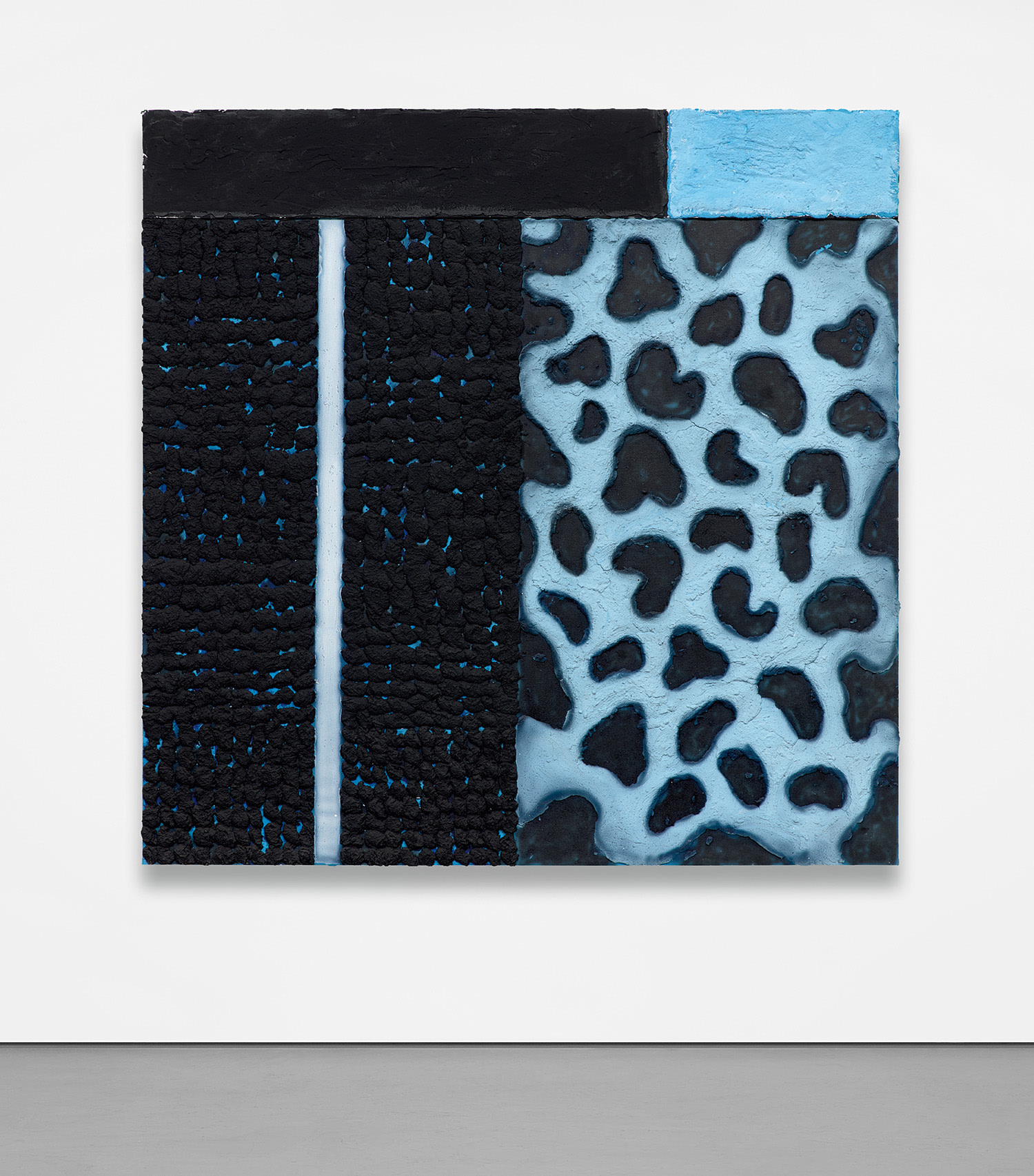
Vaughn Spann
Dalmatian (Denim), 2019
Like these peers, Spann draws from the long history of Western portraiture while fundamentally renegotiating its terms. He is equally indebted to the expressive freedom of artists like Cy Twombly and Jean Michel Basquiat, whose willingness to let the surface speak for itself opened space for the kind of gestural intensity Spann brings to his figurative subjects. Within this lineage, he occupies a distinctive position: his work is never purely abstract, never purely documentary, but always somewhere between sensation and story. What makes Vaughn Spann matter right now is precisely the quality of his attention.
At a moment when conversations about representation in art can sometimes settle into formula, his paintings insist on specificity, on the particular texture of a face, a gesture, a color that names something true. He is an artist who paints as though it is necessary, as though the image being made might hold something that cannot be held any other way. For collectors, for institutions, and for anyone who believes that painting remains one of the most powerful forms of human communication available, Spann's work offers not just beauty or provocation but something rarer: genuine presence. He is, without question, one of the painters to watch most closely in the years ahead.