Vasily Ivanovich Shukhaev
Shukhaev: A Master Reclaimed By Time
Artist Spotlight · The Collection Editorial
There is a particular pleasure in rediscovering an artist whose reputation has been obscured not by the limits of his talent but by the turbulence of history. Vasily Ivanovich Shukhaev stands as one of the most compelling figures to emerge from the extraordinary ferment of Russian modernism in the early twentieth century, a painter whose gifts moved fluidly between intimate portraiture, grand figurative composition, and the bold formal experiments that defined his era. Today, as institutions across Europe and North America turn fresh attention toward the full complexity of Soviet era art, Shukhaev is being recognized not as a footnote to more famous contemporaries but as a singular voice whose life and work deserve sustained, serious attention. Shukhaev was born in 1887 in Moscow, arriving into a city alive with artistic ambition and social transformation.
Vasily Ivanovich Shukhaev
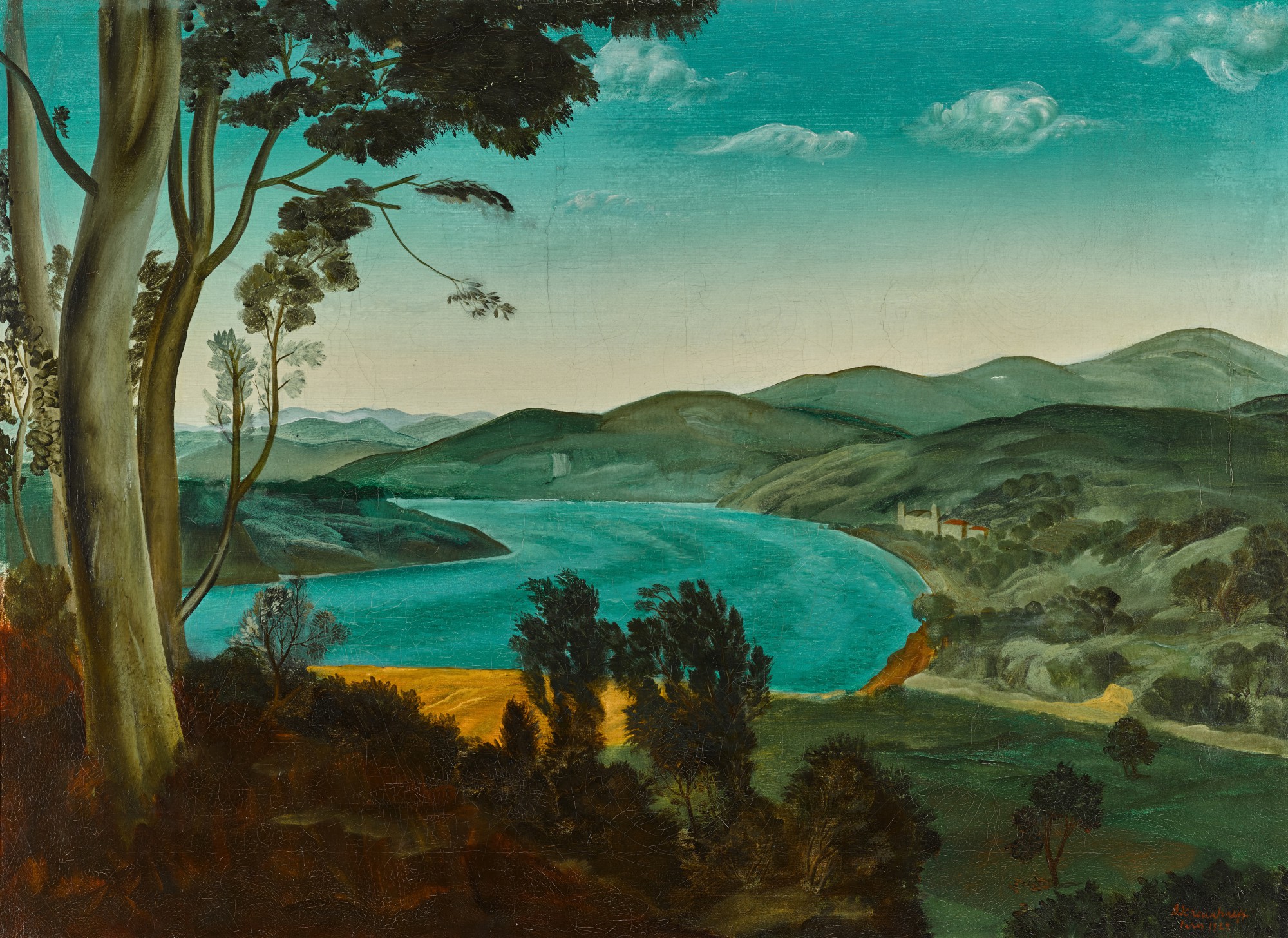
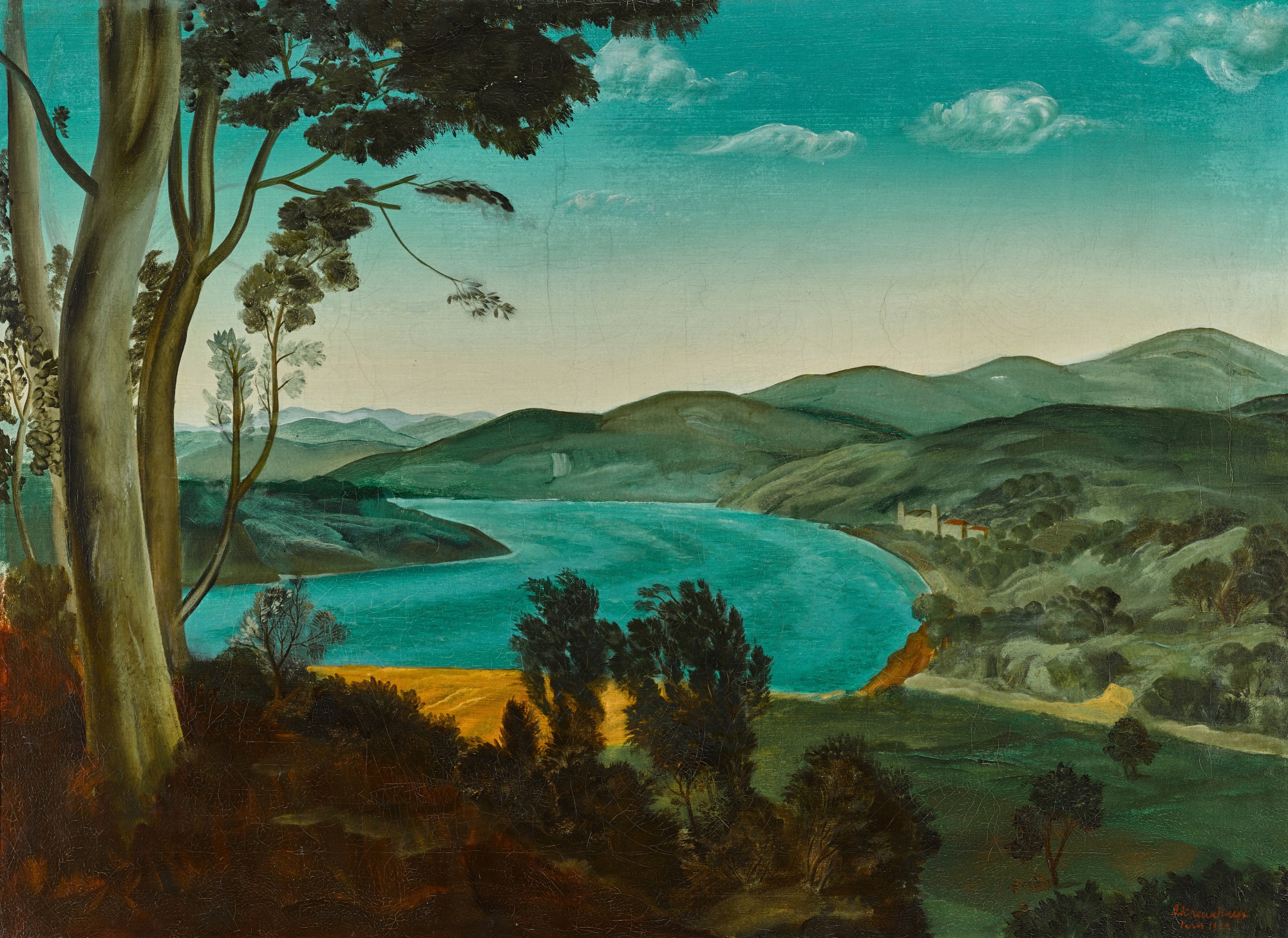
The River Dordogne
He trained at the Stroganov School of Applied Art before moving to the Imperial Academy of Arts in St. Petersburg, where he studied under Dmitry Kardovsky, a teacher who instilled in his students a rigorous respect for classical draftsmanship and the grand European tradition. Shukhaev proved an exceptional student, earning the prestigious Rome Prize in 1913, which sent him to Italy alongside his close colleague and creative rival Alexander Yakovlev. The two young Russians arrived in Europe at a moment when the continent was in creative upheaval, and their time abroad proved formative in ways neither could have fully anticipated.
In Italy and later in France, Shukhaev absorbed the lessons of the old masters with a devotion that set him apart from many of his avant garde contemporaries. He was drawn to the sculptural clarity of Renaissance figure painting, to the weight and warmth of human bodies rendered with geometric precision. Yet he was not immune to the radical currents swirling around him. The influence of Suprematism, with its faith in pure form and bold color, can be felt in the underlying structure of even his most representational works.
Constructivism, too, left its mark, lending his compositions an architectural confidence that lifted them beyond mere academic exercise. He became, in the fullest sense, an artist of multiple inheritances, someone who could hold tradition and innovation in productive tension. The years Shukhaev spent in Paris after the Russian Revolution were among the most productive of his life. Emigrating in 1920, he settled into the vibrant community of Russian artists and intellectuals who had gathered in the French capital, and he built a distinguished reputation as both a painter and a gifted teacher.
His portraits from this period are particularly arresting, capturing their subjects with a combination of psychological acuity and formal elegance that recalls the great northern European masters while remaining entirely his own. He also produced significant theatrical design work during these years, contributing to productions that brought his sense of dramatic visual structure to the stage. His painting of the Dordogne region in southwestern France, rendered in oil on canvas, speaks to his love of the French landscape and his ability to translate place into something both observed and felt, where the particular geography of river and stone becomes a meditation on light, form, and the passage of time. Shukhaev's return to the Soviet Union in 1935 marked a wrenching shift in his circumstances.
Arrested by Soviet authorities in 1937 during the height of Stalin's purges, he was sent to a labor camp in Magadan, in the Soviet Far East, where he remained for years. Even under conditions of extraordinary deprivation, he continued to draw and paint, teaching art to fellow prisoners and locals alike. His survival and his refusal to abandon his practice under such circumstances speak to a tenacity of spirit that is inseparable from any honest account of his work. After his release he continued to paint and teach in Tbilisi, Georgia, where he spent the remainder of his career and where he died in 1973.
The Georgian period produced landscapes and portraits of quiet power, works that demonstrate how fully a great artist can maintain his essential vision even when the world has done its utmost to extinguish it. For collectors, Shukhaev presents a genuinely compelling proposition. His work sits at the intersection of several of the most significant movements of the twentieth century, bridging the classical European tradition, Russian modernism, the Paris School, and the complex cultural history of the Soviet period. Works from his Paris years, where his technical mastery and creative freedom were most fully aligned, are particularly sought after.
His portraits command attention for their psychological depth, while his landscapes, including the luminous oil on canvas depicting the River Dordogne, offer a more intimate window into his sensibility as a colourist and observer of the natural world. As the market for Russian modernism continues to mature, scholars and collectors alike are recognizing that figures like Shukhaev represent genuine opportunities, artists of real historical significance whose work has not yet been fully absorbed into the canonical pricing structures that govern better known names. In art historical terms, Shukhaev belongs to a fascinating generation that includes Alexander Yakovlev, Zinaida Serebriakova, and Boris Grigoriev, artists who carried the achievements of Russian academic training into dialogue with European modernism while navigating the devastating political upheavals of their era. He shares with these contemporaries a commitment to figuration as a vehicle for genuine feeling, a refusal to treat the human form as merely ideological or merely decorative.
His relationship to Suprematist and Constructivist ideas connects him also to the broader world of Kazimir Malevich and the Vkhutemas generation, though Shukhaev always remained his own man, never fully subsumed by any single movement or manifesto. The legacy of Vasily Ivanovich Shukhaev is one of endurance, craft, and a kind of quiet moral courage. He lived through revolution, exile, imprisonment, and the enforced orthodoxies of Socialist Realism, and through all of it he kept painting, kept teaching, kept looking at the world with the patient, generous attention of a great artist. His works are not relics of a tragic biography but living things, full of color and intelligence and the particular pleasure of encountering a sensibility that refused, against all odds, to be diminished.
To own a work by Shukhaev is to possess something that carries history lightly but carries it honestly, and that is, in the end, one of the finest things a work of art can do.