Valery Koshlyakov
Valery Koshlyakov Builds Ruins Worth Celebrating
Artist Spotlight · The Collection Editorial
There is a particular kind of reverence that comes over visitors when they first encounter a large scale work by Valery Koshlyakov. Standing before one of his monumental depictions of classical architecture, rendered in cascading layers of paint on raw cardboard, the sensation is not of looking at a picture but of standing inside a memory. His canvases and found materials hum with the accumulated weight of centuries, as though the facades of Rome, Venice, and St. Petersburg have been summoned from the collective unconscious and pressed into physical form.
Valery Koshlyakov
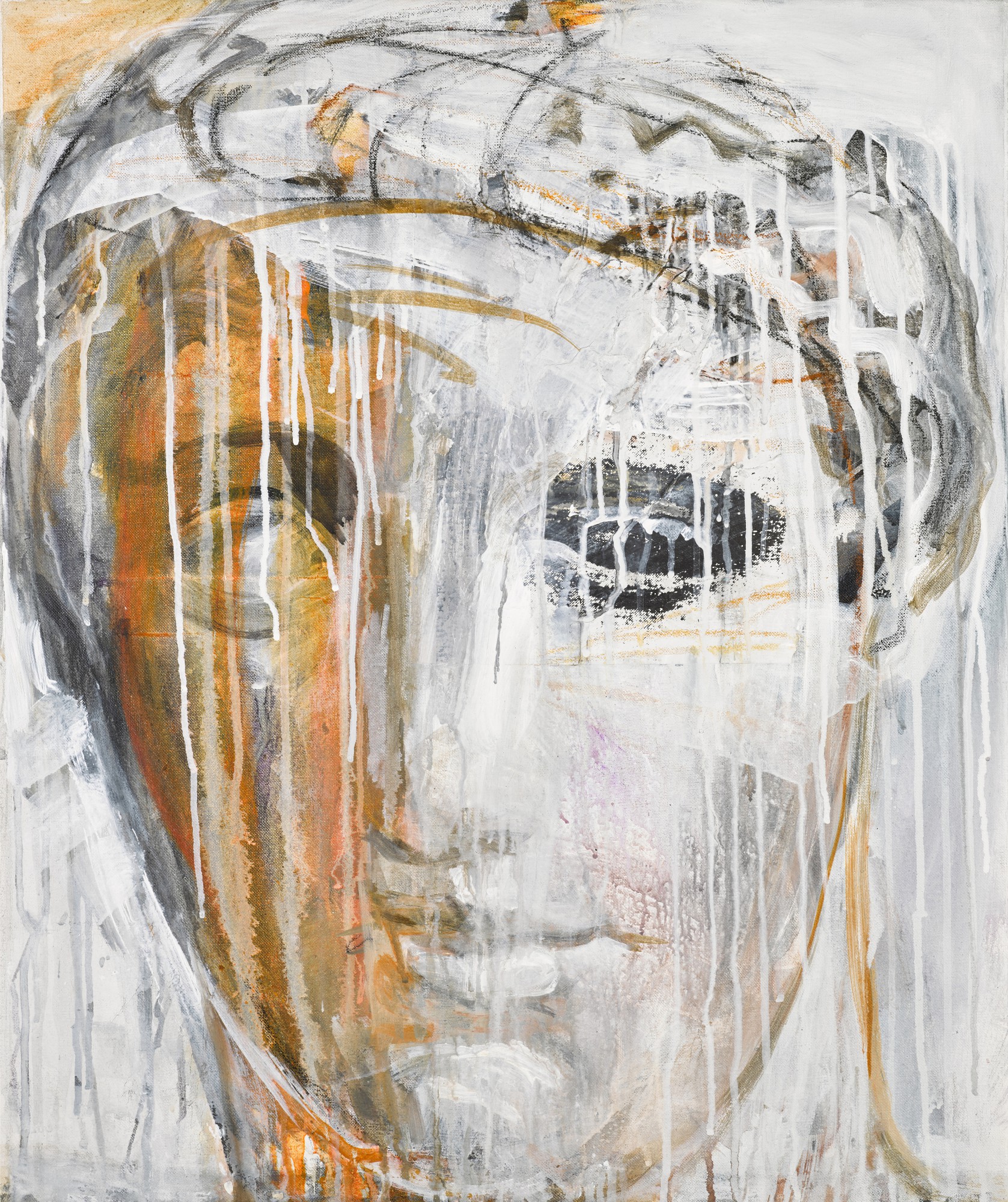
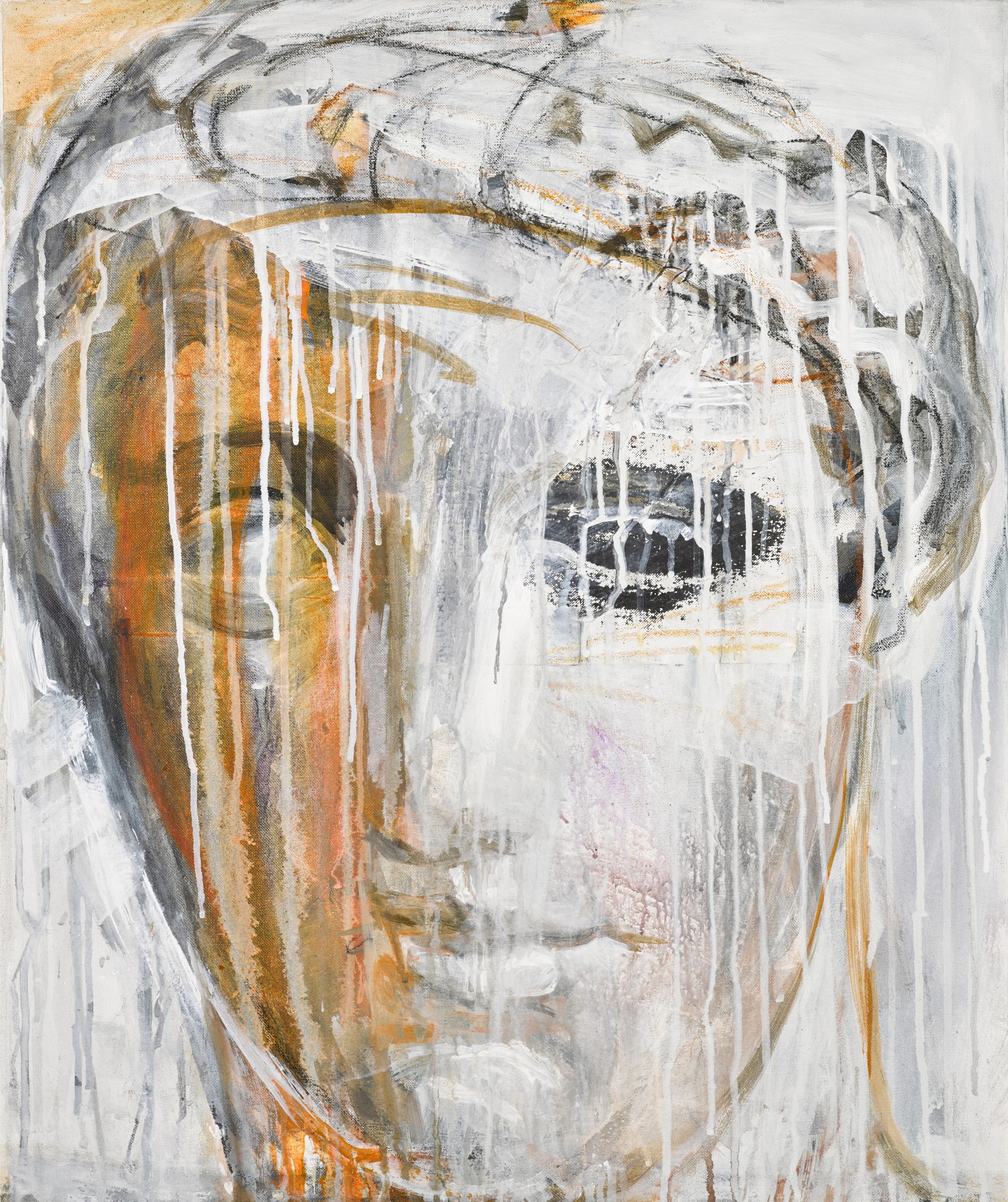
Antinous
That this experience is available to a new generation of collectors and art lovers is cause for genuine celebration. Koshlyakov was born in 1962 in Salsk, a modest city in the Rostov region of southern Russia, far from the metropolitan centers where artistic careers are typically forged. That distance proved formative rather than limiting. Growing up during the Soviet era, he developed an acute sensitivity to the gap between the grandeur promised by official culture and the material reality of everyday life.
The classical idiom, with its columns, arches, and heroic proportions, was everywhere in Soviet public architecture, yet it coexisted with crumbling infrastructure and the quiet erosions of time. Koshlyakov absorbed this contradiction deeply, and it became the animating tension of his entire practice. He studied painting and arrived in Moscow in the late 1980s, a period of seismic cultural transformation as the Soviet Union began its unraveling. The Moscow art scene of that era was electric with possibility and urgency, and Koshlyakov found his footing among a generation of painters who were renegotiating their relationship to both Western modernism and their own Russian inheritance.
Valery Koshlyakov
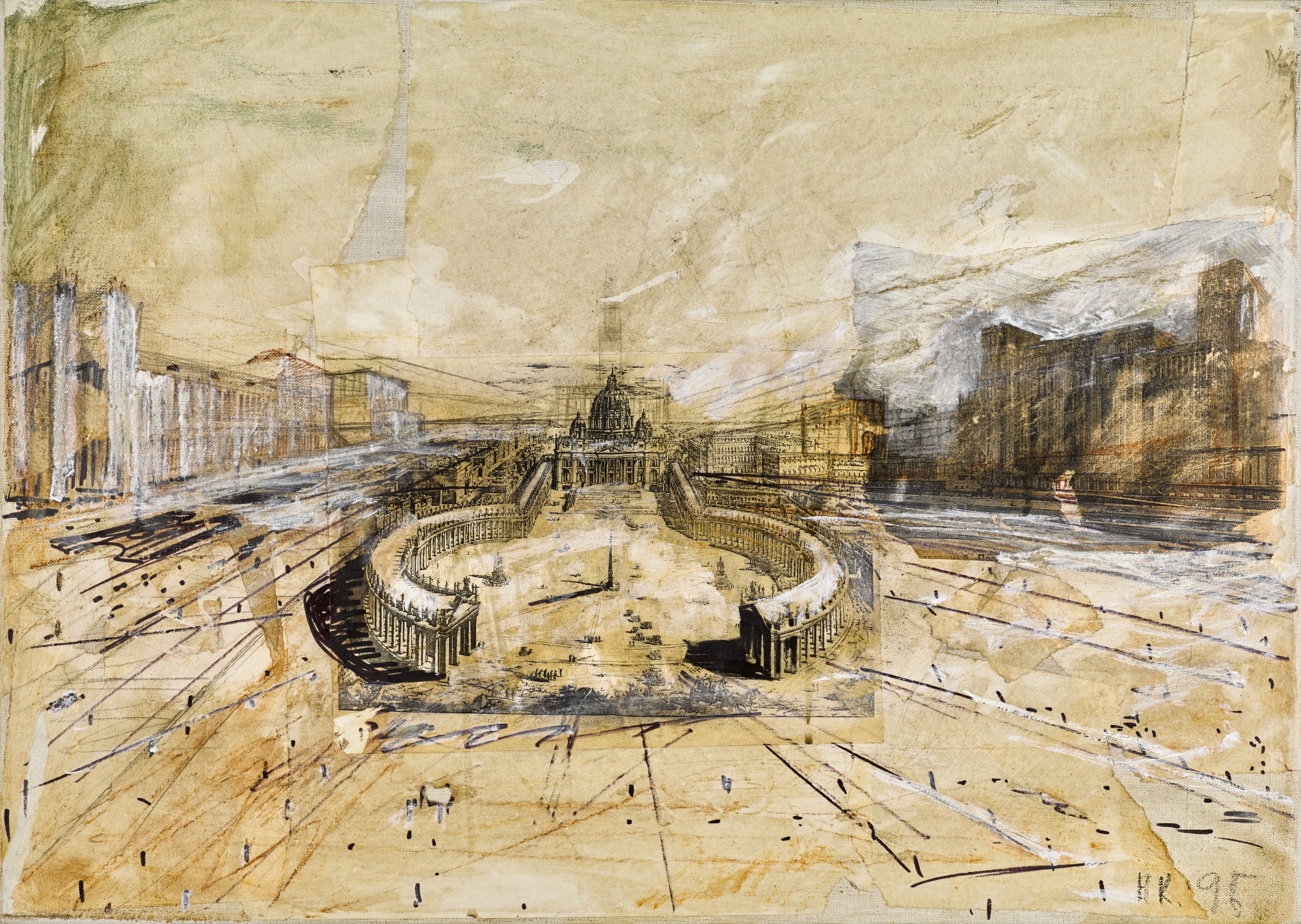
Archeological Reconstructions
He became associated with the Southern Russian Wave, a loose grouping of artists from the Rostov and Krasnodar regions who brought a raw, almost folkloric energy to contemporary painting. This background gave his work an outsider vitality that set it apart from the more conceptually driven Moscow Conceptualism that dominated critical discourse at the time. The signature Koshlyakov technique emerged gradually but announced itself with unmistakable force once it crystallized. He discovered that cardboard, the most humble and disposable of surfaces, could hold paint in ways that expensive linen or cotton canvas could not replicate.
Paint applied to cardboard soaks and bleeds, it buckles and warps, it ages visibly even within the span of a single work's creation. Koshlyakov began layering paint and scraping it back, building up surfaces that appeared simultaneously ancient and freshly excavated. The resulting works looked less like paintings of ruins and more like ruins themselves, objects that had survived something. This was not mere stylistic cleverness but a genuine philosophical position: that art carries within it the evidence of its own making and unmaking.
Valery Koshlyakov
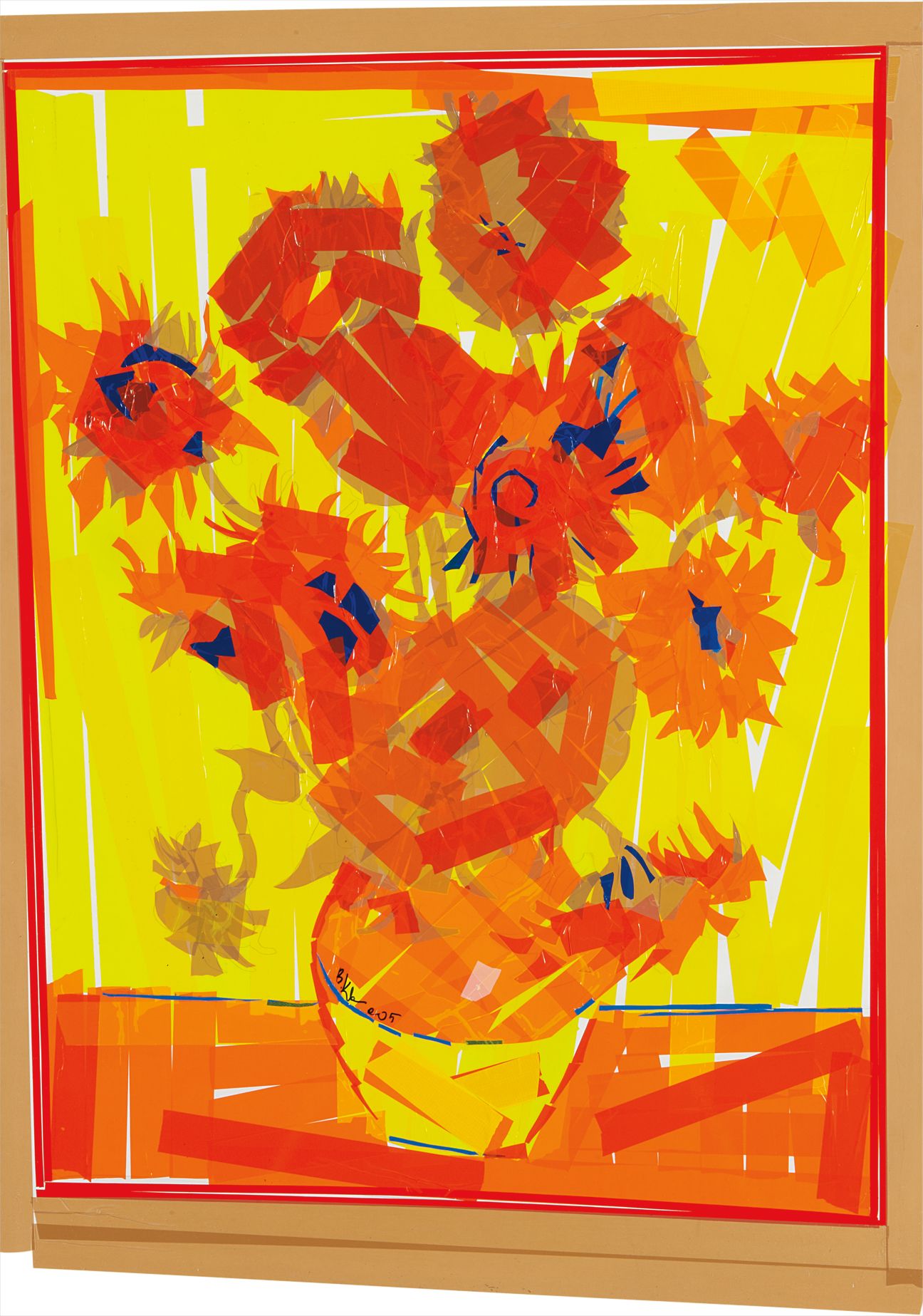
Sunflowers (from Masterpieces of Europe series)
Among his most celebrated bodies of work are his depictions of classical and neoclassical architecture, in which the columned facades of imagined or remembered monuments dissolve at their edges into raw material. Works such as Archeological Reconstructions engage directly with the vocabulary of antiquity, presenting structures that feel simultaneously triumphant and already passing into legend. Antinous, rendered in oil and collage on canvas, draws on the deep well of Greco Roman idealization while inflecting it with the particular melancholy of a civilization looking back at its own sources. The Sunflowers piece from his Masterpieces of Europe series takes a different and disarming approach, recreating a canonical image of European painting entirely in adhesive tape collage on mat board, a gesture that is witty, rigorous, and genuinely moving in equal measure.
High rise on Raushskaya Embankment, executed in tempera on cardboard, brings his archaeological sensibility to bear on Soviet modernist architecture, treating a Moscow tower block with the same reverence he extends to the Colosseum. Koshlyakov has exhibited at some of the most significant venues in the contemporary art world. His participation in the Venice Biennale brought his work to an international audience primed to appreciate painting that thinks seriously about history and cultural transmission. His exhibition at the Hermitage Museum in St.
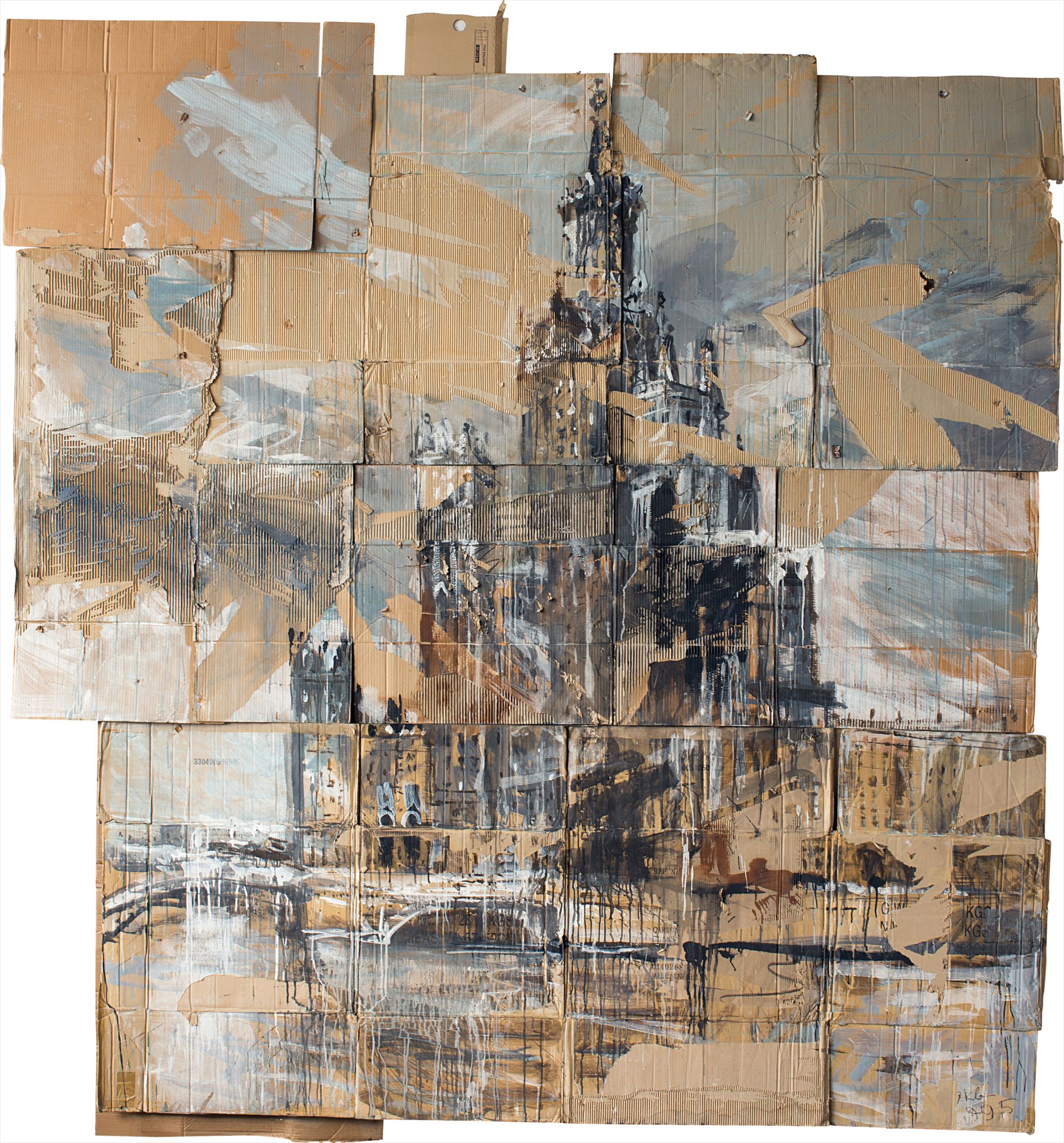
Valery Koshlyakov
High-rise on Raushskaya Embankment
Petersburg placed his practice in direct dialogue with one of the world's supreme collections of classical and European art, a juxtaposition that illuminated the depth of his engagement with tradition. These institutional endorsements reflect a critical consensus that has built steadily over three decades, recognizing in Koshlyakov an artist whose formal ambitions are matched by genuine intellectual seriousness. For collectors, Koshlyakov's work offers a rare combination of visual power and conceptual depth. His large scale works command attention in any interior and reward sustained looking in ways that purely decorative painting cannot.
The materiality of his practice means that each work is genuinely unique, bearing the specific traces of its own making in ways that cannot be reproduced or approximated. Collectors drawn to Arte Povera, to the legacy of Robert Rauschenberg's combines, or to the meditative surfaces of Anselm Kiefer will find in Koshlyakov a kindred intelligence working from a distinctly Russian and classical vantage point. His prices have grown steadily as his international profile has expanded, and works on cardboard in particular represent an opportunity to acquire something genuinely irreplaceable. In the broader context of art history, Koshlyakov occupies a fascinating position at the intersection of several lineages.
His use of humble materials connects him to Arte Povera and to the broader post war tradition of artists who challenged the hierarchy of artistic surfaces. His engagement with classical architecture and cultural memory places him in conversation with Neo Expressionist painters who revisited history and myth in the 1980s. And his specifically Russian perspective on empire, memory, and decay gives his work a resonance that feels increasingly urgent in a global culture grappling with the afterlives of its own grand narratives. He is an artist who has found a completely personal language for questions that are universal.
What makes Koshlyakov's contribution enduring is precisely the generosity of his vision. His ruins are not elegies for lost greatness but evidence of continuity, proof that the human impulse to build, to remember, and to transform persists across every material circumstance. In his hands, a sheet of cardboard becomes a site of civilization. That is a remarkable thing, and it is the reason his work rewards not just a single encounter but a lifetime of looking.