Tran Van Ha
Tran Van Ha, Vietnam's Luminous Lacquer Master
Artist Spotlight · The Collection Editorial
In auction rooms from Hong Kong to Hanoi, a quiet reverence settles whenever a lacquer panel by Tran Van Ha appears on the block. His works, dense with the shimmer of applied resin and the delicate texture of crushed eggshell, carry within them an entire world: the silver light of a river village at dusk, the proud posture of roosters in a farmyard, the patient rhythm of a water wheel turning in the Cambodian countryside. For collectors who specialize in Southeast Asian modernism, encountering a Van Ha at auction is not merely a transaction but an encounter with one of the most sensitive and technically accomplished Vietnamese painters of the twentieth century. His reputation, built slowly and without fanfare during his lifetime, has grown considerably in the decades since his death in 1974, as the international art market has turned its attention with increasing seriousness toward the modernist traditions of Vietnam.
Tran Van Ha
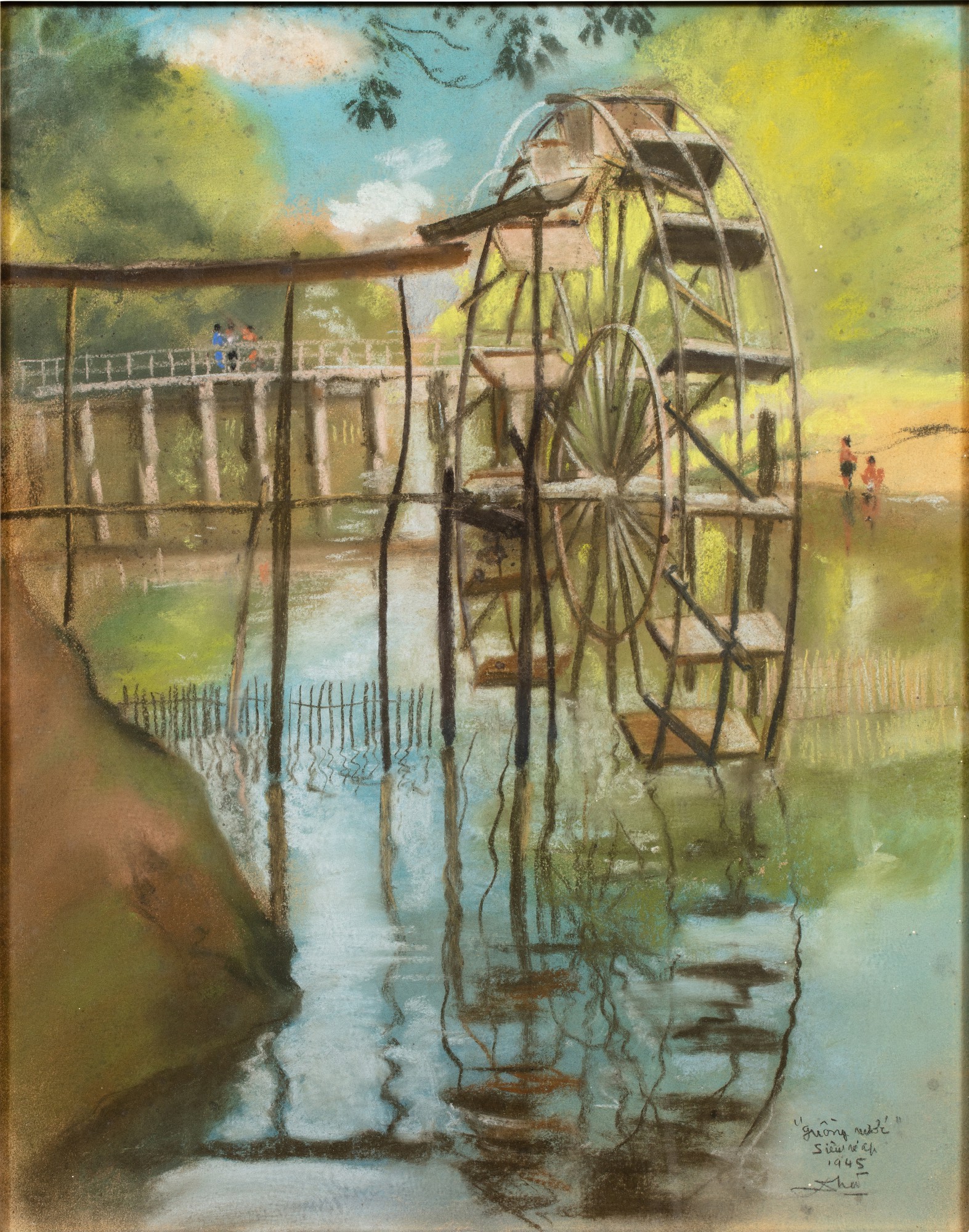
陳文河 (1911-1974), 柬埔寨暹粒水車, 1945
Tran Van Ha was born in 1911, coming of age in a Vietnam still under French colonial administration. This period, for all its political tensions, produced a remarkable flowering of Vietnamese visual art, centered on the Ecole des Beaux Arts de l'Indochine, founded in Hanoi in 1925. The school brought together French academic training and the deep material and spiritual traditions of Vietnamese craft, and it shaped an entire generation of painters who would define what Vietnamese modernism could look like. Van Ha emerged from this milieu with a formation that was at once cosmopolitan and deeply rooted in local sensibility, absorbing lessons in European painterly technique while remaining attentive to the visual culture of the villages, rivers, and paddy fields that surrounded him.
The medium that would come to define Van Ha's practice was lacquer, known in Vietnamese as son mai. This is a medium with roots stretching back centuries in Vietnamese decorative and religious art, but it was the Ecole des Beaux Arts generation that transformed it into a vehicle for fine art painting of genuine ambition. Working with layers of sap harvested from the rhus succedanea tree, lacquer painters build up surfaces of extraordinary depth and luminosity, sometimes embedding gold leaf, silver foil, crushed eggshell, or mother of pearl to create textures that no other medium can replicate. Van Ha mastered this demanding process and brought to it a painter's eye for composition and light, producing works that feel simultaneously ancient and urgently present.
Tran Van Ha
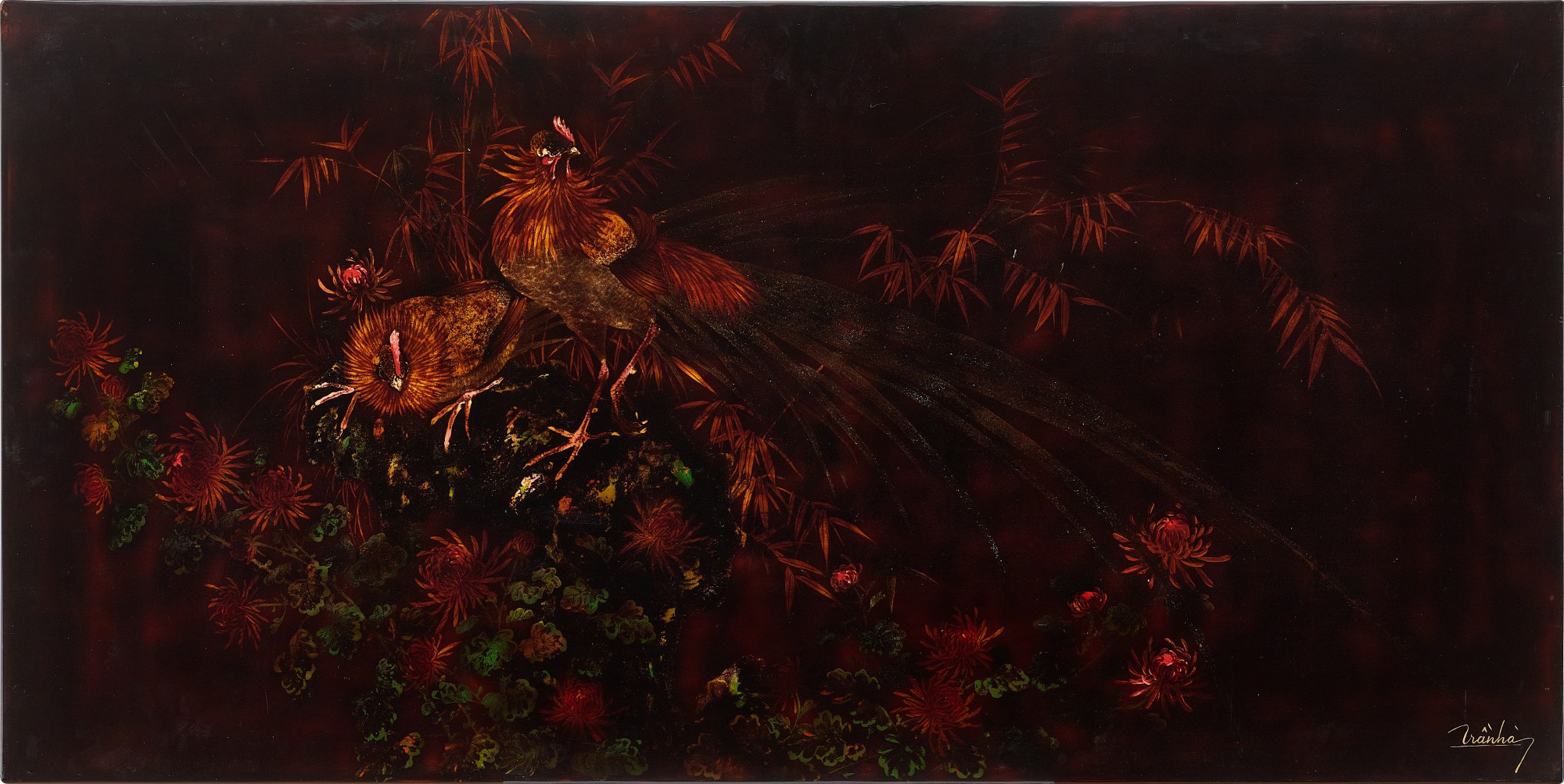
Roosters 公雞
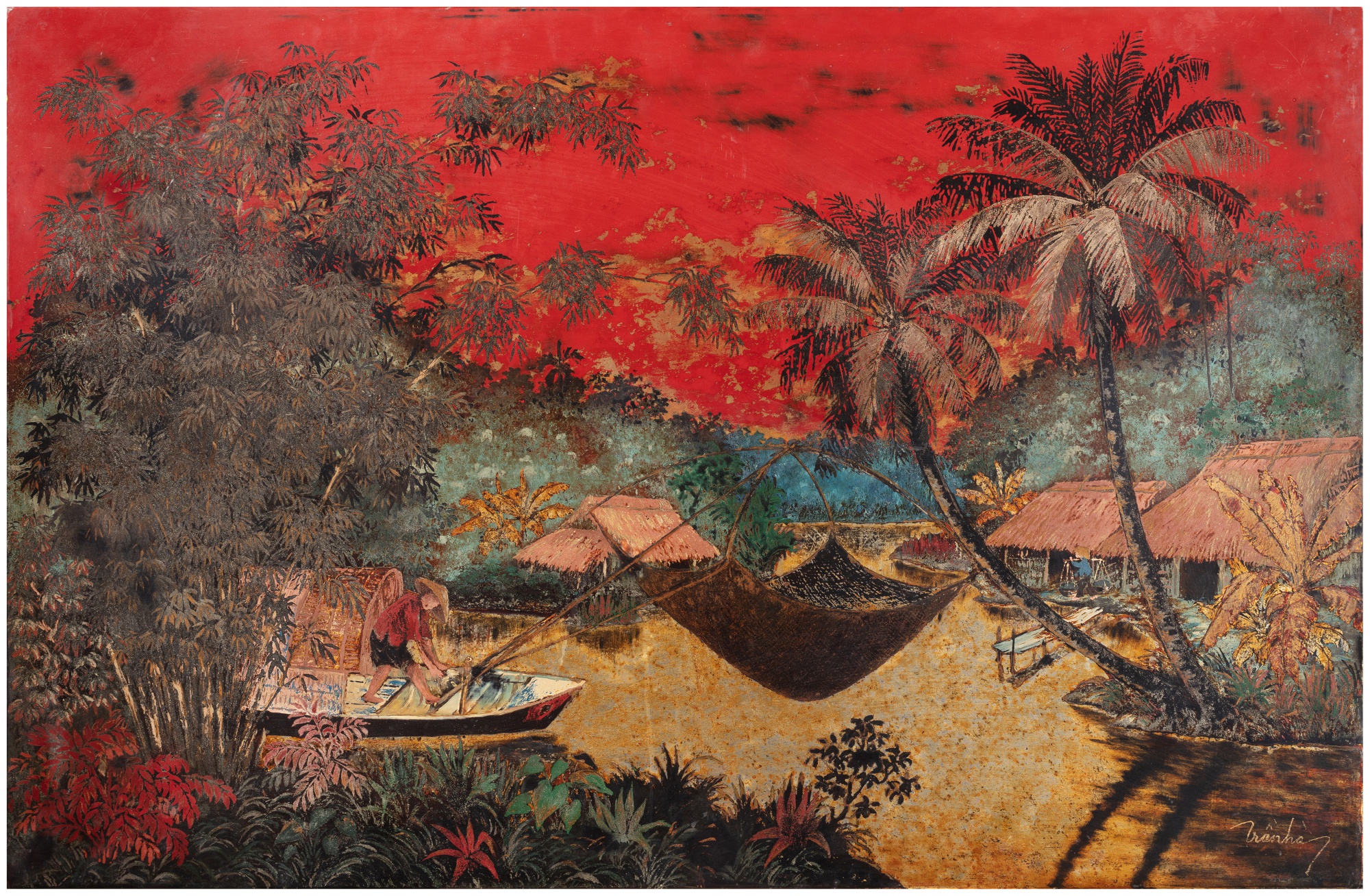
The arc of Van Ha's career spans some of the most turbulent decades in Vietnamese history. His 1945 pastel on paper depicting a water wheel at Siem Reap in Cambodia offers a rare window into a moment of travel and observation outside Vietnam, a work of tender documentary intimacy that shows his range beyond lacquer. By 1960, the year that several of his most celebrated lacquer panels are dated, Van Ha was working at full maturity. Works such as his fishing village scene and his four seasons birds and flowers panel from that year demonstrate the full command of his craft: the eggshell inlay breathing texture into surfaces that might otherwise feel sealed and remote, the compositions balancing figuration and near abstraction with practiced ease.
His rooster panel, undated but unmistakably confident in its placement of form against ground, has become one of the more recognizable images associated with his name. What makes Van Ha's work so compelling to serious collectors is the combination of technical rarity and emotional directness. Lacquer on wood is an unforgiving medium. Unlike oil paint, which can be worked and reworked, lacquer demands patience and foresight, each layer curing before the next is applied, the final surface revealed only through grinding and polishing.
Tran Van Ha
陳文河 (1911-1974), 漁村, 1960
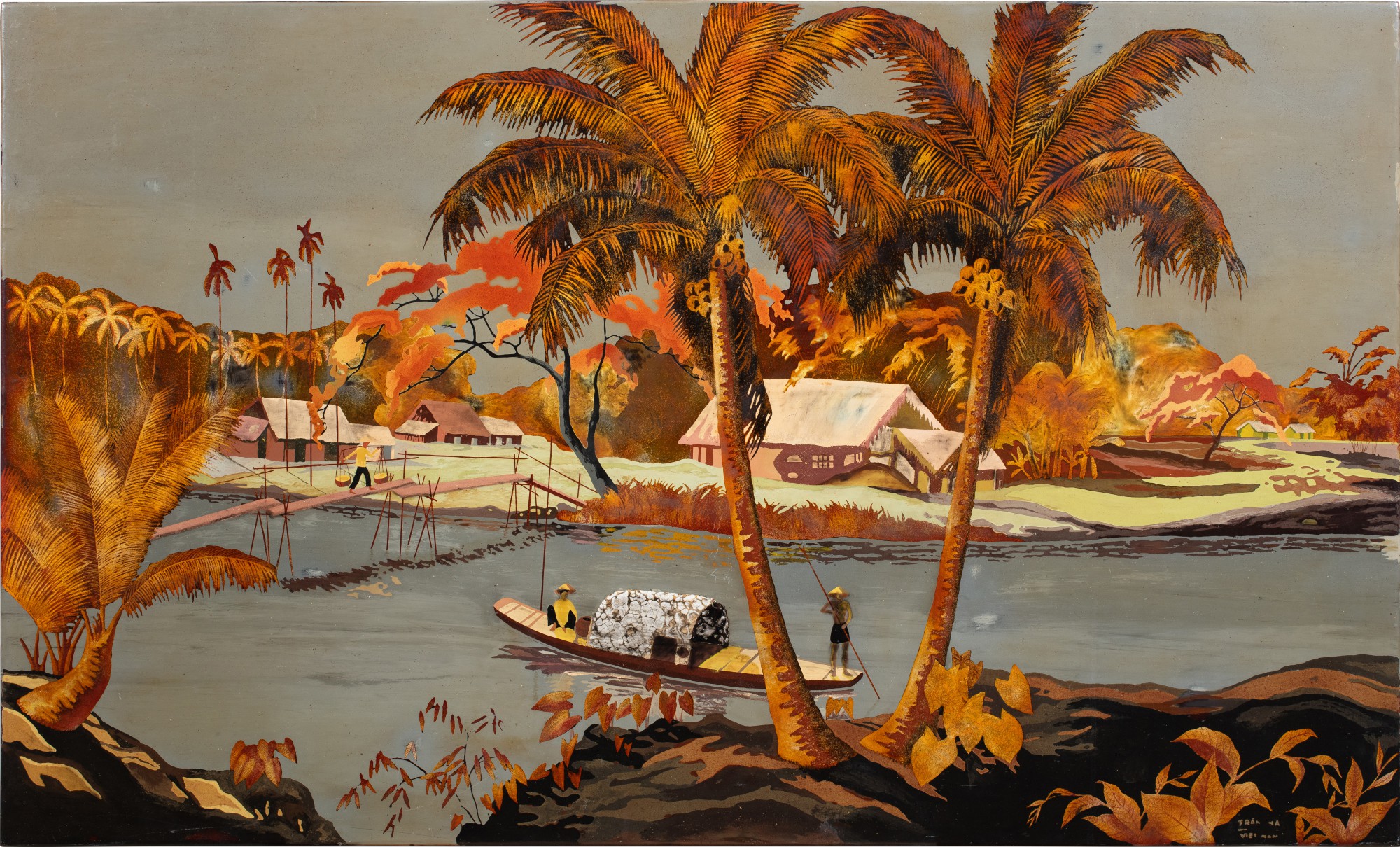
That Van Ha achieved such warmth and narrative clarity within these constraints speaks to an artist of exceptional discipline and vision. His village scenes along riverbanks do not sentimentalize rural Vietnamese life; they observe it with affection and precision, locating dignity in the everyday. For collectors, this documentary quality adds a layer of historical significance that purely abstract or decorative work cannot offer. In the broader context of the Southeast Asian art market, Van Ha occupies a position of genuine distinction.
Auction houses handling Vietnamese art, including those operating in Hong Kong and Singapore as well as specialist rooms focused on Indochinese material, have seen sustained interest in the Ecole des Beaux Arts generation. Artists such as To Ngoc Van, Nguyen Phan Chanh, Bui Xuan Phai, and Mai Trung Thu are frequently cited alongside Van Ha as the pillars of Vietnamese modernism, each bringing a distinct sensibility to the shared inheritance of that remarkable school. Van Ha's particular contribution is his deepening of the lacquer tradition as a medium for landscape and genre painting, making him essential to any serious understanding of how Vietnamese art developed across the mid twentieth century. For collectors approaching Van Ha today, several considerations are worth holding in mind.
Tran Van Ha
陳文河 (1911-1974), 河旁村落
His dated works, particularly those from 1945 and 1960, carry the additional value of historical specificity, anchoring his output to identifiable moments in Vietnamese and regional history. The presence of eggshell inlay in a panel typically signals both a later technical confidence and a more elaborate compositional ambition. Works on wood panel tend to have fared better over time than works on other supports, given lacquer's natural affinity with that substrate. Provenance is, as always with Vietnamese modernism, an important factor; works with clear collection histories traceable through regional auction houses or established Southeast Asian galleries command appropriate confidence from buyers.
Tran Van Ha died in 1974, at the age of sixty three, leaving behind a body of work that has only grown more significant with the passing years. As Vietnam's cultural heritage is reassessed by a new generation of curators, scholars, and collectors both within the country and across the global diaspora, painters like Van Ha are being recognized not as regional curiosities but as genuine participants in the larger story of twentieth century modernism. His ability to take a craft tradition of profound depth and bend it toward the expressive demands of modern painting, without losing the soul of either, is an achievement that deserves the widest possible audience. To acquire a Tran Van Ha is to hold in your hands something irreplaceable: the light of a particular country, caught at a particular moment, by a painter who understood both with rare and lasting grace.