Tony Lewis
Tony Lewis Makes Language Beautifully Fall Apart
Artist Spotlight · The Collection Editorial
There is a particular kind of excitement in contemporary art circles when a young artist from Chicago announces themselves not with noise but with quiet, sustained intelligence. Tony Lewis has been doing exactly that for well over a decade now, and the conversation around his work has only deepened with time. His recent inclusion in major institutional surveys of drawing and contemporary American abstraction has cemented what many collectors and curators have known for years: Lewis is one of the most genuinely original voices working in the United States today. His practice sits at a crossroads that few artists have the conceptual dexterity to navigate, and he does so with a physicality and restraint that feels entirely his own.
Tony Lewis
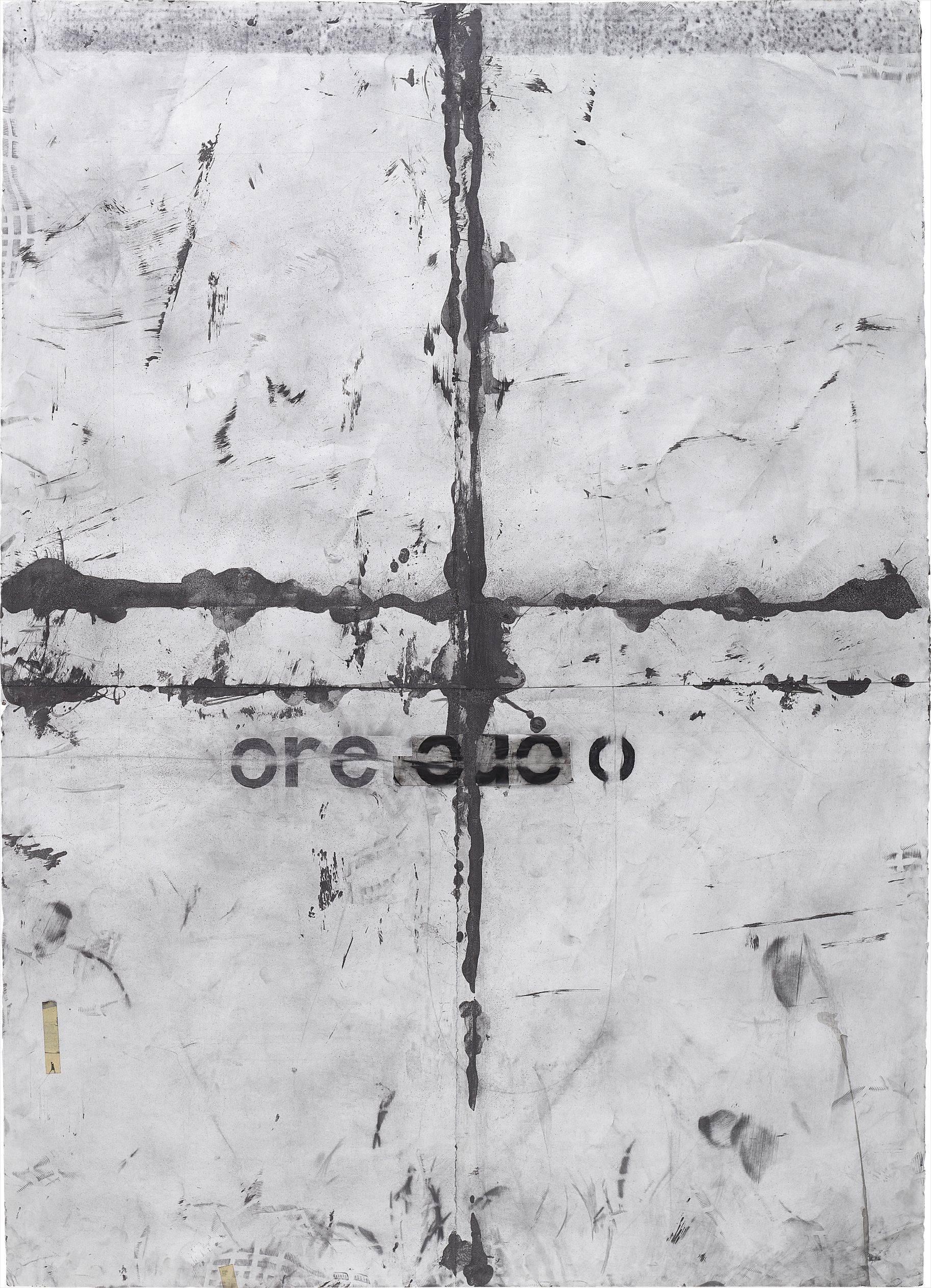
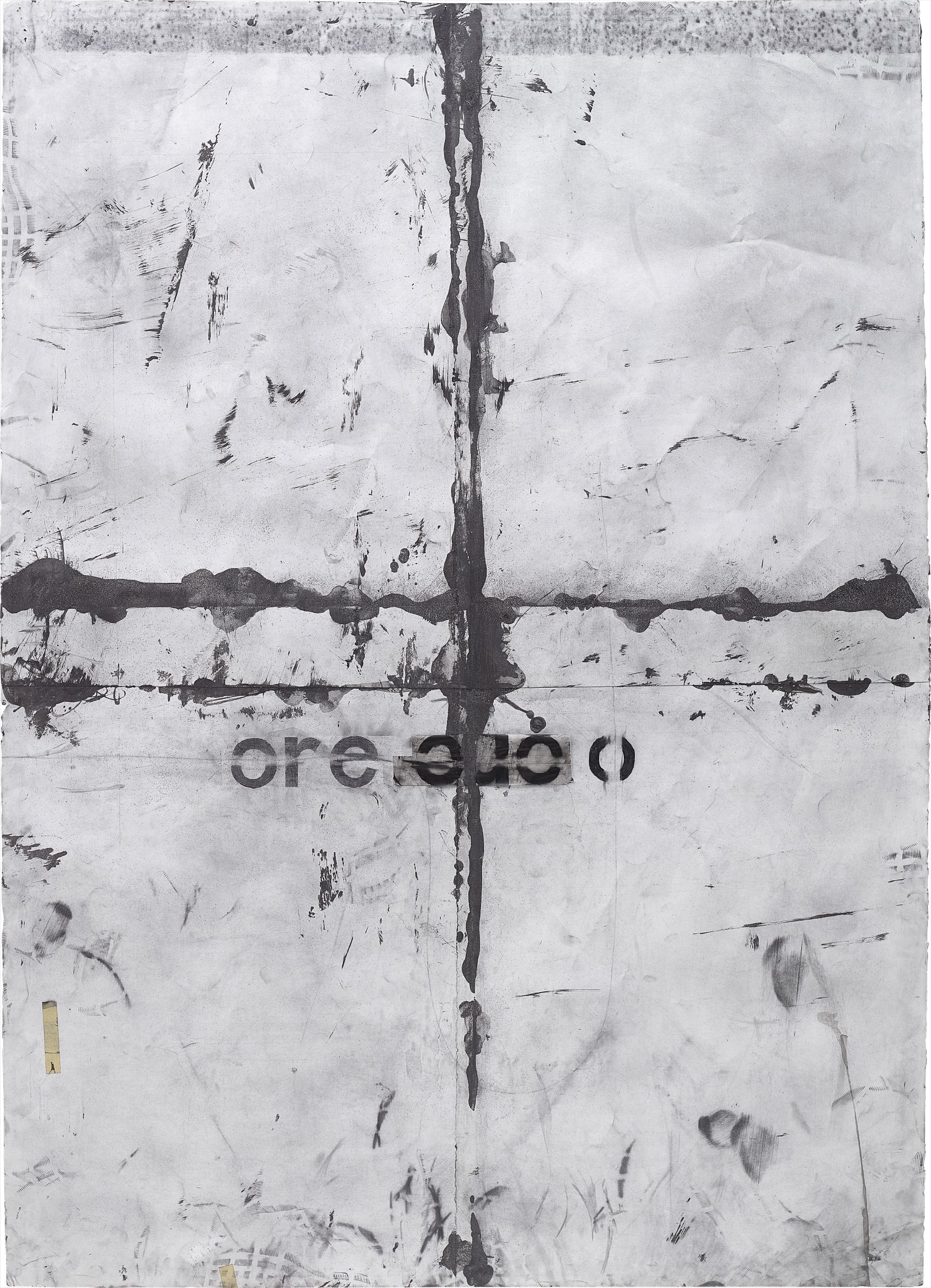
Ore Ero O, 2014
Lewis was born in Chicago in 1986, and the city's particular creative ecology left its mark. Chicago has long nurtured artists who resist easy categorization, a tradition running from the Imagists through to the city's vibrant experimental music and poetry scenes. Growing up in that environment cultivated in Lewis an instinct for work that refuses to settle, that keeps the viewer in productive uncertainty. He went on to study at the University of Illinois at Urbana Champaign, where his engagement with language, text, and the materiality of drawing began to take serious form.
The academic environment gave him the framework, but the questions he was already asking were his own. The development of Lewis's practice has been marked by a commitment to a deceptively simple set of materials: pencil, graphite powder, and paper. Within those constraints he has built an entire visual language. His works on paper, often large in scale and physically imposing despite their intimacy of medium, exploit the tension between inscription and erasure, between what is said and what is withheld.
Tony Lewis
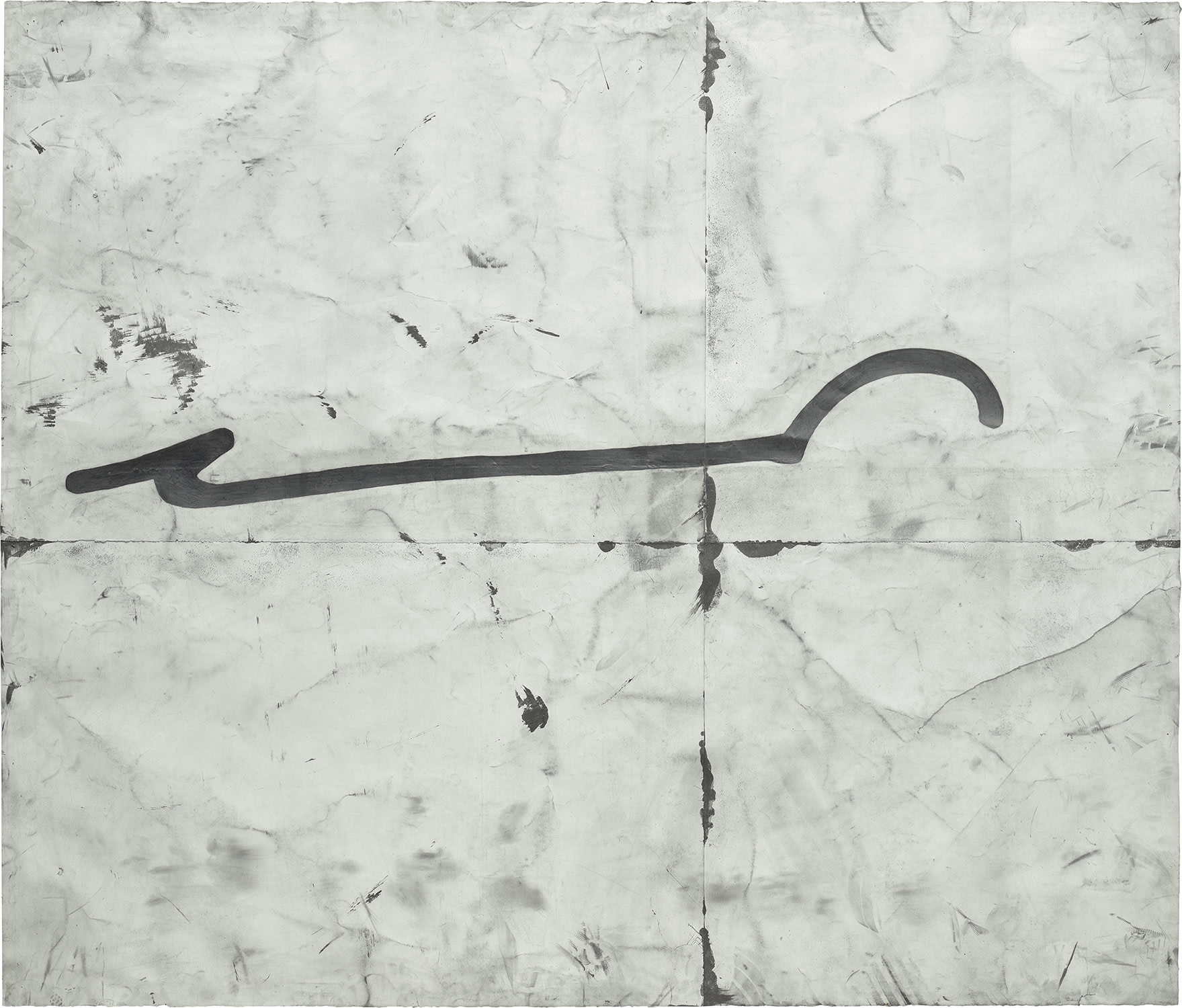
Nomenclature, 2015
Graphite powder, which he applies, smears, and layers, creates atmospheric fields that simultaneously obscure and illuminate the text and marks beneath. The result is a surface that breathes, that seems to be in the act of thinking. It is drawing as philosophical inquiry, and it rewards prolonged looking in a way that very little contemporary work manages. Among the works that best illustrate his achievement, several stand out as touchstones for understanding his vision.
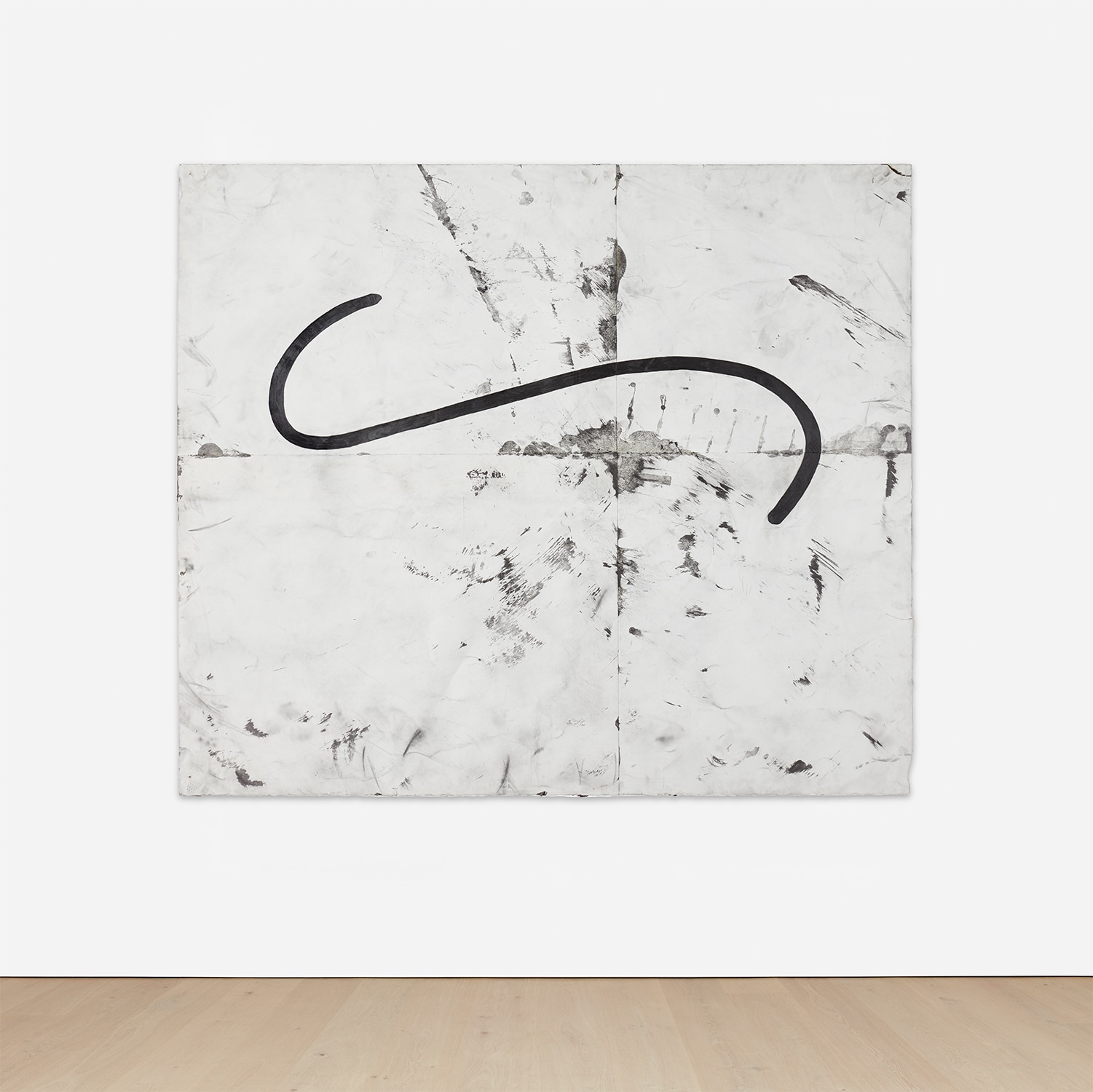
"Wave at Children on School Buses" from 2012 is an early indication of the tenderness and wit embedded within what might otherwise read as austere formal exercises. The title introduces a social gesture, warmth, even sentimentality, while the work itself hovers in abstraction. "Ioo" from the same year, executed in pencil and graphite powder across four sheets of paper, demonstrates his facility with scale and sequence, the way a single unit of meaning can be stretched, fractured, and redistributed across a surface until it becomes something closer to music than language. Works like "Ore Ero O" and "Progression" from 2014, and "Nomenclature" and "Hajoning" from 2015, reveal an artist in full command of his method, each piece a careful negotiation between the readable and the felt.
Tony Lewis
Progression, 2014
"Automatic" from 2015, made in pencil, graphite powder, and tape on four joined sheets, takes its title from the Surrealist tradition of automatism while turning that tradition inside out: where the Surrealists sought to bypass conscious control, Lewis engineers a precise and deliberate opacity. For collectors, the appeal of Lewis's work operates on several levels at once. There is the immediate sensory pleasure of the surfaces themselves, which are genuinely beautiful objects, dense and luminous in equal measure. But there is also the sustained intellectual engagement that his work demands and rewards.
These are not decorative objects, though they hold their own magnificently in any context. They are works that change over time in the viewer's experience, revealing new readings and new resistances. The market for his work has reflected this depth of engagement. Collectors who acquire Lewis are investing in an artist whose conceptual seriousness places him in a lineage that endures.
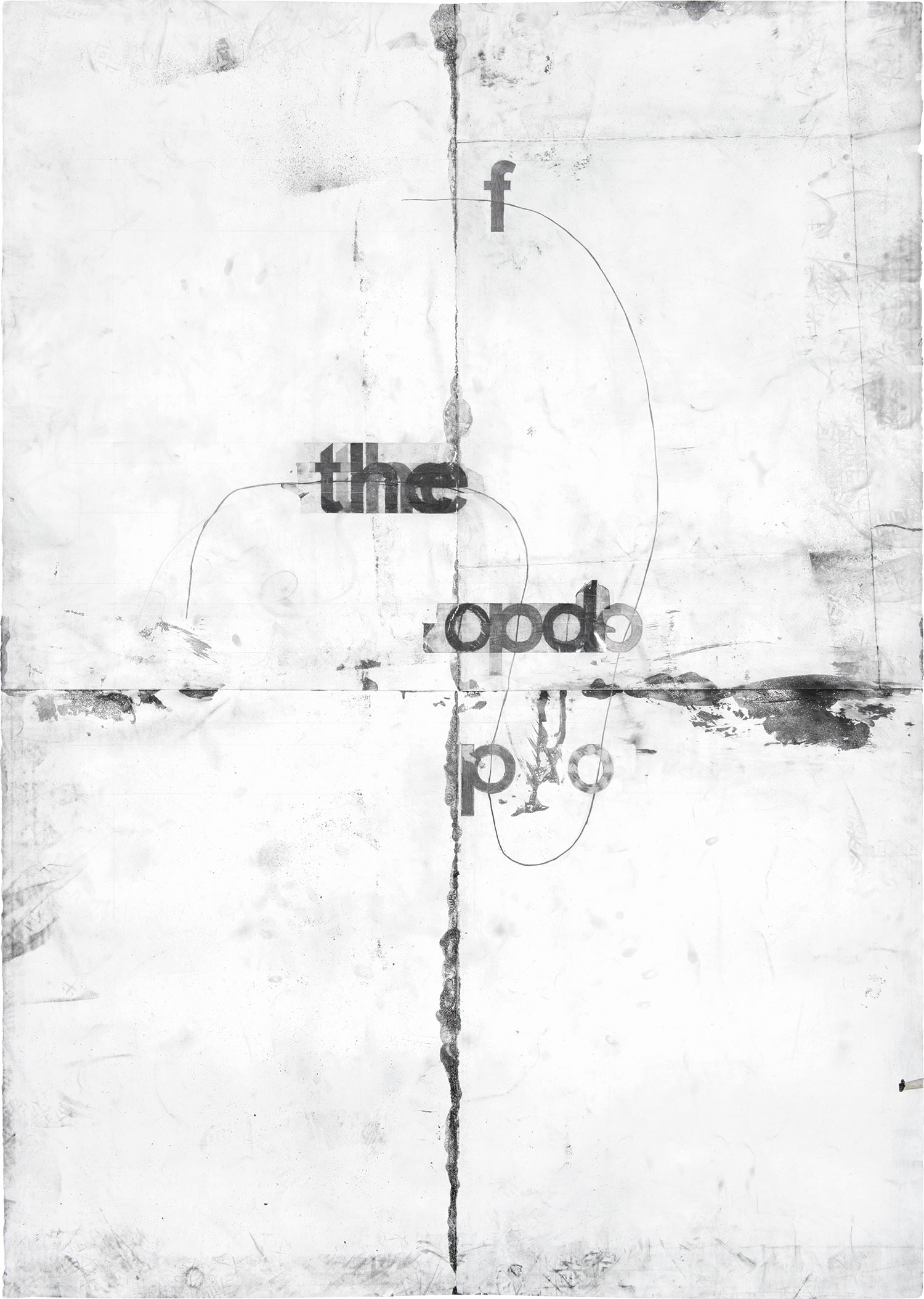
Tony Lewis
Thep Poof, 2013
His works have attracted attention from serious private collections as well as institutional interest, and his gallery relationships have brought his practice to audiences across the United States and internationally. Placing Lewis within the broader landscape of contemporary art, one thinks of artists who have similarly explored the boundaries between language and image, between legibility and abstraction. His practice shares certain concerns with the work of Theaster Gates, a fellow Chicagoan whose engagement with materiality and cultural memory resonates in different registers. One might also consider Christopher Wool, whose text paintings probed the edges of readability well before Lewis came to prominence, or the legacy of Cy Twombly, in whose work handwriting becomes gesture and gesture becomes field.
There are echoes too of the conceptual traditions associated with Lawrence Weiner and On Kawara, artists for whom language was not illustration but substance. Lewis absorbs all of this without being dominated by any of it. His work is in conversation with art history but it speaks in its own voice, one that is distinctly American and distinctly of this moment. What makes Tony Lewis matter now, and what ensures he will continue to matter, is his insistence on the difficulty and the beauty of communication itself.
At a time when language is simultaneously everywhere and increasingly unreliable, when meaning is contested and images are suspect, Lewis makes work that holds those tensions in elegant suspension. He does not resolve the contradictions between clarity and obscurity: he lives inside them, and invites us to do the same. His practice reminds us that the act of making marks, of trying to say something and then half unsaying it, is one of the most fundamentally human things an artist can do. For collectors who want their holdings to reflect the genuine intellectual ambition of contemporary art, Lewis represents exactly the kind of vision that ages into significance.