Tom Anholt
Tom Anholt Paints the World With Tenderness
Artist Spotlight · The Collection Editorial
There is a particular quality of light in Tom Anholt's paintings that stops you mid step. It is the light of late afternoon through a kitchen window, or the soft glow that settles over a garden gathering just before dusk. In recent years, collectors and gallerists across London and beyond have been drawn to this quality with growing urgency, recognizing in Anholt's work something genuinely rare: a figurative painter who manages to make intimacy feel both universal and wholly specific. His rise within the contemporary British painting scene has been one of the more quietly thrilling stories of the past decade, a slow accumulation of devotion from people who encounter his canvases and find themselves reluctant to look away.
Tom Anholt
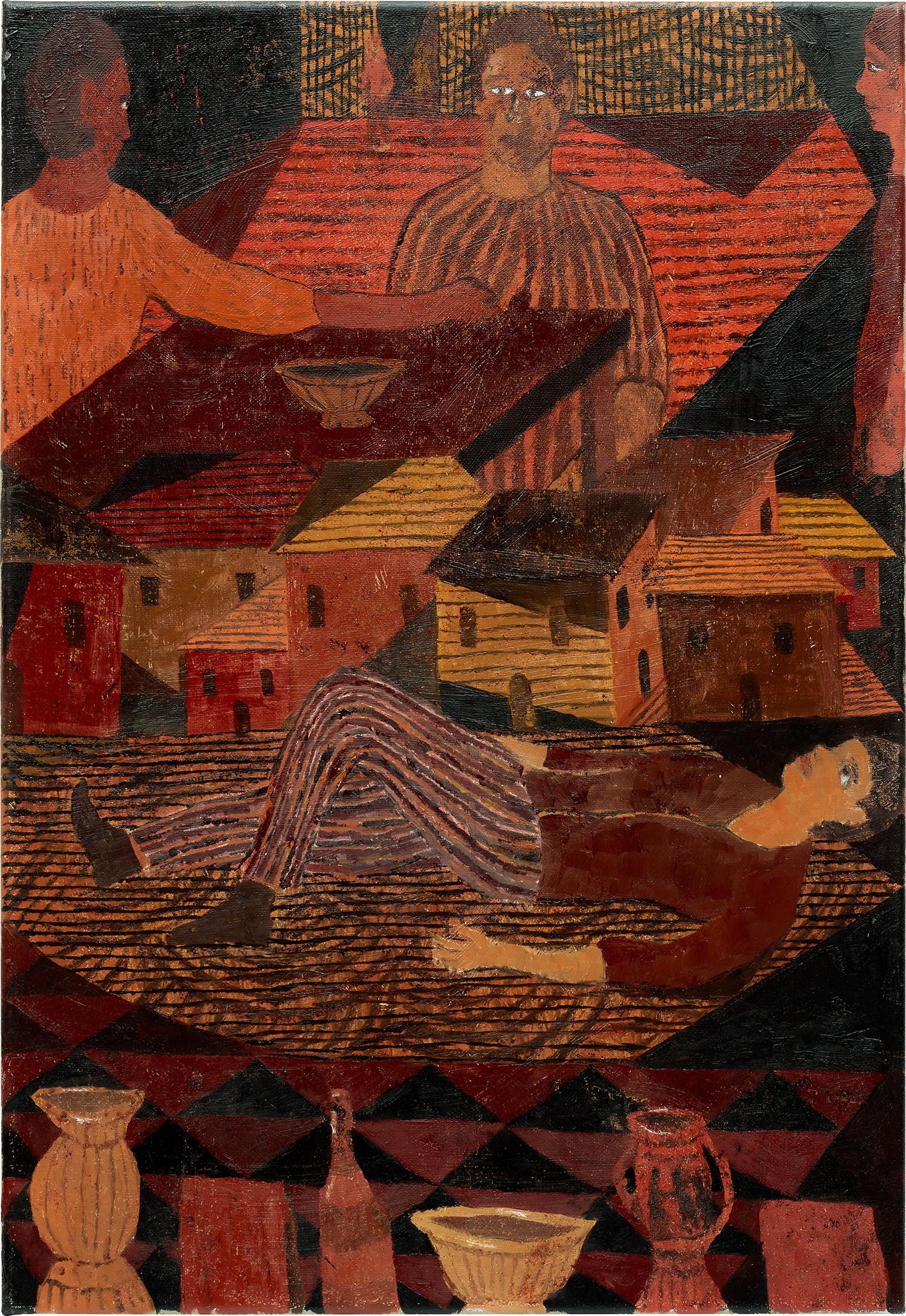
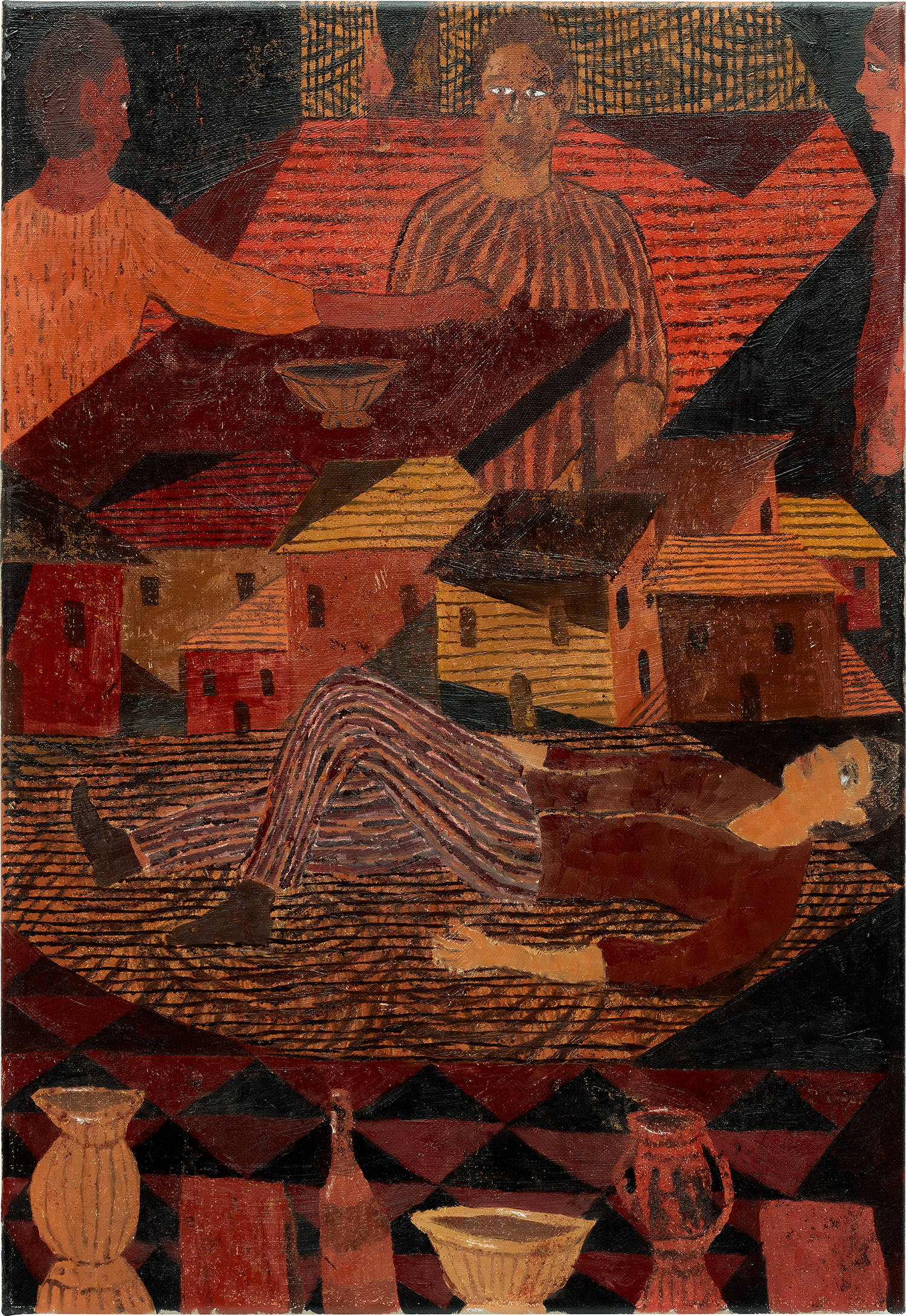
Cousins, 2019
Anholt was born in 1986, and his formation as an artist is rooted in the rich tradition of British figurative painting that stretches from the warm domesticity of Gwen John through to the more emotionally loaded interiors of Peter Doig and the psychological charge found in the best works of Cecily Brown. Growing up in Britain, he came of age during a period when figurative painting was reasserting itself after decades of conceptual dominance, and he absorbed those influences with evident care. The human body, the domestic space, the fleeting arrangement of people in relation to one another: these became the coordinates of his entire practice, and they have remained remarkably consistent even as his technical fluency has grown. His artistic development is marked by a deepening commitment to what might be called emotional archaeology.
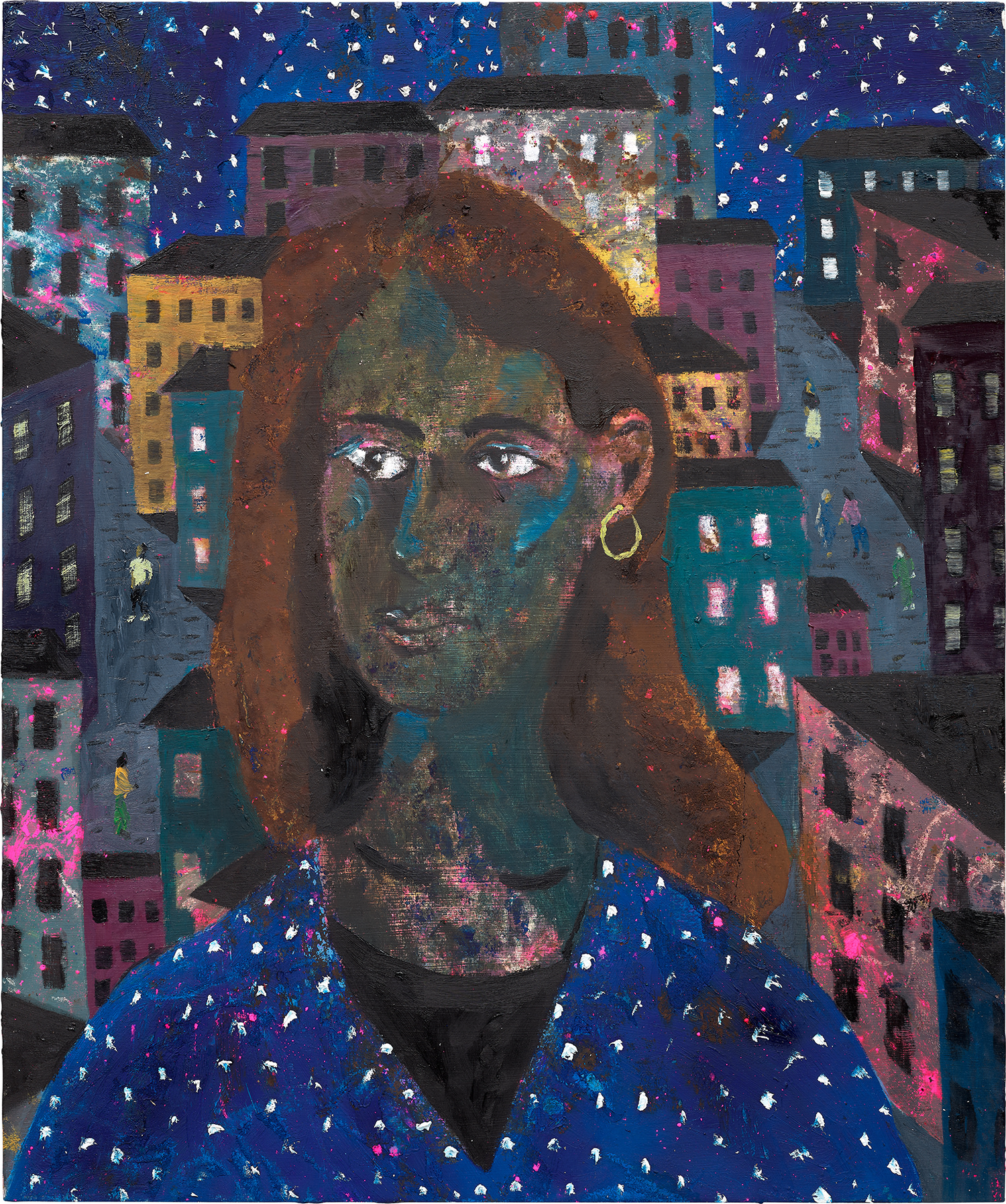
Rather than painting scenes of high drama or social spectacle, Anholt has always been drawn to the quieter registers of human experience: a cousin leaning close during a family gathering, a young woman pausing in a city street with an inner life that the viewer is invited to intuit rather than decode. His brushwork carries the confidence of a painter who has spent serious time with the Old Masters while remaining firmly rooted in the present tense. The surfaces of his oil paintings are richly layered, built up through sessions of reworking and revision that leave visible traces, giving each canvas a material history that mirrors the psychological depth of the subject. Among his most celebrated works are "Cousins," painted in 2019 on linen, and "City Girl," completed the following year on panel.
Tom Anholt
City Girl, 2020
"Cousins" exemplifies Anholt's gift for locating the tender geometry of family bonds: the figures are rendered loosely, almost as impressions, yet they communicate an entire emotional history in their positioning and the quality of attention they pay to one another. Oil on linen is a demanding support, prone to absorbing paint in ways that require constant adjustment, and Anholt's mastery of it speaks to his technical seriousness. "City Girl" shifts the setting outward, placing a solitary female figure within the ambient noise of urban life, and the warmth of his palette holds her steady against the implied pressures of the city around her. Both works demonstrate his ability to hold complexity and simplicity in perfect tension.
From a collecting perspective, Anholt represents a genuinely compelling proposition. His work sits within a broader conversation about the resurgence of figurative painting that has captured significant institutional and market attention over the past fifteen years, placing him in dialogue with painters such as Cecily Brown, Peter Doig, and a younger generation of British and European figurative artists including Lynette Yiadom Boakye and Hurvin Anderson. Collectors who have been following this current closely will recognize in Anholt the same qualities that made those names so desirable early in their careers: technical ambition married to emotional intelligence, and a voice that is distinctly personal rather than derivative. His works on linen and panel hold their surface beauty across years of living with them, which matters enormously to serious collectors.
The question of what to look for when acquiring Anholt is worth addressing directly. Works that feature multiple figures in relation to one another tend to demonstrate his compositional gifts most fully, as the charged space between figures is where his real subject lives. His palette, built around warm ochres, soft greys, and the kind of muted greens that evoke both garden light and memory itself, gives his paintings an atmospheric coherence that makes them adaptable to a wide range of interior environments while retaining their emotional authority. Earlier works on linen in particular have attracted consistent collector interest, and there is every reason to expect that interest will only deepen as his profile continues to grow.
Within the broader arc of contemporary British painting, Anholt occupies a position of genuine significance. He is working in a lineage that includes not only the giants of twentieth century British figuration but also the quieter emotional intelligence of painters like Fairfield Porter in America, whose domestic scenes carried a similar commitment to the unremarkable moment rendered extraordinary. The comparison is not about stylistic imitation but about shared values: the belief that a painting of people in a room, or in a garden, or on a city pavement, can carry as much meaning as the grandest historical composition if the painter brings sufficient attention and care to what is actually happening between human beings. What ultimately makes Tom Anholt matter, now and in the years ahead, is the sincerity of his gaze.
In an art world that sometimes rewards irony and conceptual distance above all else, he has committed fully to the idea that painting can be a vehicle for genuine emotional communication, that the act of looking closely at other people and rendering that closeness in oil on canvas is a serious and necessary endeavour. His canvases do not shout for attention. They earn it, slowly and completely, in the way that the best human relationships do. For collectors fortunate enough to live with his work, that patience is repaid every time they enter the room.