Toby Ziegler
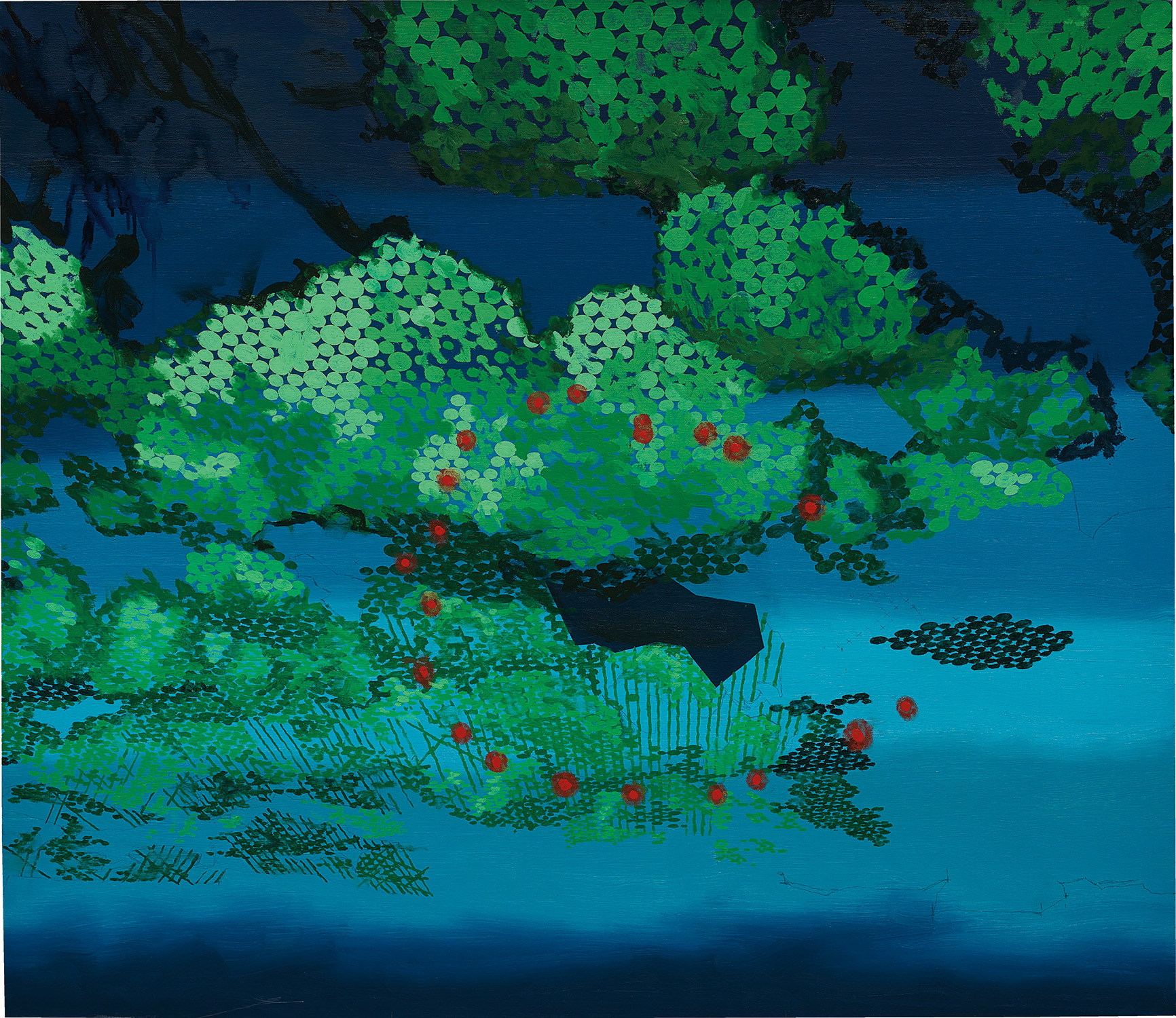
Toby Ziegler Finds Beauty Between Worlds
Artist Spotlight · The Collection Editorial
In the spring of 2023, visitors to Simon Lee Gallery in London encountered something that stopped them mid step: large scale paintings on aluminium whose surfaces seemed to shimmer between the digital and the physical, as though caught in the act of becoming. This was Toby Ziegler's territory, the threshold space where a scanned image meets a brush stroke, where memory and machine collaborate to produce something neither could achieve alone. Over two decades, Ziegler has built one of the most quietly radical practices in contemporary British painting, and the art world has been paying closer and closer attention. Born in London in 1972, Ziegler came of age during a period of tremendous ferment in British art.
Toby Ziegler
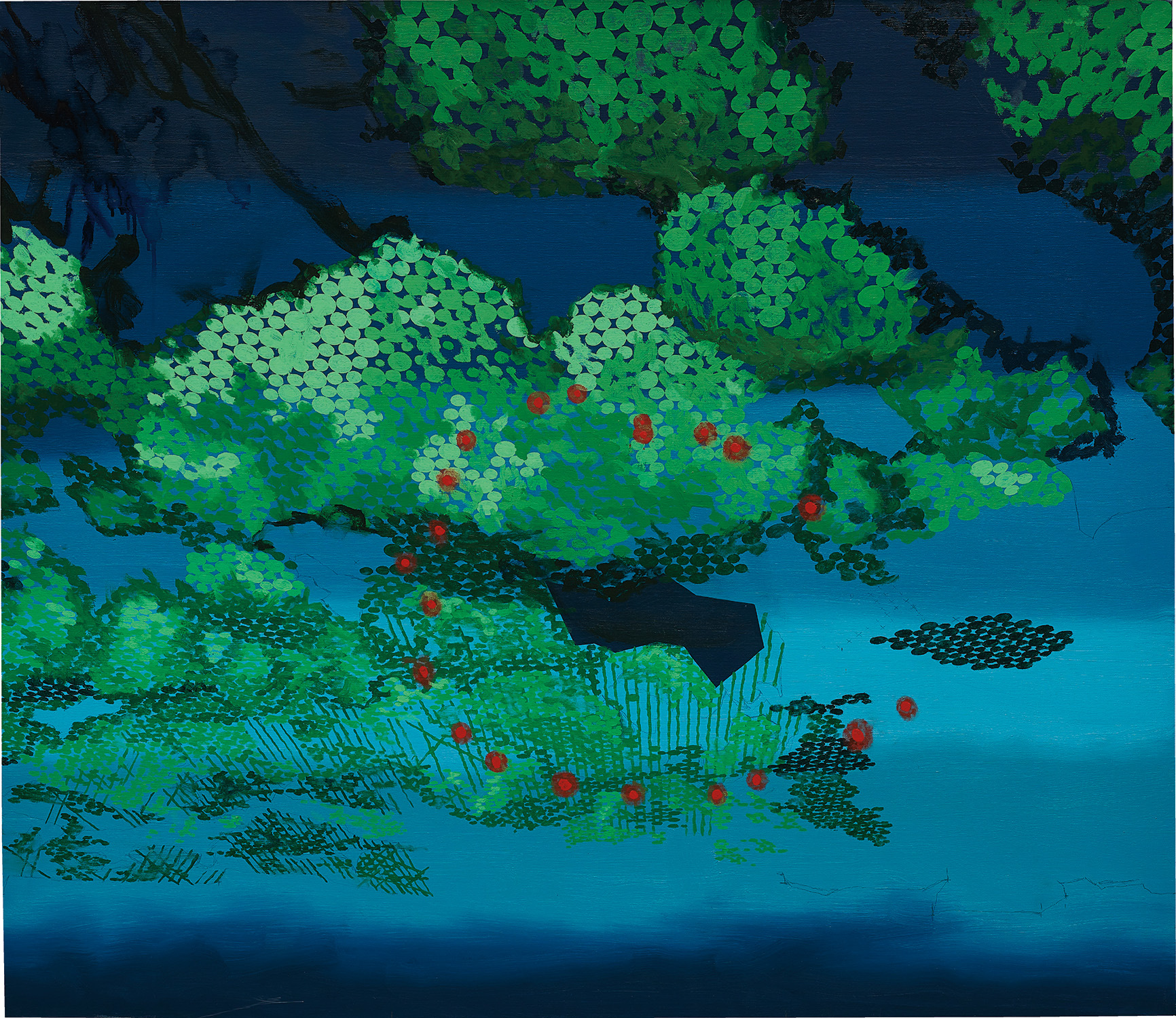
Study for Vitalis, 2007
The YBA generation was reshaping the cultural landscape around him, but Ziegler's interests ran in a different direction, less toward provocation and more toward a sustained, almost philosophical inquiry into how images travel through time and technology. He studied at Central Saint Martins, where the collision of fine art traditions with emerging digital tools made a deep impression on his developing sensibility. That formation, rooted in craft but alive to the possibilities of the screen, would define everything that followed. Ziegler's practice is built around a process that is deceptively simple in description and genuinely mysterious in execution.
He begins with found images or scanned objects, subjects them to repeated cycles of digital manipulation, and then translates the resulting forms onto canvas or aluminium by hand, using tools that are often unconventional and sometimes improvised. The surface that emerges is one of extraordinary tension: it carries the cool geometry of algorithmic transformation but also the warmth and unpredictability of a human hand moving through paint. This is not painting about technology, it is painting that uses technology as a kind of extended memory, a way of processing what we see before we put it into the world. The early 2000s saw Ziegler developing the foundations of this method with real urgency.
Toby Ziegler
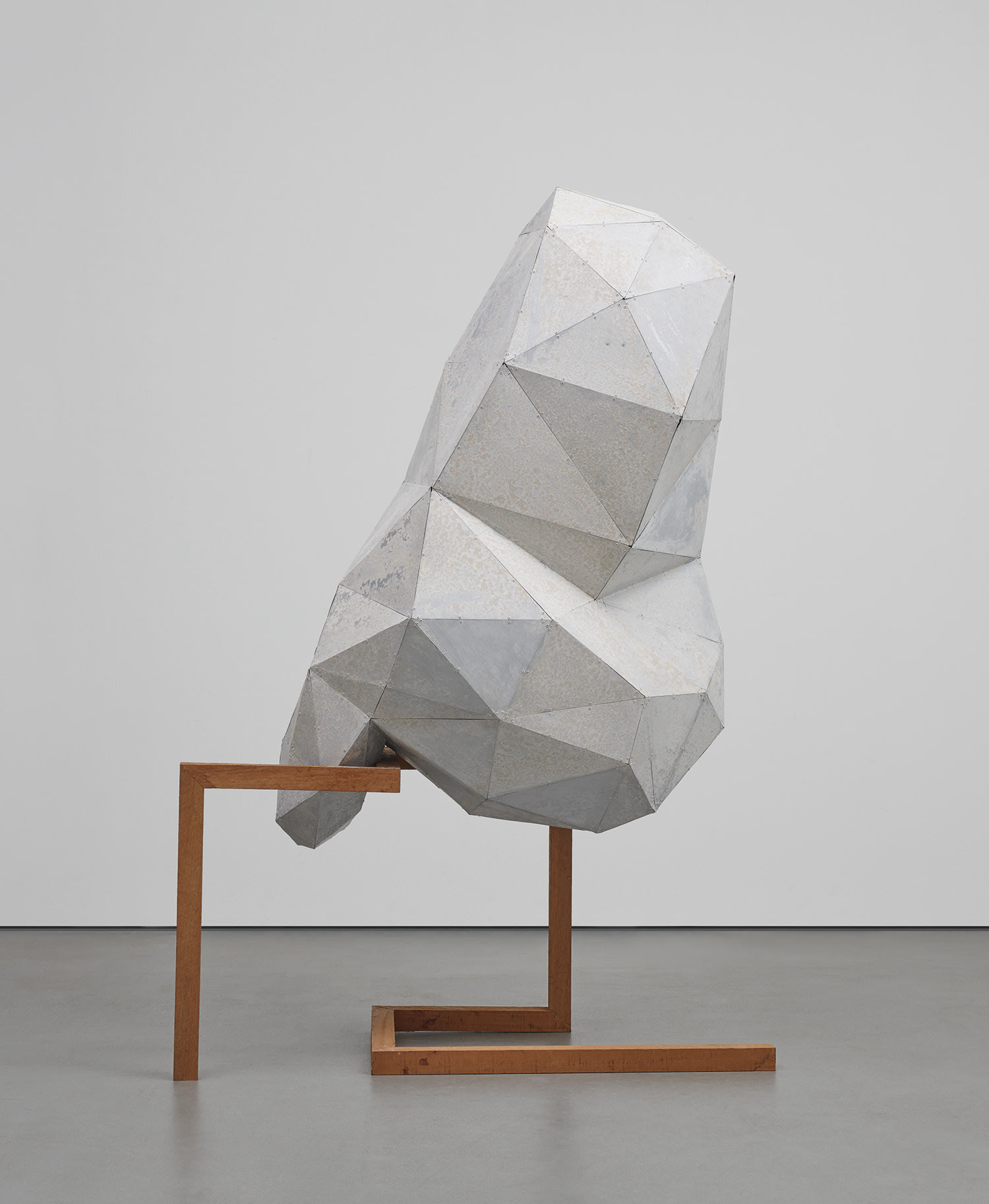
Found Object, 2012
Works such as "Enter Desire" from 2005, an ambitious three part painting on Scotchlite, demonstrated his early willingness to work with industrial and reflective materials that complicate the viewer's relationship to the surface. Scotchlite, a retroreflective material more commonly found on safety clothing and road signage, transforms radically depending on the light and angle at which it is viewed, a quality that aligned perfectly with Ziegler's preoccupation with how seeing itself is never neutral. "D.i.
v.o.r.c.
Toby Ziegler
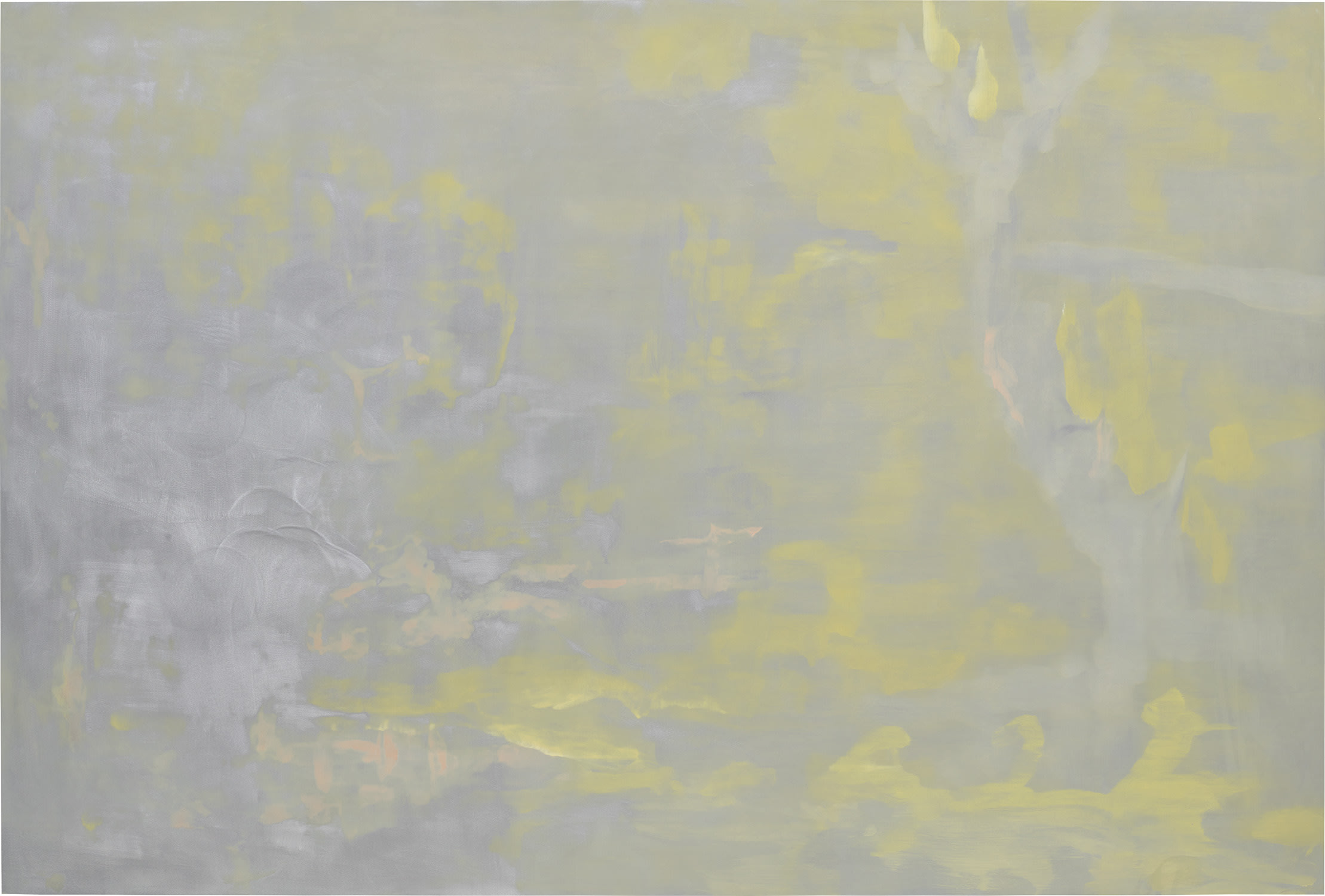
Cotton Rich Panic, 2013
e" from the same year confirmed that he was already thinking in series and in language, using titles not as labels but as conceptual provocations that reorient the viewer's encounter with the image. "Study for Vitalis" from 2007 represents a pivotal moment, the oil and graphite on canvas revealing a surface that feels like an archaeological recovery, as though something once known is being carefully, imperfectly reconstructed from fragmentary data. By the early 2010s, Ziegler had made aluminium his signature support, a choice that is rich with meaning. Aluminium is industrial and reproducible but also delicate and responsive; oxidised, it develops a patina that speaks to time, weather, and the chemistry of exposure.
Works such as "Found Object" from 2012, which pairs oxidised aluminium with wood, and "The Cripples (1)" from the same year, show him pushing the material into sculptural territory, blurring the line between painting and object with characteristic confidence. "Cotton Rich Panic" from 2013, oil on aluminium, is among his most arresting achievements: the surface holds colour in a way that feels both ancient and absolutely contemporary, and the title injects a note of wry psychological unease that enriches the looking. "Self love thus push'd to social" from 2015, a two part work in oil on aluminium, draws its title from Alexander Pope, signalling the deep literary and historical consciousness that runs beneath even the most formally abstract of Ziegler's compositions. For collectors, Ziegler's work offers something genuinely rare: a coherent, evolving body of work that rewards sustained attention and that sits comfortably in dialogue with both the history of abstraction and the most urgent questions of our digital present.
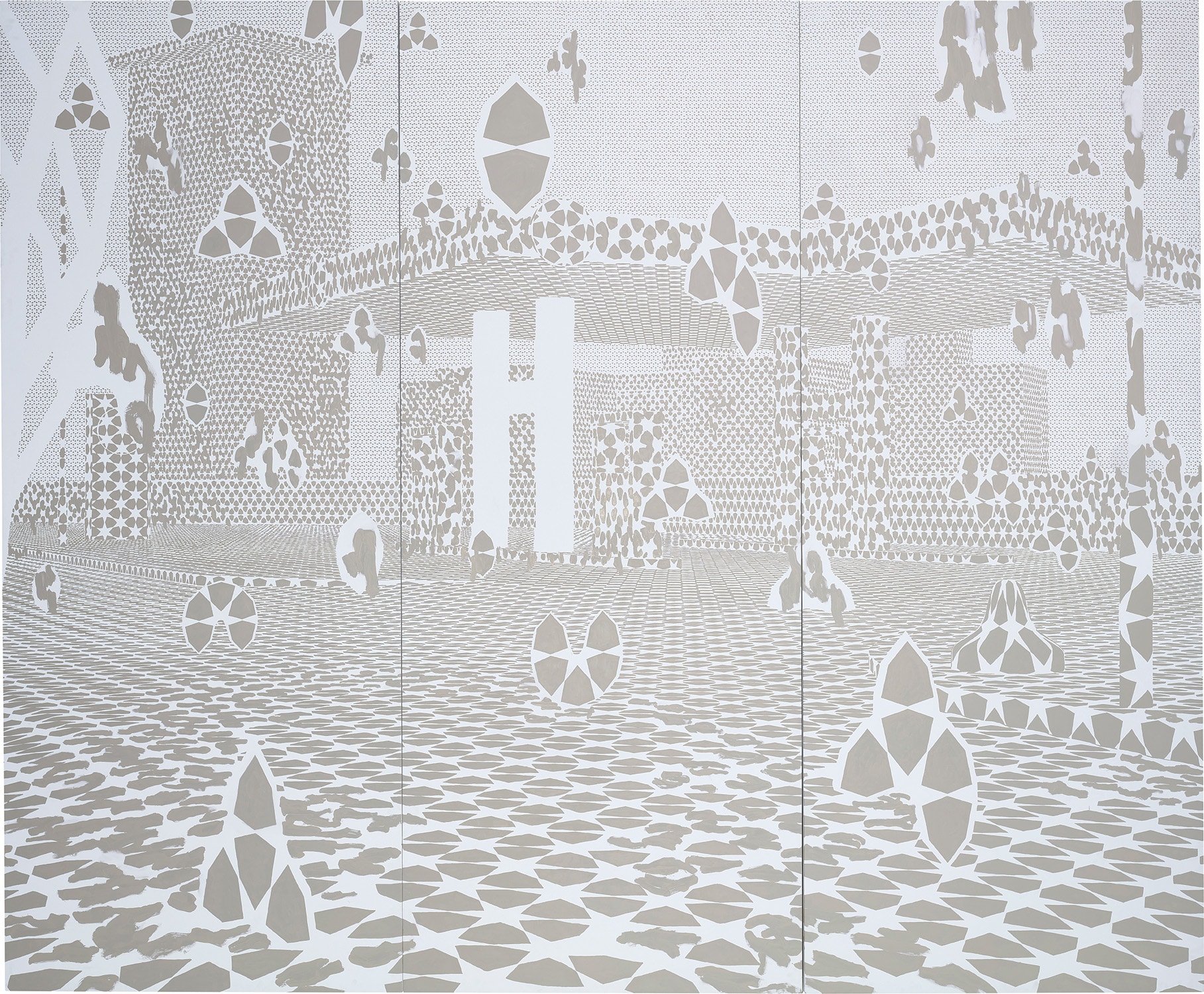
Toby Ziegler
Enter Desire, 2005
His practice connects meaningfully to artists such as Wade Guyton, who also works at the intersection of digital process and painterly surface, and Gerhard Richter, whose lifelong investigation of photography and painting as competing and complementary systems of representation Ziegler clearly holds in mind. There are also echoes of Christopher Wool in Ziegler's use of language within titles as a destabilising force, and of Thomas Houseago in his willingness to move between media without apology. What distinguishes Ziegler is the particular quality of his surfaces, which manage to feel simultaneously worked and arrived at, as though the image has been waiting in the material all along. The market for Ziegler's work has grown steadily and intelligently.
His primary market relationship with Simon Lee Gallery, with spaces in London and Hong Kong, has ensured that his work reaches sophisticated international collectors while maintaining the kind of curatorial seriousness the work demands. Works on paper, such as the ink on paper "Equivalents for Megaliths 7" and the inkjet collage "...good the doom... (2nd study)" from 2009, offer collectors a way to live with his thinking at a more intimate scale, and they are among the most searching works he has produced.
For those entering his practice for the first time, the aluminium works from 2012 onward represent the most fully realised expression of his vision and the strongest long term investments in both artistic and financial terms. What Toby Ziegler has built over more than twenty years is a practice of genuine consequence. He has found a way to make painting feel necessary again by asking it to carry the weight of our mediated experience, all the screens and scans and compressions through which we now encounter the world, without surrendering any of its sensory and material richness. In a cultural moment saturated with images and anxious about their meaning, his work insists that looking carefully still matters, that the hand and the eye and the algorithm can produce something together that none of them could produce apart.
That is a significant achievement, and it is one that will only grow in importance as the questions he has spent his career asking become ever more central to how we understand ourselves.