Tina Barney
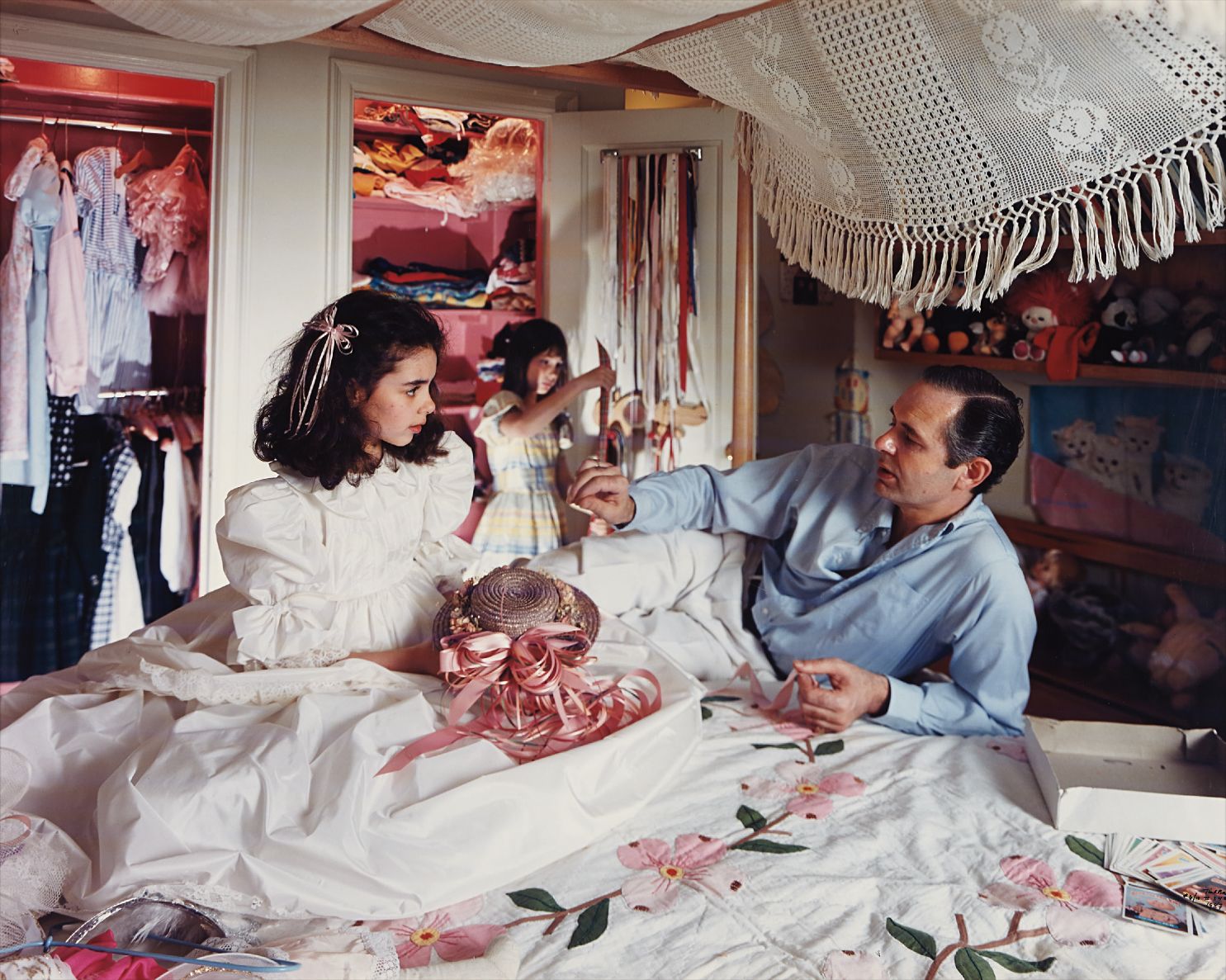
Tina Barney: Life Lived in Full Color
Artist Spotlight · The Collection Editorial
“I photograph people I know. I am one of them. I can get close to them in ways that no one else can.”
Tina Barney, interview with Janet Malcolm
There is a moment in Tina Barney's photograph "Jill and Polly in the Bathroom" that stops you cold. Two women occupy a tiled domestic space with the unselfconscious ease of people who have never questioned their place in the world, yet something in their body language, in the way they orbit each other, suggests a whole architecture of feeling just beneath the surface. This is what Barney does better than almost anyone working in photography today: she makes you feel the weight of a life, the texture of belonging, the quiet electricity of people who know each other too well. Her work has found renewed appreciation in recent years as museums and collectors alike have returned to questions of class, intimacy, and the social performance of wealth, subjects that feel more urgent now than ever.
Tina Barney
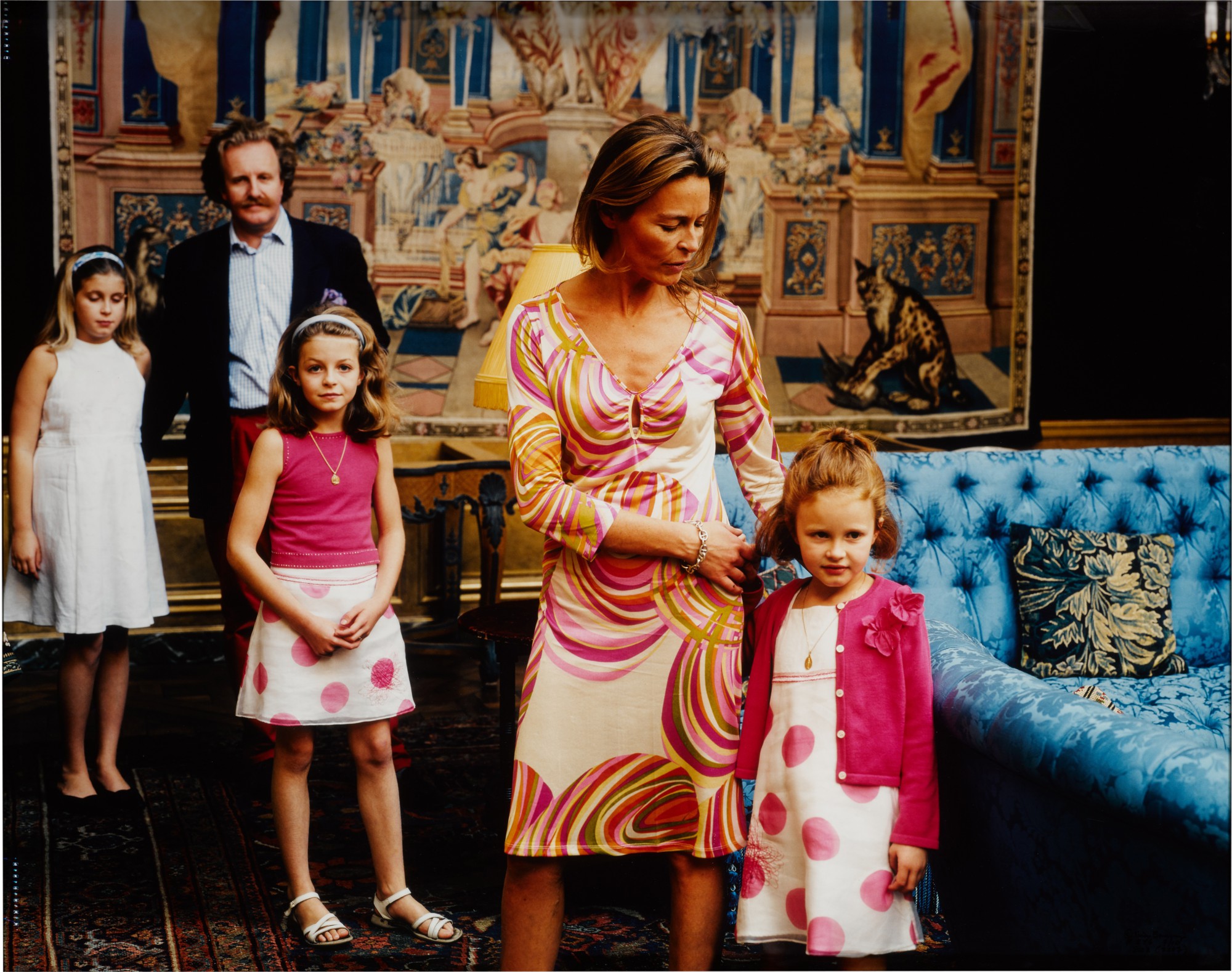
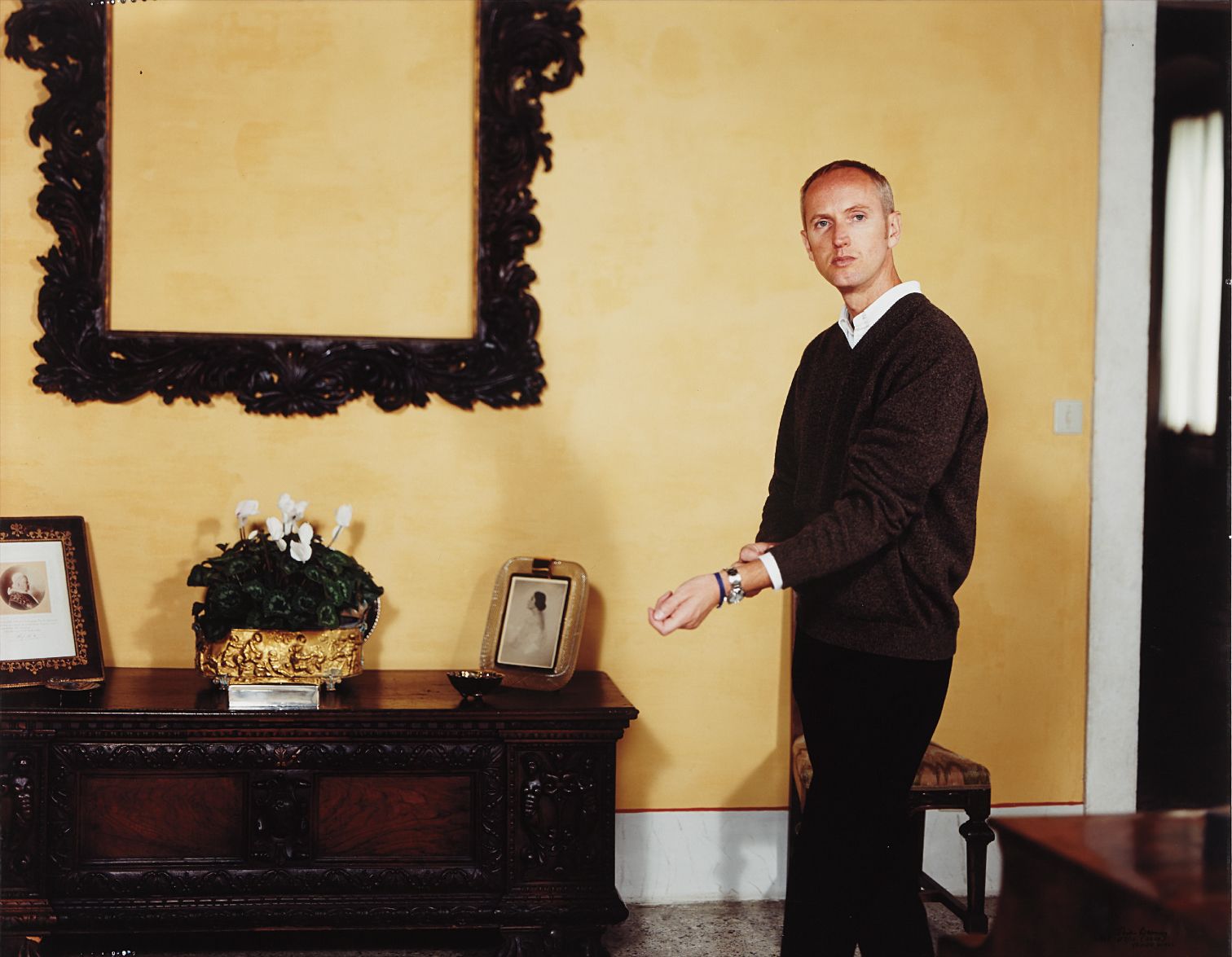
The Daughters (from The Europeans)
Barney was born in 1945 into the very world she would spend decades photographing. Raised in the patrician atmosphere of New York and New England, she grew up surrounded by the rituals, the inherited objects, and the particular emotional codes of the American upper class. She came to photography relatively late, beginning her serious practice in the late 1970s after studying at the Sun Valley Center for the Arts and Humanities in Idaho. This unconventional path, outside the traditional art school circuit, gave her an outsider's analytical eye even as she remained an insider to her subject matter.
That productive tension between intimacy and observation became the engine of her entire practice. In the early years of her career, Barney worked with a large format camera, a deliberate and considered choice that shaped everything that followed. The large format process is slow and collaborative. Subjects must hold still, must consent, must in some sense participate in their own portrayal.
Tina Barney
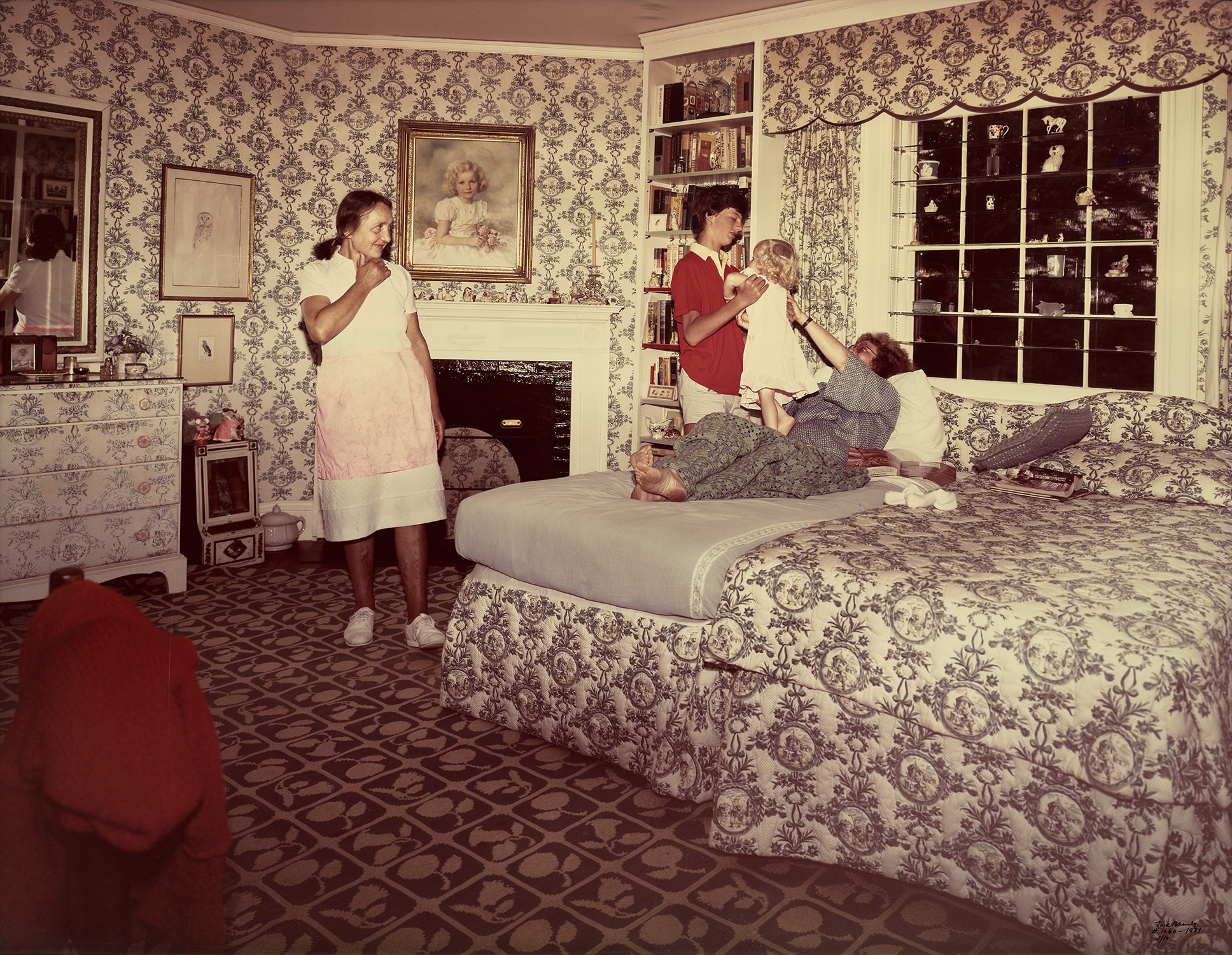
The Portrait
This is why Barney's photographs feel neither purely candid nor purely staged. They exist in a third space, somewhere between documentary truth and choreographed fiction, between a family snapshot and a painted tableau. She began exhibiting in the early 1980s and quickly attracted attention for the sheer scale and chromatic richness of her prints, chromogenic works that could span several feet and fill a room with the warmth and density of an Old Master painting. Her breakthrough came as her photographs entered the collection of major institutions including the Museum of Modern Art in New York and the Smithsonian American Art Museum.
“The camera is a license to be present in a way that you normally would not be allowed to be.”
Tina Barney
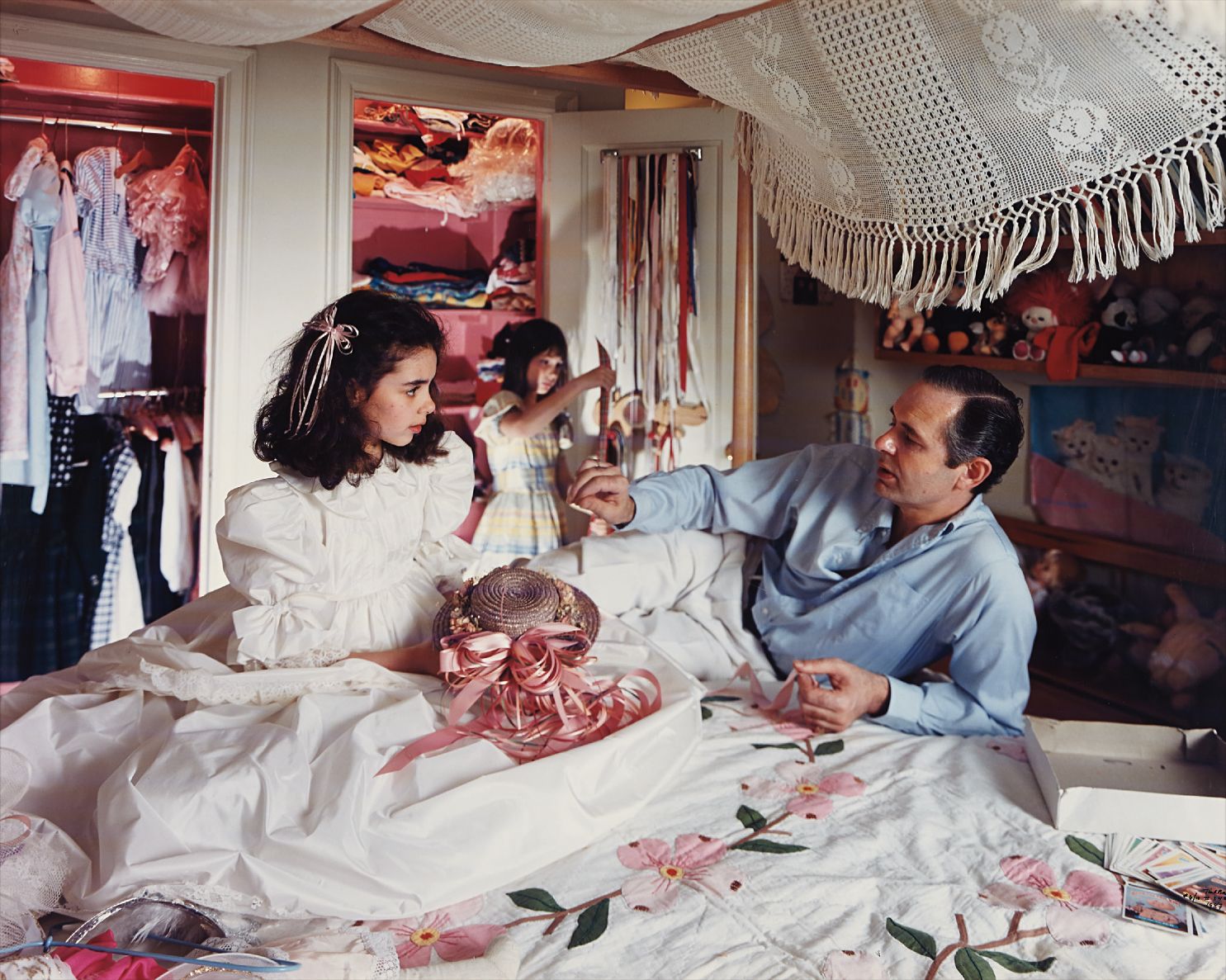
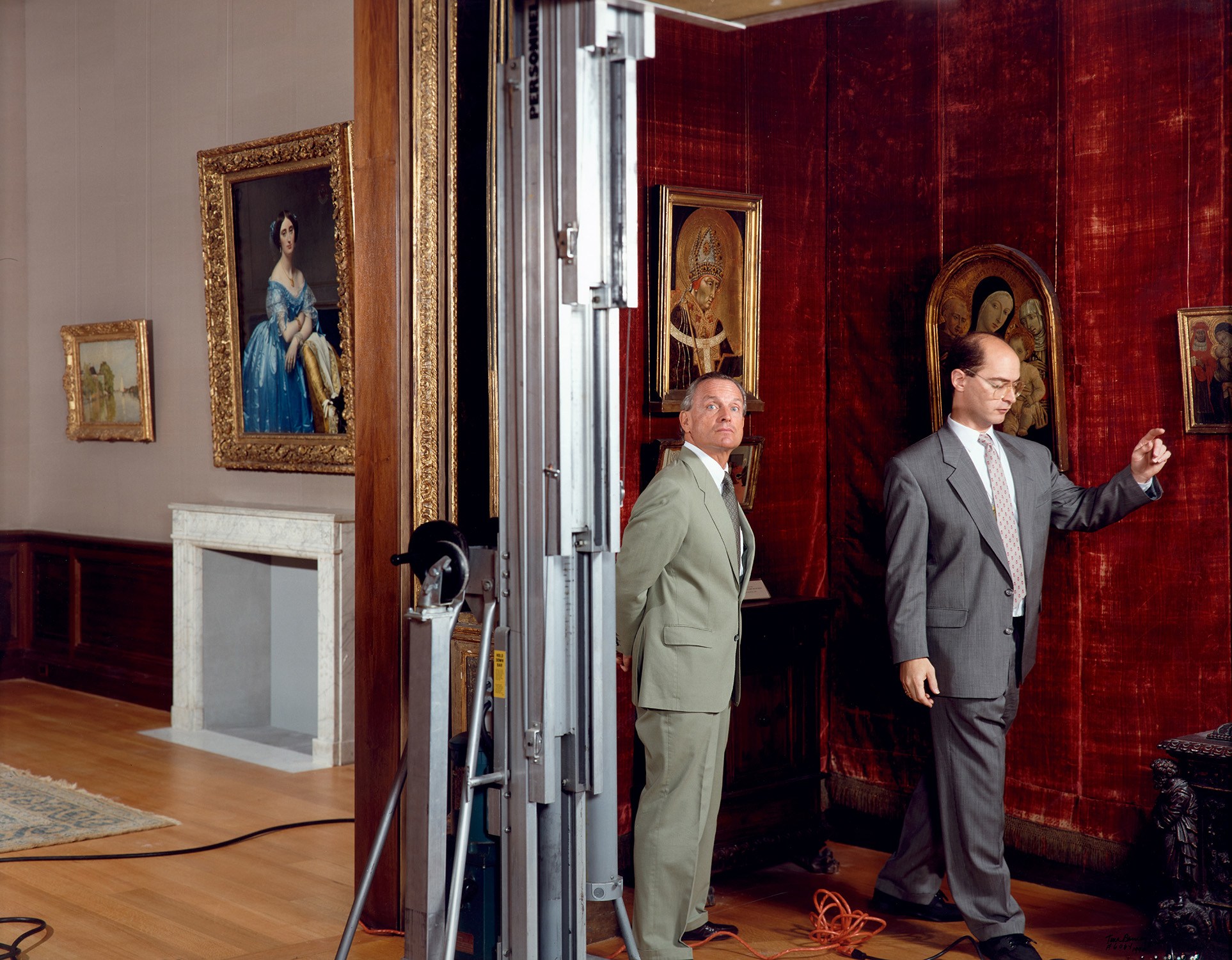
Works like "The Portrait" and "The Trustee and the Curator" announced an artist thinking seriously about what it means to depict social class from the inside. "Marina's Room" is perhaps the most celebrated example of her domestic interiors, a work that rewards long looking with its layered accumulation of objects, patterns, and personality. The room itself becomes a kind of self portrait of its occupant, every surface a declaration of taste and inheritance. "The Yellow Wall" achieves something similar through color alone, the saturated ground organizing the figures within it into something approaching a modern history painting.
Tina Barney
Marina's Room
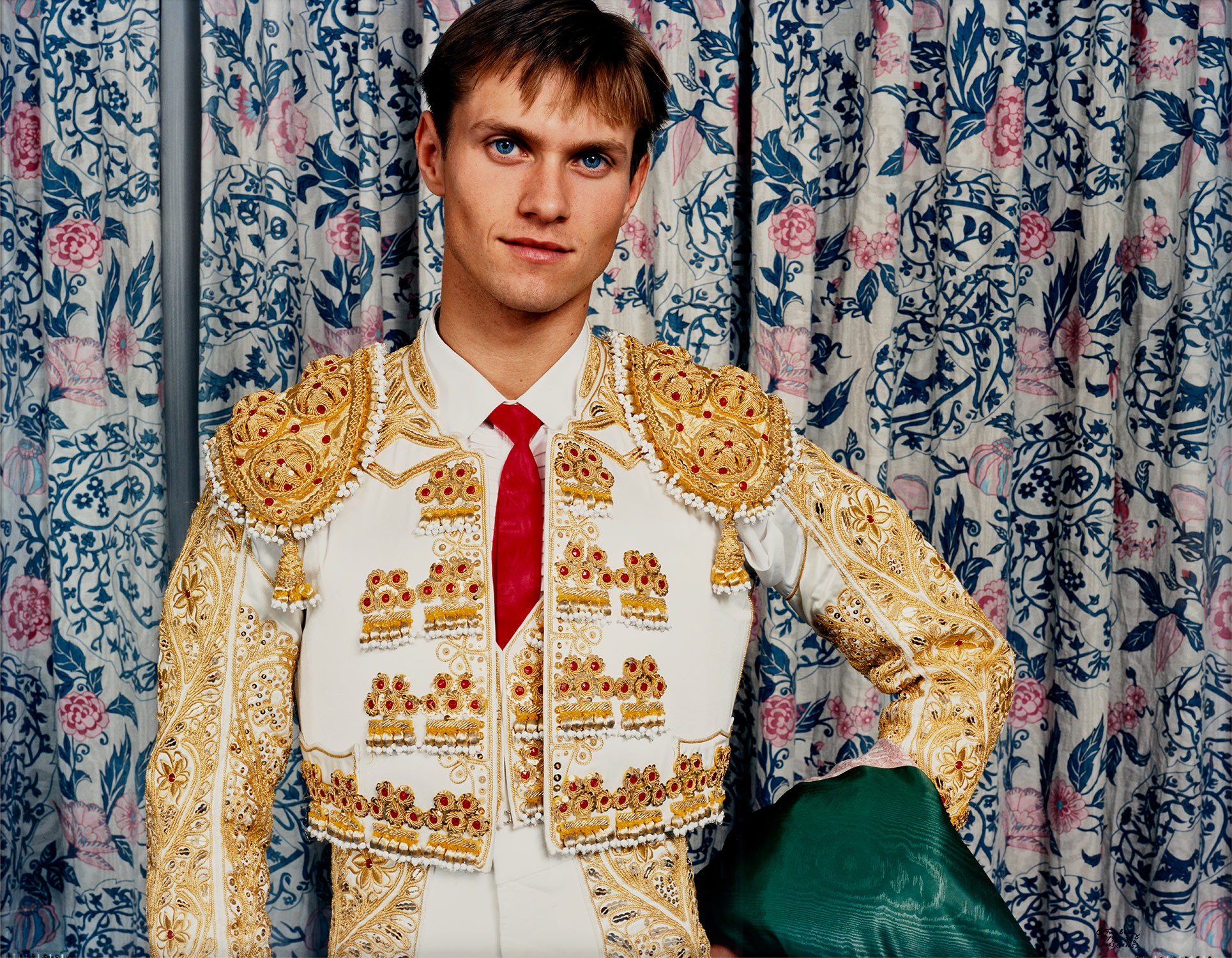
These works are not merely documents; they are arguments about how we construct identity through the spaces we inhabit. In the 2000s, Barney expanded her scope significantly with her Europeans series, for which she traveled to document aristocratic families across the continent. Works such as "The Daughters" brought her signature approach to bear on the particular textures of European inherited culture, finding there both the familiar rhythms of class performance and something more melancholy, more aware of historical weight. "The Matador," printed in 2005, exemplifies this period: theatrical, formally complex, and charged with a sense of ritual that feels both ancient and entirely contemporary.
The Europeans series confirmed what her American work had long suggested: that Barney is not simply a chronicler of one social stratum but a genuine philosopher of how human beings use space, dress, and ceremony to tell stories about who they are and who they wish to be. For collectors, Barney's work represents one of the most compelling propositions in the secondary market for contemporary photography. Her chromogenic prints, many flush mounted to aluminum, have a physical presence and a surface quality that reproduce poorly and reward the experience of the actual object. Works from her core American period, particularly pieces featuring recurring subjects like Jill and Polly, carry significant art historical resonance as part of a sustained and coherent body of work.
Tina Barney
The Matador
"Beverly, Jill and Polly" and "The Reception" are examples of the kind of multi figure compositions that demonstrate her full command of color, space, and psychological nuance. Collectors drawn to photographers such as Larry Sultan, whose work similarly examined the domestic lives of a specific social world, or to the staged intimacy of Philip Lorca diCorcia, will find in Barney a natural and deeply rewarding companion. Barney occupies a singular position in the history of photography, sitting at the intersection of the social documentary tradition of the mid twentieth century and the staged, theatricalized photography that came to define the 1980s and 1990s. She shares something of the sociological ambition of Richard Avedon's later portraiture and something of the painterly seriousness of Jeff Wall, but her particular subject matter and her insider's access give her work an authenticity that is entirely her own.
At a moment when culture is reckoning seriously with questions of inherited privilege, economic stratification, and the aesthetics of wealth, her photographs feel not like relics of a vanished world but like living documents that speak directly to the present. Tina Barney has spent nearly five decades building one of the most coherent and emotionally intelligent bodies of work in contemporary photography. Her images ask us to look carefully at people who are accustomed to being seen only in a certain way, and to find in them not just the familiar markers of class but the full complexity of human life: love, tension, boredom, tenderness, and the strange comfort of ritual. For collectors who value work that deepens with time and continues to generate new meaning, her photographs represent not just a sound acquisition but an invitation into a world of inexhaustible richness.
Featured Works
Explore books about Tina Barney
Tina Barney: Theater of Manners
Russell Ferguson
Tina Barney: Photographs 1975-2015
Tina Barney
Tina Barney: The Europeans
Tina Barney
Tina Barney: Photographs
Tina Barney
Tina Barney: Photographs of Theater and Cinema
Tina Barney
Tina Barney: La Famiglia
Tina Barney