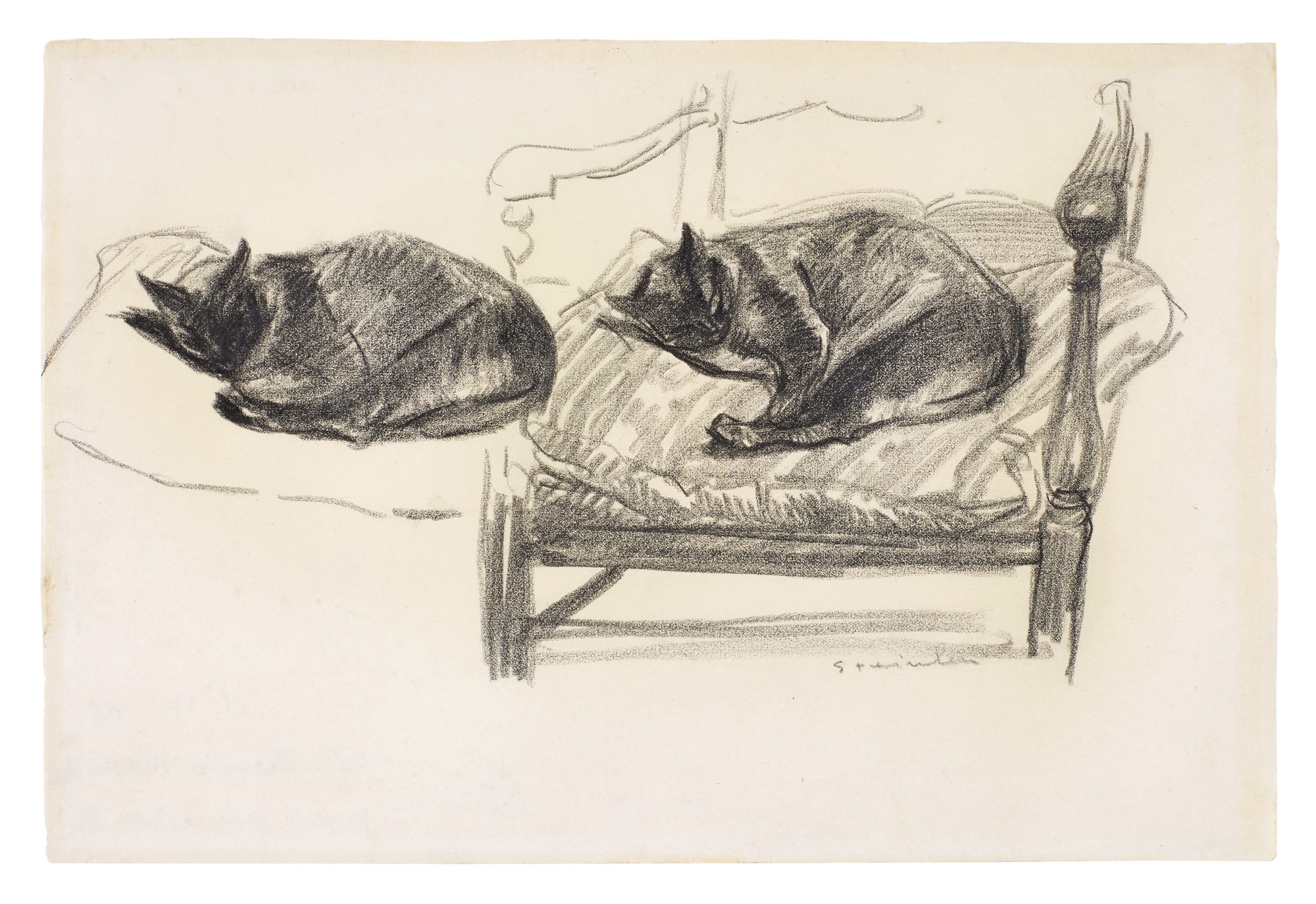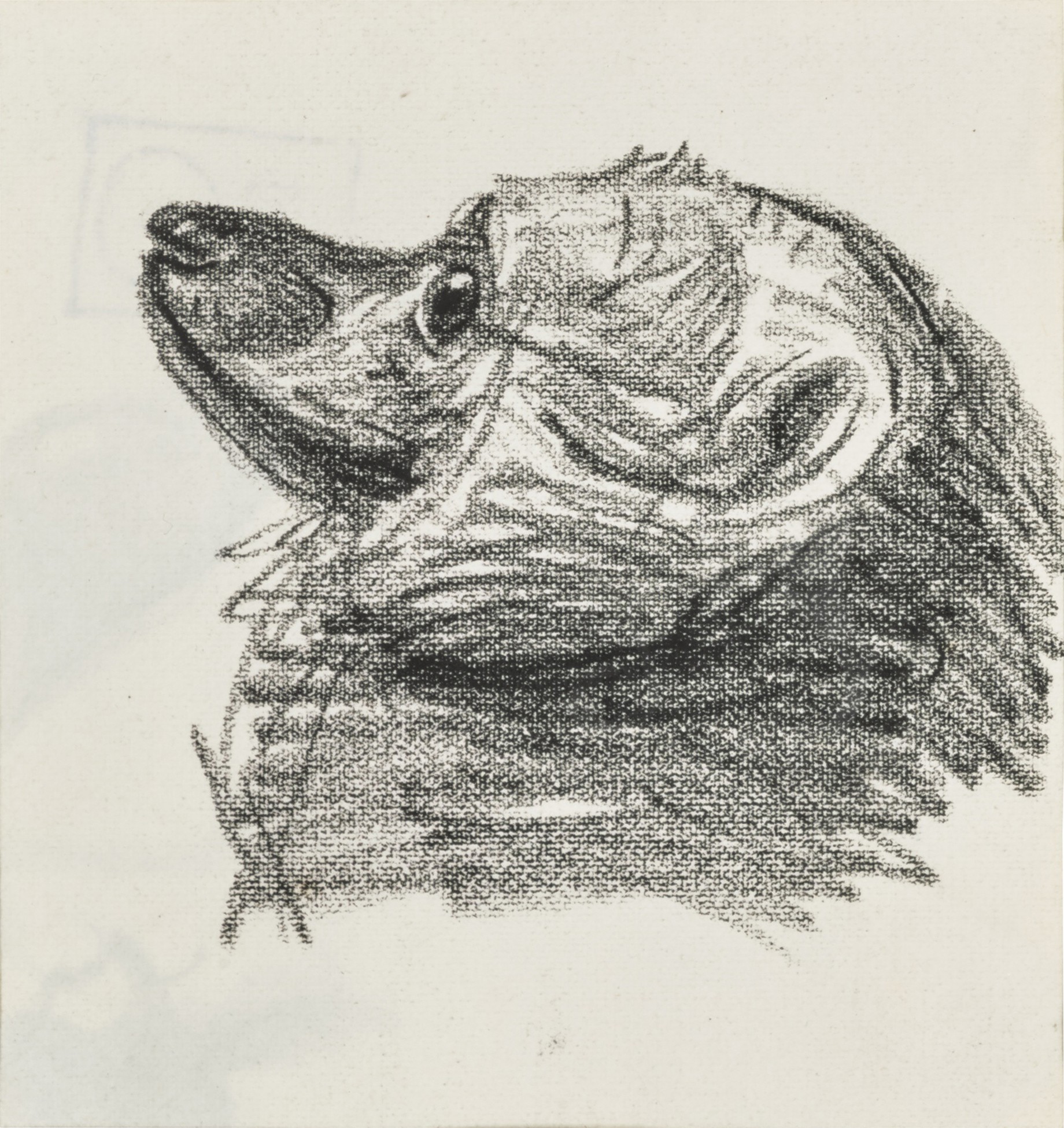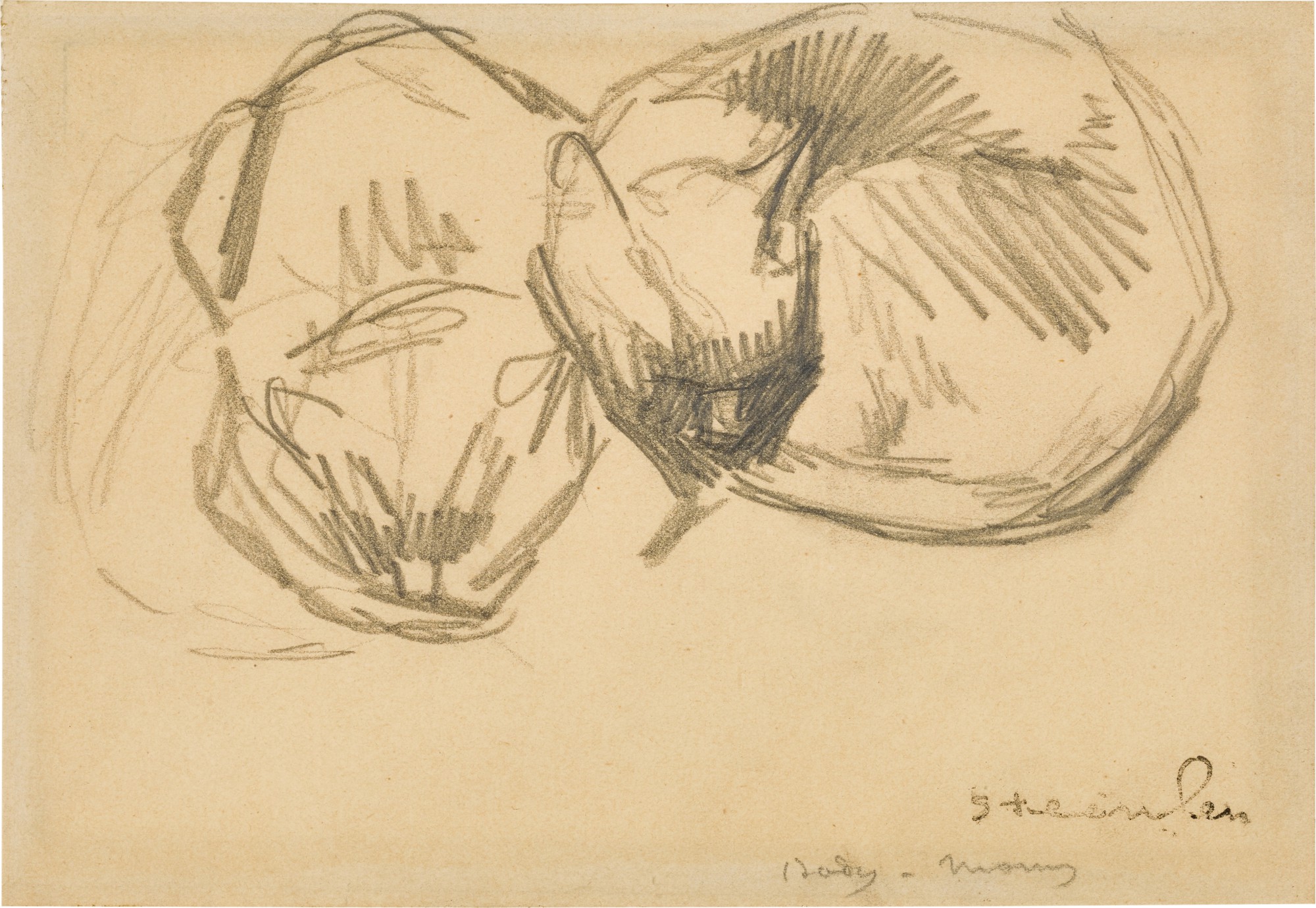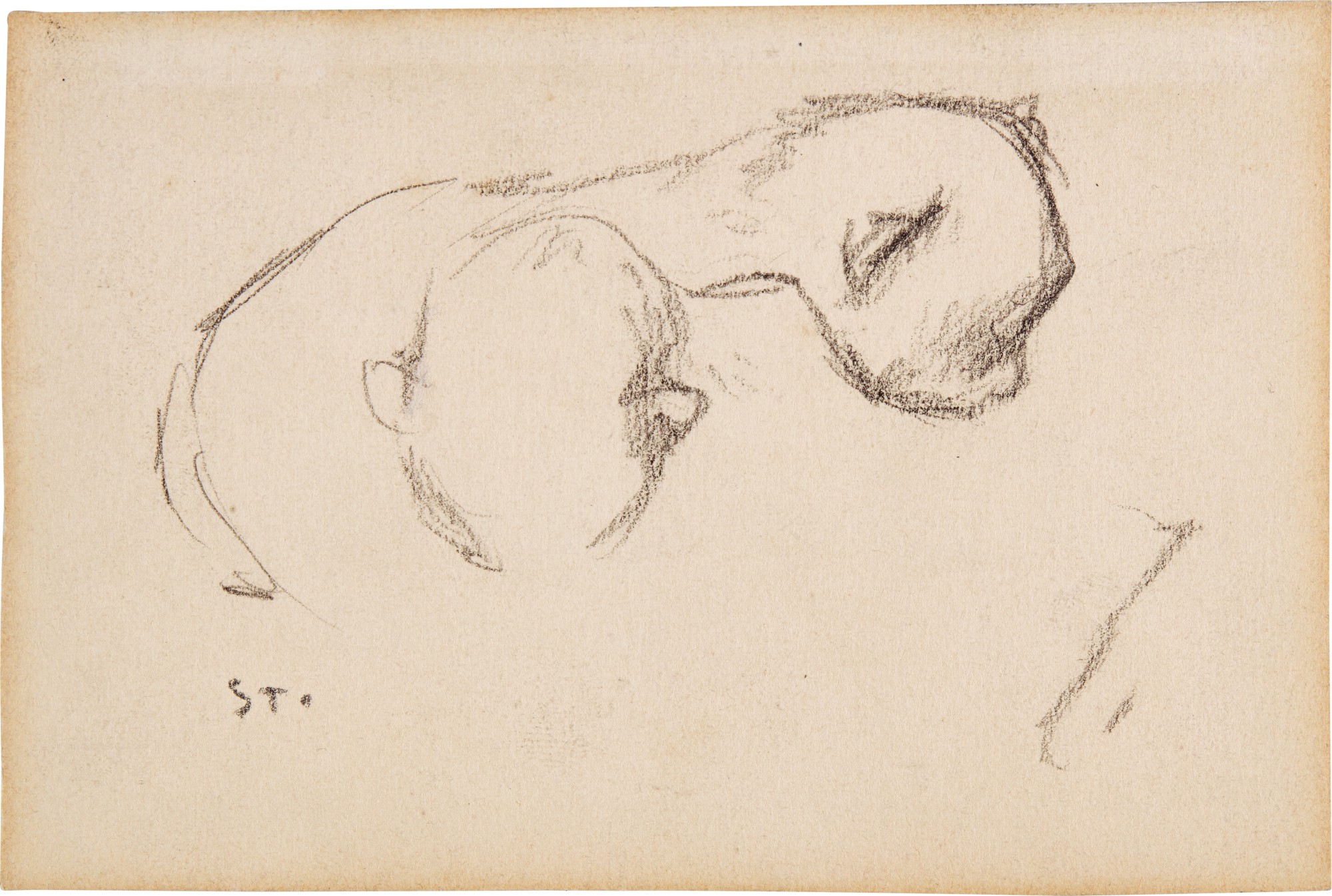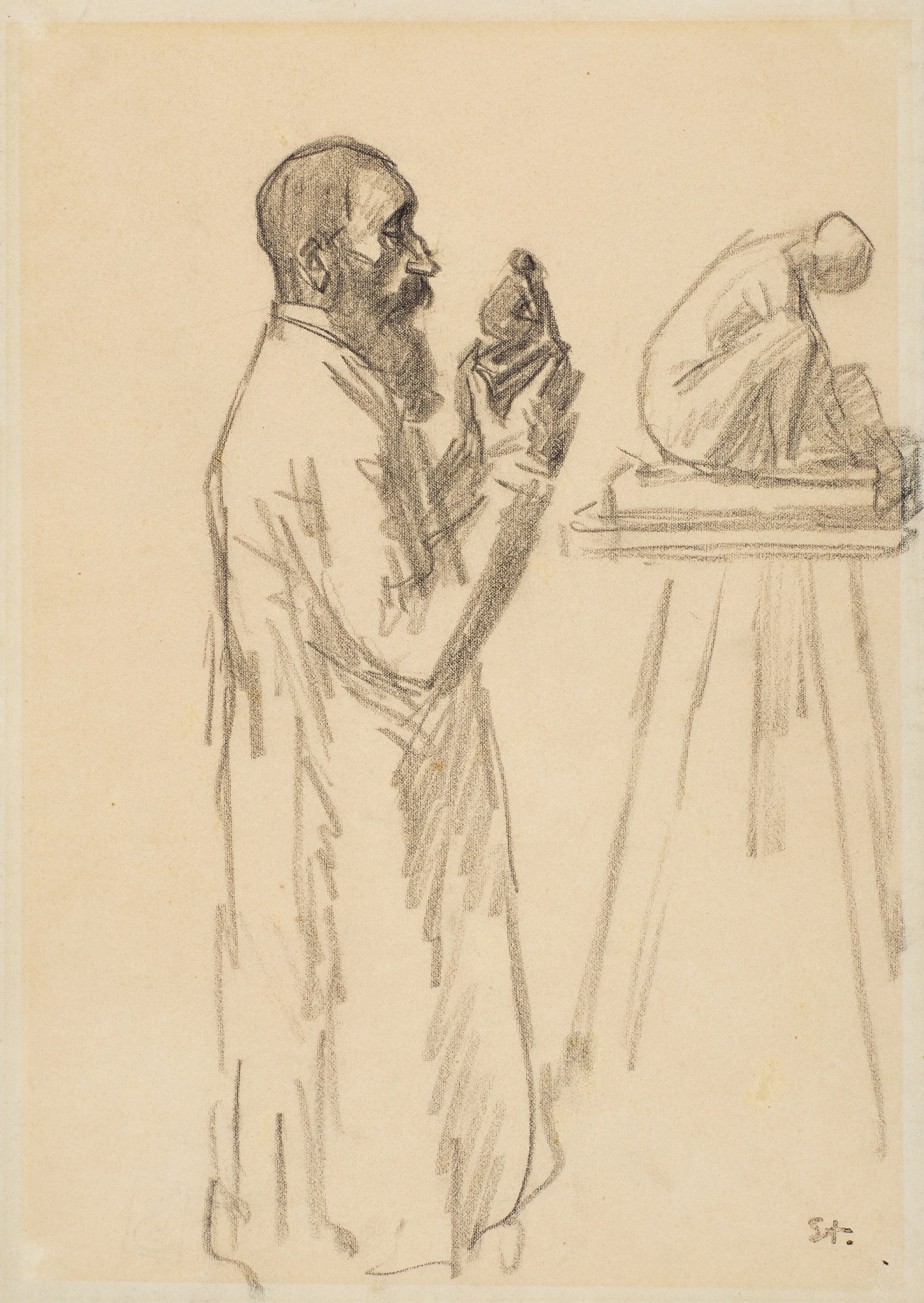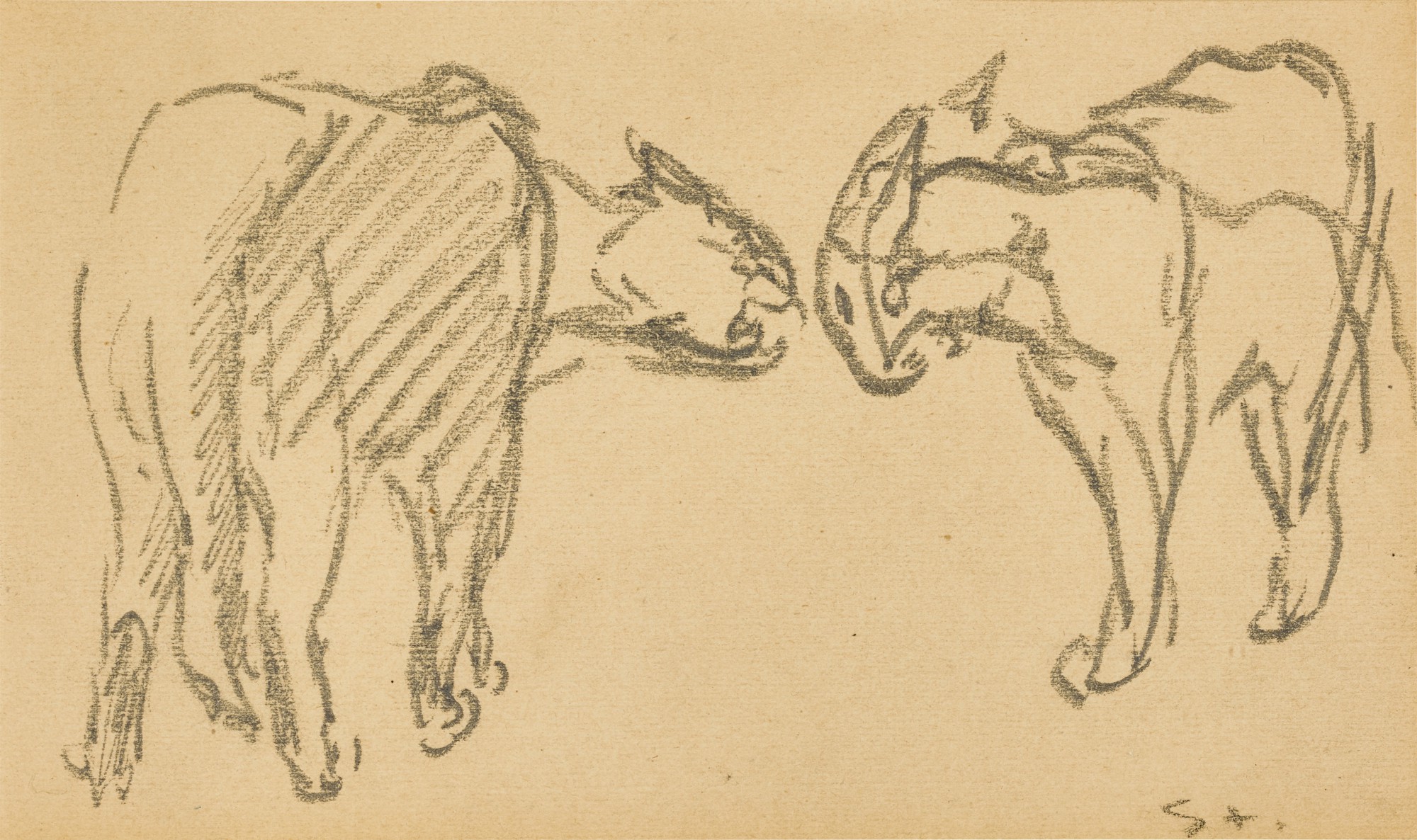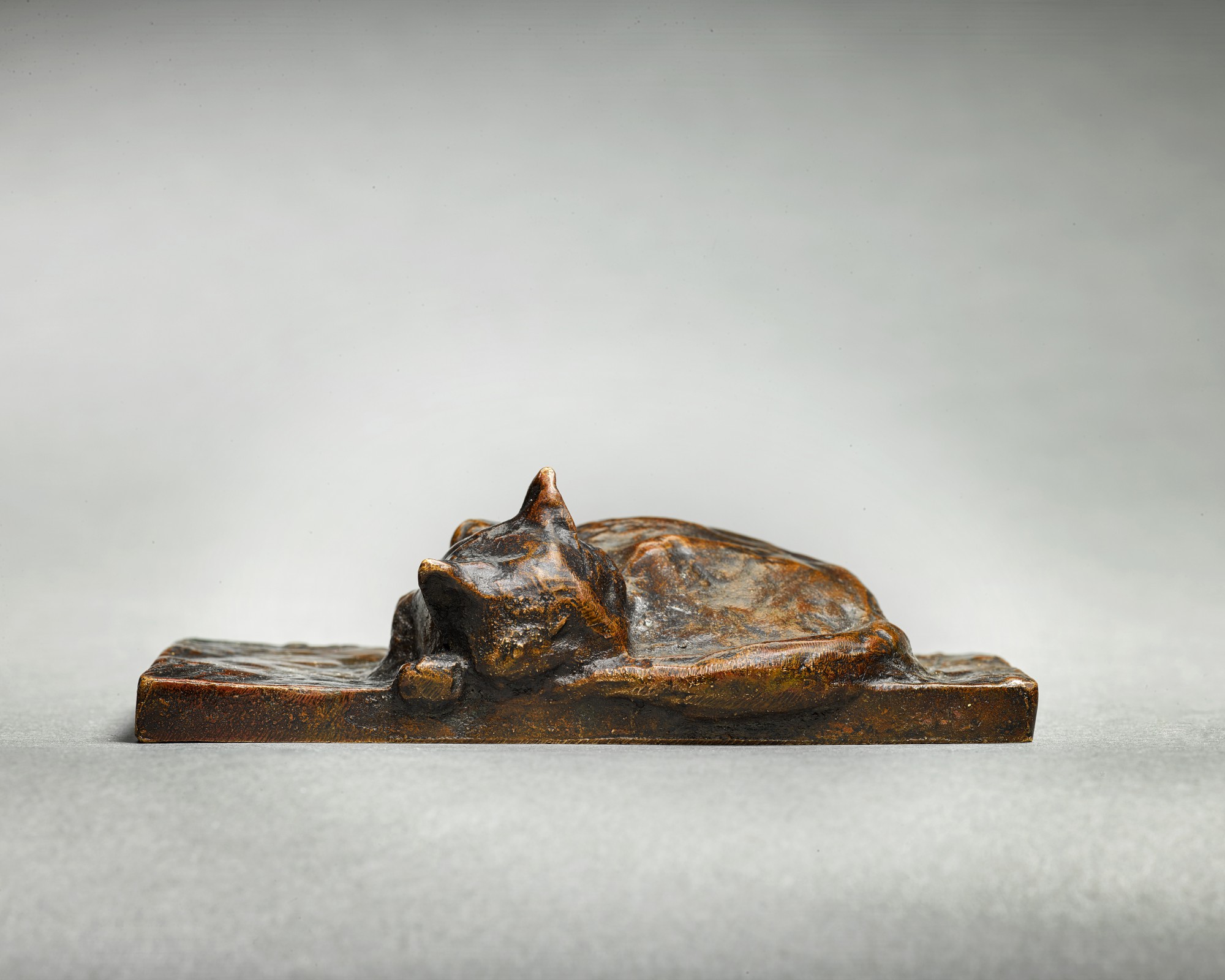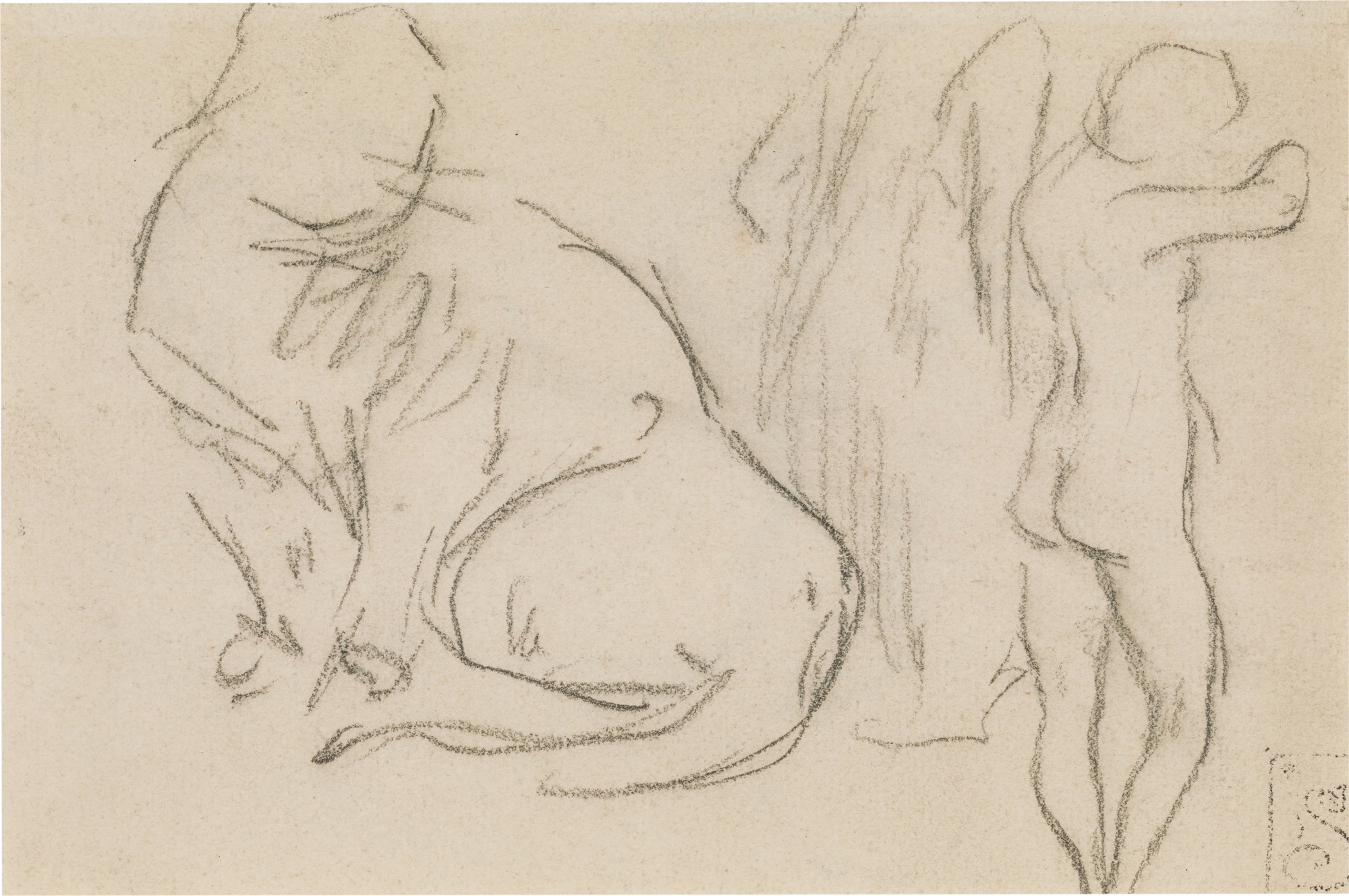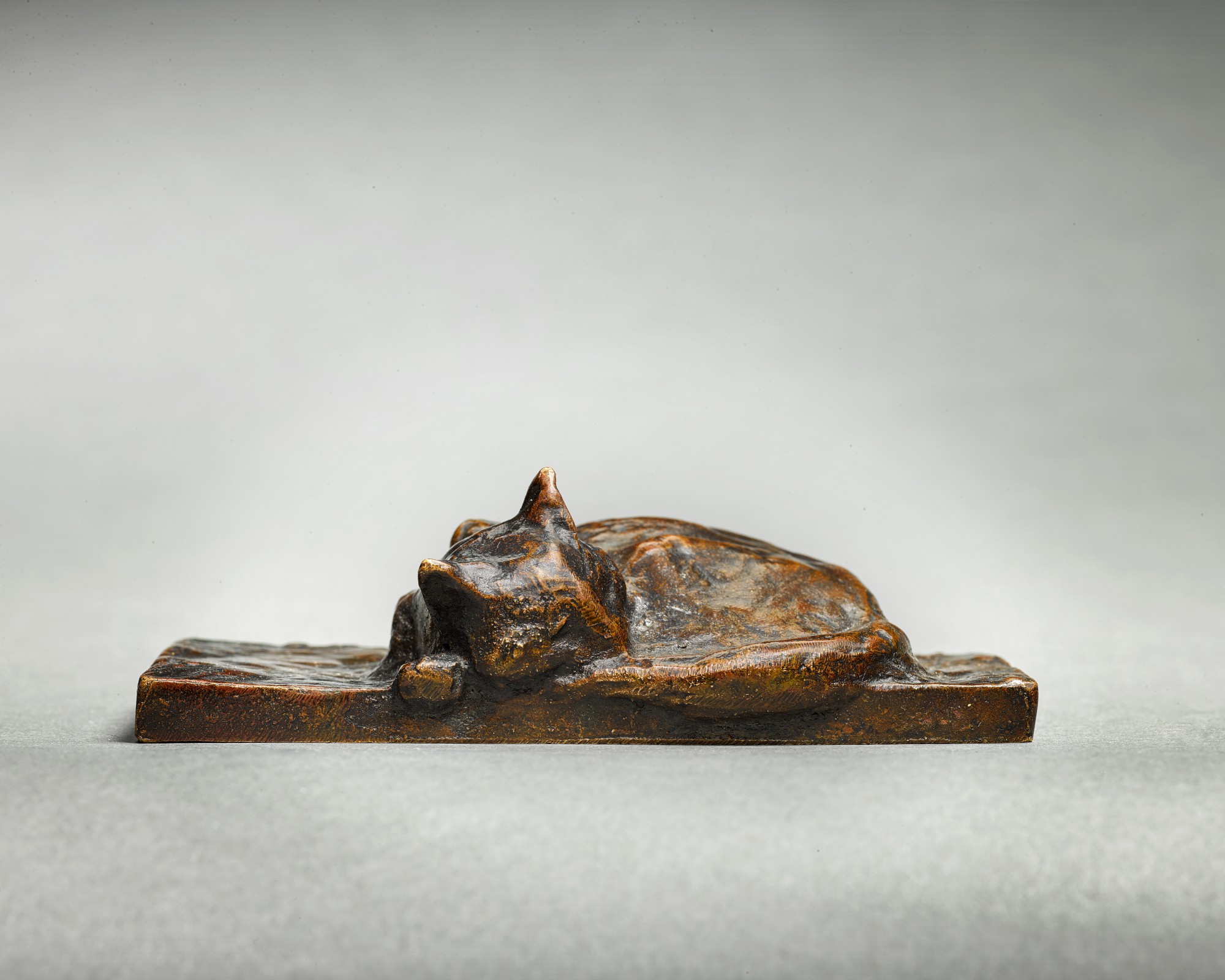
There is a particular kind of magic that occurs when a single image becomes inseparable from the city that inspired it. For Théophile Alexandre Steinlen, that moment arrived with his iconic 1896 poster for the cabaret Le Chat Noir, a sinuous black cat rendered against a gold ground that seemed to capture the entire electric spirit of Montmartre in one arresting composition. More than a century later, that image still circulates as a symbol of Paris at its most alive, and museums from the Musée d'Orsay to the Library of Congress hold his prints as foundational documents of the Belle Époque. Collectors who have come to know Steinlen intimately understand that behind the famous poster lies one of the most versatile, humane, and technically brilliant artists of the late nineteenth and early twentieth centuries. Steinlen was born in Lausanne, Switzerland in 1859, into a family with deep roots in textile design and decorative arts. His early training steeped him in pattern, line, and the discipline of applied craft, sensibilities that would later distinguish his printmaking from that of his contemporaries. In 1881, at the age of twenty two, he made the journey to Paris, settling in Montmartre at a moment when the neighborhood was transforming into the creative capital of the Western world. He arrived without connections but with an extraordinary eye, and within years he had embedded himself in the overlapping circles of artists, writers, anarchists, musicians, and working people who gave the Butte its legendary character. The atmosphere of Le Chat Noir, the celebrated cabaret founded by Rodolphe Salis on the Boulevard de Rochechouart, became the crucible of Steinlen's artistic identity. He contributed illustrations to the cabaret's journal, forged friendships with figures including Aristide Bruant and Henri de Toulouse Lautrec, and absorbed the radical visual energy of a neighborhood that was simultaneously inventing modern entertainment and modern art. Where Toulouse Lautrec was drawn to the theatrical and the aristocratically dissolute, Steinlen fixed his gaze on the street itself: the laundress, the street vendor, the mother carrying bread through a gray morning, the children who played in the gutters of the Rue Caulaincourt. His was a democratic vision, generous and unsentimental in equal measure. Steinlen worked with extraordinary range across his career. He produced thousands of illustrations for publications including Gil Blas Illustré, Le Mirliton, and the socialist journal L'Assiette au Beurre, where his images of labor, poverty, and social injustice earned him a reputation as one of the great visual voices of the French left. As a poster artist he stood alongside Jules Chéret and Alphonse Mucha as a defining figure of the Art Nouveau movement, though his work always retained a gritty warmth that distinguished it from the more decorative tendencies of his peers. His paintings and drawings on paper reveal a draughtsman of rare sensitivity, capable of rendering the texture of a cat's fur or the weariness in a working woman's shoulders with equal and unsettling precision. Cats, famously, were among his great subjects, and works such as Études des chats, Deux chats dormant, and the exquisite sculptural bronzes including Petit chat couché and Petit chat Angora assis demonstrate a mastery that goes far beyond the charming or the decorative. These works are studies in weight, repose, and animal psychology, as formally rigorous as anything produced in the academic tradition of the period. His bronzes in particular, with their warm red brown and dark patinas, have a tactile immediacy that surprises collectors encountering them for the first time. They feel alive. His drawings in pencil and black chalk, including works such as Chat siamois and the tender Deux chats jouant, reveal a line of extraordinary confidence, economic and expressive in the same breath. The market for Steinlen has grown steadily as collectors and institutions have come to appreciate the full depth of his practice rather than viewing him only through the lens of the iconic poster. His works on paper represent a particularly compelling area of the market: accessible in price relative to comparable French artists of the period, yet produced at a level of quality that stands comparison with the finest draughtsmanship of the Belle Époque. Collectors are drawn to the combination of historical significance, technical accomplishment, and the emotional warmth that radiates from even his smallest sketches. The bronzes, produced in limited numbers and distinguished by beautiful patination, have attracted increasing attention from sculpture collectors who recognize in them a sculptor's eye operating at full power. Works such as The Bread Carrier and The Shepherdess, executed in brush and ink and graphite respectively, reveal the social realist dimension of his practice and invite comparison with contemporaries including Honoré Daumier and Constantin Meunier. Within the broader sweep of art history, Steinlen occupies a position of genuine importance at the intersection of several major currents. He bridges the tradition of French social realism, rooted in Daumier and Gustave Courbet, with the decorative ambitions of Art Nouveau and the emerging visual culture of mass media illustration. He was a precursor to the graphic artists of the twentieth century who would use print and poster to speak to mass audiences, and his commitment to the representation of working class life anticipates the social concerns of artists across the following decades. His friendship and professional relationship with Toulouse Lautrec remains one of the most fascinating creative dialogues of the period, two artists occupying the same streets and salons yet seeing entirely different worlds. What makes Steinlen matter today, beyond the pleasure of the work itself, is the completeness of his attention. He looked at Paris without flinching and without condescension, finding dignity in labor, beauty in the ordinary, and formal possibility in the everyday. In an era when questions about who art represents and whose lives it honors have returned to the center of critical conversation, his practice reads as quietly radical. To collect Steinlen is to bring into a home or a collection a sustained act of looking, one that began on the streets of Montmartre more than a century ago and has lost none of its warmth or its clarity since.