Thomas Zipp
Thomas Zipp: Visionary Worlds Brilliantly Decoded
Artist Spotlight · The Collection Editorial
There is a particular kind of electricity that fills a room when a Thomas Zipp installation takes hold of a space. In recent years, his work has appeared with renewed urgency across major European institutions, with presentations at Galerie Krinzinger in Vienna and ongoing international interest cementing his reputation as one of the most intellectually rigorous and visually arresting German artists working today. His canvases, assemblages, and multi part installations do not ask for passive viewing. They demand a kind of total engagement, pulling the viewer into systems of thought that are as much about the history of ideas as they are about the history of painting.
Thomas Zipp
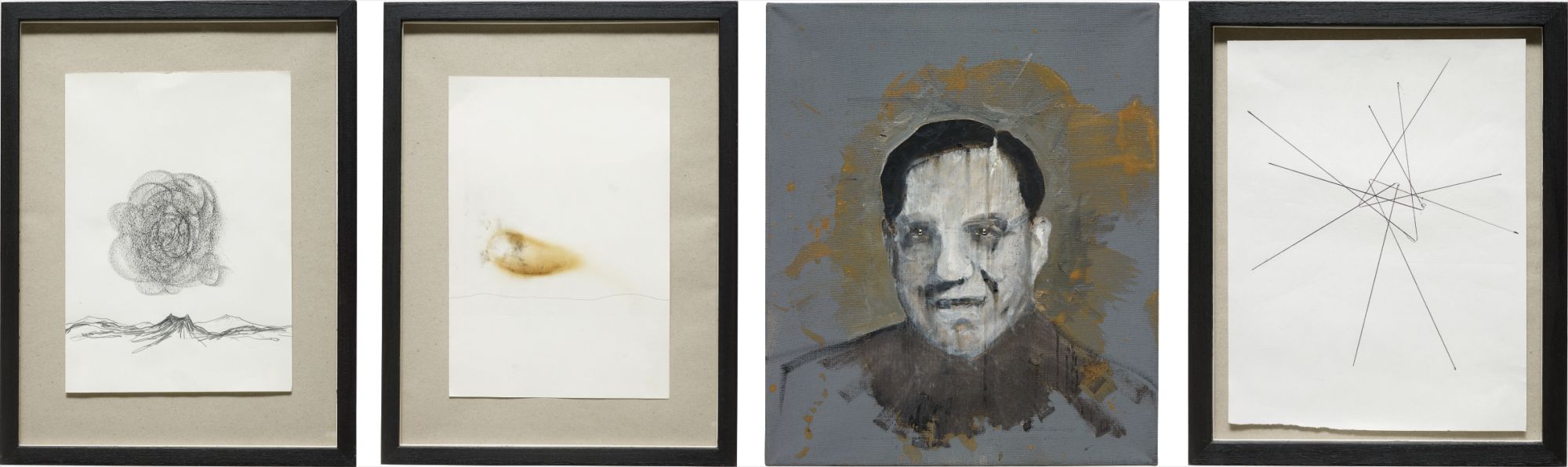
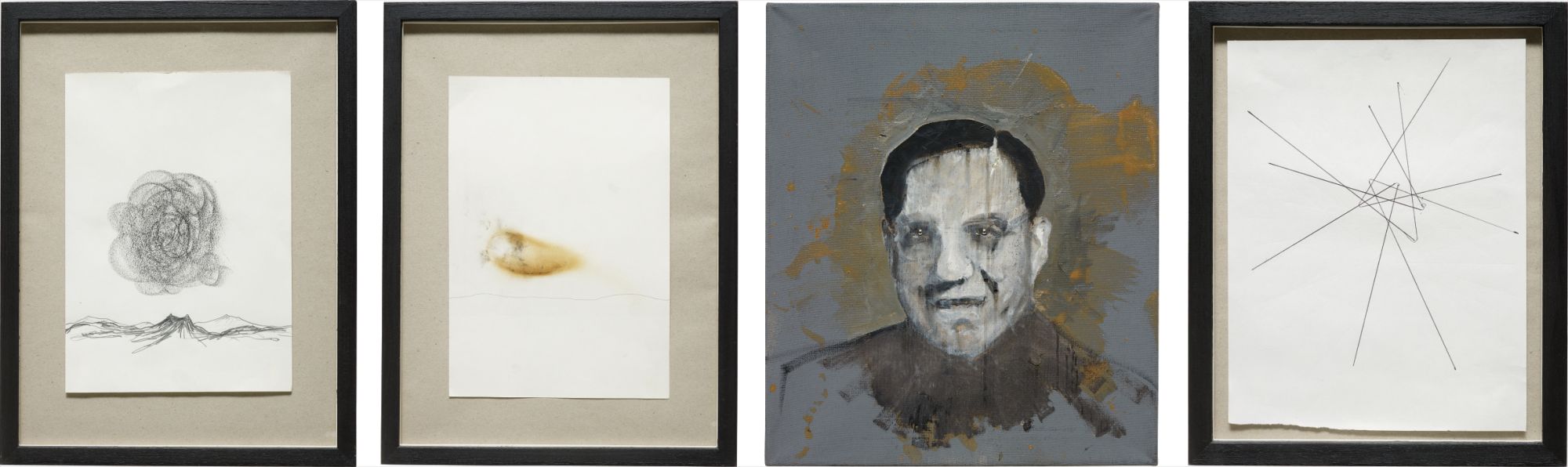
P.G.K (brown cloud)
Zipp was born in 1963 in Heppenheim, Germany, coming of age in a country actively renegotiating its relationship with its own past, its cultural identity, and its place within a rapidly shifting Western intellectual landscape. This context proved formative. The postwar German tradition, with its heavy philosophical inheritance from Beuys, Baselitz, and the broader currents of Fluxus and Neo Expressionism, surrounded him as a young artist finding his footing. He studied at the Hochschule für Bildende Künste in Hamburg, an institution with a strong tradition of conceptual rigor, before eventually establishing himself in Berlin, a city whose own fractured and reborn identity mirrored many of the preoccupations that would come to define his practice.
What makes Zipp so compelling as an artist is his refusal to remain within the comfortable boundaries of any single medium or movement. His practice spans painting, drawing, collage, installation, and performance, and at the center of all of it is a relentless investigation into systems of belief, whether scientific, occult, political, or psychological. He is deeply interested in the figures who operated at the fringes of accepted knowledge: the parapsychologists, the utopian theorists, the countercultural visionaries who believed they were decoding the hidden architecture of reality. Rather than mocking these figures, Zipp treats them with a kind of tender seriousness, finding in their obsessions a mirror for broader human desires around meaning, control, and transcendence.
Thomas Zipp
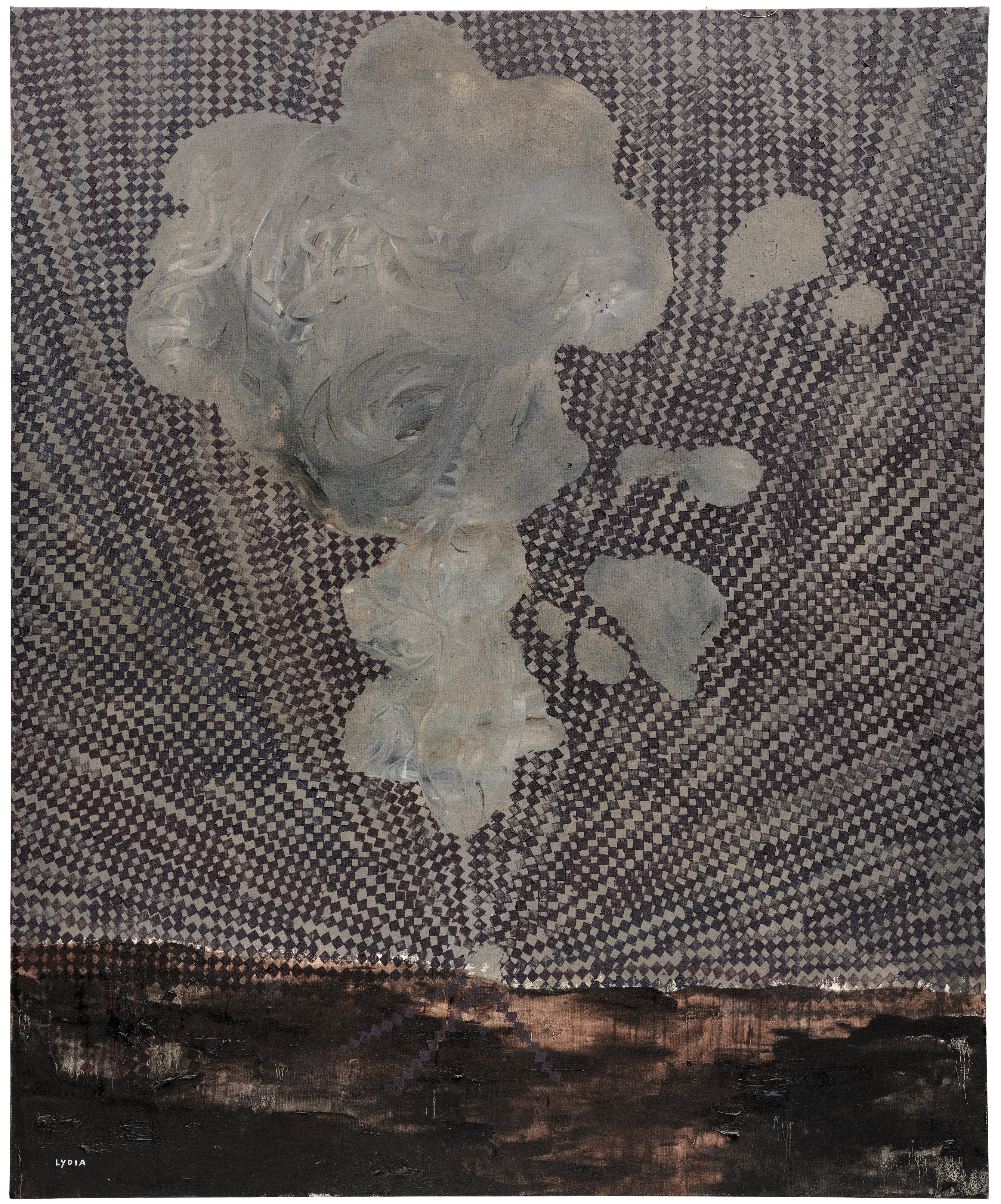
Lydia, 2004
His breakthrough as an internationally recognized presence came through a series of densely layered works that brought together painting and installation in ways that felt genuinely new. Works like "Der Schlaf IV (y drops)" from 2004, executed in acrylic and oil on muslin with mixed media and a chandelier across three parts, demonstrated his extraordinary ability to fuse the atmospheric with the conceptual. The chandelier as an object carries enormous cultural weight, evoking the drawing rooms of Enlightenment Europe, the theatres of the 19th century, the grand narratives of bourgeois civilization, and Zipp suspends it within a visual field that quietly destabilizes all of that inheritance. Around the same period, "Lydia" from 2004 showed his mastery of oil on canvas as a vehicle for psychological portraiture, a work that feels intimate and unsettling in equal measure.
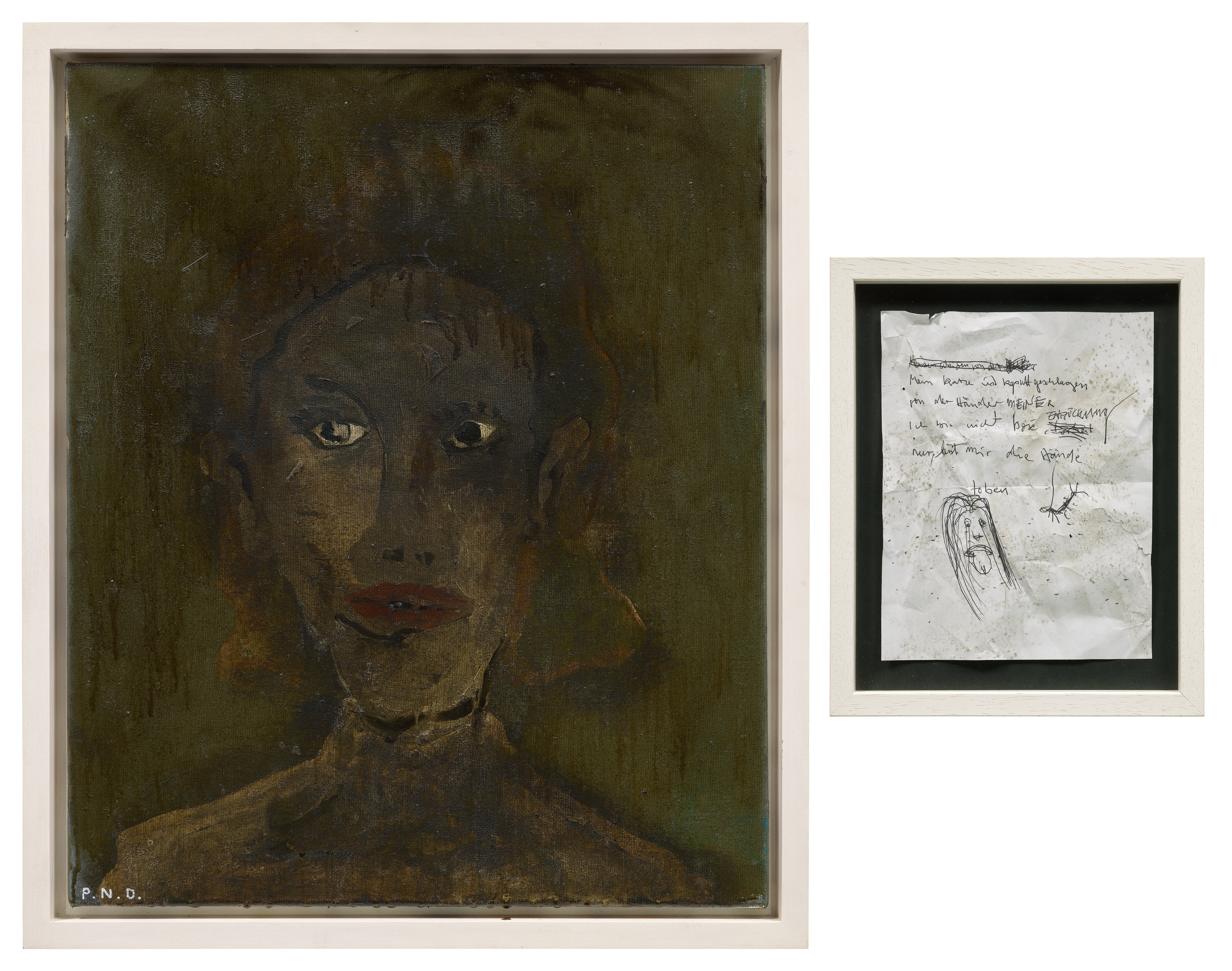
The multi part structure that recurs throughout his output is not incidental but deeply intentional. Works such as "P.n.d.
Thomas Zipp
P.n.d., 2008
" from 2008, combining acrylic and oil on canvas with mixed media on paper and presented in the artist's own chosen frames across two parts, and "Blue Flowers (Lysol)", spread across four distinct components in multiple media, reveal a practice built around duality, fragmentation, and dialogue. By placing works in conversation with each other across space, Zipp creates systems rather than singular objects. The viewer must move, compare, and construct meaning in the gaps between parts. This is a fundamentally generous approach to spectatorship, even as the imagery itself can feel dense or arcane.
His interest in specific cultural and historical codes is also visible in works like "Stonehenge" from 2005, rendered in ink, gouache, and tape on printed paper in two parts within the artist's own frames, and "The code of les mats" from 2005, painted in oil on canvas. Both works engage with structures that carry enormous symbolic and historical resonance, ancient monuments, esoteric traditions, the archaeology of collective belief. The choice to work in the artist's own frames throughout much of his output is also worth noting. By insisting on the full visual context of a work, Zipp reminds us that presentation is never neutral, that the frame is always already part of the argument.
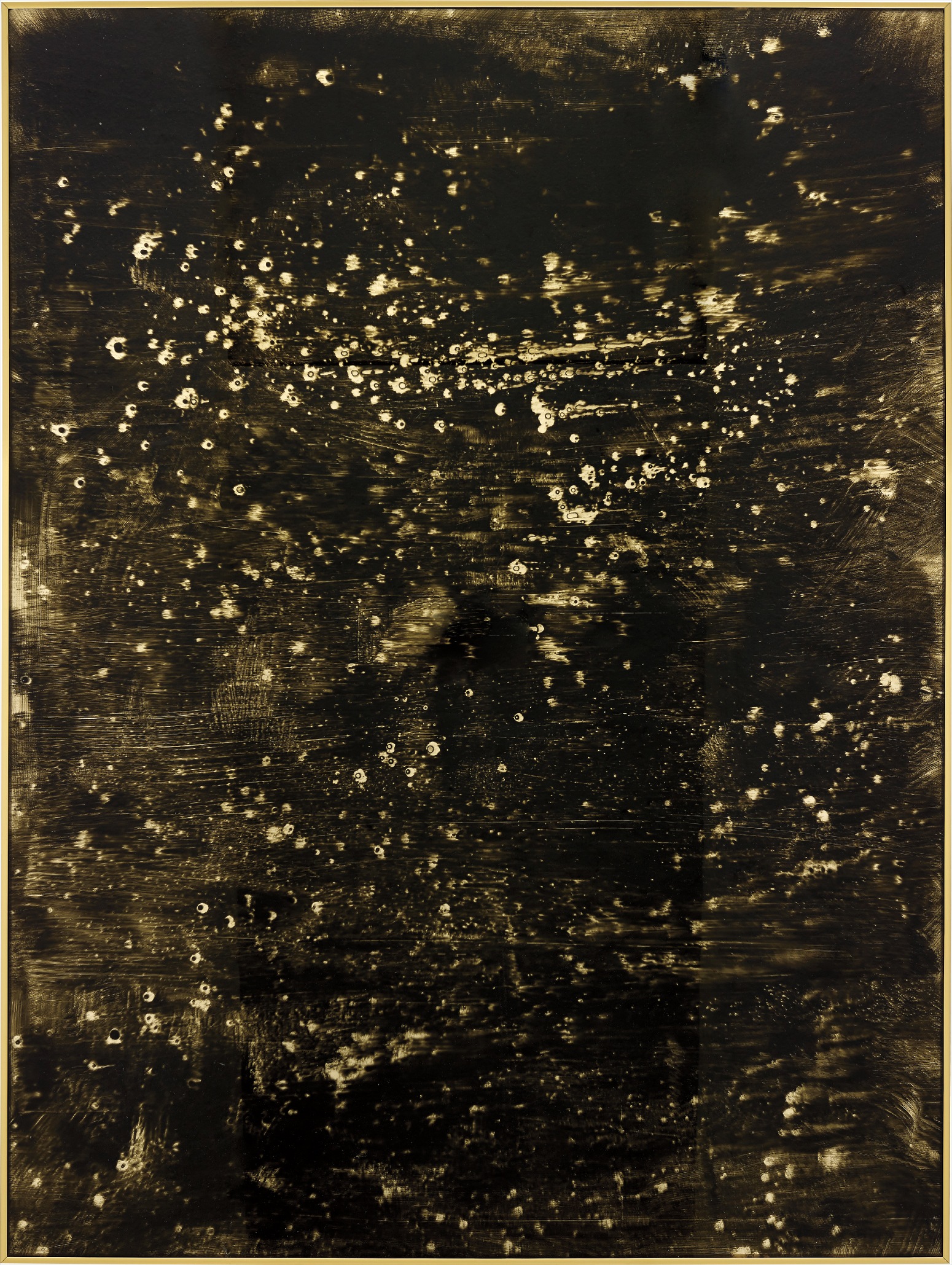
Thomas Zipp
Der Schlaf IV (y-drops), 2004
From a collecting perspective, Zipp represents a particularly rewarding area of focus for those drawn to serious German postwar and contemporary practice. His works occupy a space adjacent to, but distinct from, the more widely traded names of the Neo Expressionist generation. Collectors who have engaged with the work of Albert Oehlen, Martin Kippenberger, or Sigmar Polke will find in Zipp a kindred but singular sensibility, one that shares the German tradition's appetite for ideas and cultural critique but channels it through a more explicitly installation oriented and conceptually systematic practice. Works in multiple parts, particularly those in the artist's own frames, retain an especially strong integrity as they were conceived as complete environments, and acquiring them together preserves the full force of the artist's intention.
The art historical context surrounding Zipp is rich and instructive. He belongs to a generation of German artists who came to prominence in the late 1990s and 2000s, shaped by Berlin's emergence as a global center for contemporary art after reunification. The influence of institutional critique, of Conceptualism, and of a very German tradition of intellectual painting all flow through his work. Yet he also looks outward, to figures like Mike Kelley in his engagement with subcultural knowledge systems, or to the tradition of Symbolism and Surrealism in his willingness to treat the irrational as a legitimate subject for serious investigation.
Thomas Zipp matters today because the questions he has spent his career asking have only grown more urgent. In an era saturated with competing systems of belief, with conspiracy and counter narrative, with the desperate human search for hidden patterns in a chaotic world, his art functions as both a diagnosis and a kind of compassionate archaeology. He takes the full complexity of modern consciousness seriously, in all its contradictions, its yearnings, and its occasional grandeur. For collectors and institutions willing to engage with that seriousness, his work offers not just aesthetic reward but something rarer: a genuinely expanded sense of what painting and installation together can think.