Thomas Jackson
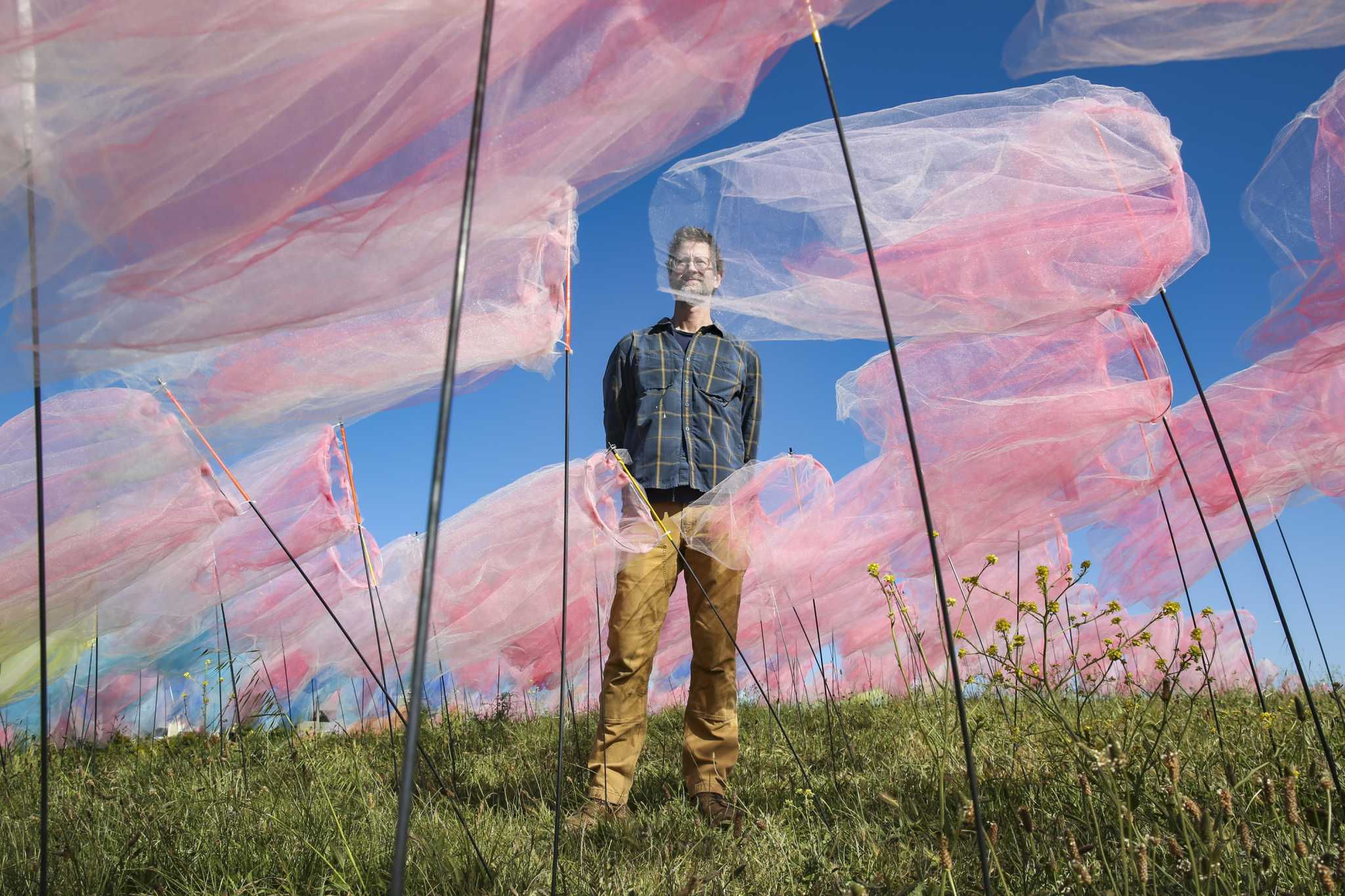
Thomas Jackson Makes the Impossible Beautifully Real
Artist Spotlight · The Collection Editorial
There is a moment, well known to anyone who has encountered Thomas Jackson's photographs for the first time, when the mind simply refuses to accept what the eyes are seeing. Hundreds of paper coffee filters suspended in a perfect geometric cloud above a sun drenched meadow. Thousands of glow sticks arcing through a twilight forest like a living constellation pulled down to earth. Post it notes gathering in a pulsing swarm above an urban rooftop.
Thomas Jackson
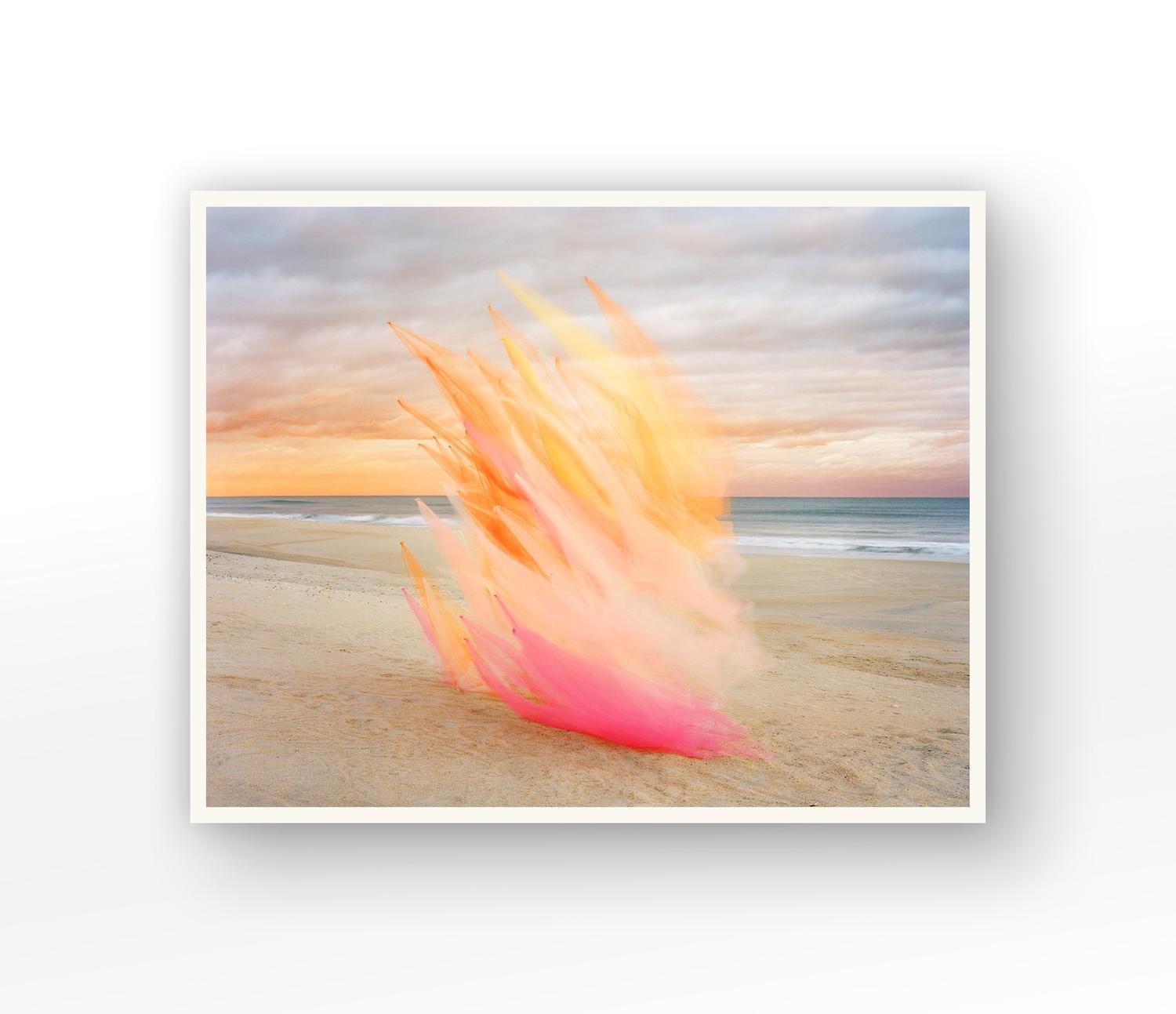
Tulle no. 34_v3, 2021
Jackson has spent more than a decade building these visions out of the most ordinary materials imaginable, and the results remain among the most quietly astonishing images in contemporary photography. As his practice continues to evolve through the 2020s, with new works appearing on platforms dedicated to discerning private collectors, his reputation as one of the most inventive artists working at the intersection of photography, installation, and conceptual practice has never been stronger. Jackson was born in 1971 and came of age in America during a period of intense visual experimentation, when the boundaries between photography, sculpture, and performance art were being actively tested and renegotiated. Though the specific details of his early formation remain relatively private, the sensibility that drives his work speaks clearly to someone shaped by both the natural world and a deep curiosity about how images are made and what they can make us believe.
The American landscape, with its vast open spaces and its capacity to absorb and amplify human gesture, is not merely a backdrop in his photographs. It is a collaborator, a counterpoint, a stage that seems to await his precisely arranged interventions. The development of Jackson's signature practice required patience and a willingness to work against the grain of contemporary image culture, which prizes speed and spontaneity above almost everything else. His process is the opposite of spontaneous.
Thomas Jackson
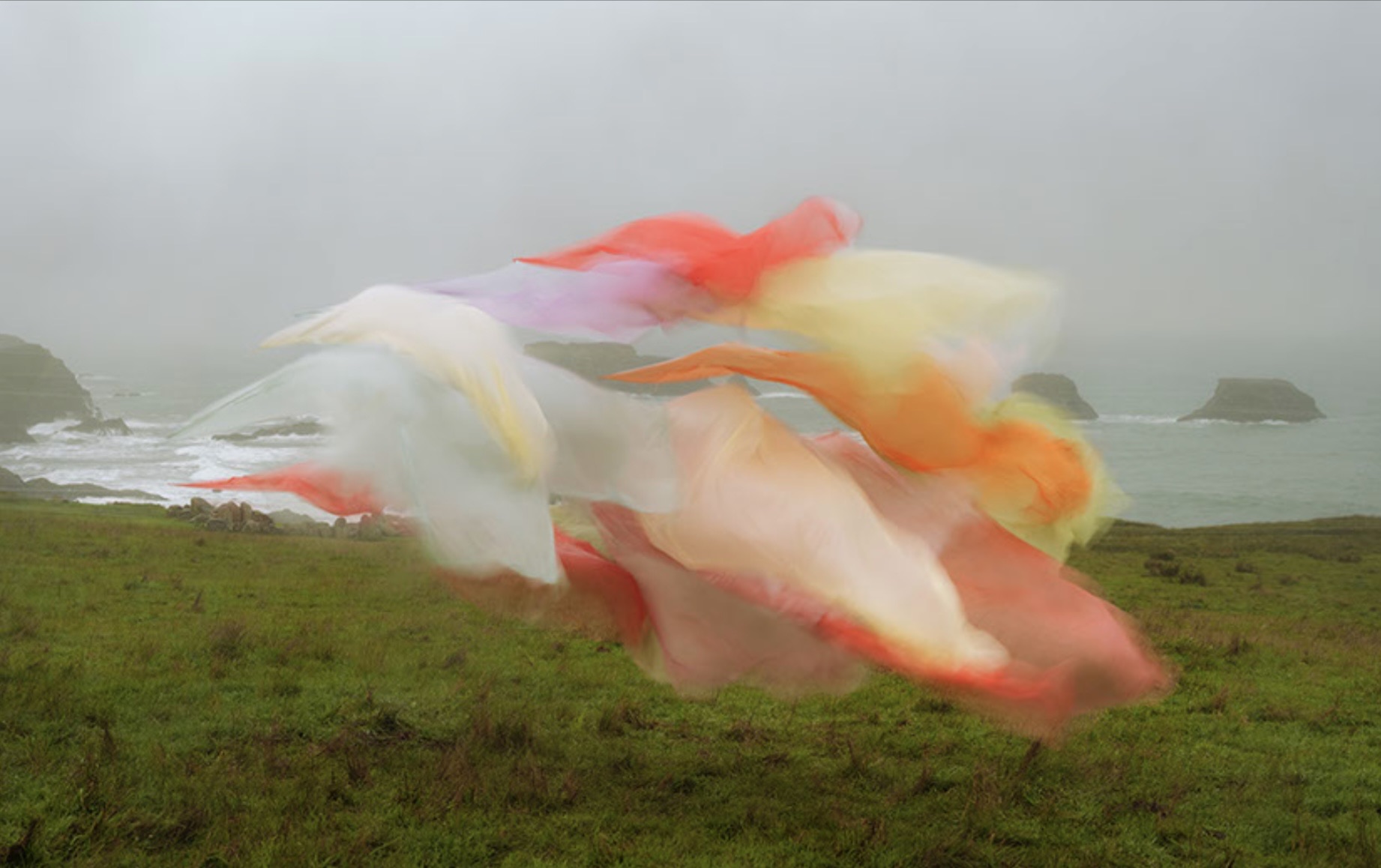
silk 008 2/4, 2025
Each installation demands weeks of planning, the sourcing of materials often numbering in the hundreds or thousands of identical units, the scouting of locations, and then the painstaking physical work of arrangement. The installations are built, photographed, and then entirely dismantled, leaving no permanent mark on the landscape. The photograph is the work, the only surviving evidence of something that actually existed in three dimensions and in real light. This commitment to the photograph as final object rather than mere document places Jackson firmly within a lineage of artists who have used the camera not to record the world but to construct an alternative version of it.
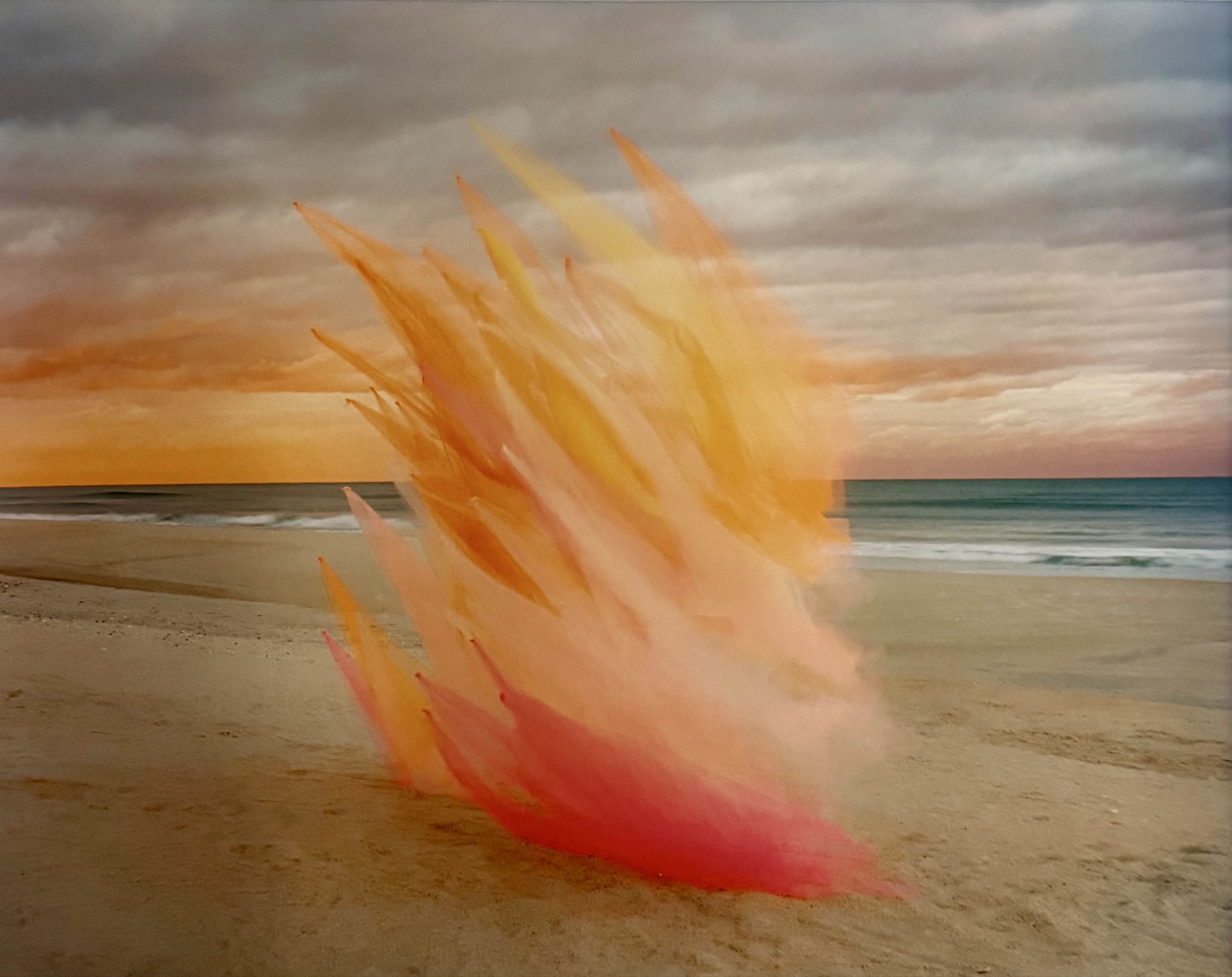
Among his most celebrated series is his ongoing exploration of everyday objects transformed into something approaching the sublime. Works like Tulle no. 34, produced in 2021 as a pigment print on Canson Platine, demonstrate his extraordinary command of material, light, and spatial illusion. The tulle series, in which gossamer fabric forms seemingly float in impossible configurations against natural backdrops, exemplifies his ability to take the familiar and render it genuinely strange without tipping into mere spectacle.
Thomas Jackson
Untitled
The 2025 work silk 008, an archival pigment print, signals a continued refinement of this approach, with the translucency of silk lending his formations an almost atmospheric quality, as though the installation exists somewhere between solid matter and pure light. The quality of his print production is itself worthy of attention. Jackson's choice of archival and fine art substrates reflects a seriousness about longevity and about the physical presence of the photographic object that collectors have come to appreciate deeply. For collectors, Jackson's work offers something that is genuinely rare in the current market: a practice that is conceptually rigorous, visually immediate, and emotionally generous all at once.
His photographs reward extended looking in a way that many contemporary works do not. There is the initial impact, the almost vertiginous sense of impossibility, and then a slower pleasure as the eye begins to trace the logic of the composition, the way light falls through the material, the relationship between the human made formation and the landscape that contains it. His editions, produced in limited runs, have attracted collectors across North America and beyond, and his presence on carefully curated private platforms reflects the growing appetite among sophisticated buyers for work that operates at the highest level of craft without sacrificing imaginative ambition. Given his continued productivity and the consistent critical attention his new series generates, early acquisition represents a thoughtful long term position.
Contextually, Jackson belongs to a broader conversation in contemporary art about the relationship between landscape, intervention, and documentation. His work invites comparison to the earthworks tradition associated with artists like Andy Goldsworthy, whose temporary sculptures in natural settings are similarly preserved only through photography. He shares something too with the spirit of Christo and Jeanne Claude, whose large scale wrappings and installations transformed familiar spaces into sites of wonder before being taken down and returned to their original state. Within photography itself, there are resonances with the constructed image making of Sandy Skoglund, whose elaborately staged environments blur the line between sculpture and photograph.
What distinguishes Jackson is his particular focus on the swarm, the flock, the formation: natural behaviors translated into geometric arrangements of inert objects, creating a tension between the organic and the mathematical that gives his work its distinctive psychological charge. What Jackson ultimately offers, and what makes his practice so valuable to this cultural moment, is a reminder that wonder is not a naive emotion. In a visual landscape saturated with manipulation and simulation, his photographs achieve their effects through actual physical labor, actual presence in actual landscapes, and an actual commitment to the craft of printing and presenting the final image. They ask us to believe in something we know is temporary, to find meaning in an arrangement that existed for a few hours in a meadow or a forest before being packed away and carried home.
That is, in the deepest sense, what the best art has always done: it builds something real out of the materials of imagination and asks us to stand in front of it and feel the full weight of our attention. Thomas Jackson does this with consistency, intelligence, and a generosity of vision that places him among the most rewarding American artists of his generation.