Thomas Hirschhorn
Artist Spotlight · The Collection Editorial
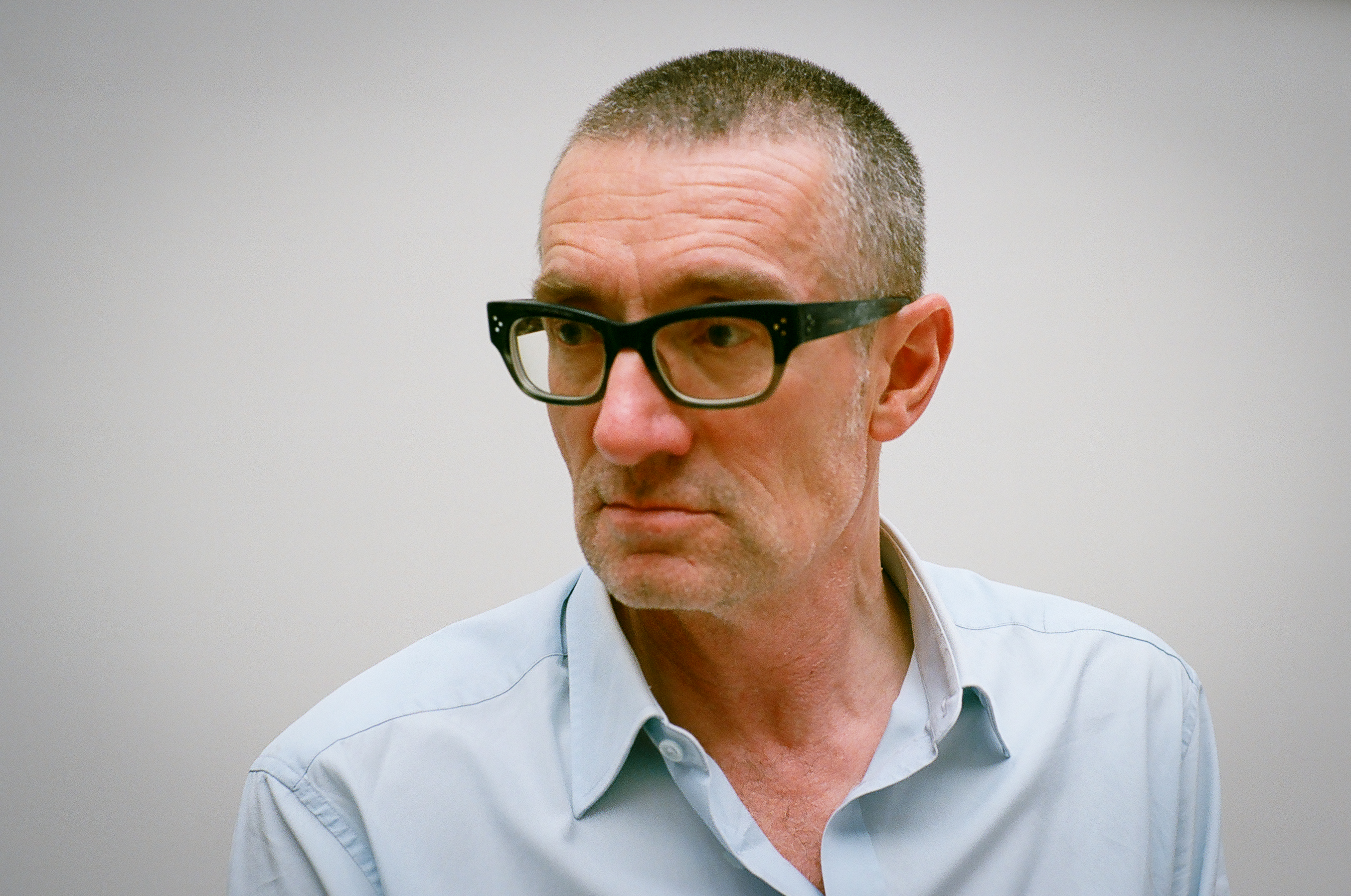
```json { "headline": "Thomas Hirschhorn: Art Made With Radical Generosity", "body": "In the spring of 2023, the Kunsthaus Zürich mounted a sweeping survey of Thomas Hirschhorn's work that drew visitors from across Europe and beyond, reaffirming what the art world has long understood: this Swiss artist is among the most morally serious and formally inventive figures working today. The exhibition gathered decades of sculpture, collage, installation, and multiples into a cathedral of cardboard and conviction, reminding audiences that Hirschhorn's practice is not simply about aesthetics but about the urgent, sometimes uncomfortable work of thinking together. To encounter his art is to be invited, insistently, into a conversation about philosophy, power, and what it means to be present in the world. Few artists of his generation have held that invitation open so consistently or so generously.
Thomas Hirschhorn
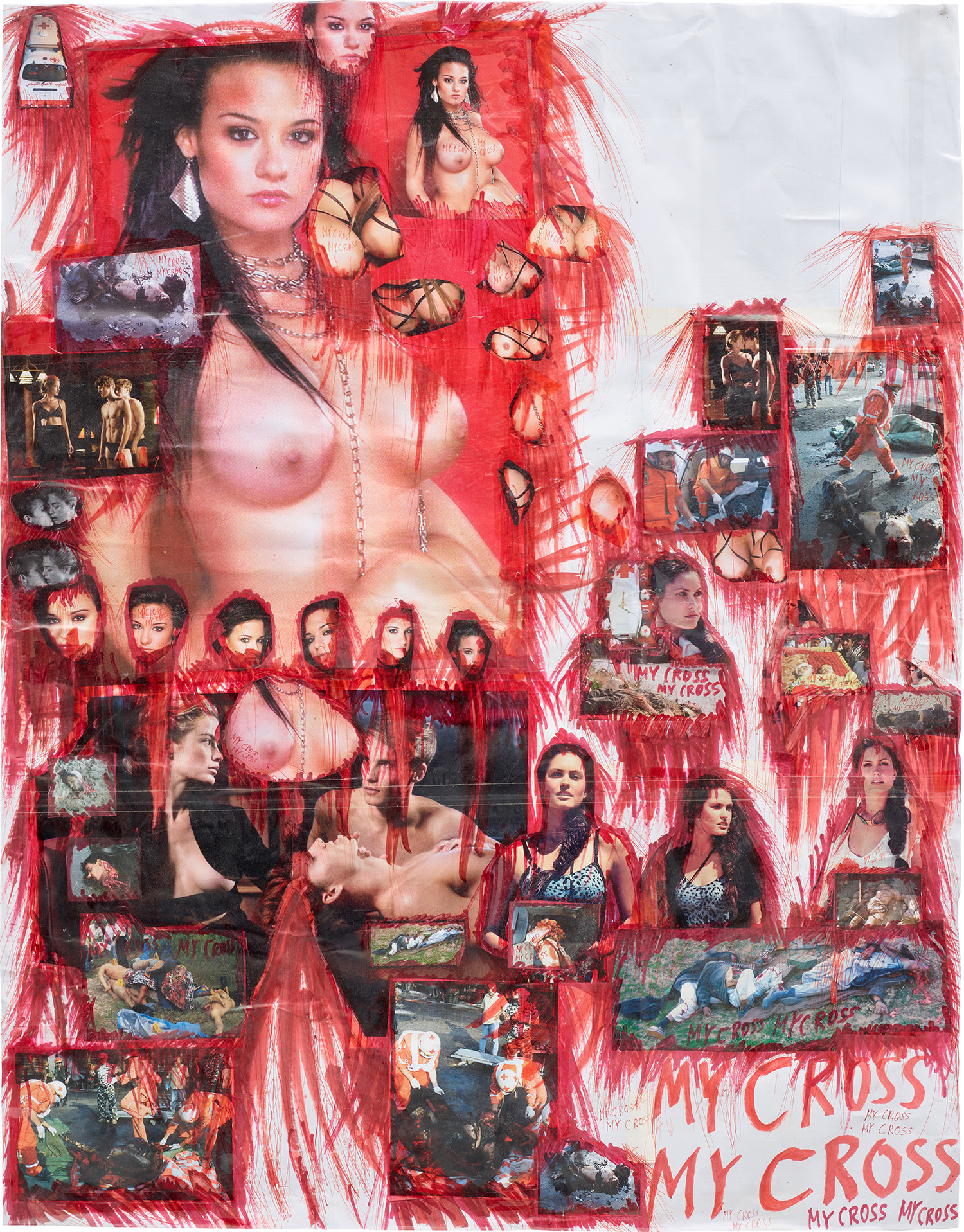
My Cross My Cross, 2010
", "Born in Bern, Switzerland in 1957, Hirschhorn came of age in a country whose reputation for neutrality and prosperity sat in uneasy tension with the global upheavals of the postwar decades. He studied at the Schule für Gestaltung in Zürich before moving to Paris in the 1980s, a city that would shape his thinking profoundly and where he still lives and works. In Paris he encountered the intellectual traditions of French theory, including the writings of Georges Bataille, Gilles Deleuze, Baruch Spinoza, and Antonio Gramsci, figures who would become not merely influences but genuine collaborators in spirit throughout his career. He also worked for several years as a graphic designer with the Grapus collective, an experience that gave him a deep fluency in the visual language of political communication, protest, and collective address.
", "Hirschhorn began exhibiting seriously in the early 1990s, and from the outset his work declared its materials with a kind of proud defiance. Cardboard, aluminum foil, tape, plastic sheeting, felt, and found printed matter became the vocabulary of a practice that rejected the polished surfaces of institutional art in favor of something rougher, more urgent, and more democratic. His early altar pieces and vitrines established the core gesture that would define his mature work: accumulation as argument, abundance as a form of thought. By piling images, texts, objects, and handwritten annotations together under plastic wrap or adhesive tape, Hirschhorn created works that demanded active reading rather than passive contemplation.
Thomas Hirschhorn
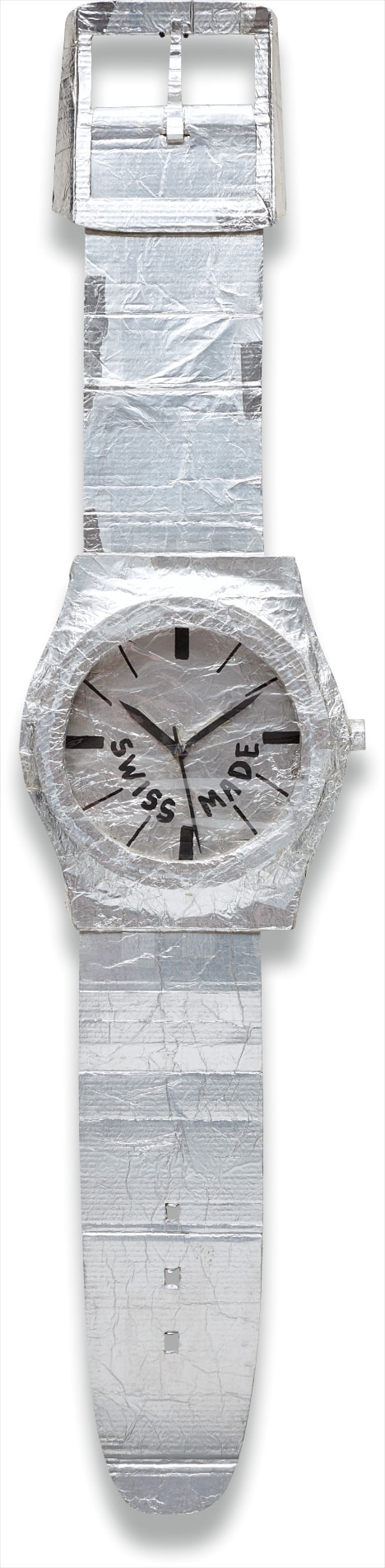
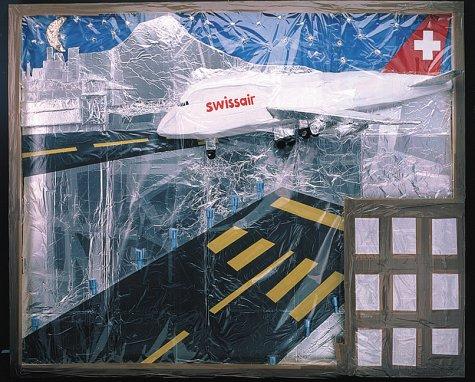
Swiss Made
The viewer was required to lean in, to parse, to commit.", "The period from the late 1990s through the 2000s brought Hirschhorn international recognition through his ambitious public monument projects. His Bataille Monument, created for Documenta 11 in Kassel in 2002, was installed not in the city center but in a working class neighborhood, built with and for the residents who lived there, staffed by local people, and animated by daily events and discussions. This was followed by the Gramsci Monument at Forest Houses in the Bronx in 2013, which similarly embedded a temporary museum, library, and meeting space into a public housing community.
These projects were not gestures of charity or condescension but radical acts of philosophical hospitality, insisting that art and ideas belonged wherever people were, not only where institutions decreed. They remain landmarks in the history of socially engaged practice.", "Among the works available on The Collection, several offer particularly illuminating entry points into Hirschhorn's sensibility. My Cross My Cross from 2010, executed in plastic, marker, tape, and paper collage on paper, carries the compressed intensity of his larger installations into an intimate format, each material choice a deliberate declaration.
Thomas Hirschhorn
Thomas Hirschhorn
The Swiss Made multiple, constructed from cardboard, aluminum foil, felt, wood, plastic, and transparent foil, plays on the mythology of Swiss precision and manufacture while quietly undoing it with the handmade, the provisional, and the tenderly assembled. The Dancing Philosophy series, which traces how one might embody the thinking of Bataille, Deleuze, Spinoza, and Gramsci through movement, is at once playful and deeply serious, a reminder that for Hirschhorn philosophy is not an academic exercise but a lived practice. His scarves and necklace pieces, including the Necklace CNN and the Echarpe works, transform the logic of the multiple into something almost folkloric, a form of thinking you might wear.", "For collectors, Hirschhorn's work offers something rare: an art that is visually arresting, intellectually nourishing, and historically significant all at once.
His multiples, which he has produced with care and commitment throughout his career, represent an ideal entry point, conceived as objects that carry the full weight of his thinking without requiring the space of a major installation. Institutions including the Centre Pompidou in Paris, the Museum of Modern Art in New York, and the Kunstmuseum Bern hold significant works by Hirschhorn, and auction results have consistently reflected both the critical esteem and the collecting appetite for his practice. Works on paper, collages, and smaller sculptural pieces have shown particular strength in the secondary market, valued for their directness and the density of thought they contain. Collectors who have committed to Hirschhorn's work over time describe it as transformative, as the kind of art that changes how you see a room, and then how you see everything outside it.
![Thomas Hirschhorn — Thank You Scarf [Danke]](https://rtwaymdozgnhgluydsys.supabase.co/storage/v1/object/public/artwork-images/auction-lots/NY030122-192022-lot1774298961508.jpg)
Thomas Hirschhorn
Thank You Scarf [Danke]
", "Hirschhorn occupies a distinctive position in relation to his contemporaries, sharing certain affinities with artists such as Andrea Fraser, Martha Rosler, and Harun Farocki in his commitment to critical political engagement, and with figures like Mike Kelley and Paul McCarthy in his embrace of abject materials and accumulated visual noise. Yet his practice is finally singular, rooted in a philosophical seriousness and a warmth toward his audience that sets him apart. Where some artists in the post conceptual tradition maintain a cool critical distance, Hirschhorn insists on contact, on the handmade gesture as a form of address, on the belief that art can and should ask something real of its viewer. That belief connects him to a longer tradition of committed art making that runs from El Lissitzky through Joseph Beuys, artists who understood the studio as a place where the world could be thought differently.
", "Thomas Hirschhorn's legacy is already secure, but what makes his work feel so alive today is precisely its refusal to settle. At a moment when questions of public space, political discourse, and the role of culture in democratic life feel more urgent than ever, his art offers neither comfort nor despair but something more valuable: a model of sustained, generous, demanding attention. To collect Hirschhorn is to take on a kind of responsibility, to become a steward of work that asks to be returned to, argued with, and shared. That is a remarkable thing to say of any artist, and it is entirely true of this one.
" , "quotes": [ { "quote": "I want to give everything. I don't want to select. I want to be generous without calculation.", "source": "Thomas Hirschhorn, interview with Okwui Enwezor" }, { "quote": "Art is not a mirror.
Art is a hammer.
Explore books about Thomas Hirschhorn
Thomas Hirschhorn
Okwui Enwezor

Thomas Hirschhorn: Establishing a Critical Corpus
Various Authors
Thomas Hirschhorn: Jumbo Spoons and Big Cake
Carolyn Christov-Bakargiev

Thomas Hirschhorn: Works 1986-2004
Kunsthalle Zurich
Thomas Hirschhorn: The Hard Way
Lisa Lee
Thomas Hirschhorn: Sculpture 1986-2009
Various Authors