Thomas Demand
Thomas Demand Builds Worlds From Paper
Artist Spotlight · The Collection Editorial
“I am not interested in reproducing reality. I am interested in what reality looks like after it has been processed.”
Thomas Demand, interview with Artforum
There is a particular kind of quiet that descends when you stand before a large Thomas Demand photograph. At the Museum of Modern Art in New York, where Demand has been collected and exhibited for decades, visitors routinely pause longer than expected in front of his prints, leaning in as if the extra inch might finally reveal the secret. It never does, and that is precisely the point. Demand's ongoing international presence across institutions from the Neue Nationalgalerie in Berlin to the Fondazione Prada in Milan confirms what collectors have understood for years: this is an artist whose work rewards sustained attention and grows more resonant with each passing decade.
Thomas Demand
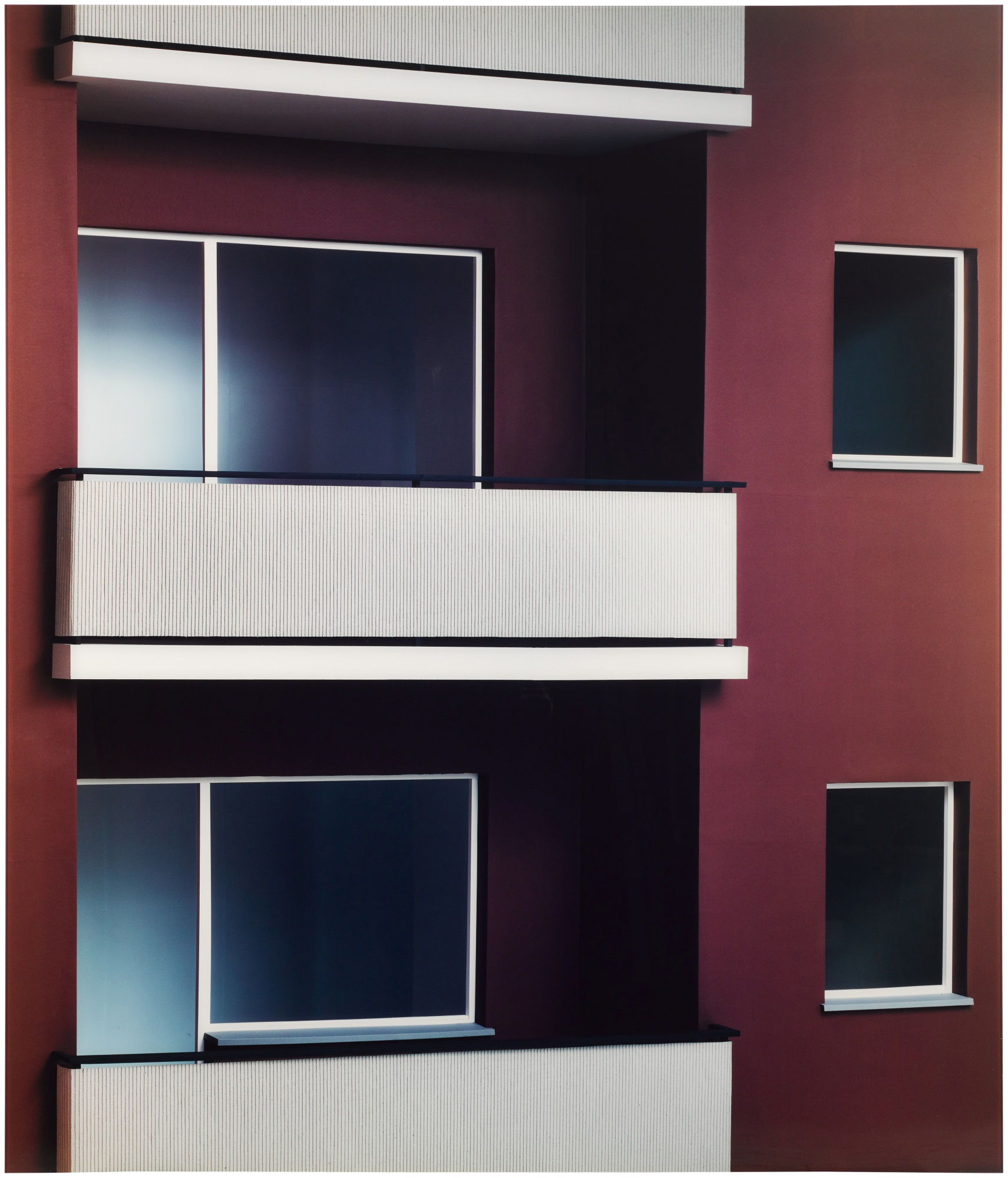
Balkone (Balconies)
Thomas Demand was born in Munich in 1964, coming of age in a West Germany still negotiating its relationship with its own recent history. He studied sculpture at the Kunstakademie Düsseldorf, that legendary crucible of postwar German art where Beuys had taught and Gursky and Struth were also finding their voices, before moving to London to study at Goldsmiths and then to Paris. This unusually broad formation gave Demand something rare: fluency in the language of sculpture, the conceptual rigor of the British art world in the 1990s, and the intellectual seriousness of a European tradition that treated photography as a philosophical instrument rather than simply a documentary tool. What emerged from this formation was a practice of astonishing originality.
Demand constructs meticulous, life scale architectural models entirely from paper and cardboard, sourcing his subjects almost always from press photographs or found images that carry some charge of historical or cultural significance. He builds these models with extraordinary fidelity, recreating offices, corridors, pools, laboratories, and government chambers down to their smallest features. He then photographs the model with large format cameras, and destroys it. The photograph that remains is the work, and it carries within it this layered history of reference, construction, and erasure that gives Demand's images their uncanny atmosphere.
Thomas Demand
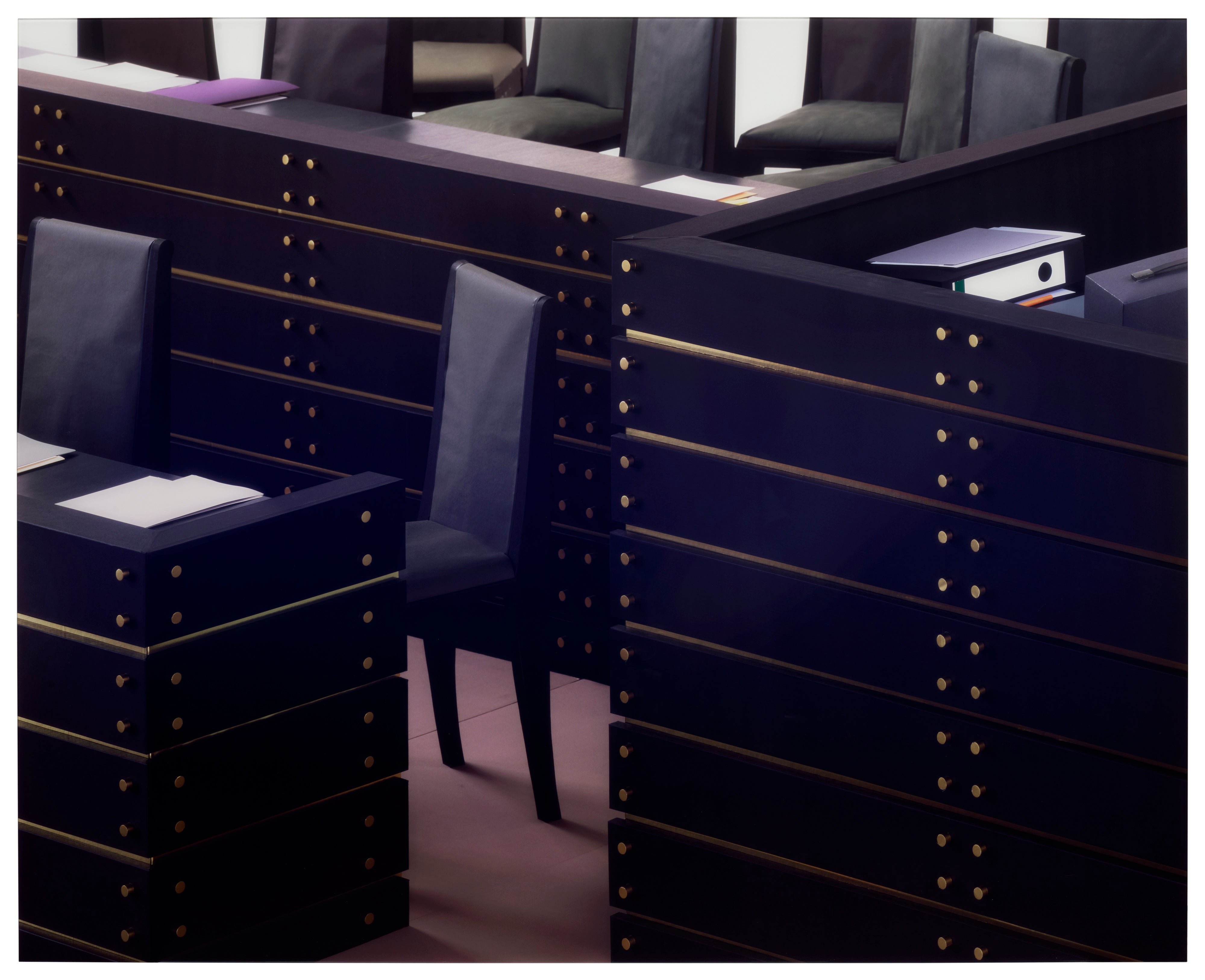
Parlament (Parliament), 2009
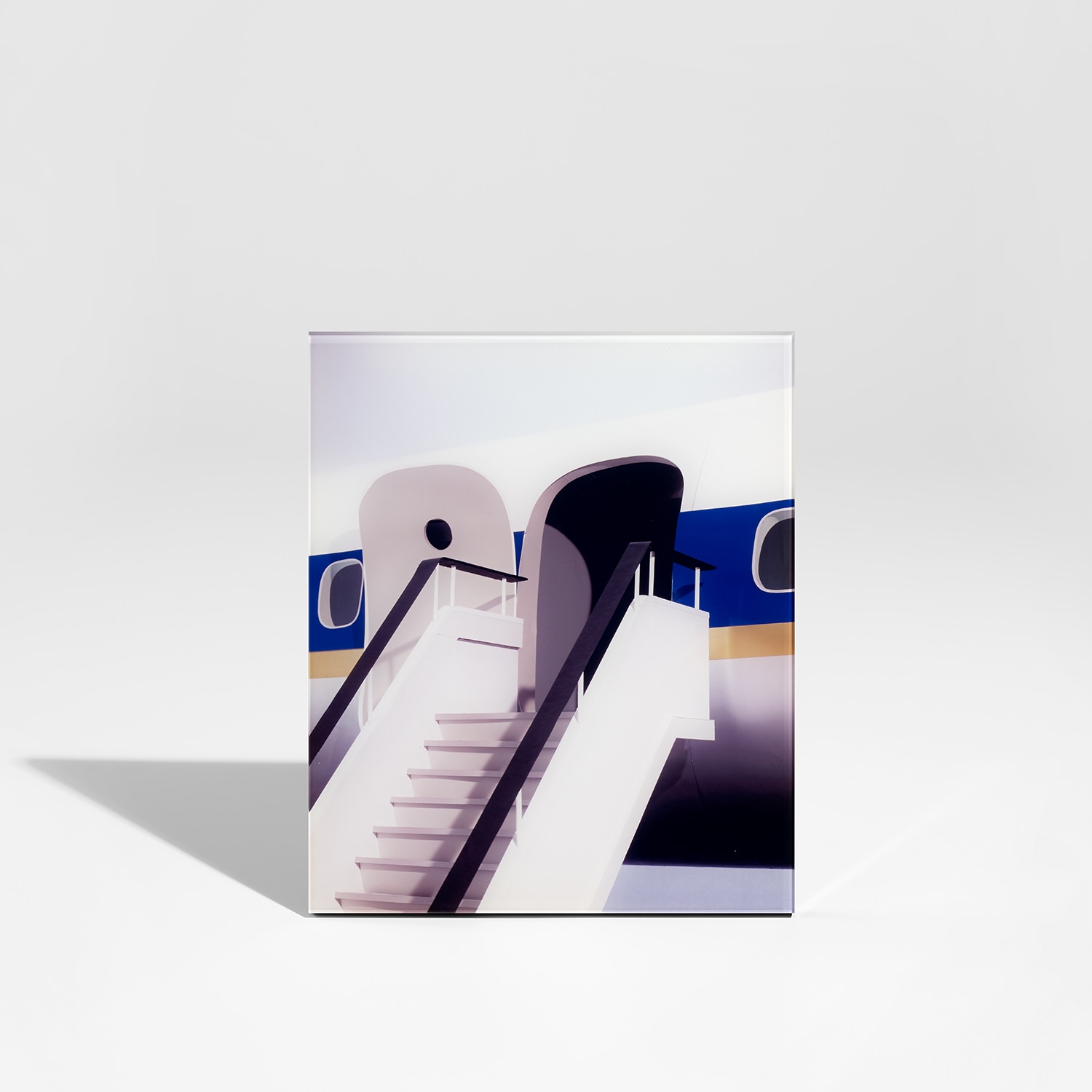
The signature works in Demand's catalogue have become touchstones of contemporary photography. Parlament, which depicts the interior of the room in Saddam Hussein's bombed Baghdad headquarters, stripped of any human presence and rendered in Demand's characteristic pale, airless light, is among the most discussed political images in recent art. Laboratory from 2000 recreates the workspace of a scientific facility with clinical precision, the absence of any human figure making the space feel both purposeful and abandoned simultaneously. Grube from 1999, depicting a pit or excavation site, and Gangway, with its vertiginous sense of institutional non space, both demonstrate Demand's gift for finding the uncanny within the entirely ordinary.
“The model is not the subject. The photograph is not the model. Each step involves a loss, and that loss is the work.”
Thomas Demand, catalogue essay
What unites these works is not subject matter but atmosphere: a sense that reality has been processed, filtered, and returned to us as something simultaneously familiar and deeply strange. Balkonee and Ruine from 2017 show the continued evolution of Demand's thinking. In recent years he has expanded his vocabulary to include works that engage more directly with natural forms and with architectural decay, allowing a new warmth and even a kind of melancholy to enter compositions that earlier felt more coolly analytical. The Vault works, face mounted to Plexiglas in the manner that has become associated with the highest production standards in contemporary photography, demonstrate his continued commitment to the physical presence of the print as object, not merely image.
Thomas Demand
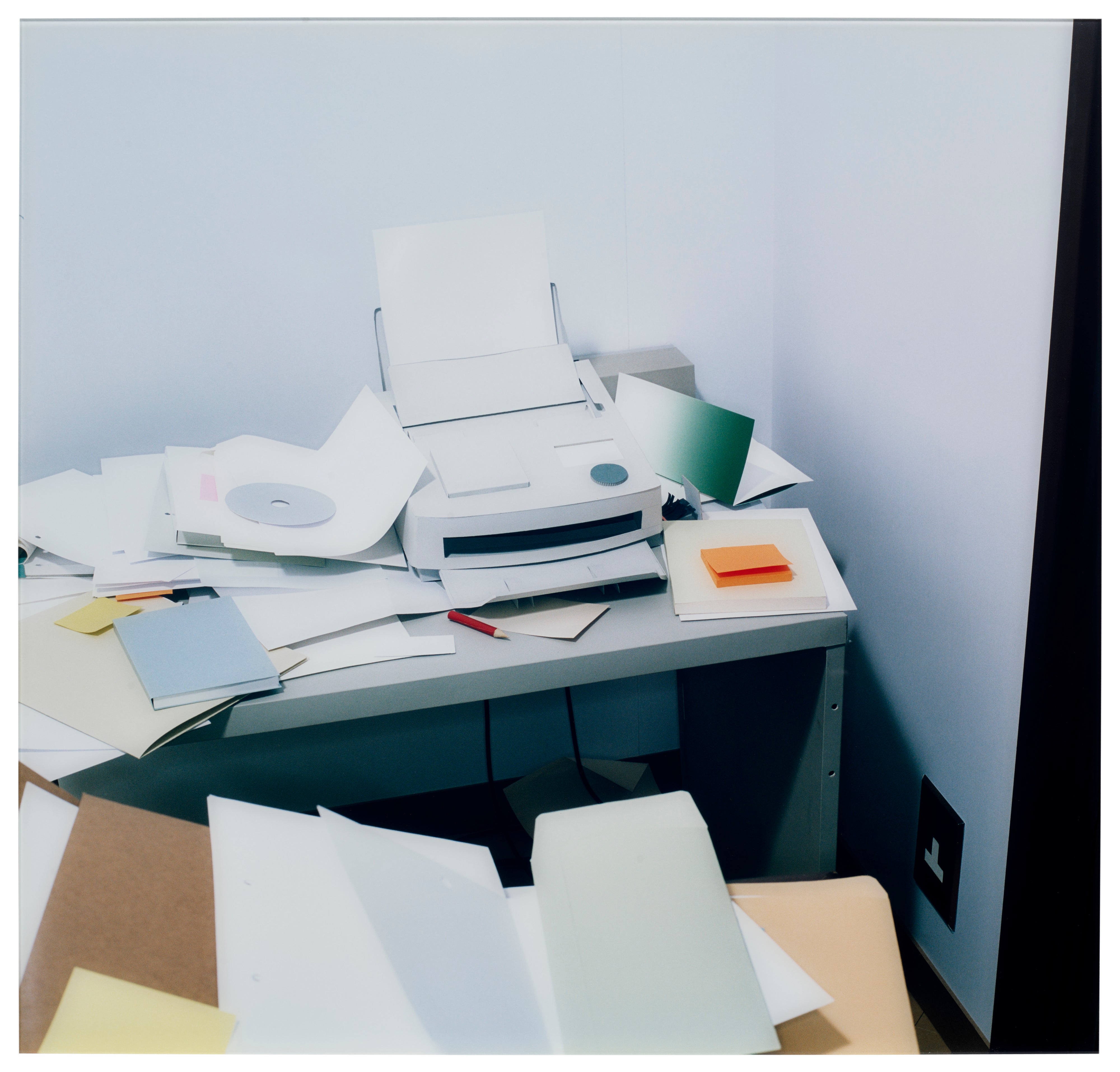
Detail XIV, 2007
The Diasec mounted Lambda prints on black acrylic glass that characterize works like Gangway are among the most technically demanding objects in the medium, and their material authority is inseparable from their visual effect. For collectors, Demand represents one of the most intellectually serious and market validated positions within the generation of German photographers who transformed the medium from the 1990s onward. His work sits in close conversation with artists like Andreas Gursky, Thomas Struth, and Candida Höfer, all of whom emerged from or were influenced by the Düsseldorf school, as well as with contemporaries like Hiroshi Sugimoto, whose own large format photographs share Demand's interest in time, memory, and the uncanny dimensions of space. Demand's prints have performed consistently at auction across major houses, with institutions on multiple continents actively building their holdings.
Works from editions published by Edition Schellmann in Munich and New York carry particular significance, combining Demand's photographic practice with the impeccable publishing standards that house has long maintained. The condition and mounting of Demand's photographs matter greatly to collectors. Face mounted chromogenic prints on Plexiglas or Diasec mounted Lambda prints on acrylic glass represent the most desirable presentation, combining archival stability with the luminous depth that distinguishes Demand's surfaces from lesser reproductions. Artist's proofs, such as those from the Double Exposure series including Pile and Stapel, are especially sought after, offering collectors a foothold into Demand's practice at a level of rarity that standard editions cannot match.
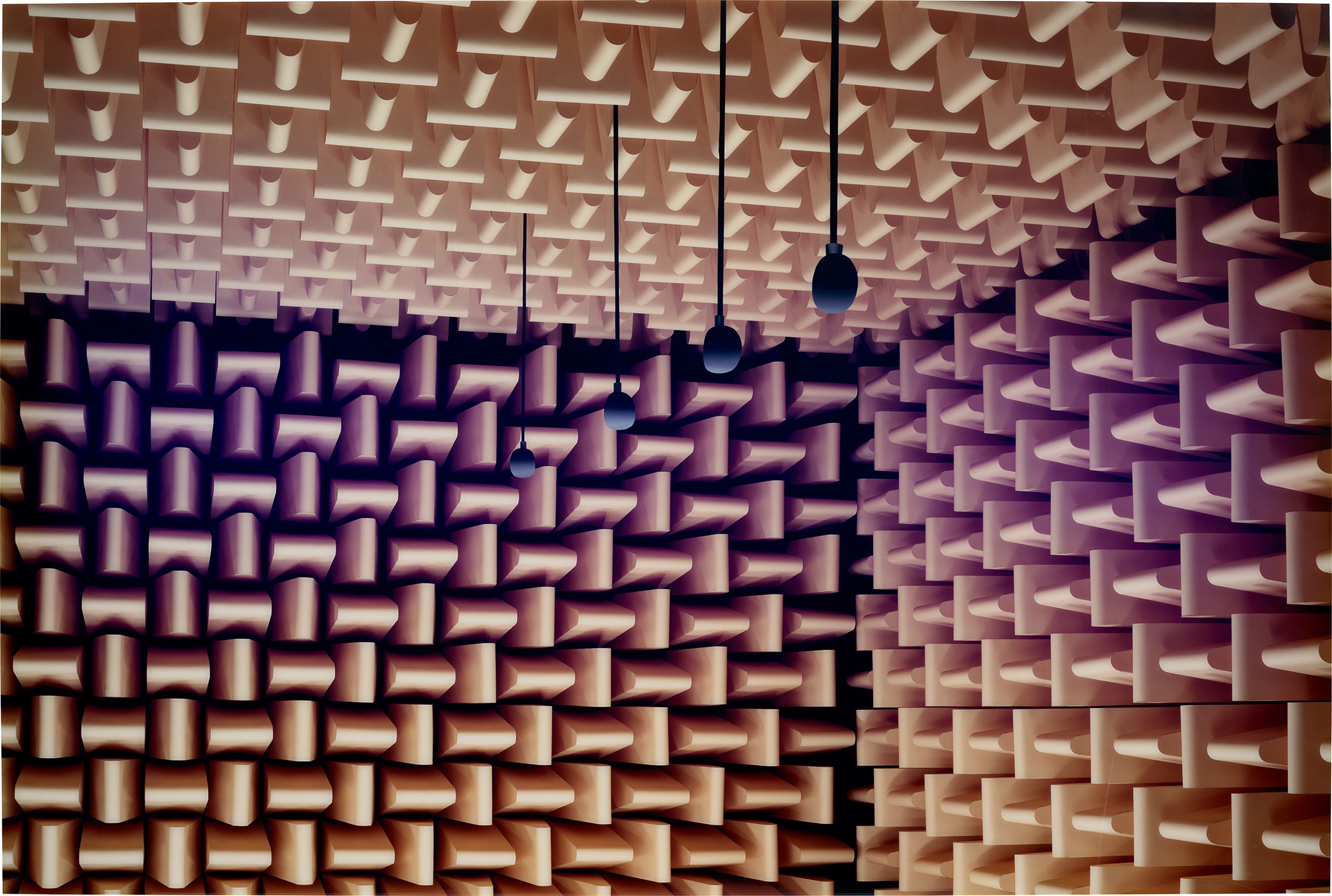
Thomas Demand
Laboratory (Labor), 2000
The signed and numbered examples carry both the legal authority of the edition and the intimate gesture of the artist's direct acknowledgment. Demand's importance to art history rests on something more durable than market performance or institutional prestige, though he has earned both in abundance. He arrived at a moment when photography's relationship to truth was becoming one of the central questions of cultural life, and he built an entire practice around the productive anxiety that question generates. His images do not document reality; they reconstruct it, filter it through human hands and human choices, and present the result as something that looks almost like a photograph of the world but is in fact a photograph of an idea about the world.
In this sense Demand is as much a philosopher as an artist, using the materials of paper, cardboard, and light to think through questions about memory, representation, and what it means to know something through an image. To collect Thomas Demand is to bring into one's home a sustained argument about how we see. His works ask to be lived with, returned to across seasons and years, their surfaces rewarding the kind of attention that great art always demands and great collections always provide. The Collection is proud to offer a range of his works, each one an invitation to that conversation.
Explore books about Thomas Demand
Thomas Demand
Peter Galassi
Thomas Demand: Catalogue Raisonné of Photographs 1992-2006
Thomas Demand, Hripsimé Viscaridi

Thomas Demand: Neuschwanstein
Various Contributors
Thomas Demand: Capitalism, Temporality, Photography
Okwui Enwezor

Thomas Demand: Retrospective
Museum of Modern Art
Thomas Demand
Iwona Blazwick