Théo van Rysselberghe
Light, Color, and the Luminous Belgian
Artist Spotlight · The Collection Editorial
Picture the Mediterranean coast in the early years of the twentieth century, the afternoon sun fragmenting across the water in a thousand points of pure color. Théo van Rysselberghe is standing before a canvas, his brush loaded not with blended pigment but with small, deliberate touches of unmixed paint, trusting the eye of the viewer to do the mixing. This was not simply a technique. It was a philosophy, a commitment to seeing the world as it truly is, in all its vibratory, shimmering aliveness.
Théo van Rysselberghe
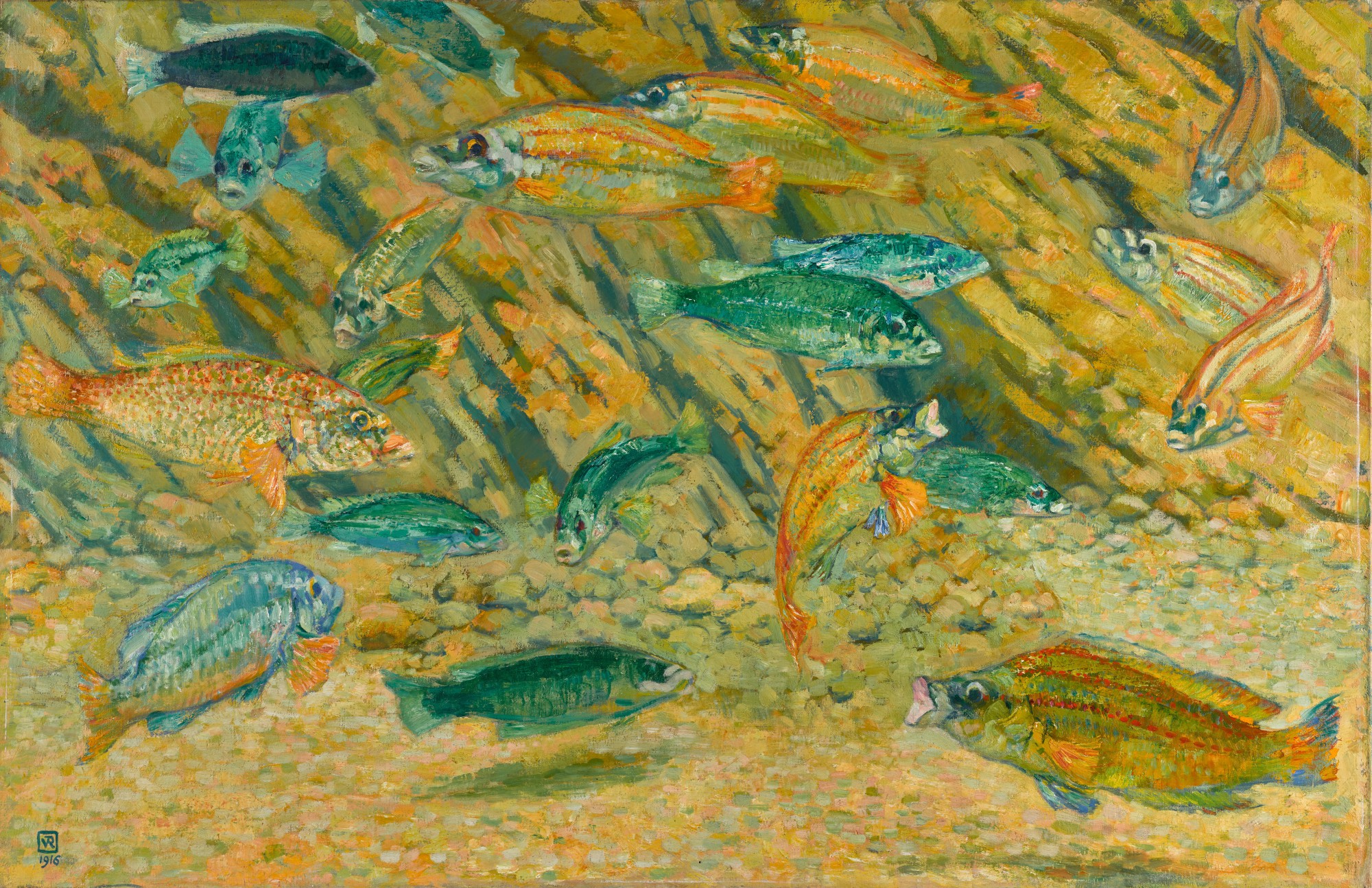
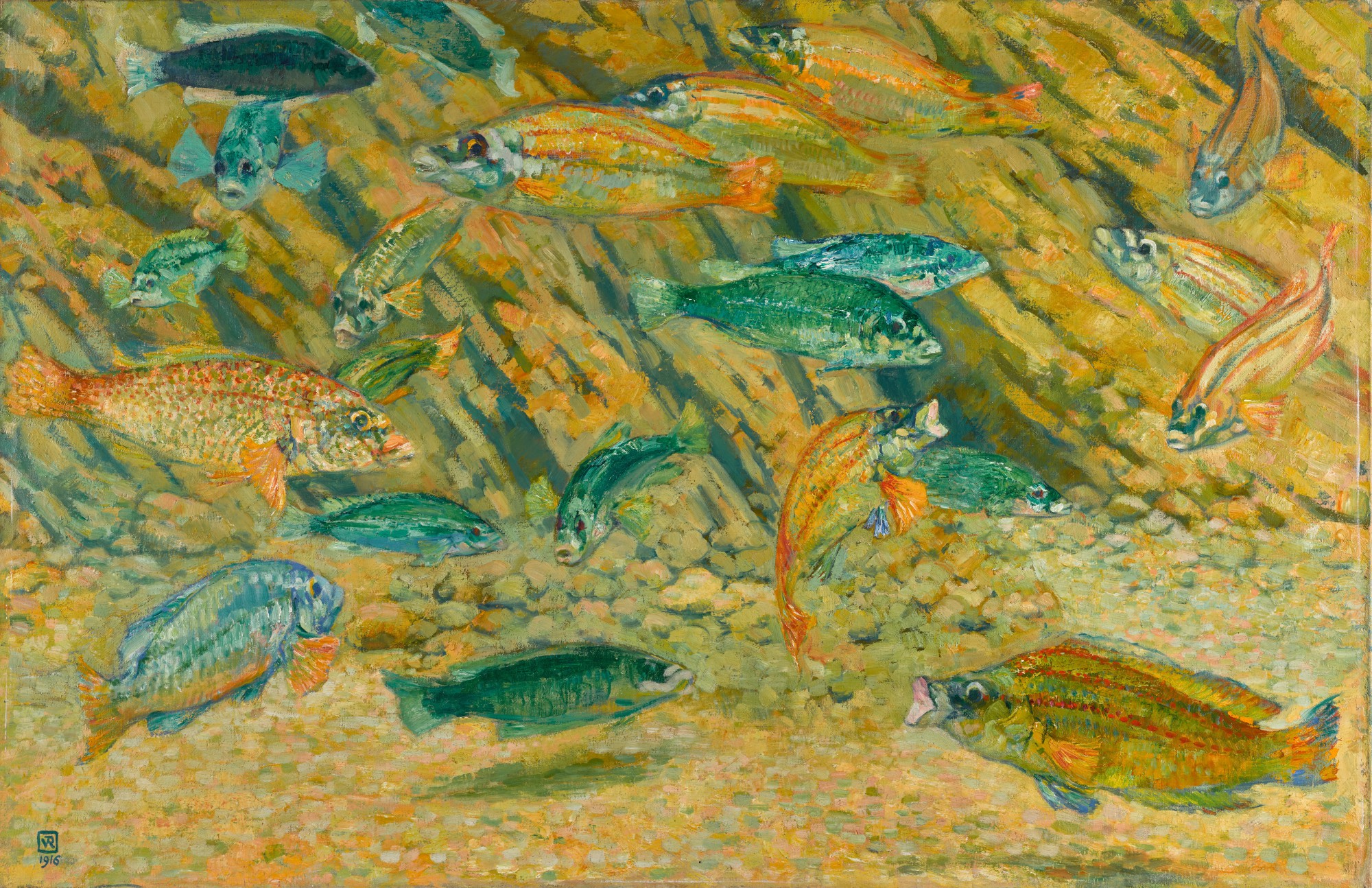
Vitrine d’aquarium (labres), 1916
More than a century later, his canvases still hum with that same electric conviction, and institutions and collectors across Europe and North America continue to rediscover why he remains one of the great figures of Belgian modernism. Van Rysselberghe was born in Ghent in 1862, into a bourgeois family that gave him both the material comfort and the cultural exposure to pursue painting seriously from an early age. He studied at the Académie des Beaux Arts in Ghent and later in Brussels, where he absorbed the academic training of the era without being captured by it. What truly shaped him was his restless curiosity and his social intelligence, a gift for finding the most intellectually alive people in any room.
By his mid twenties he had become a founding member of Les XX, the radical Brussels exhibition society that would become one of the most important platforms for avant garde art in Europe during the 1880s and 1890s. Through Les XX he encountered the work of Georges Seurat, Paul Signac, and the full flowering of French Post Impressionism, and the encounter changed everything. The transformation in his practice came swiftly and decisively. After meeting Seurat in Paris around 1886 and studying the principles of chromoluminarism firsthand, van Rysselberghe embraced Pointillism with the conviction of a true believer.
Théo van Rysselberghe
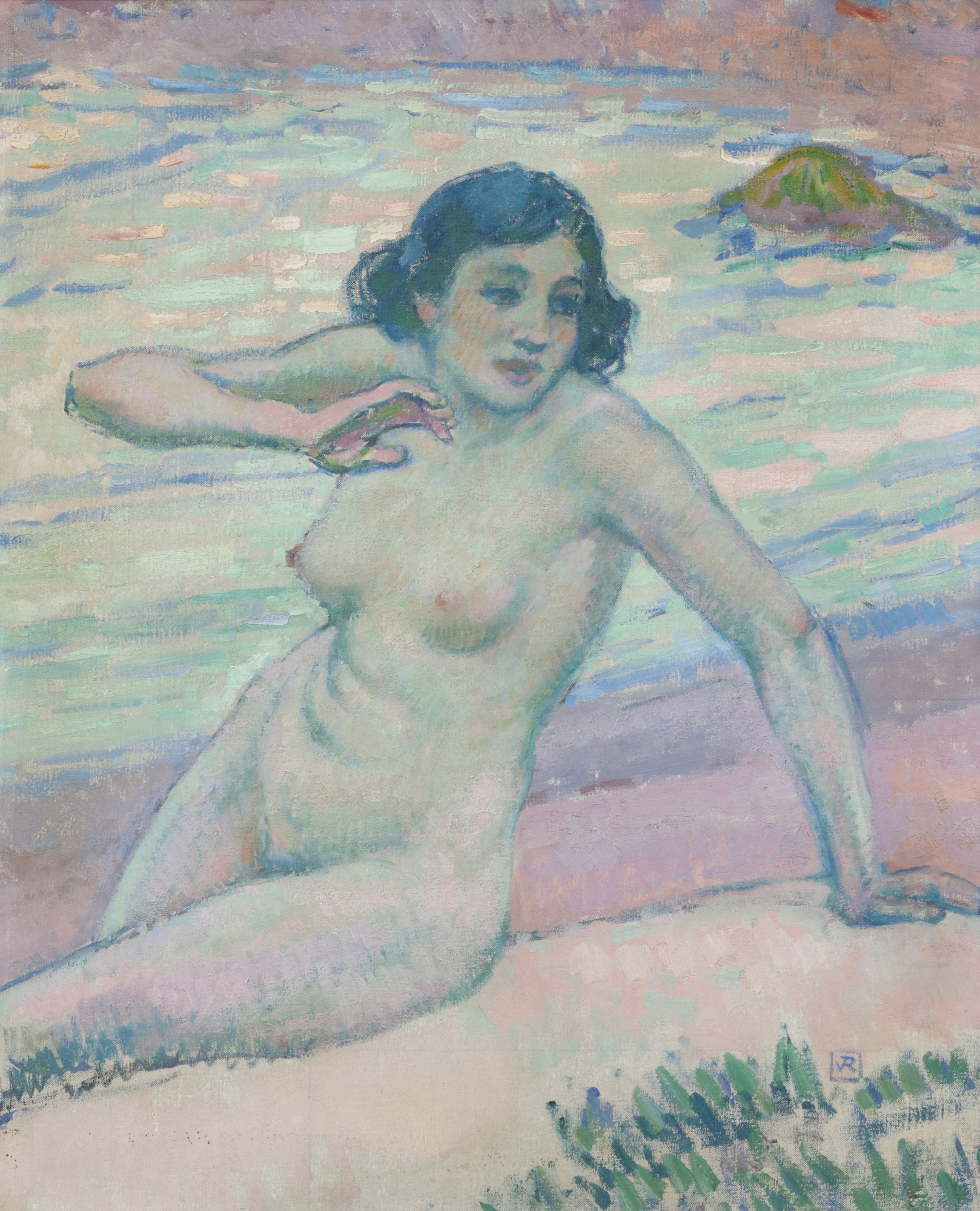
Baigneuse, 1909
His early naturalistic painting gave way to a disciplined, joyous application of pure color in small strokes, and the results were immediate and striking. Works from the late 1880s such as Pluie fine, painted in 1887, show him already experimenting with atmospheric effects and the dissolution of form into light, even as he retained a firm command of composition and spatial structure. He was never merely an imitator. Where Seurat could be cool and monumental, van Rysselberghe brought warmth, intimacy, and an unmistakable delight in the pleasures of everyday life.
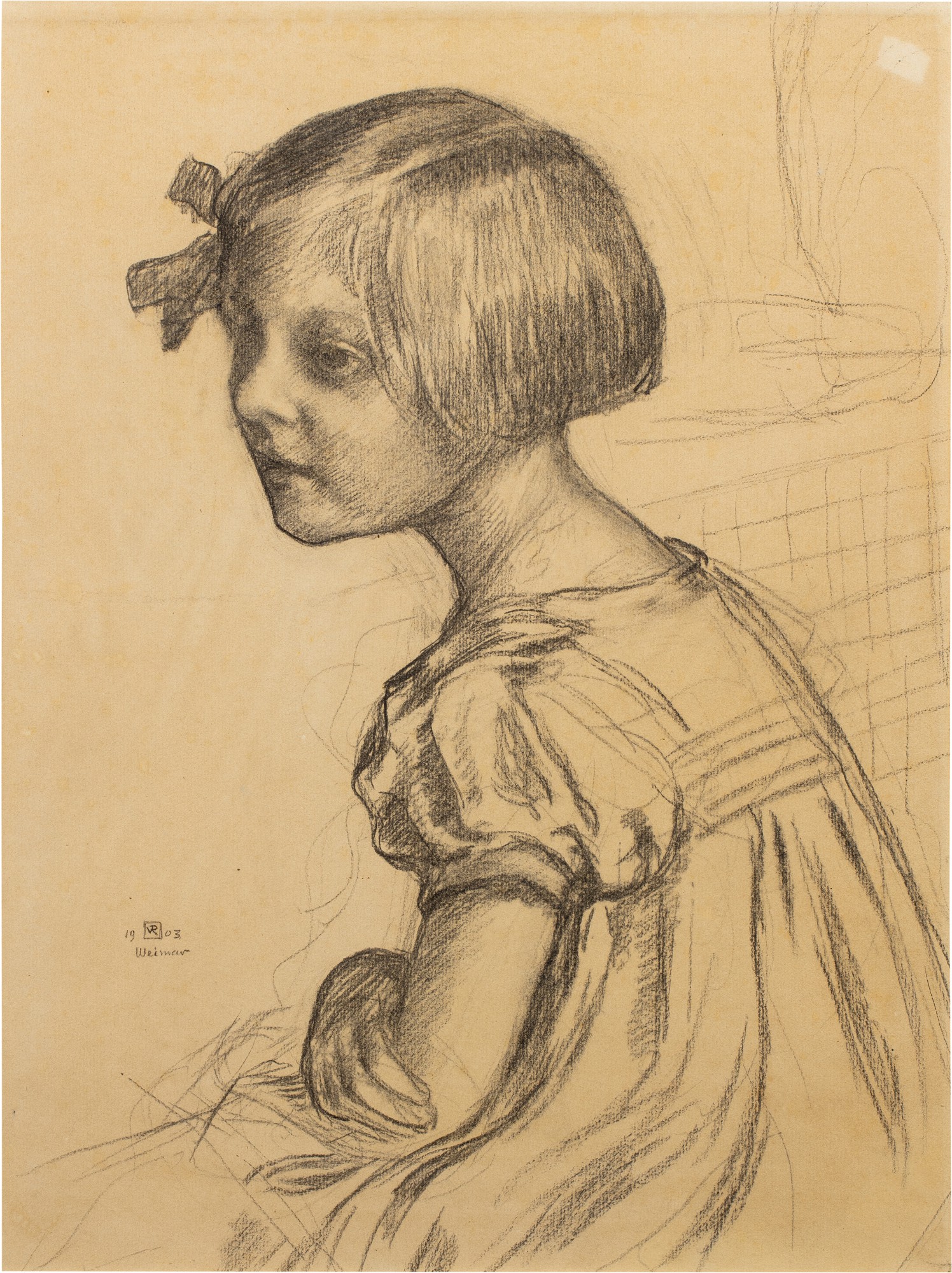
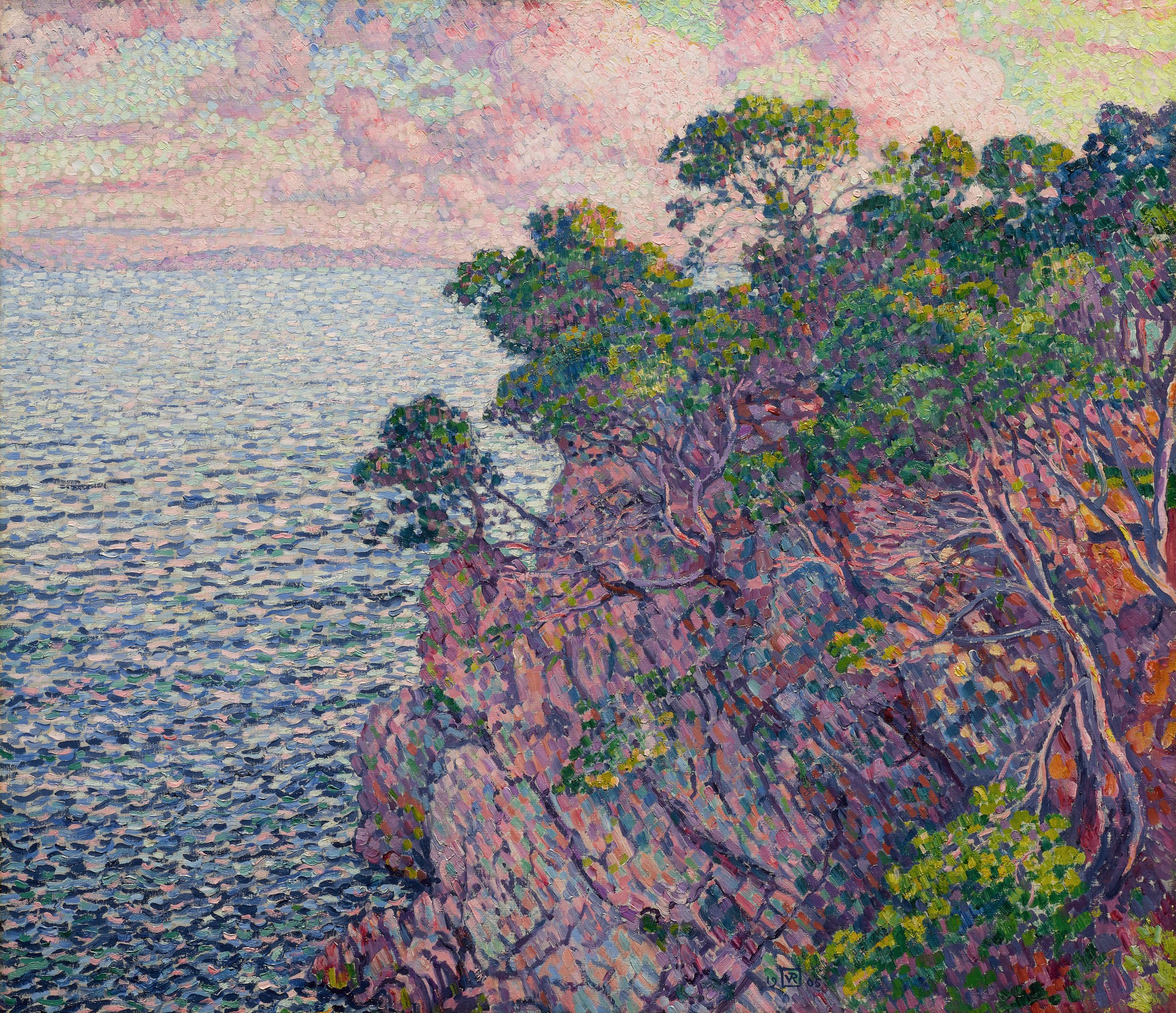
His range across subject matter is one of the qualities that most impresses collectors today. He was a superb portraitist, capable of investing the formal demands of a commissioned likeness with genuine psychological presence. His 1903 charcoal on paper Mademoiselle Cornélie van de Velde demonstrates his draftsmanship at its most refined, the hatched marks building luminosity and character simultaneously. He was equally at home with landscape, and works like La pointe du Rossignol (Cap Layet) from 1905 show his ability to render the particular quality of light on the southern French coast with a sensory accuracy that still feels immediate.
Théo van Rysselberghe
Mademoiselle Cornélie van de Velde, 1903
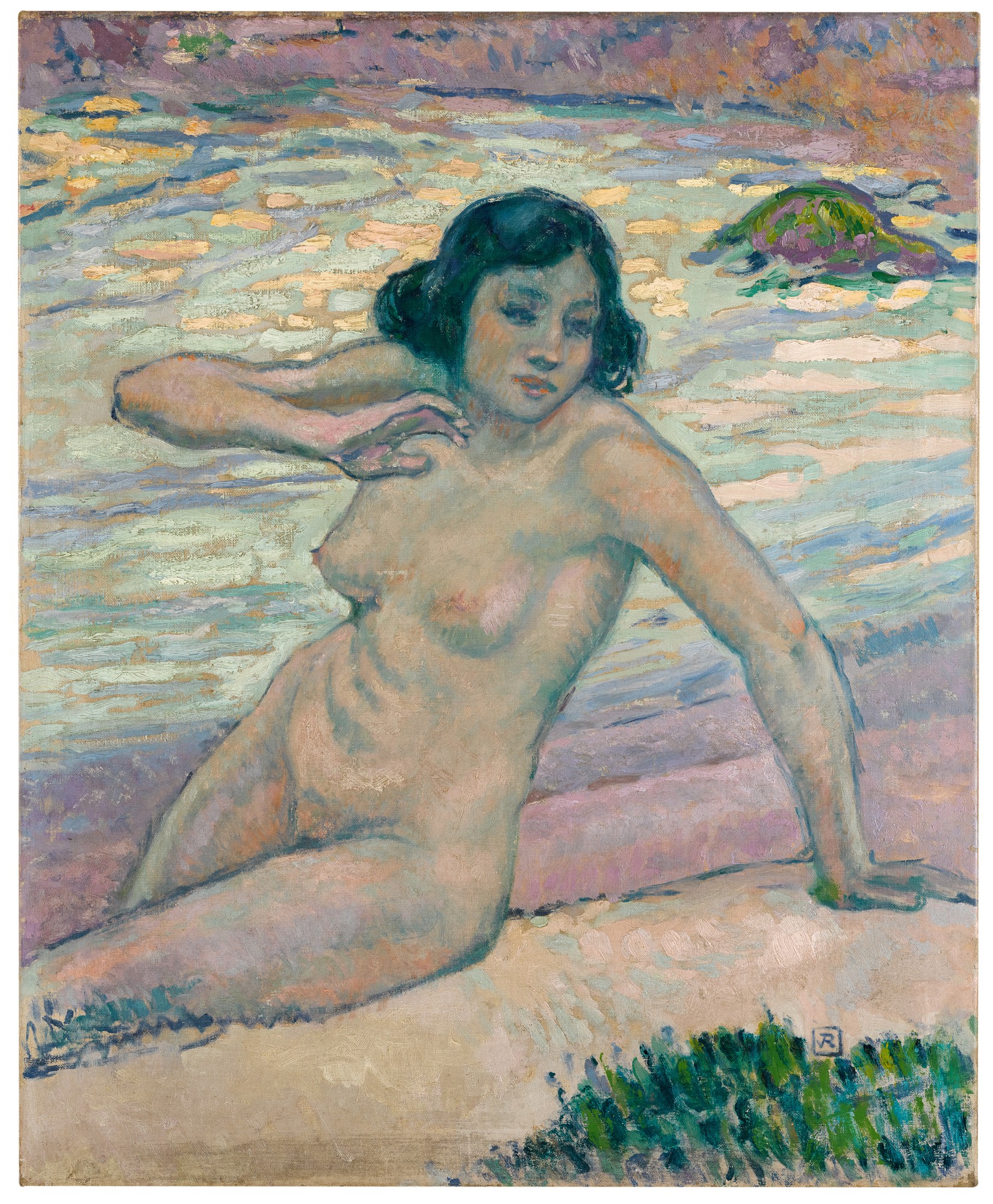
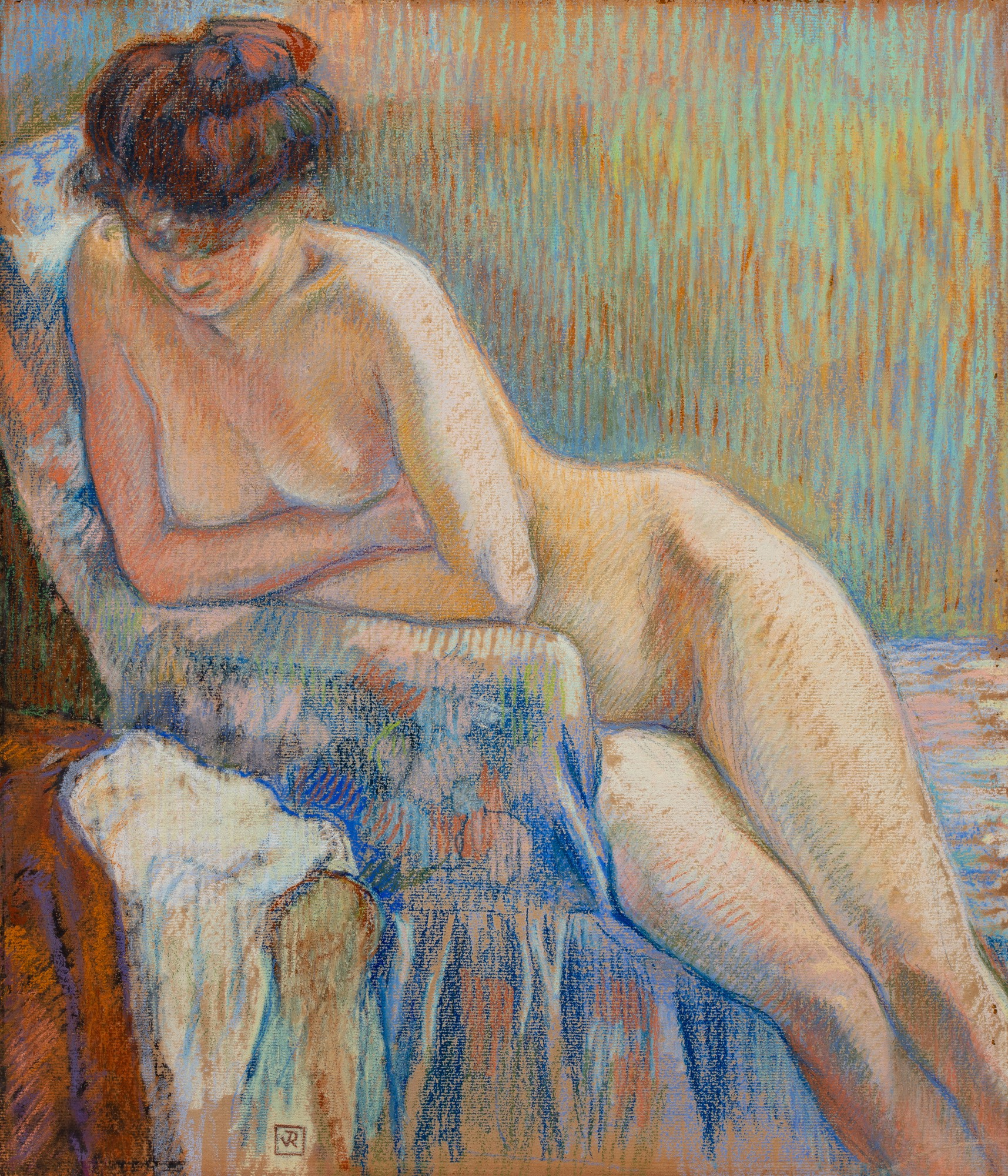
His figure paintings, including the celebrated Baigneuse of 1909 and the related Étude pour Après la baignade from the same year, place him squarely in the tradition of European painters who found in the bathing figure a vehicle for exploring light, flesh, and the relationship between the body and its natural environment. The pastel Nu assis aux bras croisés, also from 1905, reveals how he could achieve in works on paper the same chromatic richness that he commanded in oil. Van Rysselberghe was also a committed graphic artist and designer, a dimension of his practice that speaks to his engagement with the broader visual culture of his moment. His 1897 color lithograph Poster for the Lembrée Gallery is a confident and beautiful object, showing his fluency in the decorative language of Art Nouveau while maintaining the chromatic sensibility he had developed through Pointillism.
His marine paintings, among them the magnificent Flottille d'Arnemuiden of 1896, demonstrate his command of large scale composition and his ability to animate a canvas with the rhythmic movement of water and sky. The later still life Vitrine d'aquarium (labres), painted in 1916, is a reminder that he never stopped looking closely at the natural world, finding in an aquarium tank the same optical mysteries he had pursued for decades at the sea's edge. His work on paper, including pieces like Roses grimpantes, shows the full arc of an artist who moved with genuine ease across media and genre. On the market, van Rysselberghe occupies a position of consistent and growing respect.
Théo van Rysselberghe
La pointe du Rossignol (Cap Layet), 1905
His work appears regularly at the major auction houses, with strong results particularly for his Pointillist landscapes and his figure paintings. Belgian collectors have long championed him, and his presence in major European museum collections, including the Royal Museums of Fine Arts of Belgium in Brussels and the Kröller Müller Museum in the Netherlands, has provided the institutional foundation that sustains long term market confidence. For private collectors, the appeal is multifaceted. His work is visually generous and genuinely pleasurable to live with, while also carrying serious art historical weight.
Works on paper and smaller panels offer entry points at a range of price levels, while major oils represent serious and defensible investments for the most committed buyers. His natural context within art history is among the Neo Impressionists, alongside Signac, Henri Edmond Cross, and Maximilien Luce, as well as his fellow Belgian pioneers including Fernand Khnopff and Jan Toorop, both of whom were fellow members of Les XX. He shared with these artists an ambition to move painting beyond mere representation toward something more felt and more absolute. Yet van Rysselberghe always retained a humanist warmth that distinguishes him, an abiding pleasure in people, places, and the sensory textures of lived experience.
He spent significant periods in Paris and in the south of France, where proximity to Signac and Cross deepened his commitment to color theory, and he remained a central figure in the international network of progressive artists and writers that included Émile Verhaeren, the Belgian poet with whom he maintained a lifelong friendship. What makes van Rysselberghe matter today is not simply that he was a skilled practitioner of a historically important style. It is that his paintings continue to do what only the finest art can do: they alter your perception of the world you return to after looking at them. The light in his canvases is not a record of light observed.
It is light reconstituted, rebuilt from first principles, and offered back to the viewer as a kind of gift. For any collector who believes that art should be a daily source of wonder and renewal, his work is an extraordinary, enduring proposition.
Featured Works
Explore books about Théo van Rysselberghe
Théo van Rysselberghe
Francine-Claire Legrand
Théo van Rysselberghe: Catalogue Raisonné
Antoinette Mangin-Legrand
Van Rysselberghe and the Neo-Impressionists
Ronald Pickvance
Théo van Rysselberghe: Correspondance
Antoinette Mangin
Belgian Painting in the Nineteenth Century
Pierre Baudson