Terry Winters
Terry Winters: Where Nature Thinks in Paint
Artist Spotlight · The Collection Editorial
When the Museum of Modern Art presented a major survey of Terry Winters' work, something clarified itself for a whole generation of painters and collectors who had long sensed that abstract art still had urgent, unfinished business. Winters occupies a position in American art that is at once deeply rooted in tradition and genuinely exploratory, a painter who has spent more than four decades building a visual language capable of describing the invisible architectures of living systems. His canvases feel like dispatches from the interior of matter itself, places where cells divide, networks pulse, and organic forms negotiate their relationship to geometry and chance. That enduring ambition has made him one of the most quietly indispensable figures working in contemporary abstraction.
Terry Winters
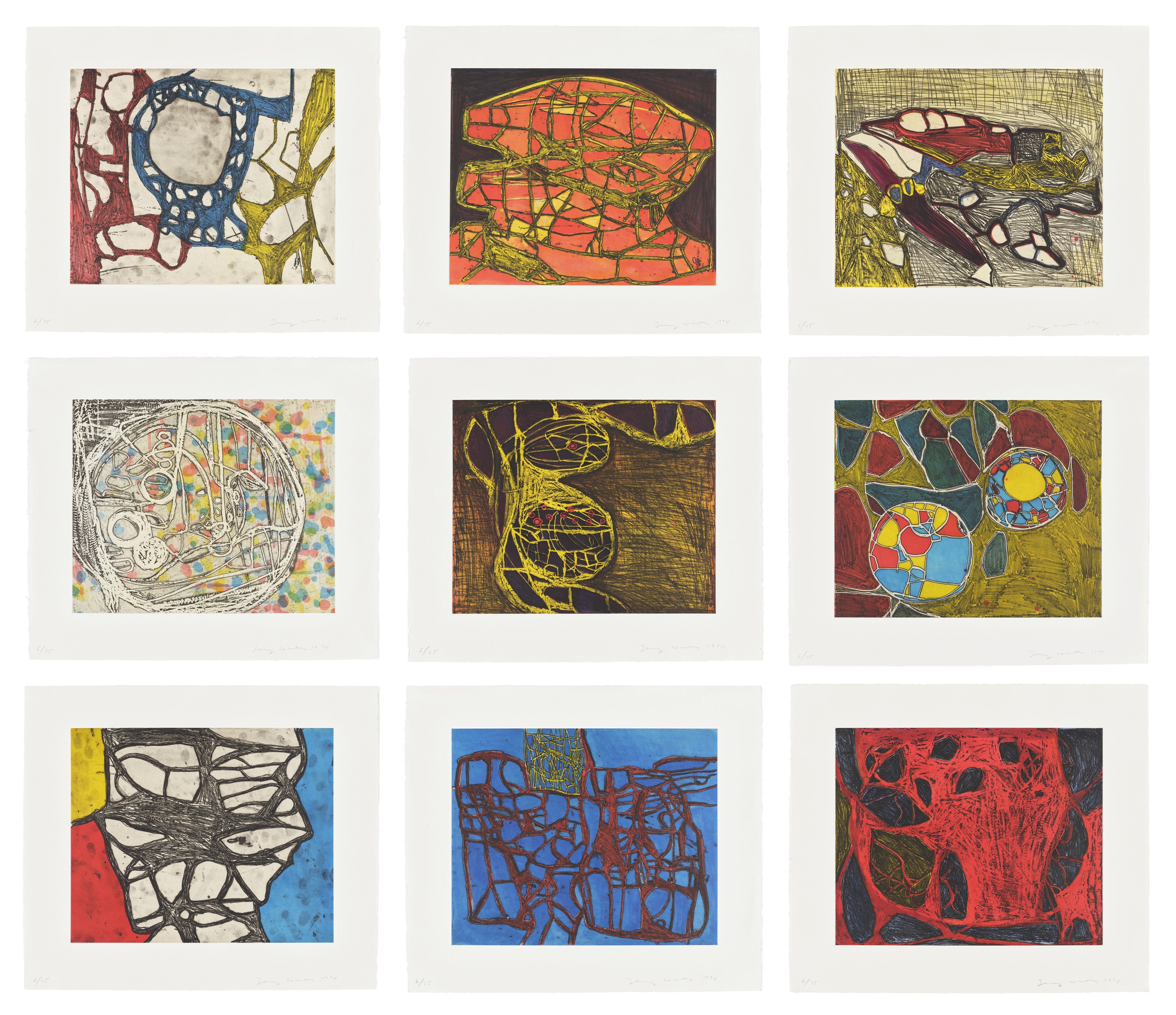
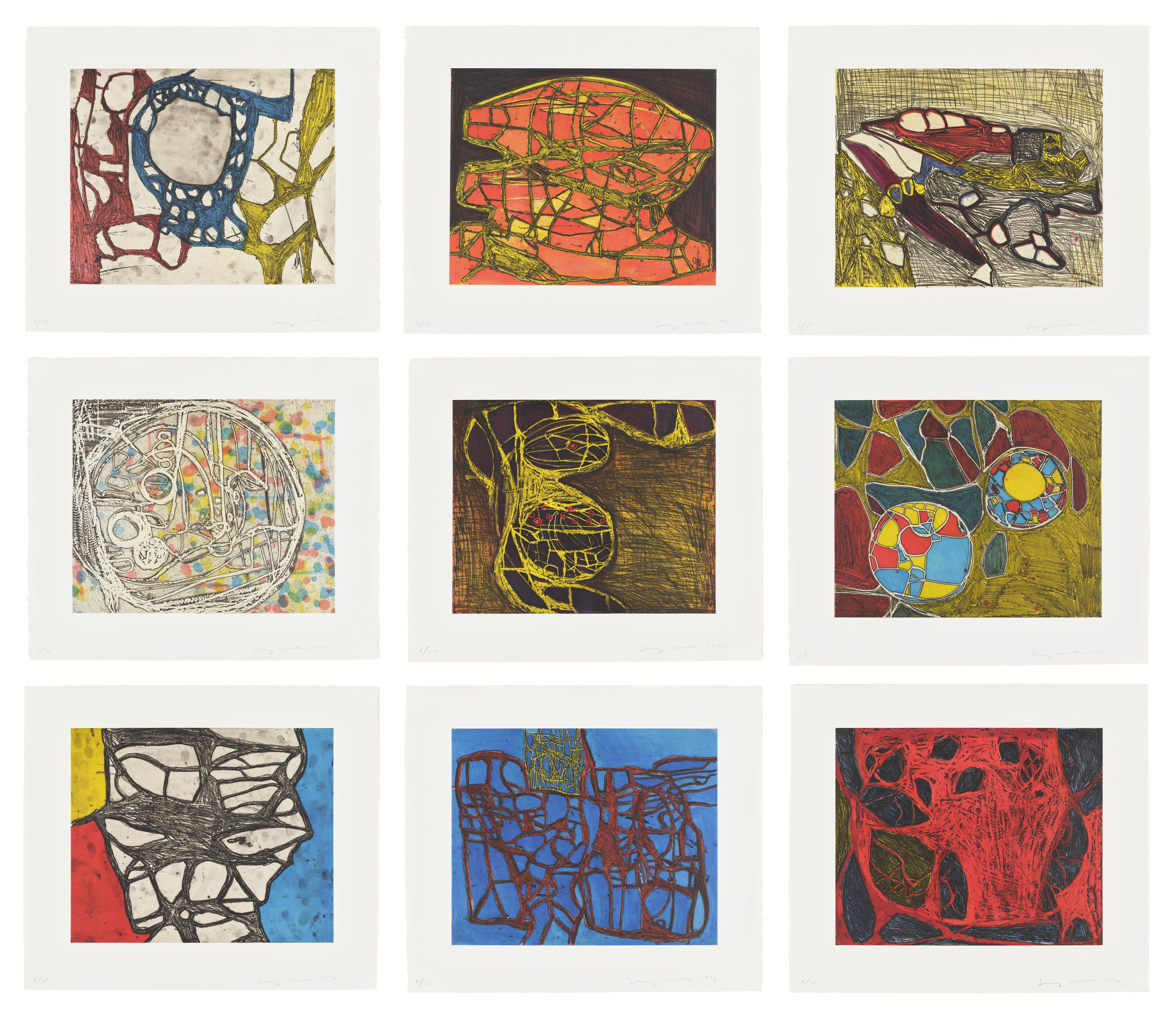
Models for Synthetic Pictures: nine plates (S. 97-98, 100, 102, 104-108, A. & K. 26.01-26.02, 26.04, 26.06, 26.08-26.12)
Winters was born in Brooklyn in 1949, and the borough's particular texture of density and improvisation seems to have left a permanent mark on his sensibility. He studied at the Pratt Institute in New York, where he absorbed the discipline of craft alongside a deep awareness of modernist painting's competing lineages. The New York art world of the 1970s was a place of intense argument and fertile cross pollination, and Winters came of age amid conversations between formalism and expressionism, between the legacy of Abstract Expressionism and the cooler propositions of Minimalism. Rather than choosing sides, he found a third path, one rooted in close observation of the natural world and a hunger to discover what paint could do when it was asked to describe things that microscopes and botanists had only recently learned to see.
His emergence as a distinctive voice in American painting came in the early 1980s, when he began showing at the Sonnabend Gallery in New York. The work he brought to those early exhibitions announced something genuinely new: paintings in which dense, layered surfaces seemed to encode information like biological specimens pressed between glass slides. Critics and curators responded immediately to the richness of his visual thinking, and by the mid 1980s Winters had been recognized alongside contemporaries like Elizabeth Murray and Carroll Dunham as part of a generation reinvesting painting with intellectual and material urgency. His inclusion in major group exhibitions at institutions including the Whitney Museum of American Art helped cement his reputation as a painter whose concerns were as conceptually serious as they were visually compelling.
Terry Winters
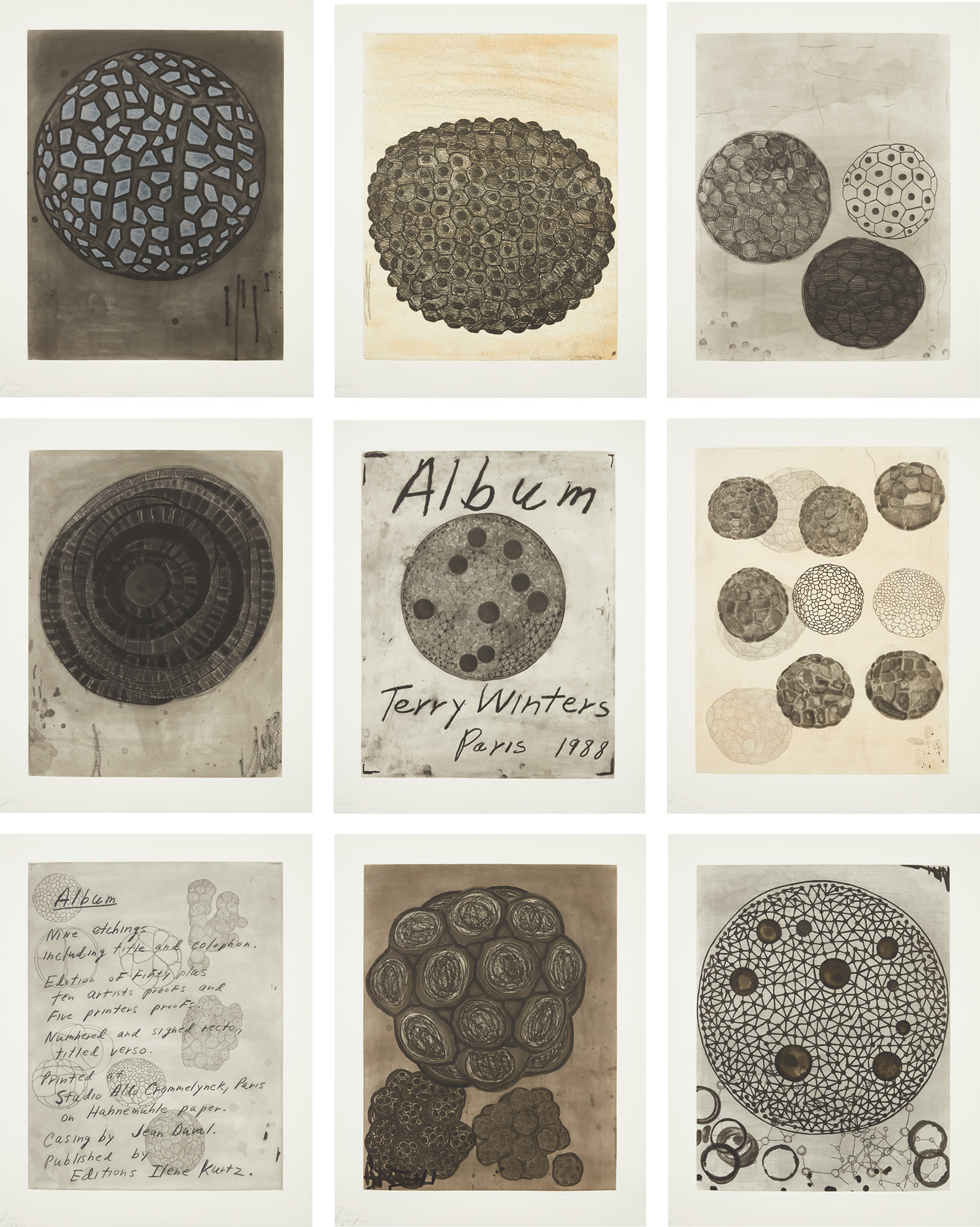
Album
The development of Winters' practice across the 1990s and into the twenty first century reveals an artist of remarkable consistency of purpose combined with genuine restlessness of method. Works such as Luminance from 2002 and Standardgraph/3 from 2003 demonstrate his ability to sustain tension between control and accident, between the diagrammatic precision of scientific illustration and the unpredictable physicality of oil on canvas or linen. Strata, a work on linen that takes its subtitle from the geological language of layered sediment, exemplifies his approach to pictorial space as something accumulated rather than simply depicted. These paintings reward prolonged looking in a way that feels increasingly rare: they disclose their structures gradually, like organisms revealing their internal logic to a patient observer.
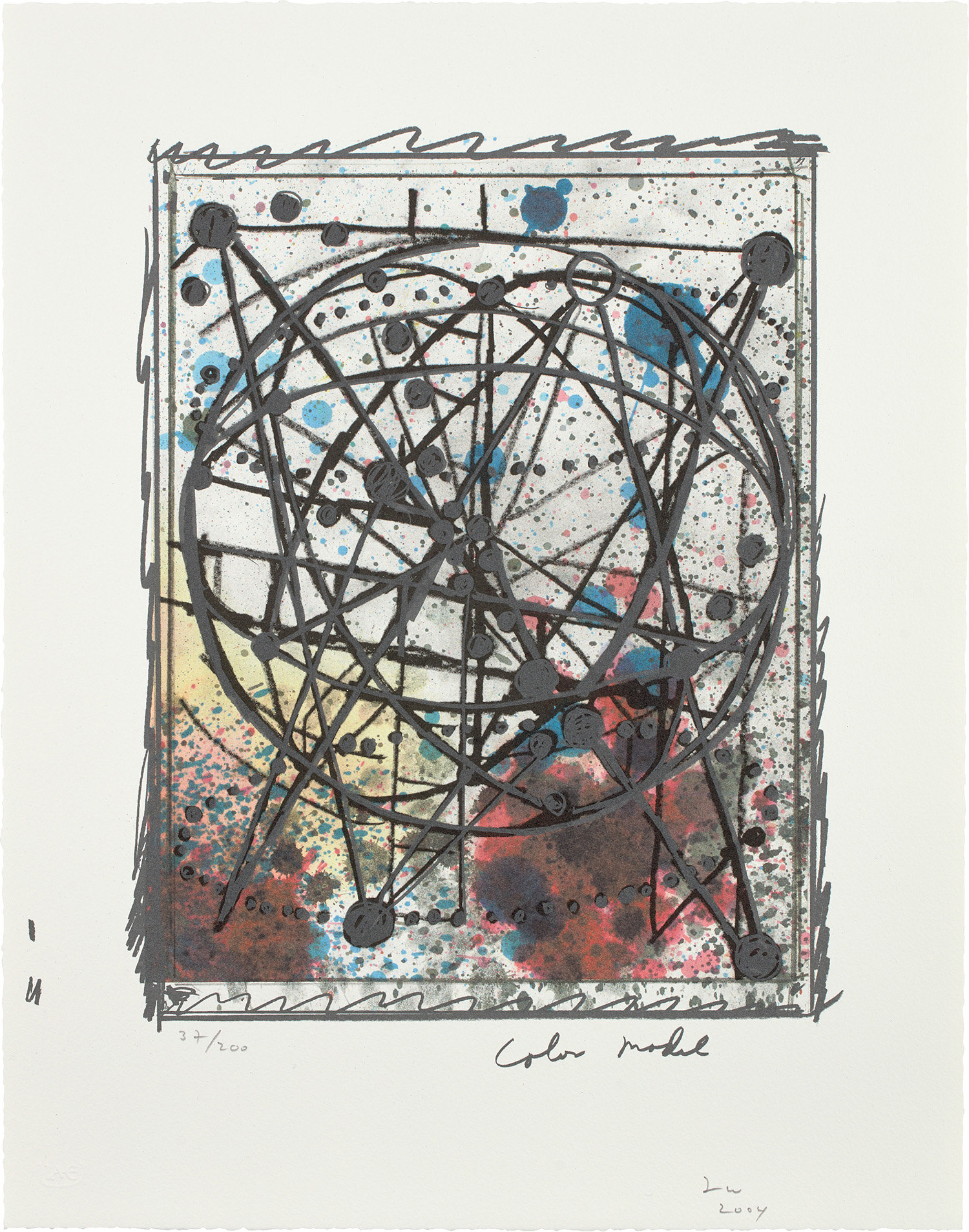
Winters' commitment to printmaking runs parallel to his painting practice and deserves recognition in its own right. The suite Models for Synthetic Pictures, a set of etchings and aquatints in colors executed on Gampi Chine collé to Lana Gravure paper and issued in a distinguished portfolio, represents one of the most accomplished examples of his graphic sensibility. The Album series, published by Editions Ilene Kurtz in New York, and Intervals, published by Two Palms Press, further demonstrate his facility with the particular demands and pleasures of the printed medium. His lithographs, including Grid from the Suite of Nine Lithographs and Color Model, a lithograph with inkjet on Somerset paper, show how seamlessly his visual thinking translates across techniques.
Terry Winters
Color Model
The Tate Gallery in London and the Metropolitan Museum of Art in New York both hold significant examples of his prints, a recognition that his work in this medium achieves the same level of ambition and resolution as his painting. For collectors, Winters presents a compelling proposition. His works occupy a position in the market that reflects both critical consensus and genuine rarity: the most important canvases from key periods in the 1980s and 1990s rarely come to auction, which means that when they do appear, they attract serious institutional and private interest. The prints offer a more accessible point of entry while retaining the conceptual richness and visual sophistication of his broader practice.
Works on paper from his major published suites are particularly sought after by collectors who appreciate the intersection of technical mastery and sustained artistic vision. What distinguishes Winters' market is the loyalty of those who collect him: his buyers tend to live with his work for a long time, finding new layers of meaning as their own understanding of his sources and intentions deepens. To place Winters in art historical context is to understand something important about the American painting tradition he both inherits and extends. His work speaks to the biomorphic abstraction of Arshile Gorky and the late Surrealist lineage that fed into Abstract Expressionism, while his interest in systems, networks, and the visual vocabulary of science puts him in conversation with artists like Dorothea Rockburne and Brice Marden, who also sought to ground abstract practice in external structures of thought.
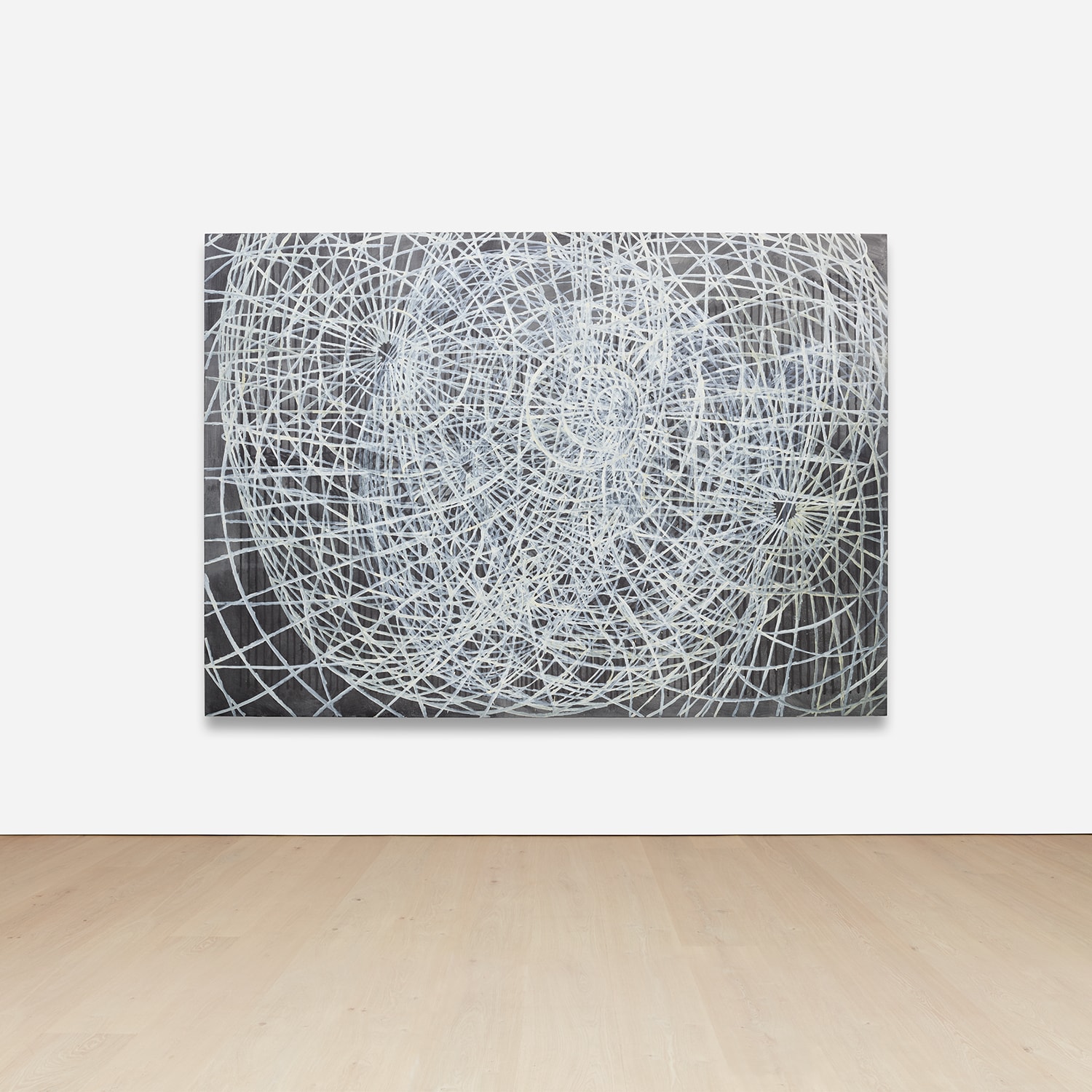
Terry Winters
Luminance, 2002
There is something of Philip Guston's willingness to embrace the impure and the difficult in Winters' surfaces, and something of Agnes Martin's meditative patience in his approach to pictorial repetition and variation. He is, in the best sense, a painter's painter, someone whose decisions at the level of individual mark and overall composition continue to inform younger artists working in abstraction today. The lasting significance of Terry Winters lies in his demonstration that abstract painting can be genuinely curious about the world without becoming illustrational, that it can draw on the visual languages of science, botany, and topology while remaining irreducibly itself. At a moment when painting is being reconsidered and revalued across institutions and the primary market alike, his work offers a model of sustained seriousness and aesthetic pleasure that feels not only relevant but necessary.
To encounter a Winters painting or a Winters print is to be reminded that the surface of a canvas can still be a site of genuine discovery, a place where the patterns underlying growth, connection, and transformation become, briefly and beautifully, visible.
Explore books about Terry Winters
Terry Winters
Robert Storr
Terry Winters: Paintings 1981-1990
Roberta Smith
Terry Winters: A Catalogue Raisonné of Paintings and Drawings
Gagosian Gallery
Terry Winters: Etchings and Prints 1981-2002
Paul Donnelly
Terry Winters
David Moos