Tauba Auerbach
Tauba Auerbach Folds the World Open
Artist Spotlight · The Collection Editorial
“I want the paintings to have a physical presence that you feel before you understand it.”
Tauba Auerbach
In the fall of 2023, Tauba Auerbach's survey exhibition at the Institute of Contemporary Art in Los Angeles drew sustained attention from critics, collectors, and fellow artists alike, cementing a reputation that had been building steadily for nearly two decades. The show gathered paintings, sculptures, and artist books that together read as a single, coherent inquiry into the nature of perception itself. Standing before those works, visitors found themselves unsure whether they were looking at a flat surface or a three dimensional object, whether the pattern before them was printed, woven, or somehow born from the canvas itself. That productive uncertainty is precisely the point.
Tauba Auerbach
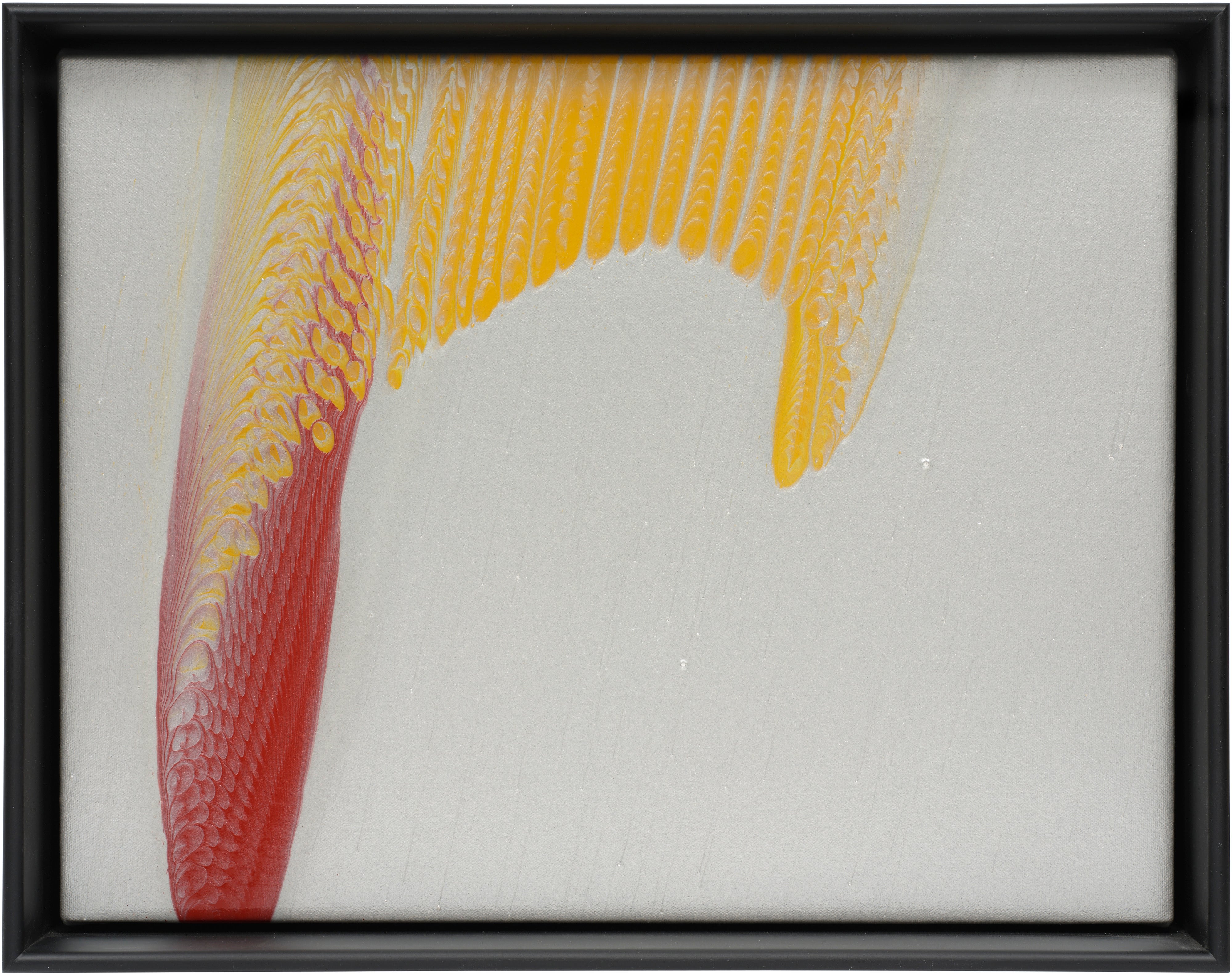
Extended Object, 2019
Auerbach was born in San Francisco in 1981 and grew up in the Bay Area at a moment when the region's particular confluence of technology, counterculture, and rigorous academic life made it fertile ground for interdisciplinary thinking. They studied painting at Stanford University, graduating in 2003 with a foundation in both fine art and the kind of analytical curiosity that would come to define their practice. The Bay Area's legacy of conceptual experimentation, from the early work emerging out of the San Francisco Art Institute to the mathematical playfulness associated with artists like MC Escher whose prints circulated widely in that intellectual climate, shaped a sensibility that has never been content to stay inside a single discipline. After moving to New York in the mid 2000s, Auerbach began developing the bodies of work that would bring them international attention.
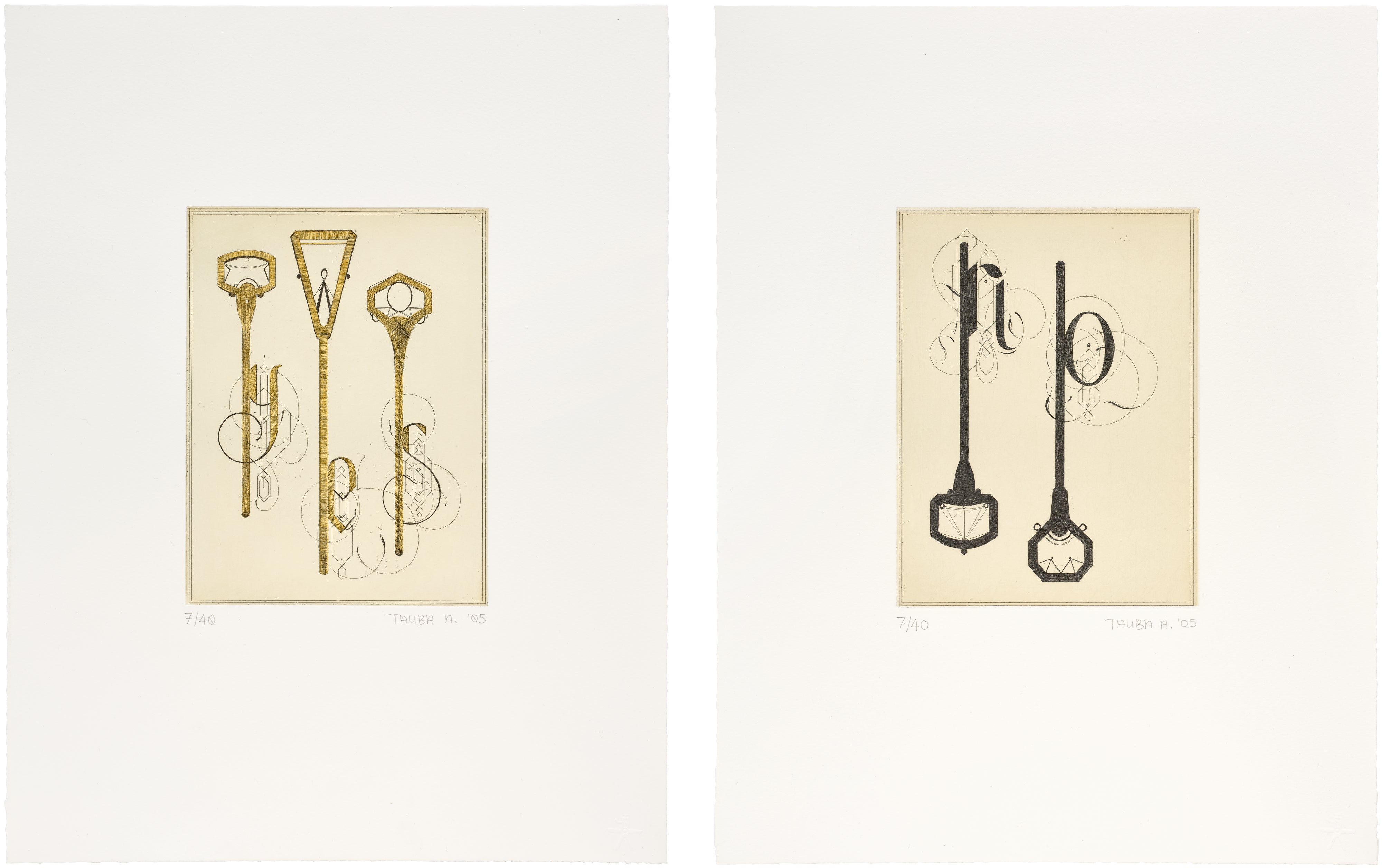
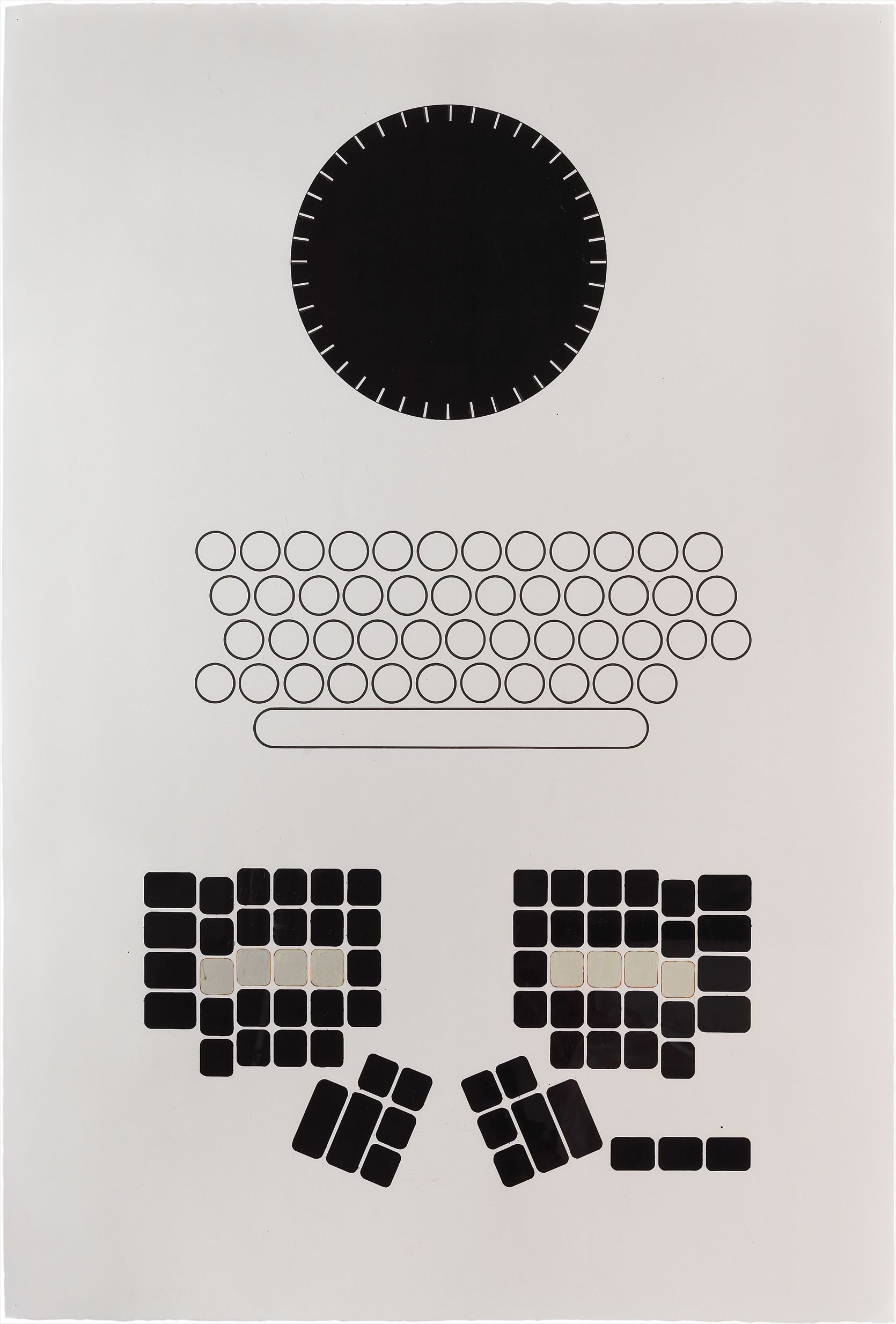
Early paintings featuring intricate typographic and linguistic systems, including works exploring the QWERTY keyboard layout and various indexing systems, announced an artist fascinated by the hidden structures that organize human knowledge and visual experience. These works, some rendered in ink and gouache on paper with exacting precision, demonstrated a draftsmanship and conceptual rigor that set them apart from the painterly abstraction that dominated their immediate peer group. The leap from letterforms to optical phenomena felt, in retrospect, entirely logical. The folded canvas works that emerged in the late 2000s and early 2010s represent one of the most genuinely original contributions to the history of abstraction in recent memory.
Tauba Auerbach
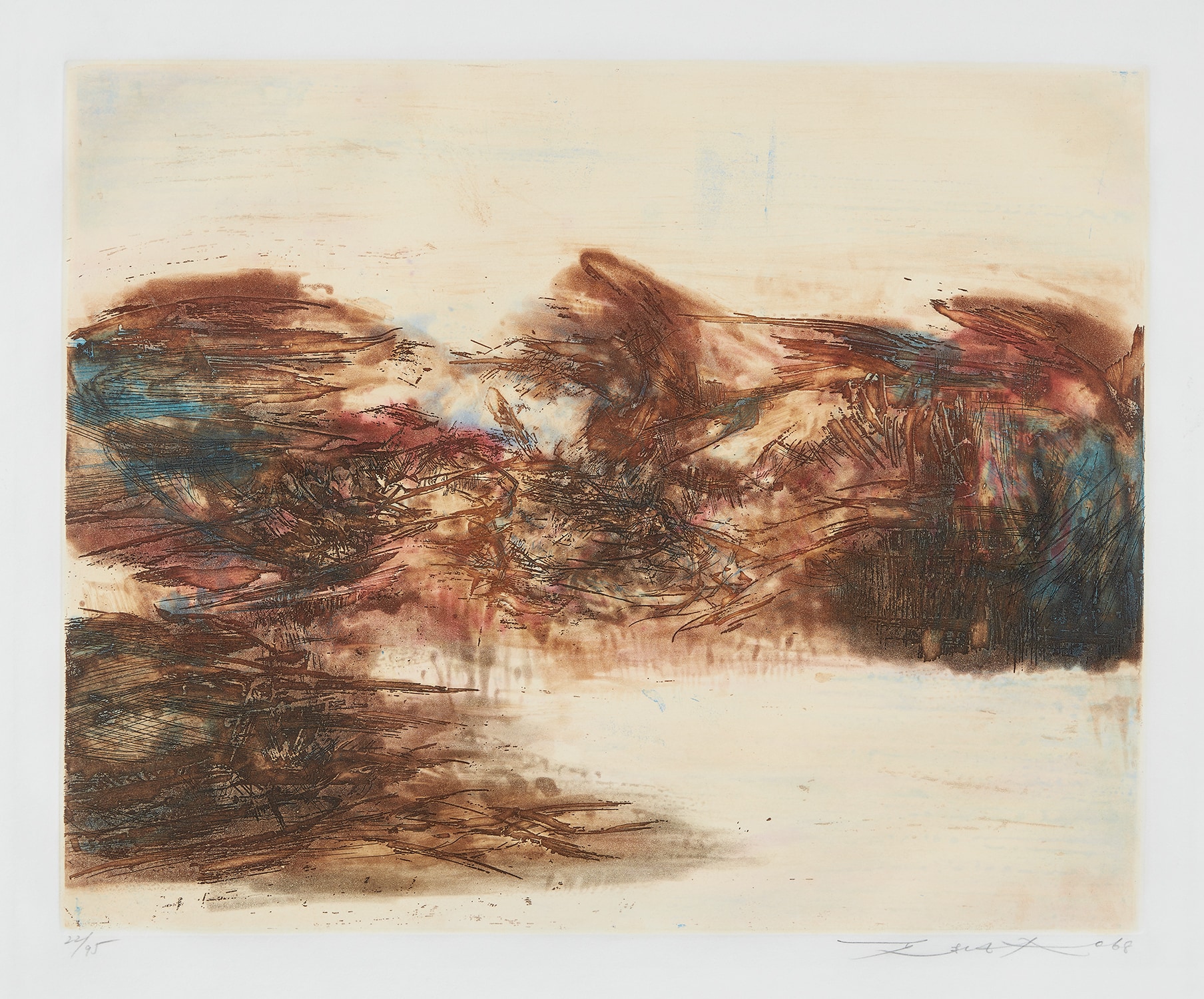
Plate Distortion II; and Plate Distortion III
In these paintings, Auerbach would fold the canvas before applying paint, then unfold it to reveal a surface that carries the memory of its own dimensional past. The result is something that photographic reproduction consistently fails to capture: a surface that seems to breathe, to shift between two and three dimensions as the viewer moves. Works like the Untitled Fold paintings demonstrate that the history of abstraction, from Color Field painting through Minimalism, still has room for genuinely new moves when an artist approaches it with sufficient intellectual ambition. The Mesh and Moire print series, published in collaboration with Paulson Fontaine Press in San Francisco, extended these investigations into the medium of printmaking with remarkable results.
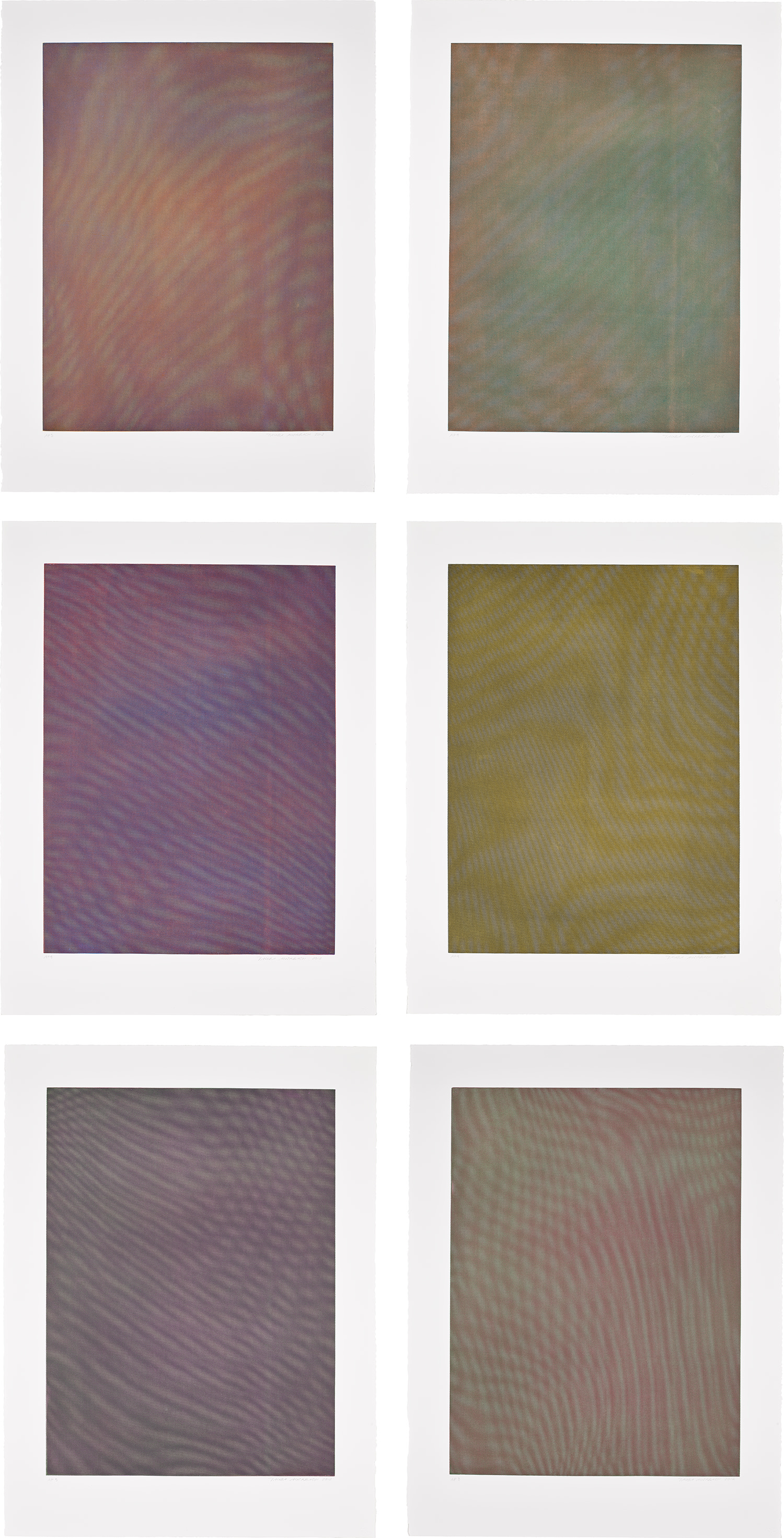
The Mesh/Moire prints, issued in editions of 40 with 10 artist's proofs, use the inherent properties of overlapping grids to produce shimmering optical effects that seem to move even on a static sheet of paper. Paulson Fontaine, one of the most respected fine art print publishers in the United States, brought exacting technical skill to the project, and the collaboration produced works that reward close study in ways that distinguish them from most contemporary print editions. Similarly, the Plate Distortion series, produced with Paulson Bott Press in Berkeley, uses aquatint in colors on Kozo paper Chine colle to explore how a flat surface can suggest curvature and spatial distortion. These prints are among the most intellectually and visually satisfying works Auerbach has made available in multiple editions, and they remain a compelling entry point for collectors at various levels.
Tauba Auerbach
Edland 1892 Indexing, JVCRAK and QWERTY
The artist books represent perhaps the least discussed but most intellectually rich dimension of Auerbach's practice. The work known as [2,3], a complete set of six die cut pop up books with screenprint in colors, housed in a blue cloth covered slipcase, is a work of extraordinary ambition. It engages directly with topological mathematics, specifically with the properties of three dimensional surfaces and their relationship to the flat page, and manages to do so with a formal elegance and material warmth that makes the mathematics feel embodied rather than diagrammatic. Auerbach has collaborated with the publishing house Publication Studio on several projects, and their commitment to the book as an art object in its own right places them in a distinguished lineage that includes Dieter Roth, Ed Ruscha, and Sol LeWitt.
From a collecting perspective, the breadth of Auerbach's practice offers genuine variety. Works on paper and print editions provide accessible points of entry, while the paintings, particularly the folded canvas works and the marbled abstractions in acrylic, command serious attention at major auction houses and in primary market sales through their longtime gallery partner Paula Cooper Gallery in New York. The Static series, chromogenic prints flush mounted to Alu Dibond, occupies a compelling middle ground between painting and photography, and the works hold their presence exceptionally well in residential and institutional settings alike. Collectors drawn to artists working at the intersection of science, mathematics, and aesthetics frequently find that Auerbach speaks to the same sensibility that draws them to work by Bridget Riley, whose Op Art investigations share a similar commitment to optical experience, or by Olafur Eliasson, whose installations make perceptual phenomena the primary medium.
Tauba Auerbach
Mesh/Moire I-VI
Within American abstraction specifically, Auerbach's closest points of comparison might be found in the materialist investigations of Dorothea Rockburne or the systems based painting of Robert Mangold, though Auerbach's chromatic range and topological ambition are distinctly their own. The question of legacy, for an artist still in their early forties, feels premature and yet somehow inevitable to raise. Auerbach has exhibited at the Whitney Museum of American Art, the San Francisco Museum of Modern Art, and in major international venues across Europe and Asia, accumulating an institutional record that most artists spend entire careers working toward. More importantly, the ideas they are pursuing, the relationship between mathematical structure and sensory experience, between the flat and the dimensional, between the rigorous and the lyrical, feel urgently relevant in a cultural moment when the nature of space and perception is being renegotiated by digital technology on a daily basis.
Auerbach is not making work about technology, but they are making work that helps us understand what it means to see, to feel a surface, to inhabit a body in three dimensional space. That is not a minor contribution. It is, in fact, exactly what painting is for.
Explore books about Tauba Auerbach
