Tania Franco Klein
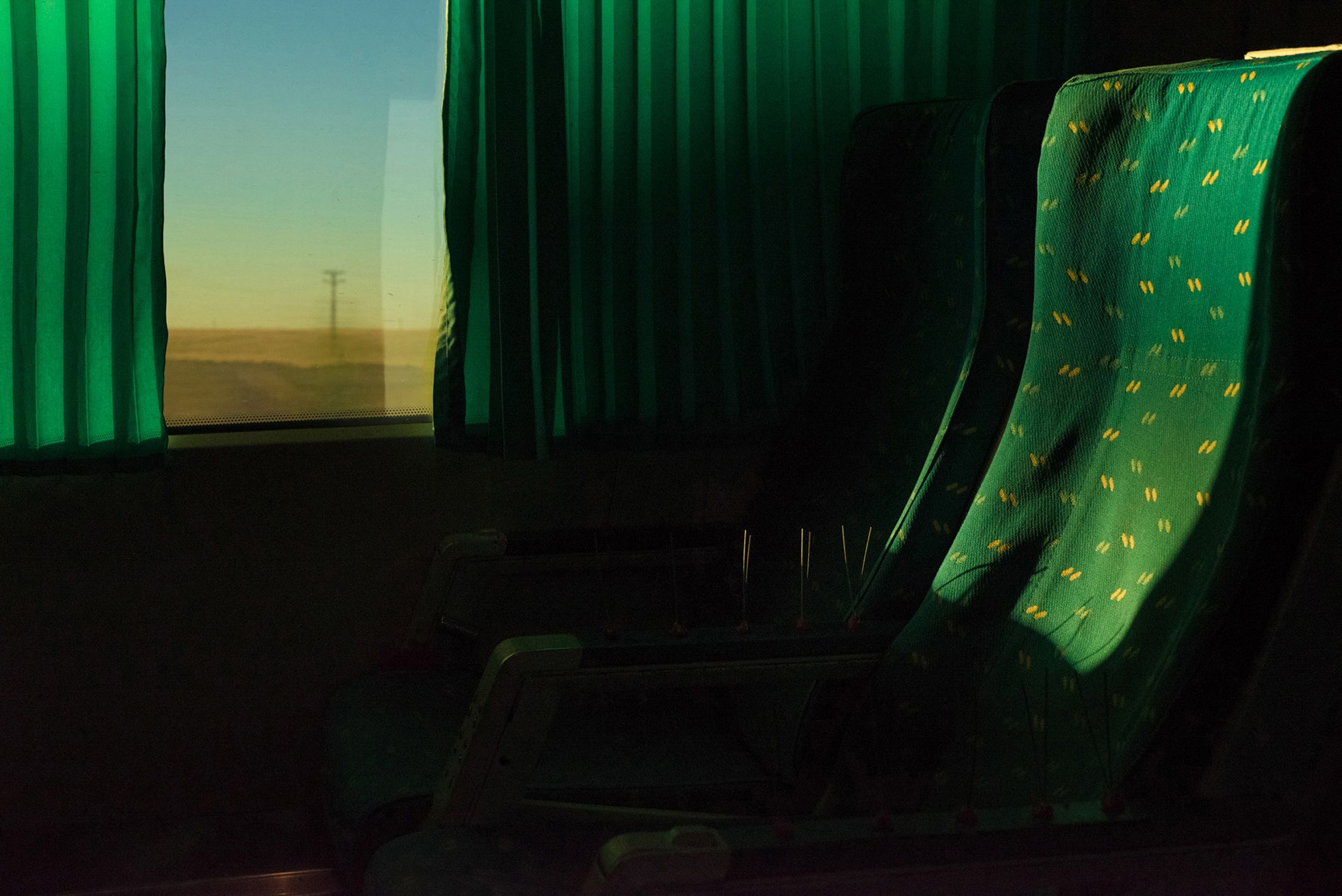
Tania Franco Klein Illuminates Our Beautiful Unease
Artist Spotlight · The Collection Editorial
There is a particular kind of attention that the art world reserves for artists who manage to make the familiar feel newly strange, and in recent years that attention has gathered with unmistakable intensity around Tania Franco Klein. The Mexican photographer and visual artist has moved steadily from cult recognition to something approaching essential status, with her work appearing in major international publications, prestigious gallery exhibitions across Europe and the Americas, and her celebrated monograph published by Aperture Foundation cementing her place in the contemporary canon. For collectors and curators alike, the conversation around Franco Klein is no longer one of discovery but of depth, a reckoning with an artist whose vision has proven both deeply personal and uncannily universal. Born in Mexico in 1990, Franco Klein came of age in a world already saturated by screens, advertising aesthetics, and the peculiar emotional texture of late consumer capitalism.
Tania Franco Klein
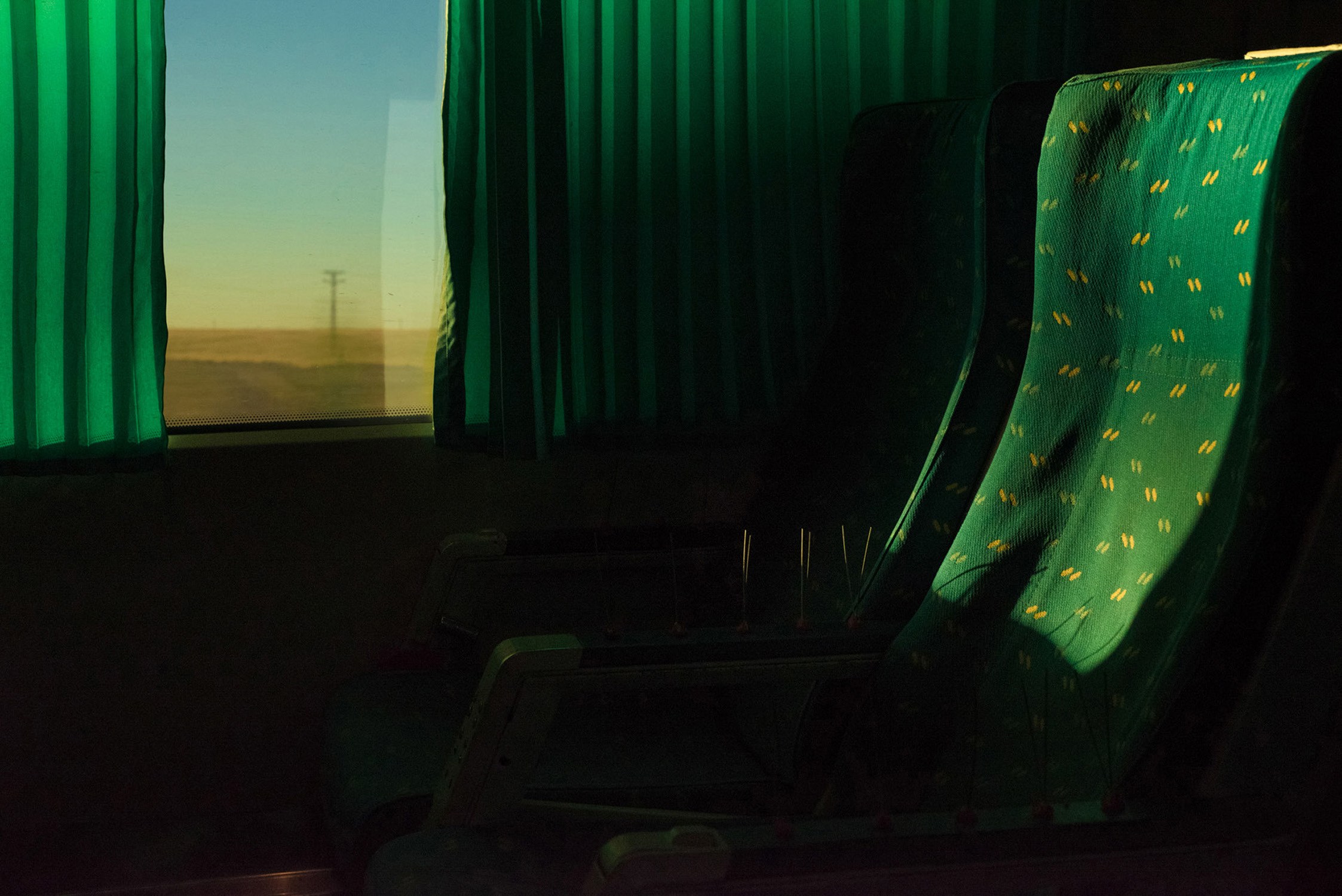
Railway, TH 332 from Pest Control
Her formation as an artist drew on the visual language she absorbed growing up, the glossy surfaces of commercial photography and cinema, the coded femininity of domestic spaces, and the quiet psychic toll of navigating modern life as a young woman. She studied and developed her practice across Mexico and abroad, absorbing influences from both Latin American artistic traditions and the broader international photography world, before establishing herself as a voice that felt genuinely new even when working within recognizable photographic conventions. The evolution of Franco Klein's practice is one of progressive refinement and expanding emotional range. Her earlier projects established the foundational grammar of her work: the solitary female figure, often herself, placed within environments that ought to feel comfortable or aspirational but instead hum with a low frequency of dread.
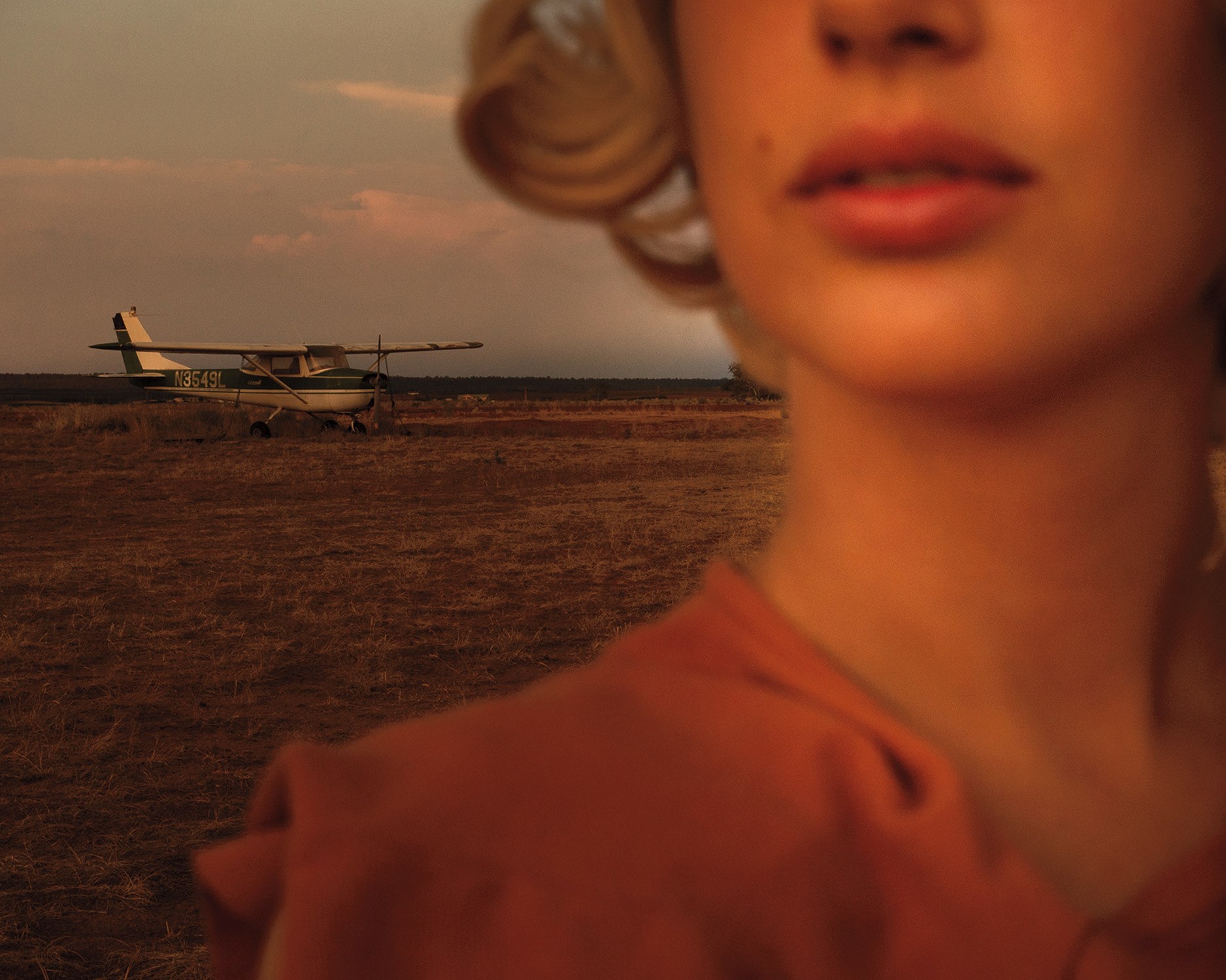
Over time, her color palette grew more intensely saturated, her compositions more cinematically precise, and her thematic ambitions broader. She began moving between series that each functioned almost as distinct chapters in an ongoing psychological novel, each one probing a different facet of the modern condition while remaining unmistakably, cohesively hers. Three bodies of work have proven particularly significant for understanding both her achievement and her appeal to collectors. The series Proceed To The Route, from which her work Plane (Self portrait) originates, uses the language of navigation and transit to explore the anxiety of directionlessness that defines so much contemporary experience.

Tania Franco Klein
Toaster, (Self-portrait) from Our Life in the Shadows
The image of herself aboard a plane, bathed in that signature hyper saturated light, is at once glamorous and deeply lonely, a photograph that seems to understand something precise about the emotional reality of modern travel. From Our Life in the Shadows, the Toaster (Self portrait) distills her domestic uncanny to near perfection, placing the body in relation to household objects in a way that makes the everyday feel both menacing and tenderly observed. And from the Pest Control series, Railway TH 332 extends her vision into the public realm, finding in transit infrastructure the same existential freight she locates in kitchens and living rooms. Each archival pigment print, mounted with the care her work demands, rewards sustained looking in the way that only truly considered photography can.
Franco Klein's monograph Prone to Invisible Overwhelming Pleasure, published by Aperture, represents one of the most significant launches of a photography book in recent memory. Aperture's endorsement carries enormous weight within the photography collecting world, and the book introduced her work to an audience far beyond gallery goers and magazine readers. For collectors, the publication was a marker: an artist whose work had been generating genuine excitement was now being contextualized within the highest tier of contemporary photographic practice. The response confirmed what early collectors already understood, that her prints occupy a space where emotional resonance and formal rigor are held in rare and productive tension.
Tania Franco Klein
Plane (Self-portrait) from Proceed To The Route
For those thinking about collecting Franco Klein, several qualities make her work particularly compelling from a market perspective. Her archival pigment prints, produced in limited editions and mounted with an attention to presentation that mirrors her compositional care, have the material presence of objects made to last. The cinematic scale at which she often works means that her images command a room in a way that rewards the kind of serious domestic or institutional installation that sophisticated collectors seek. She belongs to a generation of photographers, including artists like Carmen Winant and Nadine Ijewere working across related questions of femininity, interiority, and cultural pressure, yet her visual signature is sufficiently distinct that her work reads as singular rather than symptomatic.
Collectors who have followed her trajectory note that her prices have moved with the purposeful momentum of an artist whose critical standing is still in ascent. Within art history, Franco Klein's work invites comparison to figures who similarly used the photographic surface as a site of psychological investigation. The cinematic color and existential staging of her images echo something of Gregory Crewdson's constructed tableaux, though where Crewdson tends toward the theatrical and the externalized, Franco Klein operates with an intimacy that feels more interior, more confessional. Her engagement with consumer aesthetics and their emotional costs places her in dialogue with artists like Cindy Sherman, who pioneered the use of the female body as both subject and critical instrument.
Yet Franco Klein is not working in pastiche or appropriation. She is working in genuine feeling, and that distinction matters enormously. What makes Tania Franco Klein matter right now, at this particular moment, is that she has found a visual language adequate to a widely felt but rarely named experience: the strange grief of living in beautiful, overwhelming, anxious abundance. Her images do not diagnose or prescribe.
They witness, with extraordinary formal skill and real emotional courage, the texture of a specific kind of contemporary life. For collectors, her work offers not only aesthetic pleasure and investment quality but also the rarer gift of images that continue to yield meaning long after the first encounter. She is an artist whose best work is, by any serious measure, already behind glass in some of the most thoughtful collections in the world, and whose continued development promises to make that early faith look better and better with time.