Takesada Matsutani
Matsutani: Where Matter Becomes Pure Feeling
Artist Spotlight · The Collection Editorial
In the spring of 2023, the art world turned its full attention to Takesada Matsutani when Hauser and Wirth mounted a significant presentation of his work, affirming what a devoted circle of collectors and curators had long understood: that this quietly radical Japanese artist, now well into his eighties, represents one of the most singular and sustained artistic visions of the postwar era. His presence in museum collections from the Centre Pompidou in Paris to the National Museum of Art in Osaka speaks to a career that has unfolded across continents and decades with remarkable coherence. To encounter a Matsutani for the first time is to feel something shift, as though the work is breathing. Takesada Matsutani was born in 1937 in Osaka, a city whose mercantile energy and deep aesthetic traditions shaped him in ways that would only become fully apparent years later.
Takesada Matsutani
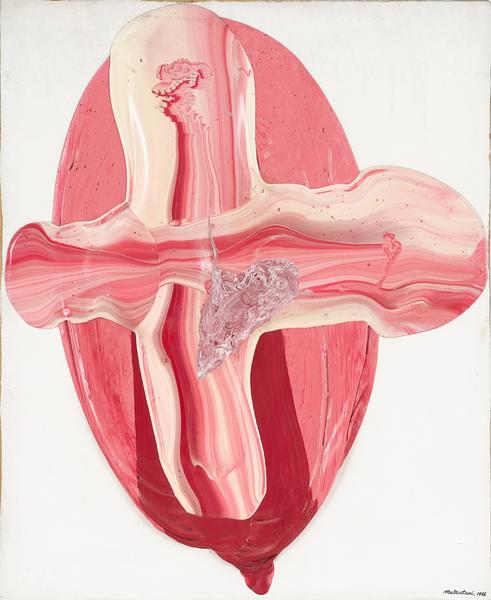
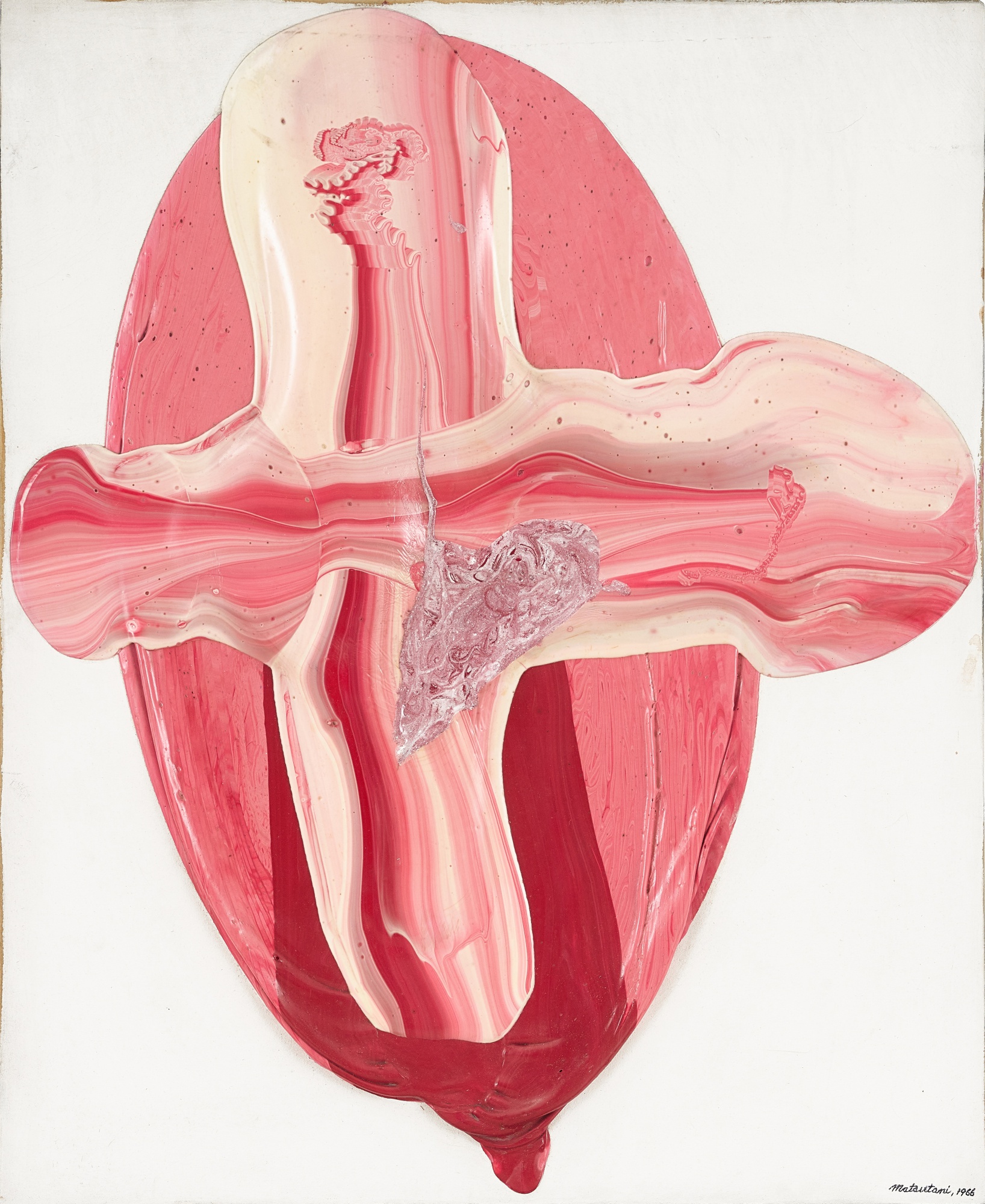
Takesada Matsutani 松谷武判 | Work 66-7 作品 66-7, 1966
He trained at the Osaka Municipal College of Art, and it was there, in the early 1960s, that he encountered the Gutai Art Association, the incandescent collective founded by Jiro Yoshihara in 1954. Gutai, whose name translates roughly as "concrete" or "embodiment," had declared that art must be made through direct physical engagement with materials, that the artist's body and the resistant world of matter must meet without mediation. For a young Matsutani, this was not merely a philosophy but a revelation. He became an official member of Gutai in 1963, joining a group that already included figures such as Kazuo Shiraga, who famously painted with his feet while suspended from a rope, and Saburo Murakami, who threw himself through paper screens.
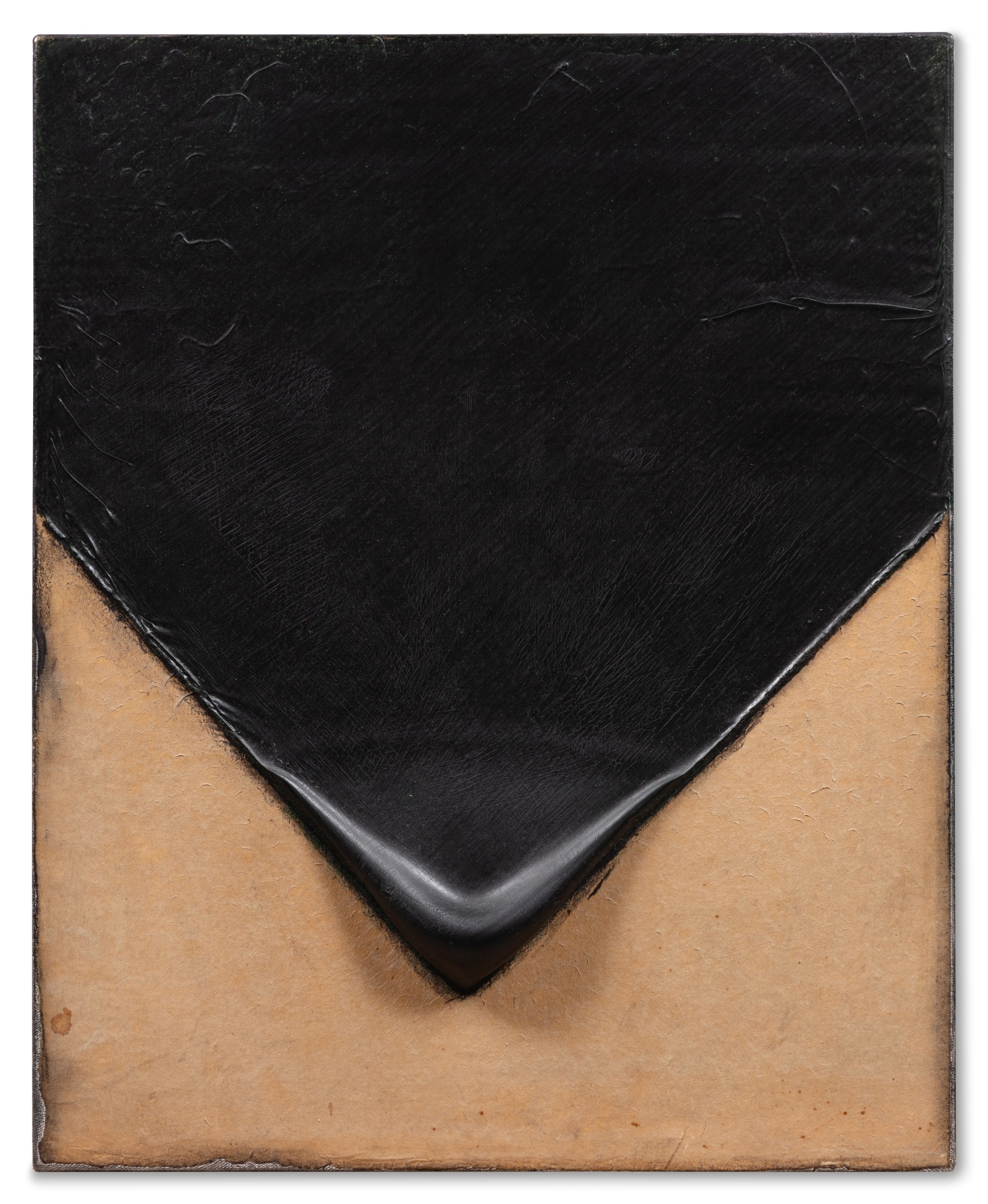
Matsutani's own contribution to this atmosphere of radical material experimentation was the discovery of vinyl glue, an industrial adhesive that, when applied to canvas and manipulated while wet, would swell and bulge into organic, cellular forms. He would breathe directly onto the surface, coaxing the glue into shapes that resembled cells dividing, lungs inflating, or landscapes glimpsed from an impossible altitude. The resulting works from this period possess an uncanny vitality, as though they contain a life force that predates human consciousness. In 1966, Matsutani made a decision that would fundamentally reorient his practice: he moved to Paris.
Takesada Matsutani
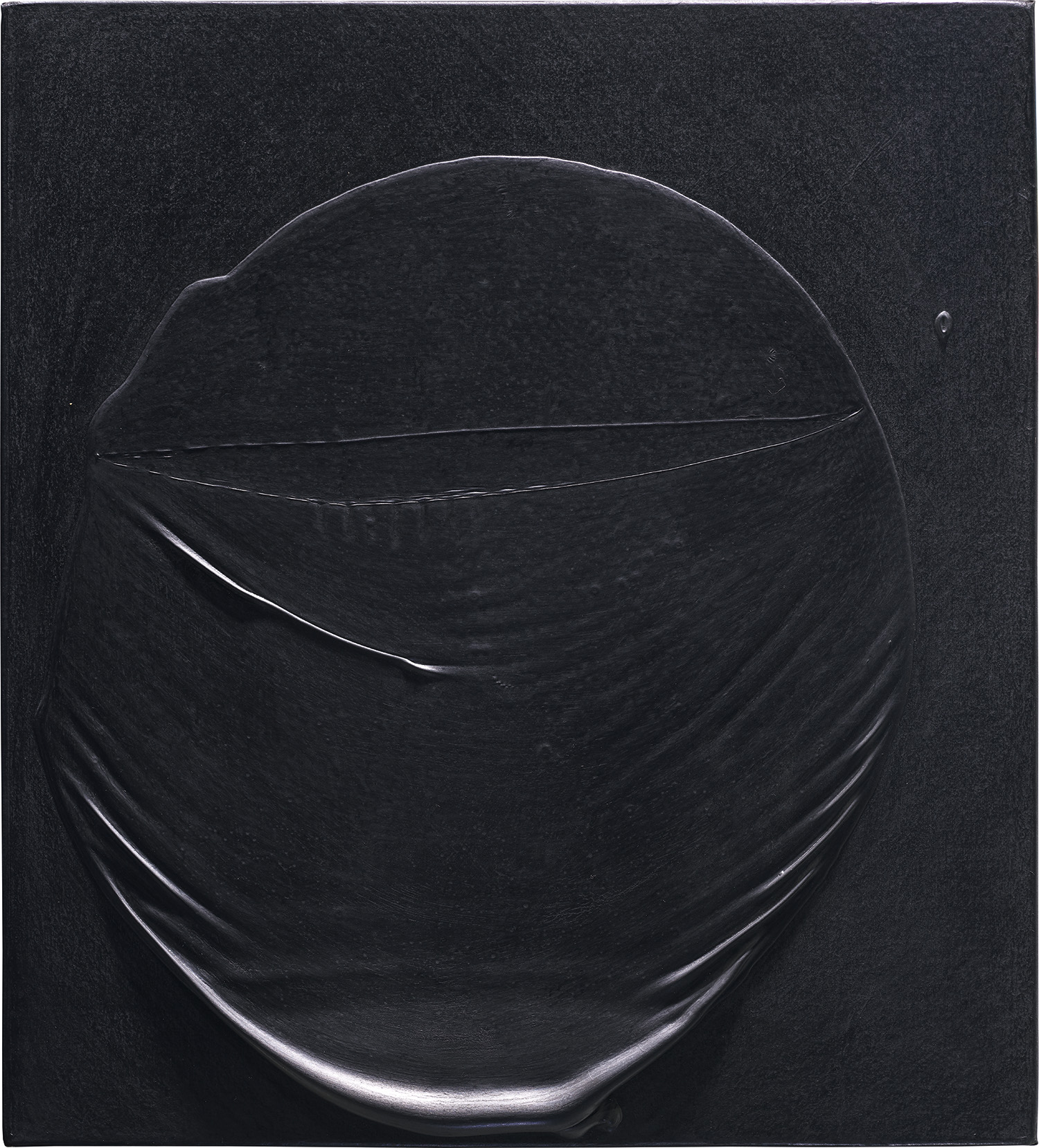
Cercle 09-9, 2009
He had won a scholarship to study at the École Nationale Supérieure des Beaux Arts, and the city's intellectual and artistic climate, saturated at that moment with Art Informel, the gestural abstraction of Georges Mathieu, and the material investigations of Jean Dubuffet, offered both challenge and confirmation. Paris did not dilute Matsutani's Japanese sensibility; it sharpened it. He began to see how his instincts for reduction, for the meditation on a single material or gesture, resonated with and yet differed profoundly from Western abstraction. He has lived and worked in Paris ever since, occupying a genuinely singular position as a Japanese artist whose formation was rooted in the Osaka avant garde but whose mature practice unfolded in dialogue with European modernism.
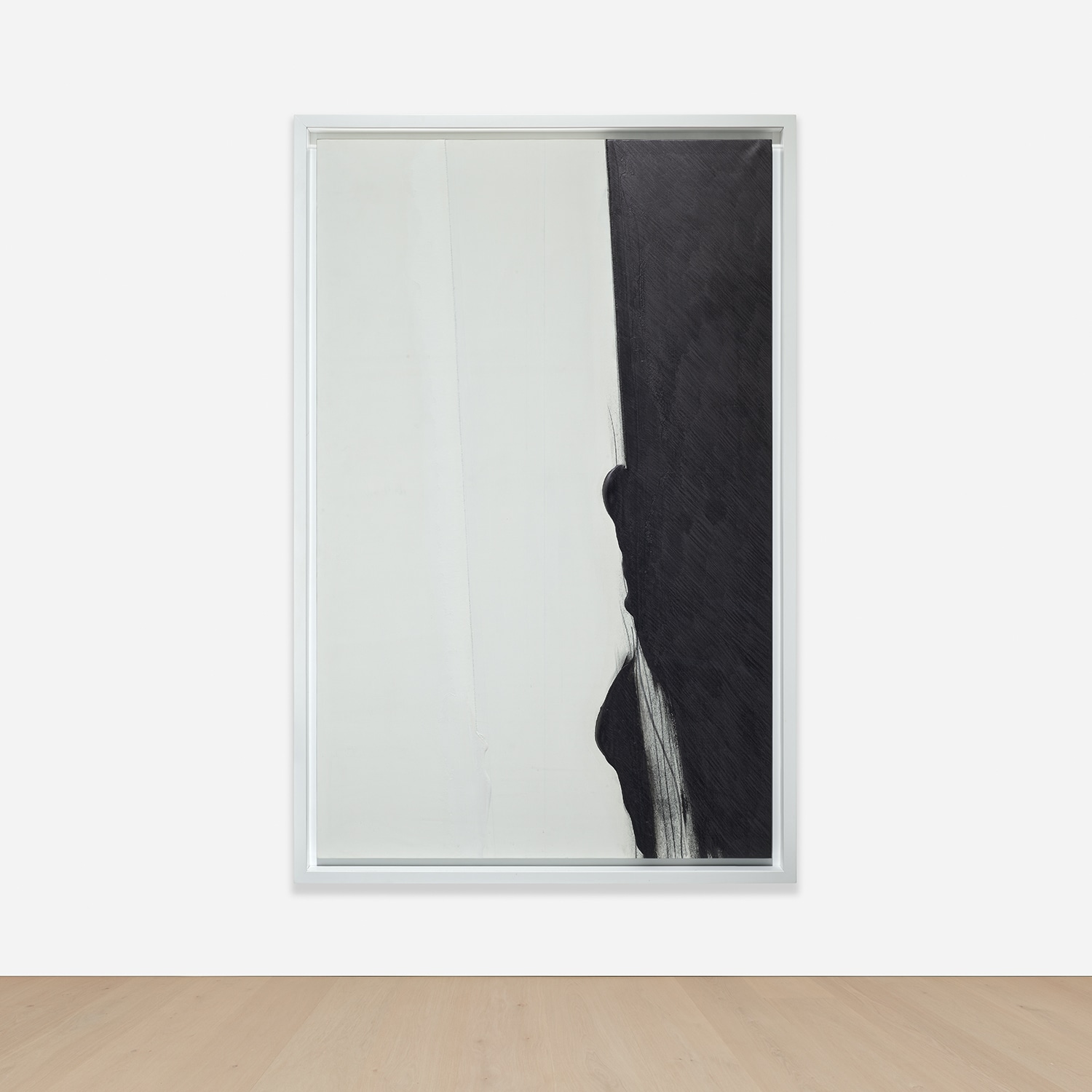
The evolution of Matsutani's work across six decades reveals a rigorous and deeply patient intelligence. After the explosive vinyl glue works of the 1960s, he entered periods of intense focus on graphite and ink, creating large works on paper in which single gestures, drawn lines, or pooled washes of black accumulate into something contemplative and vast. Works such as "Passage 1" from 1997 demonstrate his mastery of mixed media on canvas, where layers of material history accrue into surfaces that reward extended looking. "Sans Titre" from 1983 shows his continued commitment to vinyl and Japan paper, materials whose combination speaks both to industrial modernity and to the ancient Japanese tradition of washi, handmade paper with a memory of its own.
Takesada Matsutani
Parallel, 2004
His more recent works, including "Cercle 09 9" from 2009 and "Line for Circle" from 2018, reveal an artist who has not slowed but deepened, paring his vocabulary to essentials: the circle, the line, the trace of a breath or a hand. For collectors, the appeal of Matsutani operates on several levels simultaneously. There is first the purely sensory pleasure of his surfaces, which reward close inspection and reveal their complexity gradually rather than all at once. Then there is the historical weight: an early work such as "Work 66 7" from 1966, made with vinyl adhesive and acrylic on canvas, represents a direct document of one of the most important moments in postwar Japanese art, the period when Gutai was at its most vital and when Matsutani was discovering his signature material language.
Works from this period carry the particular gravity of art that was made not for the market but out of urgent necessity. His later works on paper and canvas, meanwhile, offer entry points at varying scales and price levels, making his practice accessible to a range of collectors while maintaining consistent quality and conceptual integrity. Within the broader context of art history, Matsutani occupies a position that is still being fully understood and appreciated by Western institutions. His closest affinities are with artists who worked at the intersection of Eastern philosophy and Western abstraction: Lee Ufan, the Korean artist and theorist whose Mono ha movement shares Matsutani's interest in the encounter between materials and emptiness; Simon Hantai, the French Hungarian painter whose folding and unfolding of canvas created similarly unexpected surfaces; and Mark Tobey, the American painter whose engagement with East Asian calligraphy produced works that feel spiritually adjacent to Matsutani's own graphite drawings.
Takesada Matsutani
Sans Titre, 1983
To collect Matsutani is to participate in a conversation that crosses the Pacific and spans a century. What makes Matsutani matter so urgently today is precisely the quality that resists easy description: his work operates at the level of presence. In an art world that frequently prizes speed, irony, and conceptual legibility above all else, his practice insists on slowness, on the accumulation of attention, on the dignity of a single material pushed to its expressive limit. He has spent more than sixty years asking what happens when a human being meets matter with full concentration and full humility, and the answers he has found are still surprising.
For any collector serious about the postwar Japanese avant garde, about the global dimensions of abstraction, or simply about art that endures, Matsutani is not a discovery to be deferred.
Explore books about Takesada Matsutani
Takesada Matsutani: A Retrospective
Museum of Modern Art
Takesada Matsutani: Works 1960-1980
Gallery Kasahara
Matsutani: Vinyl and Sand Paintings
Yoshiaki Tono
Contemporary Japanese Art: Takesada Matsutani
Tokyo Metropolitan Museum of Art
Takesada Matsutani: Monograph
Iwao Yamawaki