Takeru Amano

Takeru Amano Finds Beauty Everywhere
Artist Spotlight · The Collection Editorial
In 2025, Takeru Amano released Venus, an eight layer screenprint on Munken Pure Smooth 400gsm paper that immediately announced itself as one of the most considered print works of the year. The choice of Munken Pure Smooth, a paper beloved by fine press publishers and serious printmakers for its luminous, almost velvety surface, speaks to Amano's meticulous relationship with materials. Each of the eight layers in Venus represents a decision, a commitment, a conversation between color, pressure, and surface that cannot be undone once the ink is pulled across the screen. It is the kind of work that rewards sustained looking, the kind that earns a place on a wall for decades.
Takeru Amano
Venus, 2025
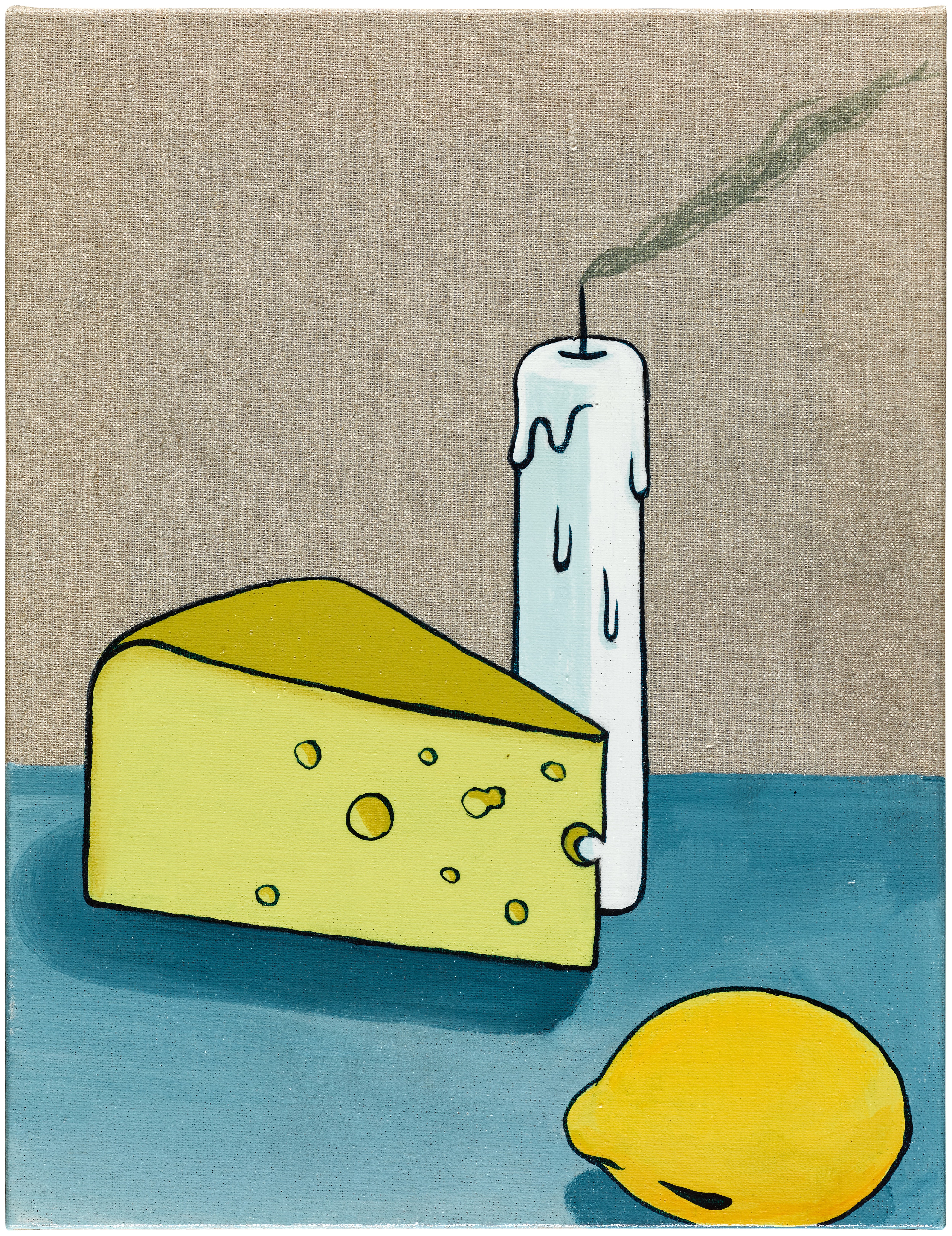
Amano is a Japanese artist whose practice moves fluidly between painting, printmaking, and object based work. His background reflects the particular creative tension that defines so many artists who move between Japanese visual culture and the broader Western contemporary art conversation. Japan's extraordinary tradition of woodblock printing, with its emphasis on layered color, precise registration, and the inherent beauty of the printed surface, runs quietly beneath everything Amano does, even when the subject matter feels thoroughly contemporary or European in its references. His earlier paintings, represented on The Collection by Fromage, Candle and Lemon from 2016, show an artist deeply engaged with the still life tradition.
Executed in acrylic and varnish on canvas, the work places itself in dialogue with centuries of European still life painting, from the Dutch Golden Age masters who used cheese and candlelight to speak about abundance and mortality, to the quieter meditations of Giorgio Morandi, whose bottles and vessels became almost sacred objects through repetition and attention. Amano brings to this tradition a sensibility that is simultaneously reverential and contemporary, keeping the formal vocabulary of the genre while stripping away any sense of accumulated dust or nostalgia. The varnish in Fromage, Candle and Lemon is worth pausing on. Varnish in painting is often treated as purely functional, a protective layer applied after the fact.
Takeru Amano
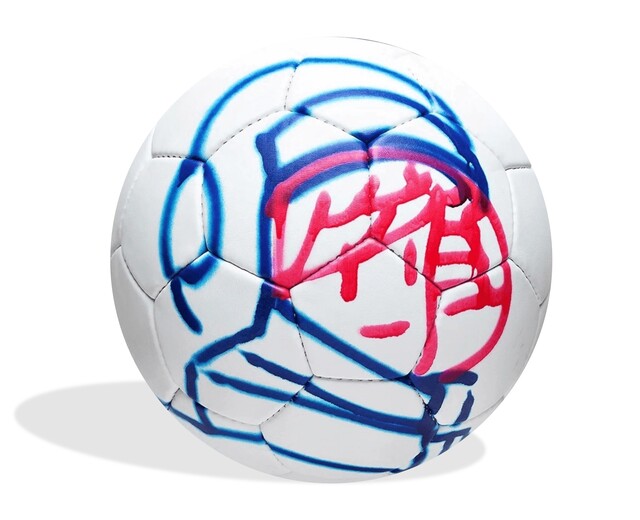
Balls, 2021
In Amano's hands it becomes part of the image itself, creating differential surfaces that catch and hold light differently across the canvas. This interest in surface, in how light behaves across different materials and finishes, connects directly to the layered screenprints that would follow years later. The through line in Amano's practice is not subject matter but surface intelligence, an ongoing investigation into how a two dimensional object can contain depth, luminosity, and physical presence simultaneously. Balls, the 2021 offset lithograph printed on a soccer ball, represents perhaps Amano's most formally daring gesture.
The soccer ball as a substrate is an inspired choice. The geodesic panel structure of a standard football is itself a kind of found geometry, a solved mathematical problem made from leather and air. By applying the lithographic image across that curved, seamed, three dimensional surface, Amano collapses the traditional distinction between print and sculpture, between the flat image and the object in space. The work sits in a lineage that includes Jasper Johns's flag paintings and target works, where familiar objects become estranged through the artist's attention, and the viewer suddenly sees something utterly commonplace as if for the first time.
Takeru Amano
Fromage, Candle & Lemon, 2016
Collectors drawn to Amano tend to share a particular sensibility. They are people who appreciate the intelligence of craft, who understand that a decision about paper weight or varnish finish is as conceptually loaded as any theoretical position. They are also collectors who find genuine pleasure in the visual world, who want work that rewards daily living with rather than simply asserting its importance from across the room. Amano's works across different media and price points offer genuine entry points for collectors at various stages, and the print works in particular represent outstanding value for works of this technical and conceptual ambition.
As interest in fine art printmaking continues to grow internationally, driven in part by a new generation of collectors who came to art through editions and multiples, Amano's command of the medium positions him exceptionally well. In the broader context of contemporary art, Amano occupies interesting territory alongside artists who take everyday objects and familiar visual categories seriously as subjects for sustained aesthetic investigation. His still life paintings echo concerns shared by painters like Claudio Bravo, whose hyperrealist still lifes brought an almost shocking physical presence to traditional subjects, and his print and object works invite comparison with artists in the post Pop tradition who find meaning in the vernacular. What distinguishes Amano is the warmth and genuine pleasure that animates his practice.
There is no ironic distance in his work, no cool theoretical apparatus standing between the artist and his delight in the way light falls on a lemon or ink sits on a curved surface. That warmth, that genuine love of looking and making, is ultimately what makes Amano's work so compelling and so lasting. We live in a moment when art can feel obligated to argue, to protest, to position itself within urgent discourses. Amano's work does none of that, and is more radical for the refusal.
It insists that careful attention to beautiful things, to the geometry of a football, to the glow of a candle beside a wedge of cheese, to the layered complexity of a screenprint built up slowly over eight passes, is itself a meaningful and serious act. In a collecting landscape full of noise, Amano's quiet confidence is exactly what a considered collection needs.