Taizo Kuroda
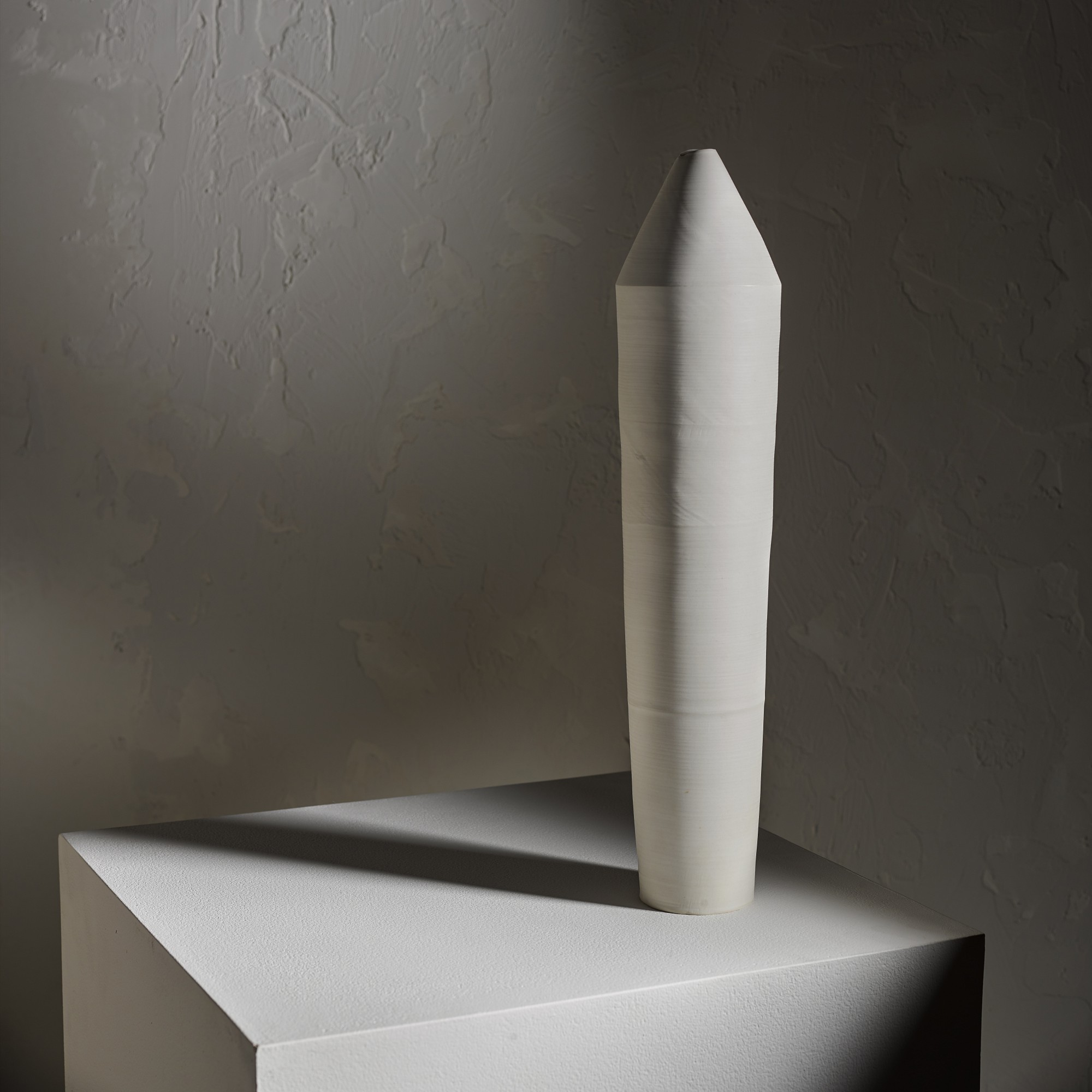
Taizo Kuroda, Where Silence Becomes Form
Artist Spotlight · The Collection Editorial
There is a particular kind of stillness that settles over a room when a work by Taizo Kuroda enters it. In recent years, his white porcelain vessels have appeared with quiet authority in major international auction rooms and in the collections of discerning private collectors across Europe, the United States, and Asia, each acquisition carrying the weight of genuine connoisseurship. His presence in the market has grown steadily, not through spectacle but through the slow accumulation of reputation that only true mastery can build. The world, it seems, is catching up to what those closest to Japanese contemporary ceramics have known for decades.
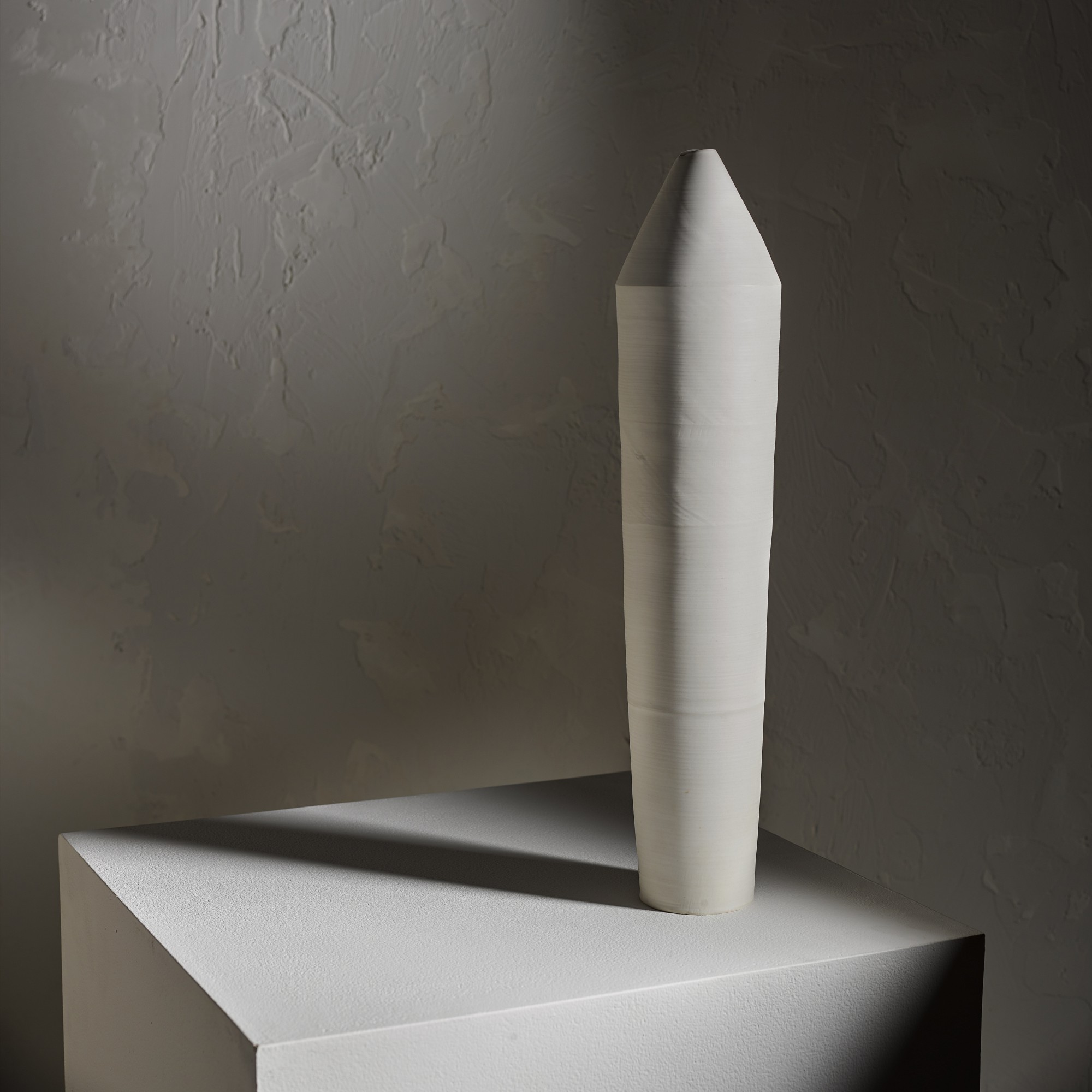
Taizo Kuroda
Porcelain flower vase
Kuroda was born in 1946, arriving into a Japan that was remaking itself with extraordinary energy and intention. That postwar moment, charged with both rupture and renewal, formed the backdrop against which an entire generation of Japanese artists would renegotiate the relationship between tradition and modernity. Kuroda came of age within this tension, and it would prove formative. He trained under master potters in Japan, absorbing the rigorous discipline and philosophical depth of a ceramic lineage that stretches back centuries.
This apprenticeship was not merely technical. It was an education in seeing, in patience, and in the understanding that restraint is its own kind of eloquence. The ceramics tradition Kuroda entered is one of the most demanding and philosophically rich in the world. Japanese pottery carries within it the influence of Zen aesthetics, the wabi sabi sensibility that finds beauty in imperfection and transience, and the mingei folk craft movement that elevated the handmade object to the status of high art.
Taizo Kuroda
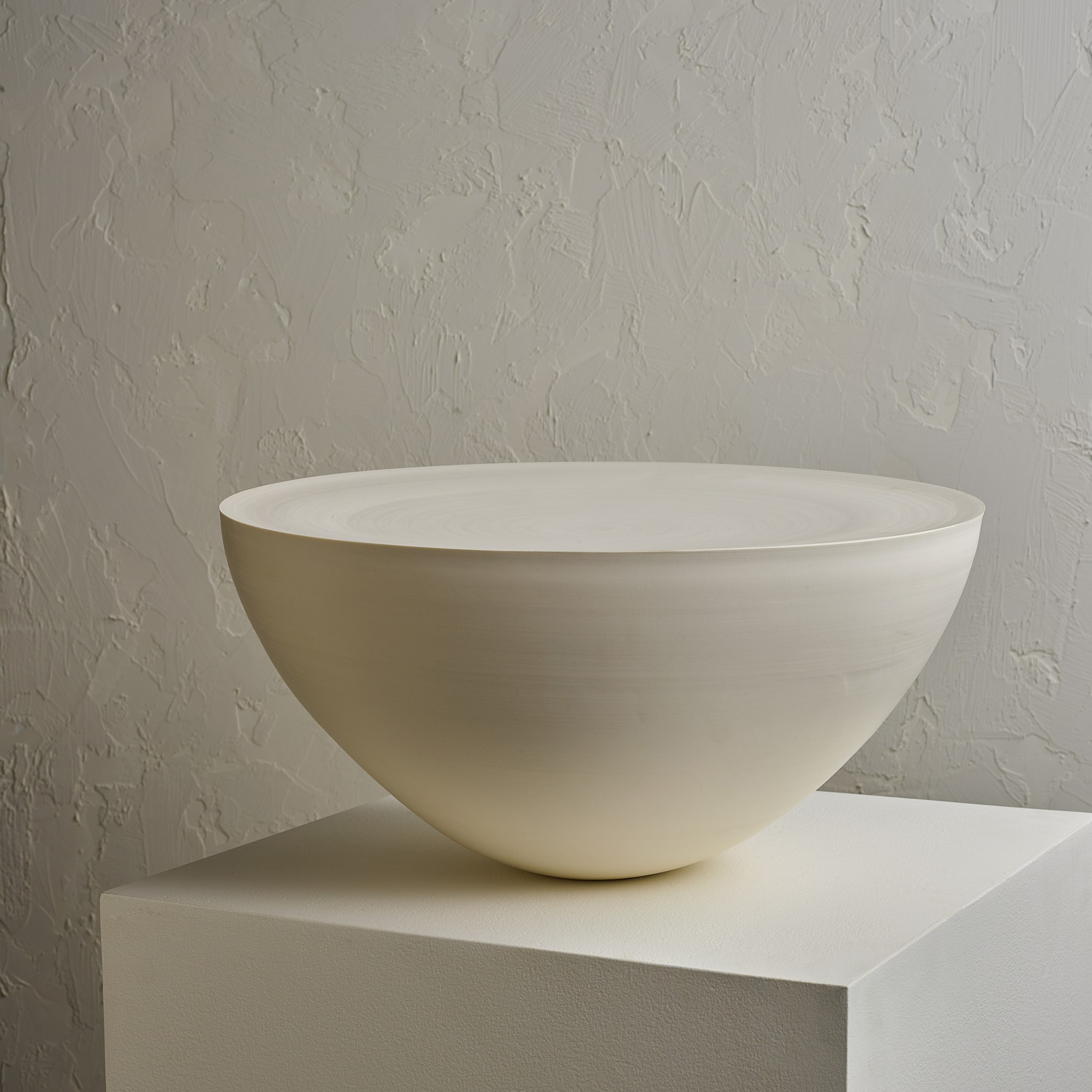
Daizara
Kuroda absorbed all of this and then, with the confidence of a true artist, began to distill it. His early works show a practitioner learning the full vocabulary of his medium. His mature works show someone who has chosen, with great deliberateness, to speak in a whisper rather than a shout. What defines Kuroda's practice above all is his commitment to white porcelain, a material that demands everything of its maker and conceals nothing.
Unlike earthenware or stoneware, porcelain is unforgiving. Its surface reveals every touch, every hesitation, every decision made in the making. Kuroda leans into this exposure rather than retreating from it. His vessels are characterized by surfaces of extraordinary subtlety, where texture is implied rather than stated, where the glaze catches light in ways that change with the hour and the angle of viewing.
Taizo Kuroda
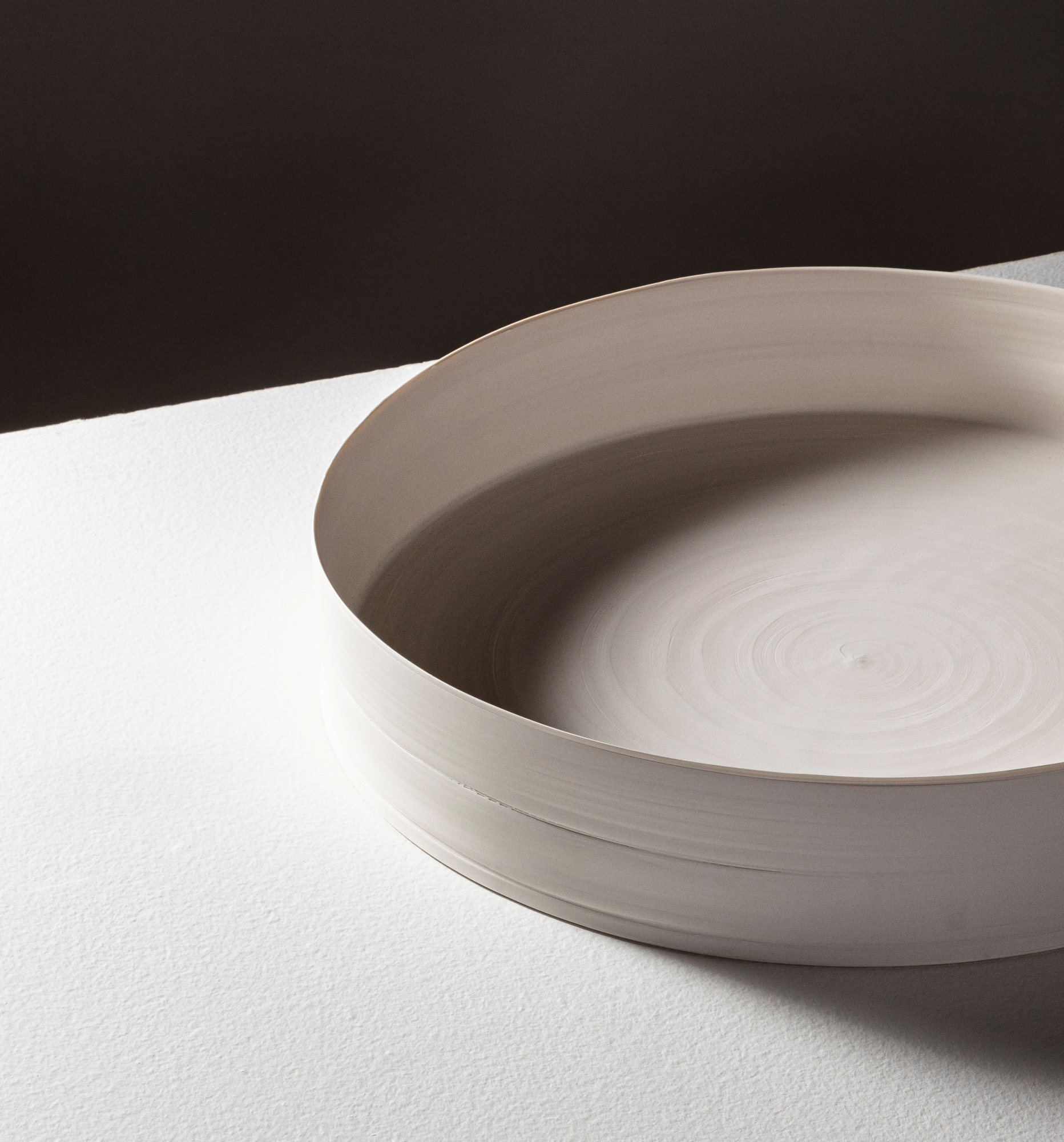
Untitled White Porcelain (Hachi) | 2006
Works such as his Tsutsu hanaire, a cylindrical flower vase of serene vertical presence, and his Ware daizara, a large circular dish bearing the deliberate beauty of a controlled crack, demonstrate how fully he has transformed technical mastery into artistic statement. These are not objects that announce themselves. They ask to be approached, and they reward that approach generously. The Daizara, one of his most celebrated forms, exemplifies this quality of generous restraint.
At over fifty centimeters in diameter, it commands space without aggression. Its surface, luminous and pale, seems to hold light rather than reflect it. The fitted wood storage boxes in which his works are traditionally housed are themselves a statement of intent: these objects belong to a culture that understands preservation, that believes in the long life of beautiful things. The Porcelain flower vase, with its elegant proportions and the refinement of its glazed surface, occupies a similar territory, sitting comfortably in the lineage of the great Japanese flower vessel tradition while remaining entirely its own thing.
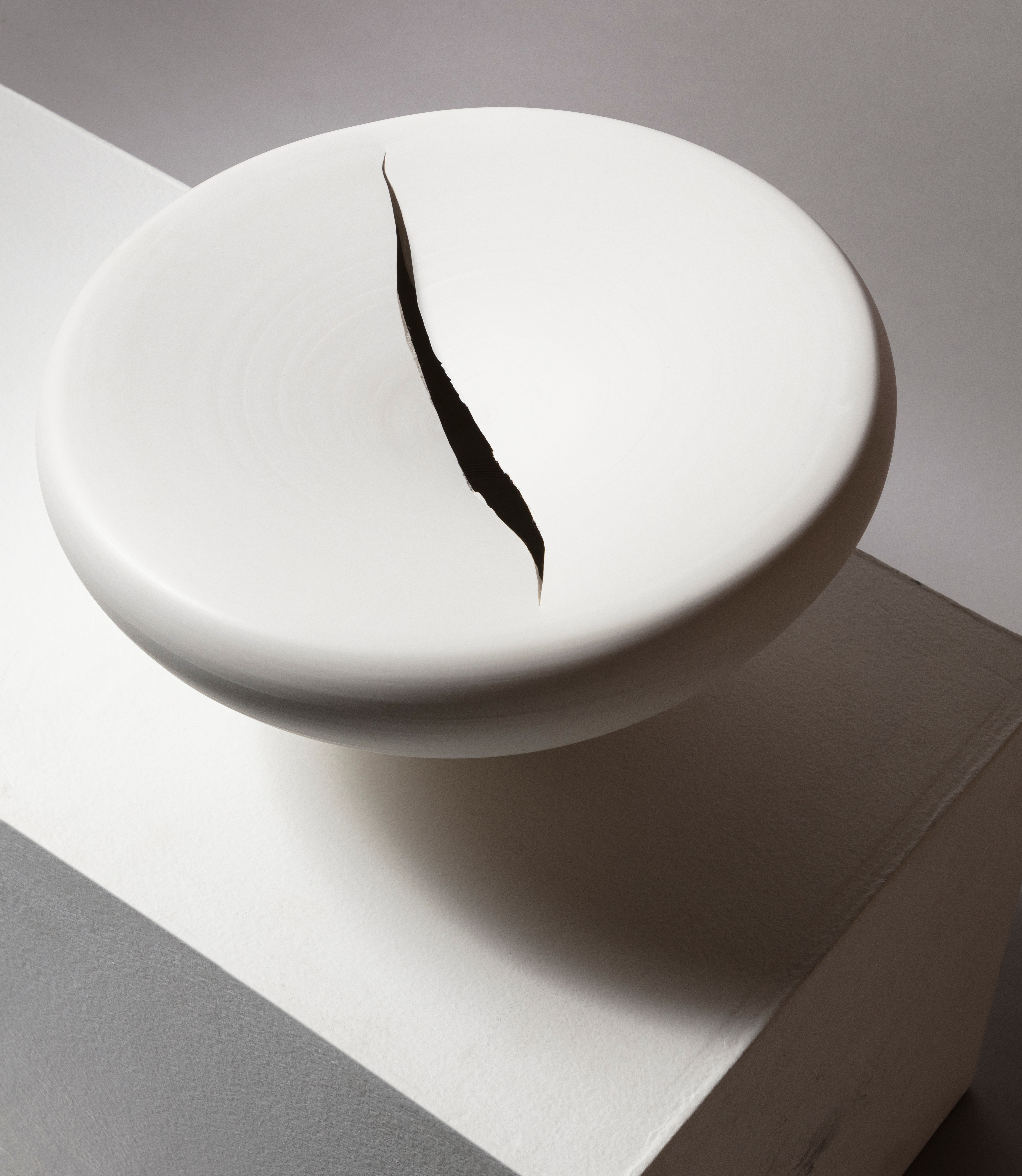
Taizo Kuroda
Untitled White Porcelain (Ware-daizara) | 2017-2018, 2017
Kuroda's forms are always recognizable as vessels, as objects with function embedded in their DNA, and yet they operate fully as sculpture, as meditation, as art. Collectors who are drawn to Kuroda's work tend to share certain qualities. They are rarely in a hurry. They are drawn to depth over novelty, to the kind of beauty that reveals itself across years of living with an object rather than across the first few seconds of viewing it.
In this sense, collecting Kuroda is an act of alignment with a particular set of values, an investment in a quieter, more considered relationship with art. His works have found homes alongside pieces by other masters of the Japanese ceramic tradition, and they hold their own in those conversations with ease. In the international market, his pieces attract serious interest from collectors who understand that the finest Japanese ceramics represent one of the most intellectually and aesthetically rich collecting categories available anywhere in the world. To understand Kuroda's place in art history, it is useful to consider him alongside figures who have similarly navigated the space between tradition and contemporary art in ceramic form.
Artists such as Lucie Rie, whose porcelain vessels brought a modernist sensibility to studio pottery in postwar Britain, and Hans Coper, whose sculptural forms pushed ceramics firmly into the territory of fine art, offer one set of reference points. Within Japan, the legacy of Living National Treasures such as Shoji Hamada and Kanjiro Kawai, who elevated folk pottery to the level of national cultural treasure, provides essential context. Kuroda does not replicate any of these traditions. He draws from them, filters them through his own sensibility, and produces something that is unmistakably of its time while remaining in deep conversation with everything that came before.
What makes Kuroda matter today, in this particular cultural moment, is precisely the quality of attention his work demands and rewards. In an art world that often prizes the immediate, the loud, and the easily legible, his porcelain vessels insist on a different set of terms. They ask the viewer to slow down, to look carefully, to find within apparent simplicity a world of nuance and decision and quiet feeling. His career represents a sustained argument for the value of refinement, for the idea that less, handled with absolute mastery, can be more than almost anything else.
For collectors, for institutions, and for anyone who believes that art at its finest is a form of concentrated human understanding, the work of Taizo Kuroda offers something genuinely rare and genuinely lasting.