Szabolcs Bozó
Szabolcs Bozó Paints the World Alive
Artist Spotlight · The Collection Editorial
In the past several years, a quietly electric name has been moving through the conversations of perceptive collectors and gallerists across Europe and Asia. Szabolcs Bozó, the Budapest born painter whose canvases crackle with the energy of a city that never fully sleeps, has seen his work travel from Hungarian studio walls to auction rooms and private collections on multiple continents. His paintings carry something rare in contemporary figurative art: they feel simultaneously immediate and timeless, as though the moment of their making is still alive inside them. That quality, more than any single stylistic decision, is what has made Bozó one of the most compelling Hungarian artists to emerge in the international market over the past decade.
Szabolcs Bozó
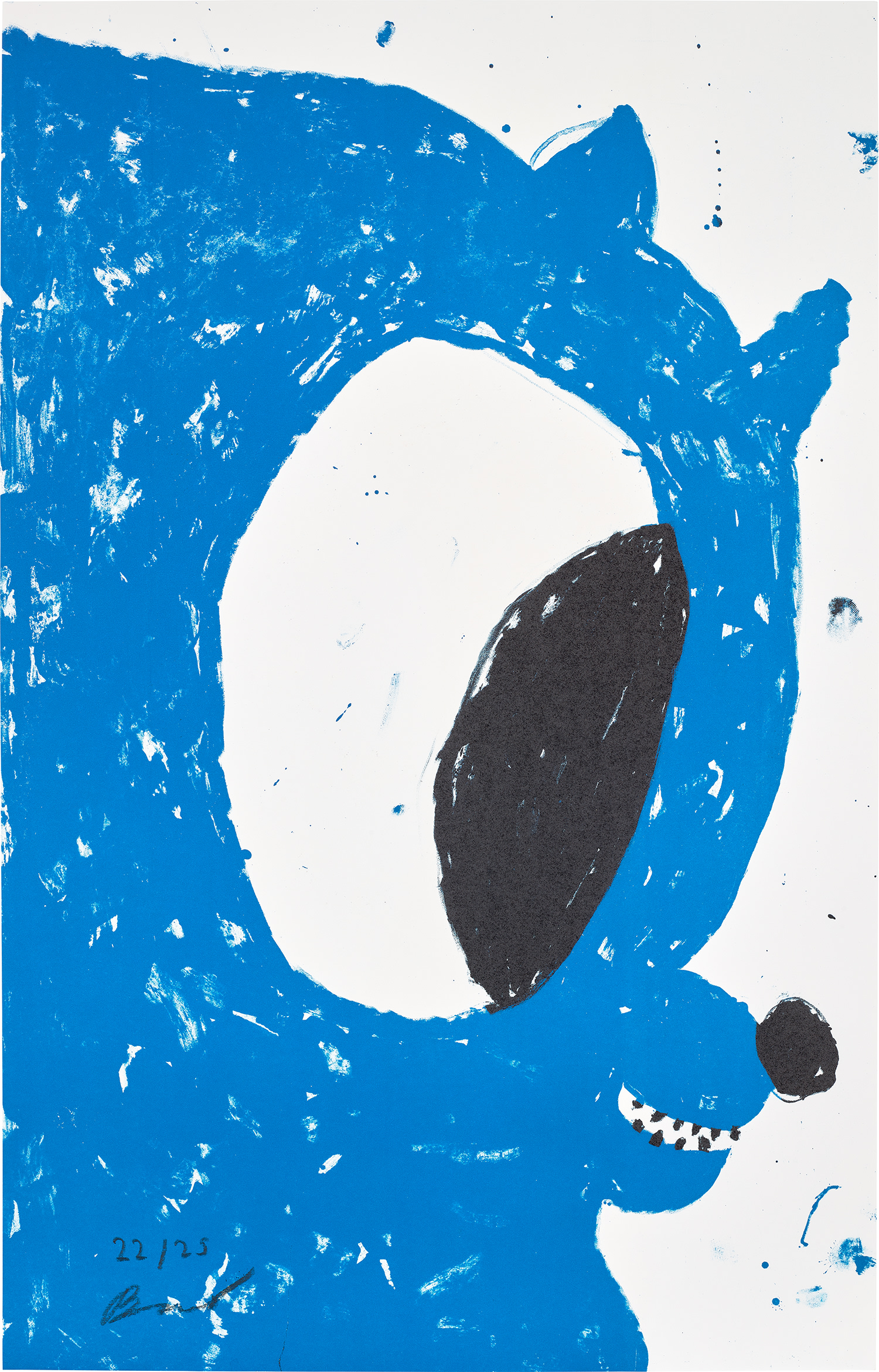
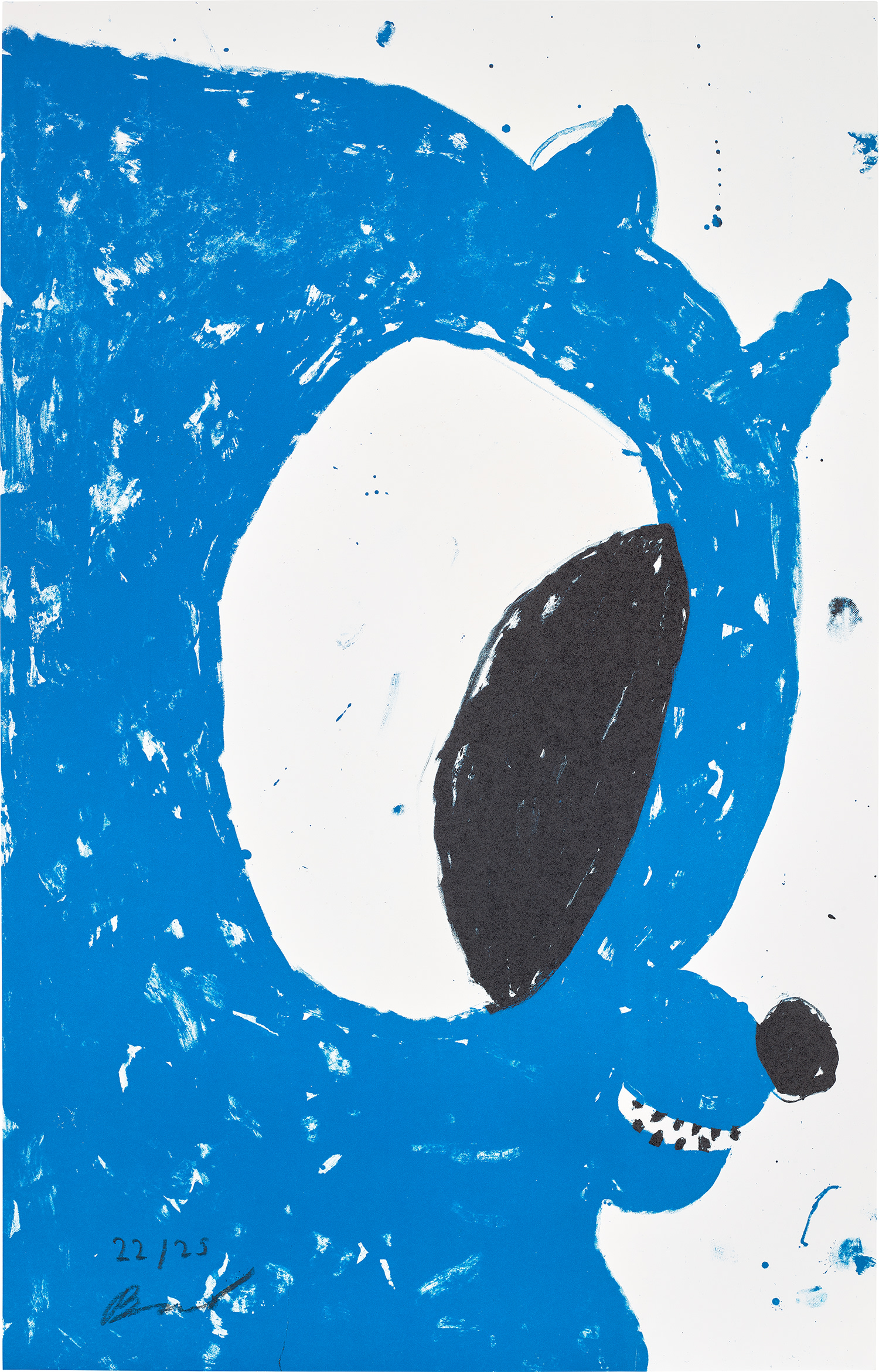
Nicolas (Blue)
Bozó was born in Hungary in 1984, coming of age in a country that was still metabolising its post socialist transformation. Budapest in the 1990s and early 2000s was a city of remarkable cultural friction, where Soviet era aesthetics collided with incoming waves of Western pop culture, street art, and global media imagery. For a young person with an instinct for visual language, that environment was both a challenge and a gift. The layered visual noise of the city, its graffiti, its billboards, its folk traditions rubbing shoulders with international youth culture, left a permanent mark on how Bozó would eventually choose to build a painting.
His artistic formation drew from a wide constellation of influences. The legacy of American pop art, particularly the flattened boldness of figures like Jean Michel Basquiat and Kenny Scharf, clearly runs through his sensibility, though Bozó has always filtered those references through a distinctly Central European lens. There is something in his mark making that speaks to a European expressionist tradition too, a willingness to let the hand be visible and urgent on the surface. Over time, he developed a practice that moves fluidly between acrylic, oil, oil stick, spray paint, and collage, layering these materials in ways that give his canvases a physical depth that rewards close looking.
Szabolcs Bozó
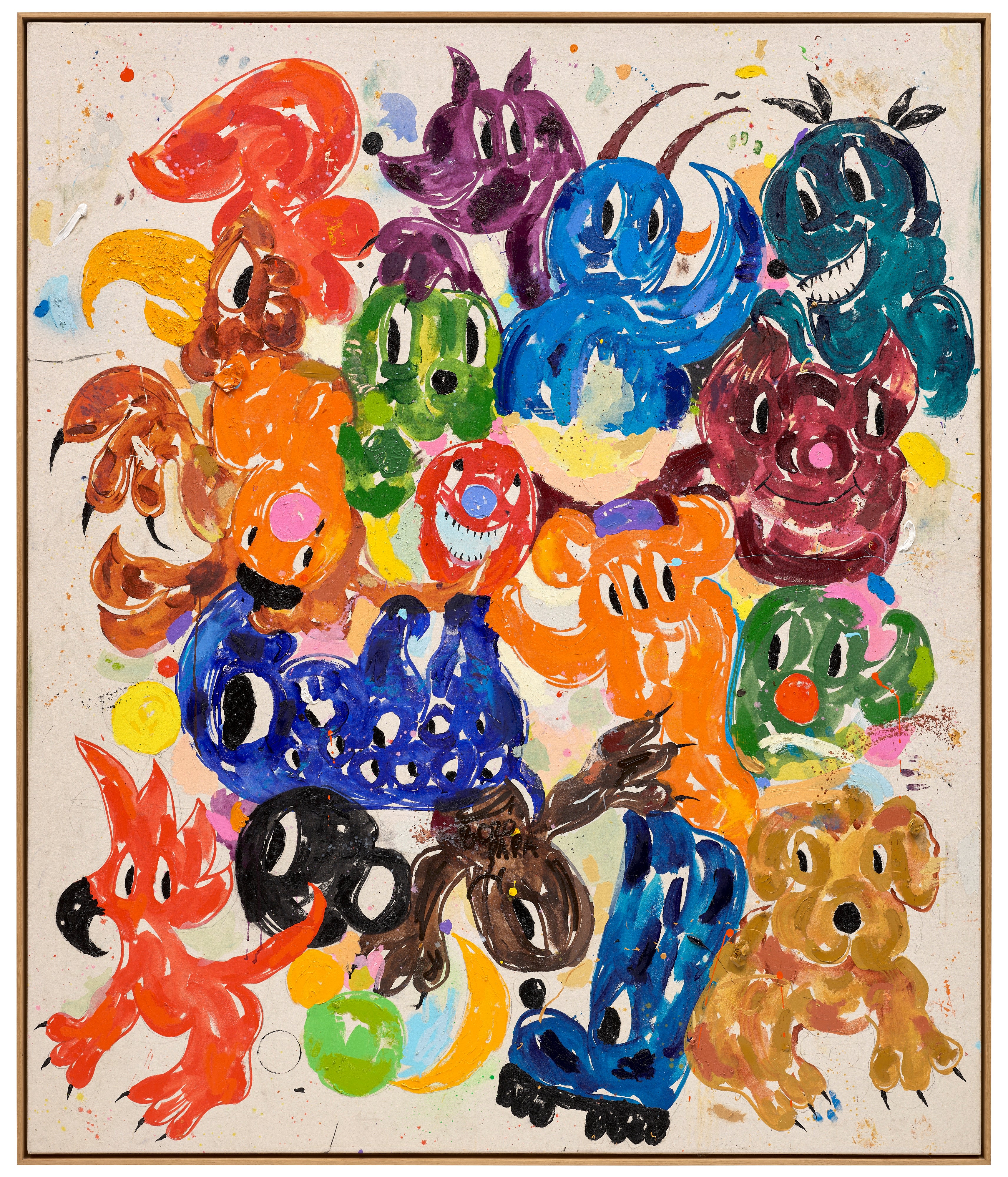
"A Kert" The Garden, 2021
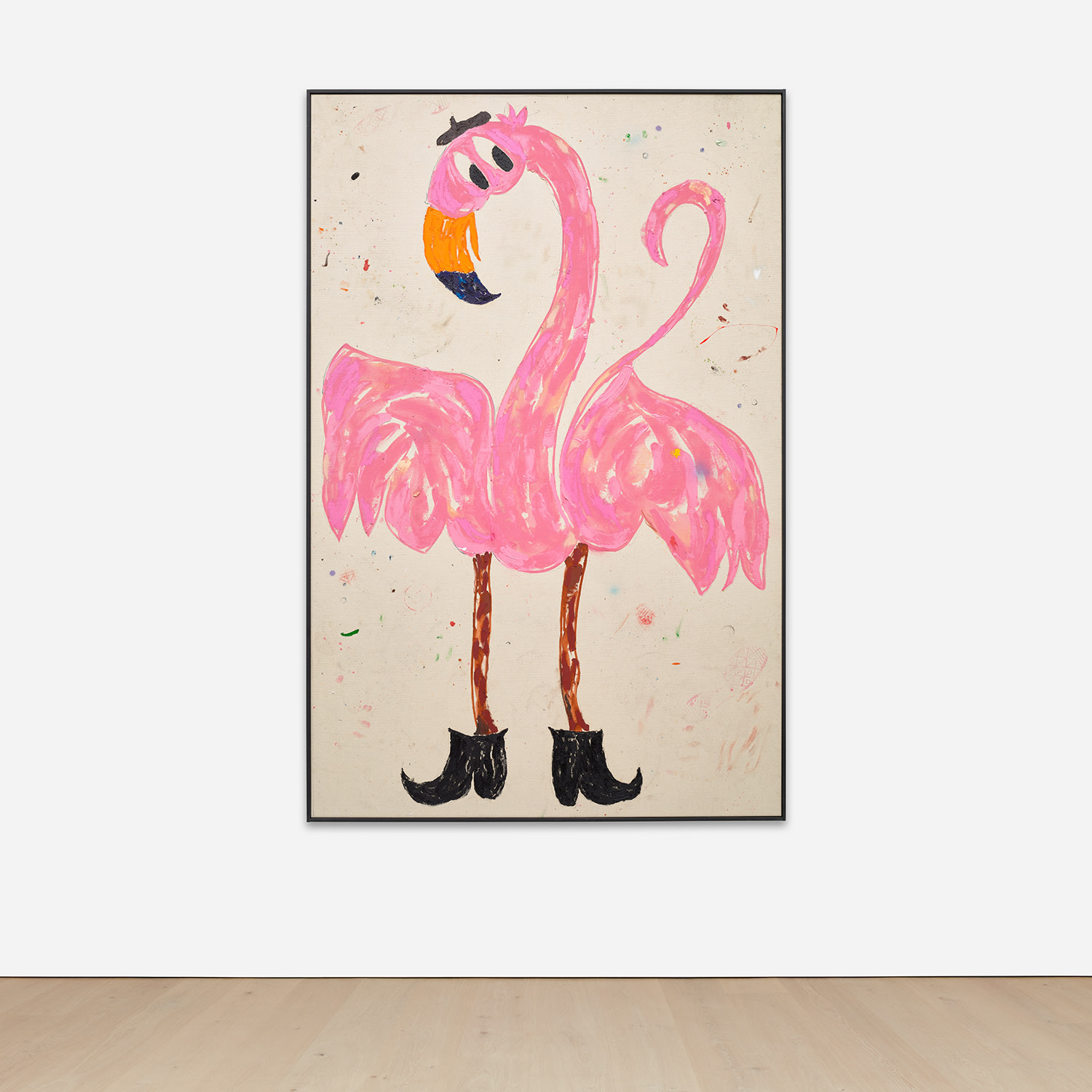
The works that have drawn the most attention demonstrate how fully Bozó has developed his own iconographic world. "Bakkancsos Flamingó (Flamingo with Boots)" from 2020 is a vivid example: a flamingo rendered with both affection and absurdist wit, the boots a detail that tips the image from mere illustration into something stranger and more poetic. The flamingo appears more than once in his work, as does the frog, the bird, the cat, figures that recur like characters in an ongoing narrative. "Green Frog Red Shoes" from 2022 carries a similar spirit, the pairing of creature and footwear functioning as a kind of gentle surrealist logic that is entirely Bozó's own.
These are not arbitrary choices: the animals in his paintings feel like stand ins for human moods and conditions, observed with sympathy and a dry sense of humour. Larger compositions such as "A Kert (The Garden)" from 2021 reveal the full range of his material ambition. Working with acrylic, oil, oil stick, spray paint, and paper collage on canvas, Bozó builds surfaces that feel genuinely excavated, as though the image has been arrived at through a process of addition and removal rather than simple application. The work "Éjszakai Erdő (Night Forest)" operates in a similar register, using oil, acrylic, spray paint, and oil stick to conjure a nocturnal atmosphere that feels both invented and utterly convincing.
Szabolcs Bozó
Bakkancsos Flamingó (Flamingo with Boots), 2020
His bilingual titles, appearing in Hungarian alongside Chinese characters in several works, speak to a collector base that has extended meaningfully into East Asian markets, a reflection of the genuinely international appetite his work has attracted. From a collecting perspective, Bozó occupies a particularly interesting position. His works are available in multiple formats: large scale canvases that command a room and make an unmistakable statement, and editions such as the lithograph "Nicolas (Blue)" that offer a point of entry for collectors building their first significant holdings. The mixed media canvases are where his practice is most fully realised, and works from his 2020 to 2022 period in particular show an artist operating at real peak confidence.
Collectors who have acquired works from this period are holding pieces that document a distinct and fertile moment in his development. The appearance of his work in notable auction sales has also provided the kind of transparent price history that allows new collectors to approach his market with clarity and confidence. Placing Bozó within a broader art historical context, his closest affinities are with a generation of figurative painters who emerged in the early twenty first century and chose to treat pop culture and urban imagery not as ironic material but as genuinely felt subject matter. His spirit of energetic figuration connects him to artists like Kaws, whose work similarly moves between fine art and street culture registers, as well as to painters such as Jonas Wood, who brings a comparable warmth and graphic precision to domestic and personal imagery.
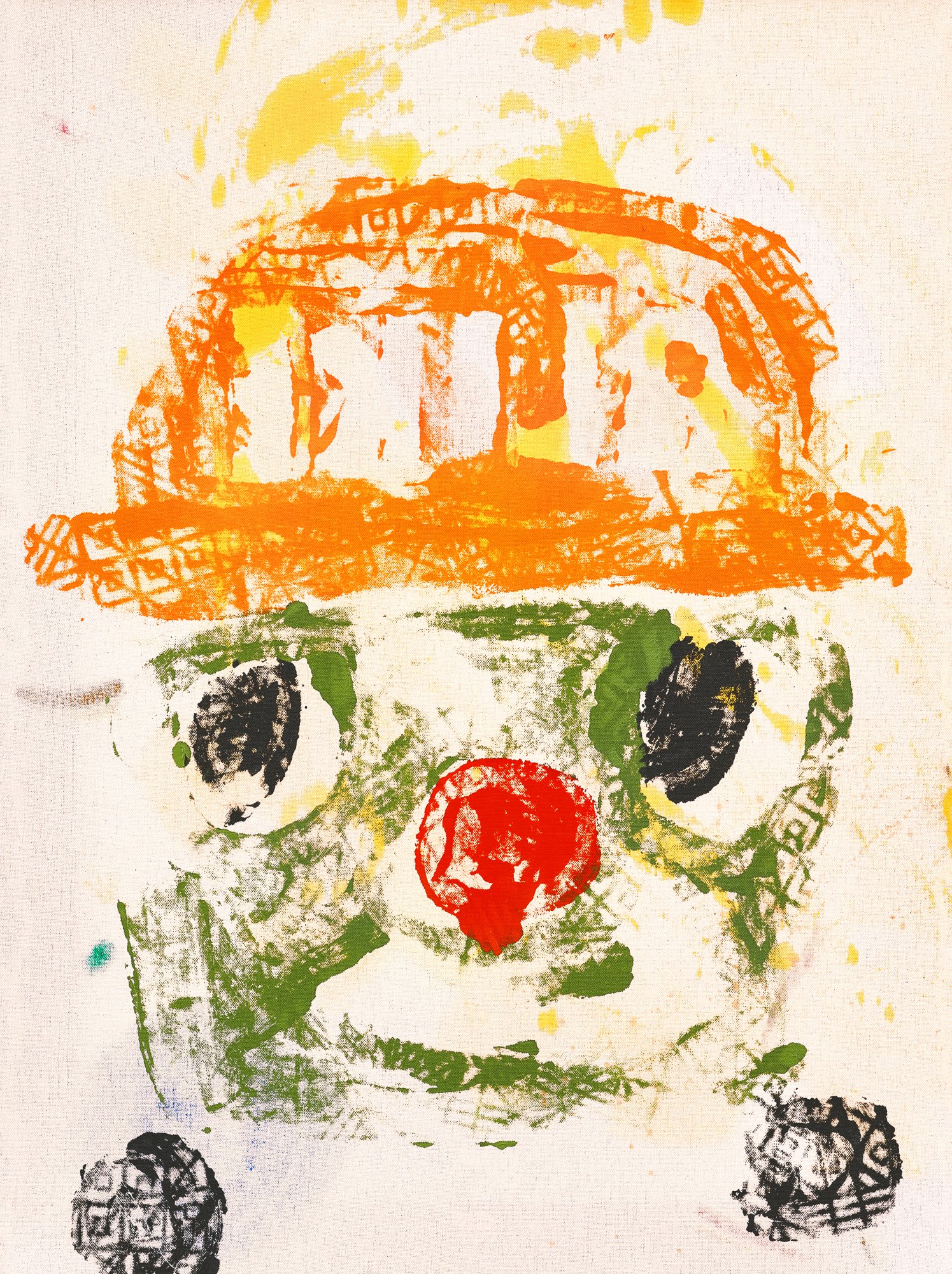
Szabolcs Bozó
C.m. 005 , 2019
Within the Hungarian and Central European tradition, Bozó carries forward an appreciation for expressive mark making that has roots in the region's long painterly history, even as he resolutely faces outward toward a global conversation. What makes Bozó matter right now is something beyond technique or market positioning. His paintings insist on joy, on the legitimacy of colour and creature and absurd small beauty, at a moment when contemporary art can sometimes feel obligated toward bleakness. There is serious intelligence in his work, and real formal rigour, but neither comes at the expense of pleasure.
For collectors, for galleries, and for anyone who spends time with his canvases, that combination feels genuinely rare. Szabolcs Bozó is an artist whose work rewards both the quick glance and the long look, and whose best is, by every indication, still arriving.