Sylvie Fleury
Sylvie Fleury Turns Desire Into Art
Artist Spotlight · The Collection Editorial
When the Centre Pompidou in Paris positions a Swiss artist among its permanent conversation about what contemporary art can do, it is a signal worth heeding. Sylvie Fleury, born in Geneva in 1961, has earned that kind of institutional attention through decades of work that refuses to behave itself. Her sculptures and installations occupy an extraordinary middle ground: they are gorgeous and they are critical, seductive and subversive, the visual equivalent of a knowing smile from across a very well appointed room. Fleury grew up in Geneva during the 1960s and 1970s, a city defined by discretion, private wealth, and an almost architectural sense of propriety.
Sylvie Fleury
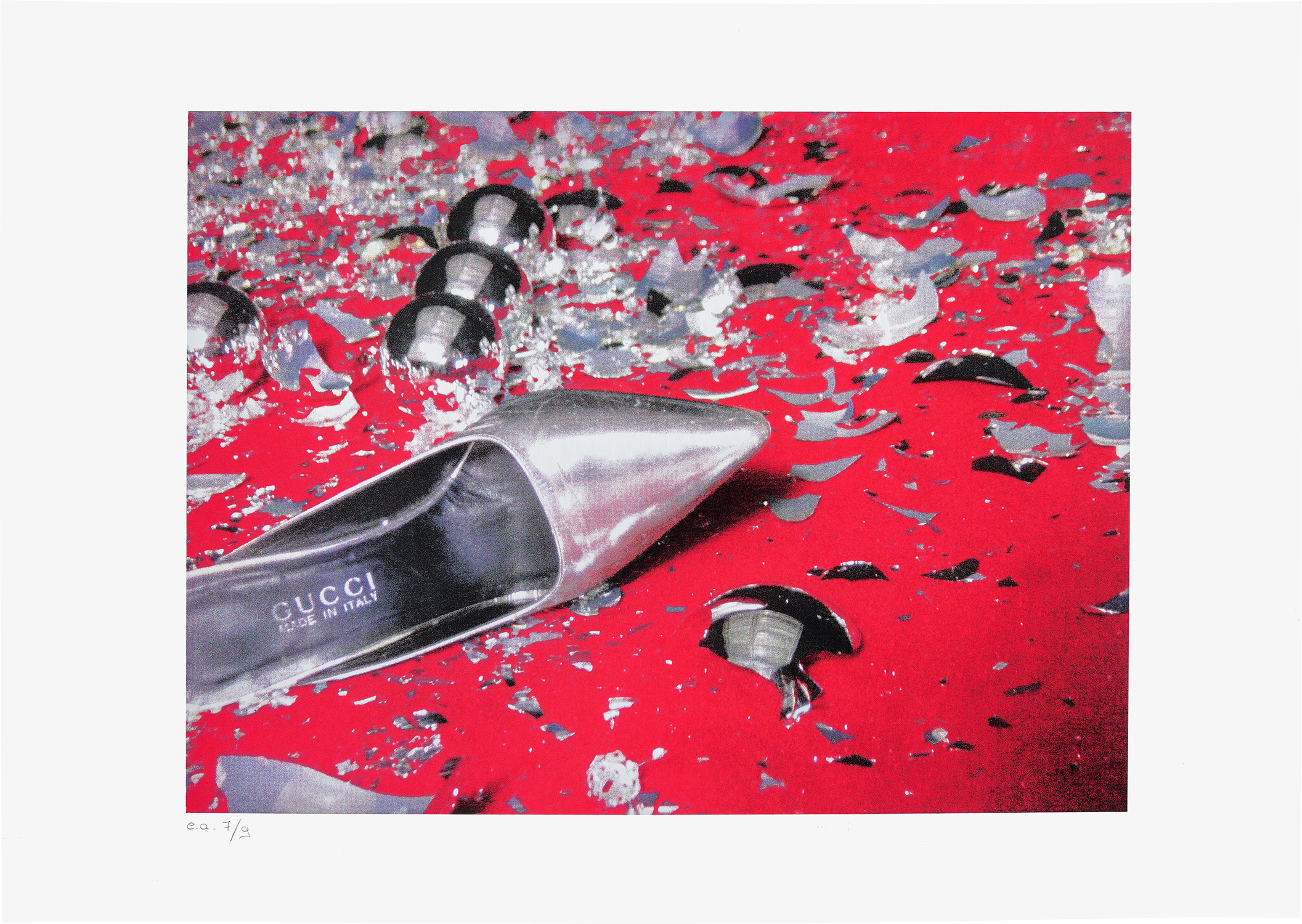
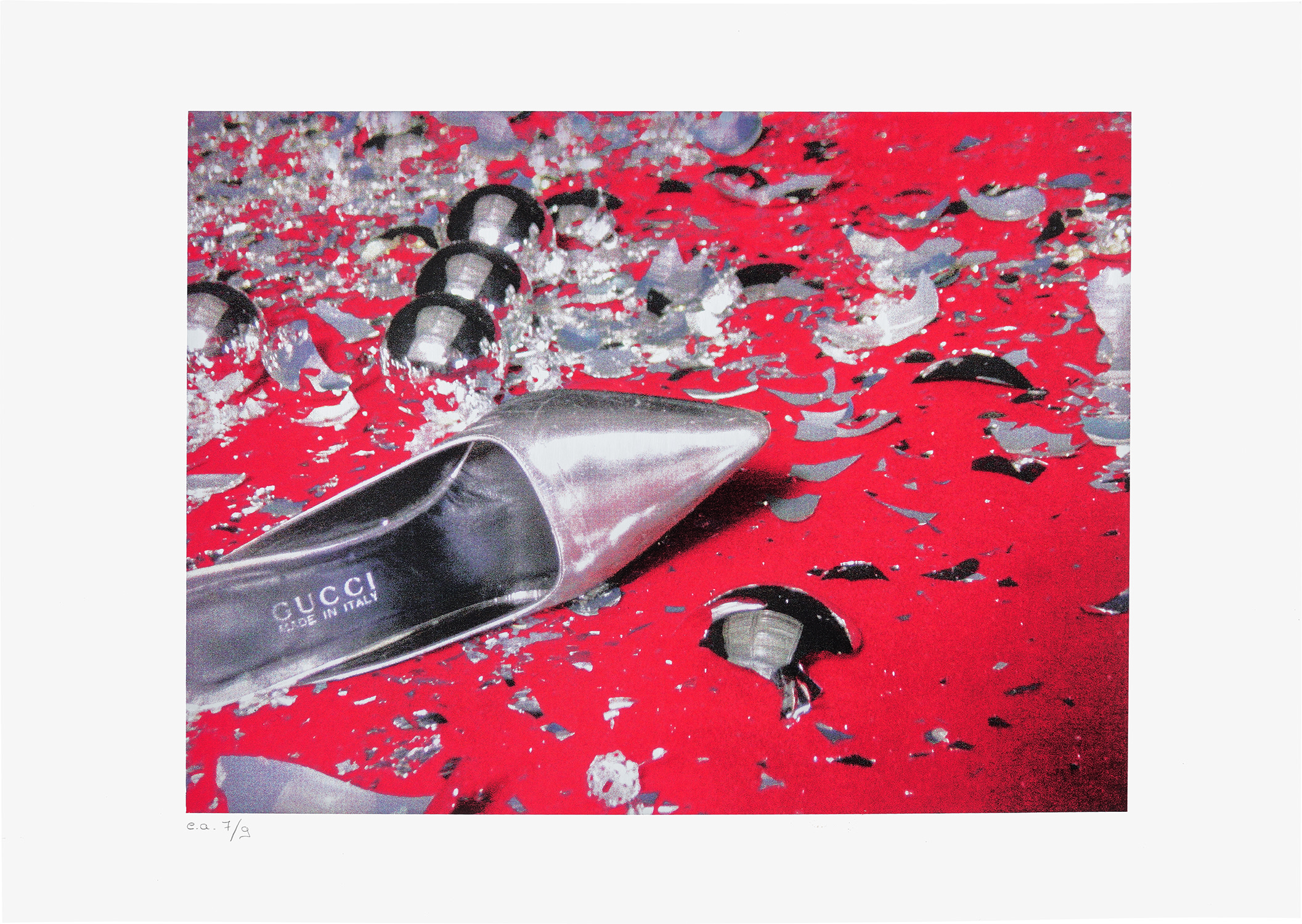
Here Comes Santa
That environment, saturated with luxury goods and the social codes that surround them, became her primary subject matter. She came of age at a moment when feminism, consumer culture, and Pop Art were all reshaping what was possible in contemporary life and in the gallery. She absorbed those energies and translated them into a practice that would become one of the most distinctive voices in European art from the 1990s onward. Her artistic development drew from a rich lineage.
The Pop sensibility of Andy Warhol, who understood that commerce and beauty were inseparable, echoes through her work, as does the Conceptualism of artists like Jeff Koons, whose chrome surfaces and appropriated objects made the art world reckon with desire and irony at once. But where Koons often plays it straight, Fleury brings something more personal and more pointed. Her feminism is not aggressive but it is absolutely present, woven into every choice she makes about what objects to elevate and how to treat them. She arrived on the international scene in the early 1990s with a gesture that announced exactly who she was: shopping bags from luxury boutiques placed directly on gallery floors as sculpture.
Sylvie Fleury
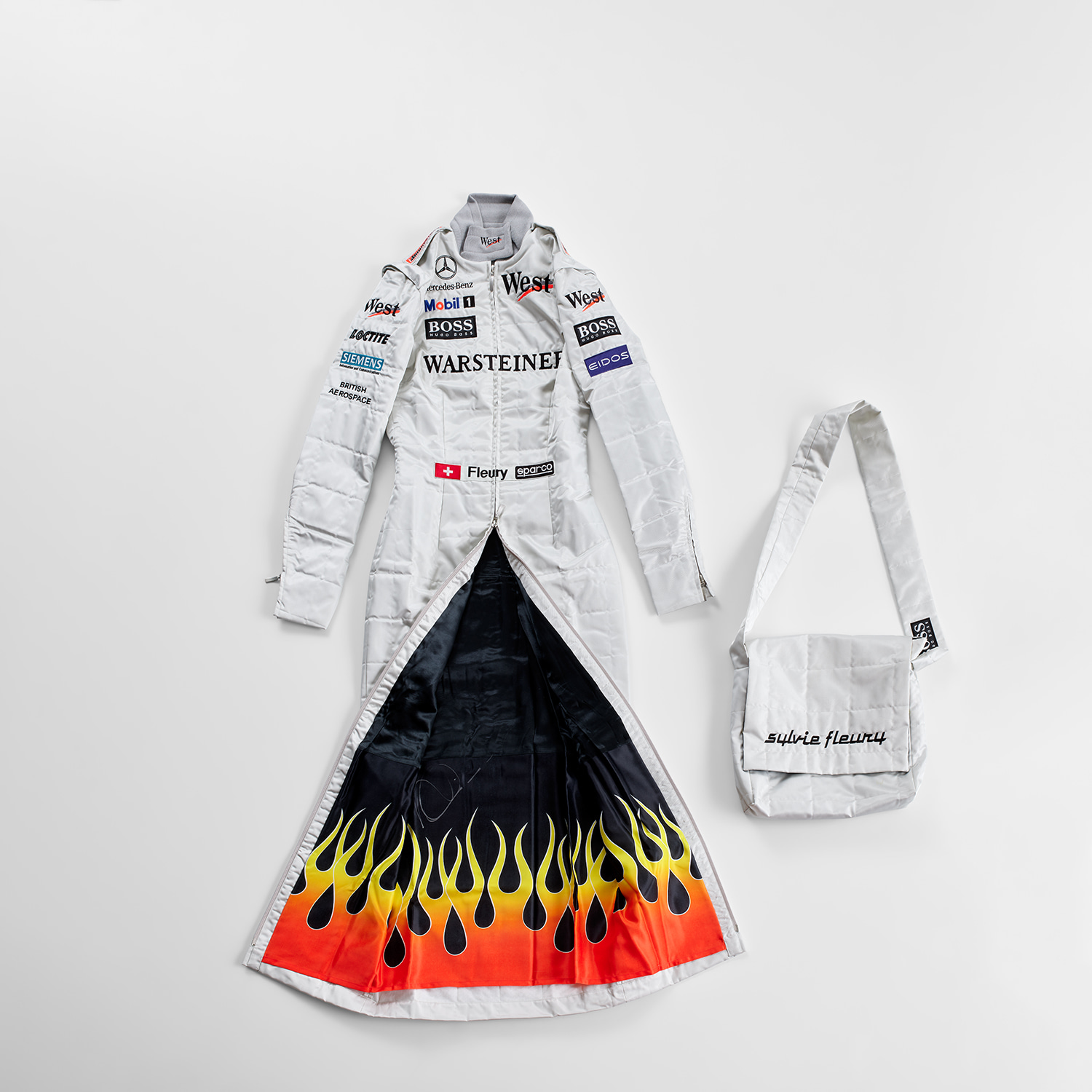
Formula 1 Dress and Bag
The message was clear and yet wonderfully ambiguous. Was this a critique of consumerism or a celebration of it? The answer, she has always suggested, is both. Among her most celebrated works are the chrome plated shopping carts that have become synonymous with her name.
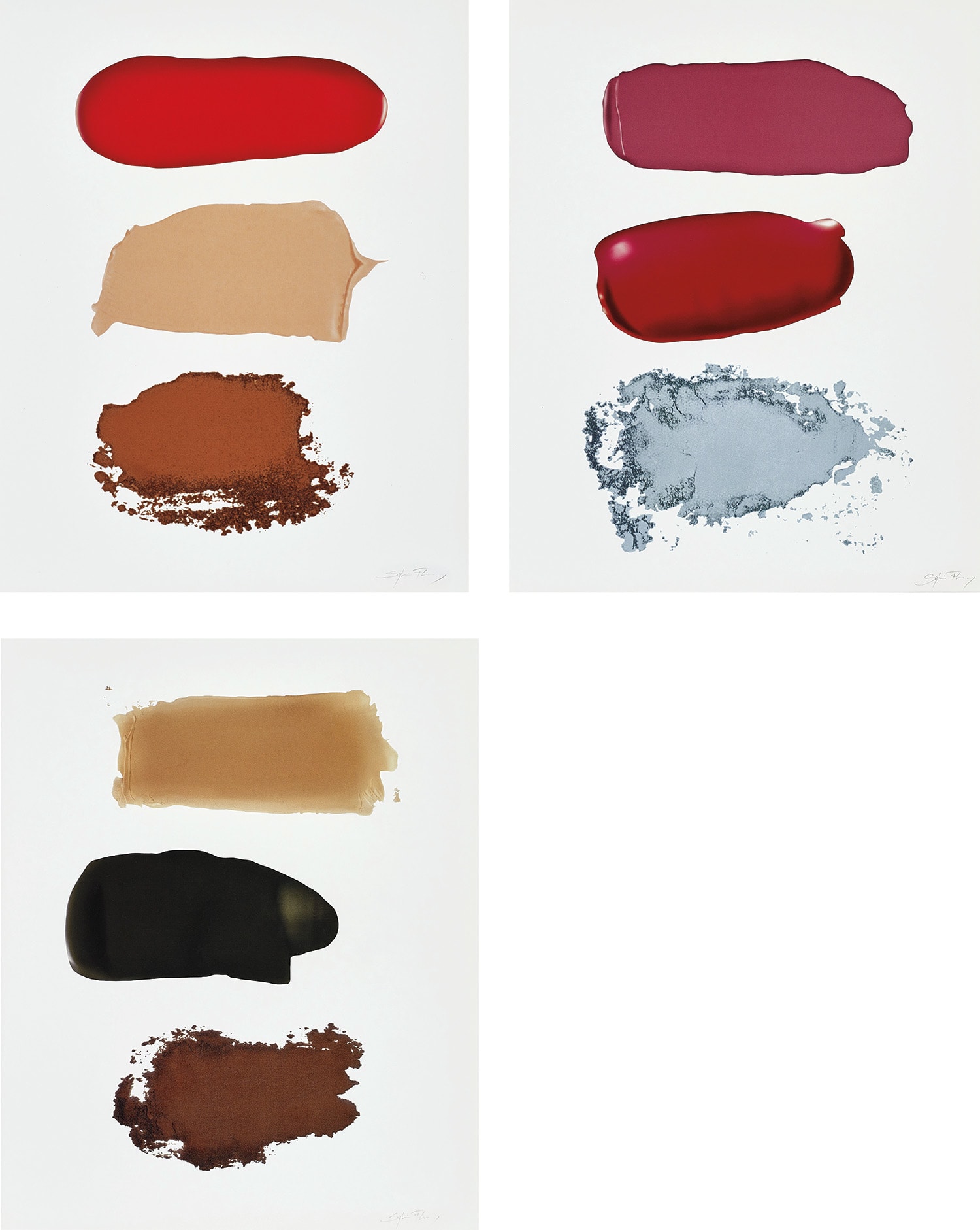
These supermarket objects, rendered in brilliant reflective metal, transform the mundane apparatus of consumption into something that looks like it belongs in a temple. They are simultaneously monuments and jokes, and that tension is precisely the point. Her shoe sculptures, in which designer footwear is cast, replicated, or displayed with the reverence one might reserve for ancient artifacts, carry the same dual charge. Works from her ongoing series exploring beauty products and cosmetic branding, including pieces like Happy Clinique from the Sequences series, treat the visual language of advertising with the seriousness of fine art printing.
Sylvie Fleury
Happy Clinique, from Sequences
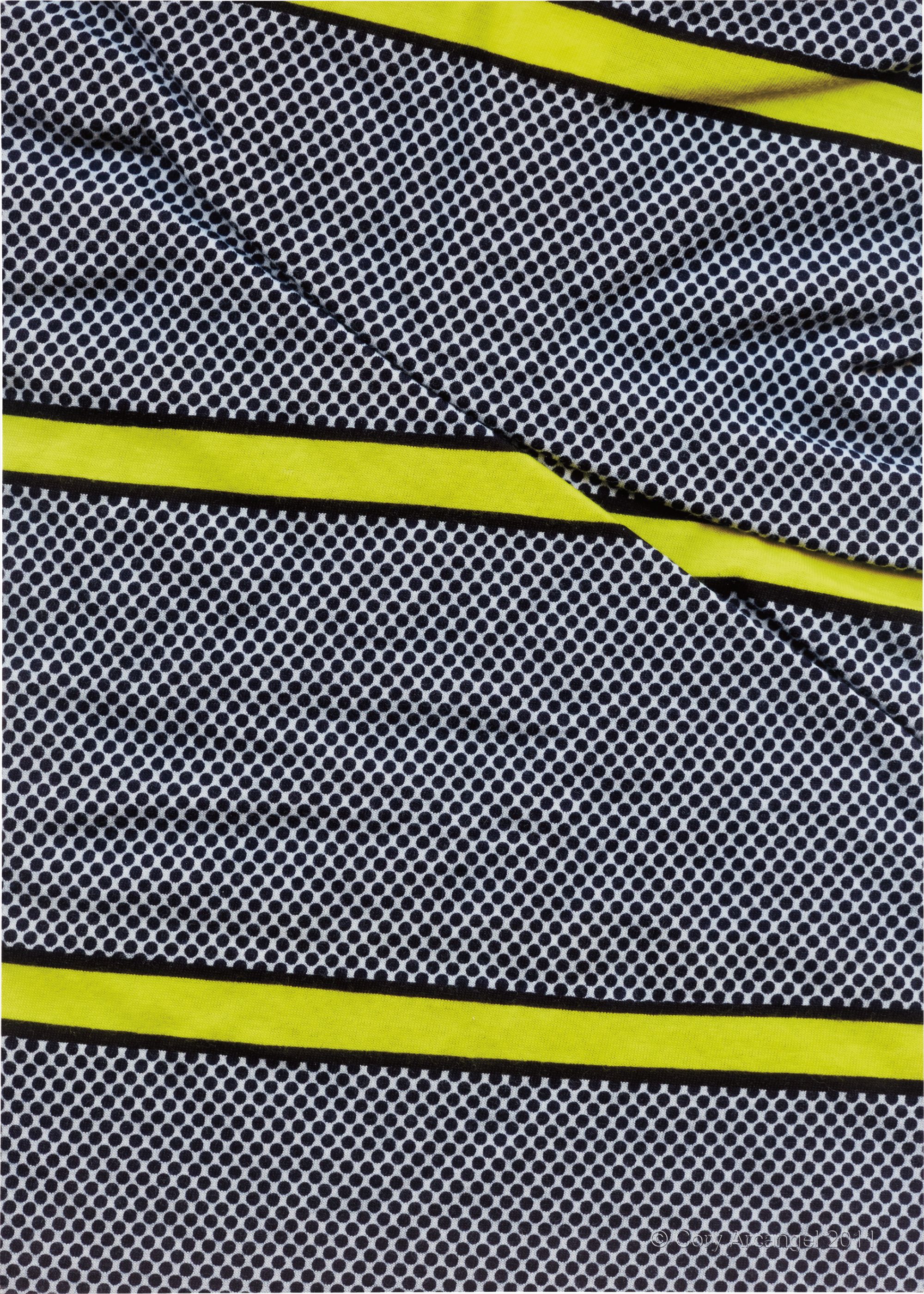
The complete set of three offset lithographs with screenprint in colours on heavy gloss paper has a richness and materiality that elevates its source imagery into something genuinely moving. The Formula 1 Dress and Bag, a private commission from 1999, stands as one of the most audacious objects in her catalogue. Created by Hugo Boss in Metzingen, Germany and published by the artist herself, the work arrived bearing the signature of Mika Hakkinen, the 1999 Formula 1 world champion. This is Fleury at her most theatrical and her most precise: fashion, sport, celebrity, and masculinity brought together in a single garment that is also a sculpture.
It asks who gets to inhabit power and glamour, and it does so with an elegance that disarms the question before it can feel heavy. Her Road Movie from 2018, an acrylic on shaped canvas over panel, shows her continued willingness to push beyond the readymade and into painting, bringing the same sense of cinematic scale and pop cultural literacy to a purely painted surface. The Gold Fountain LKW from 2003 is perhaps the work that best crystallises what Fleury does at her most ambitious. A gold plated porcelain truck tyre serves as the centrepiece of a fountain installation, mounted on an acrylic and glass pedestal.
Sylvie Fleury
Sylvie Fleury
The image of a tyre, one of the most workaday industrial objects imaginable, transformed into gilded porcelain and made to perform the aristocratic function of a garden fountain, is almost absurdly funny and almost unbearably beautiful. It is the kind of work that collectors remember for decades. Her Slim Fast series, a complete set of two wooden multiples with screenprint in colours, returns to the body and its anxieties, using diet culture branding as raw material for objects that are both funny and uncomfortable in exactly the right measure. For collectors, Fleury presents a compelling and still developing market story.
Her works have been acquired by major public institutions and appear regularly at auction, where her multiples and prints offer an accessible entry point and her sculptural works command serious attention. The Here Comes Santa screenprint in colours on silver foil wove paper is a characteristic example of her print work at its most refined, the silver ground giving the image a festive shimmer that also reads as a comment on seasonal consumption. Collectors who appreciate artists in the tradition of Barbara Kruger, Louise Lawler, and Haim Steinbach, all of whom share Fleury's interest in the aesthetics and politics of commodity culture, will find her work a natural and enriching companion. Her place in the broader conversation about institutional critique and feminist appropriation art has only grown more secure as those conversations have moved to the centre of art historical attention.
Fleury has represented Switzerland at the Venice Biennale, a recognition that places her at the very top of her country's artistic reputation. She has exhibited at MoCA Los Angeles and the Centre Pompidou, and her work continues to be shown by leading galleries internationally. What is striking, revisiting her body of work now, is how prescient it feels. The questions she began asking in the early 1990s about desire, femininity, luxury, and the seductions of the market have only become more urgent as those forces have grown more powerful and more pervasive in everyday life.
Sylvie Fleury did not simply respond to consumer culture. She found within it a genuine language for talking about what it means to want things, to be shaped by things, and occasionally to be liberated by the act of turning those things into art.