Suzan Frecon
Suzan Frecon: Color as Sacred Ground
Artist Spotlight · The Collection Editorial
In the spring of 2023, the art world turned its attention once again to Suzan Frecon when David Zwirner presented a major exhibition of her paintings and works on paper, reaffirming what a devoted circle of collectors and curators has long understood: that Frecon is among the most quietly transformative painters working in America today. Her canvases arrived in the gallery with the gravity of ancient objects, their surfaces burnished and luminous, each one the product of a practice so considered and so deeply felt that standing before them feels less like viewing art and more like entering a state of attention. At 83, she continues to work with the same discipline and philosophical rigor that has defined her career across five decades, and the recognition she now receives feels not like belated discovery but like a long conversation finally reaching its fullest register. Frecon was born in 1941 in Warren, Pennsylvania, a small industrial city set along the Allegheny River, and from early in her life she demonstrated an affinity for close looking and material sensitivity that would eventually define her entire artistic identity.
Suzan Frecon
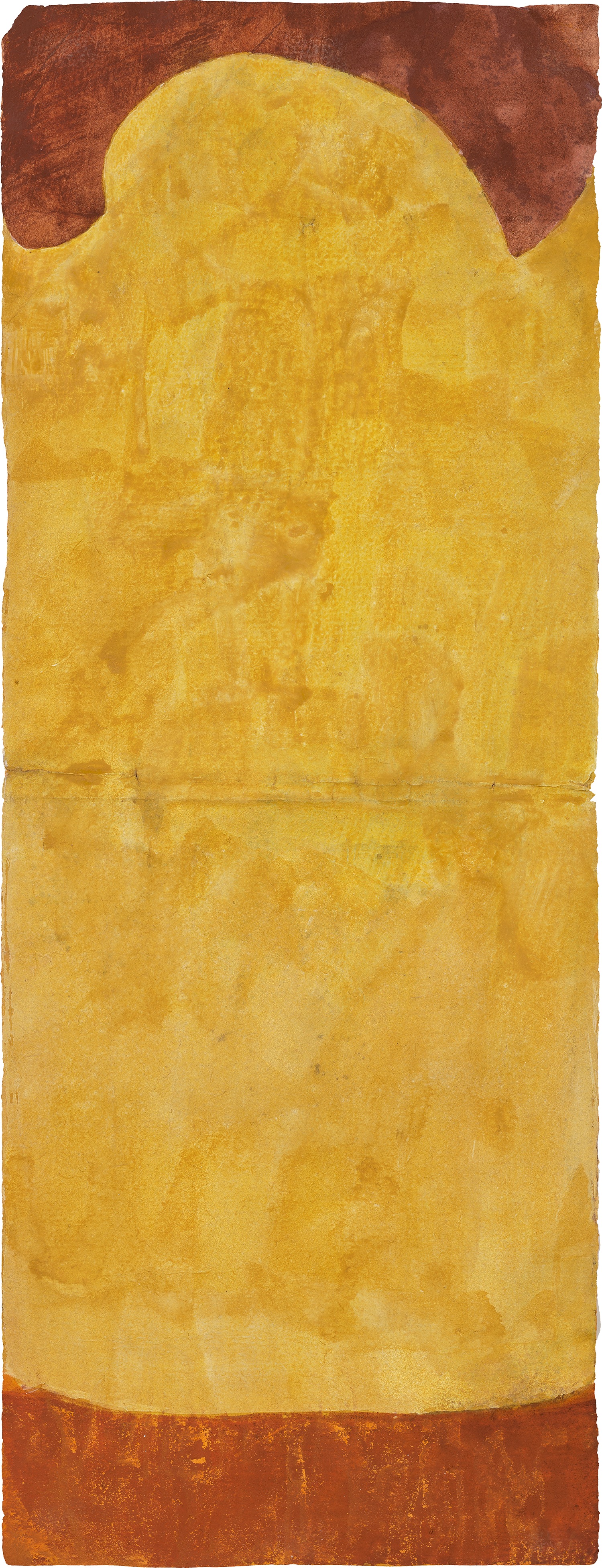
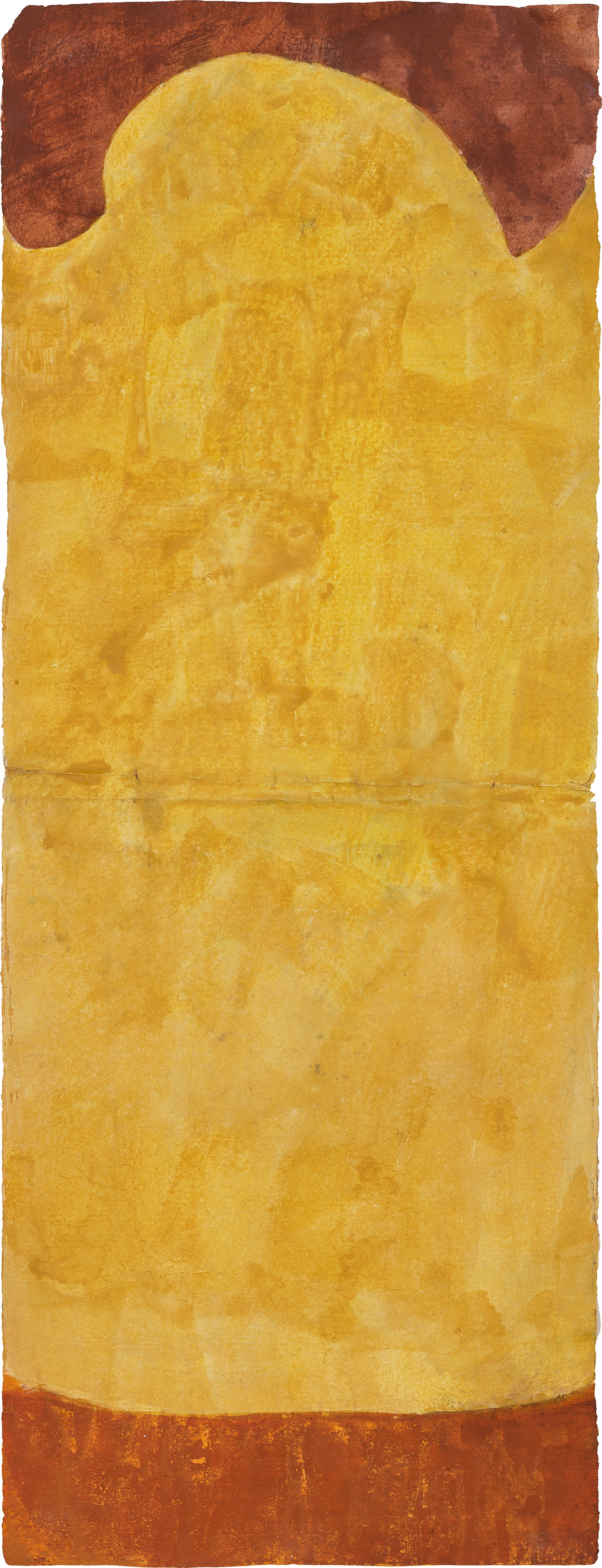
vertical yellow composition with reverse curve
She studied at the Moore College of Art and Design in Philadelphia before continuing her education in Paris, where she spent formative years in the late 1960s absorbing the weight of European art history while developing an independence from its most dominant narratives. Paris gave her access to medieval manuscripts, Islamic geometric abstraction, and the austere spirituality of Romanesque art, influences that would prove far more lasting on her sensibility than any single contemporary movement. She returned to the United States carrying a quiet conviction that painting, practiced with total devotion, could reach toward something both ancient and entirely alive. Her development as a painter unfolded slowly and deliberately, which is itself a form of statement in an art world that has often rewarded spectacle and velocity.
Through the 1970s and into the 1980s, Frecon refined a visual language rooted in the interplay of geometric forms and chromatic depth, working with oil on canvas in compositions that balanced formal precision with an almost meditative openness. Works such as Light and Earth from 1986 and Dark and Light with Homage to Manet from 1985 demonstrate the philosophical seriousness with which she approached the modernist tradition even as she transformed it. These are paintings that acknowledge their art historical inheritance without being burdened by it, canvases that breathe and ask to be breathed with. By the time the 1990s arrived, she had established herself as a singular voice within American abstraction, one whose work rewarded sustained engagement above all else.
Suzan Frecon
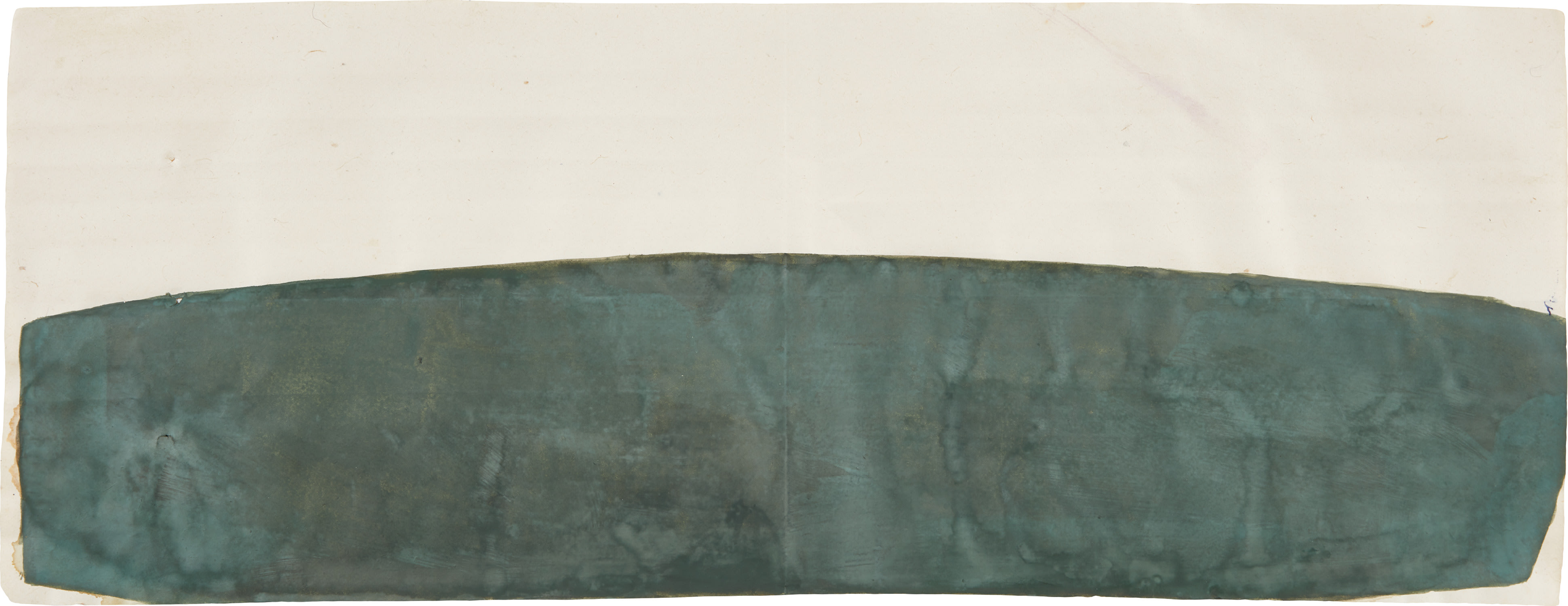
green composition
What distinguishes Frecon most profoundly is her commitment to materials that carry history in their very substance. She works extensively with earth pigments, raw mineral colors ground from ochre, sienna, umber, and iron oxide, applied in ways that make the passage of time feel present rather than erased. Her use of old Indian ledger paper, sheets repurposed from nineteenth century colonial administrative records, adds another layer of temporal resonance to works like vertical yellow composition with reverse curve and impracticable enceinte. These papers arrive already marked by history, and Frecon works across them with watercolor in a manner that honors rather than obliterates that prior life.
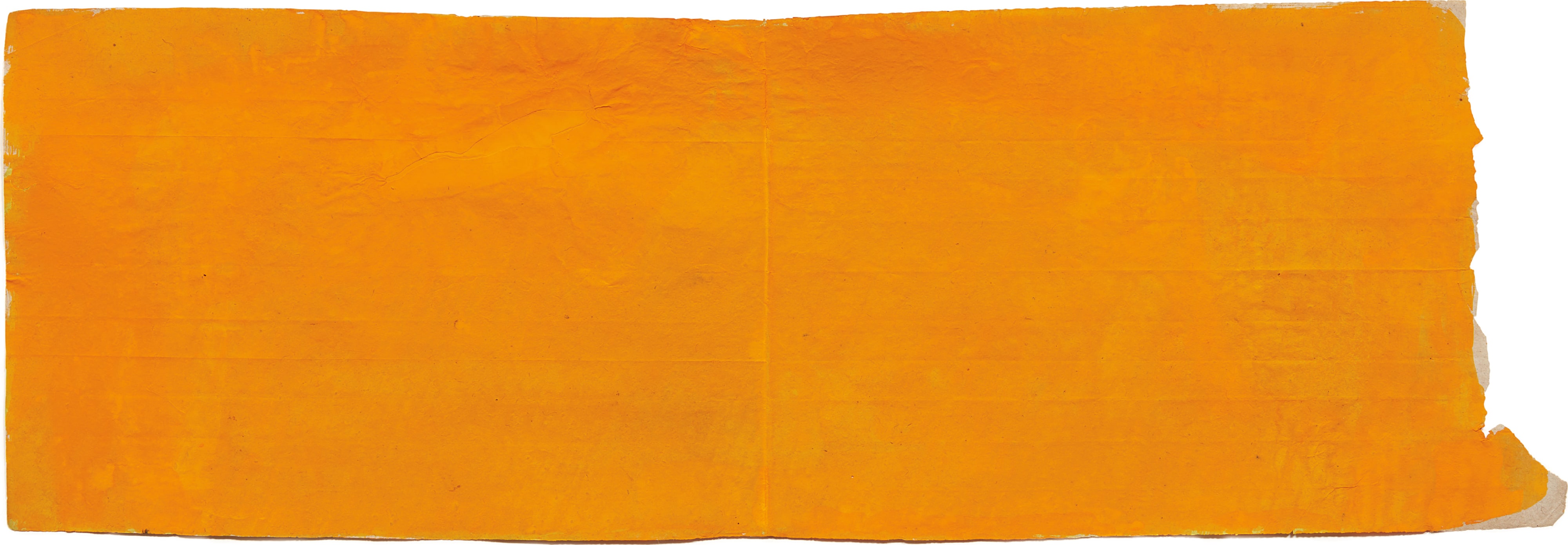
Her practice of burnishing paper with agate stone before applying pigment, visible in green composition and orange composition on small long format, creates surfaces of uncommon intimacy and density, surfaces that seem to hold light rather than simply reflect it. The result is work that feels genuinely timeless without resorting to any nostalgic gesture. From a collecting perspective, Frecon represents a rare combination of critical credibility and enduring market stability. Her work entered the permanent collections of the Museum of Modern Art in New York, the Menil Collection in Houston, and the Dia Art Foundation at a relatively early stage of her career, a signal of institutional confidence that has only deepened over time.
Suzan Frecon
Horizontally Extended Orange (patched), 2011
Works on paper, particularly her watercolors on agate burnished old Indian ledger paper, offer collectors an accessible entry point into a practice whose oils on canvas command significant attention at auction and in private sales. The specificity of her materials means that each work is genuinely unique, not merely as a matter of legal categorization but as a physical and experiential fact. Collectors drawn to artists such as Agnes Martin, Ellsworth Kelly, and Mary Heilmann will find in Frecon a sensibility that is simultaneously rigorous and warmly human, a painter whose restraint is a form of generosity. Frecon's place within art history is best understood through the conversation she conducts with abstraction across cultures and centuries.
Her work resonates with the color field investigations of Mark Rothko and Ad Reinhardt while drawing equally from sources as distant as Persian miniature painting and pre Columbian ceramic vessels. She shares with Martin a devotion to horizontal and vertical orientation as a means of inducing contemplation, but where Martin sought a kind of dissolved stillness, Frecon is more interested in what she might call the body of color, its weight and presence and physical insistence. Artists such as Robert Ryman explored the materiality of painting's surface with comparable focus, and viewers who love Ryman will find Frecon a compelling and enriching companion. Her position within contemporary abstraction is not marginal but foundational, a reminder that the most enduring formal investigations are driven by genuine philosophical need.
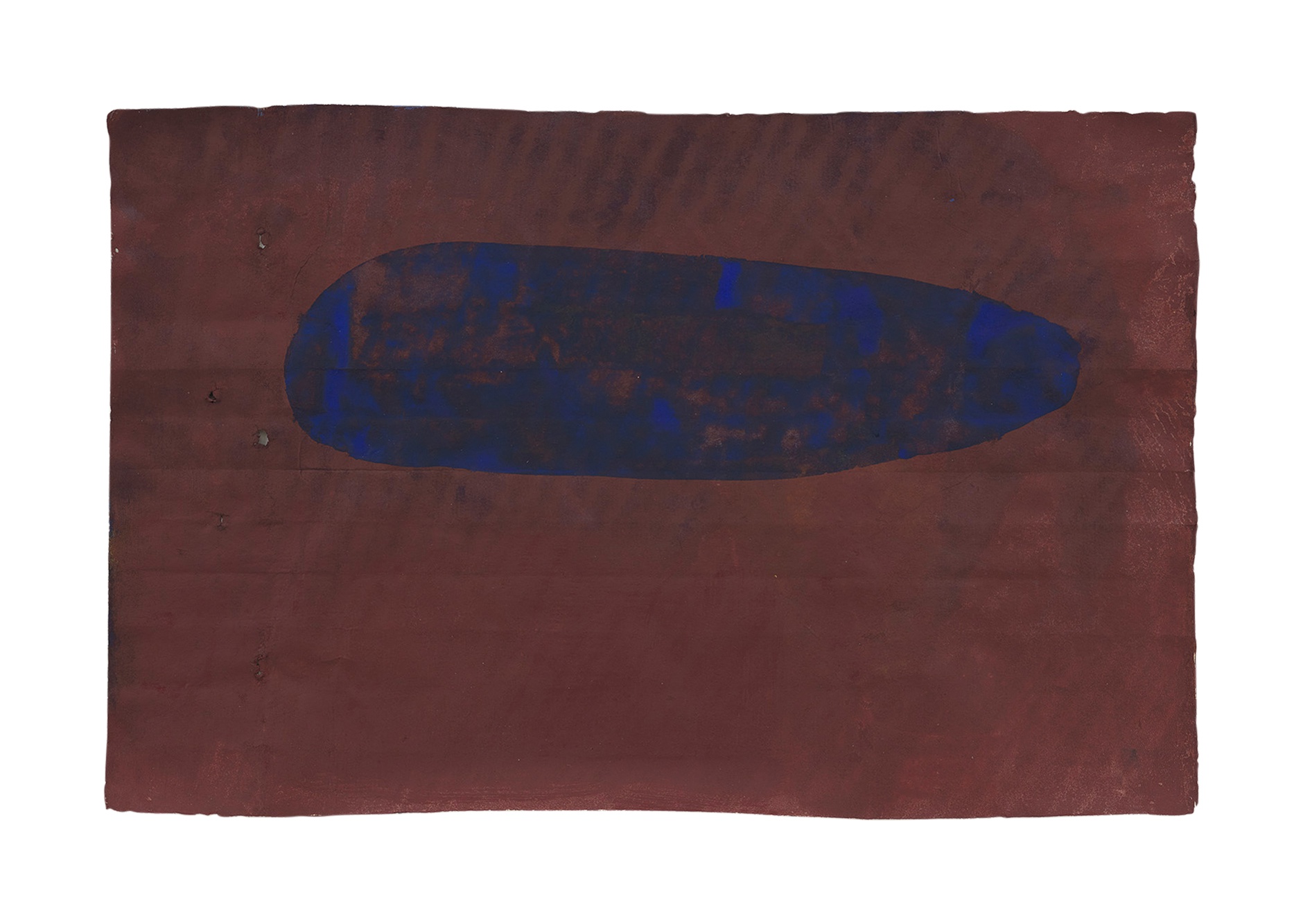
Suzan Frecon
impracticable enceinte, 2018
The legacy Frecon is building, quietly and without fanfare, is one of extraordinary coherence and depth. In a cultural moment saturated with irony and noise, her paintings ask something genuinely countercultural of their audience: they ask for time, for stillness, for the willingness to let color become an event rather than a description. Institutions have recognized this. Collectors who live with her work speak of it with the kind of devotion usually reserved for objects that have changed them.
And as younger artists increasingly look to reclaim the spiritual and material dimensions of painting, Frecon stands as a living example of what sustained practice and philosophical seriousness can achieve. To encounter her work, whether in a major museum gallery or across the intimate surface of a watercolor on old Indian ledger paper, is to understand that painting at its deepest is not a style but a form of attention, and that Suzan Frecon has spent a lifetime teaching us how to practice it.
Explore books about Suzan Frecon