Susan Derges
Nature's Own Hand, Luminously Revealed
Artist Spotlight · The Collection Editorial
In the quiet hours before dawn along the River Taw in Devon, something remarkable takes place. Susan Derges wades into the cold current, submerging sheets of photosensitive paper beneath the surface, and then triggers a flash of light. In that single, irreversible instant, the river draws its own portrait. The resulting images, among the most quietly astonishing works in contemporary British photography, have earned Derges a devoted international following and a place in the permanent collections of institutions including the Victoria and Albert Museum in London and the National Museum of Photography, Film and Television in Bradford.
Susan Derges
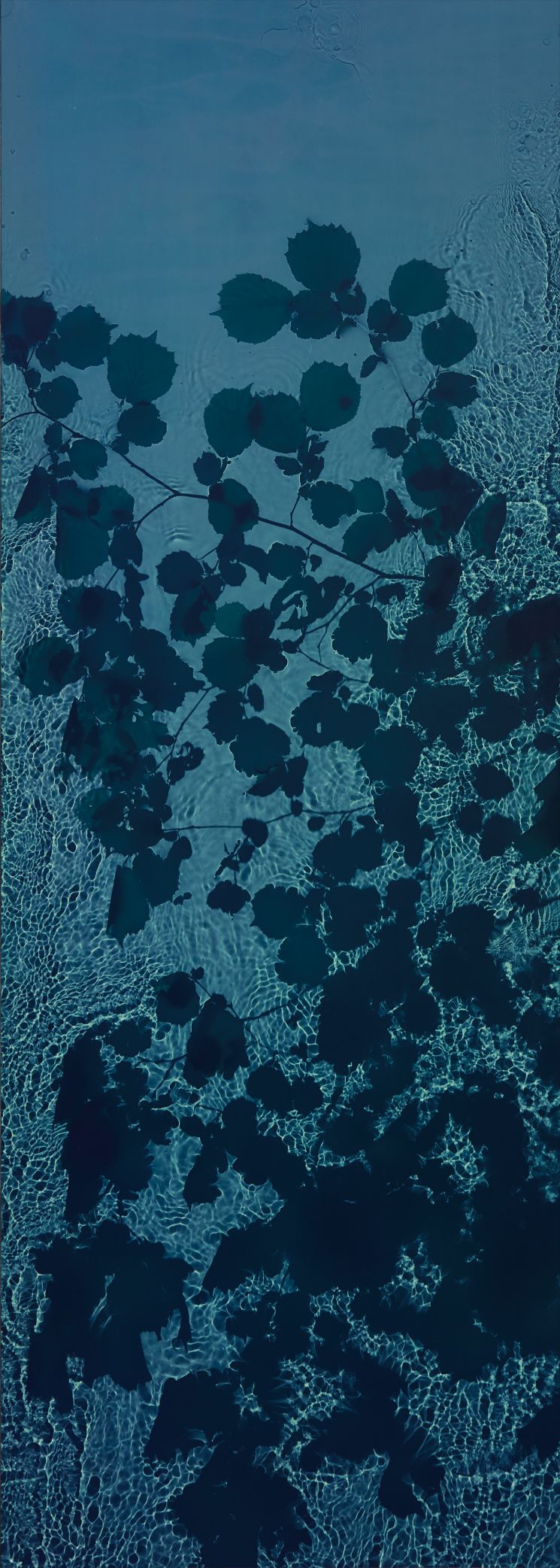
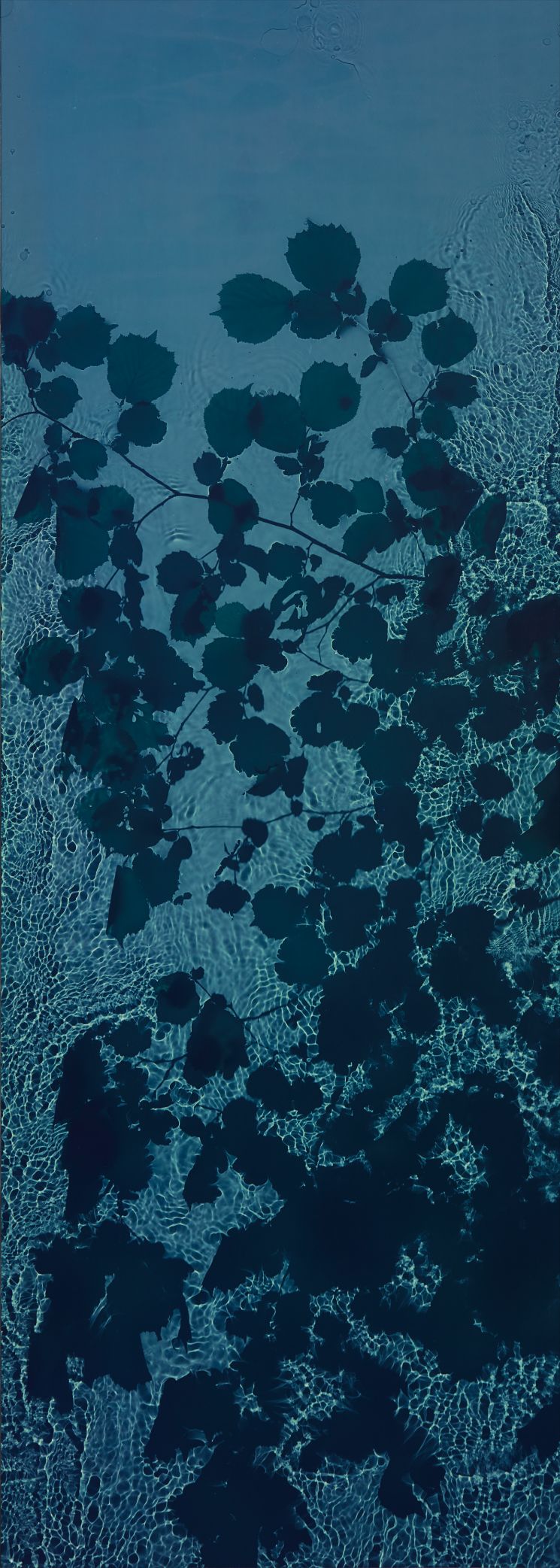
The River Taw (Hazel), June 16
Her practice, refined over decades of patient and philosophically rigorous engagement with the natural world, continues to feel urgently relevant at a moment when questions of ecological attention and human perception sit at the very centre of cultural conversation. Derges was born in 1955 and grew up in Britain during a period of tremendous intellectual ferment around the sciences and the arts. She studied at the Chelsea School of Art in London during the late 1970s, a formative environment that encouraged experimental approaches and cross disciplinary thinking. It was during an extended period living and working in Japan in the 1980s that her sensibility underwent its most decisive transformation.
Immersed in a culture that had long cultivated a philosophy of attentiveness to natural phenomena, she encountered traditions of mark making and perception that would reshape her understanding of what photography could do and what it could mean. Japan gave her the conceptual permission, as it were, to remove the camera entirely from her practice. Returning to England and settling in Devon, Derges began working directly with the landscape in ways that had no real precedent in photographic art. Her early cameraless experiments drew on the long tradition of the photogram, the technique first explored systematically by William Henry Fox Talbot in the 1830s and later revived with surrealist intensity by Man Ray and László Moholy Nagy in the twentieth century.
Susan Derges
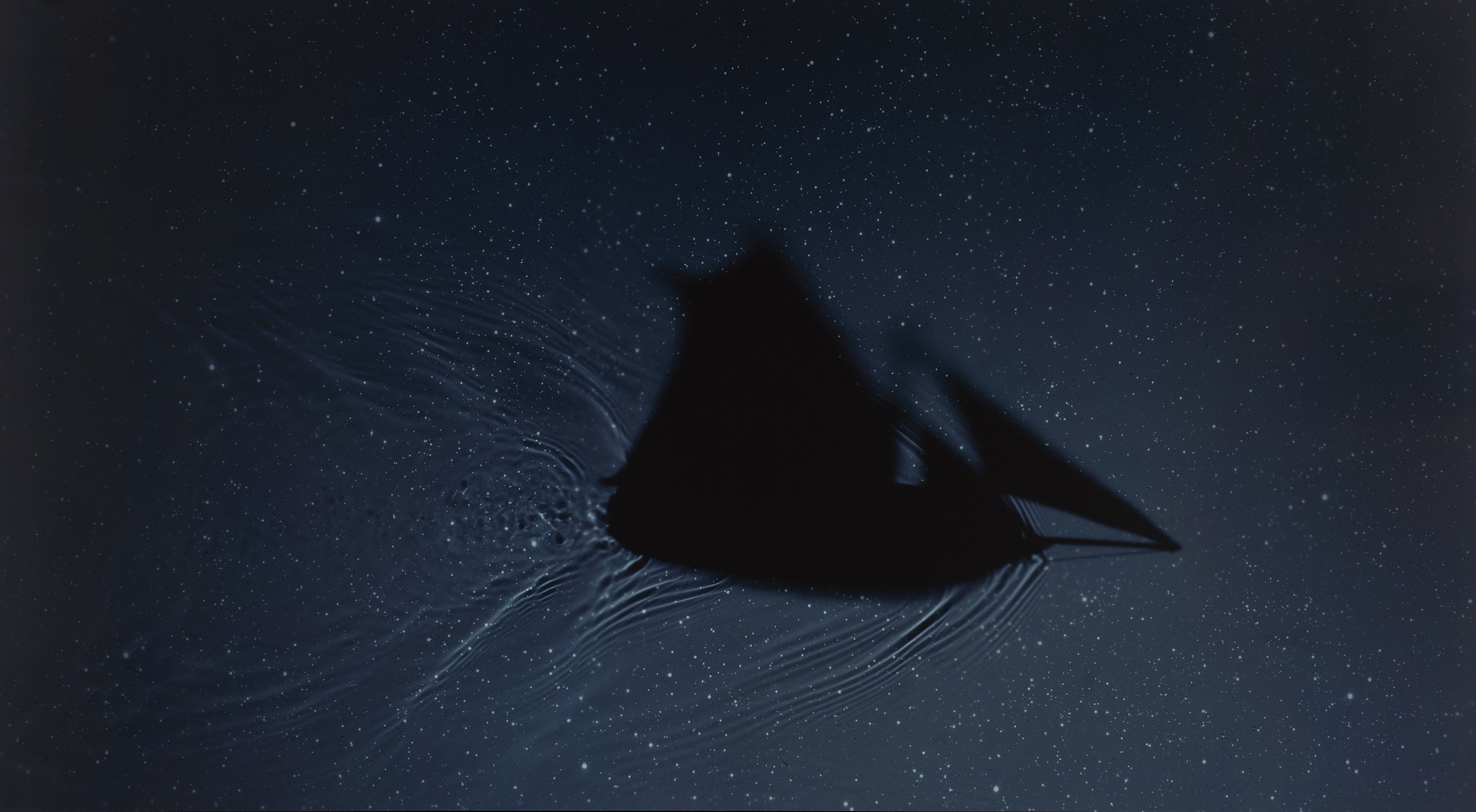
Passage
But where her predecessors typically worked in the controlled environment of the studio, Derges took the process outside entirely. She brought the darkroom to the river. The photosensitive surface became a kind of membrane between the artist, the natural world, and the archive of light itself. The River Taw series, from which several of the works available through The Collection are drawn, represents perhaps the fullest expression of this ambition.
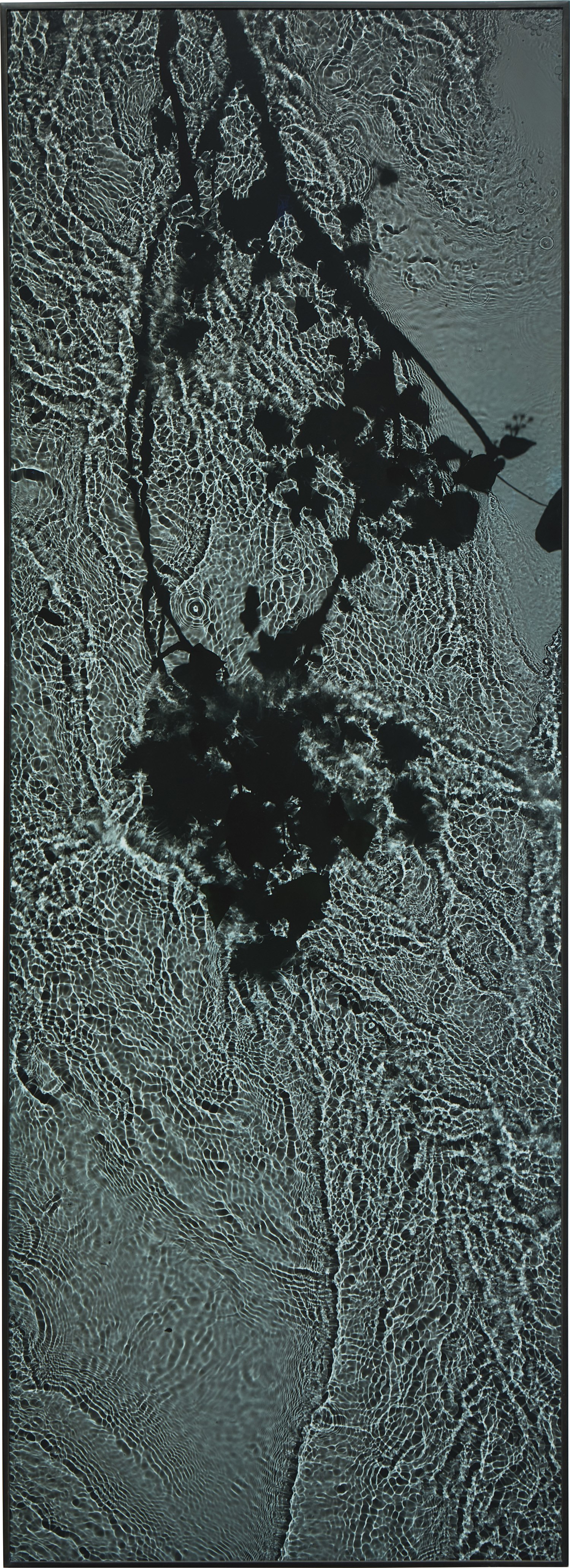
Works such as The River Taw (Hazel), June 16 and The River Taw (New Moon Ivy), Oct. 20 are dated with the precision of a naturalist's field notes, and that specificity matters enormously. Each image is the record of a particular night, a particular phase of the moon, a particular configuration of overhanging branches and flowing water. The dye destruction photogram process Derges employs produces colours of extraordinary depth and permanence, the kind of chromatic richness that transforms a scientific procedure into something approaching the sublime.
Susan Derges
The River Taw (New Moon Ivy), Oct 20.
These are unique works in every sense: no two nights on the river are the same, and the images cannot be reproduced. Full Moon Spawn and Star Field Cypress extend the vocabulary of the river works into territory that feels almost cosmological. In the former, the fecund turbulence of a spring pond under moonlight becomes an image of overwhelming biological energy, life asserting itself in the darkness with joyful abandon. In Star Field Cypress, the silhouette of a tree resolves into a field of luminous points that reads equally as foliage and as galaxies, collapsing the distinction between the microscopic and the infinite.
This is one of Derges's most consistent and thrilling achievements: the revelation that the structures governing natural phenomena at different scales are, at root, the same structures. She arrives at this insight not through argument but through direct perceptual experience, her own and that of the viewer standing before the work. For collectors, the appeal of Derges's practice is both aesthetic and philosophical. Her works are genuinely unique objects, produced in conditions that cannot be replicated.
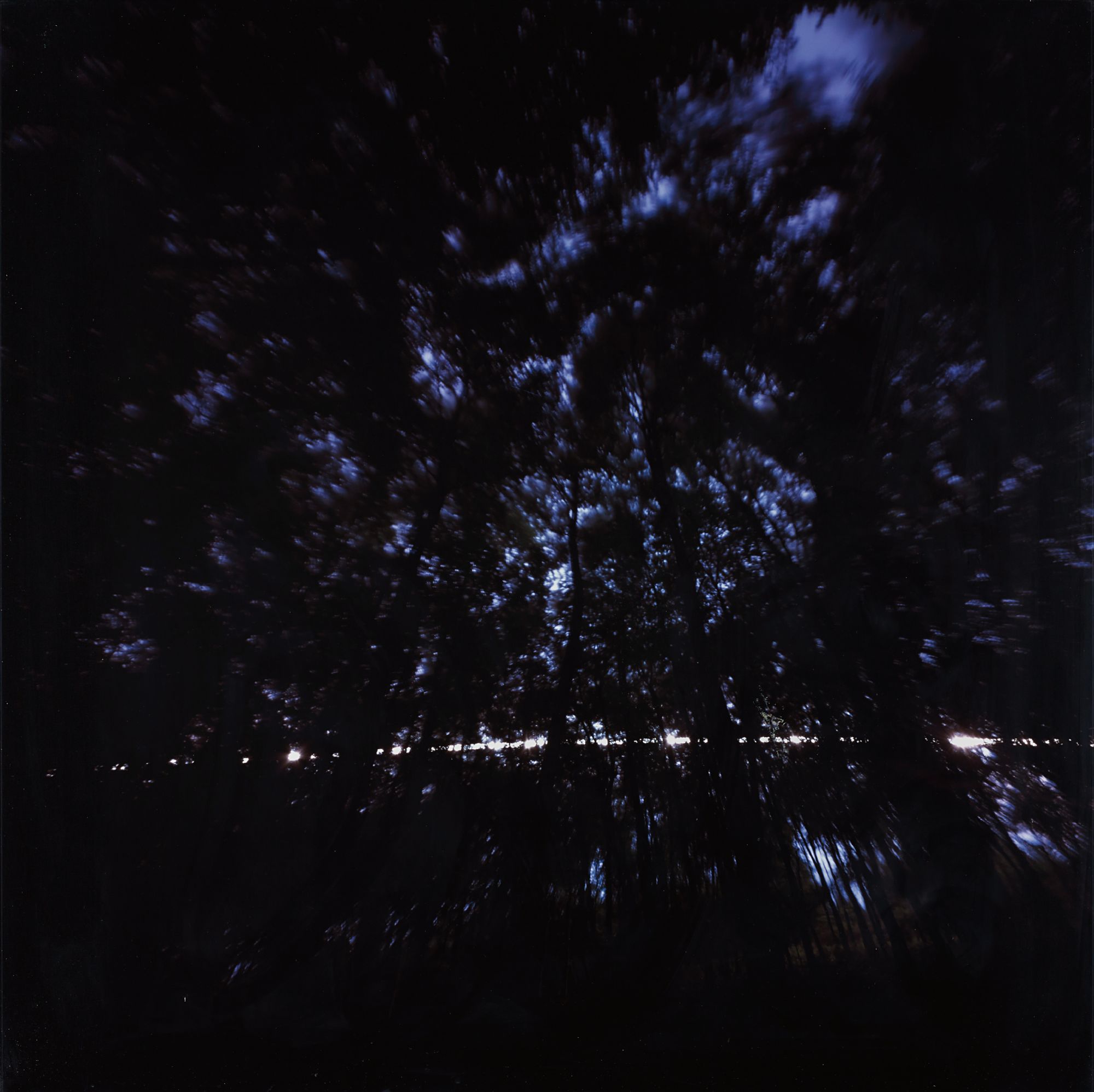
Susan Derges
Canopy
The large scale flush mounted format in which they are typically presented gives them a commanding physical presence that reads powerfully in both domestic and institutional settings. Collectors drawn to the work of artists such as Wolfgang Tillmans, Hiroshi Sugimoto, and Adam Fuss will find in Derges a sensibility that is equally rigorous and equally committed to photography as a medium of genuine thought rather than mere image making. Like Sugimoto, she is fascinated by duration and by the way photographic materials register time as a physical trace. Like Fuss, she works cameralessly and finds in that constraint a tremendous expressive freedom.
Her position within the history of British art places her in conversation with the land artists and experimental photographers who emerged from the 1970s and 1980s, yet her concerns feel entirely contemporary. Derges has been represented by Purdy Hicks Gallery in London, which has championed her work for many years and helped establish her international profile. Her works have been acquired by private collectors across Europe and the United States, drawn not only by the visual beauty of the images but by their unusual combination of scientific rigour and meditative openness. In a market increasingly attentive to photography that rewards sustained looking, her practice occupies a distinctive and valuable position.
The works available through The Collection represent genuine opportunities to acquire pieces of lasting importance. The legacy of Susan Derges is still being written, and that is precisely what makes engagement with her work so exciting at this particular moment. She belongs to a tradition of British artists, from Andy Goldsworthy to Cornelia Parker, who have insisted that the deepest subject of art is our relationship to the physical world and to the processes of change and transformation that constitute it. At a time when that relationship is under unprecedented pressure, her images of rivers capturing the moon, of water recording its own passage through time, feel less like quiet nature studies and more like urgent, luminous testimony.
To own a work by Susan Derges is to possess a record of a genuine encounter between a profoundly attentive human sensibility and the living world.
Explore books about Susan Derges
Susan Derges: Photogenic
Susan Derges
Susan Derges: Elemental
Susan Derges
Susan Derges: A Photographer's Journey
Martin Parr
The Light of Nature: Susan Derges Photographs
Paul Wombell
Susan Derges: Field Work
Susan Derges
Derges: Works 1986-2010
Derges, Susan; Seawright, Paul