Sui Jianguo
Sui Jianguo: Sculptor of a Nation's Memory
Artist Spotlight · The Collection Editorial
When the Ullens Center for Contemporary Art in Beijing mounted a sweeping survey of Sui Jianguo's practice, it confirmed what collectors and curators across Asia and Europe had long understood: this is an artist whose work operates at the very fault lines of Chinese modernity, translating the weight of ideology into objects you can hold, or stand before, or feel pressing against your sense of certainty. Sui Jianguo has spent four decades forging a sculptural language so physically immediate and conceptually precise that his pieces feel less like art objects and more like historical events given material form. His reputation, already considerable, has only deepened as the global appetite for serious Chinese contemporary art has grown more discerning and more urgent. Sui Jianguo was born in 1956 in Qingdao, a port city on China's eastern coast shaped by German colonial architecture, Confucian tradition, and the turbulent tides of twentieth century politics.
Sui Jianguo
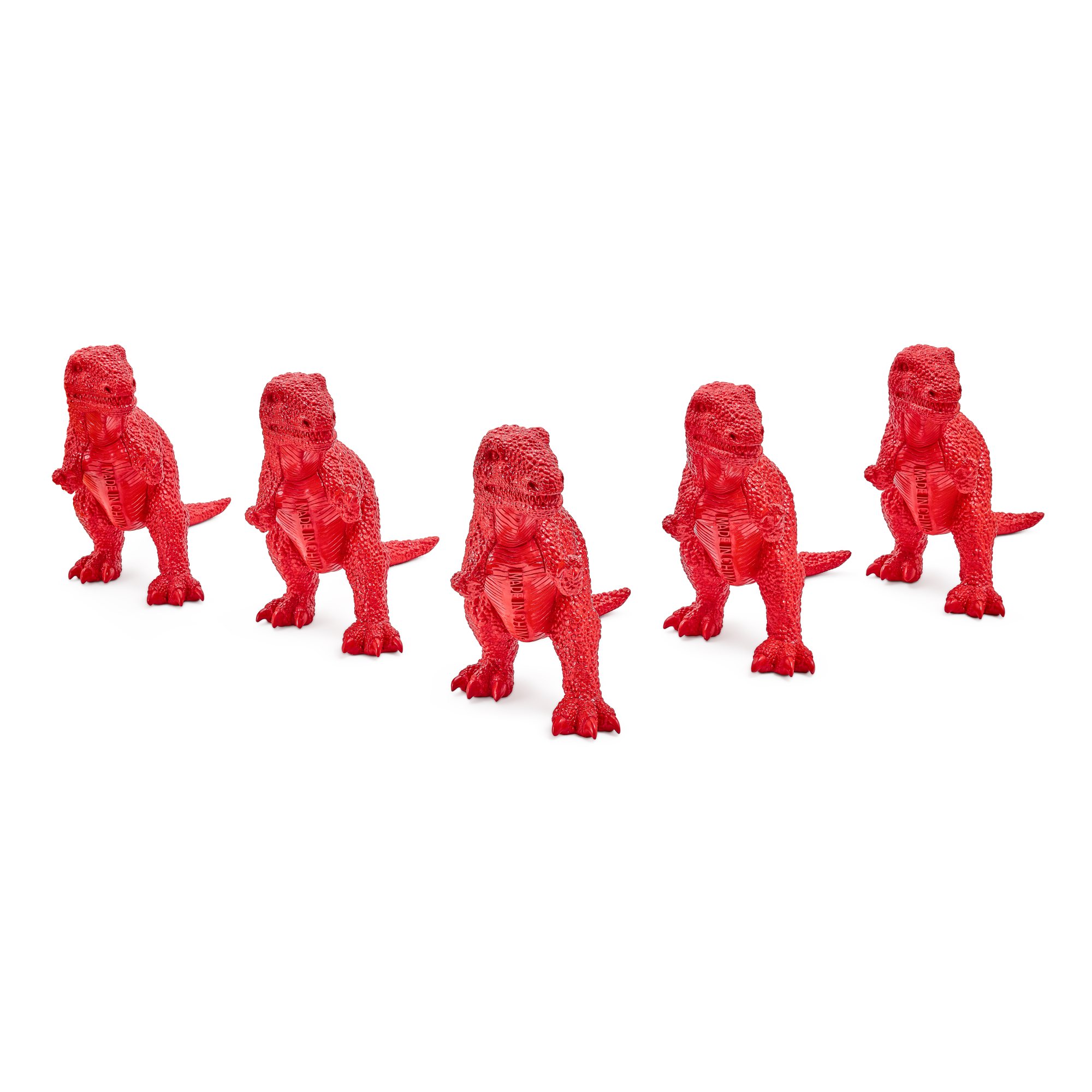
Made in China (5 Works) 中國製造(5件作品), 2002
He came of age during the Cultural Revolution, a period that shuttered museums, burned books, and redirected the energy of an entire civilization toward ideological conformity. That formative experience, living through a moment when art was weaponized and culture became a site of coercion rather than freedom, left permanent marks on his thinking. He later studied at the Shandong College of Arts and went on to receive his MFA from the Central Academy of Fine Arts in Beijing, where he eventually became a professor and department head, shaping generations of Chinese artists. His early career unfolded during the extraordinary ferment of the 1980s and 1990s, when Chinese artists were absorbing Western modernism with ferocious speed while simultaneously reckoning with what it meant to be a Chinese artist after Mao.
Sui Jianguo found his footing not in painting, the dominant medium of that generation's rebellions, but in sculpture, a form whose demands for physical presence and material commitment suited his temperament perfectly. His early stone and steel works from the late 1980s and early 1990s showed an artist already thinking seriously about mass, resistance, and the body under pressure, both literal and metaphorical. The work that announced him as a major figure came in 1998 with the Mao Suit series, monumental fiberglass sculptures of the iconic Zhongshan jacket worn by Mao Zedong and his followers, rendered without a body inside them. These hollow forms were at once monuments and absences, the uniform of an ideology preserved and emptied simultaneously.
Sui Jianguo
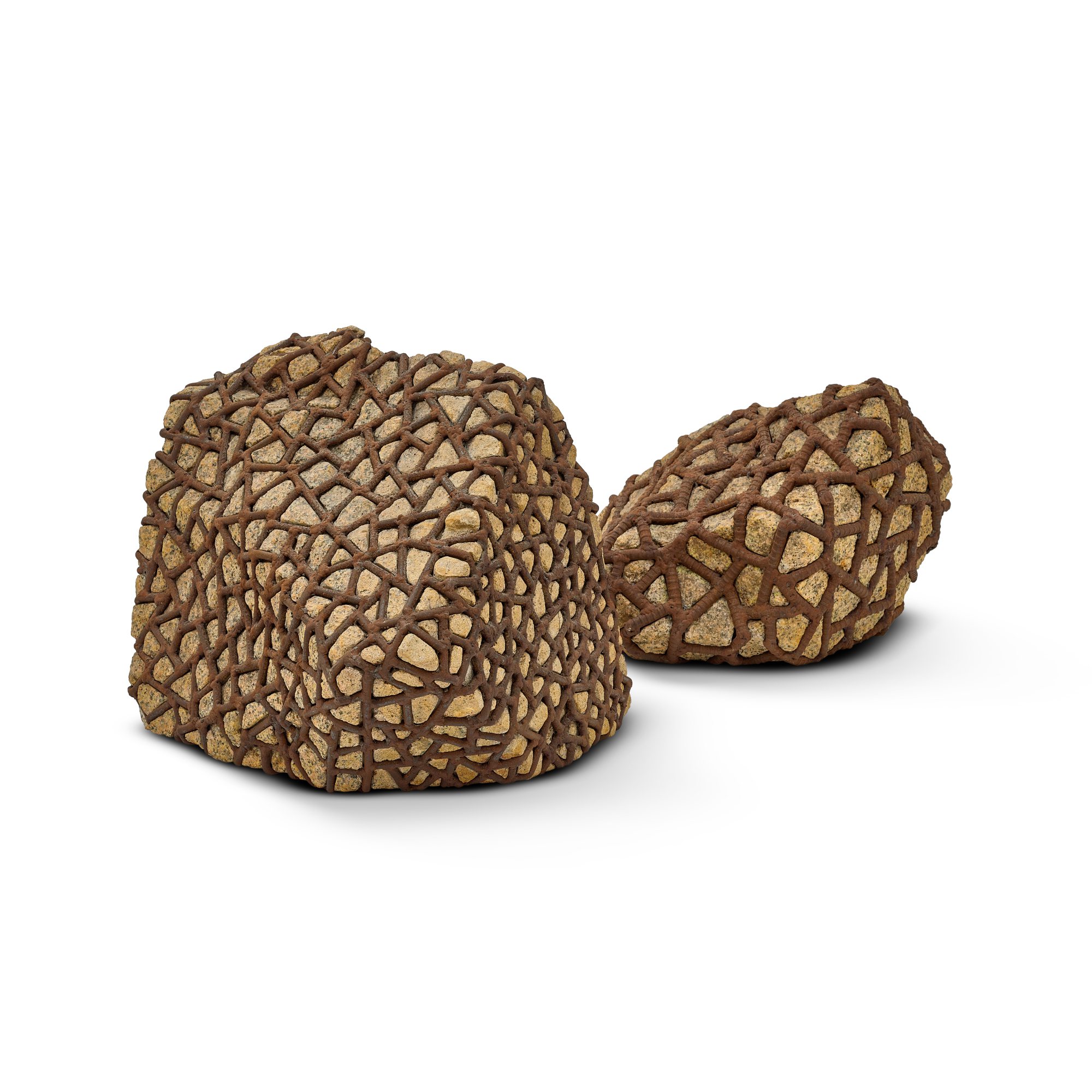
Earthly Force (Two Works) 地罣(兩件作品), 1992
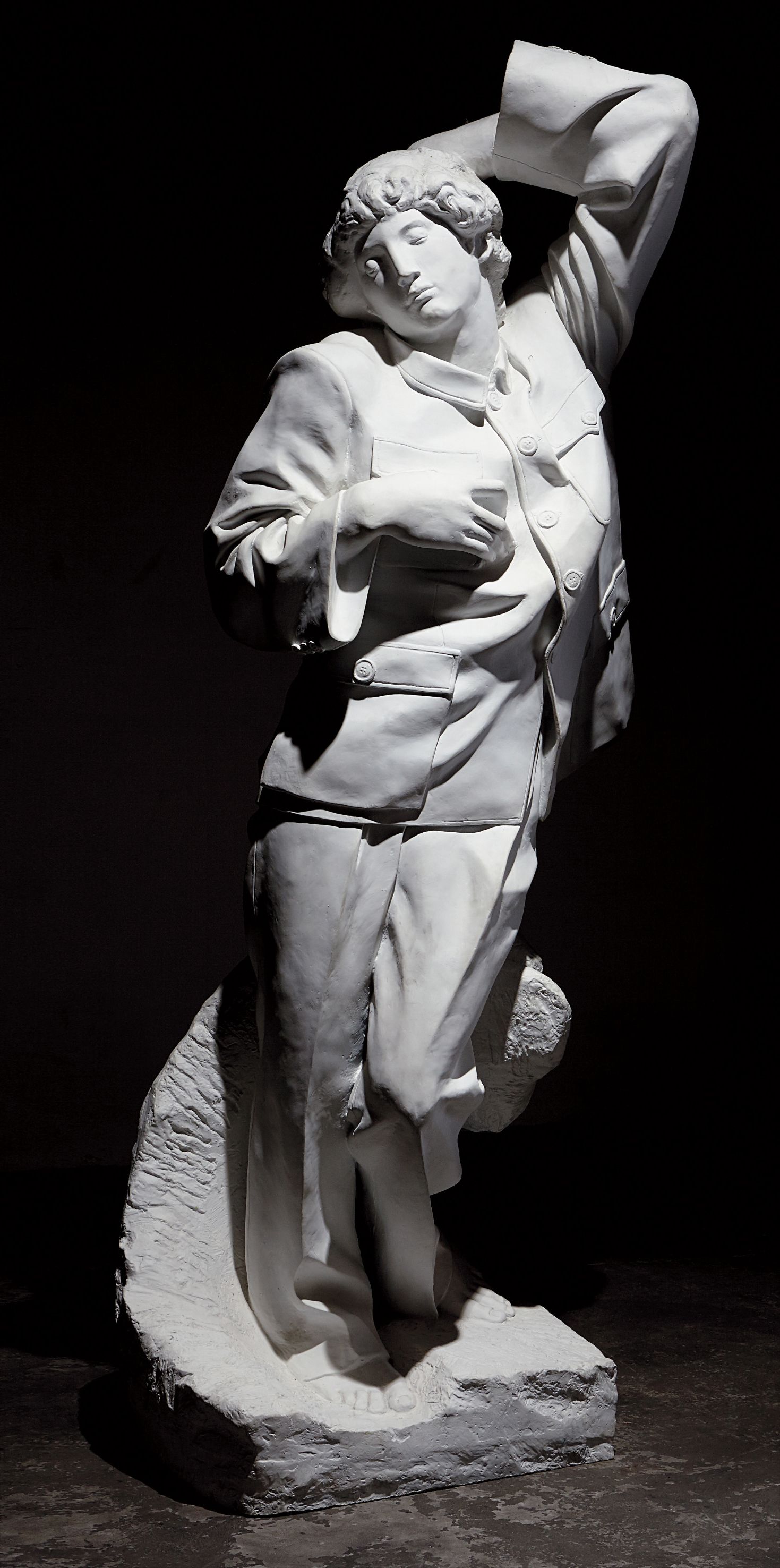
That same year he produced Dying Slave, a painted bronze work that placed Michelangelo's Renaissance masterpiece inside a Mao suit, collapsing five centuries of art history and political iconography into a single, startling object. The gesture was audacious: Western humanism clothed in Chinese communist dress, neither tradition intact, both transformed by the encounter. These were not polemical works in any simple sense. They were questions sculpted into permanence.
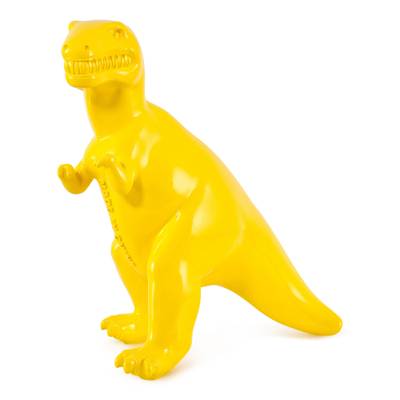
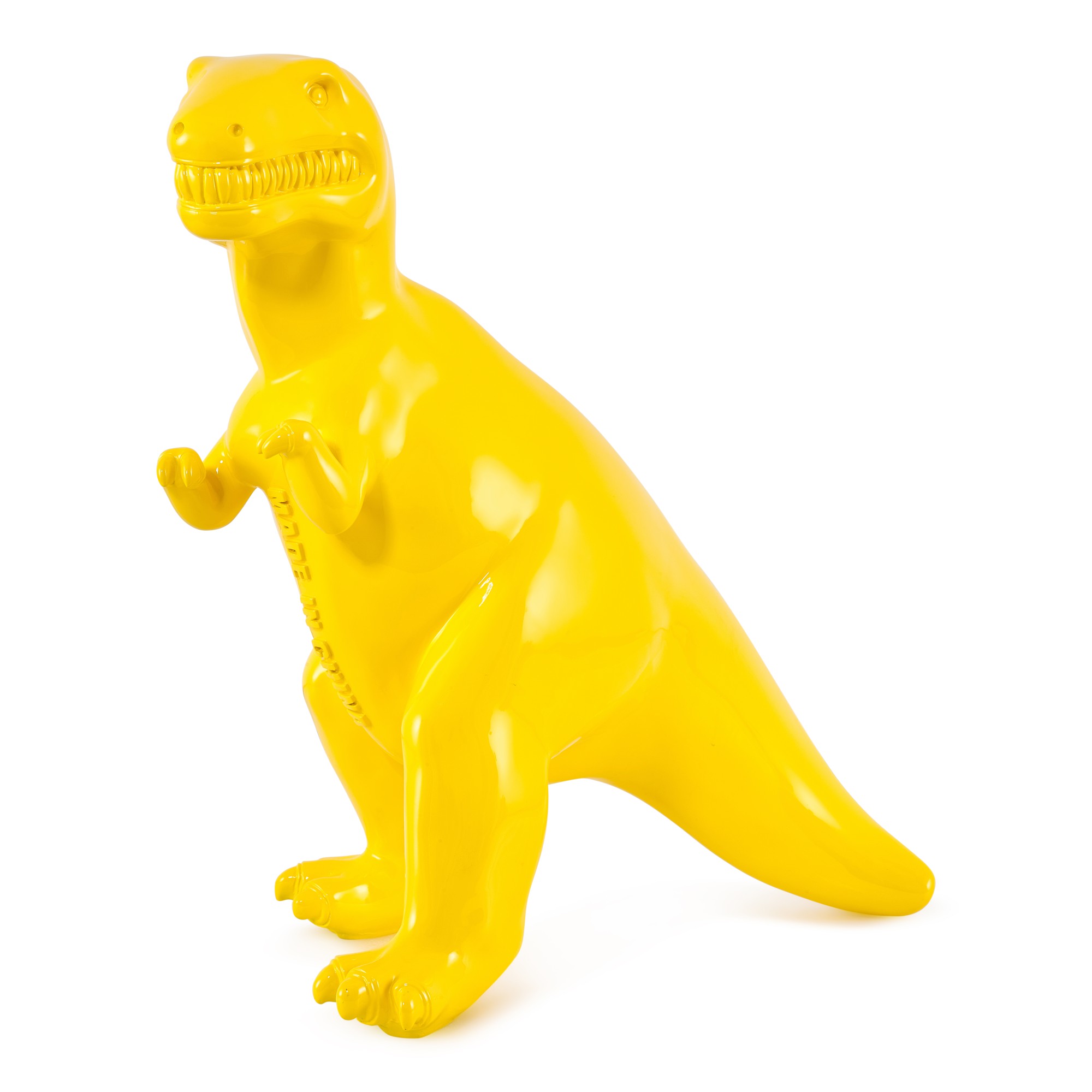
Then came the work for which Sui Jianguo is perhaps most widely known outside China: the Made in China series, begun around 2002 and continued across multiple editions and scales for years afterward. The premise was deceptively simple. He took mass produced plastic dinosaur toys, objects manufactured in Chinese factories and exported across the globe to fill the toy boxes of children from Tokyo to Toronto, and cast them in bronze, resin, and other materials, presenting them as sculpture. The stamp Made in China, ubiquitous on cheap consumer goods, became the title and the argument simultaneously.
Sui Jianguo
Dying Slave, 1998
These cheerful, recognizable forms, scaled up and cast in serious materials, asked profound questions about labor, globalization, authorship, and national identity. Who makes the world's objects, and what do those objects say about the people who make them? The works in this series, available in multiple colorways including yellow, green, white, and pink, have become among the most sought after works in his catalogue, prized by collectors for their wit, their conceptual clarity, and their remarkable visual presence. The Earthly Force works from 1992, realized in stone and welding steel, demonstrate a different register of Sui Jianguo's ambition.
These pieces engage with geological time and elemental material, the raw facts of stone before culture arrives to shape it. Paired or grouped, they create dialogues between mass and edge, between what endures and what is imposed upon the enduring. For collectors drawn to work that thinks about deep history rather than just contemporary spectacle, these earlier pieces offer an entry point into Sui Jianguo's practice that rewards sustained attention. They remind you that beneath all the ideological theater of his most famous works lies a sculptor of genuine formal seriousness.
Sui Jianguo
Made in China (Yellow) 中國製造 (黃色), 2007
In terms of market trajectory, Sui Jianguo occupies a commanding position among Chinese contemporary sculptors of his generation. His works appear regularly at major auction houses in Hong Kong and London, and the Made in China multiples in particular have demonstrated consistent demand across successive sale cycles. For collectors approaching his work, the resin and bronze editions offer accessible entry points, while unique and early works command premium attention and represent stronger long term positioning. Contextually, his practice invites comparison with artists navigating similar tensions between state power and individual expression: one thinks of Ai Weiwei's engagement with Chinese political history through material and scale, or of Zhang Huan's use of the body as a site of historical inscription.
Internationally, his interrogation of mass production and cultural identity places him in productive conversation with artists like Koons and Murakami, though Sui Jianguo's historical specificity and political density give his work a gravity that distinguishes it clearly from those peers. What endures most powerfully about Sui Jianguo's contribution is his insistence that sculpture can carry the full burden of a civilization's contradictions without collapsing under the weight. He does not illustrate history; he makes history into something you can walk around and feel. In a moment when questions of cultural identity, global manufacturing, and the legacies of authoritarian modernity are more pressing than ever, his work arrives not as historical document but as living argument.
Collectors who live with Sui Jianguo discover over time that the works do not sit still. They keep asking their questions, year after year, patient and implacable as stone.