Sue Williams
Sue Williams: Painting Life With Fearless Joy
Artist Spotlight · The Collection Editorial
When the Whitney Museum of American Art mounted its survey of American art from the 1990s, Sue Williams emerged as one of the decade's most essential voices, a painter whose work had moved from visceral provocation to something richer and stranger and altogether her own. Today, with works held in the permanent collections of the Whitney and the Museum of Modern Art in New York, Williams occupies a firmly secured place in the history of American painting. Her presence in the market has grown steadily as collectors and curators alike revisit the full arc of a practice that refuses easy categorization, spanning raw figuration, biting political commentary, and a kind of ecstatic abstraction that feels as alive and necessary now as when it first appeared. Sue Williams was born in 1954 in Chicago Heights, Illinois, and came of age during a period of profound cultural and political upheaval in the United States.
Sue Williams
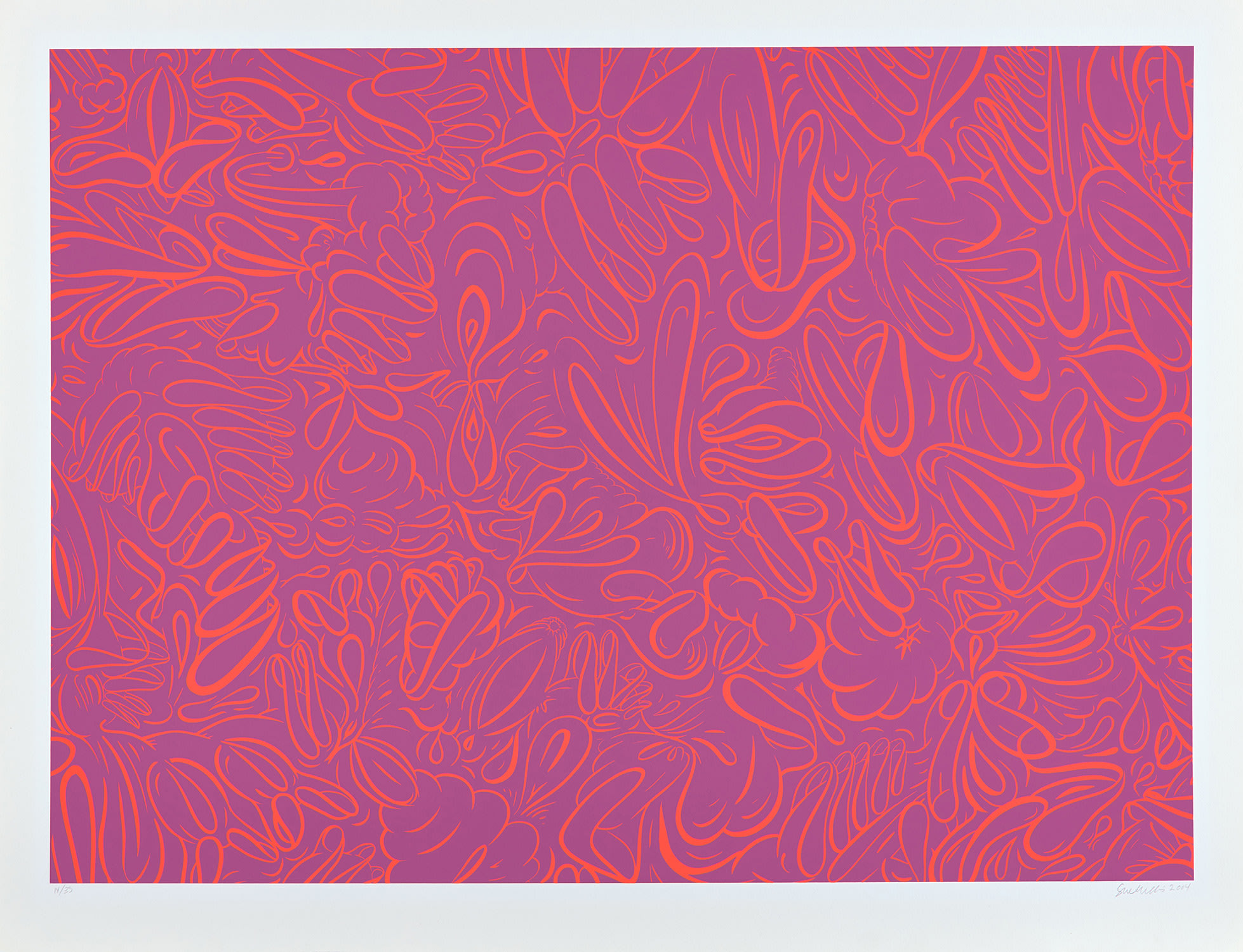
The Wiggliness
She studied at the California Institute of the Arts, graduating in 1976, where she was immersed in a conceptually rigorous environment that encouraged artists to question the assumptions underlying their practice. That training gave Williams a theoretical foundation, but it was her own lived experience and a fierce, uncompromising honesty about the world she inhabited that would ultimately define her voice. She arrived in New York in the late 1970s, a city then crackling with energy and crisis, and set about developing a practice that had no interest in safe distance. The early work for which Williams first gained widespread attention in the late 1980s and early 1990s was arresting in its directness.
Her figurative paintings and drawings addressed domestic violence and the everyday degradations visited upon women with a rawness that felt both personal and political. These were not comfortable images. They were funny and horrifying in equal measure, combining cartoon inflected line work with text and imagery that named difficult truths with sardonic clarity. Shows at 303 Gallery in New York, where Williams has maintained a long and productive relationship, placed her squarely at the center of debates about representation, feminism, and the capacities of painting.
Sue Williams
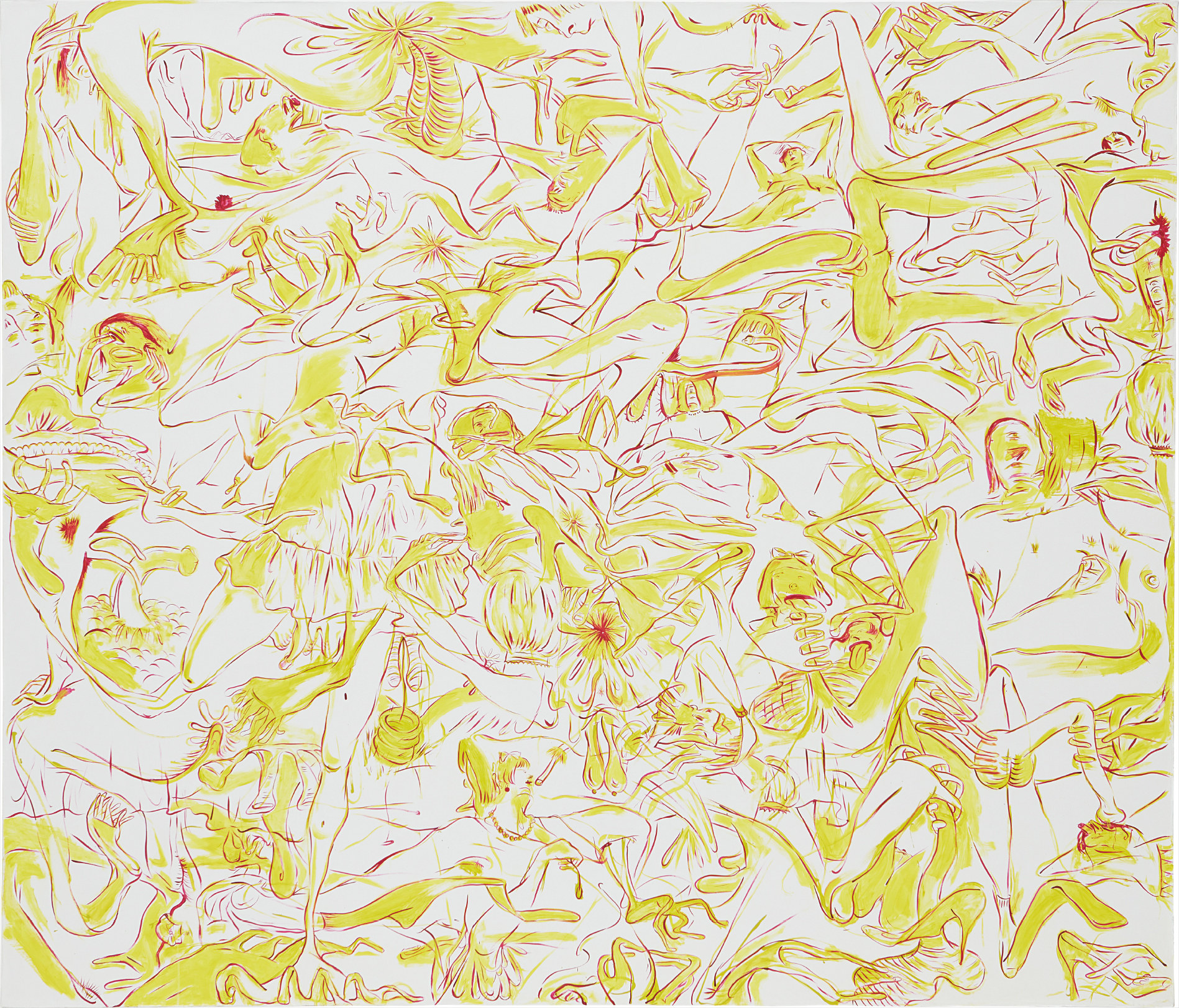
Tighter Flocky with Green Yellow, 1997
Critics and peers recognized in her work a kind of moral seriousness that wore its humor lightly but never abandoned its convictions. Then, in the mid to late 1990s, something remarkable happened. Williams began to loosen the figurative armature of her work and allow the paint itself to proliferate in new directions. The paintings became increasingly biomorphic and abstract, filled with curving, intertwining forms that seemed to pulse with organic energy.
Works such as Tighter Flocky with Green Yellow from 1997 and Three Blues, No Orange from the same year exemplify this pivotal transition. The bodies and body parts that had populated her earlier canvases did not disappear so much as dissolve and recombine into something more ambiguous and more exuberant. Color became expansive. The surfaces grew more complex.
Sue Williams
Sue Williams
And yet the wit, the political awareness, and the deeply personal quality of her vision remained entirely intact, threading through the abstraction like a bright current beneath moving water. By the 2000s, Williams had developed a mature abstract language that was entirely her own. Works like Selected Tufts from 2006 and Bat at Sunset with Radar Diagram Inset from 2012 reveal a painter fully in command of her means, deploying oil and acrylic with gestural confidence and a gift for compositional surprise. These are large, ambitious canvases that reward sustained looking.
The forms accumulate and disperse, suggest and withhold, creating a pictorial space that feels inhabited rather than designed. The 2016 painting Trump Not Funny and Lifestyles of the Rich and Famous from 2011 demonstrate that Williams never abandoned her appetite for social commentary, even as the formal language evolved. The political and the painterly coexist in her work not as competing impulses but as two expressions of the same restless intelligence. For collectors, Williams represents a genuinely compelling proposition.
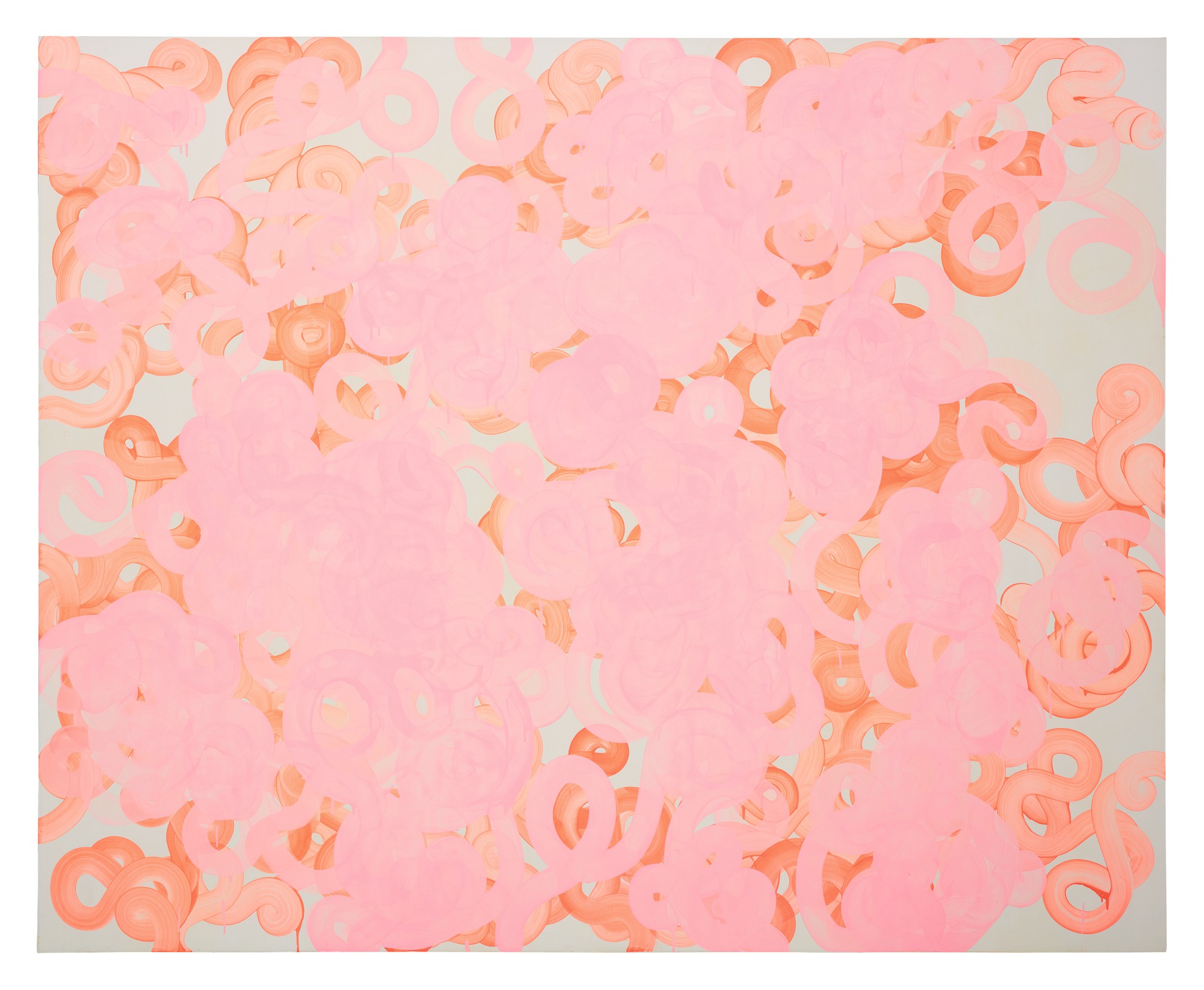
Sue Williams
Opaque Invasion
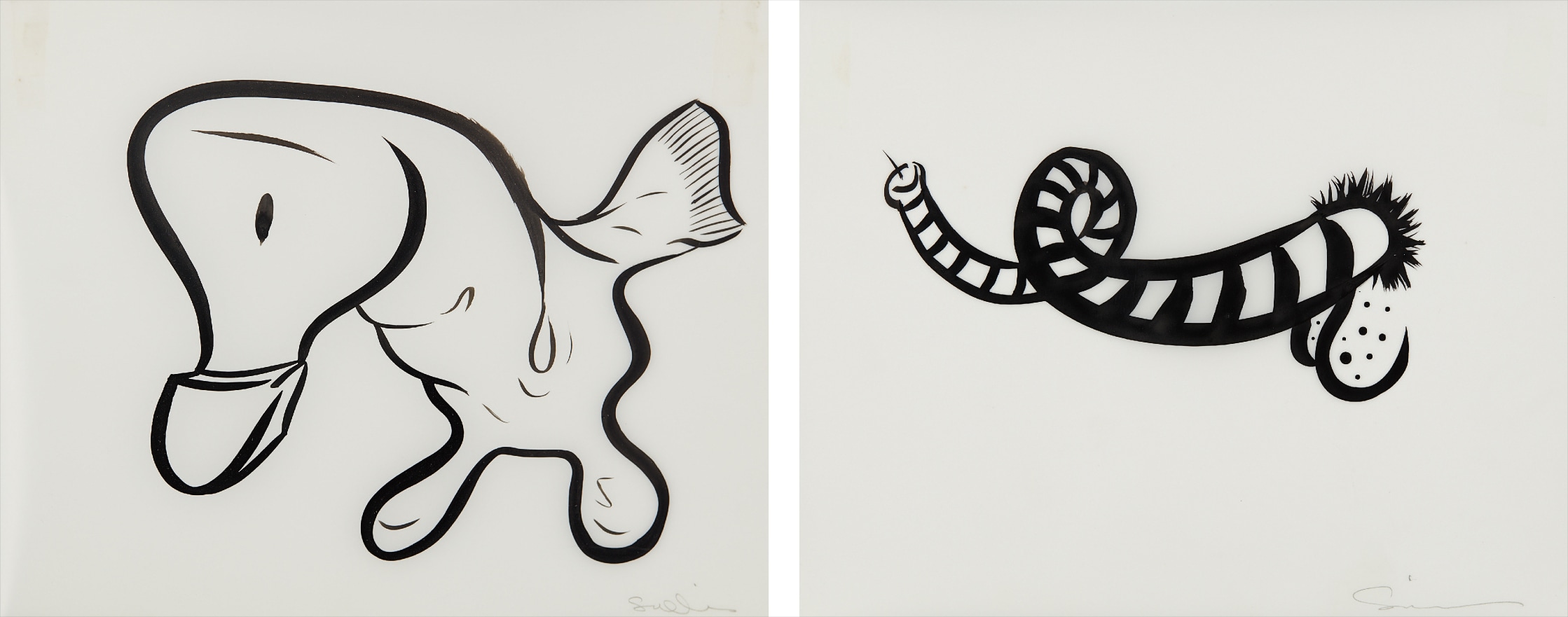
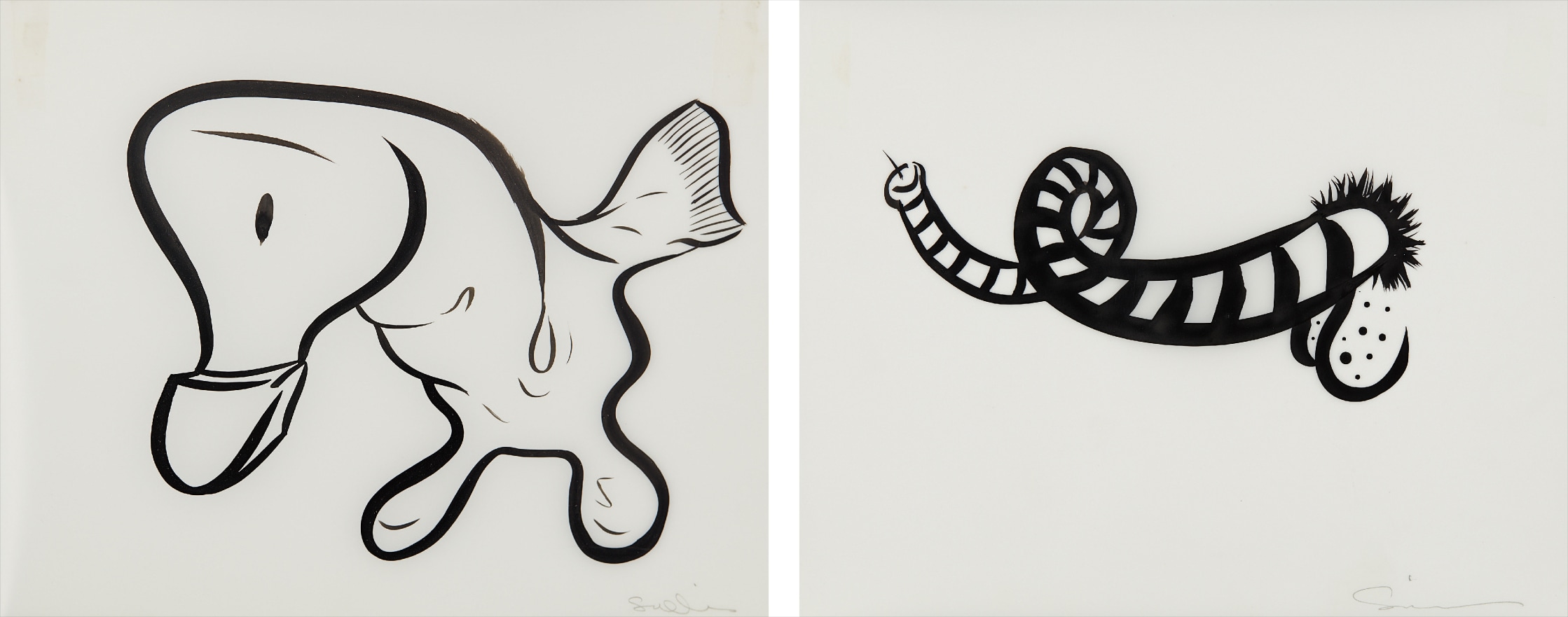
Her work sits at the intersection of several important conversations in postwar and contemporary American art: feminist painting, the rehabilitation of figuration, the legacy of Abstract Expressionism as filtered through a post punk sensibility, and the relationship between personal narrative and formal invention. Paintings from the 1990s transitional period are particularly sought after, as they document a moment of artistic transformation that now reads as historically significant. Works on paper, including screenprints such as The Wiggliness and her ink drawings on vellum, offer more accessible entry points into a practice that has commanded serious attention at auction and in institutional contexts alike. What collectors consistently respond to is the sense of a distinct and irreducible personality speaking directly through every mark.
In terms of art historical context, Williams is most productively understood alongside a generation of American painters who came to prominence in the late 1980s and early 1990s and who collectively renewed the possibilities of figurative and near figurative painting. Artists such as Kara Walker, Carroll Dunham, and Mike Kelley share with Williams an interest in the grotesque, the comic, and the politically charged. Her move toward abstraction also places her in dialogue with painters like Amy Sillman and Laura Owens, who have similarly pushed the boundaries between figuration and abstraction in ways that feel genuinely exploratory rather than merely stylistic. Williams has always been in conversation with the broader culture, absorbing and transforming its energies rather than retreating from them.
The legacy of Sue Williams is still being written, and that is part of what makes her work so compelling to encounter now. She is an artist who has never stopped evolving, never settled into a signature mode that could be comfortably packaged and repeated. The full scope of her practice, from those early confrontational figurative works to the sprawling, joyful abstractions of recent decades, constitutes one of the more complete and honest records of what it meant to be a thinking, feeling, politically alive American artist across the last four decades. Institutions and collectors who have been paying attention know this.
For those coming to her work for the first time, there is the particular pleasure of discovering a voice that speaks with unmistakable clarity, warmth, and nerve.