Stuart Franklin
Stuart Franklin: Witness, Poet, and Visionary
Artist Spotlight · The Collection Editorial
“Photography is a way of feeling, of touching, of loving. What you have caught on film is captured forever.”
Stuart Franklin
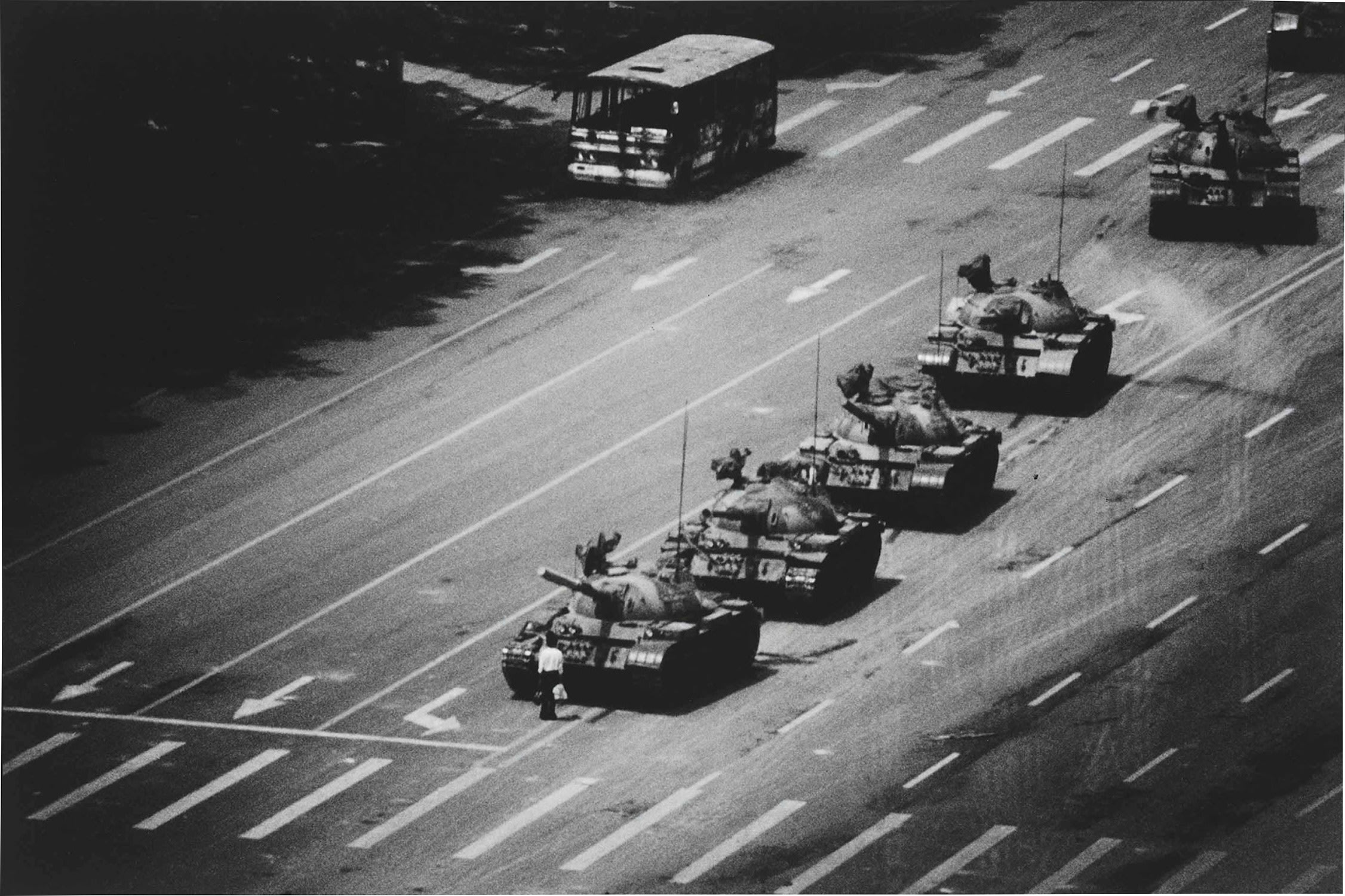
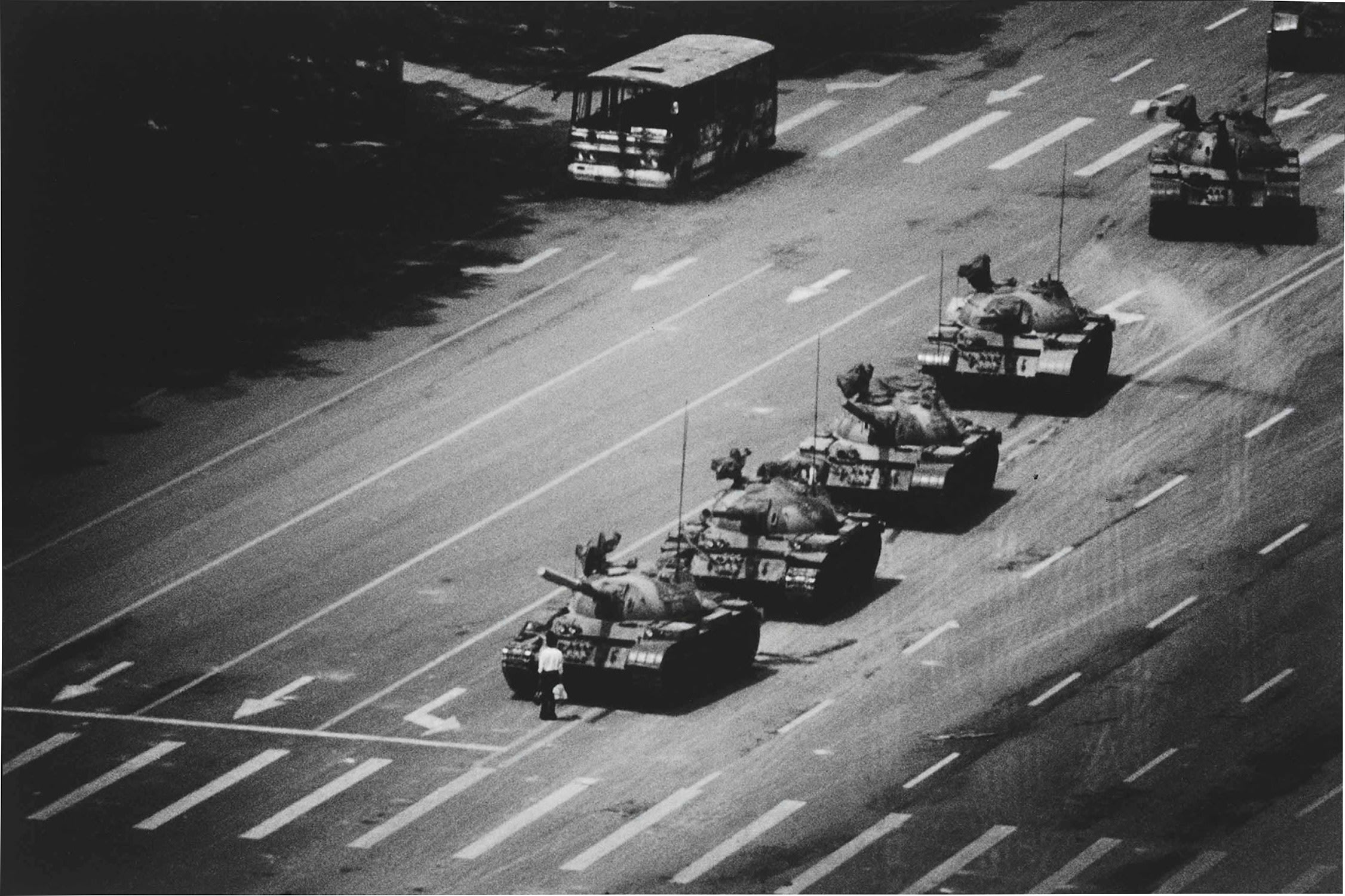
There are photographs that document history, and then there are photographs that become history. On the fourth of June 1989, Stuart Franklin stood at a window of the Beijing Hotel and raised his camera toward Chang'an Avenue. What he captured in that moment, a solitary figure halting a column of Type 59 tanks in Tiananmen Square, became one of the most reproduced and morally charged images of the twentieth century. More than three decades later, that photograph continues to appear on museum walls, in auction catalogues, and in the consciousness of anyone who believes in the power of a single human being to stand against overwhelming force.
Stuart Franklin
Tiananmen Square, Beijing
It is a reminder that the greatest photographs do not merely record a moment; they crystallize a feeling that entire generations share but cannot quite put into words. Stuart Franklin was born in 1956 in Britain, and his path toward photojournalism was shaped by a deep and restless curiosity about the world beyond his immediate surroundings. He studied at the Oxford Polytechnic and later at the École Nationale Supérieure Louis Lumière in Paris, an education that gave him both a rigorous technical foundation and an appreciation for the visual culture of continental Europe. France in particular left its mark on his sensibility, lending his work a compositional elegance that distinguishes it from the more purely documentary tradition of Anglo American photojournalism.
He absorbed the lessons of the Magnum founders, of Henri Cartier Bresson's decisive moment and Robert Capa's proximity to danger, while developing a voice that was unmistakably his own. Franklin joined Magnum Photos in 1985, becoming a full member of the agency that has long represented the conscience of documentary photography. Magnum was not simply a professional home; it was an intellectual community, a group of photographers who believed that bearing witness carried ethical weight and lasting cultural value. Within that community, Franklin distinguished himself through the range of his ambitions.
Stuart Franklin
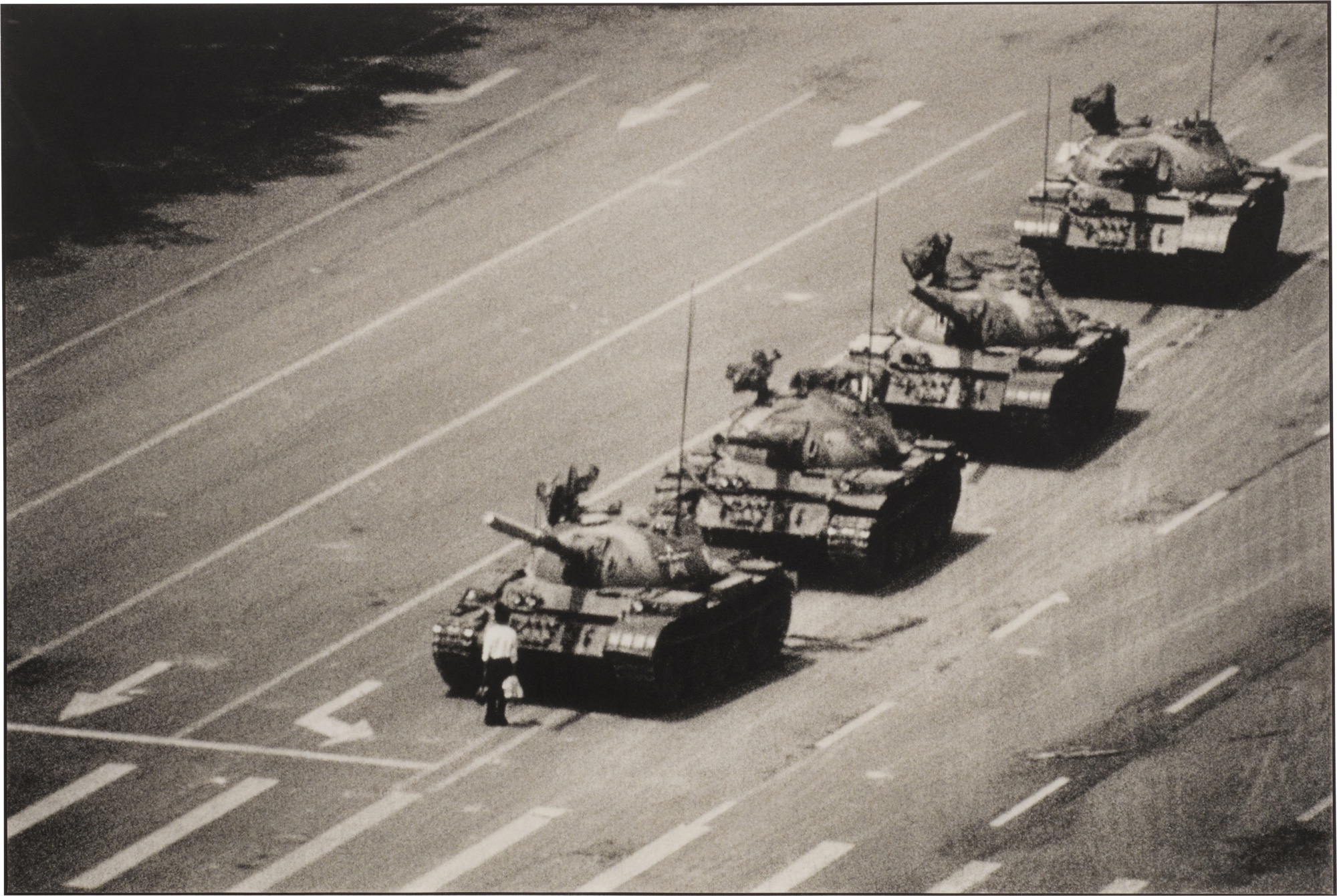
'The Tank Man' Stopping the Column of T59 Tanks, Tiananmen Square, Beijing, China, 4th June 1989
He moved fluidly between conflict zones and landscapes, between portraiture and environmental documentation, always asking not just what was happening in front of his lens but why it mattered and what it meant. His work in West Africa during the famines of the 1980s, for instance, brought the same unflinching compassion to bear that would later characterise his coverage of political upheaval in China. The Tiananmen Square photograph, often referred to simply as Tank Man, was taken during Franklin's assignment to cover the pro democracy protests that had drawn students and workers to the square in the spring of 1989. Franklin had been photographing the demonstrations for weeks before the crackdown, and when the military moved in on the night of June 3rd and into the morning of June 4th, he was among the small number of Western photographers still present.
The image of the lone protestor, whose identity has never been definitively established, stopping the column of tanks through sheer force of will, was smuggled out of China hidden inside a box of tea. It went on to win Franklin the World Press Photo of the Year award and to enter the permanent collections of major institutions worldwide. The gelatin silver print, available in editions printed later from the original negative, has become one of the most sought after works in the market for documentary photography. What makes Franklin's practice so compelling to collectors and curators alike is the breadth that sits alongside that iconic peak.
His photographic books, including The Beautiful Game, a meditation on football's global reach, and Sea, a lyrical exploration of the ocean, reveal a photographer equally at home with beauty and quietude as with the urgency of crisis. He earned a doctorate in geography from Oxford, and that academic discipline informs his environmental work in ways that elevate it well beyond reportage. His images of landscapes under ecological pressure carry an analytical depth as well as an aesthetic grace, making them resonant contributions to one of the defining conversations of our time. Collectors who approach his work from the fine art side rather than the photojournalism side often speak of a stillness in his imagery that rewards long looking.
In the market for fine art photography, Franklin occupies a position of considerable distinction. His most iconic works command serious attention at auction and in private sales, with the Tiananmen Square images representing a category of photography, the historically transformative single frame, that major collectors actively seek. Institutions including the Museum of Modern Art in New York and the National Portrait Gallery in London hold examples of his work. For collectors approaching his practice for the first time, the gelatin silver prints offer an entry point that is both financially considered and historically significant.
Works by photographers of comparable standing and similar documentary ambition, such as Sebastião Salgado, James Nachtwey, and Don McCullin, provide useful context for understanding the market and the critical conversation in which Franklin's work participates. Like those artists, Franklin occupies the intersection of journalism and fine art in a way that has become more, not less, valued as the art world has broadened its appreciation of photography as a primary medium. Franklin's legacy is still very much in formation, which is itself part of what makes engaging with his work so exciting at this moment. He remains an active photographer and thinker, contributing to conversations about the ethics of image making, the responsibilities of the documentary photographer, and the environmental futures that his landscape work has long anticipated.
His academic background gives him a rare ability to articulate the ideas behind his images, and his lectures and writings enrich the experience of the photographs themselves. For collectors, this is an artist whose intellectual engagement with his own practice adds layers of meaning to every acquisition. To own a Franklin is not merely to possess a beautiful or historically significant object; it is to participate in a sustained, decades long inquiry into what photography can ask of us and what it can give back. At a time when the image feels simultaneously devalued by abundance and more fiercely contested than ever as a site of truth and meaning, Stuart Franklin stands as a figure whose entire career has been a meditation on photographic responsibility.
He has shown that a camera in the right hands at the right moment can stop a column of tanks, at least in the imagination of the world, and that the same sensibility applied to a stretch of coastline or a game of football can illuminate the full spectrum of human experience. His place in the history of photography is already assured. His relevance to the present moment feels, if anything, more urgent than ever.