Stuart Davis
Stuart Davis: America's Irrepressible Jazz Modernist
Artist Spotlight · The Collection Editorial
“I paint what I see in America. I paint the accidentalness of American culture.”
Stuart Davis
When the Whitney Museum of American Art mounted its landmark retrospective of Stuart Davis in 1978, the curators faced an enviable challenge: how do you contain a painter whose canvases seem to hum, to pulse, to practically swing off the wall? That exhibition crystallized what a generation of collectors and scholars had long sensed, that Davis was not merely a significant figure in American modernism but one of its most joyful and irreducible voices. Today, with his works held in the permanent collections of the Museum of Modern Art, the Metropolitan Museum of Art, and the Smithsonian American Art Museum, Davis continues to attract serious collectors who recognize in his work a singular fusion of European formal ambition and deeply American vernacular energy. Stuart Davis was born in Philadelphia in 1892 into a household that took art seriously from the very beginning.
Stuart Davis
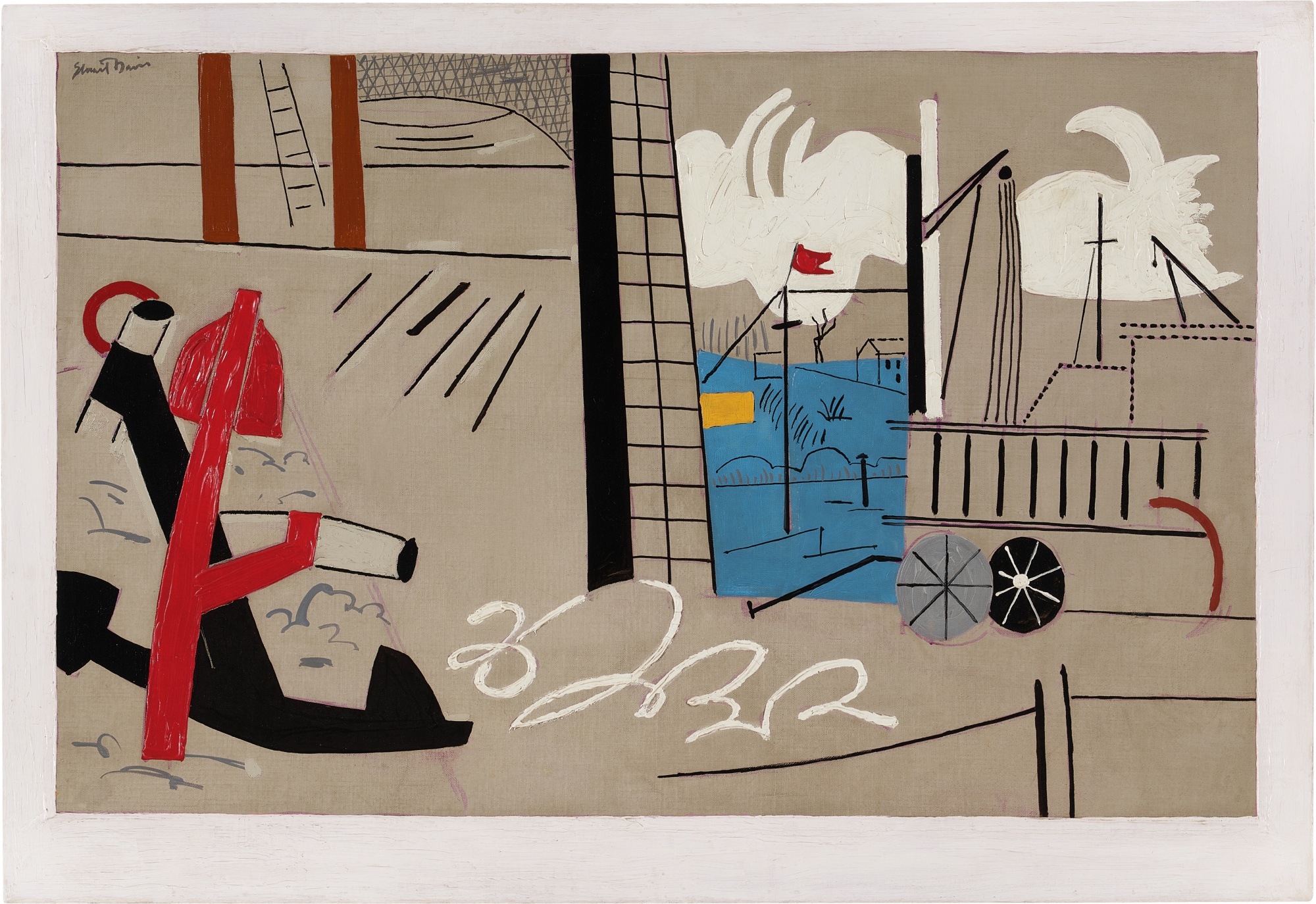
Anchors
His father, Edward Davis, was art editor of the Philadelphia Press and counted among his close friends some of the leading illustrators and painters of the era. That proximity to working artists gave the young Davis an unusually direct route into professional life, and by his early teens he had already made up his mind about his vocation. At eighteen he moved to New York to study under Robert Henri, the firebrand teacher whose Ashcan School was then transforming American painting by insisting that the gritty, teeming life of the modern city was a subject worthy of the highest artistic ambition. Henri's influence on Davis was formative and lasting, instilling in him a conviction that art must be rooted in lived experience and observed reality.
But the decisive rupture came in 1913, when Davis attended the International Exhibition of Modern Art at the 69th Regiment Armory in New York, the event that would permanently be known as the Armory Show. Encountering the work of Henri Matisse, Paul Gauguin, and the Post Impressionists at close range was, by Davis's own account, a revelation that reoriented everything. He began to understand that color could be structural, that form could be flattened and abstracted without sacrificing vitality, and that European modernism and American subject matter need not be mutually exclusive forces. The arc of Davis's development through the 1920s and into the 1930s is one of the most compelling stories in twentieth century American art.
Stuart Davis
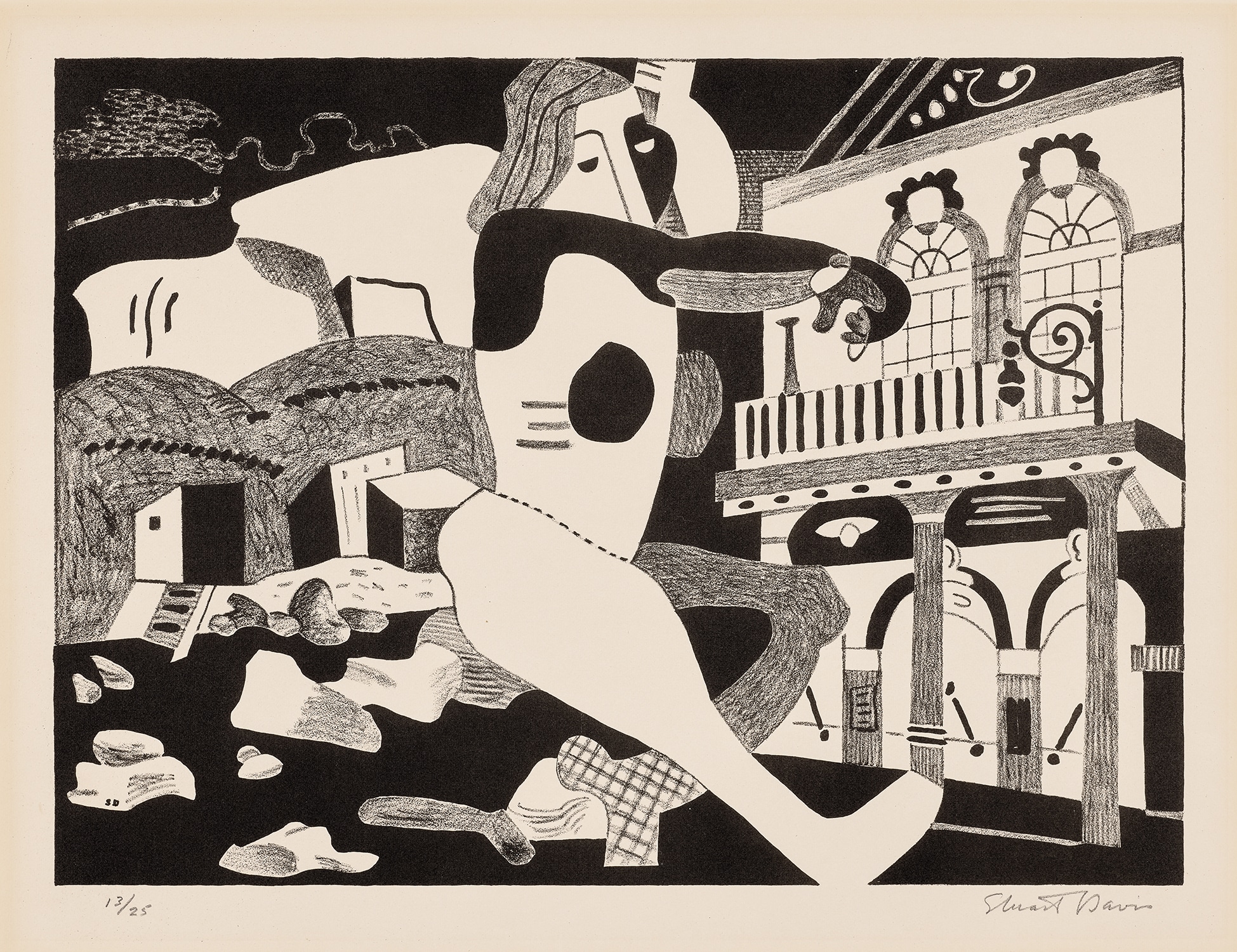
Theater on the Beach (C. & M. 16)
He spent time in Gloucester, Massachusetts, painting harbor scenes and coastal landscapes that grew progressively more abstract and formally daring. A pivotal year in Paris from 1928 to 1929 deepened his understanding of Cubism and brought him into contact with the visual culture of European café life, an experience directly visible in works like his Rue des Rats lithographs, which distill the geometry of Parisian streets into bold, syncopated compositions. These prints, several of which are among his most celebrated works on paper, demonstrate how completely Davis had absorbed the Cubist lesson while remaining unmistakably his own voice. By the 1940s and 1950s, Davis had arrived at his fully mature style, a visual language so distinctive that it is instantly recognizable and yet endlessly inventive.
“The act of painting is not a duplication of experience but the extension of experience on the plane of formal invention.”
Stuart Davis, artist's notes
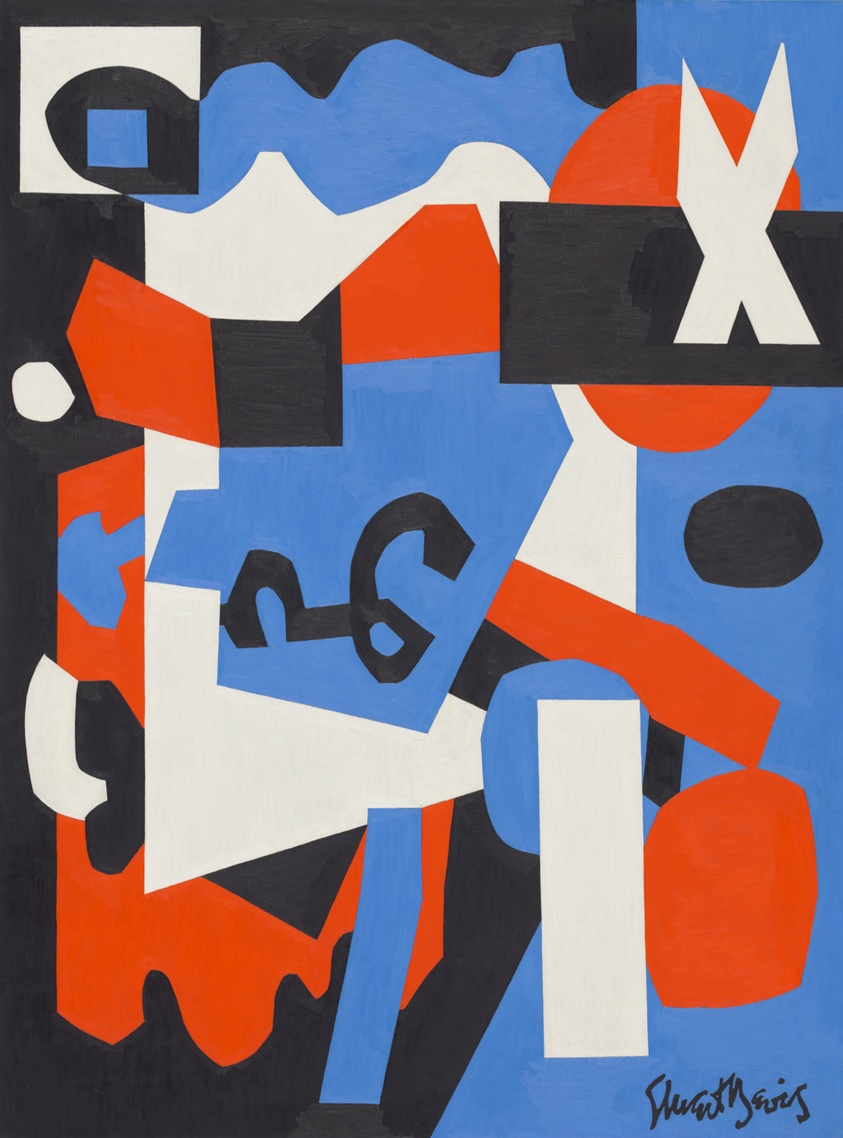
He worked with flattened planes of saturated color, fragmentary text, commercial signage, and jazz inflected rhythms to create compositions that feel simultaneously urban and abstract, familiar and completely fresh. Works from this period, including Ready to Wear from 1955 with its compressed, almost typographic energy, show an artist pushing the limits of what painting could carry. The influence of jazz was not merely metaphorical for Davis; he was a genuine devotee, and the improvisational structure of bebop and swing provided him with a model for how visual elements could be arranged with apparent spontaneity while actually obeying a rigorous underlying logic. For collectors, the question of where to enter a Davis is both exciting and genuinely varied.
Stuart Davis
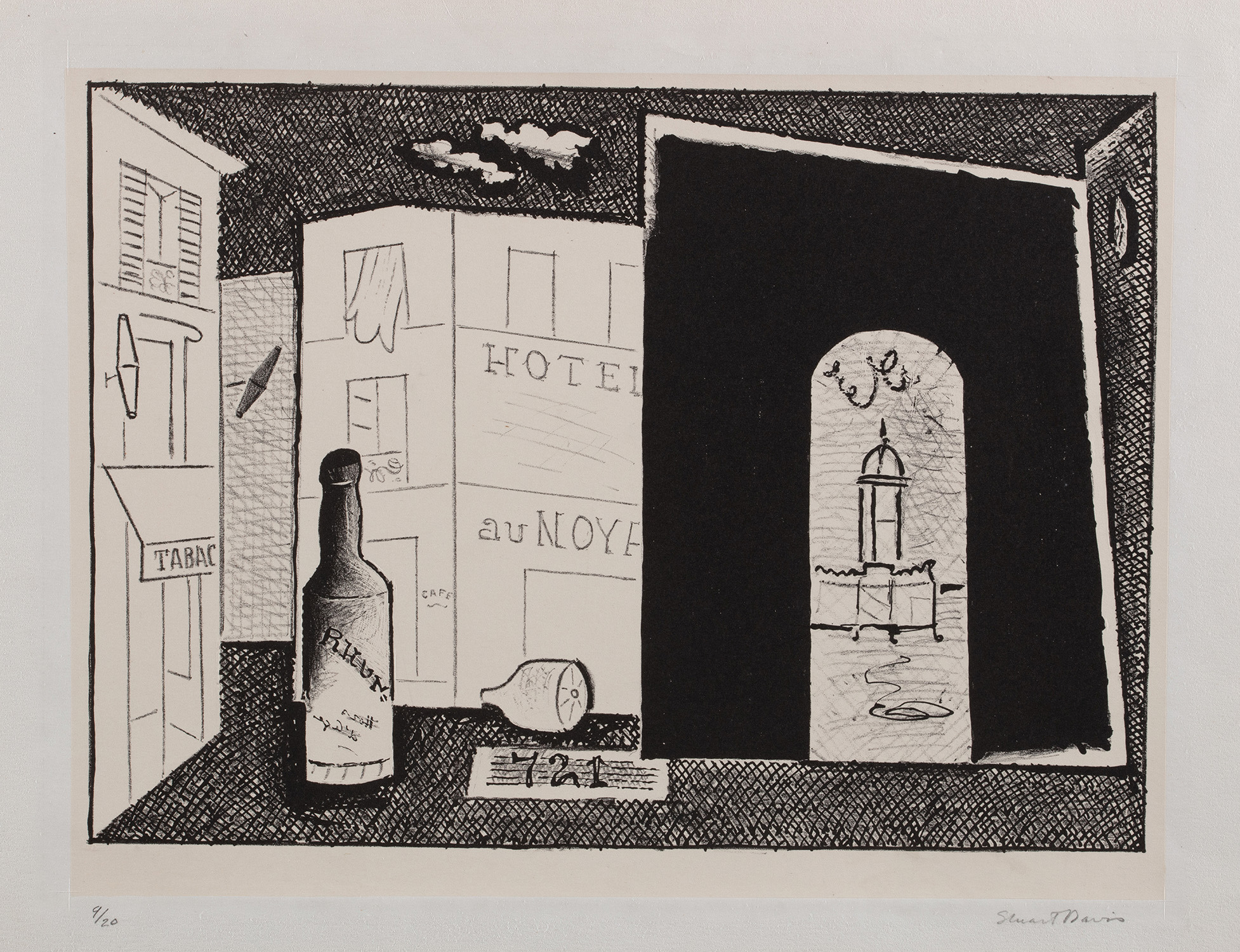
Arch No. 2
His output spans oils, watercolors, gouaches, and an exceptionally rich body of prints, including the lithographs produced in Paris and the screenprints made later in his career. Works like Hotel de France and Anchors, the latter an oil on canvas with the kind of direct, muscular composition that characterizes his best work, represent the range of media and period that serious collectors pursue. His lithographs with chine collé, including multiple iterations of the Rue des Rats theme and the Arch series, are particularly prized for the intimacy and technical refinement they bring to his signature vocabulary. These works on paper offer an accessible entry point into a practice that at the highest levels of the auction market commands significant attention.
In the broader landscape of American modernism, Davis occupies a position that is both central and curiously undersung compared to some of his contemporaries. He bridges the realist tradition of Henri and the Ashcan painters with the abstract possibilities that would flower in Abstract Expressionism, and younger artists from Jasper Johns to Robert Rauschenberg have acknowledged the debt their own use of text, commercial imagery, and flattened pictorial space owes to Davis's innovations. He predates Pop Art by decades and yet his canvases share with Warhol and Lichtenstein a delight in the visual texture of American commercial culture, treated not with irony but with genuine affection and formal seriousness. Placing him in conversation with Fernand Léger, whose mechanistic Cubism shares certain structural affinities with Davis's mature work, or with Arthur Dove and Charles Demuth, who were also navigating the space between American experience and European abstraction, illuminates how much common purpose animated that remarkable generation.
Stuart Davis
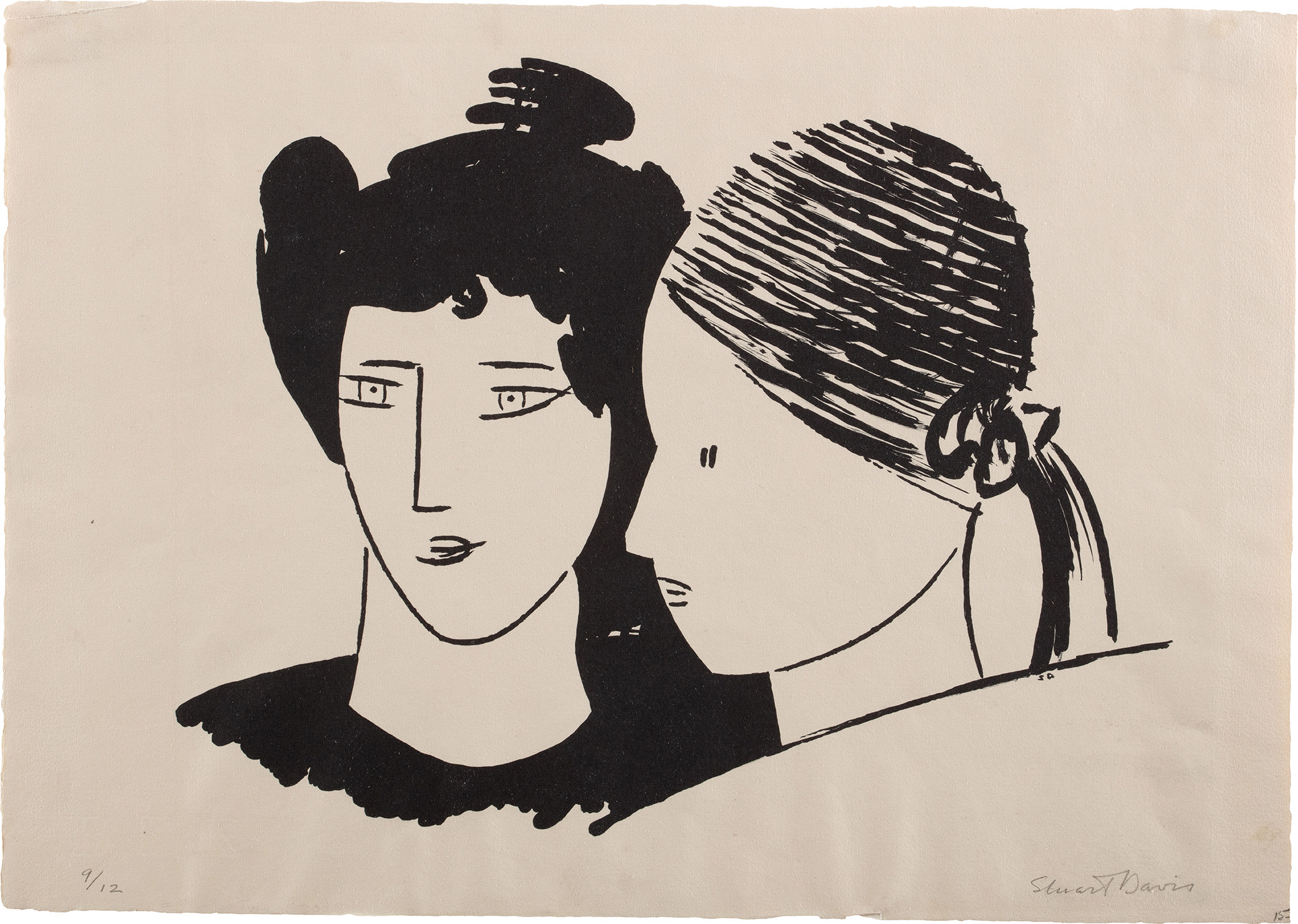
Two Heads
What makes Davis matter today, more than sixty years after his death in 1964, is the quality of optimism that runs through his work without ever tipping into sentimentality. He found in the noise and color and commercial abundance of American life a genuine subject for serious painting, and he pursued that subject with a discipline and intelligence that repays close looking. His canvases ask you to slow down, to follow the logic of their shapes and colors, to hear the rhythms they propose. For collectors who live with his work, that daily conversation with a painting that gives back more than it first seems to offer is precisely the point.
Davis built an art that is generous, inventive, and alive in the fullest sense of the word, and it belongs among the essential achievements of the American twentieth century.
Explore books about Stuart Davis
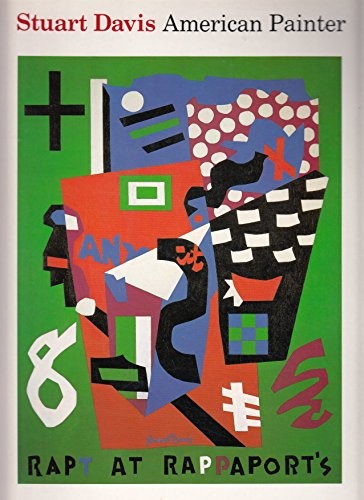
Stuart Davis: American Painter
Karen Wilkin
Stuart Davis: A Catalogue Raisonné
William C. Agee
Stuart Davis: American Modern
Lowery Stokes Sims

Stuart Davis
Diane Kelder
Stuart Davis: The Breakthrough Years
H. Harvard Arnason

Stuart Davis and the Language of Art
Karen Tsujimoto

Stuart Davis: Abstract Painting in America
Jim M. Jordan