Stickymonger
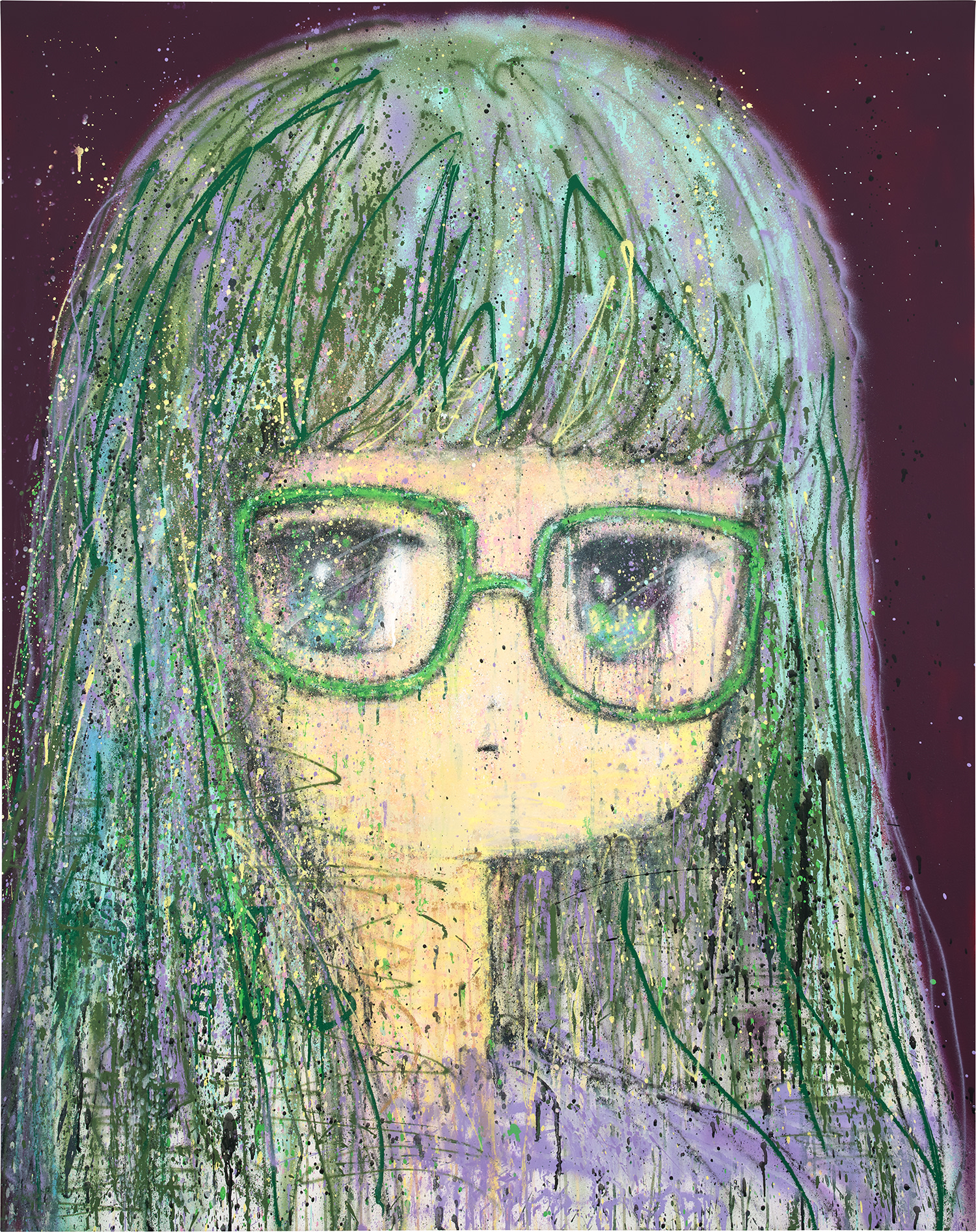
Stickymonger Finds Joy in Beautiful Strangeness
Artist Spotlight · The Collection Editorial
In the sprawling visual conversation that defines contemporary urban art, few voices feel as immediately recognizable or as genuinely their own as that of Stickymonger. The Seoul born artist, whose real name remains warmly guarded behind her moniker, has spent the better part of the last decade building a body of work that is at once playful and searching, graphic and emotionally precise. Her murals have appeared across cities in Asia, Europe, and the Americas, and her canvas works have found their way into discerning private collections around the world. What makes this moment particularly compelling for collectors and cultural observers alike is the growing sense that Stickymonger is no longer an emerging voice but a fully formed one, working at a level of confidence and clarity that places her at the center of a global conversation about what illustration, street art, and fine art can achieve when the boundaries between them dissolve entirely.
Stickymonger
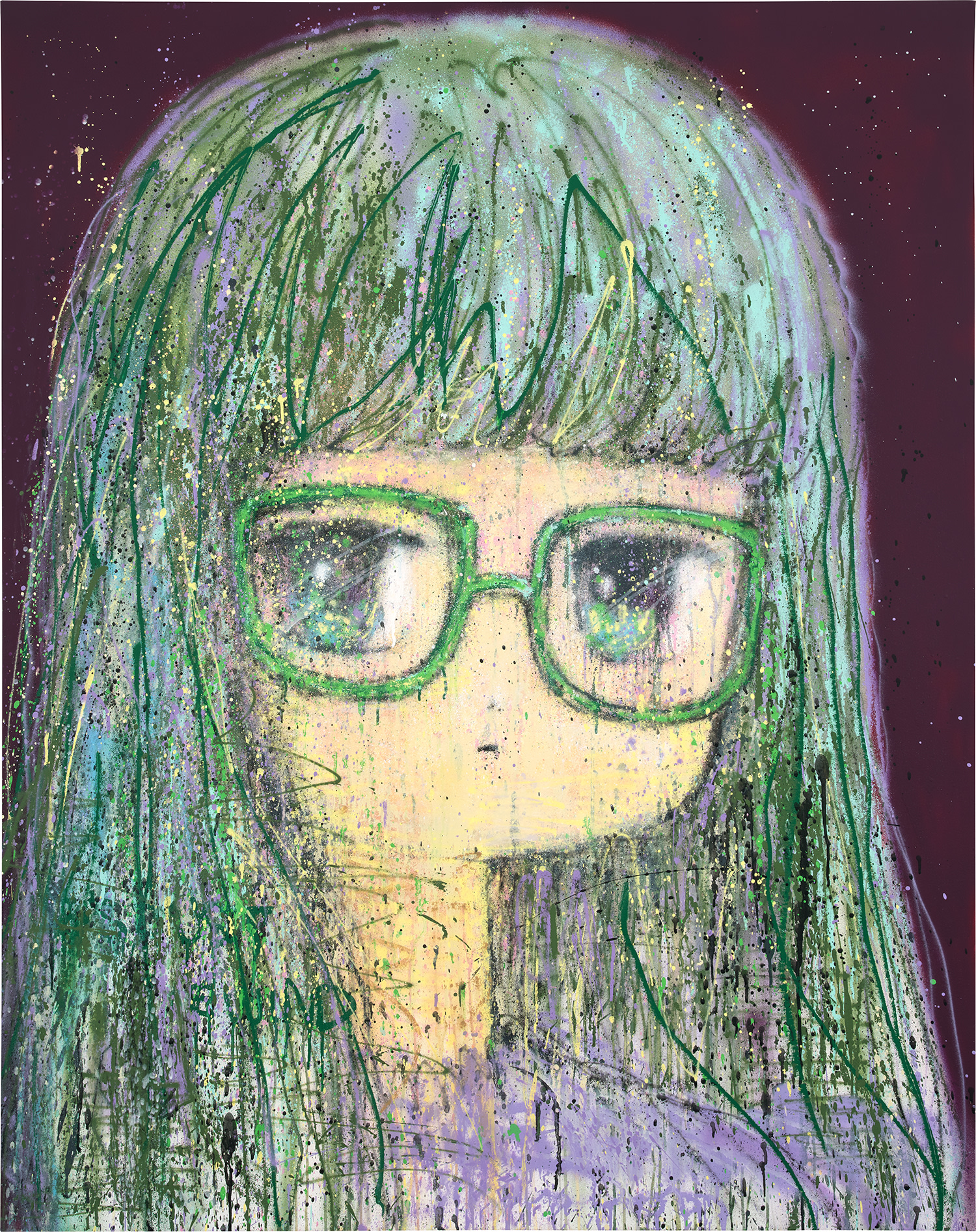
Portrait of Today II, 2021
Stickymonger grew up in South Korea during a period of extraordinary cultural transformation. The 1990s and early 2000s saw Seoul evolve into one of Asia's most dynamic creative capitals, with a generation of young artists absorbing influences from Japanese manga, American underground comics, European graphic design, and the homegrown energy of Korean pop culture in all its layered complexity. For a young artist with a naturally graphic sensibility, this environment was extraordinarily fertile. The visual language of the street, the compressed expressiveness of the comic panel, and the bold economy of the poster all fed into what would become a singular and immediately legible aesthetic.
Her early formation was less about formal academy training and more about looking hard at the world and finding a visual shorthand that could hold real emotional weight. The development of her practice has followed an arc that feels both organic and deliberate. Beginning with street based work that allowed her to test imagery at scale, Stickymonger refined a vocabulary of flat, graphic figures rendered almost exclusively in black and white, punctuated occasionally by the controlled intrusion of a single color or textural element. Her characters, with their oversized expressive faces and bodies that seem to teeter between the comic and the melancholy, became a kind of cast of recurring archetypes.
Stickymonger
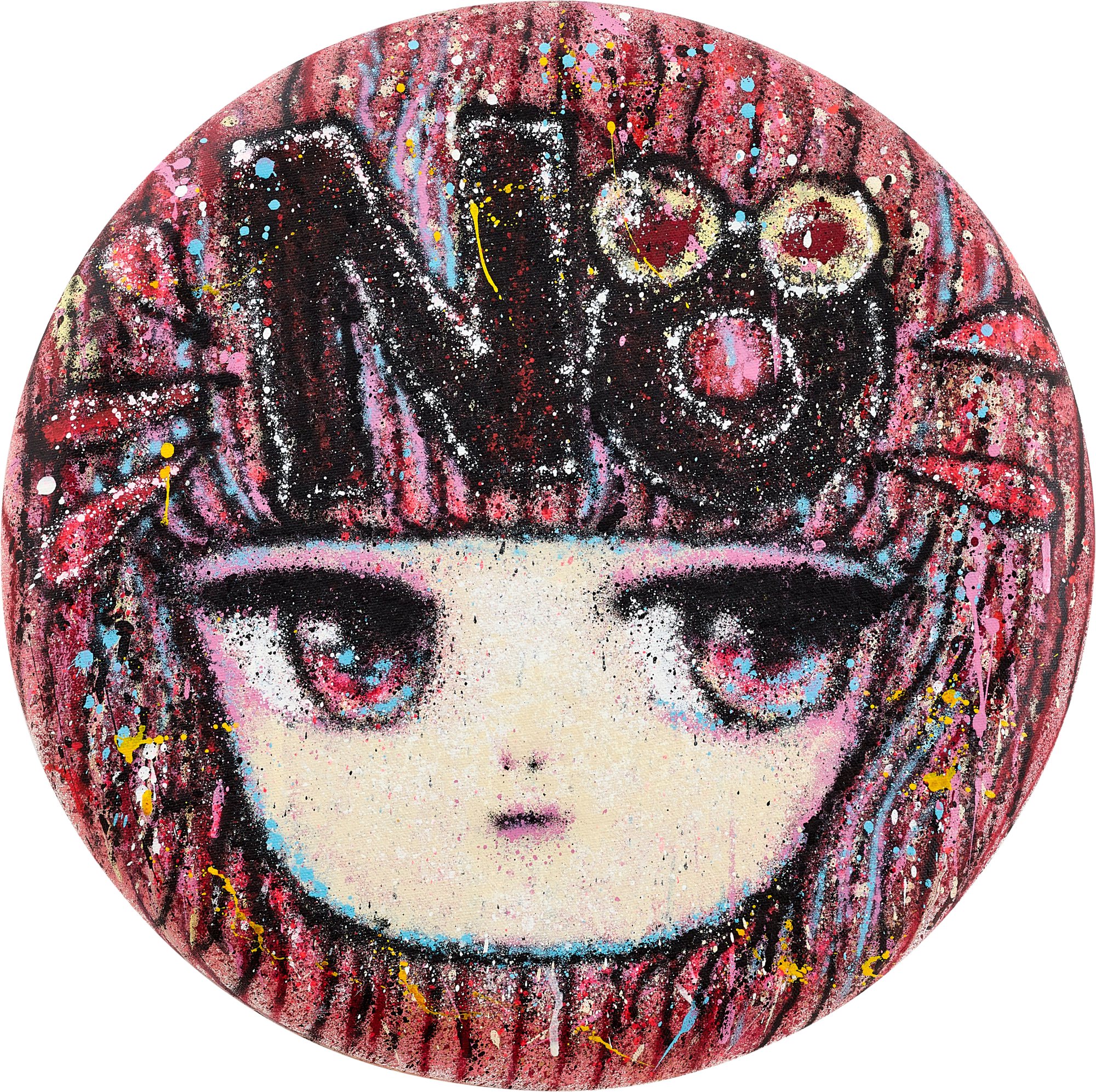
無題
They are figures who appear caught in the middle of something, suspended in a moment of feeling that resists easy categorization. The transition from walls to canvas was seamless rather than disruptive, because her instinct for composition and for the charged relationship between figure and ground translated with remarkable fidelity across surfaces and scales. Among her most celebrated works are the pieces from her ongoing series engaging with contemporary life under duress. The 2020 works titled in Chinese characters, including pieces that translate roughly as pandemic drifter and moving day, reflect a period when the entire world was grappling with dislocation, stillness, and the strange suspension of ordinary time.
Created with aerosol paint on canvas, these works carry the immediacy of street practice while achieving the intimacy of objects made to be lived with. The figures in these paintings float, drift, and occupy uncertain spatial relationships with one another and with the viewer, evoking the particular loneliness and dark comedy of that historical moment without ever becoming didactic or heavy handed. Her 2021 series including Portrait of Today and Portrait of Today: Mushrooming extended this inquiry into questions of identity and emotional legibility in contemporary life, with the mushroom motif introducing an element of organic surrealism that felt both fresh and inevitable within her visual world. For collectors, the appeal of Stickymonger's work operates on several levels simultaneously.
Stickymonger
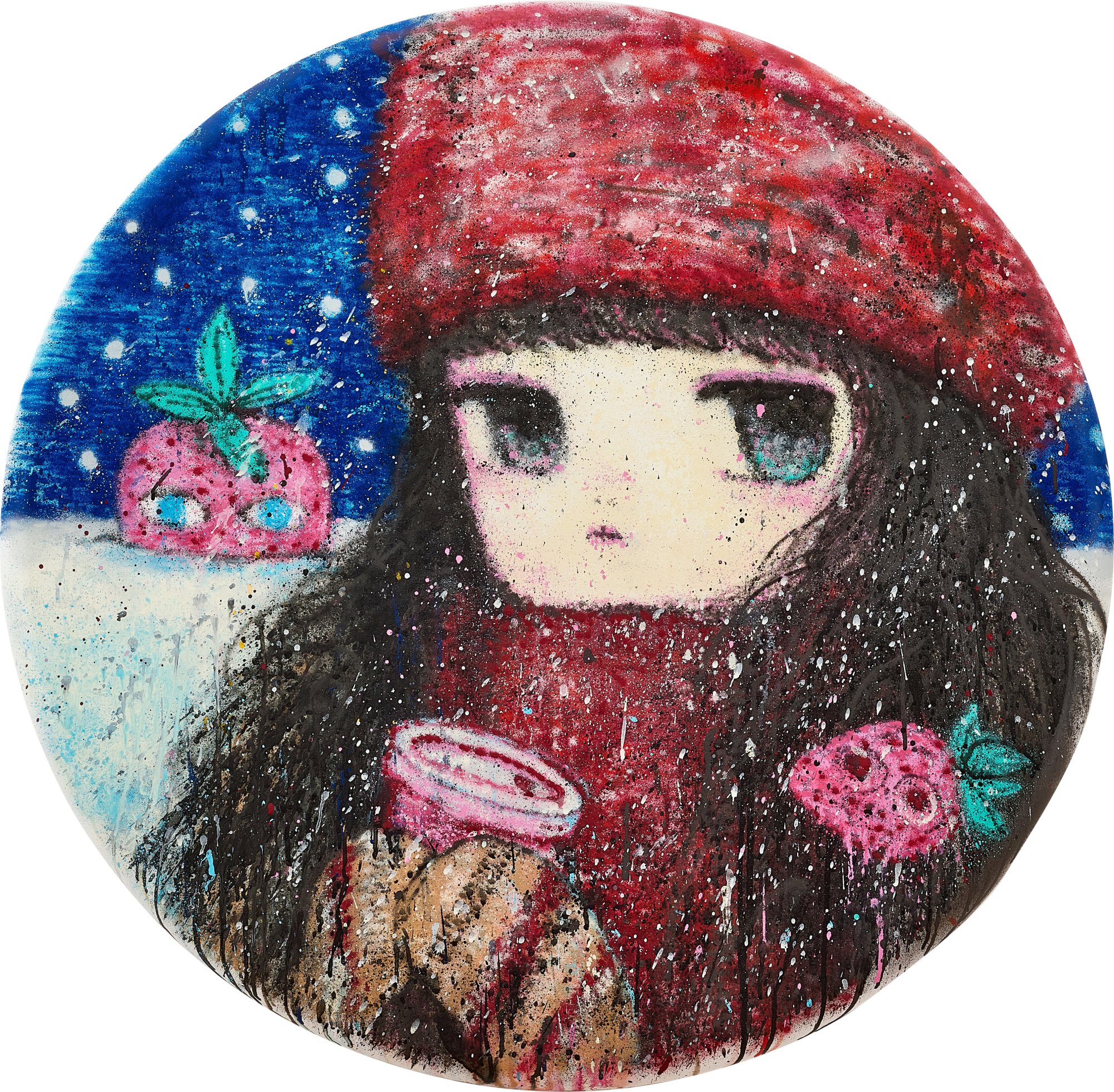
Untitled 無題
There is the immediate visual pleasure of her compositions, which reward both the quick glance and the sustained look. There is the emotional intelligence embedded in even her most apparently simple figures, a quality that distinguishes work with genuine staying power from work that merely satisfies an aesthetic appetite. And there is the growing recognition among serious collectors that artists who have built their reputations across the full spectrum of public and gallery based practice, as Stickymonger has, tend to produce objects that carry a particular cultural density. Her works on canvas, especially those executed in aerosol with the layered surface quality that spray paint uniquely allows, have a materiality that photographs beautifully but rewards physical encounter even more.
Collectors who acquire these works often describe the experience of living with them as one of continual discovery, of finding new emotional registers in a face or a figure that seemed, at first, simply to be smiling or drifting. Within the broader context of contemporary art, Stickymonger occupies a position that invites comparison with a lineage of artists who have worked productively at the intersection of graphic sensibility and fine art ambition. The tradition of artists who elevated illustration and comic adjacent imagery into the registers of serious contemporary practice, a tradition that includes figures like KAWS, whose early graffiti interventions gave way to a fully realized sculptural and painterly language, or Yoshitomo Nara, whose deceptively simple children carry enormous psychological freight, is one in which Stickymonger fits with authority and distinction. Her work also resonates with the flat graphic intensity of artists like Futura and the emotionally searching character work of Clare Rojas.
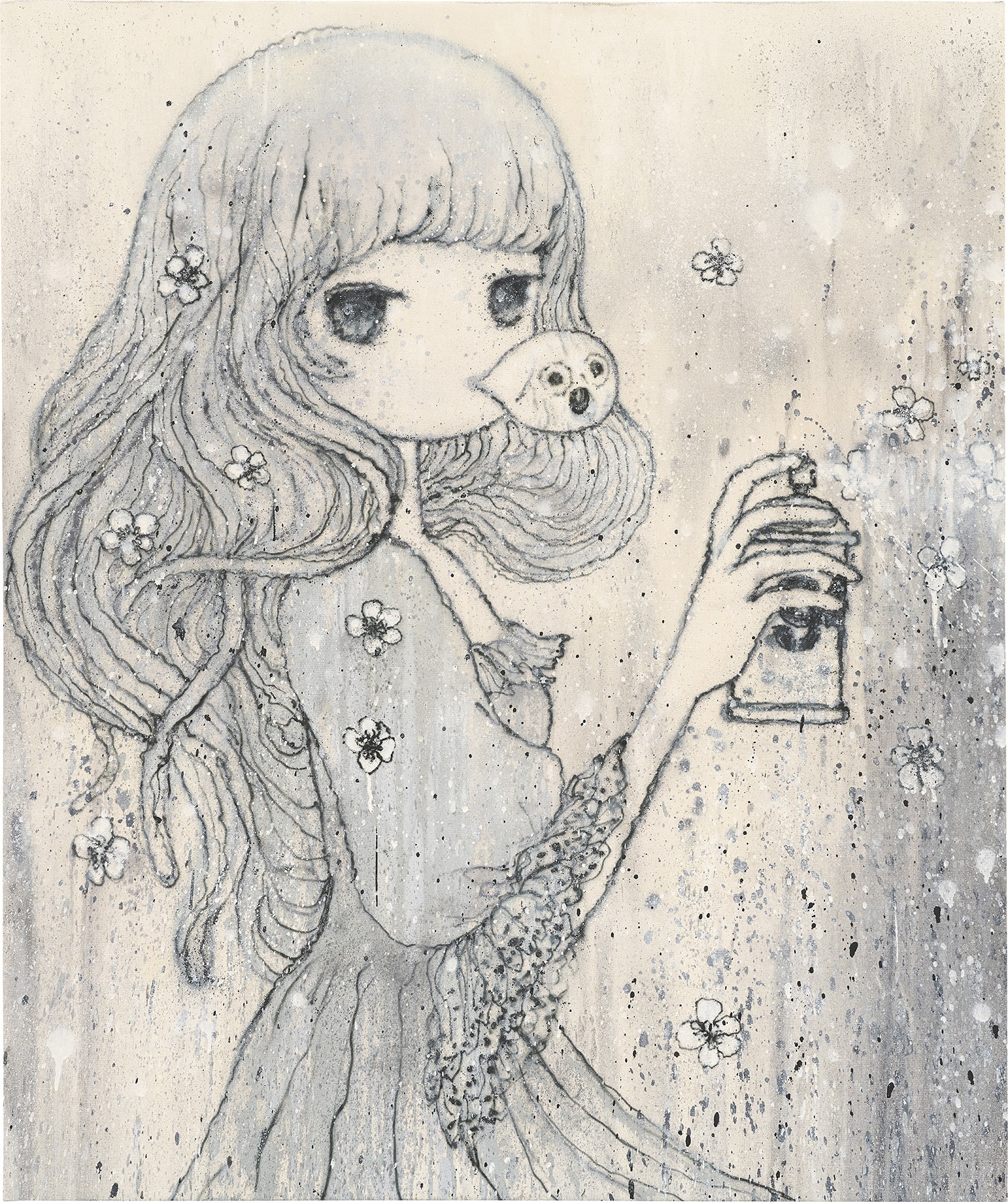
Stickymonger
No Worry. I Don't Write But Paint, 2020
But her voice remains stubbornly and delightfully her own, inflected by a specifically Korean cultural perspective that enriches the work with layers that reward patient looking. The legacy Stickymonger is building is one that takes seriously the idea that humor and melancholy are not opposites but collaborators, that a figure rendered in two colors on a white ground can hold as much of the human condition as any painting produced in a more traditionally prestigious mode. At a moment when the art world is genuinely and productively rethinking the hierarchies that once separated street art from gallery art, illustration from fine art, and popular visual culture from high culture, her practice feels not merely timely but necessary. She reminds us that the most urgent images are often the simplest ones, that a bold line and an expressive face can be the most honest response to a complicated world.
For collectors with the instinct to recognize a singular voice when it speaks clearly, Stickymonger's work represents not just an acquisition but a relationship with a perspective that will only deepen and reward over time.