Steven Shearer
Steven Shearer, Poet of Beautiful Outsiders
Artist Spotlight · The Collection Editorial
When Steven Shearer represented Canada at the 2011 Venice Biennale, the art world took collective notice of something that a devoted circle of collectors and curators had quietly understood for years: here was a painter of profound originality, one whose subjects existed at the margins of mainstream culture yet whose canvases radiated with a singular, earned beauty. His pavilion presentation confirmed his place among the most compelling figurative artists working anywhere in the world. The Venice moment was not a beginning but a crystallization, a public affirmation of a practice that had been building in depth and complexity for more than two decades. Shearer was born in 1968 and grew up in Canada, coming of age in the years when heavy metal, punk, and hard rock were not simply genres of music but entire worlds unto themselves, complete with their own codes of dress, loyalty, and spiritual yearning.
Steven Shearer
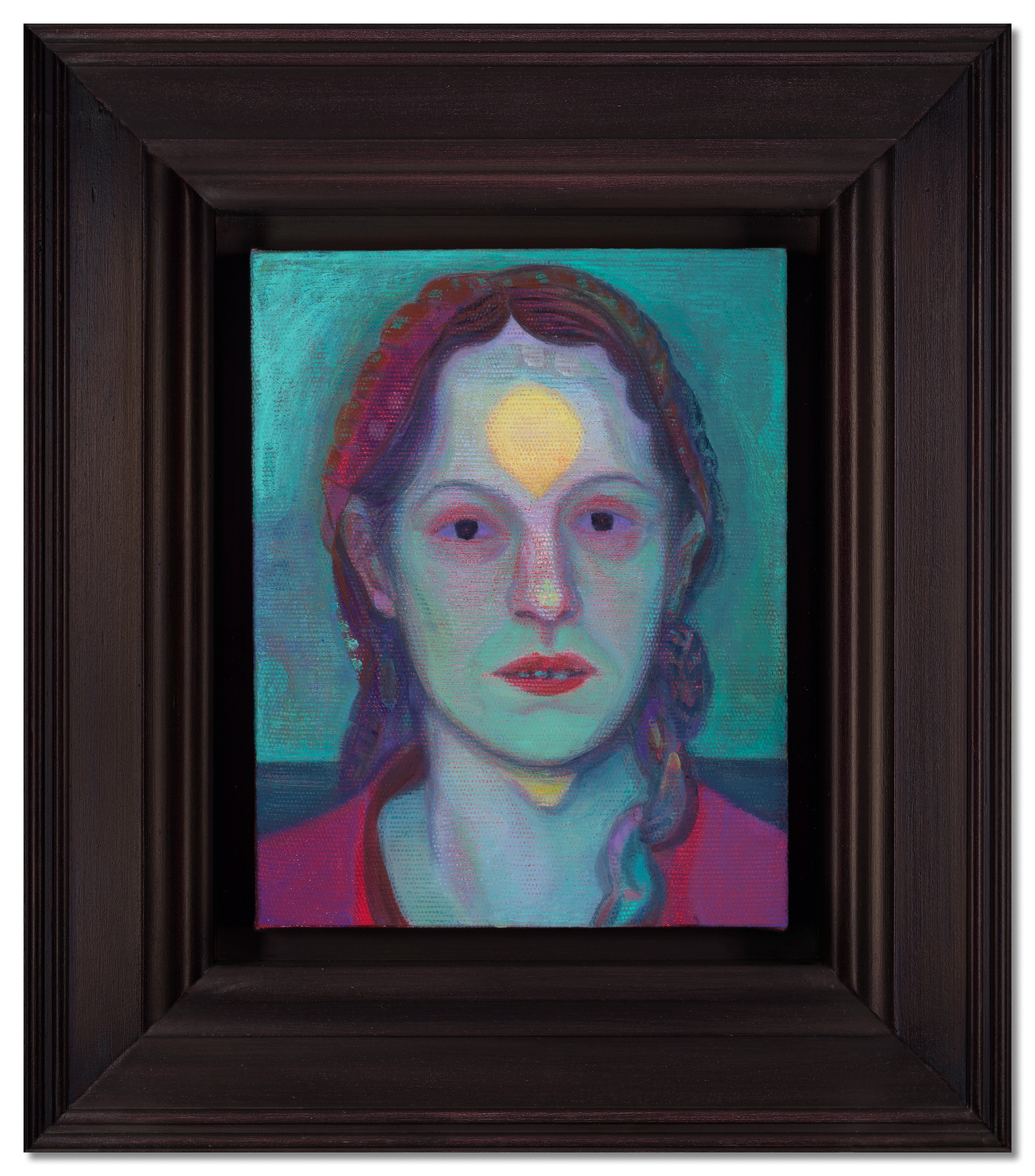
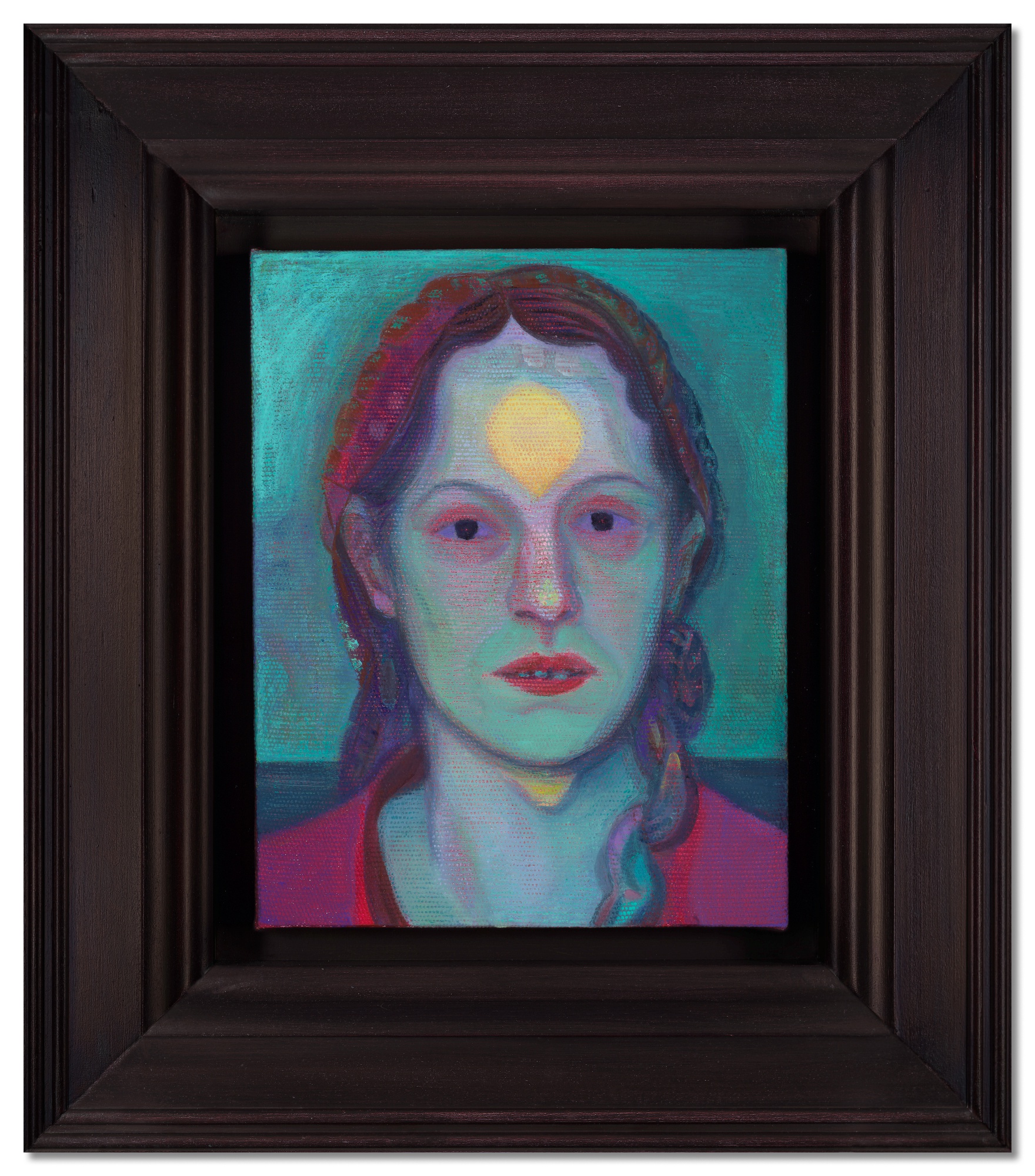
Vulgarian Applique, 2016
These subcultures were often dismissed by polite society and by the mainstream art world alike, treated as crude or adolescent rather than as genuine expressions of feeling. Shearer understood them differently. He recognized in the long haired teenager hunched over a guitar, in the hand drawn band logos on notebook covers, in the fanzines passed between friends, something urgent and essentially human: a desire to belong, to transcend, to feel intensely alive outside the structures that society had prepared for you. His formation as an artist was shaped by this intimate knowledge of subculture as well as by a serious engagement with art history and the traditions of painting.
He studied at the Emily Carr Institute of Art and Design in Vancouver, a city whose particular geography and cultural character left a visible mark on his sensibility. Vancouver in the late 1980s and early 1990s was also home to a remarkable concentration of conceptual artists, and while Shearer's work engages with the history of painting in a way that set him apart from the dominant conceptualism of his immediate context, the rigorous critical intelligence of that environment clearly informed the way he thinks about images and their layered meanings. Over the course of his career, Shearer developed a practice that moves fluidly between painting, drawing, printmaking, and assemblage. Central to his method is an obsessive and systematic approach to image collecting: he has amassed an enormous archive of found photographs, magazine clippings, record covers, and amateur snapshots, all organized and cross referenced as a kind of personal iconographic library.
Steven Shearer
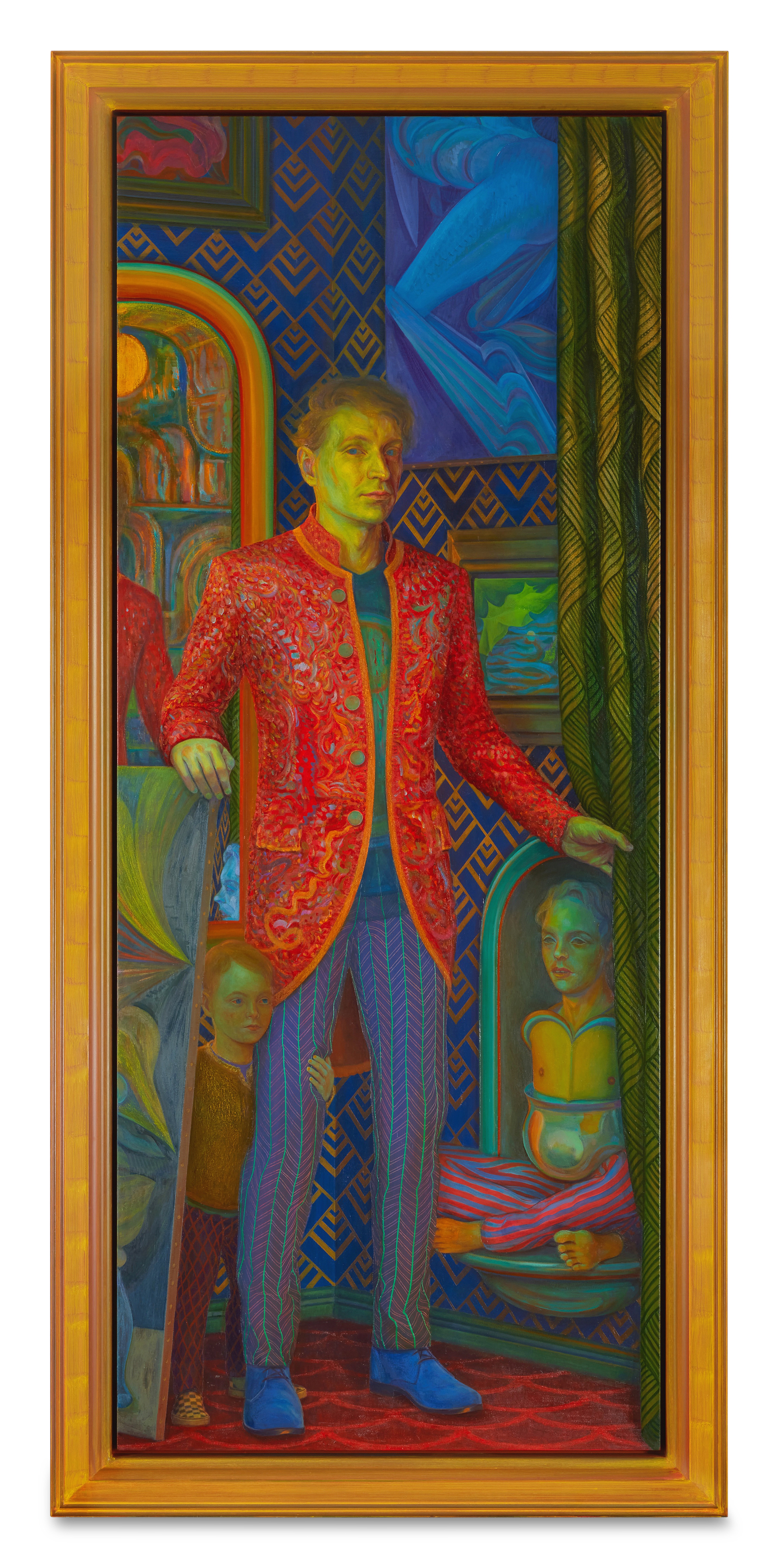
The Late Dioramist and Sons, 2020
This archive feeds his paintings, which rarely depict invented scenes but rather translate found images into oil on canvas or linen with a combination of stylistic fluency and strange detachment. The result is work that feels simultaneously familiar and deeply unsettling, images you think you recognize until you begin to look closely and realize how much has been transformed. His paintings of recumbent or sleeping male figures are among the most discussed works of his generation. These long haired young men, often depicted alone on beds or floors with their eyes closed, carry an ambiguity that resists easy reading.
They could be resting, dreaming, or lost in some interior state entirely their own. Shearer renders them with a tenderness that refuses sentimentality, using paint in a way that draws on sources as varied as old master portraiture, symbolism, and the flat graphic quality of underground print culture. The figures are never heroized in a conventional sense and never mocked: they are simply seen, fully and generously, by an artist who understands their world from the inside. Among the works available through The Collection, several offer exceptional entry points into different registers of his practice.
Steven Shearer
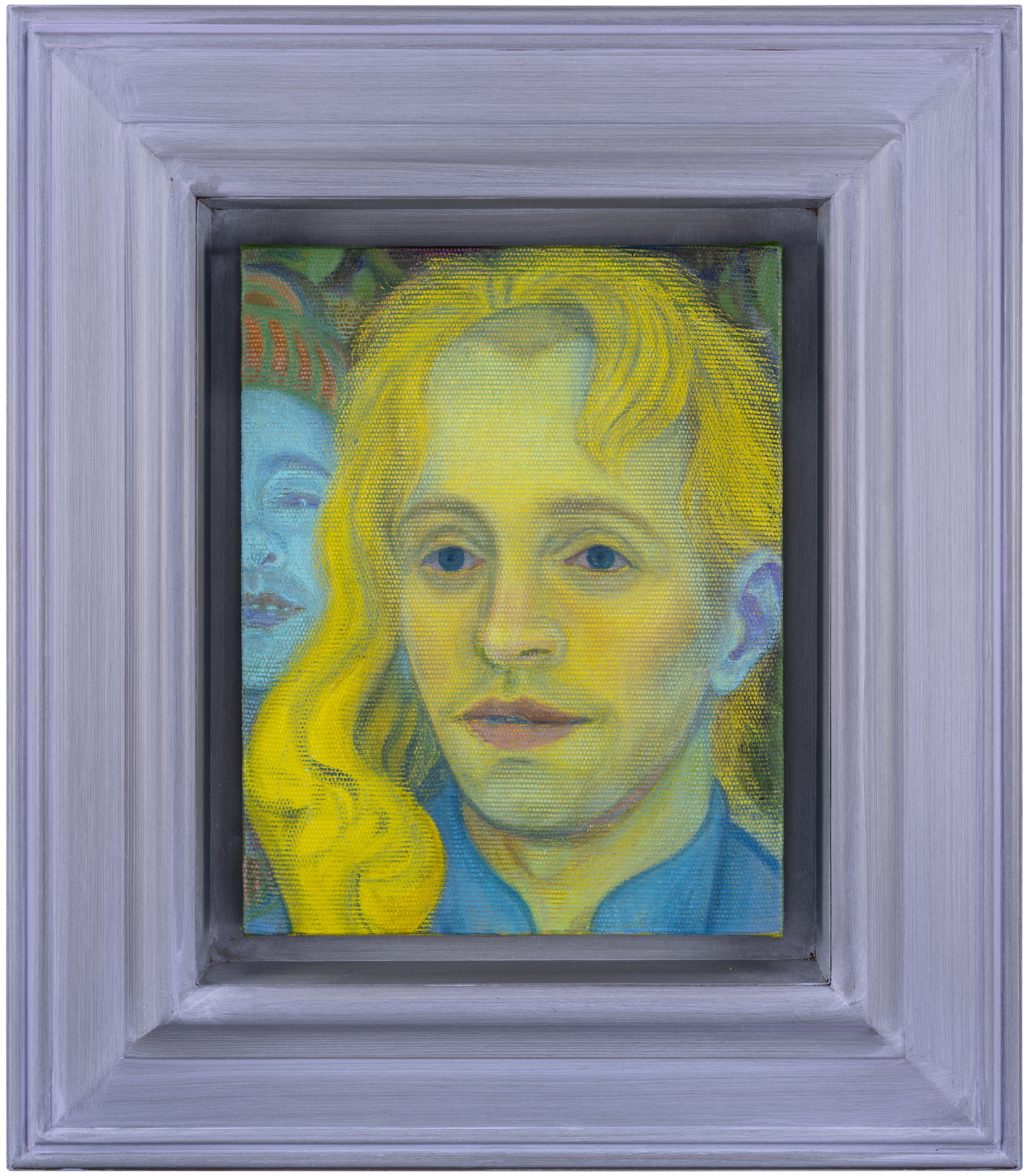
Synthist, 2018
"Vulgarian Applique" from 2016, executed in oil, oilstick, and pastel on linen and presented in the artist's own frame, exemplifies Shearer's ability to push painting toward the territory of collage and assemblage without abandoning its fundamental sensuousness. "The Late Dioramist and Sons" from 2020, a large oil on canvas also in the artist's frame, demonstrates the way his more recent paintings have grown in scale and painterly ambition while retaining the intimate strangeness that defines his vision. "Synthist" from 2018 extends this quality further, its surface of oil and oil pastel on linen stretched over panel giving the work a physical presence that rewards sustained looking. Earlier works such as "Sneaky Snapshots" from 2005 and the assemblage piece from 1997 titled "overall dimensions variable" illuminate the conceptual underpinnings of his practice and reveal how consistently his concerns have held across time.
For collectors, Shearer's work represents a particularly compelling proposition. His paintings are held in the permanent collections of the National Gallery of Canada, the Musée d'art contemporain de Montréal, and the Hammer Museum in Los Angeles, among other significant institutions, a collecting history that speaks to the breadth of recognition his work has achieved across both national and international contexts. He is represented by Gavin Brown's Enterprise, and works by him have been shown at major galleries and institutions internationally over many years. Collectors are drawn not only to the quality and seriousness of the painting itself but to the way Shearer's work opens onto genuinely large questions about masculinity, alienation, beauty, and what it means to live outside the cultural mainstream, questions that feel more rather than less relevant as time passes.
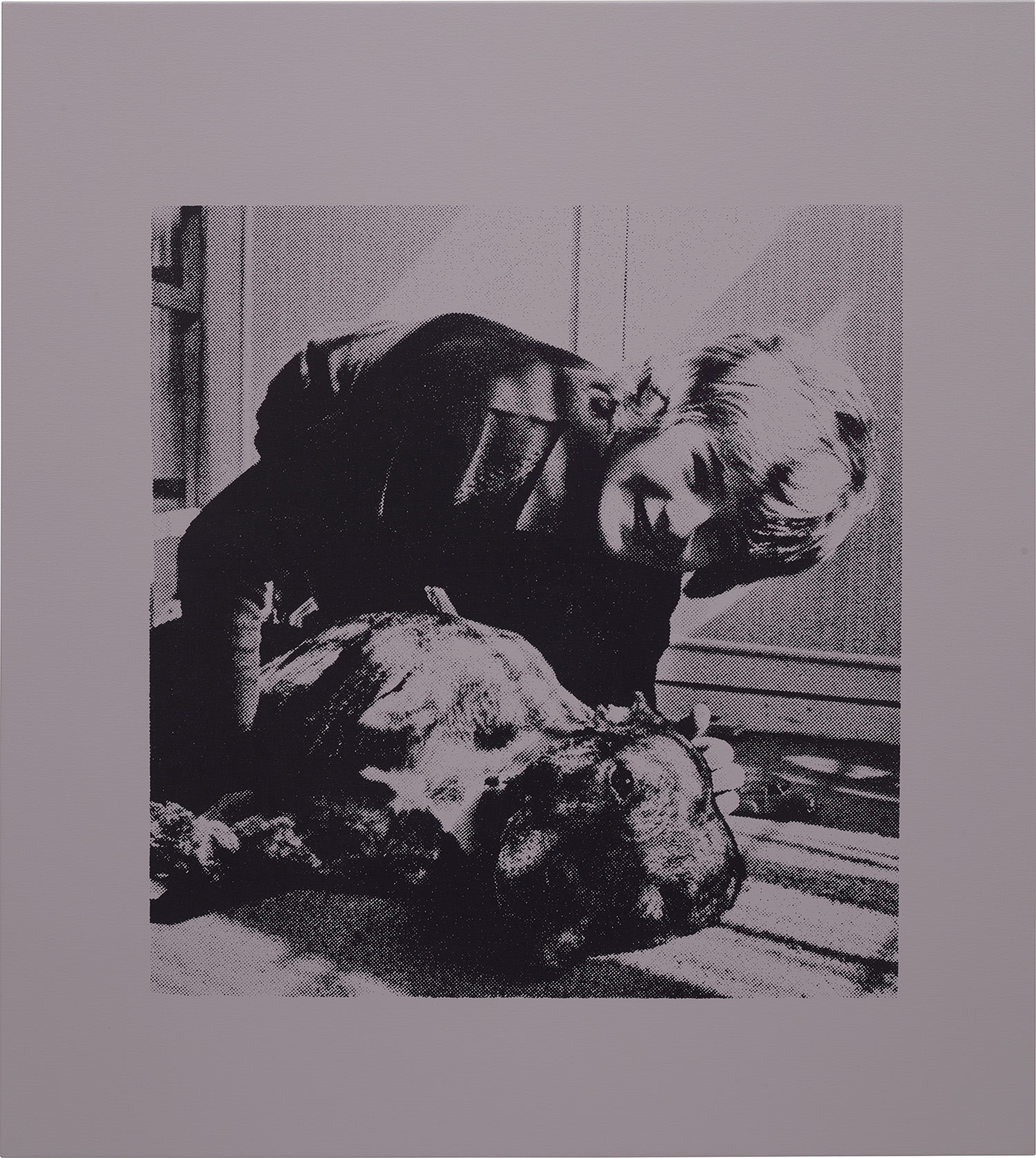
Steven Shearer
Boy with Dog, 2016
In the broader context of contemporary painting, Shearer occupies a distinctive position. His engagement with youth subculture connects him in spirit, if not in method, to artists such as Raymond Pettibon, whose drawings drew on the visual language of punk and hardcore, and to painters like Lisa Yuskavage and Neo Rauch who have used figuration to explore psychological and cultural territories that realist conventions tend to avoid. His commitment to painting as a vehicle for sustained thought about image culture places him in dialogue with a generation of artists who came of age questioning both the death of painting narratives of the 1980s and the skepticism toward direct emotional experience that dominated certain strands of conceptual practice. What makes Shearer matter now, and what will ensure his work endures, is precisely the quality of his attention.
In an art world that often rewards novelty above all else, he has remained committed to a practice of looking: looking at images that other people discard, at subcultures that society overlooks, at figures that mainstream representation renders invisible. His paintings ask viewers to extend the same quality of attention, to spend time with subjects that might initially seem unfamiliar or marginal and to discover in them something true and luminous. That invitation is one of the most generous things a painter can offer, and Shearer has been making it, with growing confidence and beauty, for his entire career.