Steven Klein
Steven Klein: Master of the Magnificent Dark Dream
Artist Spotlight · The Collection Editorial
There is a particular kind of electricity in the room when a Steven Klein photograph enters a gallery space. In recent seasons, a renewed wave of collector and institutional interest has drawn fresh attention to Klein's extraordinary body of work, with major prints from his landmark X STaTIC PRO=CeSS series appearing at leading auction houses and in private sales that confirm what devoted collectors have long understood: Klein's photographs are not simply images. They are psychological events, architectural in their ambition, operatic in their emotional register, and wholly unlike anything else in the history of contemporary photography. Klein was born in 1965 and grew up in Rhode Island, an upbringing that would seem, on the surface, far removed from the fever dreamed visual worlds he would eventually create.
Steven Klein
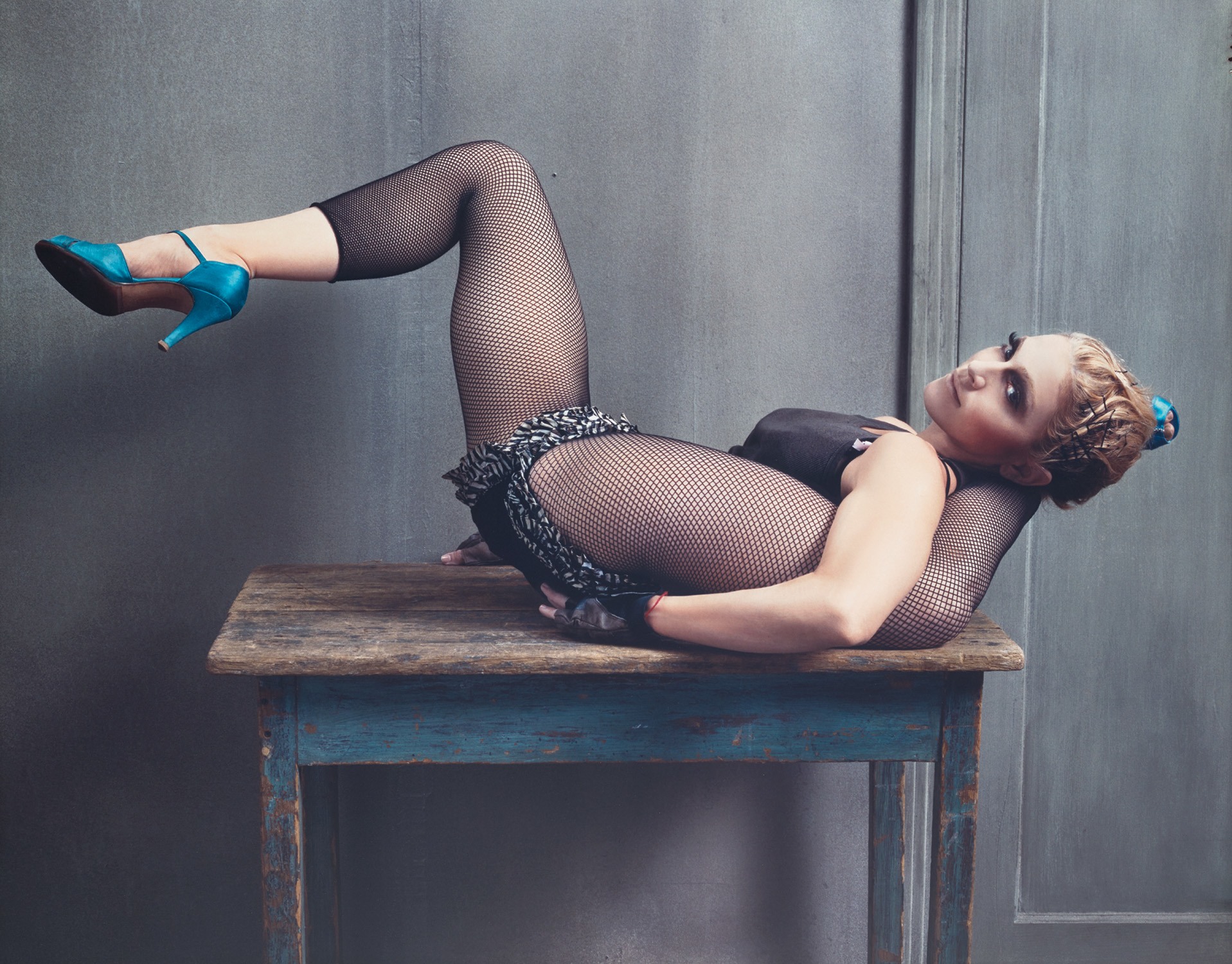
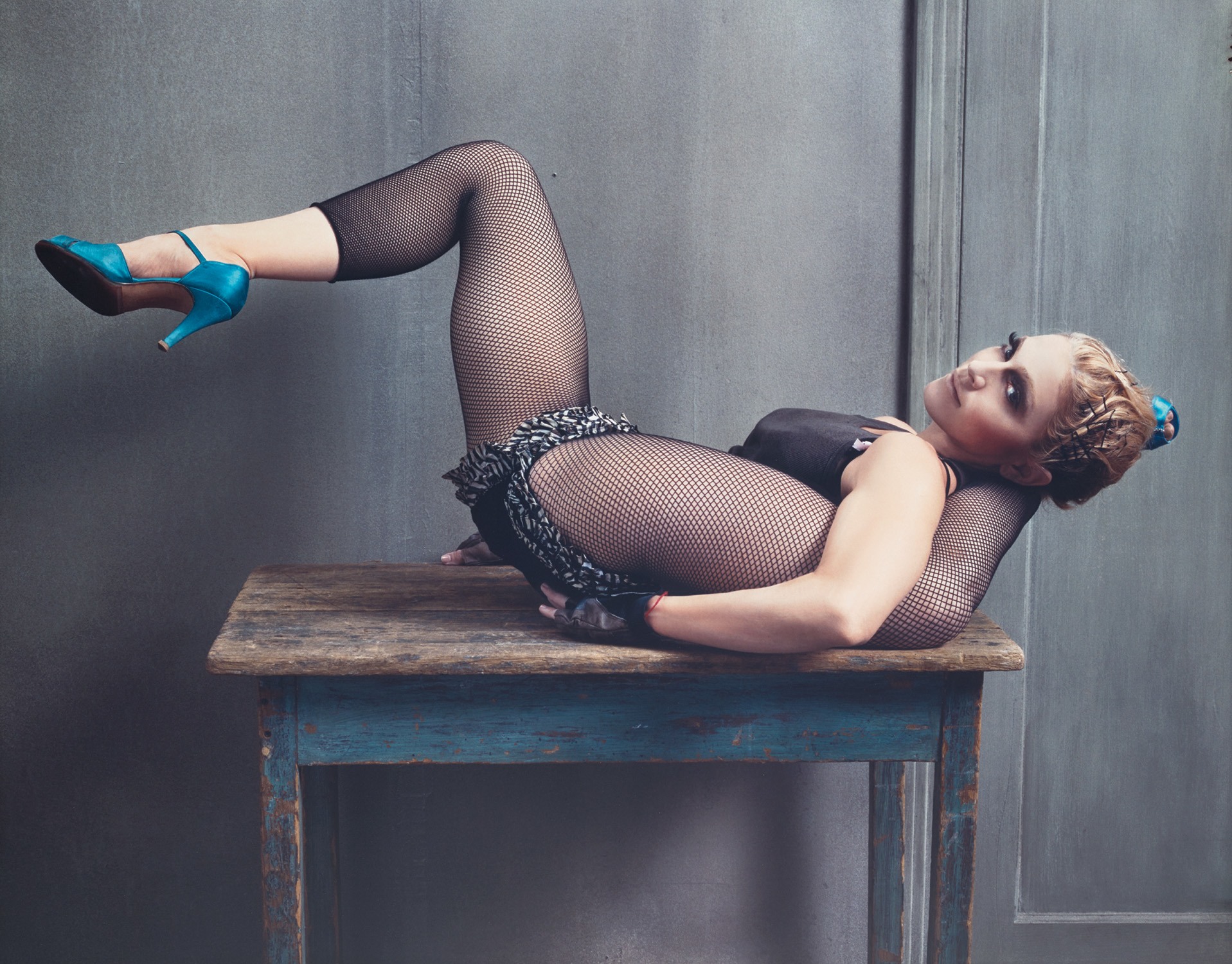
Madonna, Los Angeles from X-STaTIC PRO=CeSS
He studied fine art and developed an early fascination with painting before turning to photography, and this foundation in the plastic arts is everywhere evident in his finished work. The influence of Caravaggio's chiaroscuro, of Francis Bacon's psychological distortions, and of the grand theatrical tradition in European painting all find their way into Klein's lens. He arrived in New York at a formative moment for American fashion photography, absorbing the energy of a city in creative combustion while quietly building a visual language that would prove to be entirely his own. The breakthrough years of the 1990s saw Klein's signature aesthetic crystallize with astonishing speed and confidence.
He began contributing to W Magazine and Vogue, publications where his elaborately staged tableaux found an immediate audience among editors and art directors who recognized something genuinely unprecedented in his submissions. His photographs from this period demonstrate a command of set construction, lighting, and psychological suggestion that places them closer to cinematic production design than to conventional editorial photography. Where other photographers of the era pursued naturalism or ironic detachment, Klein leaned into artifice with total commitment, understanding instinctively that the constructed image, made with absolute conviction, could carry more emotional truth than any candid photograph. The collaborations that define Klein's public reputation are, by any measure, remarkable.
Steven Klein
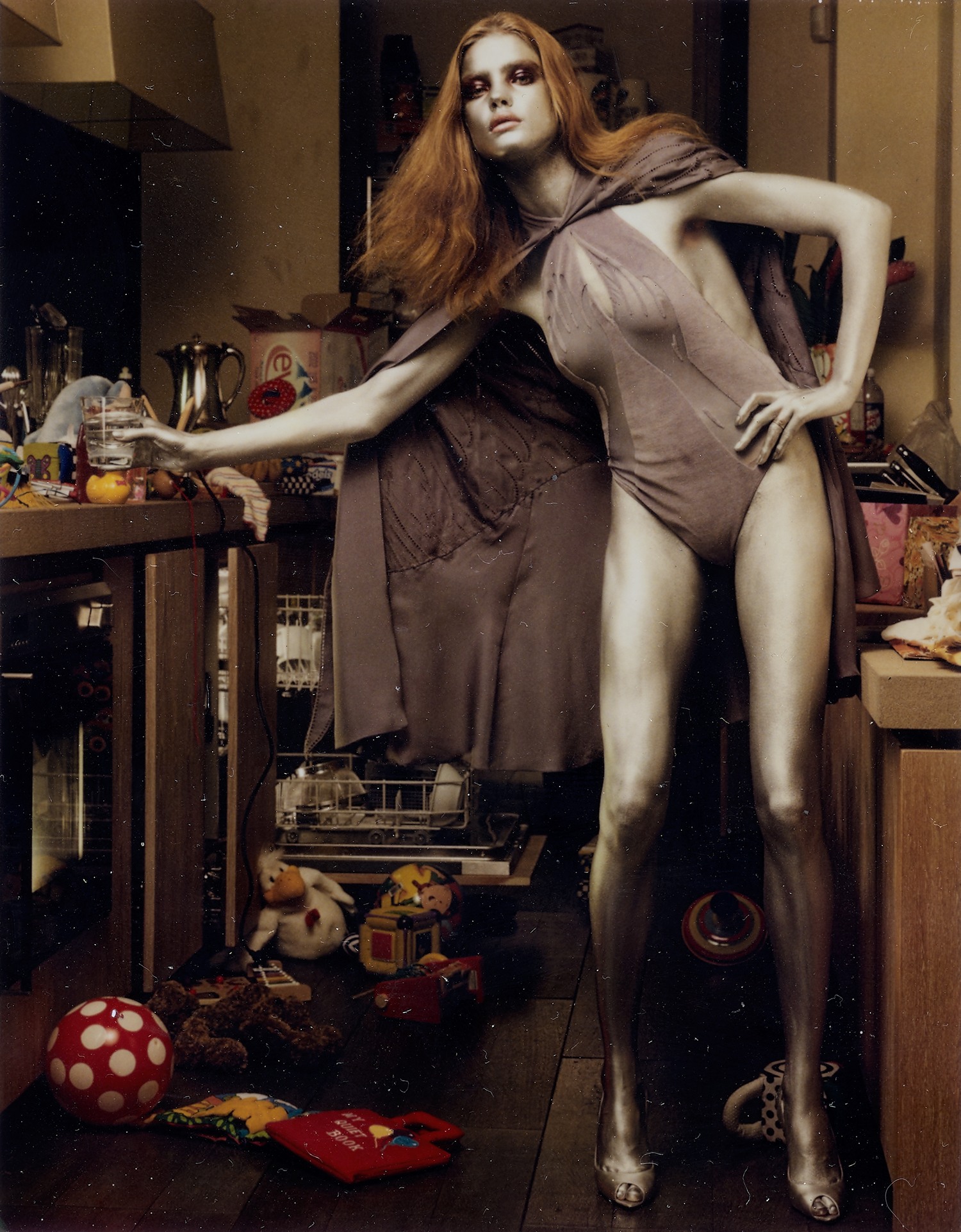
Natalia Vodianova, New York City
His long creative partnership with Madonna produced some of the most discussed and debated images of the early 2000s, culminating in the X STaTIC PRO=CeSS project, a body of work in which the two figures pushed each other toward territory that was genuinely unsettling and genuinely beautiful in equal measure. Prints from this series, including the luminous and troubling Madonna, Los Angeles from X STaTIC PRO=CeSS, are among the most sought after of his works on the primary and secondary markets today. Klein's collaboration with Alexander McQueen produced images that were inseparable from the designer's own aesthetic convictions, two imaginations equally drawn to the charged space between beauty and mortality. His portraits of Brad Pitt, rendered in gelatin silver with a painter's attention to tonal gradation, reveal Klein's gifts as a portraitist of psychological penetration, stripping away celebrity to find something raw and unguarded beneath.
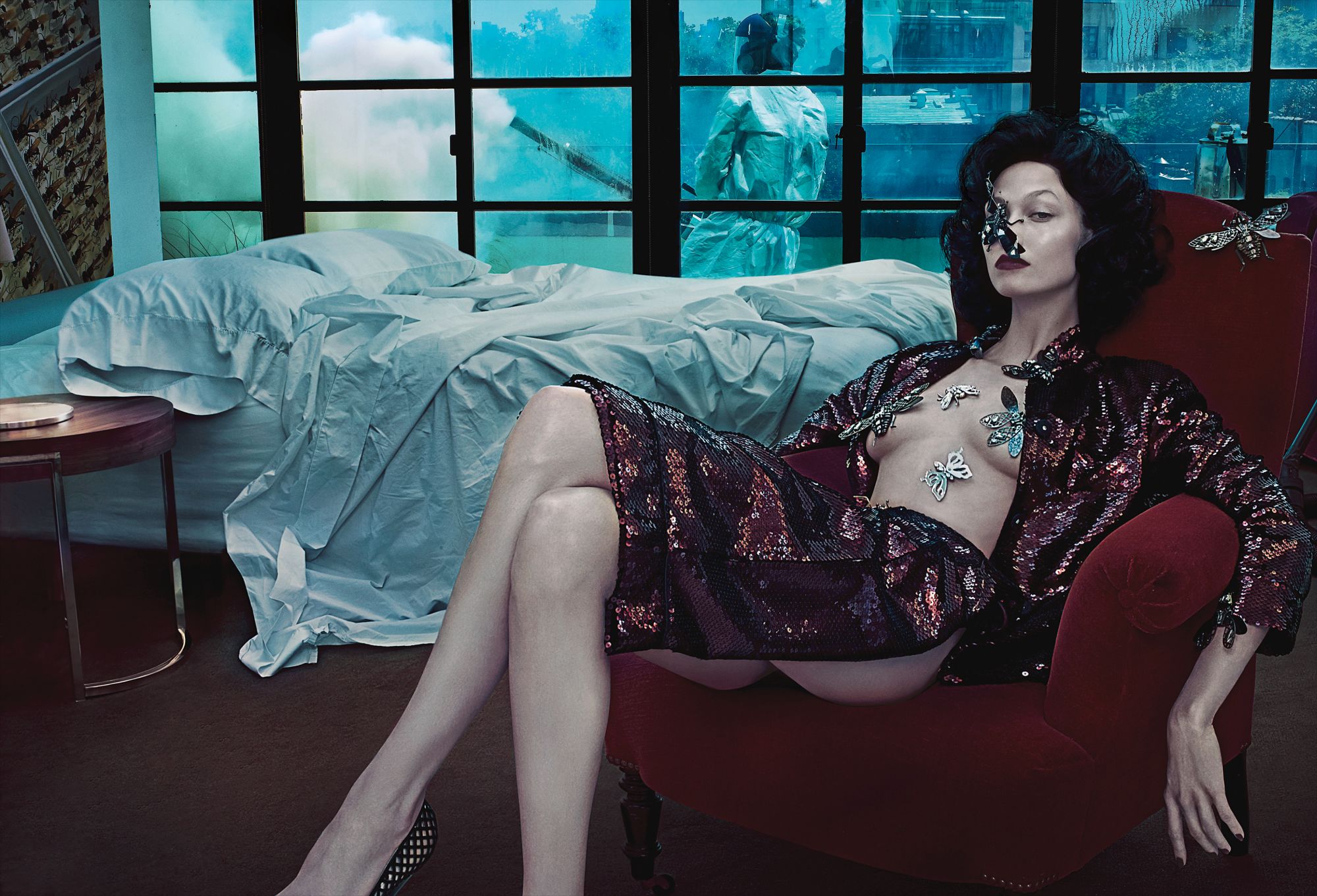
The photographs available through The Collection represent an exceptional survey of Klein's range and ambition. Works such as Natalia Vodianova, New York City and Girl with Hat (Kate Moss) demonstrate his mastery of the classical portrait format, while pieces like Bugs and Case Study Number 13 Image No. 32 reveal the more experimental, formally adventurous dimension of his practice. The Kate Moss Diptych, a unique archival pigment print, is particularly significant for collectors: unique works from Klein occupy a rare category in which the artist's hand is fully present and the possibility of duplication is foreclosed entirely.
Steven Klein
Bugs
L Star, Bridgehampton NY from 1999, an artist made gelatin silver print mounted in the artist's own frame, offers something even more intimate, a work in which Klein's involvement extends beyond the image itself into the physical object the collector receives. Guinevere at the Pink Mansion, Beverly Hills, with its sun drenched California setting rendered in Klein's characteristically charged atmosphere, shows a different register entirely, proof that his vision is not confined to darkness alone but encompasses the full spectrum of psychological weather. For collectors approaching Klein's market, several considerations stand out. Print medium and mounting matter enormously in his work.
Chromogenic prints, gelatin silver prints, and archival pigment prints each carry distinct qualities of surface, luminosity, and longevity, and Klein has worked thoughtfully across all three. Works that come in the artist's own frame, a relatively rare condition in contemporary photography collecting, carry additional significance as complete objects that the artist has approved and shaped from capture to final presentation. Edition size varies across the body of work, and unique pieces command particular attention. The strongest prices in recent private sales have been achieved by works connected to his major cultural collaborations, though serious collectors increasingly recognize that the quieter, more formally concentrated works, the single portraits, the studio experiments, reward sustained looking in ways that justify their acquisition on purely aesthetic grounds.
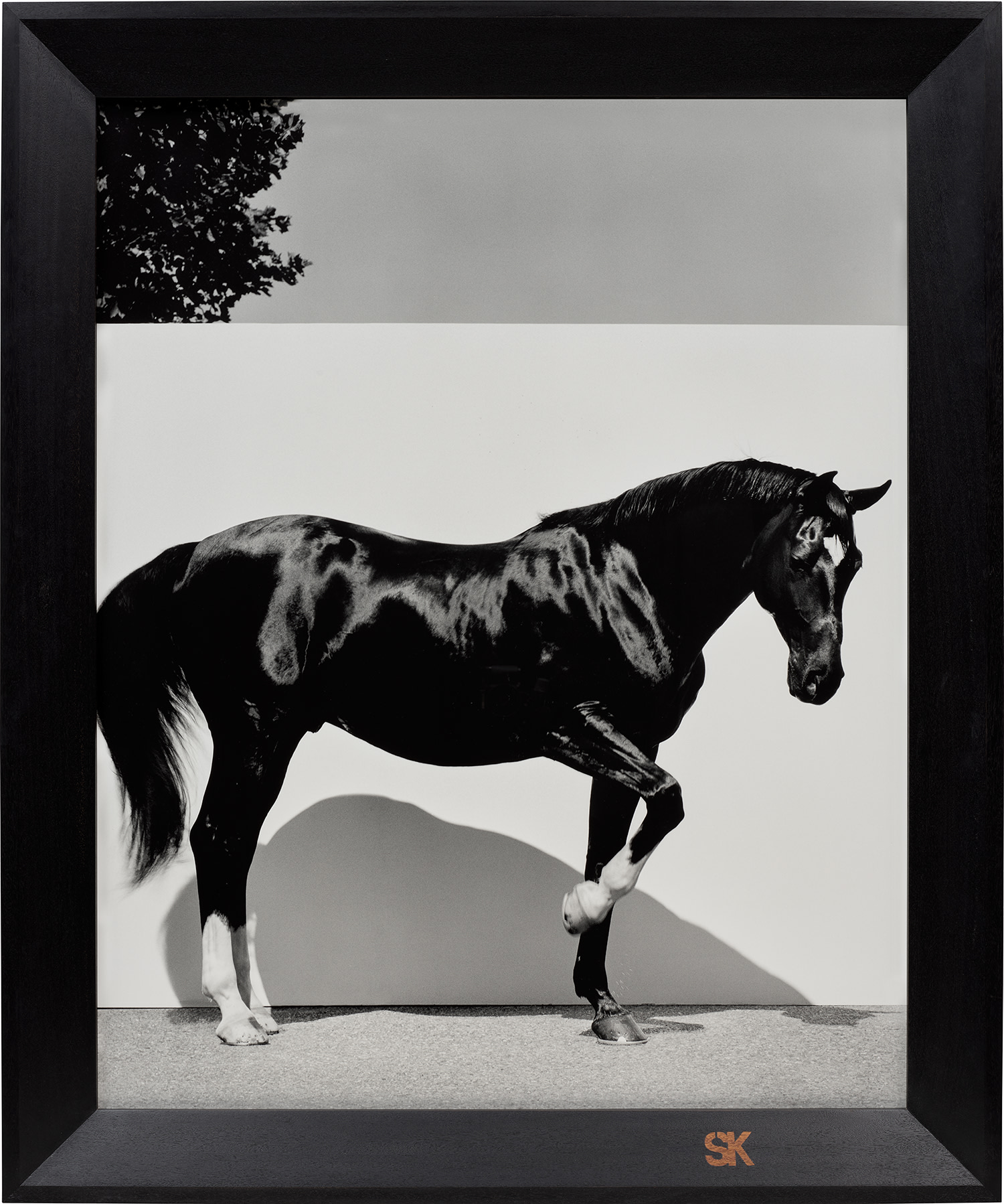
Steven Klein
L-Star, Bridgehampton NY, 1999
Klein belongs to a generation of photographers who transformed fashion photography into a legitimate arena for serious artistic inquiry. His work enters into dialogue with photographers such as Helmut Newton, whose theatricality and erotic charge provided one lineage, and with figures such as Joel Peter Witkin and Cindy Sherman, whose approach to the staged image as a vehicle for psychological and art historical investigation informs Klein's own sensibility. But Klein's visual world is finally not reducible to any of these influences. The sustained darkness of his imagination, combined with his technical perfectionism and his extraordinary ability to draw performances from his subjects that they often describe as transformative, places him in a category that is effectively his own.
The legacy of Steven Klein is still being written, which is part of what makes acquiring his work now a particularly compelling proposition for collectors with genuine vision. He continues to direct as well as photograph, and his movement between still and moving image has only deepened the cinematic quality that distinguishes his prints. Institutions and curators who have spent years tracking his output understand that the full significance of this body of work will become clearer as time provides perspective. To collect Klein is to participate in that recognition before it becomes consensus, and to live with images that are, in the most literal sense, impossible to ignore.
Explore books about Steven Klein