Steve McCurry
Steve McCurry: The World Through Wondering Eyes
Artist Spotlight · The Collection Editorial
“If you wait, people will forget your camera and the soul will drift up into view.”
Steve McCurry
There is a photograph that stopped the world. Published on the June 1985 cover of National Geographic, the image of a young Afghan refugee girl staring directly into the lens became an instant icon, arguably the most reproduced and recognised cover in the magazine's long history. Sharbat Gula, then approximately twelve years old, her sea green eyes carrying both defiance and sorrow, gazed out from newsstands and living room coffee tables across the globe. The photographer behind that image was Steve McCurry, an American then in his early thirties, already seasoned by years of fieldwork in some of the most volatile corners of the earth.
Steve McCurry
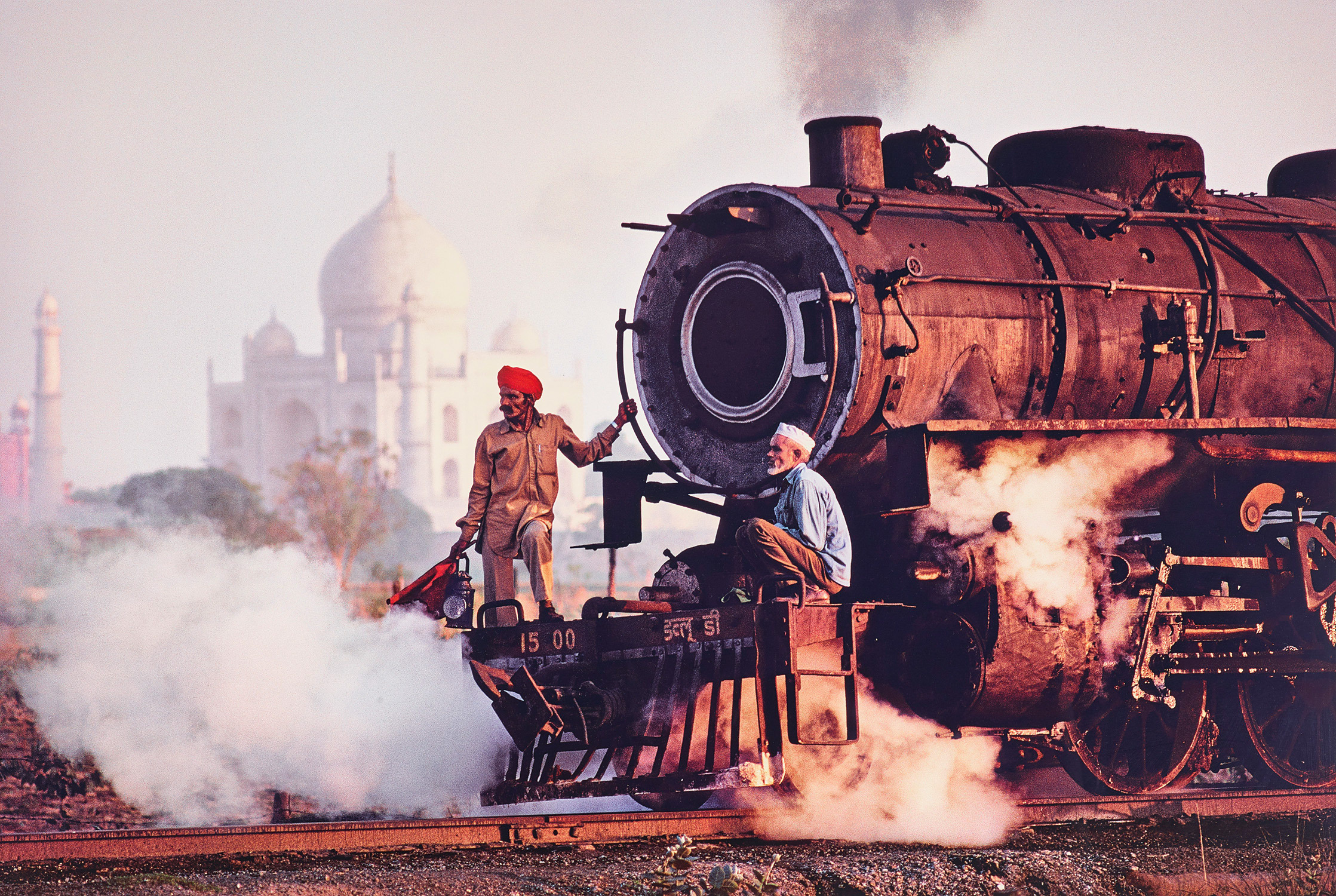
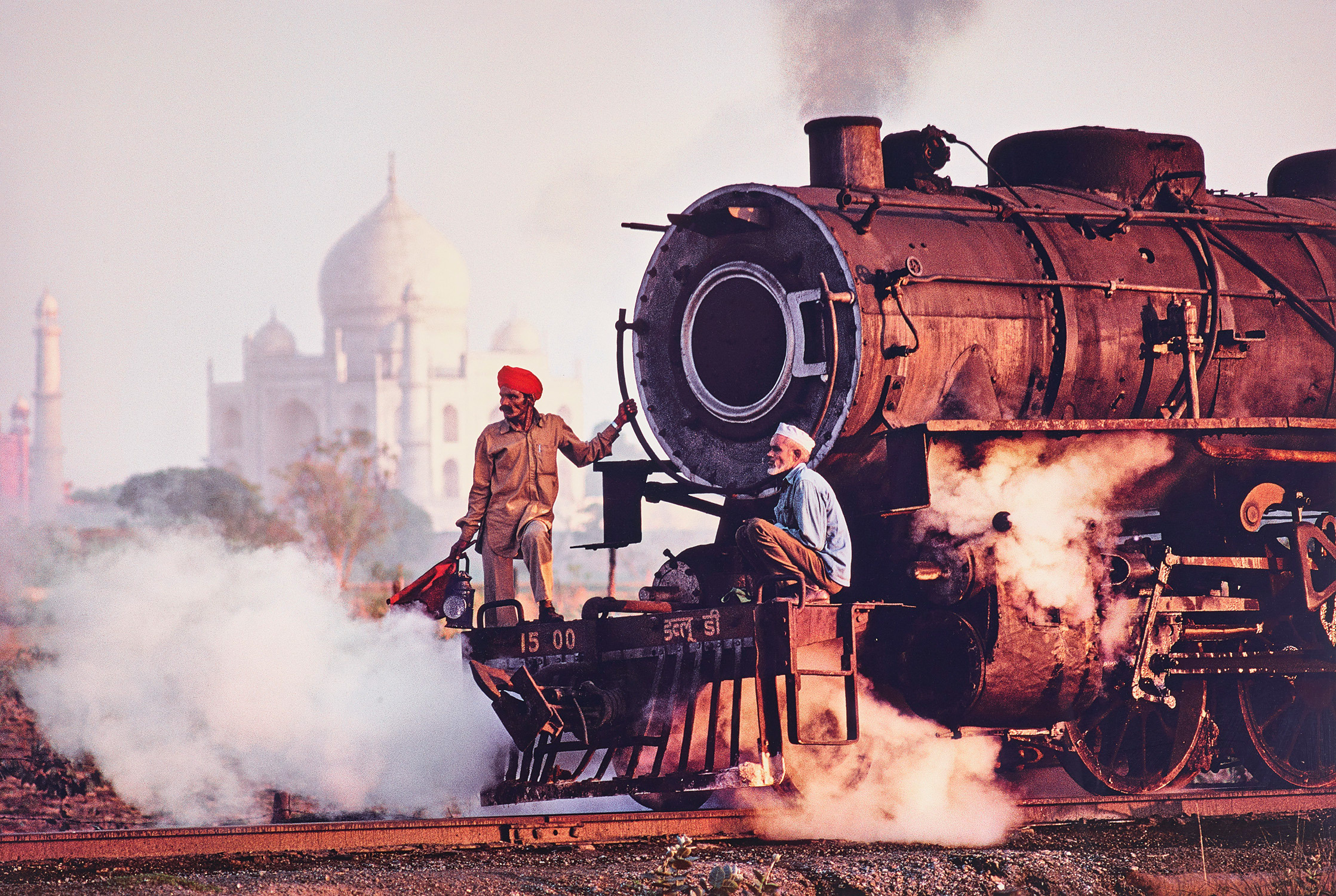
Taj and Train, India
Nearly four decades later, that photograph continues to define not just a career but an entire philosophy of what documentary photography can achieve. McCurry was born in Philadelphia in 1950 and grew up in the suburbs of Pennsylvania. He studied filmmaking and cinematics at Pennsylvania State University, graduating in 1974, an education that instilled in him an acute sensitivity to light, composition, and the choreography of a frame. Rather than moving into the film industry, he found himself drawn to still photography and the intimacy it demanded, the single decisive moment rather than the accumulating reel.
After working for a local newspaper in Philadelphia, he made his way to India in the late 1970s, trading the relative comfort of regional journalism for the disorienting, intoxicating complexity of the subcontinent. It was a formative encounter, one that would root his aesthetic practice in the colours, textures, and faces of Asia for the decades to come. His earliest international breakthrough came not in India but across the border in Afghanistan, where in 1979, just before the Soviet invasion, he disguised himself in traditional local dress and crossed into rebel held territory with rolls of film sewn into his clothing. The images he smuggled out documenting the conflict were among the first to reach Western publications, earning him the Robert Capa Gold Medal from the Overseas Press Club in 1980, an award given to work requiring exceptional courage and enterprise.
Steve McCurry
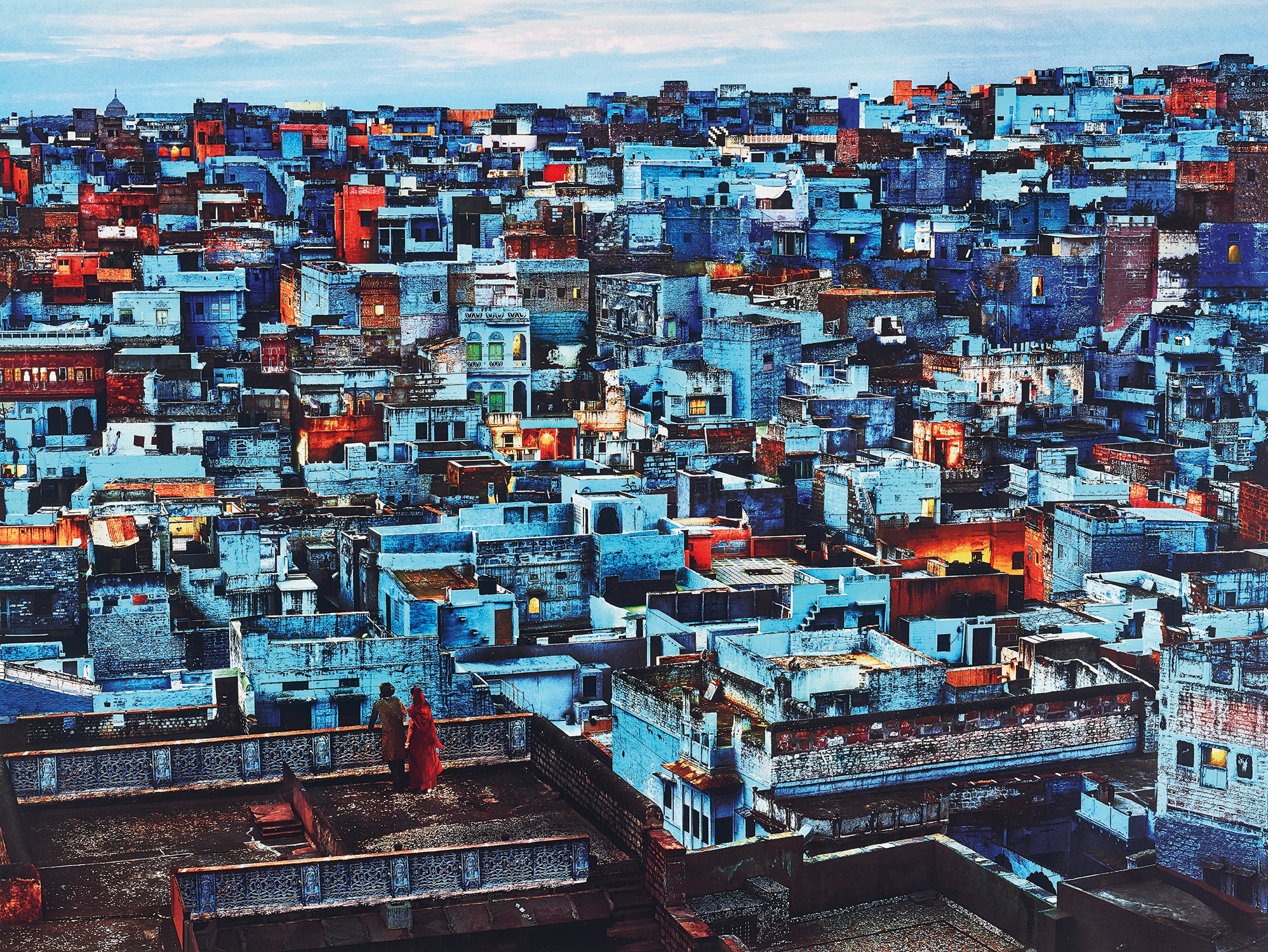
Blue City, Jodhpur, India
This was the crucible in which McCurry's approach was forged: a willingness to go where few others would, combined with a rare capacity to earn the trust of strangers under extraordinary circumstances. He became a member of the Magnum Photos agency in 1986, cementing his place within the most storied collective in the history of documentary photography, alongside figures such as Henri Cartier Bresson, Robert Capa, and Josef Koudelka. What distinguishes McCurry's practice from the broader tradition of photojournalism is his insistence on beauty as a vehicle for empathy rather than an evasion of it. His photographs are saturated with colour in a way that few of his peers have matched, the deep blues of Jodhpur's architecture, the amber light falling across a Rajasthani dust storm, the luminous fabric of a sari caught mid movement against a pale sky.
“Most of my images are grounded in people. I look for the unguarded moment, the essential soul peeking out.”
Steve McCurry
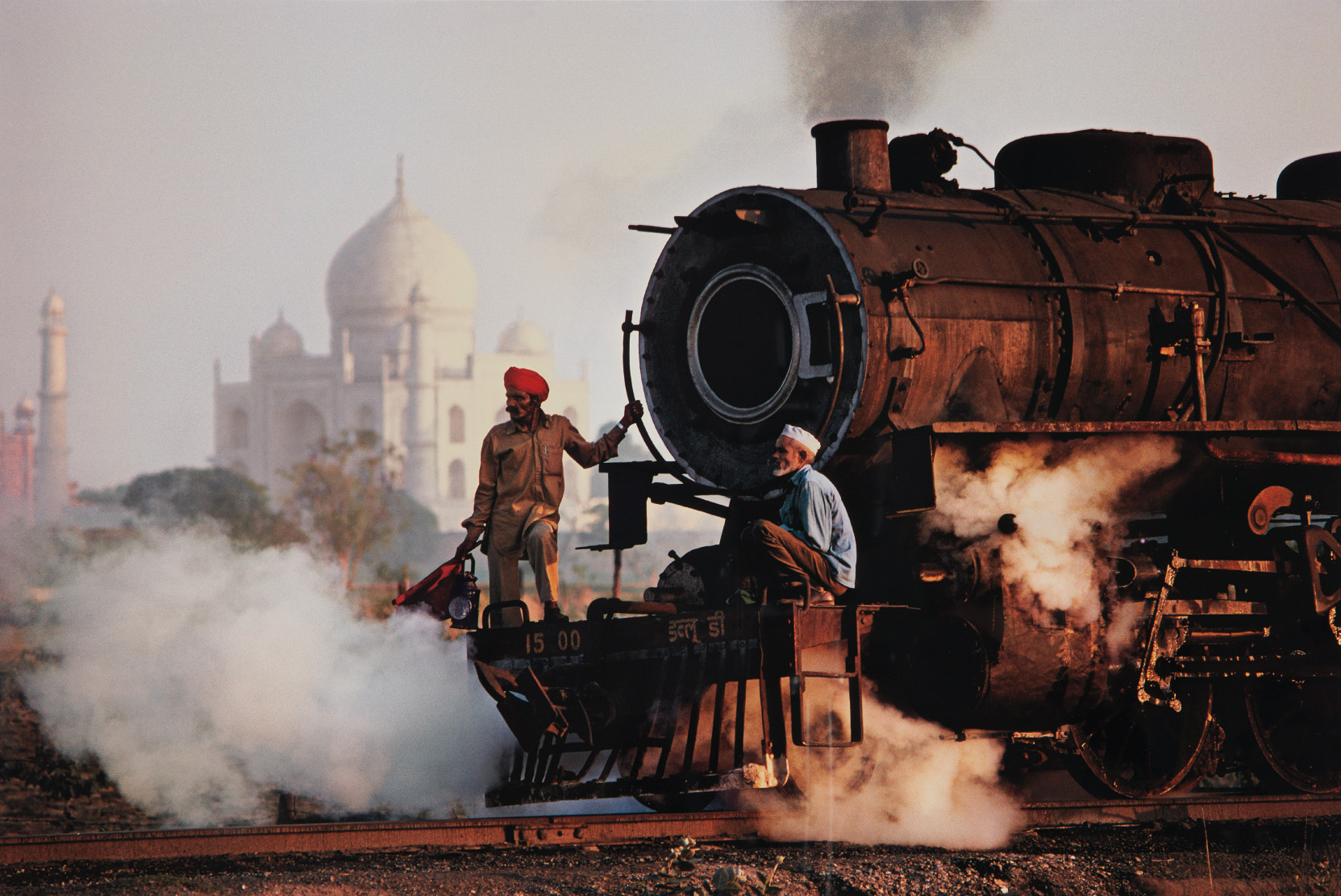
Works such as Blue City, Jodhpur present the famous cobalt cityscape of Rajasthan with a compositional precision that recalls painting more than reportage, yet they never lose their documentary grounding. Similarly, Taj and Train, Agra, in which a locomotive passes before the Taj Mahal with unhurried indifference, layers the monumental and the quotidian in a way that feels both poetic and entirely true to lived experience in India. His Boy in Mid Flight, Jodhpur captures a child suspended in a leap above rooftops, a single frame that holds both the exuberance of childhood and the textures of a specific place and time. For collectors, McCurry's work occupies a compelling position in the fine art photography market.
Steve McCurry
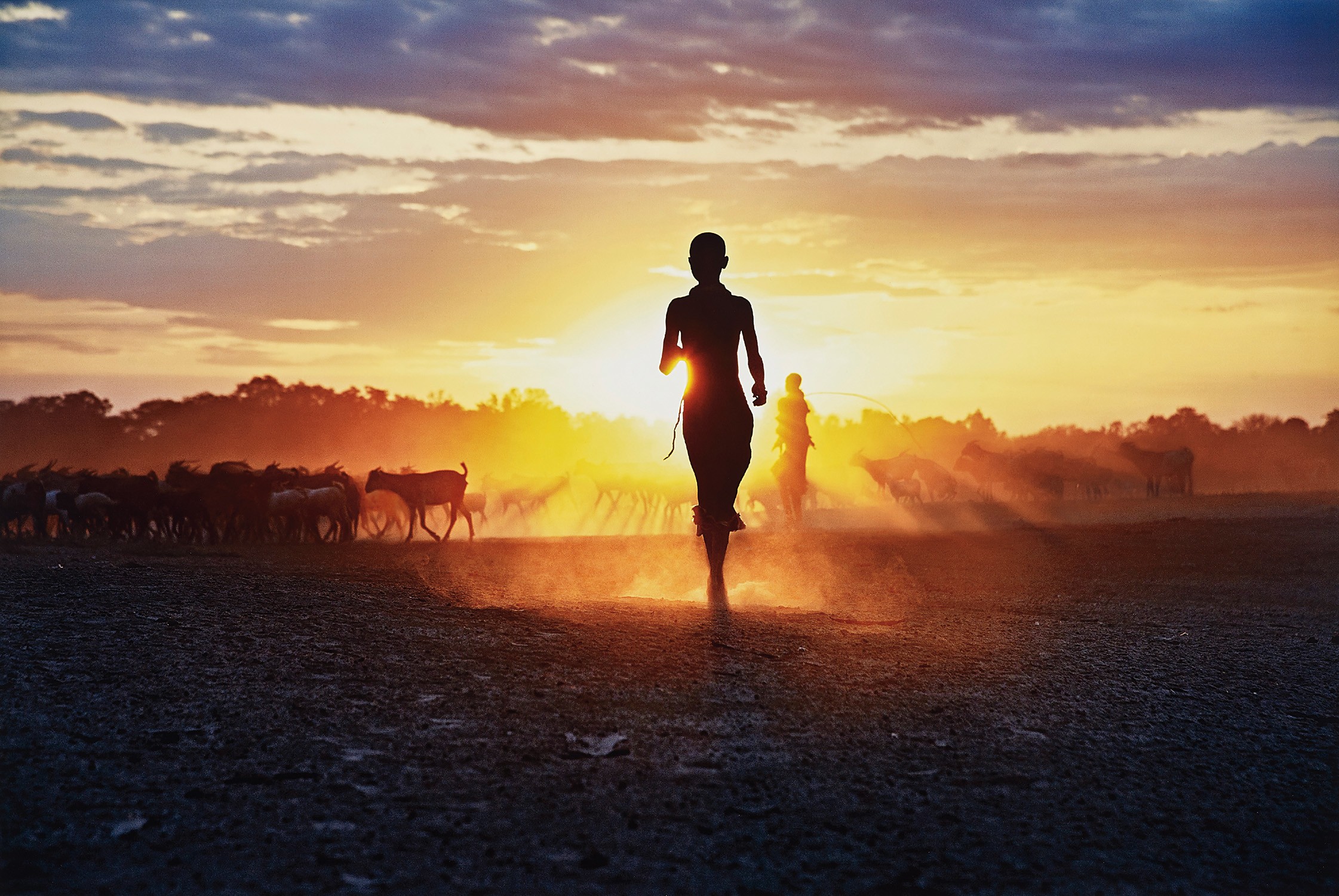
Running at Sunset, Ethiopia
His large format chromogenic prints, produced in carefully controlled limited editions, have attracted sustained attention from serious collections around the world. Peter Fetterman Gallery in Los Angeles, one of the foremost galleries specialising in humanist photography, has championed his work for many years and represents a key point of entry for collectors seeking rigorously authenticated prints. His portfolio editions, such as the India portfolio issued in a signed and numbered edition of just twenty copies, presented in red linen clamshell cases within handcrafted wooden boxes, represent the kind of considered object making that bridges the worlds of photography and the livre d'artiste. The scarcity of such editions, combined with the enduring cultural weight of his imagery, makes them among the more resilient propositions in the photography collecting market.
Collectors are advised to seek prints made closer to the time of the original negative, though McCurry's printed later works maintain strong demand when properly documented and authenticated. McCurry belongs to a lineage of humanist photographers who believe in the fundamental dignity of their subjects and the capacity of the camera to bear witness without exploitation. His natural companions in art historical terms include Sebastiao Salgado, whose monumental black and white studies of labour and migration carry a similar moral weight, and Raghu Rai, the Indian master whose decades of intimate work within the subcontinent McCurry has long admired and drawn alongside. One might also invoke the spirit of Dorothea Lange, whose Depression era portraits share with McCurry's best work that quality of making a stranger feel immediately, uncomfortably known.
Steve McCurry
Taj and Train, Agra, India
Within the Magnum tradition, his work speaks across generations to the founding belief that photography is both witness and art, never fully one without the other. The question of legacy, in McCurry's case, is already largely settled by a single image, yet to rest his contribution there would be a considerable injustice. Over more than four decades he has produced a body of work spanning conflicts in Lebanon, Cambodia, the Philippines, the Gulf War, and the aftermath of September 11, alongside sustained explorations of India, Afghanistan, Tibet, and sub Saharan Africa that amount to one of the most extensive humanist photographic archives of the late twentieth and early twenty first centuries. His photographs have been exhibited at major institutions worldwide and collected by both public museums and private enthusiasts who return to them not for their technical accomplishment alone but for the way they insist that the faces of strangers deserve our full attention.
In an era when images multiply faster than comprehension, McCurry's work stands as a reminder that slowing down, looking carefully, and allowing oneself to be moved still constitutes a radical act.
Explore books about Steve McCurry
Steve McCurry: A Life in Pictures
Steve McCurry
The Iconic Photographs
Steve McCurry
Steve McCurry: Afghanistan
Steve McCurry
Monsoon
Steve McCurry
The Face of Faith
Steve McCurry
Steve McCurry
William A. Ewing
In the Shadow of Mountains
Steve McCurry