Stan Douglas
Stan Douglas Reveals the World Anew
Artist Spotlight · The Collection Editorial
“I am interested in the way history is not over, how the past keeps coming back in different forms.”
Stan Douglas, interview with Okwui Enwezor
In the spring of 2023, the Art Gallery of Ontario mounted a landmark survey of Stan Douglas's work that drew visitors from across North America and renewed critical conversation about one of the most intellectually rigorous artists working today. The exhibition reminded audiences why Douglas has spent four decades commanding the attention of curators, collectors, and theorists in equal measure. His photographs, films, and installations do not simply document the world; they interrogate the forces that shape how we see it, remember it, and misremember it. To stand before a Douglas image is to feel the uncanny pull of a reality that is both entirely familiar and quietly, persistently strange.
Stan Douglas
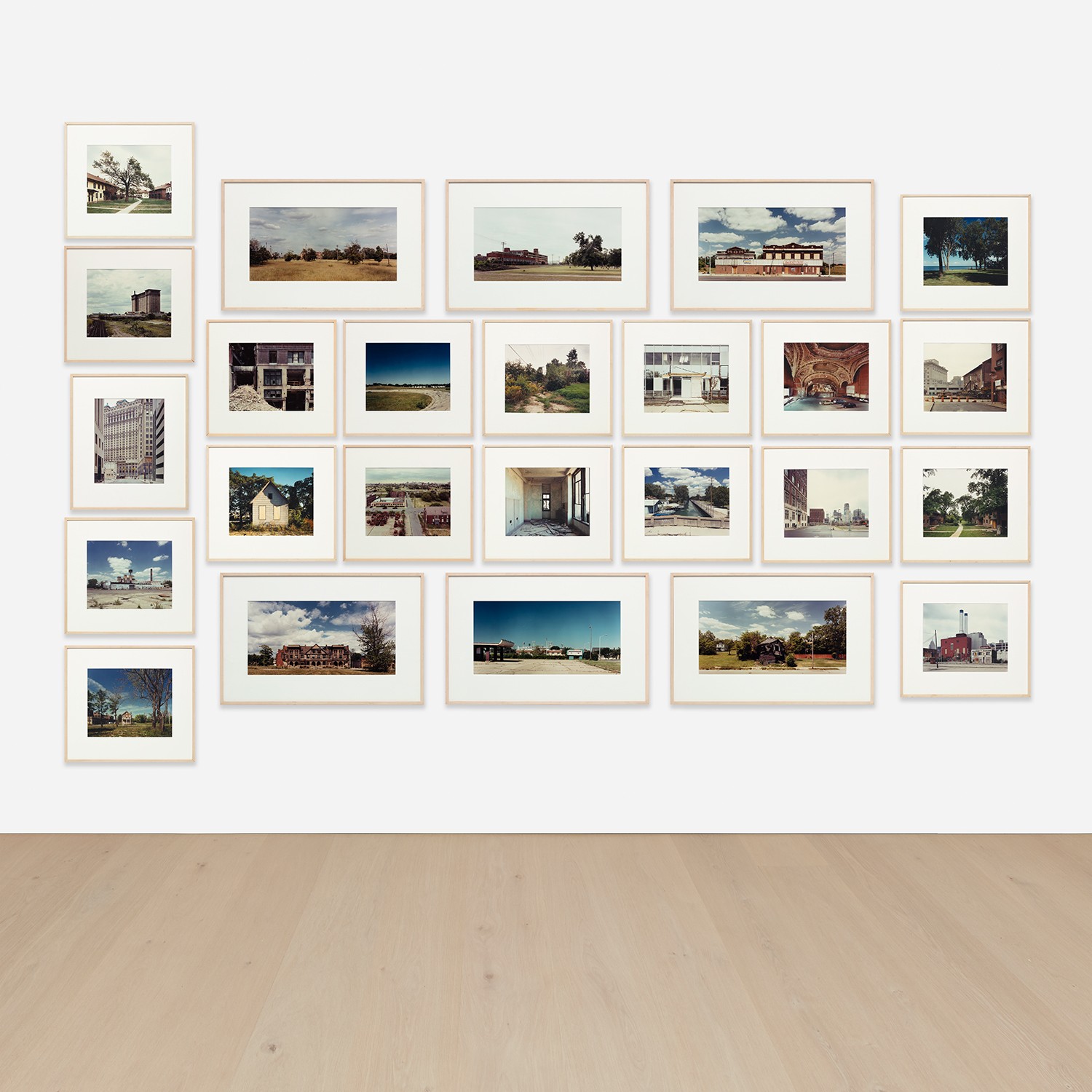
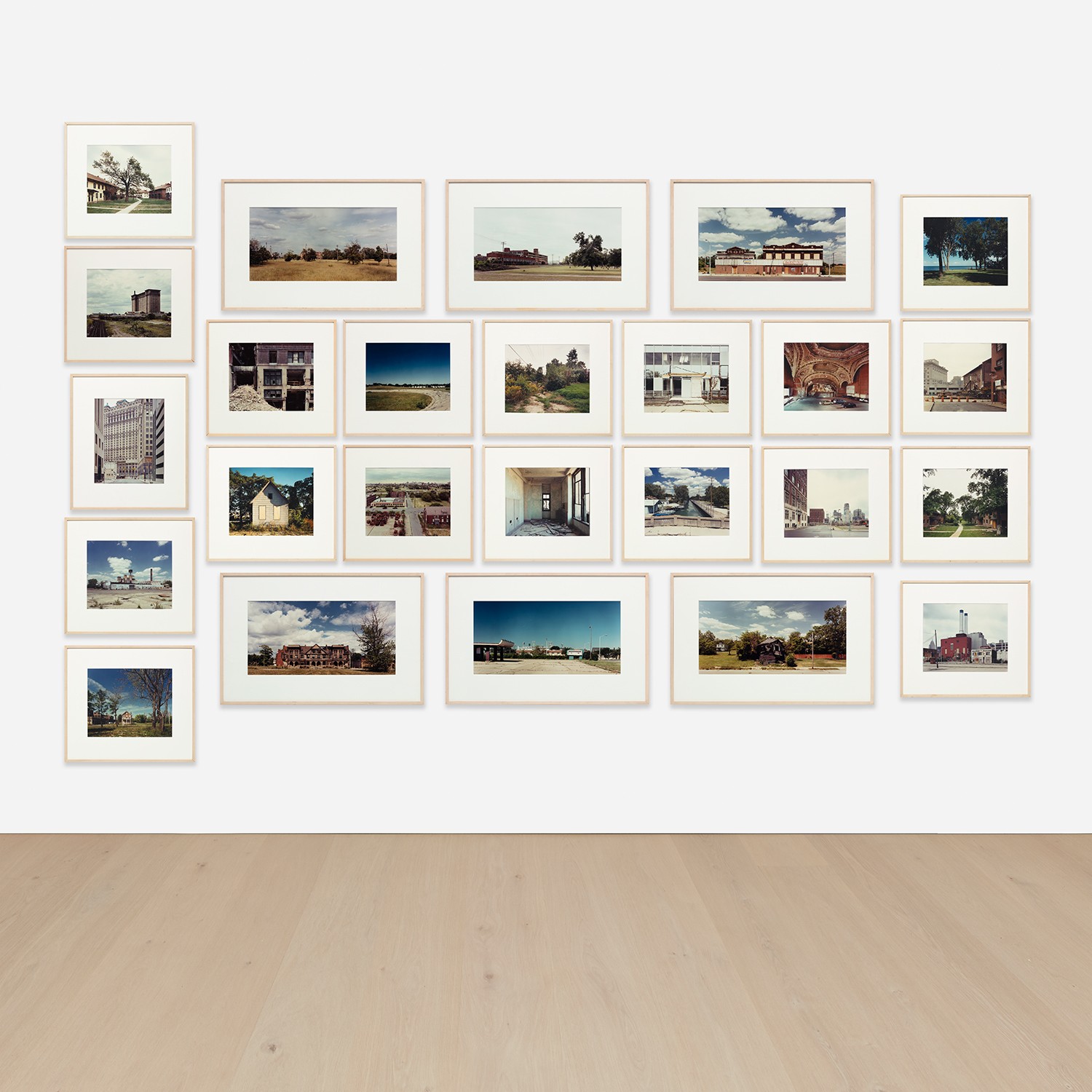
Selected Images from Detroit Photos
Stan Douglas was born in Vancouver, British Columbia, in 1960, and the city has remained central to his imagination throughout his career. He studied at the Emily Carr College of Art and Design in the early 1980s, where he encountered the conceptual and structural traditions that would define his practice. Vancouver in that era was a fertile environment for artists thinking seriously about photography, film, and media theory. Douglas absorbed those influences while also reaching outward toward the legacies of Bertolt Brecht, Samuel Beckett, and critical theory from the Frankfurt School.
This combination of local rootedness and voracious intellectual curiosity gave his work its distinctive character: formally precise, historically loaded, and emotionally resonant all at once. Through the late 1980s and into the 1990s, Douglas developed a body of work that placed photography and video in productive tension with one another. His multi channel video installations from this period, including works that drew on television formats and modernist literature, established him as a leading figure in the generation of artists who were rethinking the moving image. At the same time, he was developing his photographic practice as a distinct and powerful mode of inquiry.
Stan Douglas
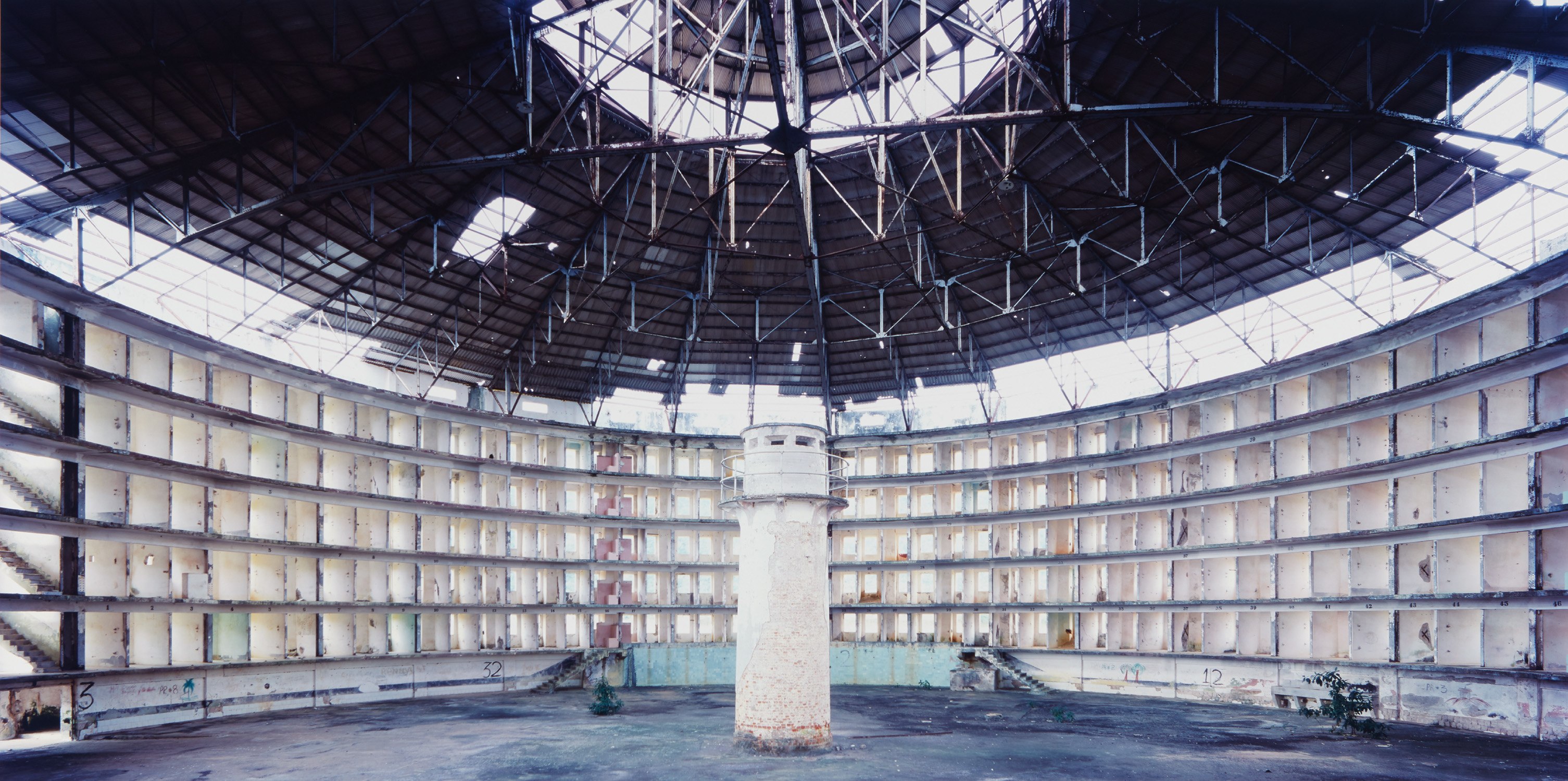
Panoptican, Isla de Pinos / Isla de la Juventud, 2005
Douglas worked with large format cameras and meticulous staging to produce images that feel like stilled moments from films that never existed, or films that exist only in cultural memory. This cinematic quality became one of his most celebrated attributes. The works that have come to define Douglas's reputation as a photographer are studies in historical layering and urban transformation. Every Building on 100 West Hastings, made in 2001, is a monumental chromogenic print that surveys a single block of Vancouver's Downtown Eastside with a panoramic sweep that recalls Ed Ruscha's Every Building on the Sunset Strip while entirely reimagining that gesture for a different city and a different social reality.
The image is a portrait of a community under pressure, rendered with such precision and stillness that it becomes something close to elegiac. It belongs to a tradition of documentary photography while also interrogating the very ethics and mechanics of that tradition. Similarly, his Detroit Photos series captures the ruins and residual architectures of a post industrial American city with a compassion that refuses both sentimentality and exploitation. The 14th floor of the Michigan Central Station, one of the most haunting images in that body of work, frames the decayed grandeur of that building with a painter's eye for light and a historian's awareness of what was lost.

Stan Douglas
Every Building on 100 West Hastings, 2001
His Panopticon, Isla de Pinos / Isla de la Juventud, made in 2005, represents another dimension of Douglas's practice: the investigation of architecture as an instrument of power. The image depicts the circular prison designed along the principles of Jeremy Bentham's panopticon, a structure that became a real and chilling emblem of surveillance and control. By choosing this subject, Douglas connects the philosophical history of discipline and observation to the specific geopolitical history of Cuba, creating an image that operates simultaneously as architecture photography, political meditation, and art historical provocation. The Malecón series, meanwhile, turns to the famous Havana seafront promenade and finds in its crumbling grandeur a stage for thinking about time, aspiration, and the complex afterlives of modernism in the developing world.
For collectors, Douglas's work offers a rare combination of visual authority and intellectual depth. His chromogenic prints, often flush mounted to aluminum or presented as honeycomb mounted panels, have a material presence that commands the rooms they inhabit. These are not works that recede into the background; they define the spaces around them. His photographs have been acquired by major institutions including the Museum of Modern Art in New York, the Tate, and the Vancouver Art Gallery, which speaks to the confidence the museum world has placed in their long term significance.
Stan Douglas
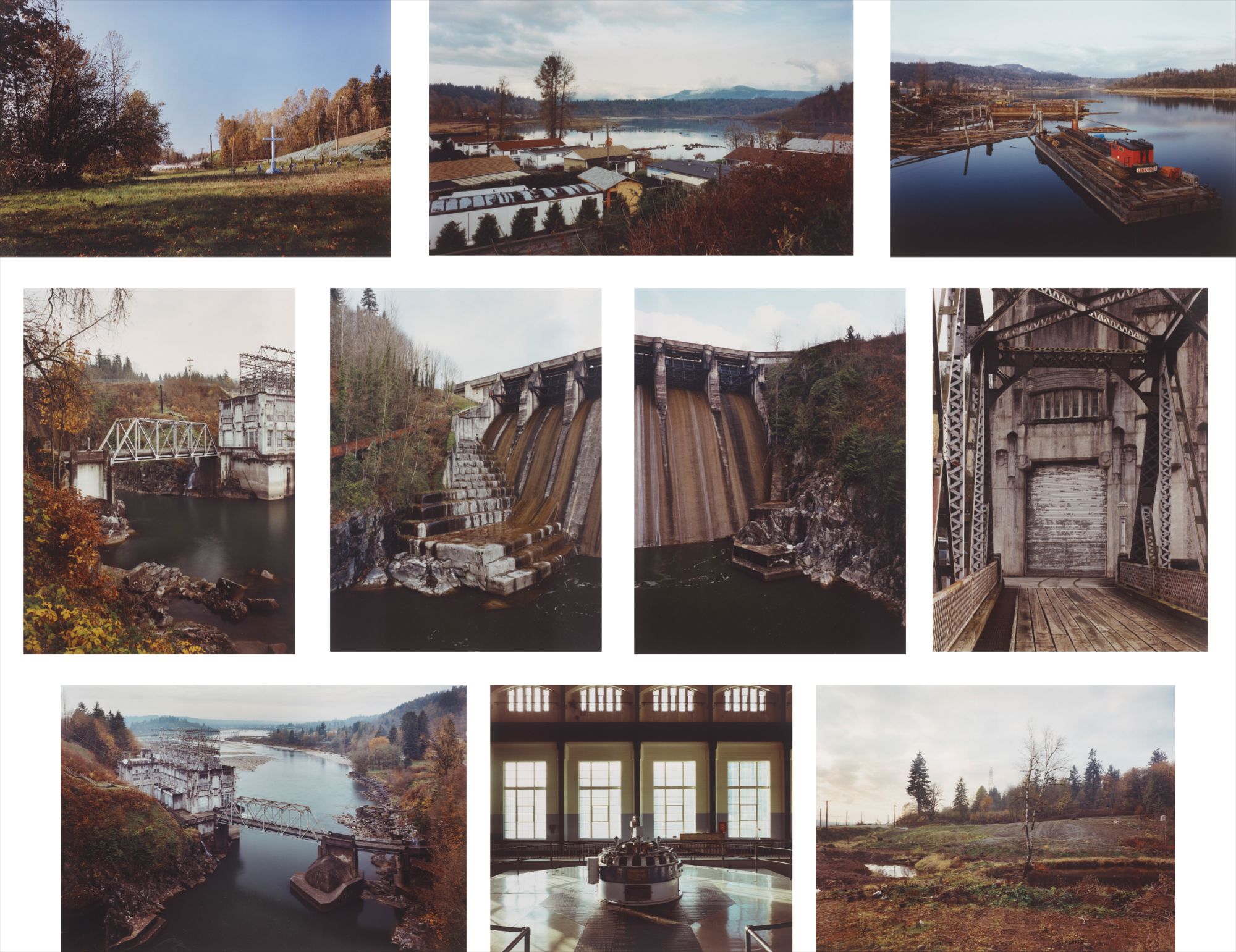
Pursuit, Fear, Catastrophe: Ruskin, B.C.
On the secondary market, his works have performed with consistency, attracting the attention of collectors who understand that serious conceptual photography of this caliber tends to appreciate not just in monetary terms but in cultural authority over time. Those drawn to the work of artists such as Andreas Gursky, Thomas Struth, Thomas Demand, and Jeff Wall will find in Douglas a practice that shares their commitment to rigorously constructed photographic imagery while bringing a distinctly Canadian and postcolonial perspective to that tradition. Douglas belongs to a generation of Vancouver based artists, including Wall and Rodney Graham, who transformed the global conversation about photography and its relationship to painting, cinema, and critical theory. But his work has always had its own particular intelligence and its own particular ethical commitments.
He is drawn persistently to the places and moments that official history tends to overlook or to romanticize without comprehending: the deindustrializing American Midwest, the colonial architectures of the Caribbean, the precarious neighborhoods of his home city. In each case, he approaches his subject with formidable technical skill and a genuine desire to understand rather than to judge. This moral seriousness is part of what makes his photographs so lasting. Stanley Douglas continues to work with the same rigorous curiosity that has defined his practice since the beginning.
His influence on younger generations of photographers and moving image artists is profound and ongoing. For collectors who want to engage with art that rewards sustained looking and sustained thinking, his work represents one of the most compelling opportunities available in contemporary photography today. To collect Douglas is to invest in a vision of the world that is more complex, more contested, and ultimately more honest than the simplified versions that surround us on every side.
Explore books about Stan Douglas
Stan Douglas
Philip Monk
Stan Douglas: Every Building on 100 West Hastings
Stan Douglas, Scott Watson
Stan Douglas: Mise en scène
Arielle Pelenc, Yves Michaud
Stan Douglas
Louise Dompierre
Stan Douglas: Subjects and Sequences
Various authors