Spanish School, late 17th Century
Spain's Golden Shadows Still Burn Bright
Artist Spotlight · The Collection Editorial
In the grand galleries of the Museo Nacional del Prado in Madrid, a quiet revolution in scholarly attention has been unfolding. Curators and collectors alike have turned renewed focus toward the painters of late 17th century Spain, a generation long overshadowed by the towering giants who preceded them. These artists, working in the decades after Velázquez and Murillo had already reshaped the visual language of the Iberian peninsula, carried forward a tradition of astonishing technical refinement and spiritual intensity. Their work now commands serious attention from institutions and private collectors who recognize that the tail end of Spain's Golden Age was not a sunset so much as a last, brilliant flare.
Spanish School, late 17th Century
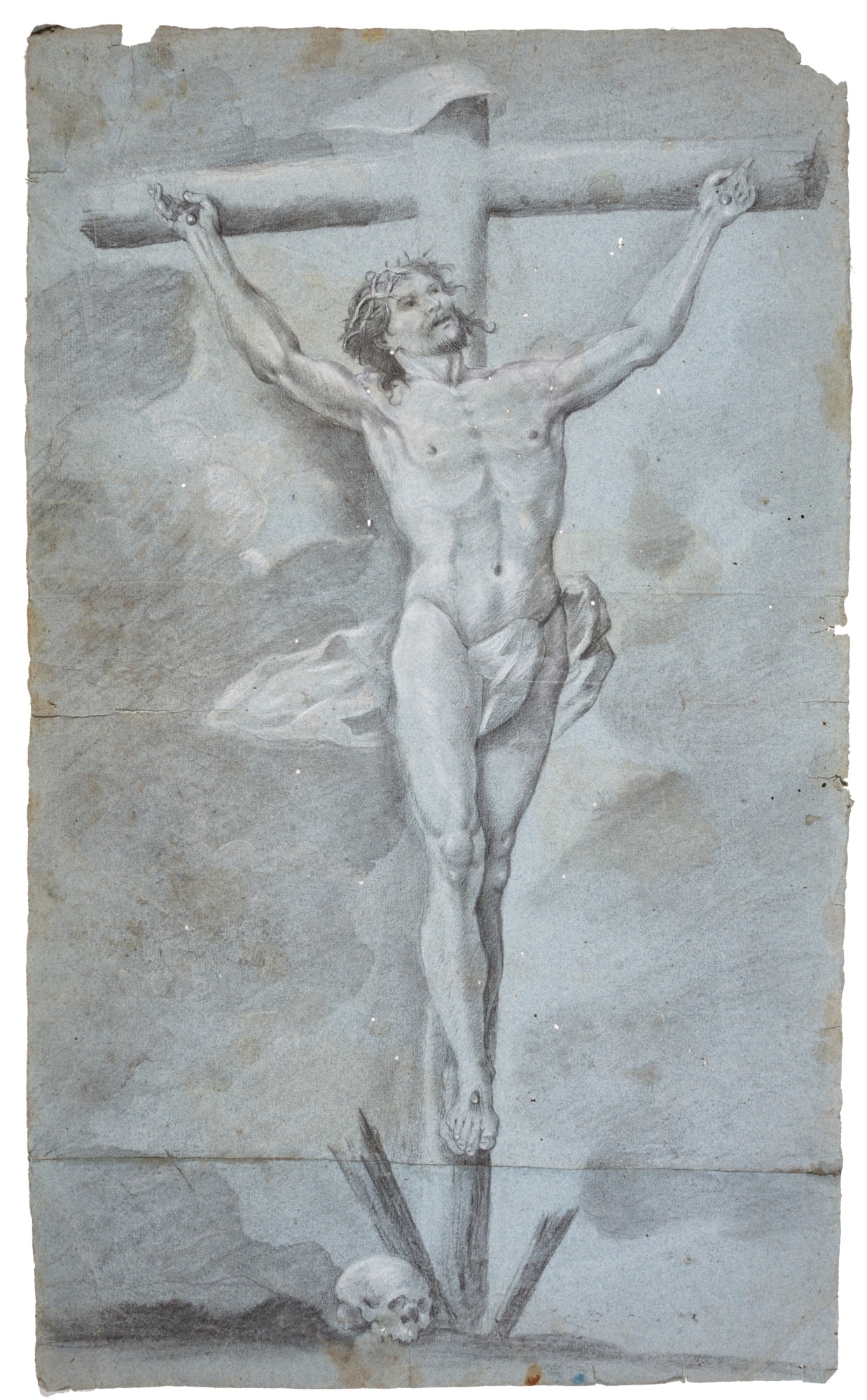
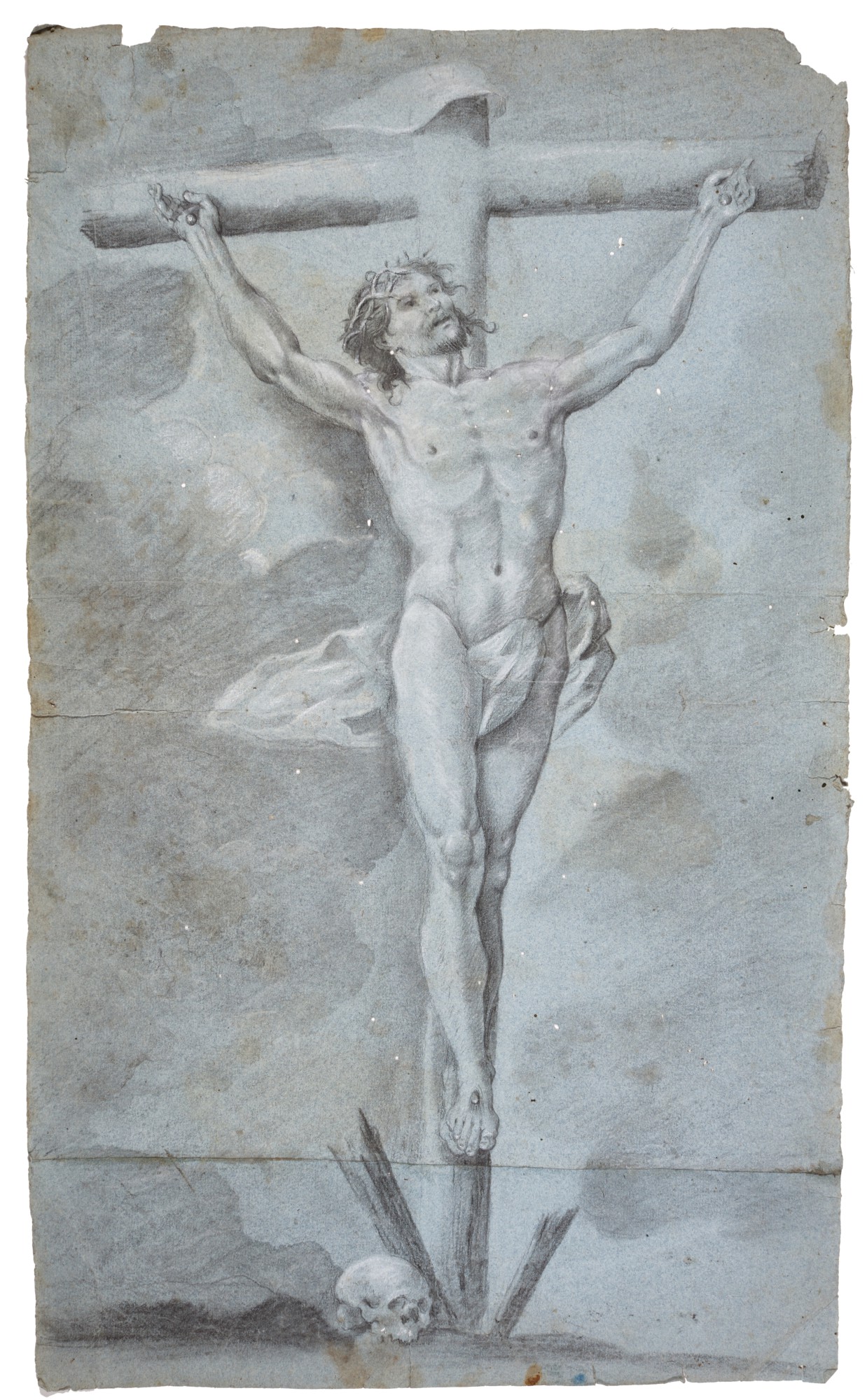
Recto: Christ on the Cross Verso: Study of a male nude, his arms raised
The designation Spanish School, late 17th century, is at once a curatorial convenience and a genuine acknowledgment of shared circumstance. These painters did not form a single movement with a manifesto or a founding figure, but they inhabited a common world. They trained in the workshops of Seville, Madrid, and Valencia, inheriting methods passed down through generations of masters who had studied in Italy, absorbed the Flemish tradition, and developed something distinctly and fiercely their own. The Counter Reformation remained a powerful force in Spanish cultural life, and the Church remained the great patron and subject of artistic production, commissioning altarpieces, devotional panels, and cycles of sacred imagery that would fill the country's cathedrals and convents for centuries to come.
The Baroque idiom that defined this moment arrived in Spain with particular force. Tenebrism, that dramatic interplay of light emerging from deep shadow, had been absorbed from Caravaggio's Italian innovations and transformed into something warmer and more psychologically complex in Spanish hands. Painters of this late Golden Age period worked within this inheritance while navigating a Spain that was economically strained, politically shifting, and yet still culturally magnificent. The reign of Carlos II, the last Habsburg monarch, brought with it a melancholic grandeur that seems almost to have infected the art of the period, lending it a depth of feeling that continues to move viewers today.
Among the works that best illuminate this tradition is the remarkable double sided drawing known as Recto: Christ on the Cross and Verso: Study of a male nude, his arms raised, executed in black and white chalk on blue paper. This work is a profound document of artistic practice at its most intimate and searching. The recto presents the central image of Christian devotion with spare, searching lines, the figure of Christ rendered with anatomical seriousness and spiritual gravity. Turn the sheet over and the verso reveals the studio practice behind the devotional image: a male nude, arms lifted, the pose that would inform the crucified figure on the other side.
The drawing collapses the sacred and the studied into a single object, reminding us that for these painters, faith and craft were not separate concerns but two dimensions of a single vocation. The use of blue paper is itself significant. Carta azzurra, imported from Venice and widely used in the 17th century, provided a mid tone ground that allowed artists to work simultaneously in light and shadow, applying white chalk highlights and dark chalk contours with equal precision. The choice speaks to a sophisticated awareness of European practice and a deliberate approach to the study of the human body as the foundation of all pictorial art.
Drawings of this kind were not peripheral documents but central to the workshop process, serving as models, records, and proofs of mastery. For collectors approaching this period, the appeal is layered and genuine. Works on paper from late 17th century Spain are among the more accessible points of entry into the Golden Age tradition, offering a directness of touch and an intimacy of scale that finished paintings on canvas cannot match. The market for Spanish Old Masters has seen sustained interest from major auction houses including Christie's and Sotheby's, where drawings attributed to the Spanish School have appeared with increasing frequency over the past two decades.
Collectors are drawn not only to the aesthetic qualities of these works but to their documentary value, their evidence of how the greatest tradition in European religious painting was actually made, one careful mark at a time. The artists who fall under this collective designation share lineage with some of the most celebrated names in Western art. Francisco de Zurbarán, whose austere devotional canvases anticipate many of the qualities found in late 17th century Spanish work, and Bartolomé Esteban Murillo, whose luminous later paintings bridge the middle and late periods of the Golden Age, are the essential predecessors. Juan de Valdés Leal, working in Seville through the 1670s and 1680s, represents the most dramatic expression of late Baroque sensibility in Spain, his paintings charged with an almost theatrical urgency.
Claudio Coello, who served as court painter to Carlos II and completed the magnificent sacristy painting at El Escorial in 1690, stands as perhaps the most distinguished individual master of the final Golden Age generation. The legacy of Spanish School painters of the late 17th century is not diminished by their collective rather than individual fame. If anything, understanding them as a school, as a community of practice sharing methods, subjects, and spiritual commitments, deepens the appreciation of what any single work among them represents. Each drawing, each canvas, is the product of a living tradition, a way of seeing and making that stretched back to the great religious painters of the 16th century and forward, in transformed ways, into the 18th century masters who would follow.
Goya himself, the towering figure who would reinvent Spanish painting in the following century, was trained within the traditions these painters maintained. To collect from this period is to participate in one of the great continuities of Western art history. The works themselves ask to be looked at slowly, with the patience that their makers brought to their creation. In the crossing of light and shadow on blue paper, in the careful study of a raised arm that becomes the arm of Christ, there is a lesson in how art at its most serious operates: not through spectacle alone, but through sustained and loving attention to the visible world and what it might be made to mean.
Explore books about Spanish School, late 17th Century
Spanish Painting from the Seventh to Nineteenth Century
August L. Mayer
Diego Velázquez
Carl Justi
El Greco to Goya: Painting in Spain
Michael Levey
Spanish Baroque Painting
José López-Rey
Murillo: Spanish Baroque Painter
David Davies and Enrique Valdivieso
The Golden Age of Spanish Painting
Jonathan Brown