Sorel Etrog
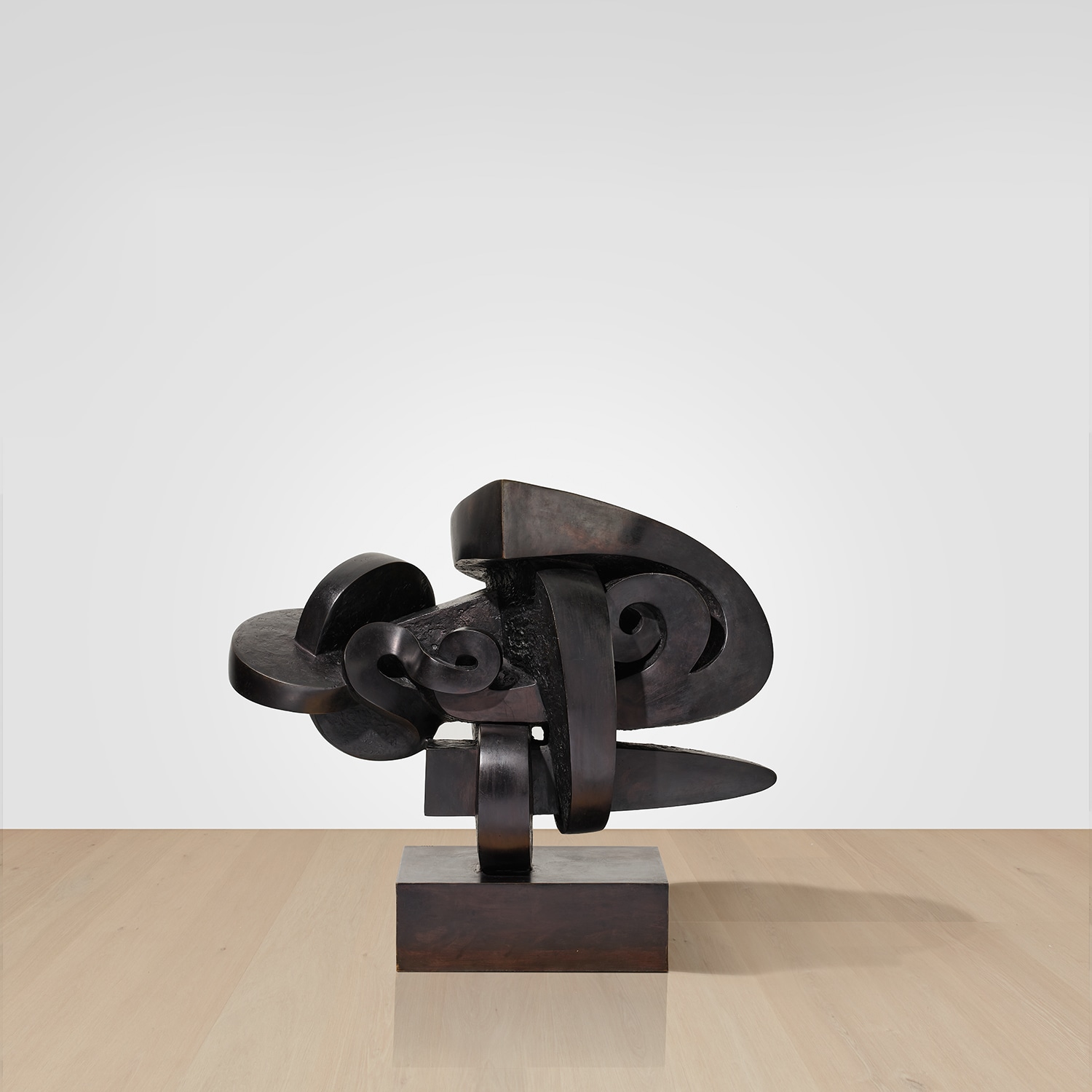
Sorel Etrog: The Sculptor Who Dreamed Beautifully
Artist Spotlight · The Collection Editorial
There is a bronze figure standing in the collection of the Art Gallery of Ontario that stops visitors mid stride. Cast with surpassing confidence, interlocking forms rise from the base in a language that feels ancient and urgently contemporary at once. It belongs to Sorel Etrog, a sculptor whose career spanned six decades, whose friendships included Samuel Beckett and Marshall McLuhan, and whose work still carries the kind of physical and emotional charge that reminds us why bronze endures. To encounter Etrog for the first time is to feel that you have always known his shapes, that they were waiting somewhere in memory before you arrived.
Sorel Etrog
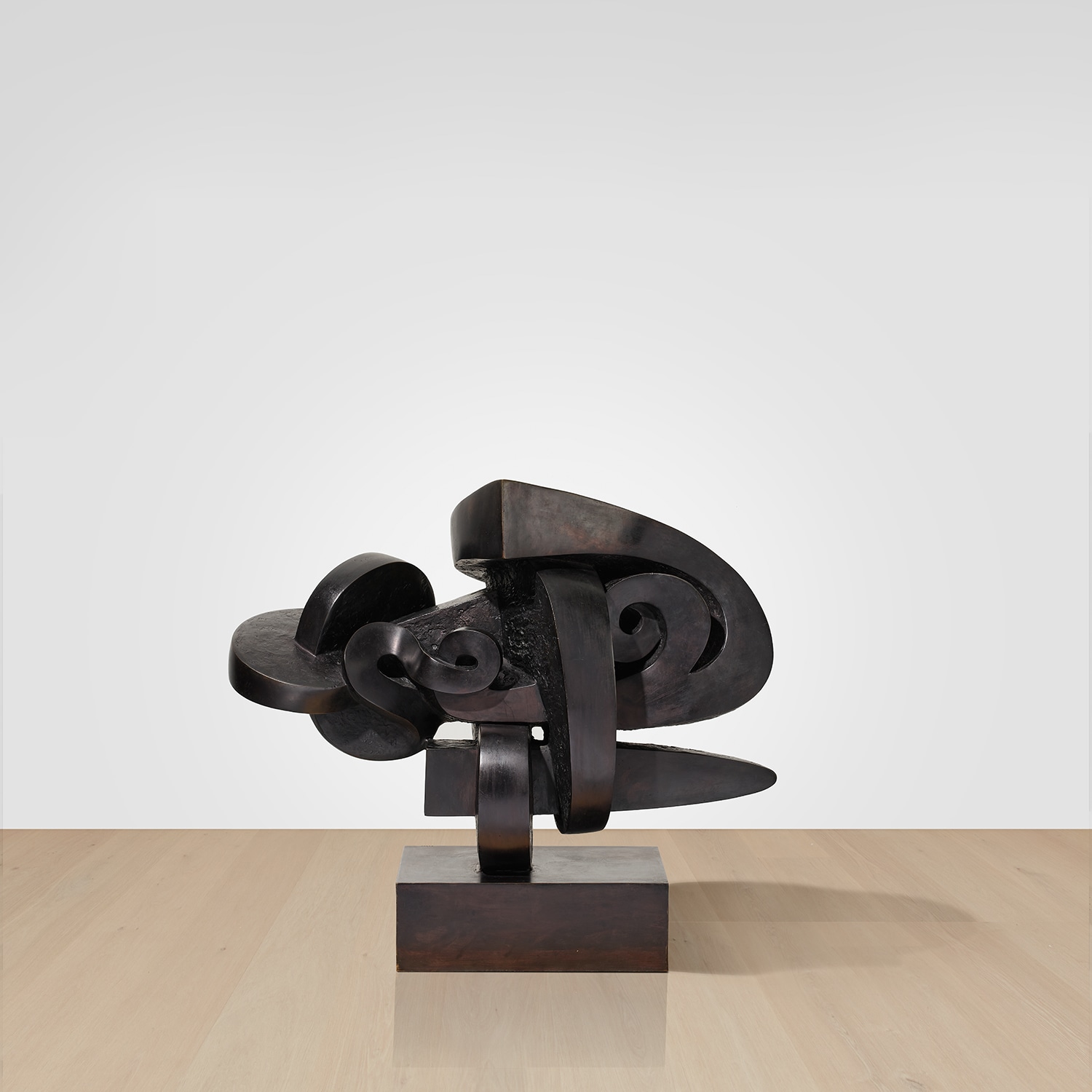
War Remembrance, 1961
Etrog was born in Iași, Romania in 1933, into a world that would soon be torn apart by war. The years of the Second World War marked his childhood with a severity that never fully left his imagination, and that would resurface decades later in works of solemn, elegiac power. He spent time in Israel in his youth, studying at the Tel Aviv Museum of Art school in the early 1950s, an experience that introduced him to the formal possibilities of sculpture and set him on a path of serious artistic inquiry. In 1958 he emigrated to Canada, settling in Toronto, and it was there that his mature voice began to find itself in metal and form.
The move to Canada proved to be transformative in the deepest sense. Toronto in the late 1950s and 1960s was a city awakening to its own cultural ambitions, and Etrog arrived at precisely the right moment to help shape what Canadian modernism could become. He was taken up by the Jerrold Morris International Gallery in Toronto, and his reputation grew quickly on both sides of the Atlantic. By the early 1960s he was exhibiting internationally, showing in New York and Europe, and earning the attention of critics who recognised in his work a genuinely original contribution to post war sculpture.
Sorel Etrog
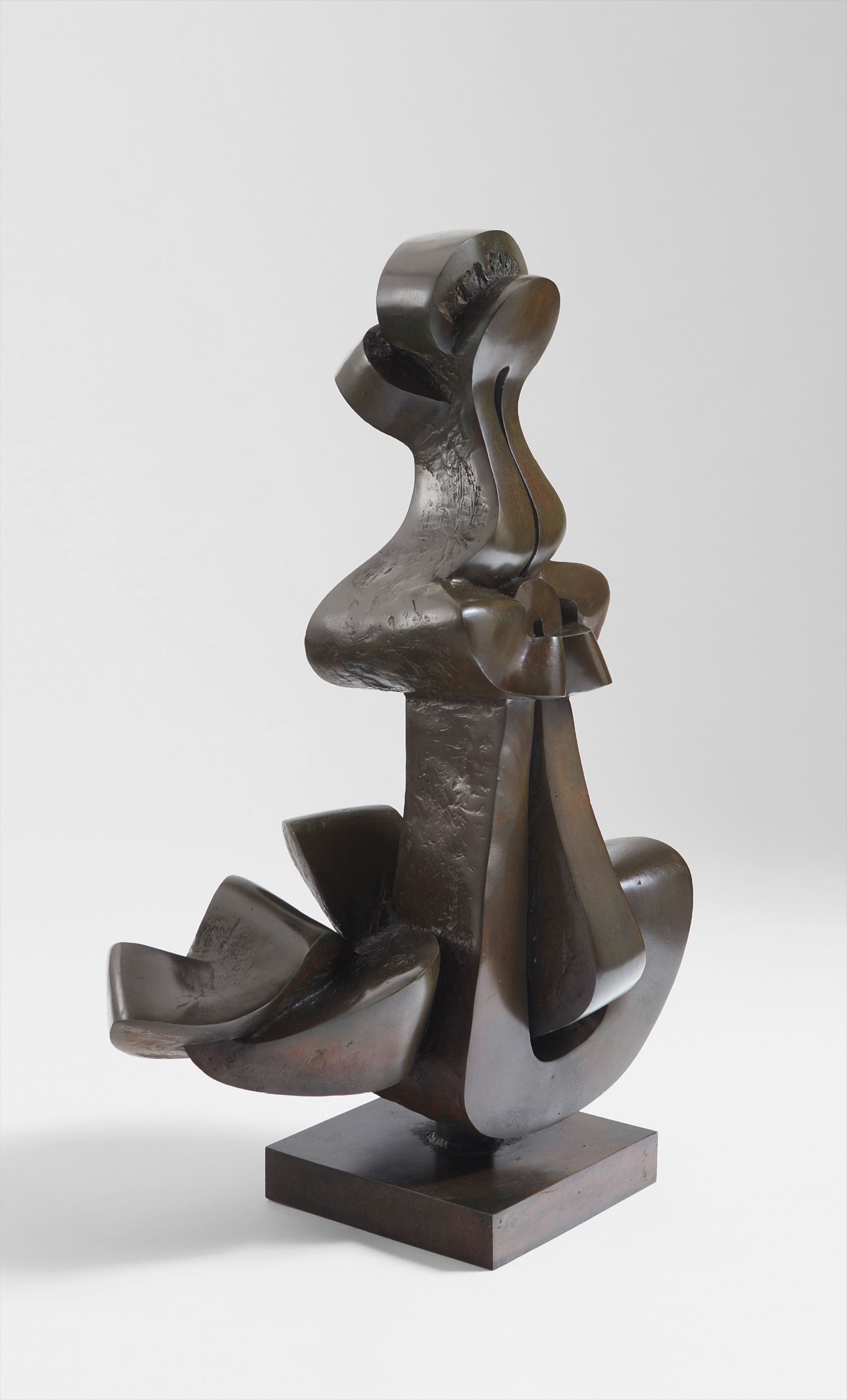
La Mère, 1962
His friendship with McLuhan deepened his thinking about communication, technology, and the human body, ideas that would thread through his work for the rest of his life. The works from the early 1960s remain among the most searching of his entire output. War Remembrance, cast in bronze in 1961, carries the weight its title promises: the forms press against one another with a tension that speaks of grief and endurance without resorting to narrative or sentimentality. It is a work that asks the viewer to feel rather than to read, and its emotional directness is wholly characteristic of Etrog at his finest.
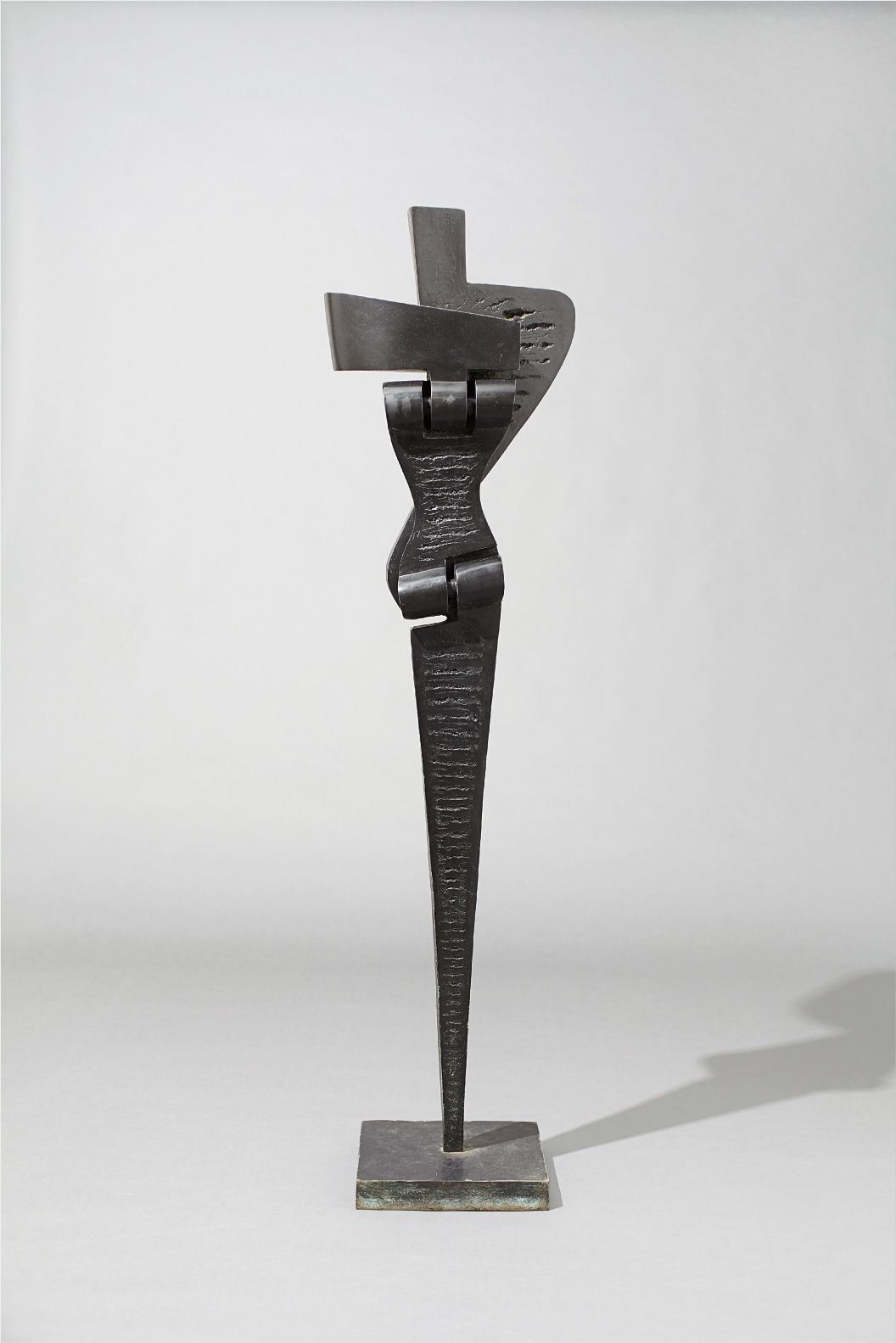
La Mère, completed in 1962, approaches the figure of motherhood with a tenderness that is structural as much as emotional, the forms folding inward as if to protect something fragile and essential. These early bronzes established Etrog as a sculptor of genuine seriousness, one whose formal intelligence was always in service of human feeling. His Homage to Nijinsky, cast in bronze with a distinctive black patina, stands among his most celebrated single works. Vaslav Nijinsky, the legendary dancer whose physical genius redefined movement in the early twentieth century, was a subject ideally suited to Etrog's sensibility.
Sorel Etrog
Homage to Nijinsky
The sculptor was fascinated by the relationship between the body and its limits, between form frozen in time and the memory of motion. In this work, the black patina deepens the sense of drama and myth, giving the surface a gravity that suits its subject perfectly. It is a piece that collectors and curators have long considered one of the key statements of his career. Etrog was not content to work in sculpture alone.
He wrote poetry, made films, and maintained an intellectual life of remarkable breadth. His friendship with Samuel Beckett produced a genuine creative exchange: Beckett wrote a poem to accompany a portfolio of Etrog's images, a collaboration that speaks volumes about the esteem in which the sculptor was held by one of the twentieth century's most demanding literary minds. This willingness to move between disciplines, to think of sculpture as part of a larger conversation about language and meaning, gave Etrog's practice a richness that purely formal accounts of his work sometimes fail to capture. For collectors approaching Etrog's work today, the bronzes of the 1960s represent the clearest entry point into a practice of lasting importance.
Works from this period combine formal mastery with biographical and historical resonance in a way that rewards sustained attention. The black patina works, including Homage to Nijinsky, are particularly sought after for the way the surface treatment enhances the sculptural drama of the underlying form. Etrog belongs to a generation of post war sculptors that includes Lynn Chadwick, Germaine Richier, and Étienne Martin, artists who shared his belief that the human figure, however abstracted, remained the central subject of modern sculpture. Placing his work in that international company is not a gesture of inflation but a statement of historical accuracy.
Etrog received the Order of Canada in 1995, a recognition that placed him among the country's most distinguished cultural figures, and his work is held in major public collections across Canada, the United States, and Europe. He continued to work until the last years of his life, dying in Toronto in 2014 at the age of eighty. His legacy is that of an artist who arrived in a country not yet sure of its own cultural identity and helped, through the force of his imagination and the quality of his craft, to give that identity genuine shape. To collect Etrog is to participate in a story that connects wartime Romania to the Toronto waterfront, Samuel Beckett's Paris to the art galleries of New York, the ancient tradition of bronze casting to the most urgent questions of what it means to be human in the modern world.
There are few sculptors of his generation whose work remains so alive, so present, so unfinished in the best possible sense.