Sir Frank Bowling
Frank Bowling: Color, Place, and Pure Feeling
Artist Spotlight · The Collection Editorial
“I am an abstract painter. I have always been interested in what painting can do beyond illustration.”
Frank Bowling, Tate interview
In 2019, Sir Frank Bowling became the first Black artist to be elected a Royal Academician in the full membership category of the Royal Academy of Arts in London, a moment that felt both long overdue and genuinely electric. That same year, Tate Britain mounted a landmark retrospective of his work, bringing together paintings spanning six decades and confirming what a generation of devoted collectors and curators had long understood: Bowling is one of the most important abstract painters working in the English language tradition. The exhibition drew enormous crowds and placed Bowling's luminous, layered canvases in direct conversation with the history of British modernism, a history he had helped to write while simultaneously expanding its borders beyond recognition. Frank Bowling was born in 1934 in Bartica, British Guiana, now Guyana, and grew up in Georgetown before making his way to London in the early 1950s.
Sir Frank Bowling
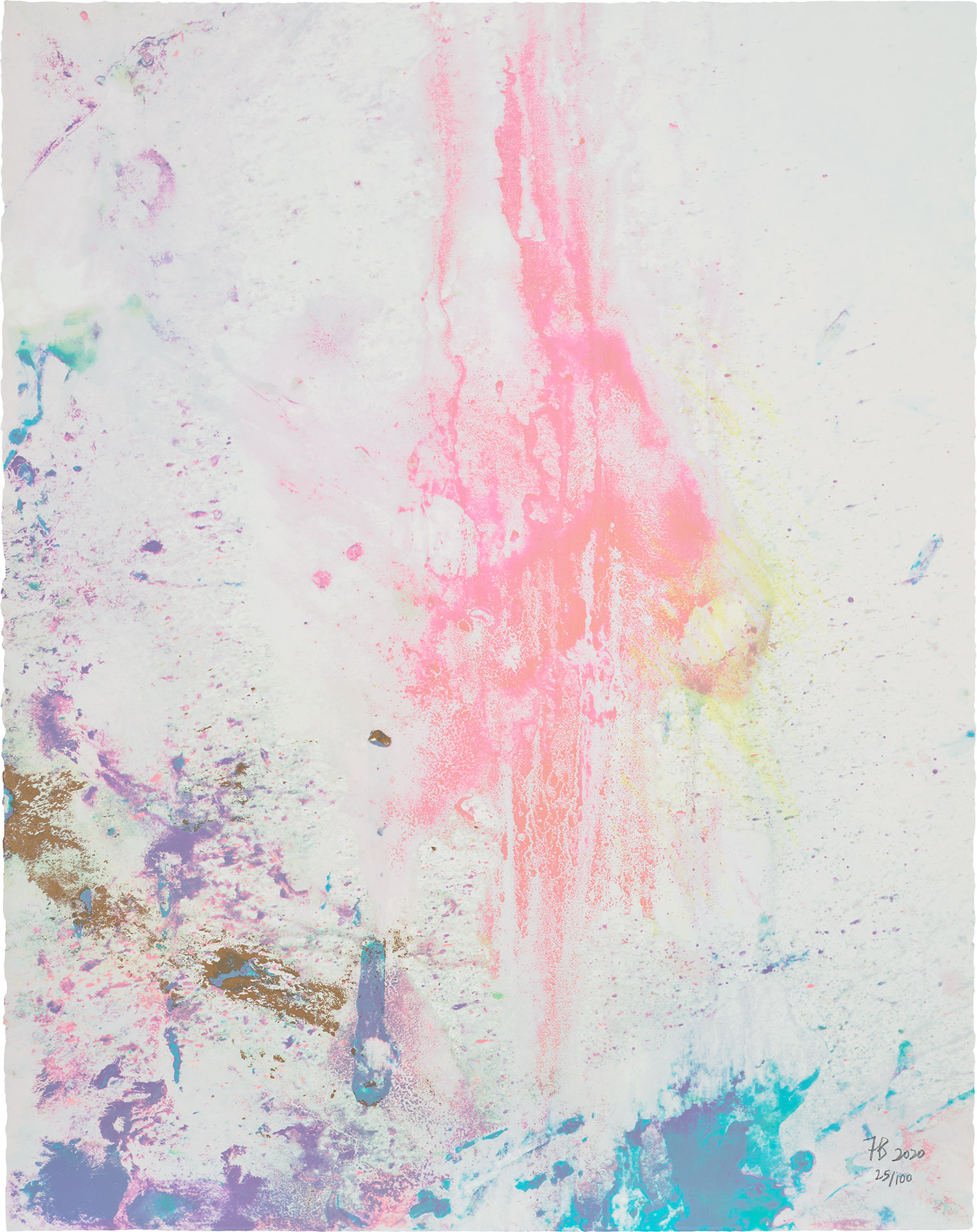
As If Eleven, from Tate Modern 21 Years Print Portfolio
He studied at the Royal College of Art, graduating in 1962, where he won the Silver Medal and competed fiercely with a cohort that included David Hockney. That rivalry, documented in interviews and institutional histories, speaks to the seriousness and ambition Bowling brought with him from the very beginning. He arrived not as a peripheral figure but as a contender, and the London art world, for all its complicated welcomes, recognized his talent. In the 1960s Bowling moved between London and New York, and that transatlantic life proved formative in every sense.
In New York he encountered the Color Field painters directly, absorbing the influence of Helen Frankenthaler, Morris Louis, and Kenneth Noland while developing his own distinct relationship to poured and stained pigment. He befriended the critic Clement Greenberg, who championed Color Field abstraction and whose ideas Bowling engaged with seriously, though never uncritically. What set Bowling apart from his American peers was his insistence on bringing the weight of biography, geography, and the Caribbean diaspora into an abstract idiom that many believed should remain purely formal. He proved that those things were never in conflict.
Sir Frank Bowling
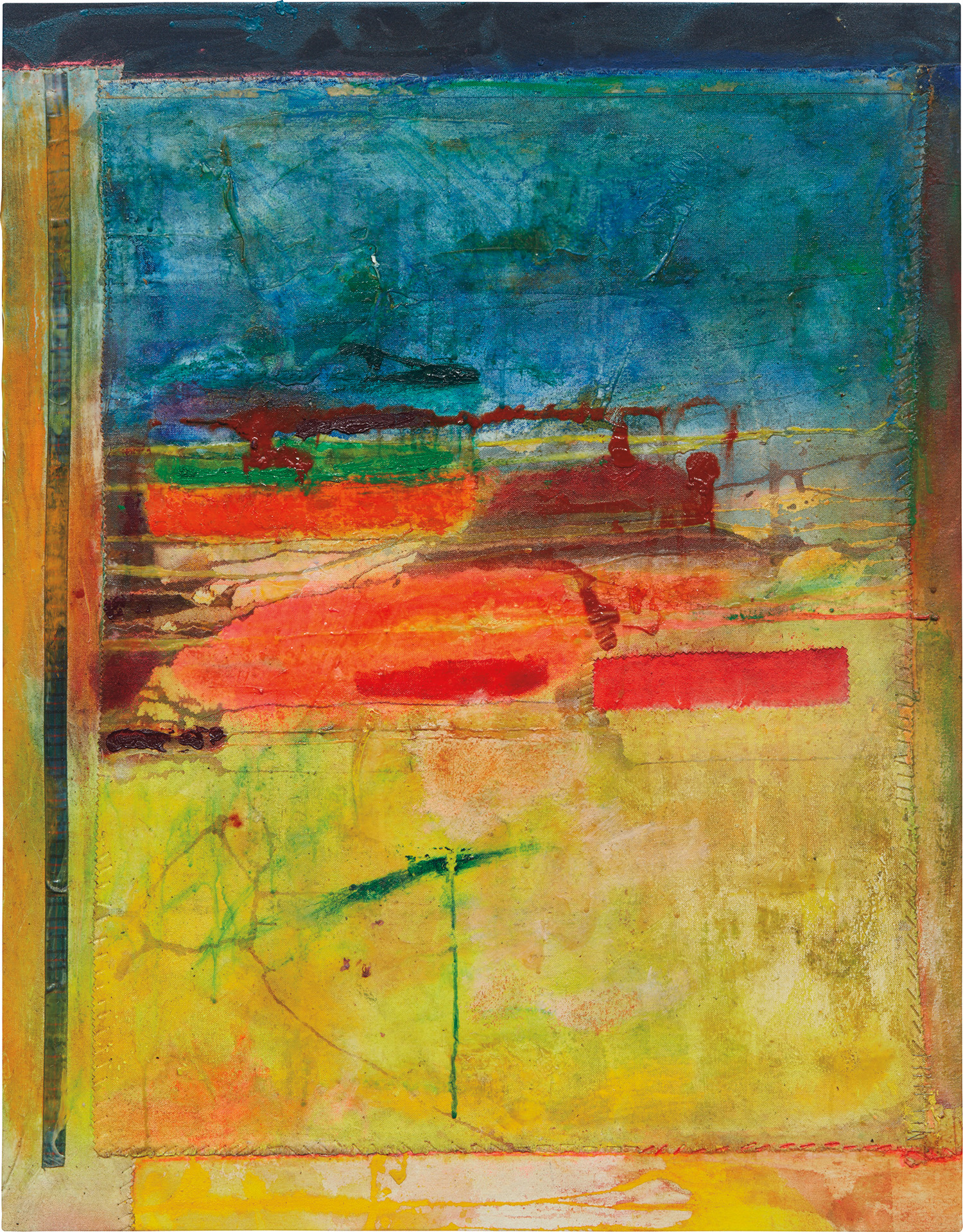
Mooring, 2008
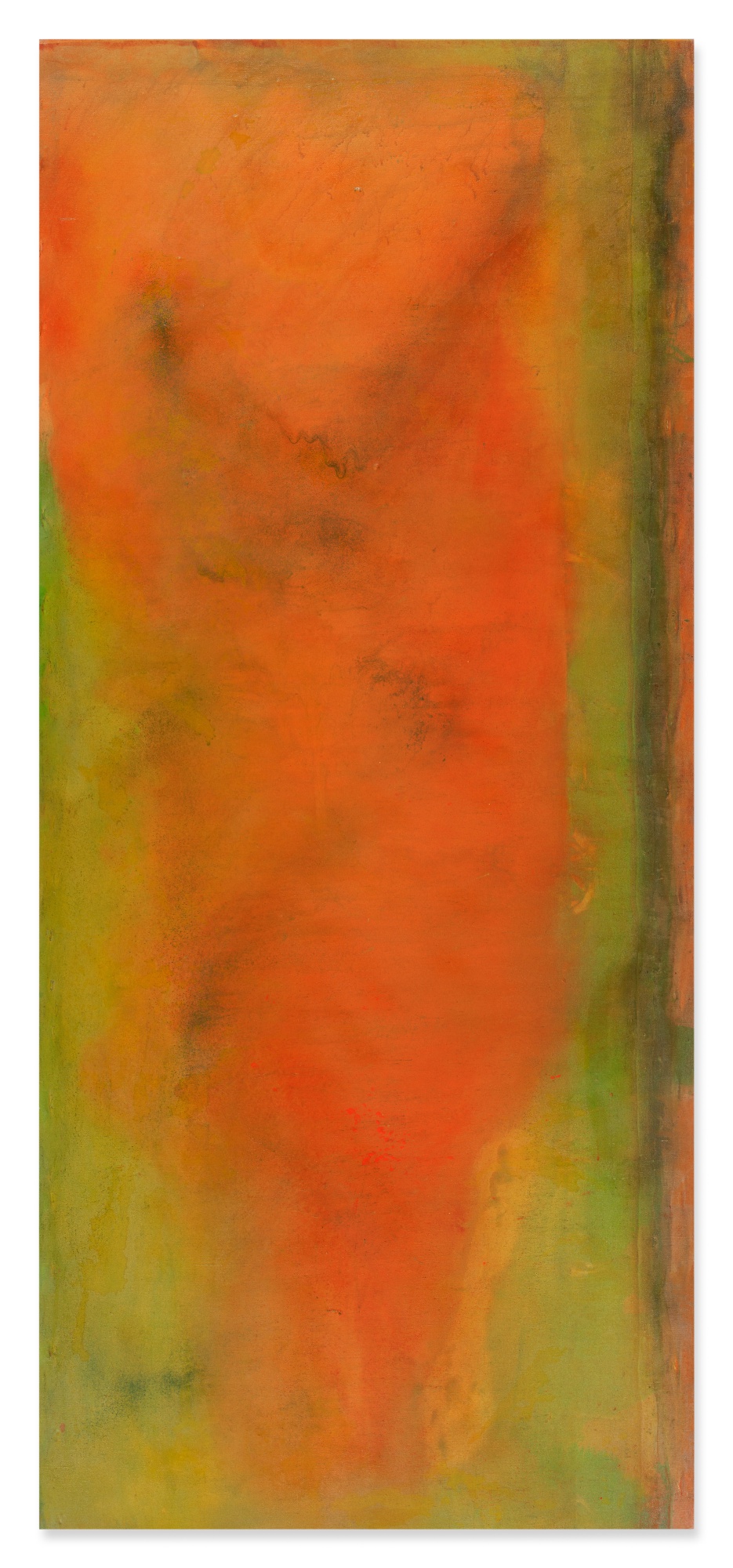
The map paintings of the late 1960s and early 1970s represent one of the most startling breakthroughs in postwar abstraction. Works from this period incorporate silkscreened outlines of South America, Africa, and the Caribbean into fields of poured acrylic color, fusing political geography with lyrical painterly gesture. The map is never merely illustrative: it dissolves into the paint, becomes almost vestigial, as if place is something felt rather than charted. "Sinon," from 1974, exemplifies the period's richness, its surface alive with shifting planes of color that seem to hold the light differently depending on where you stand.
“Color is my subject. It always has been. Everything else follows from that.”
Frank Bowling
These works anticipated by decades the mainstream art world's engagement with diaspora, postcolonial identity, and the politics of representation. Bowling's practice continued to evolve through the 1980s and 1990s in ways that rewarded patient looking. He began incorporating collage elements, polyurethane foam, acrylic gel, and found objects into the surface of his canvases, building up richly encrusted fields that carry physical as well as optical weight. "Simon Helps," from 1986, is a compelling example of this phase, its surface a complex accumulation of material that feels simultaneously archaeological and alive.
Sir Frank Bowling
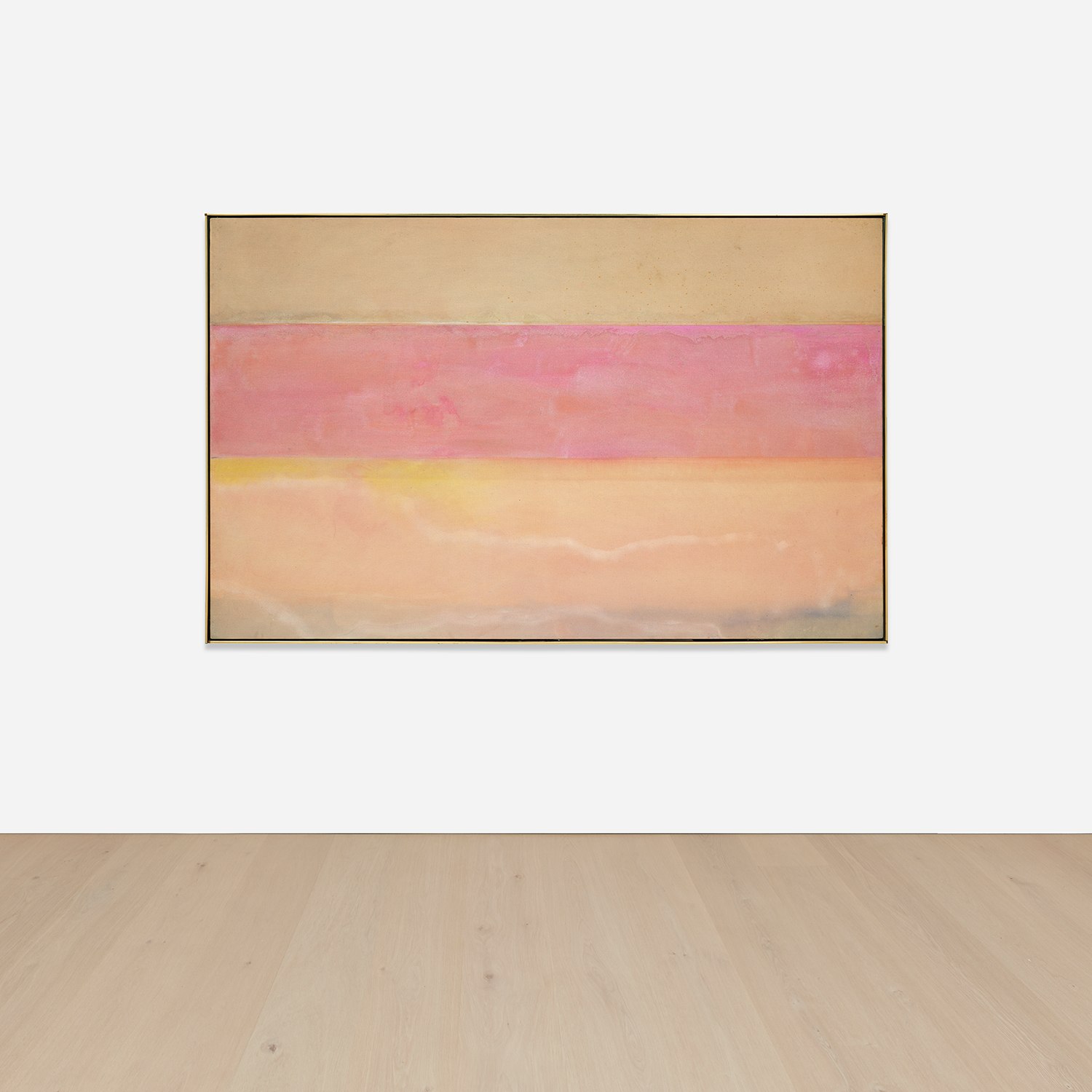
For JJ... New Life
"Mooring" from 2008 demonstrates his continued mastery of mixed media on canvas, the title itself suggesting anchorage, connection, and the gentle pull of memory. Works such as "Pondlife" from 2010 and "For JJ... New Life" show an artist who never stopped taking risks, whose later canvases are as exploratory and formally daring as anything from his early career. From a collecting perspective, Bowling's market has strengthened considerably over the past decade, tracking the broader critical reappraisal of artists whose contributions were underrecognized during their most productive years.
Works on canvas from the map painting period and the textured material paintings of the 1980s command the most serious attention at auction, while prints such as "Towards Crab Island," the 2018 digital pigment print published by Hales Gallery in London, and his contribution to the Tate Modern 21 Years Print Portfolio offer more accessible entry points for collectors building thoughtfully. Hales Gallery has represented Bowling for many years and remains a key resource for understanding both the available market and the broader arc of his practice. Christie's, Sotheby's, and Bonhams have all handled significant Bowling works in recent years, and prices have risen steadily as institutional validation has accumulated. To place Bowling properly within art history is to understand him in relation to several distinct traditions at once.
Sir Frank Bowling
Sinon, 1974
He shares with his Color Field peers a commitment to the emotional and perceptual power of color itself, to the idea that a painting can move you before you understand why. He belongs alongside Frank Stella and Jules Olitski in any serious survey of postwar abstraction, while also standing in a different relationship to that survey because his biography and preoccupations expand what abstraction is understood to be capable of saying. Among British painters, comparisons to Howard Hodgkin are natural and productive: both artists made color carry private feeling, both were recognized late by major institutions, and both ultimately received the full honors their careers had long warranted. Bowling's legacy is still being written, which is part of what makes collecting his work feel urgent rather than merely historical.
He was knighted in 2020, a recognition that arrived alongside renewed scholarly attention and a widening international audience. The questions his work poses about identity, belonging, and the relationship between lived experience and abstract form are questions that feel more relevant today than they have at any point since he first posed them in the 1960s. To live with a Bowling painting is to live with something genuinely generative: a surface that changes with the light, a composition that rewards continued looking, and a sensibility that is warm, rigorous, and unmistakably its own.