Sir Cedric Morris
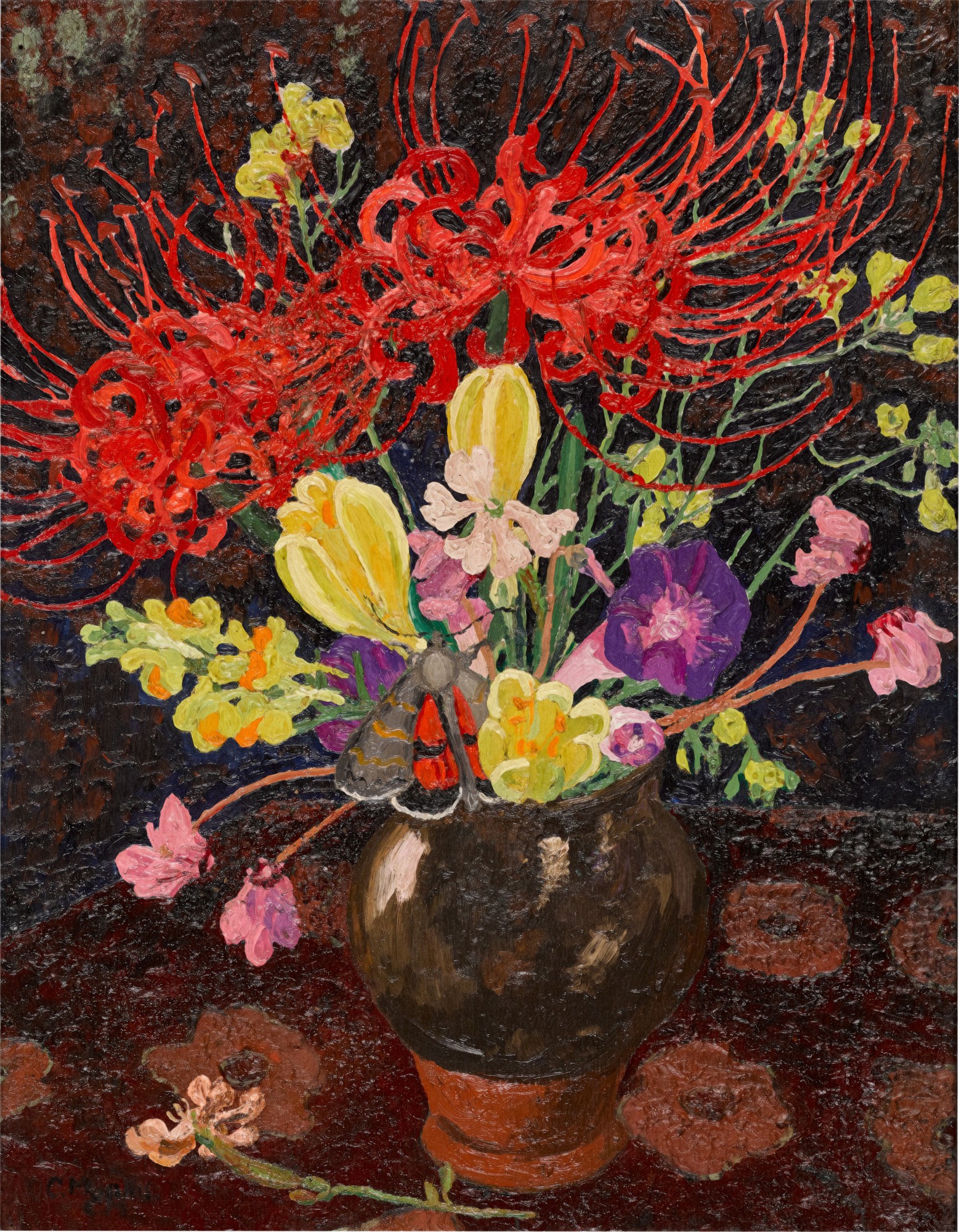
Sir Cedric Morris, Painter of Radiant Life
Artist Spotlight · The Collection Editorial
There is a moment, standing before one of Sir Cedric Morris's iris paintings, when the boundary between horticulture and high art dissolves entirely. The blooms press forward from the canvas with an almost aggressive vitality, their petals rendered in colours that feel both botanically precise and wildly expressive. It is a sensation that devotees of his work know well, and one that has brought renewed attention to this singular Welsh painter in recent years, as auction houses and museum curators alike have begun to reckon fully with a career that spanned six extraordinary decades. Cedric Lockwood Morris was born in 1889 in Sketty, near Swansea, into a prosperous industrial family whose wealth derived from the South Wales copper trade.
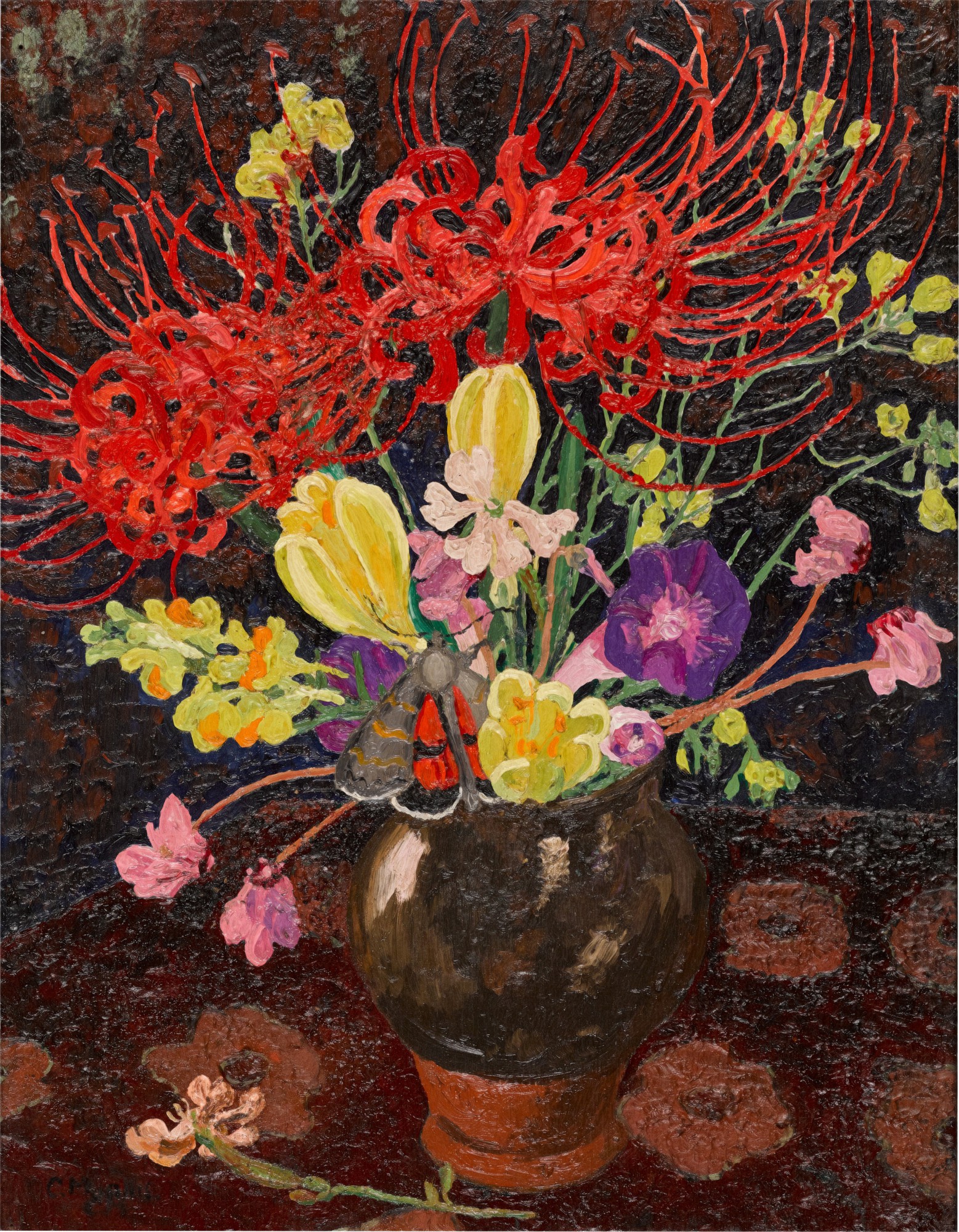
Sir Cedric Morris
Still Life with Tiger Moth
The expectation was that he would follow a conventional path, and for a time he dutifully attempted to do so, spending periods in Canada and on the European continent before the pull of painting became impossible to resist. His formation as an artist was largely self directed, shaped by travel through France and Spain in the years surrounding the First World War, where he absorbed the lessons of Post Impressionism and encountered the bold structural clarity that would come to define his mature style. He was never a product of the academy, and that independence of spirit would remain one of the most distinctive qualities of everything he made. By the 1920s Morris had settled into the orbit of London's avant garde, exhibiting with the London Group and moving through the world of Bloomsbury and beyond.
He was close friends with the painter Christopher Wood and travelled extensively, finding subjects in Brittany, the Iberian Peninsula, and eventually the landscapes of East Anglia, which would become his true spiritual home. His early flower paintings from this period, including works such as the luminous "Flowers" of 1926, already demonstrate the directness and confidence that set him apart from his contemporaries. There is no fussiness in his touch, no decorative prettiness for its own sake. Each petal and stem feels observed, felt, and then translated into paint with a kind of loving authority.
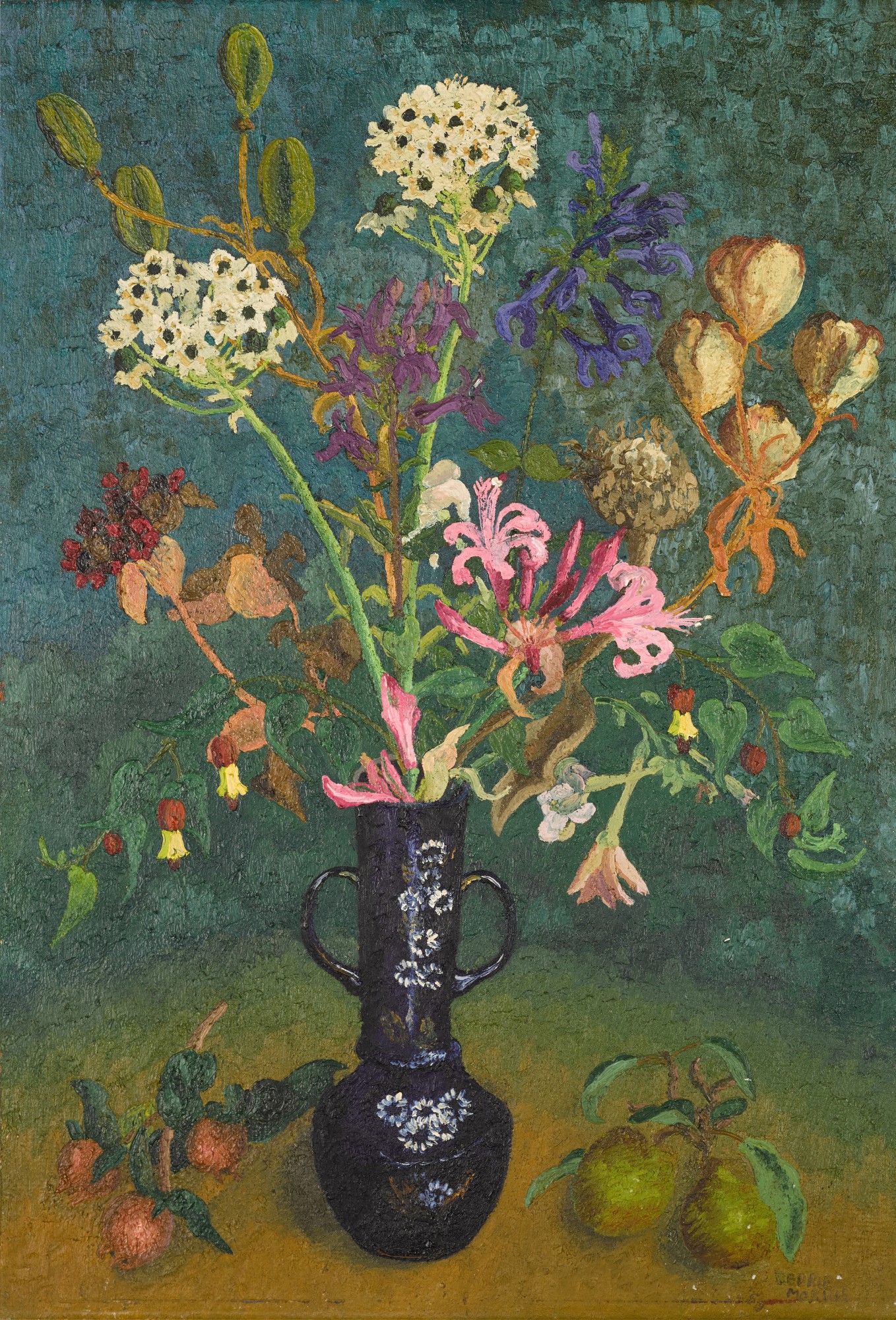
Sir Cedric Morris
Winter Flowers, 1966
The move to Suffolk proved to be the defining chapter of his life, both personally and professionally. In 1929 Morris and his lifelong partner, the painter Arthur Lett Haines, settled at Pound Farm in Higham, and later at Benton End in Hadleigh, where they would remain for the rest of their lives. It was at Benton End that Morris threw himself into the breeding of irises and other rare plant varieties with the same passionate intelligence he brought to painting. The garden became famous in its own right, visited by plantspeople, artists, and eccentrics from across Britain and Europe.
His iris paintings, many of them made in direct response to new cultivars he had bred himself, carry a charge that is inseparable from this intimate relationship between maker and subject. Works such as "Still Life Nasturtiums and Pears" of 1952 and the magnificent "Still Life in Summer Garden" of 1963 reveal how fluidly he moved between the formal ambitions of still life painting and the living, breathing specificity of the garden he inhabited. In 1937 Morris and Lett Haines co founded the East Anglian School of Painting and Drawing, initially based at Dedham and later relocated to Benton End itself after a fire destroyed the original premises. The school operated without formal curriculum or examination, guided instead by Morris's belief that honest looking and individual expression were the foundations of all genuine art.
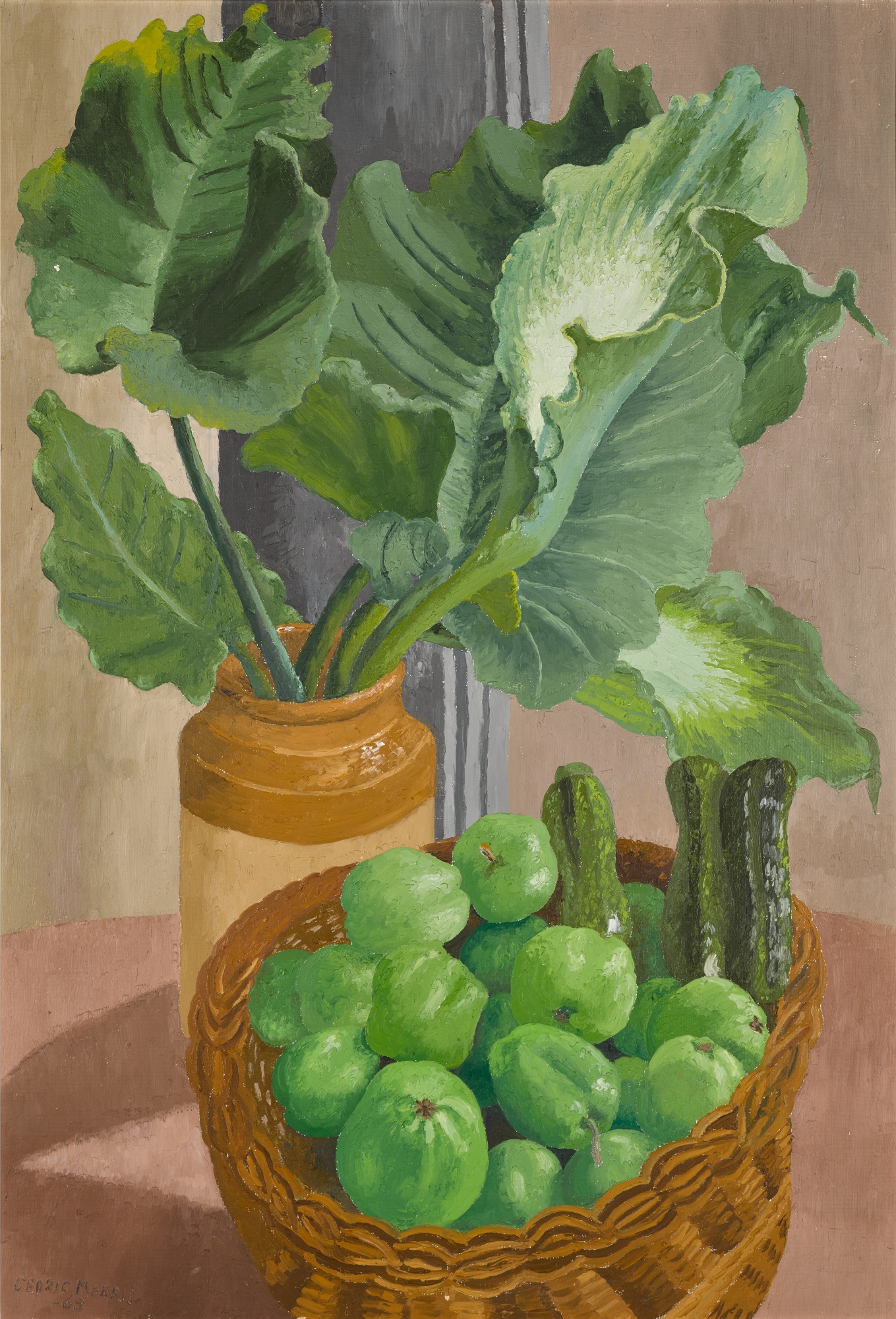
Sir Cedric Morris
Still Life Essay in Green, 1968
Among those who passed through its doors were Lucian Freud, who attended as a teenager in the early 1940s, and Maggi Hambling, who has spoken movingly about the freedom and encouragement Morris offered his students. The influence of his teaching, his insistence on close observation of the natural world, and his refusal of easy convention, can be traced through the work of several generations of British painters. Morris's range as a painter is often underestimated by those who know him only through the iconic flower pictures. His landscapes of East Anglia, his portraits, his bird paintings, and his still lifes of kitchen produce, works such as "Ratatouille" of 1954 and "Still Life Essay in Green" of 1968, demonstrate a restless intelligence and a willingness to find the monumental in the everyday.
"The Schnake Pot" and "Still Life with Tiger Moth" reveal his gift for unexpected juxtaposition, for placing objects in relation to one another in ways that generate genuine visual tension. His Cornish harbour view, "Newlyn Harbour from Trewartha Street", speaks to the breadth of his geographic curiosity and his ability to render light and place with quiet authority. For collectors, Morris represents one of the most compelling and still accessible figures in twentieth century British art. His auction record has strengthened considerably since the 1990s, with his iris paintings in particular commanding serious attention from both private collectors and institutional buyers.
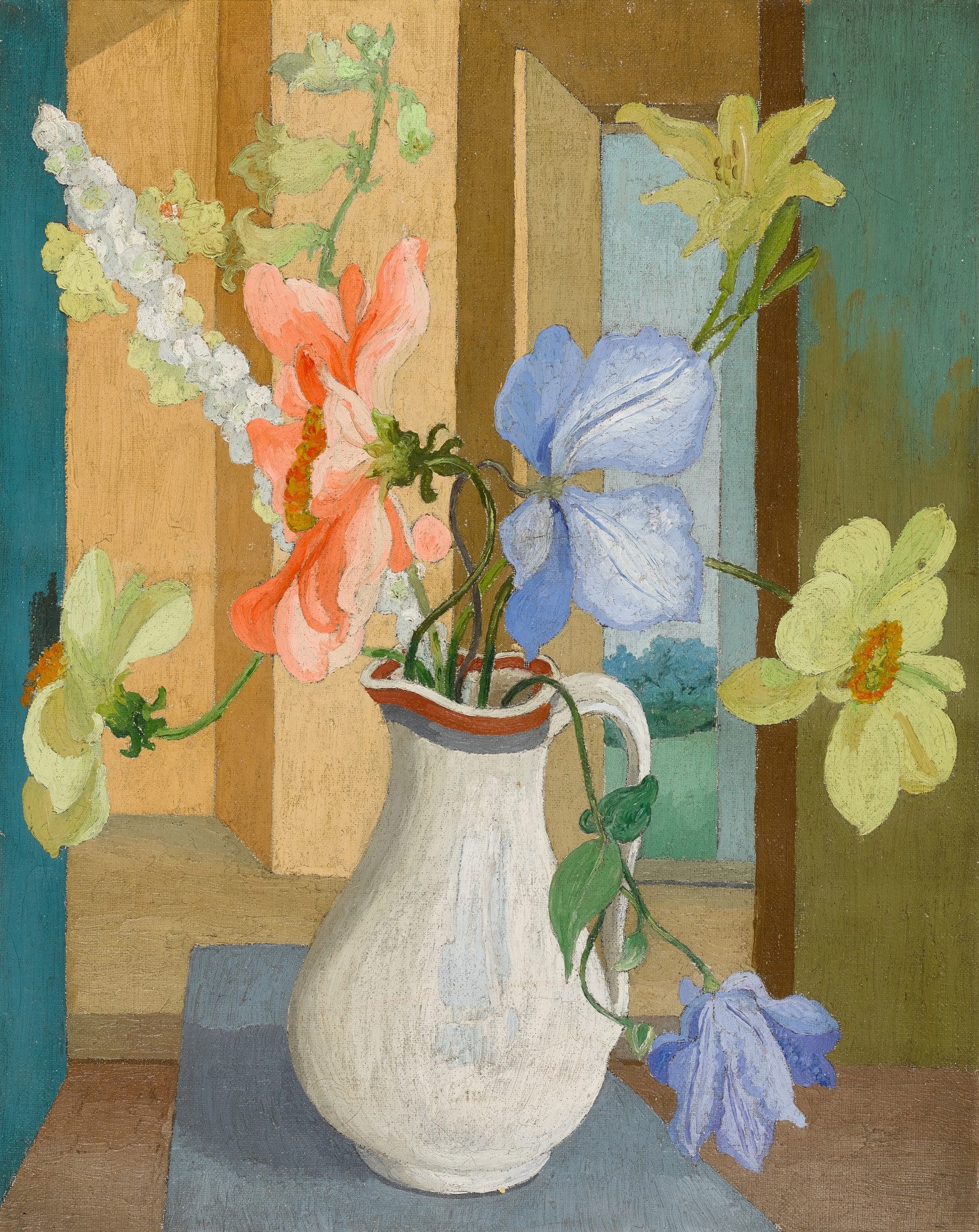
Sir Cedric Morris
Flowers in a Vase, September Diagram
Works in oil on canvas and oil on board appear regularly at the major London salerooms, and condition and provenance remain important considerations, as his best work retains remarkable freshness when well preserved. Collectors drawn to artists such as Christopher Wood, Frances Hodgkins, or the painters associated with the Euston Road School will find in Morris a figure who shares their commitment to direct observation while maintaining a distinctly personal and unhurried voice. Sir Cedric Morris was knighted in 1945 and continued to paint and garden at Benton End until near the end of his life, dying in 1982 at the age of ninety two. The longevity of his practice, the consistency of his vision, and the genuine warmth that animated both his teaching and his making, have ensured that his reputation, long admired by insiders, is now finding the broader audience it deserves.
To collect his work is to bring into your home not only a remarkable object but a piece of a world in which looking carefully at flowers, at birds, at the particular light of an English afternoon, was understood as one of the most serious and rewarding things a person could do.
Explore books about Sir Cedric Morris
Cedric Morris: Life, Letters and Paintings
Alastair Grieve
Cedric Morris: A Retrospective Exhibition
Arts Council of Great Britain
Cedric Morris and Lett Haines at Benton End
Andrew Causey
The Art of Cedric Morris
Various contributors