Sir Anthony Caro
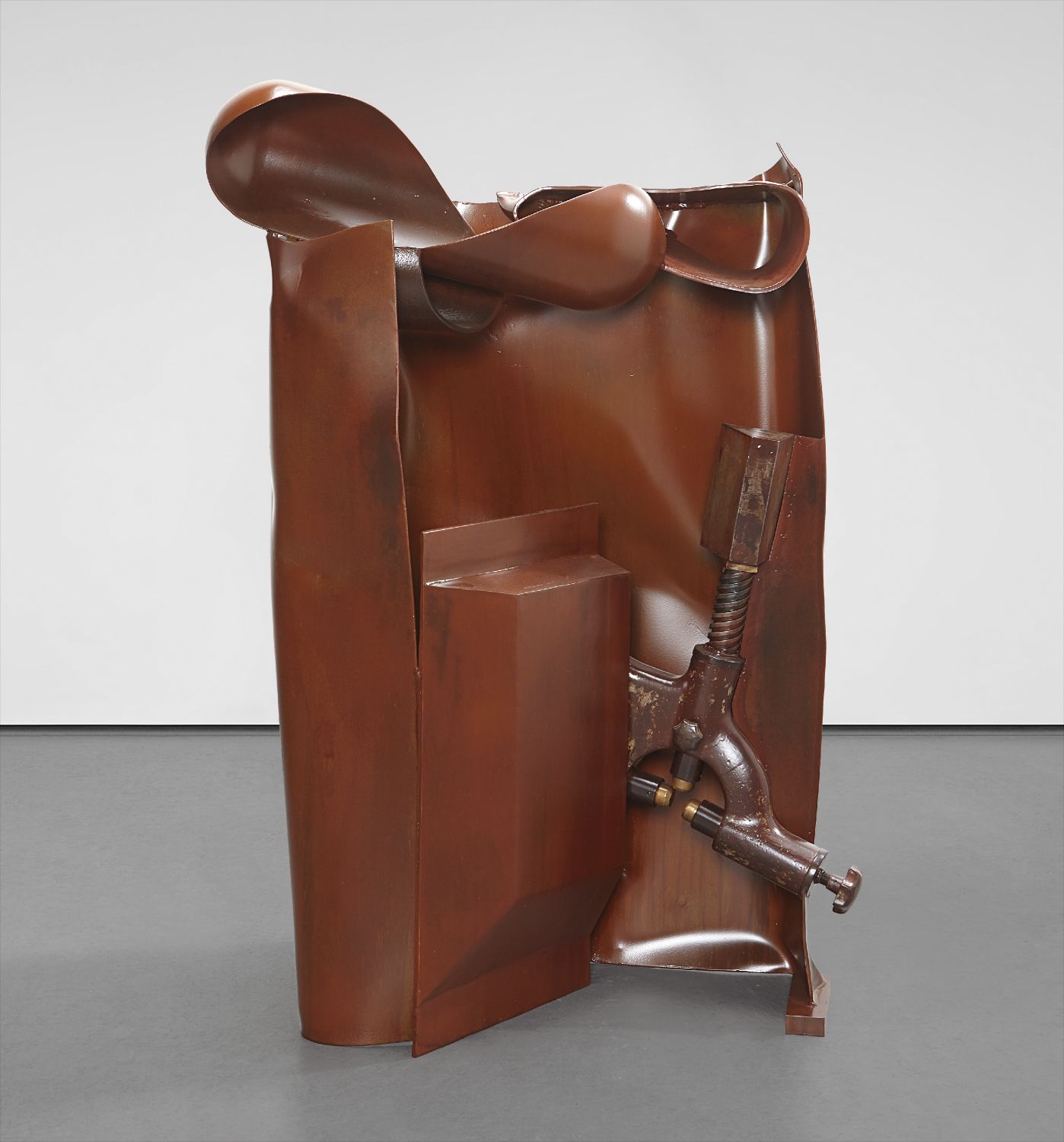
Anthony Caro: Steel, Space, and Pure Feeling
Artist Spotlight · The Collection Editorial
“I want to make sculpture that is immediate, that hits you, that doesn't need a pedestal to announce itself.”
Anthony Caro
In the spring of 2021, Tate Modern dedicated renewed attention to the legacy of Sir Anthony Caro as part of broader institutional reflection on the artists who fundamentally altered the course of British sculpture in the postwar era. His work continued to anchor major auction results at Christie's and Sotheby's London, with collectors across Europe and North America seeking out his painted steel constructions and intimate table pieces with genuine urgency. That sustained demand, decades after his most celebrated breakthroughs, speaks to something essential about Caro's art: it does not age because it was never really of its moment. It belongs to something more permanent, a conversation about what sculpture can be when it refuses every convention handed to it.
Sir Anthony Caro
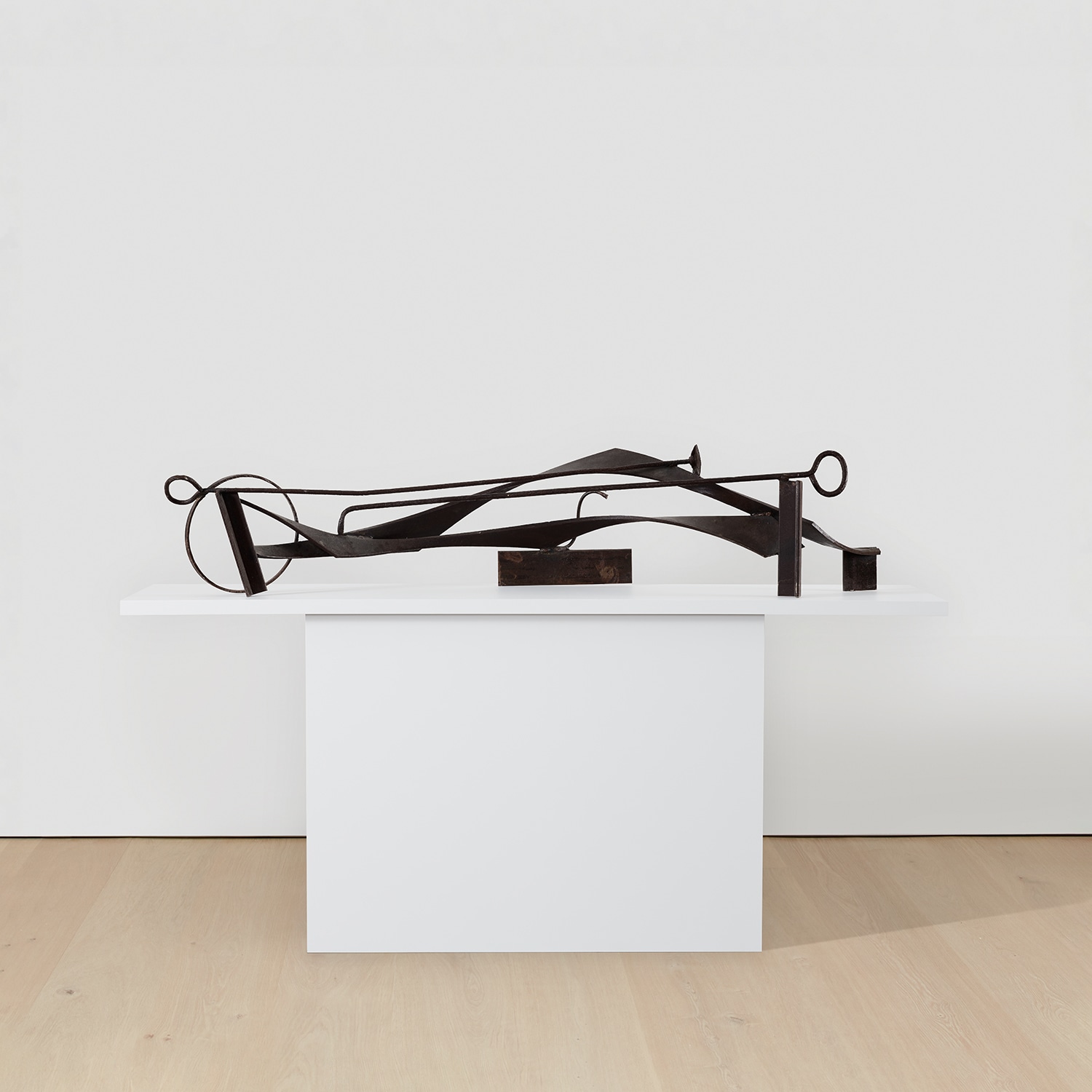
Table Piece CCCXXXVI, 1976
Anthony Caro was born in New Malden, Surrey, in 1924, into a family that encouraged intellectual curiosity and cultural ambition. He studied engineering at Christ's College, Cambridge before turning fully to art, training at the Regent Street Polytechnic and later the Royal Academy Schools in London. His early formation as an engineer was not incidental. It gave him a structural intelligence that would later distinguish his approach to assembling steel, an instinct for load and balance, for how materials speak to one another across open space.
In the early 1950s, he worked as an assistant to Henry Moore, an experience that both inspired and, in time, provoked him toward radical departure. Moore's monumental humanism was a generous inheritance, but Caro would need to move well beyond it. The turning point came in 1959, when Caro traveled to the United States and encountered the work of David Smith and the ideas of the critic Clement Greenberg. Both encounters proved transformative.
Sir Anthony Caro
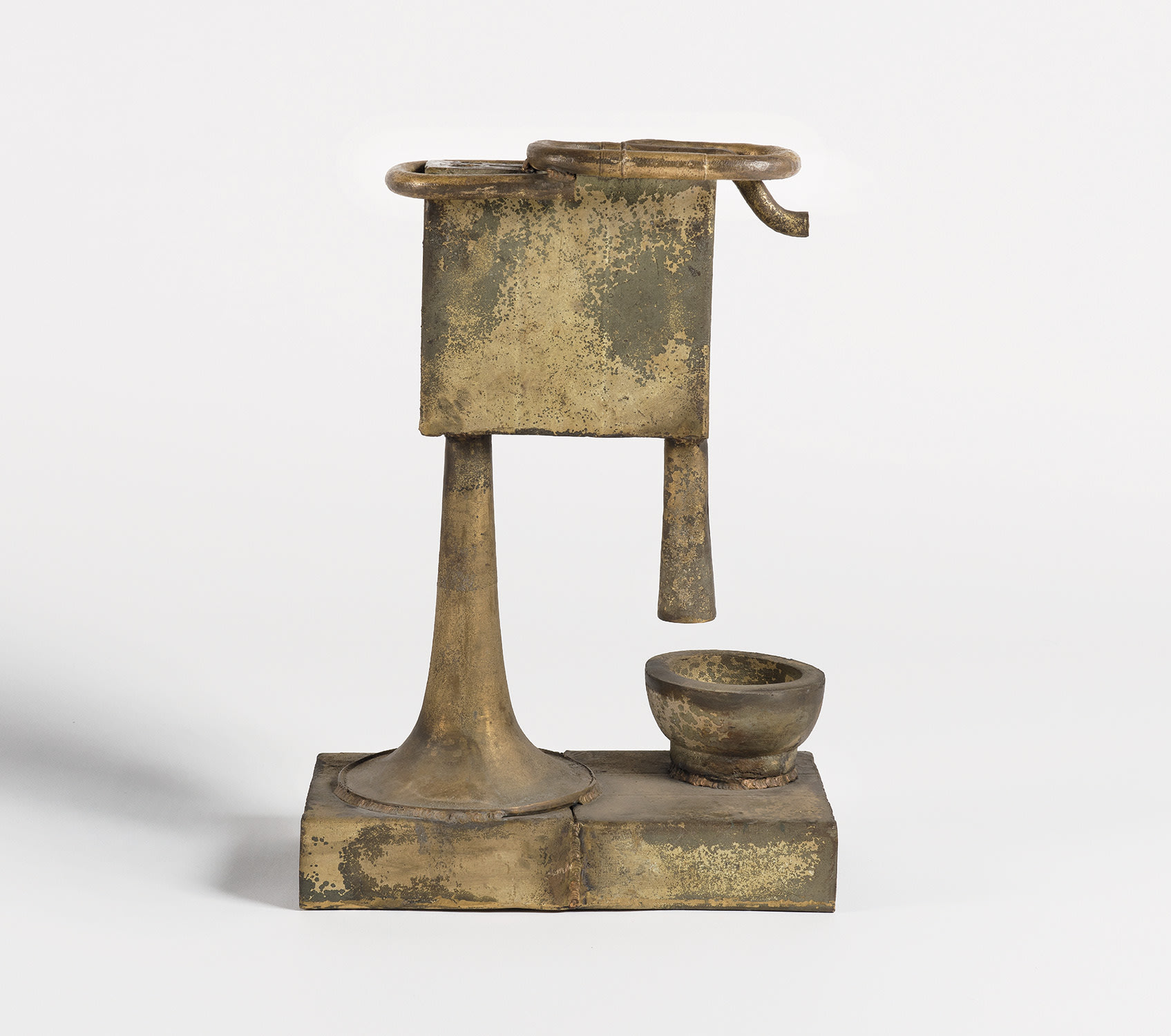
Rumba, 1999
Smith's welded steel constructions showed Caro that sculpture could be direct, raw, and built rather than carved or modeled. Greenberg's formalist thinking gave Caro a critical framework for pursuing abstraction without apology. When Caro returned to England, he abandoned figurative work entirely and began making the brightly painted, ground hugging steel sculptures that would make his reputation. Works from the early 1960s such as Twenty Four Hours (1960) and Early One Morning (1962) announced a new sculptural language to the world.
“The point of art is to be moved by it. If it doesn't move you, it hasn't worked.”
Anthony Caro
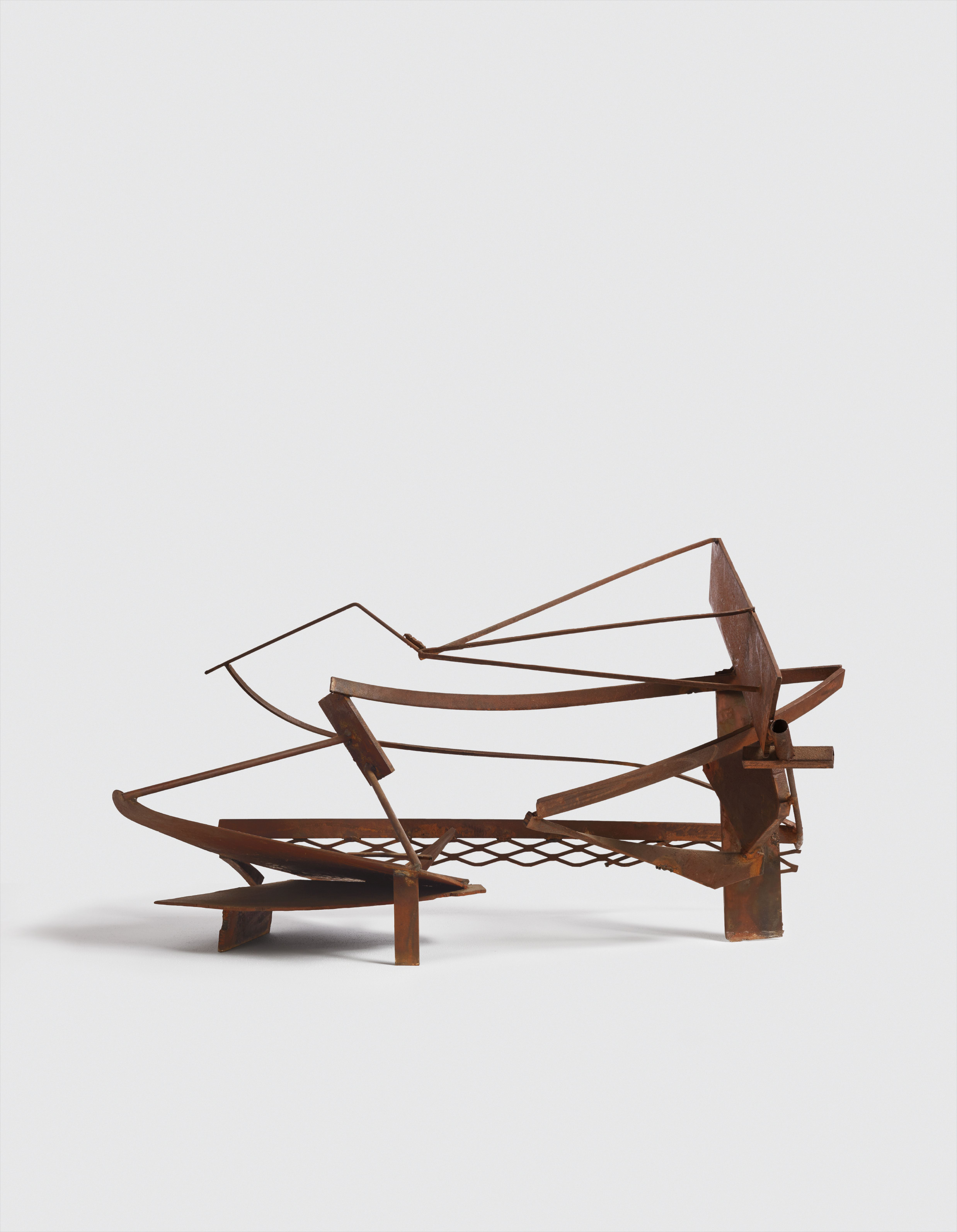
The removal of the pedestal was not a stylistic choice so much as a philosophical one: Caro wanted sculpture to exist in the same space as the viewer, to be encountered rather than observed from a respectful distance. Through the 1960s and 1970s, Caro's practice expanded in several compelling directions at once. He began the Table Pieces series, a sustained body of work in which sculptures were designed to sit on tables and countertops, intimate in scale but fully resolved as compositions. Table Piece CCLII, known as Saw Tooth, created in 1975 in rusted and varnished steel, exemplifies the series at its most assured: the oxidized surface lends warmth and age to a structure that is otherwise restless and angular, full of implied movement.
Sir Anthony Caro
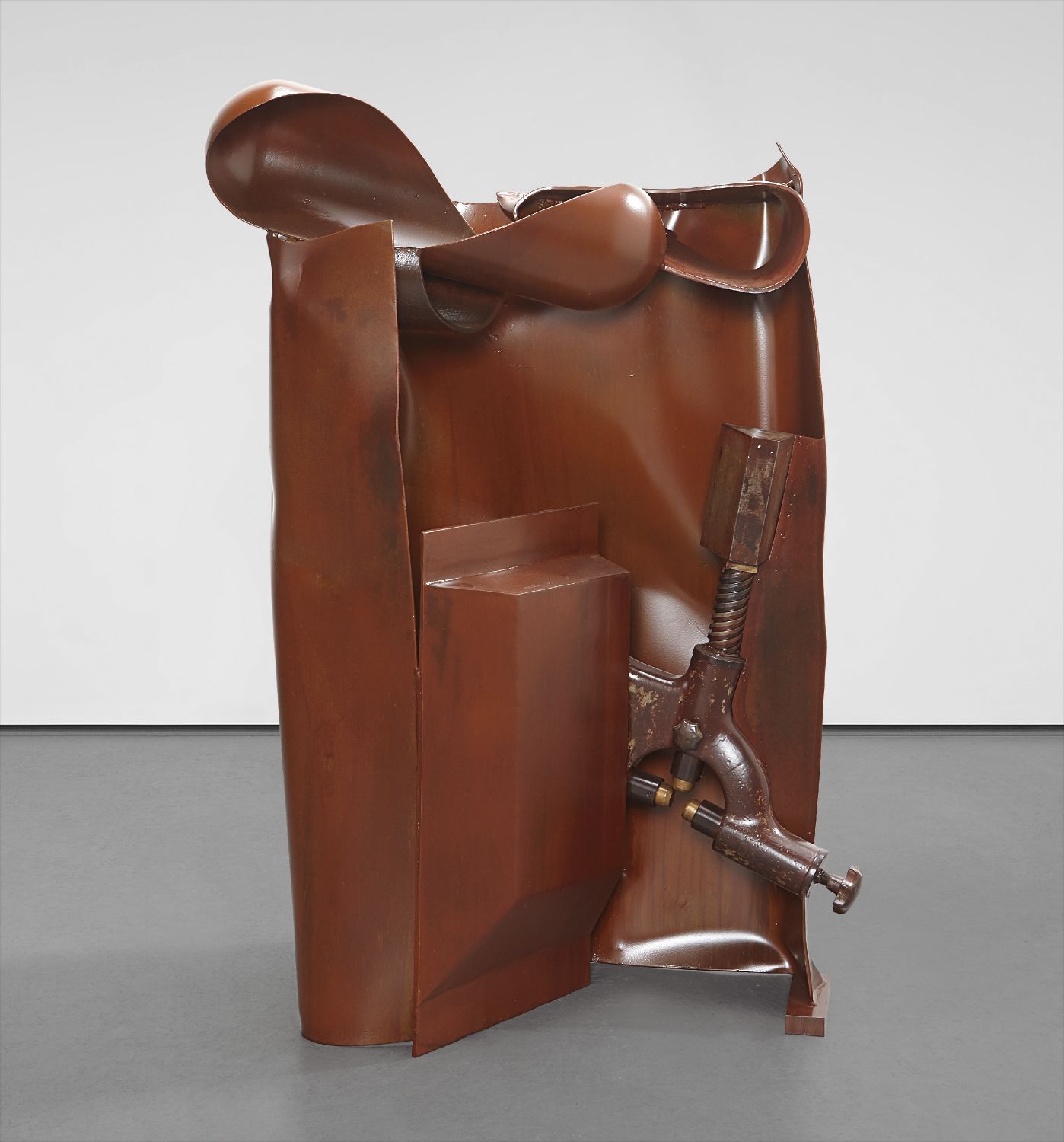
Upon Avon
Table Piece CCCXXXVI from 1976 and Table Piece CCCCVII from 1977 demonstrate the range Caro achieved within a single format, moving from open linear drawing in space to something more compressed and weighted. These works reward close looking. They repay the collector who lives with them over time, finding new relationships between their elements as the light shifts through a room. The 1980s brought a deepening of Caro's engagement with mass and volume.
Ballade, created in 1984, reflects the period's interest in more architecturally scaled gestures, steel elements arranged with the kind of musical logic that the title implies. By the late 1990s and into the 2000s, Caro was exploring polished stainless steel with characteristic openness to new possibility. Open Secret, created in 2003 in polished stainless steel and accompanied by a portfolio, is among the most quietly stunning works from his later career. The reflective surface transforms the surrounding environment into part of the work itself, so that the sculpture becomes a kind of dialogue with wherever it lives.
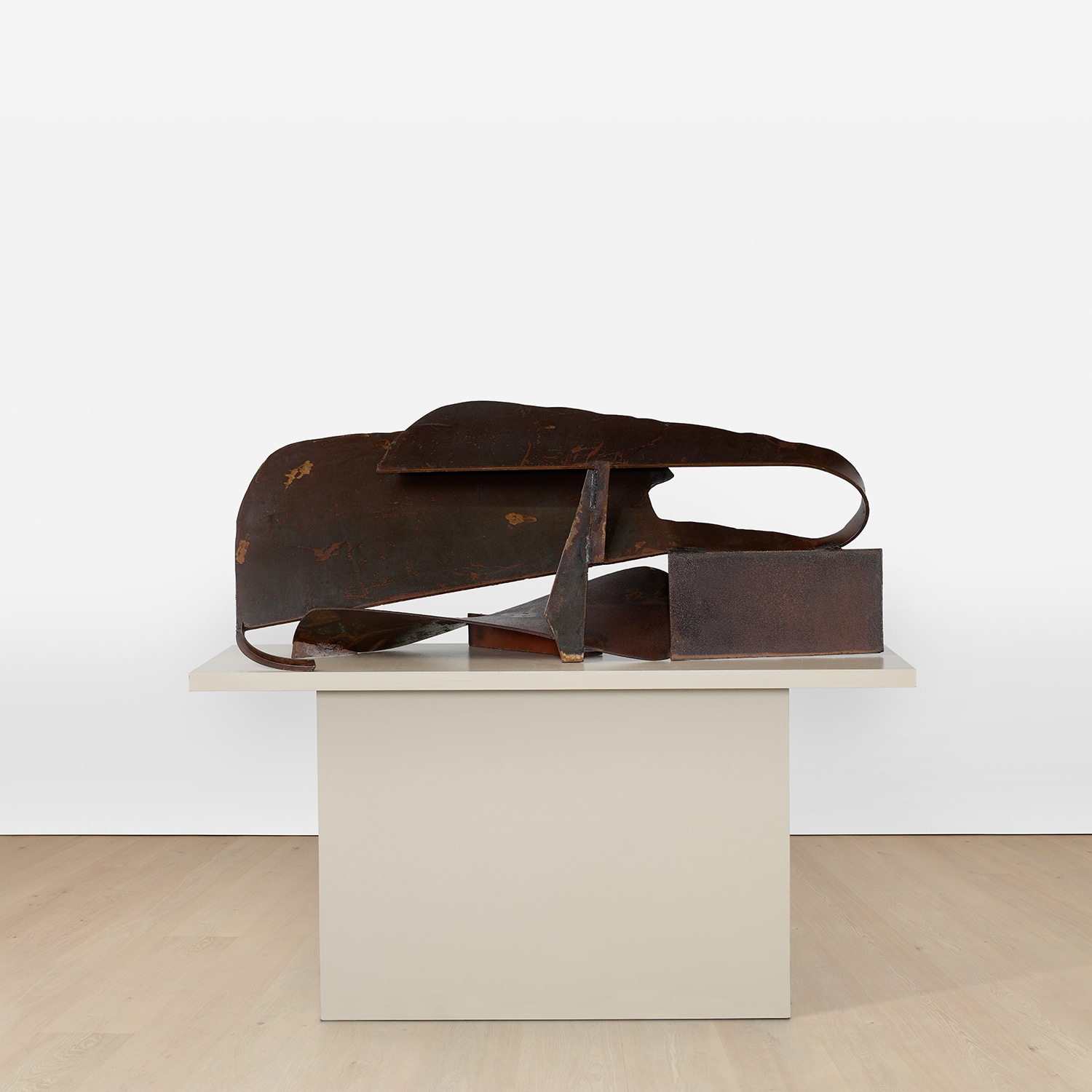
Sir Anthony Caro
Table Piece CCLXI, 1975
Rumba from 1999 and Dream of the Nile from 1988 similarly demonstrate that Caro's inventiveness never settled into formula. Each decade brought genuinely new thinking. For collectors, the appeal of Caro's work operates on multiple levels. His sculptures are physically commanding without being domineering.
They bring rigorous art historical significance without the alienating coldness that sometimes accompanies work of such intellectual weight. The Writing Pieces, including Writing Piece Say from 1979, introduced a more intimate, almost calligraphic quality to his steel constructions, as though the sculptor were finding a way to notate thought directly in metal. Upon Avon, one of the larger works available through The Collection, carries the lyrical quality that Caro was always capable of, a sense that despite the industrial materials, the work is fundamentally about feeling and perception. The Small Bronzes series, represented here by Small Bronze n (B.
1602), reveals yet another register entirely, one of studied delicacy and surprisingly tender presence. In the broader context of postwar sculpture, Caro occupies a position of genuine historical importance. He is the essential bridge between the monumental British tradition of Moore and Hepworth and the more conceptually oriented sculptors who followed. Artists including Phillip King, Tim Scott, and William Tucker all passed through his influential teaching at St Martin's School of Art in London during the 1960s, a period that transformed that institution into one of the most generative environments for new sculpture in the world.
The St Martin's school of thought rippled outward into subsequent generations. To collect Caro is to hold a piece of that history, to participate in the lineage that runs from Moore's organic humanism through Caro's radical abstraction and into the expanded field of contemporary sculpture that we now take largely for granted. Sir Anthony Caro died in 2013, but the vitality of his work in the market and in institutional collections has only grown since then. Retrospectives at the Museum of Modern Art in New York and the Triennale in Milan during his lifetime established his international stature, and that recognition has continued to shape how institutions and private collectors regard his estate.
The works available through The Collection represent a genuinely rare opportunity to engage with an artist whose influence on modern sculpture is simply beyond reasonable dispute. Whether you are drawn to the industrial grandeur of his painted steel constructions, the intimate wit of the Table Pieces, or the luminous ambiguity of his polished stainless works, there is a Caro that will reward sustained attention and genuine affection in equal measure.
Featured Works
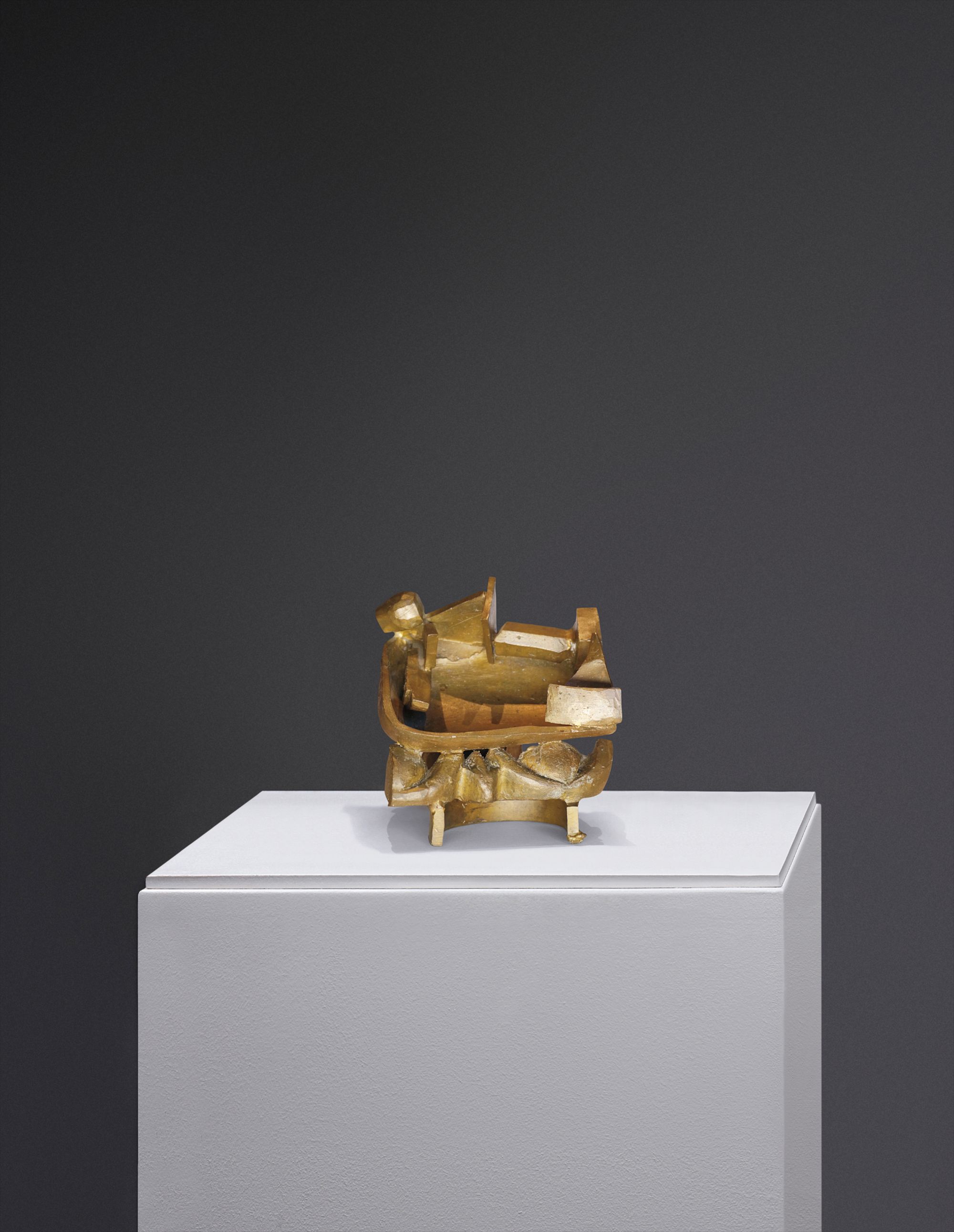
Explore books about Sir Anthony Caro
Anthony Caro
Clement Greenberg
Anthony Caro
Phyllis Tuchman
Anthony Caro: Sculpture and Drawings
William Rubin
Anthony Caro: A Catalogue Raisonné
David Burnett
Anthony Caro: Works 1958-1998
Dieter Blume
Anthony Caro: A Catalogue Raisonné
Dieter Blume
Anthony Caro: The National Sculpture Collection
Paul Moorhouse

Anthony Caro: The Horse and Rider
Paul Moorhouse

Anthony Caro: An Autobiography
Anthony Caro
Anthony Caro: Sculpture Towards Architecture
Ruth Durling
Anthony Caro: Selected Writings and Interviews
Anthony Caro, Judith Collins (editor)
Anthony Caro: A Life in Sculpture
Robin Farwell Galin