Shinique Smith
Shinique Smith Wraps the World in Wonder
Artist Spotlight · The Collection Editorial
In the galleries of the Baltimore Museum of Art, where Shinique Smith first began to find her voice as a young artist growing up in Maryland, her work now commands a kind of reverence that feels both earned and overdue. Smith has been the subject of significant institutional attention over the past decade, with her large scale installations and paintings collected by major museums across the United States, including the Museum of Modern Art in New York and the Denver Art Museum. Her presence in group exhibitions at venues such as the Studio Museum in Harlem has cemented her place among the most important American artists working today. The moment feels right, and the art world is paying close attention.
Shinique Smith
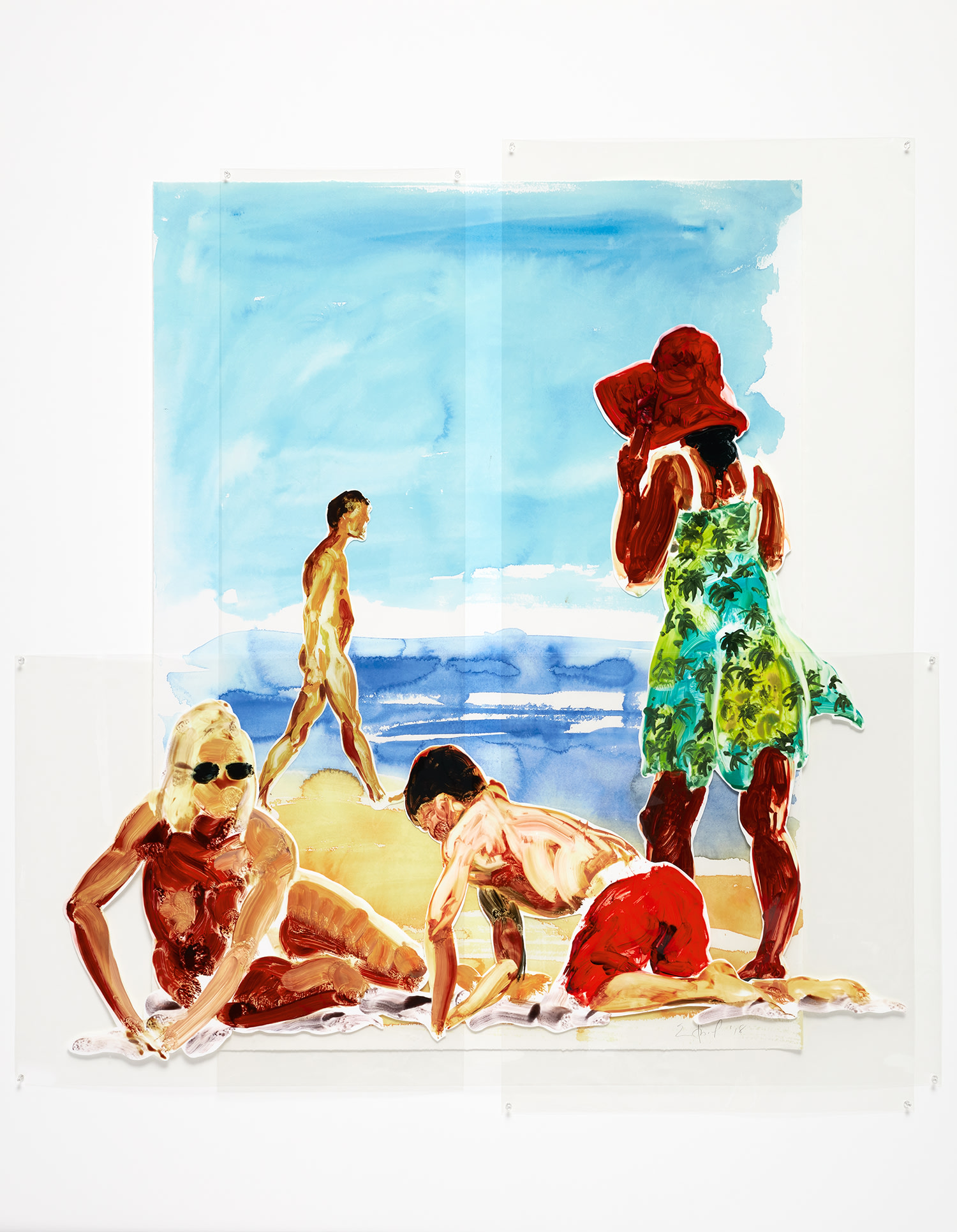
Red Rose
Smith was born in Baltimore in 1971, and the city shaped her in ways that remain visible in every work she makes. Baltimore in the 1970s and 1980s was a place of intense cultural energy, and the visual language of graffiti and street art seeped into her consciousness early. She went on to study at the Maryland Institute College of Art, one of the most rigorous art schools in the country, where she developed a disciplined foundation while simultaneously absorbing the improvisational spirit of urban mark making. These two impulses, the formal and the vernacular, would never fully separate in her practice, and that productive tension is precisely what gives her work its distinctive charge.
Her artistic development unfolded across several distinct but deeply connected phases. In her earlier works on paper and canvas, Smith explored the expressive possibilities of calligraphic mark making, drawing on both the gestural freedom of Abstract Expressionism and the meditative precision of East Asian brushwork traditions. Artists such as Franz Kline and Cy Twombly hover in the background of this lineage, though Smith brings a wholly personal vocabulary to the conversation. Over time, her work expanded beyond the picture plane entirely, as she began incorporating bundled fabric, discarded clothing, and found objects into her compositions, creating works that breathe and spill into the space of the viewer.
Shinique Smith
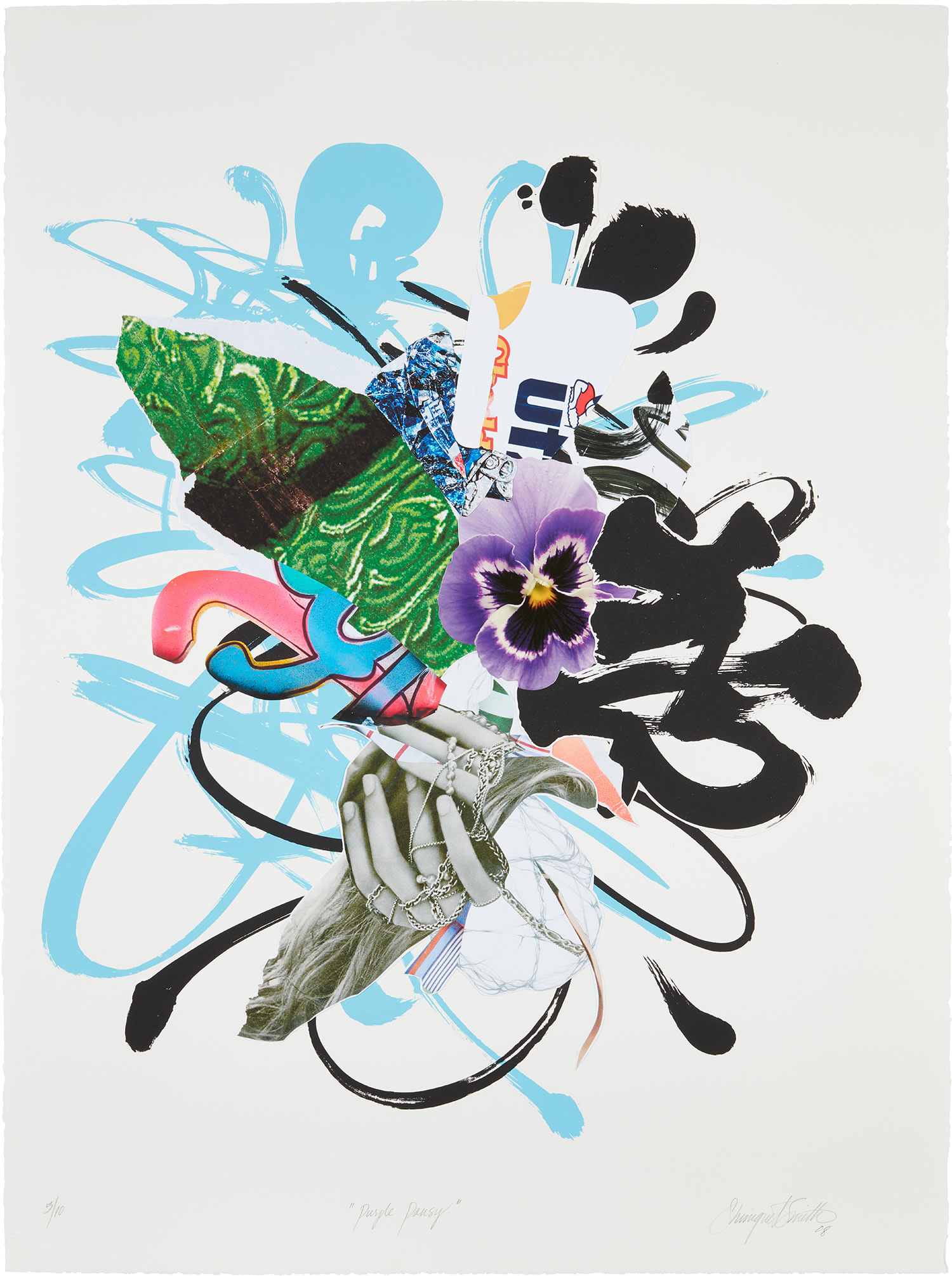
Purple Pansy
The sculptural installations for which Smith is perhaps most widely celebrated represent one of the most original contributions to American contemporary art in the past two decades. Works such as Enchanted Place, which incorporates fabric, string, pillows, foam, rug, lace, and a plaster swan, transform accumulated material into something approaching poetry. These bundles are not simply aesthetic objects. They carry the weight of human presence, suggesting bodies that have recently departed, lives lived in cloth and comfort and desire.
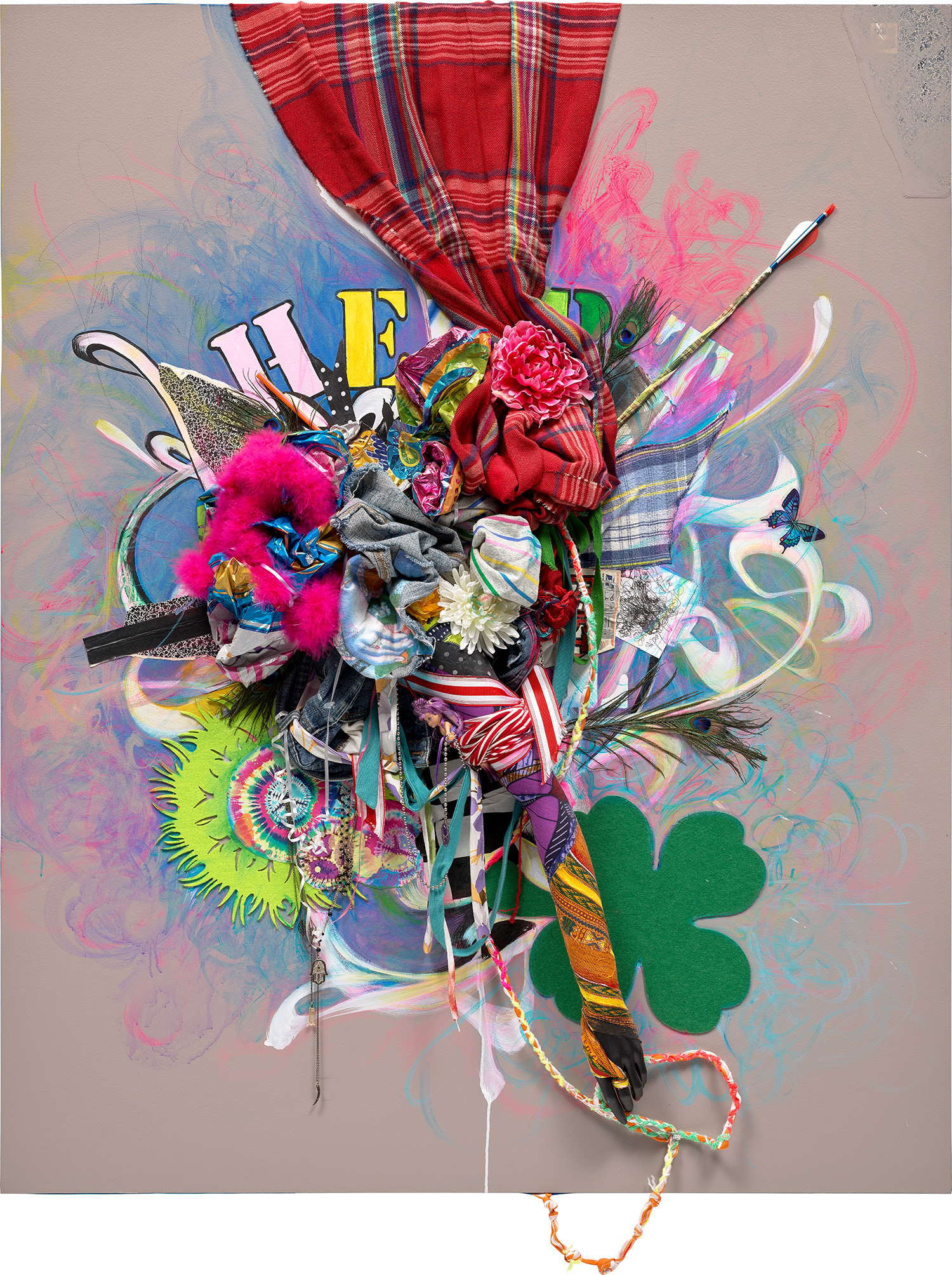
The layered paintings, such as Inner Clock from 2014, which combines acrylic, ink, fabric, paper collage, and found objects on wood panel, demonstrate how fluidly Smith moves between two dimensions and three, between restraint and exuberance. Her prints deserve particular attention from collectors. Works such as Red Rose and Purple Pansy, both realized as screenprints with archival inkjet and collage elements on Rives BFK paper, show Smith operating with the same density of layering that characterizes her large installations, but in a format that allows for intimacy and careful looking. The delicacy of the flower imagery in these works plays beautifully against the boldness of her mark making, and the use of collage gives each print a tactile presence that is rare in the medium.

Shinique Smith
This work is from an edition of 5.
For collectors who are drawn to works on paper, these pieces offer a genuinely accessible entry point into one of the most compelling bodies of work in contemporary American art. From a market perspective, Smith occupies an interesting and increasingly valuable position. Her work has been handled by respected galleries including Mitchell Innes and Nash in New York, and her institutional footprint continues to grow. Collectors who have built meaningful relationships with her work over the past fifteen years have been rewarded not only financially but aesthetically, as each new body of work deepens and recontextualizes what came before.
The edition works, including her chromogenic prints produced in small runs of five, represent a particularly strong opportunity for collectors who want to engage with her practice at a considered price point while acquiring something of genuine art historical significance. Smith belongs to a constellation of artists who have expanded the possibilities of painting and sculpture by refusing to choose between them. Her practice rhymes in important ways with that of Kara Walker, Ellen Gallagher, and Julie Mehretu, each of whom layers historical and cultural references into visually complex compositions that reward sustained looking. Like these peers, Smith is deeply concerned with questions of identity and desire, with what we carry and what we leave behind, with the way material culture both shapes and reflects our inner lives.
Shinique Smith
Inner Clock, 2014
She is also in conversation with artists such as Chakaia Booker and Leonardo Drew, who similarly elevate found and humble materials into works of considerable formal ambition. What makes Smith's legacy feel so secure, and so important, is precisely the generosity of her vision. Her work does not exclude or intimidate. It invites.
Whether she is working at the scale of a monumental installation that fills a museum atrium or producing a single quietly luminous print, she maintains an essential commitment to the idea that art should open something in the viewer, some recognition of shared human experience that transcends the objects themselves. The bundled fabrics and layered marks and collaged surfaces are, finally, a way of holding the world tenderly, of acknowledging that everything we surround ourselves with carries meaning, and that meaning is worth celebrating.