Sharon Lockhart
Sharon Lockhart Finds Beauty in Ordinary Time
Artist Spotlight · The Collection Editorial
When the San Francisco Museum of Modern Art mounted a major retrospective of Sharon Lockhart's work, it confirmed what devoted collectors and curators had long understood: that this quietly rigorous American artist had built one of the most intellectually sustained practices of her generation. SFMOMA's presentation drew together photographs and films spanning decades, revealing the extraordinary coherence of an artist who has remained steadfastly committed to looking slowly, carefully, and with genuine affection at the people and places she encounters. The retrospective reminded a broader public that Lockhart's work is not merely documentary in spirit but deeply philosophical, asking what it means to truly pay attention. Lockhart was born in 1964 and came of age at a moment when American photography was undergoing profound transformation.
Sharon Lockhart
c-print, 2001
The photographic traditions she inherited included both the cool conceptualism of the 1970s and the warm humanism of documentary practice, and her singular achievement has been to hold both of these impulses in careful tension. She studied at the San Francisco Art Institute and later at the Art Center College of Design in Pasadena, California, formative experiences that placed her in conversation with West Coast conceptualism while also grounding her in the material craft of image making. These twin educations shaped an artist who thinks rigorously about systems and structures but who never loses sight of the individual human being at the center of the frame. Her early exhibitions in the 1990s established her reputation as an artist of uncommon patience and formal intelligence.
Working in both still photography and film, she developed a practice rooted in extended observation, often spending considerable time with communities before making a single image. This approach distinguished her immediately from contemporaries who favored spontaneity or ironic detachment. Lockhart was interested in something closer to trust, in the relationship that develops between a photographer and a subject when time is genuinely given over to looking and being looked at. Her work with Japanese schoolchildren and their teachers, which produced some of her most celebrated photographs, grew out of months of engagement with a specific school and its rhythms of learning and play.
Sharon Lockhart
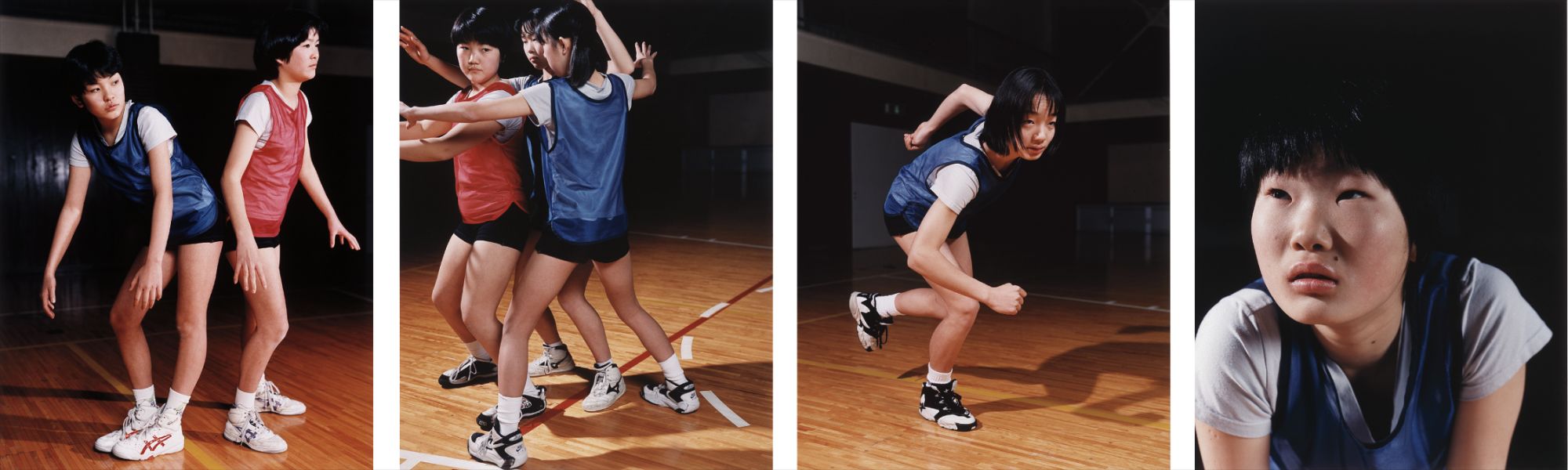
Chihiro Nishijima, Sayaka Miyamoto & Takako Yamada, Kumiko Shirai & Eri Hashimoto, Kumiko Kotaka
The series of works created in Japan during the late 1990s stands among her most significant achievements. The large format chromogenic prints depicting gymnastic exercises and group activities among young students at the Bunka Gakuen elementary school in Tokyo are images of breathtaking compositional precision. Works such as the four part chromogenic print featuring Chihiro Nishijima, Sayaka Miyamoto and Takako Yamada alongside Kumiko Shirai, Eri Hashimoto, and Kumiko Kotaka demonstrate her ability to transform documentary subject matter into something that resonates with the formal clarity of classical painting. The prints are large enough to command a room and quiet enough to reward sustained looking, which is precisely the experience Lockhart designs for her viewers.
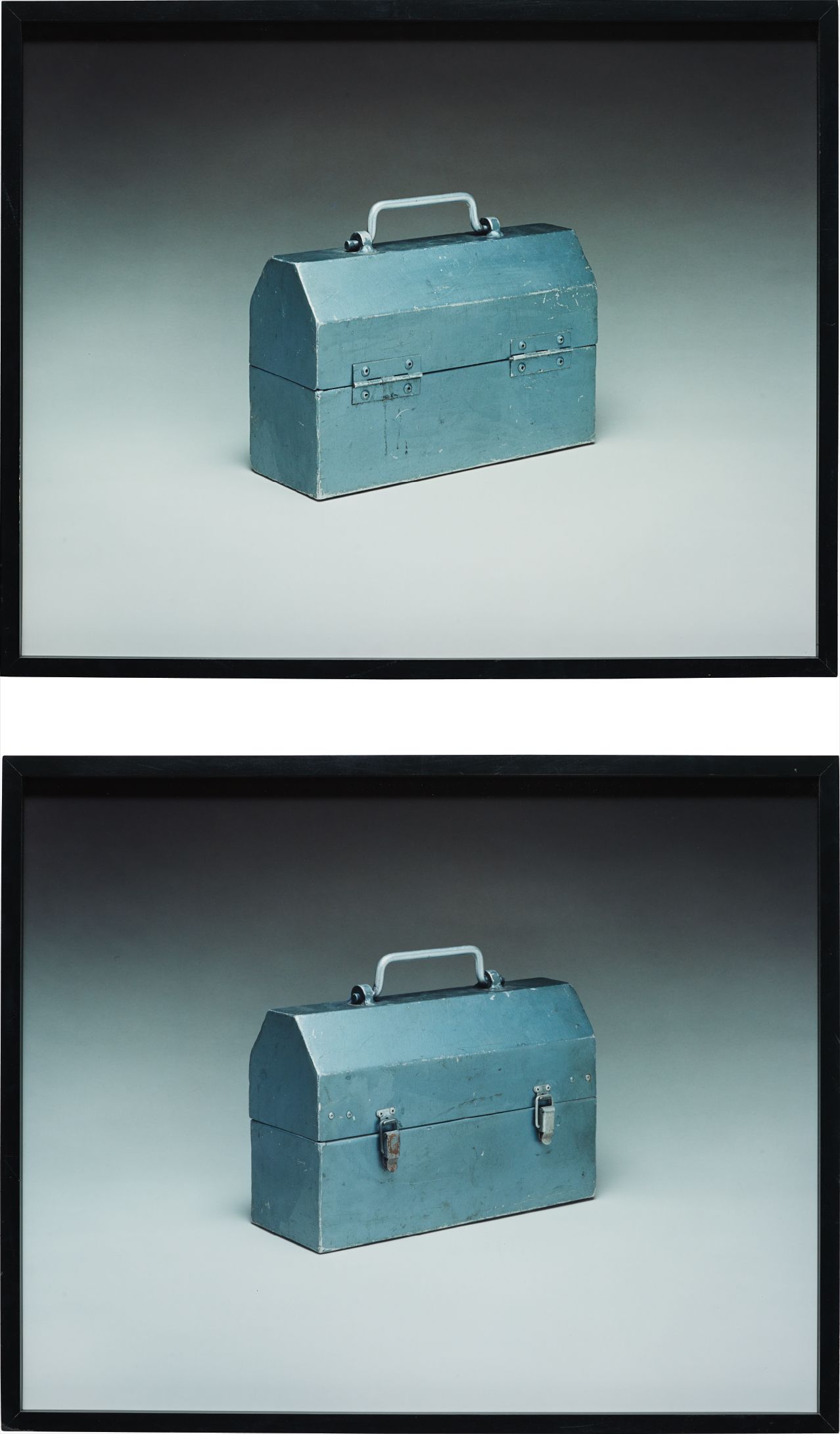
Collectors who acquire these works often speak of how they transform the spaces they inhabit, imposing a quality of stillness that is increasingly rare. Her project known as Lunch Break, which she developed through extended documentation of workers at the Bath Iron Works shipyard in Bath, Maine, represents perhaps her most ambitious engagement with labor and time. The film unfolds in a single extended take as the camera moves with extraordinary slowness down a long corridor, recording workers during their midday break in real time. Accompanying photographic works, including the two part chromogenic prints depicting Mike Dicky, a tinsmith at the facility, bring this same quality of attentive regard to the still image.
Sharon Lockhart
Mike Dicky, Tinsmith
Lockhart photographed Dicky with the seriousness and care typically reserved for portraiture of the celebrated or powerful, and the effect is both democratic and deeply moving. The Lunch Break project as a whole stands as one of the most searching meditations on working life in contemporary art, comparable in ambition to the social documentaries of Walker Evans and Dorothea Lange while remaining entirely of its own time. Lockhart's engagement with documentary traditions extends beyond American labor history into ethnographic and anthropological territory. Her 1999 silver gelatin print documenting an interview conducted along the Aripuana River in the Sao Miguel community in Brazil exemplifies her interest in the structures through which knowledge about communities is gathered and recorded.
By making the apparatus of anthropological inquiry visible, including the researcher, the location, and the subject simultaneously, she asks pointed questions about who looks, who is looked at, and under what conditions understanding is produced. This conceptual dimension of her practice places her in dialogue with artists like Allan Sekula and Martha Rosler, who have similarly interrogated the social functions of photography, though Lockhart's sensibility is warmer and more aesthetically focused than either. From a collecting perspective, Lockhart's work occupies a compelling position in the contemporary photography market. Her prints are produced in limited editions, which preserves their scarcity and supports long term value.
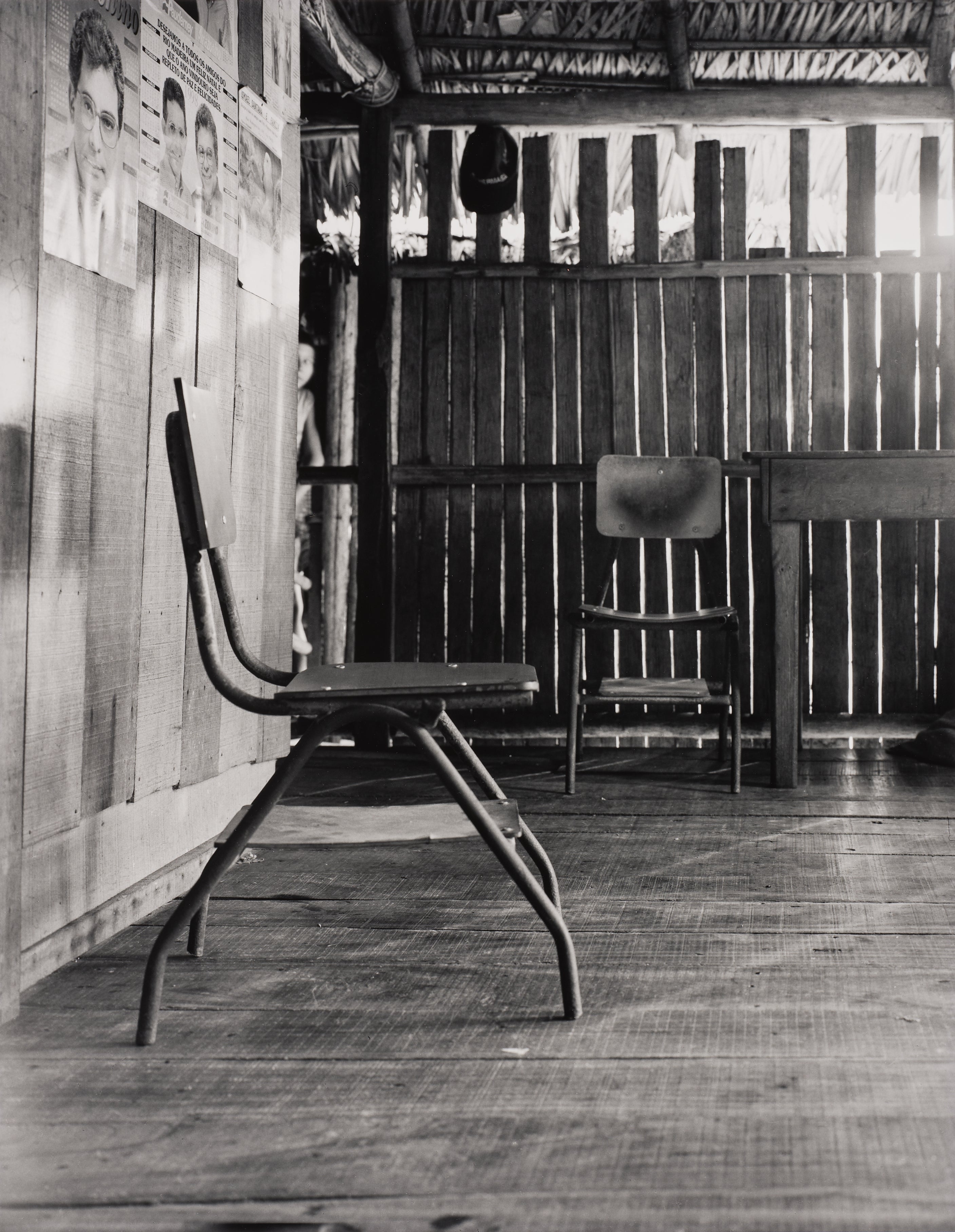
Sharon Lockhart
Interview Location: Survey of the Aripuana River Region. Sao Miguel Community, Boca do Juma River, Brazil. Interview Subject: Francisco Colares. Anthropologist: Ligia Simoniam, 1999
The chromogenic prints and silver gelatin works that form the core of her photographic output are technically exacting and have aged beautifully in collections, their surfaces retaining the luminosity that makes them so striking in person. Collectors drawn to artists who work at the intersection of photography, film, and conceptual practice, including figures like Wolfgang Tillmans, Rineke Dijkstra, and Andreas Gursky, often find that Lockhart's work sits in illuminating conversation with these peers while offering a distinctly American quietness that sets her apart. Her representation by Gladstone Gallery, one of the most respected galleries in the international contemporary art world, provides strong institutional support for collectors navigating the market. What makes Lockhart's legacy so durable is her refusal to mistake urgency for importance.
At a moment when much contemporary art strains for immediate impact, her work insists on the value of slowness, of time given freely to looking and to being present with another person or place. Her films and photographs do not demand a particular political response or deliver a predetermined interpretation. Instead they create conditions in which the viewer might discover, through their own sustained attention, something like the quality of regard that the artist herself brought to the making of the work. That gift, rare in any era, feels especially precious now.
Sharon Lockhart has spent more than three decades teaching us how to look, and the reward for those who accept her invitation is nothing less than a transformed relationship with the visible world.
Explore books about Sharon Lockhart
Sharon Lockhart
James Lingwood
Sharon Lockhart: Pine Flat
Sharon Lockhart, Hiroshi Yoshimura
Sharon Lockhart: Lunch Break
Sharon Lockhart
Sharon Lockhart: Khalili Spaces
Sharon Lockhart
Sharon Lockhart: EL Mr. Relevance
Sharon Lockhart