Seydou Keïta
Seydou Keïta: Bamako's Poet of Dignity
Artist Spotlight · The Collection Editorial
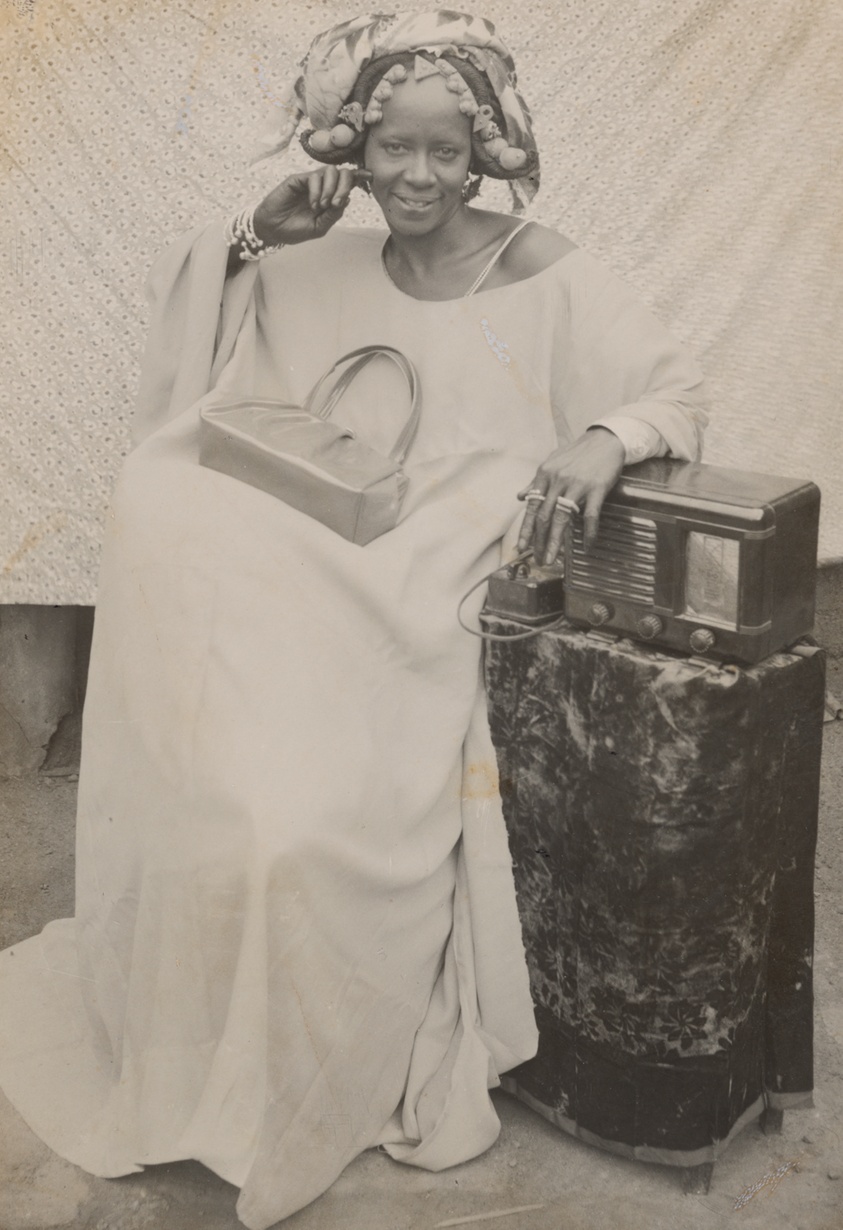
There is a photograph that stops you cold. A young woman reclines against a boldly patterned fabric backdrop, her gaze meeting the lens with absolute composure, her dress immaculate, her presence sovereign. It was made sometime in the 1950s in a modest studio in Bamako, Mali, by a man who charged a few francs per sitting and kept the negatives in careful stacks. That man was Seydou Keïta, and the image he created that day belongs to one of the most significant bodies of portraiture produced anywhere in the twentieth century.
Seydou Keïta
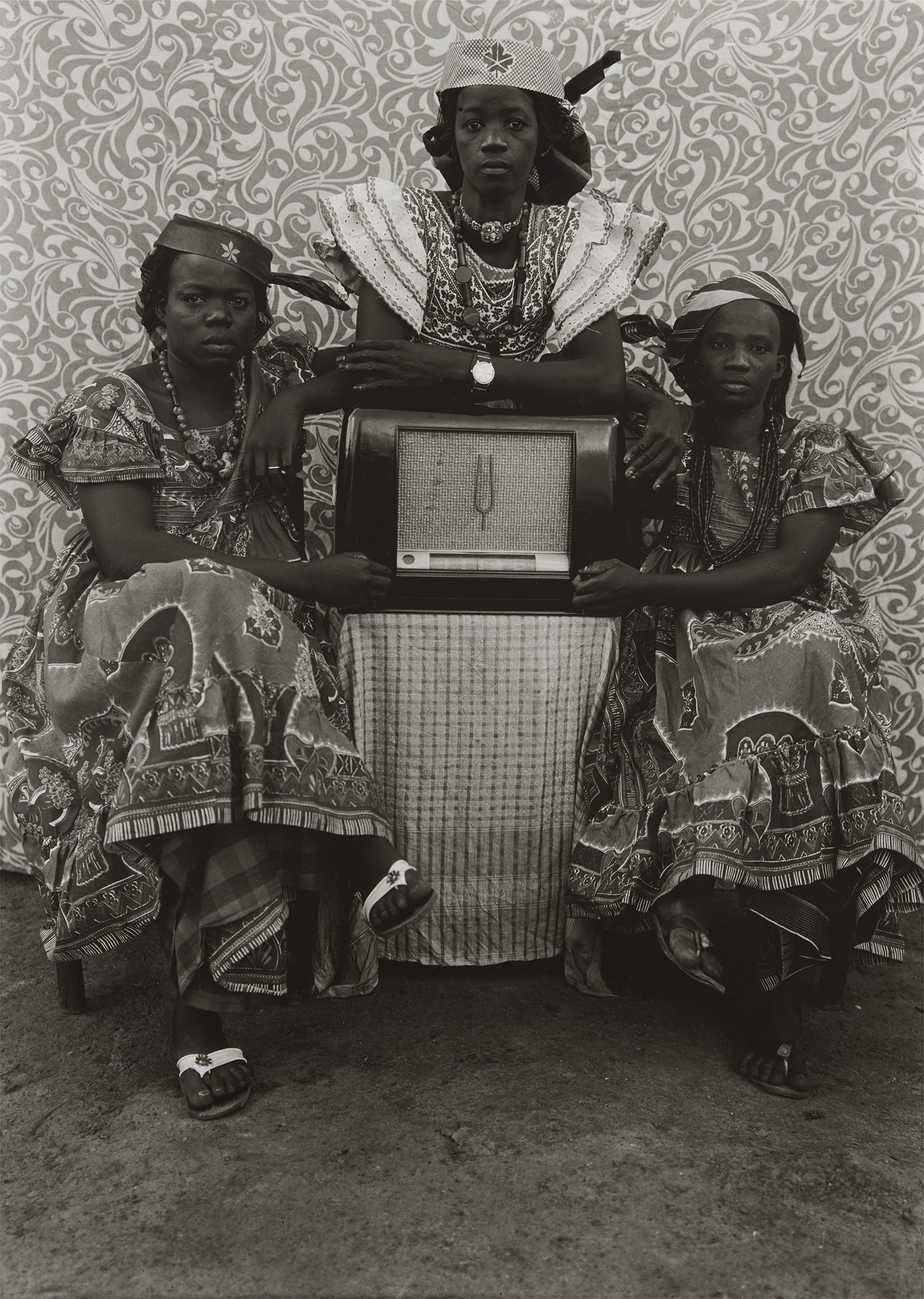
Three women wearing 'Grand dakar' dresses and 'a la de gaulle' headscarves
Today, his prints are held by the Museum of Modern Art in New York, the Fondation Cartier pour l'art contemporain in Paris, and the Smithsonian's National Museum of African Art in Washington, D.C., and his name is spoken alongside the great portraitists of any era. Keïta was born in Bamako in 1921, into a family of craftsmen.
His father was a carpenter, and Keïta grew up with a deep respect for the precision and care that skilled making demands. He taught himself photography in the early 1940s after his uncle gave him a camera, and by 1948 he had established his own studio on the Route de Koulikoro in Bamako. He was largely self taught, learning through practice, observation, and an instinctive understanding of light, fabric, and human presence. The studio became a destination.
Seydou Keïta
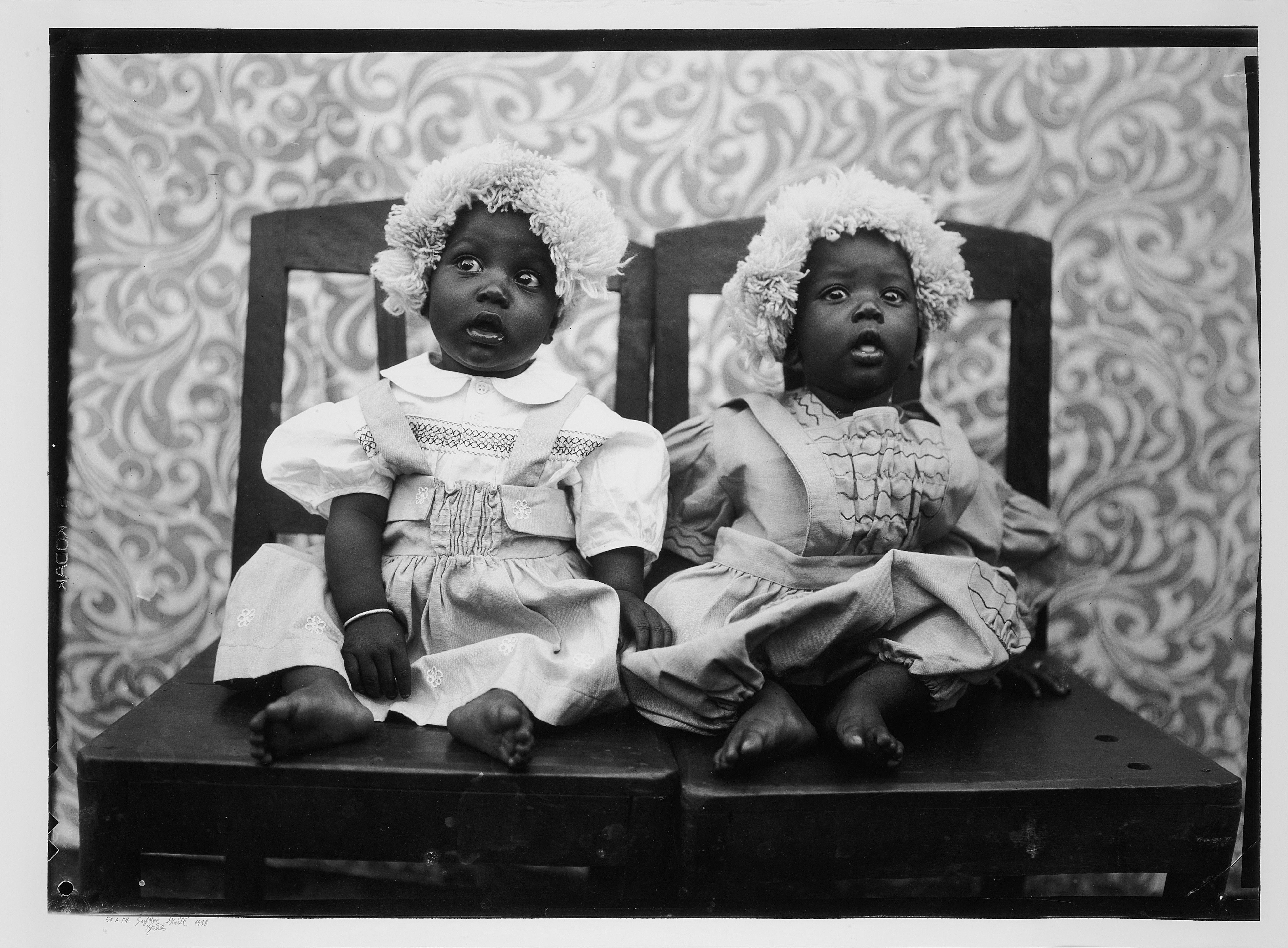
Untitled (Twins in European Dress), 1956
People came from across Bamako and beyond to be photographed by Keïta, drawn by his reputation for making his subjects look exactly as they wished to be seen. The period spanning roughly 1948 to 1963 represents the core of Keïta's practice and the heart of his legacy. These were the years of Malian independence, a moment of profound cultural transformation across West Africa, and Keïta's studio became an inadvertent archive of that transformation. His subjects arrived wearing their finest clothes, whether traditional boubous in intricate fabrics, European suits, or the elegant hybrid styles that defined mid century Bamako fashion.
Keïta understood that his role was not simply to record a likeness but to collaborate with his subjects in constructing an image of themselves as they aspired to be. He arranged the patterned cloth backdrops with great care, adjusted postures, and waited for expressions that balanced ease with authority. The results are portraits of extraordinary psychological depth. Among the most celebrated works on The Collection are pieces that demonstrate the full range of Keïta's formal intelligence.
Seydou Keïta
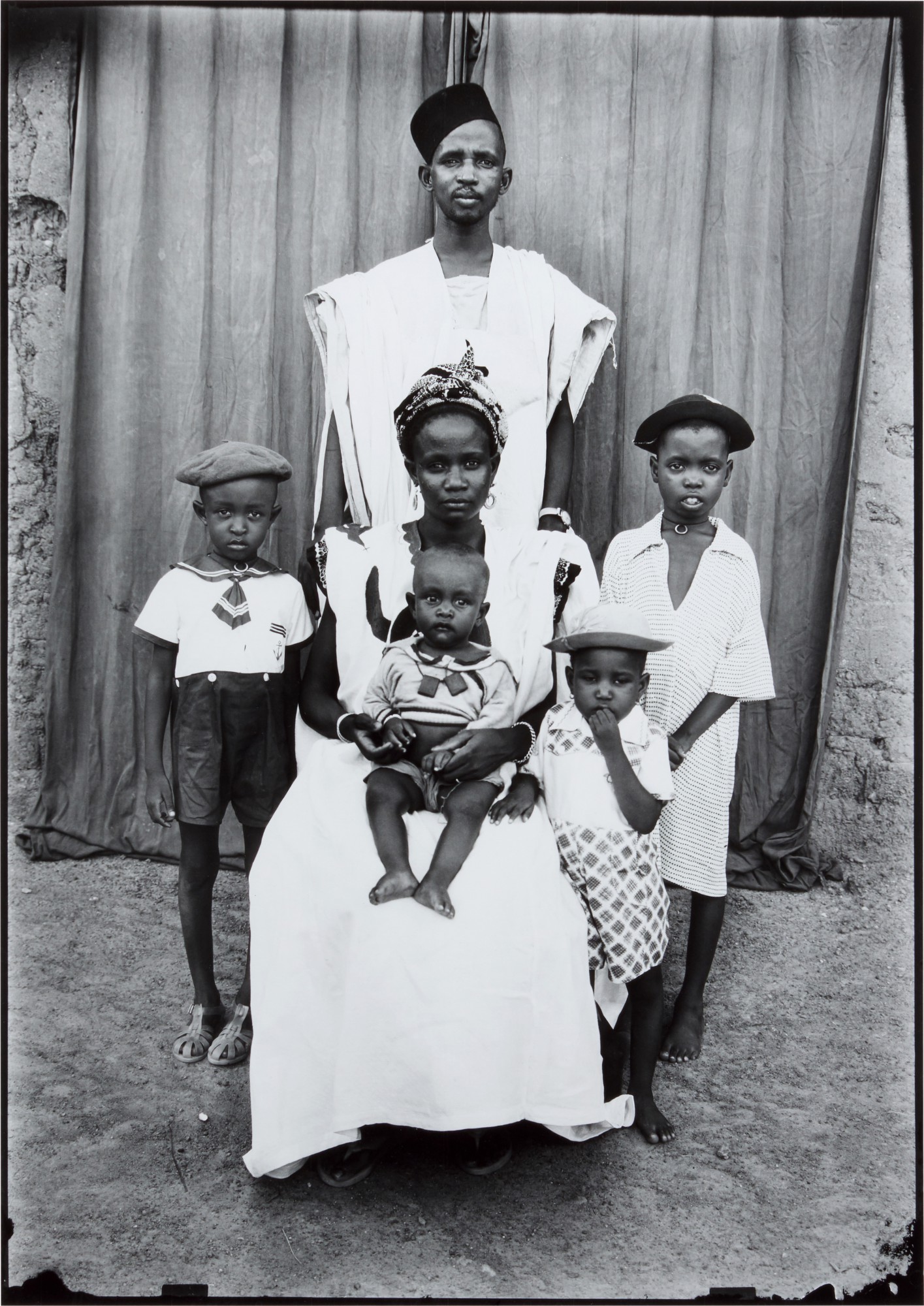
'Untitled (Family)', 1952-55
Three Women Wearing Grand Dakar Dresses and A La De Gaulle Headscarves is a masterwork of composition, its three figures arranged with the precision of a Renaissance altarpiece, the interplay of fabric patterns creating a visual rhythm that is almost musical. Untitled (Twins in European Dress) from 1956 is an intimate study in symmetry and individuality, the two figures echoing each other while each quietly insisting on their own distinctness. Portrait de Femmes avec Radio from the same year introduces a telling detail: the radio, a symbol of modernity and connection to a wider world, held with the same pride as any jewel. These objects within the portraits are never incidental.
They are statements. The rediscovery of Keïta's work in the 1990s is one of the great stories of late twentieth century art history. The French curator André Magnin played a pivotal role in bringing Keïta's archive to international attention, helping to arrange exhibitions that introduced this body of work to audiences in Europe and North America who had never encountered it. The 1994 exhibition at the Fondation Cartier in Paris was a turning point, and the critical response was immediate and almost unanimous in its admiration.
Seydou Keïta
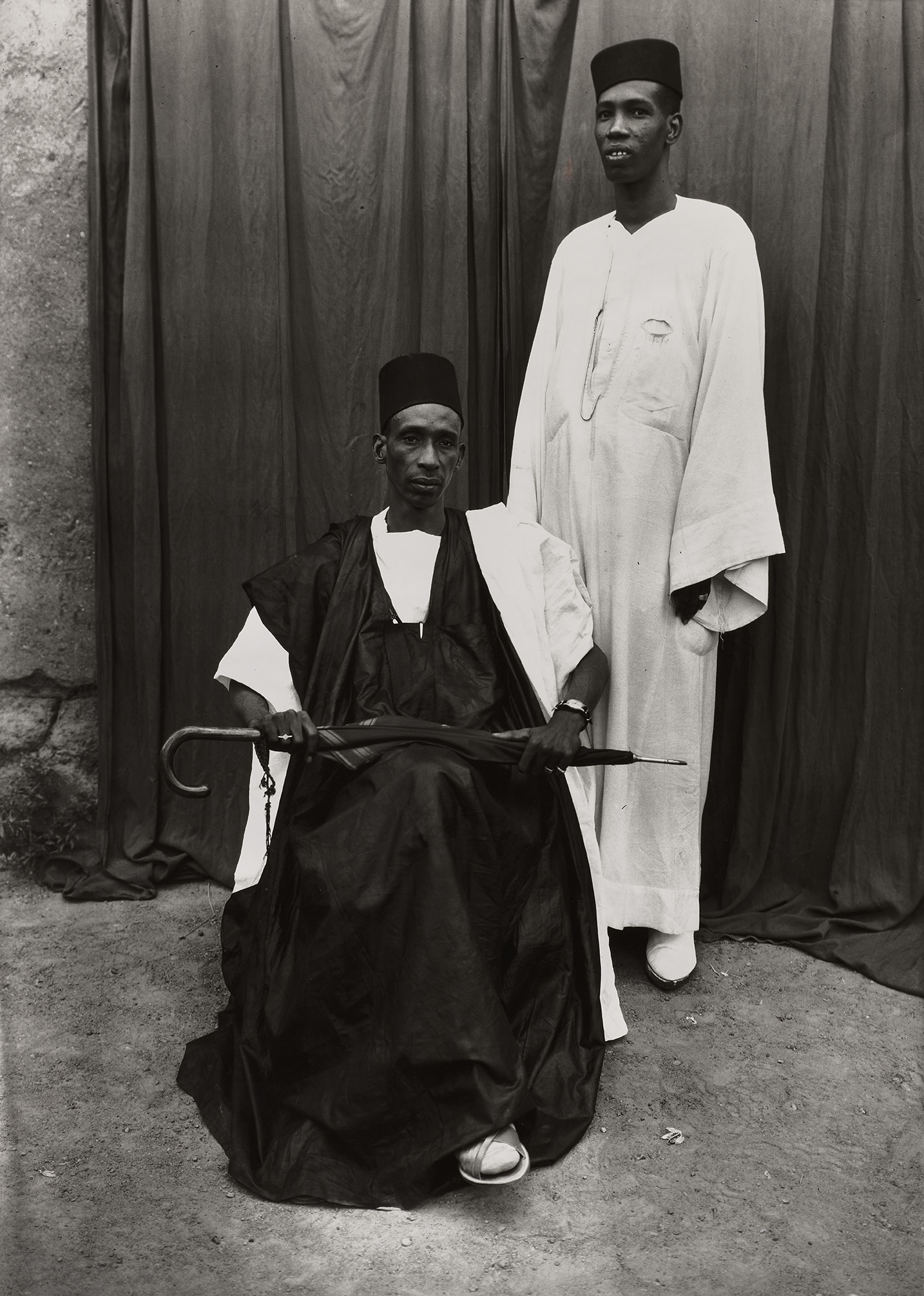
Homme Assis Avec Parapluie, Homme Debout En Blanc
Collectors and institutions moved quickly, recognising that Keïta's prints represented not only superb photography but also an irreplaceable visual record of a specific historical and cultural moment. Gelatin silver prints produced from Keïta's original negatives in the 1990s and early 2000s are the editions most commonly encountered on the primary and secondary markets, and they carry the authority of works made with the direct involvement of the artist before his death in 2001. For collectors approaching Keïta's work today, several considerations are worth holding in mind. The gelatin silver prints produced in limited editions during the final years of Keïta's life, some printed as late as 2001, represent the most direct connection to the artist's original vision.
Works that feature the richly patterned fabric backdrops for which Keïta is best known tend to attract the strongest collector interest, as do portraits that include significant cultural objects such as the radios, bicycles, and garments that populate his visual world. Keïta's work holds its value exceptionally well at auction, with major institutions continuing to acquire examples, and demand consistently outpacing supply at the upper end of the market. Those new to collecting Keïta would do well to prioritise condition and provenance, and to seek works that demonstrate his compositional confidence at its fullest. To place Keïta within art history is to understand how thoroughly he reshapes the assumptions of that history.
His work invites comparison with the great studio portraitists of the European and American traditions, from Nadar to Richard Avedon, but it also demands to be understood on its own terms. A useful point of comparison is the Guinean photographer Malick Sidibé, whose Bamako studio work of the 1960s and 1970s shares Keïta's commitment to portraying West African subjects with dignity and specificity, though Sidibé's sensibility is more youthful and spontaneous where Keïta's is formal and architectural. Samuel Fosso, working in Bangui from the 1970s onward, extended the tradition of the West African studio portrait in a more conceptually playful direction. Together these photographers constitute a lineage of enormous importance to the broader history of photography.
What Keïta ultimately gave the world is something that cannot be overstated: he returned the gaze. At a moment when images of African people were almost entirely made by outsiders, for outside audiences, and in service of outside narratives, Keïta created a space in which his subjects looked outward from a position of complete self possession. The woman in the studio on the Route de Koulikoro was not being observed. She was presenting herself, on her own terms, to history.
Decades later, standing before one of these prints in a gallery in Paris or New York or Bamako, you feel the full weight of that act. Seydou Keïta made portraits. He also made a profound argument about what it means to be seen.
Explore books about Seydou Keïta