Sergej Jensen
Sergej Jensen Finds Beauty in Every Thread
Artist Spotlight · The Collection Editorial
“I think there can be some kind of beauty even in the most damaged or strange way, because it's like some kind of floating.”
Sergej Jensen
There is a quiet revolution happening at the edges of contemporary painting, and Sergej Jensen is one of its most compelling architects. In recent years, his work has appeared with growing frequency at major institutional venues across Europe and North America, attracting the kind of sustained critical attention that marks an artist whose moment has fully arrived. His solo exhibition at the Whitechapel Gallery in London introduced his practice to a wider audience and confirmed what a devoted circle of collectors had long understood: that Jensen is producing some of the most emotionally intelligent and formally rigorous textile paintings of his generation. His presence in the collections of serious contemporary art institutions is a testament to the enduring power of work that refuses to shout.
Sergej Jensen
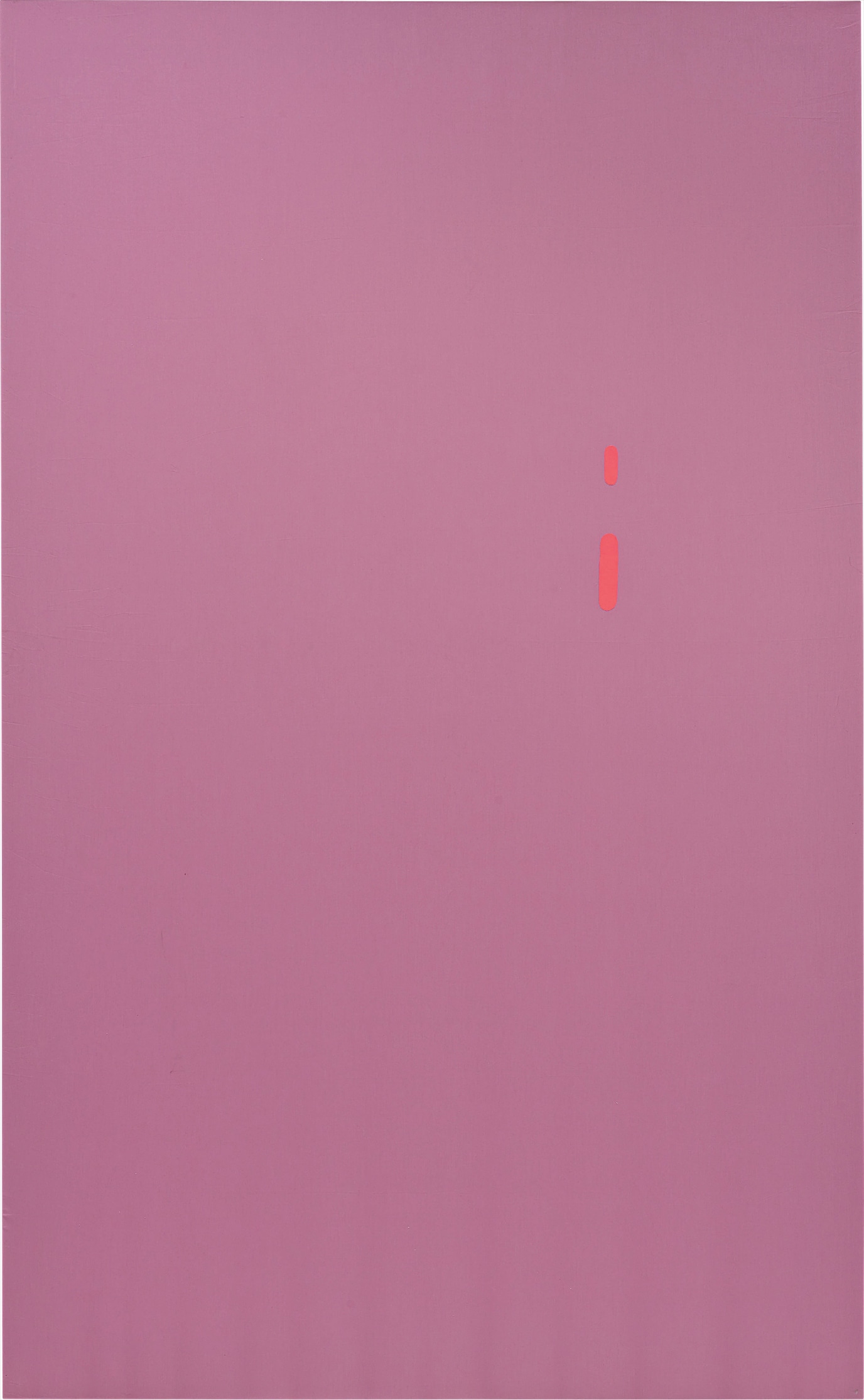
End of Society 2008, 2003
Jensen was born in Denmark in 1973 and grew up between Danish and German cultural contexts, a duality that would come to shape the quiet tension in his art. The Scandinavian tradition of craft, restraint, and material honesty runs through his sensibility like a thread through linen, while the rigorous conceptual discourse of the German art world gave him the intellectual scaffolding to push those instincts somewhere genuinely original. He studied in Germany, where he encountered the legacy of Arte Povera, post minimalism, and process based abstraction firsthand. These formative years gave him permission to treat the studio as a site of patient inquiry rather than dramatic gesture.
Jensen's artistic development has been defined by a sustained and almost devotional engagement with unconventional textile supports. Where other painters reach for canvas and oil, Jensen turns to burlap, jute, linen, denim, and carpet, materials that arrive in the studio already carrying a history. He applies bleach, dye, acrylic, oil paint, and occasionally precious pigments such as saffron, allowing these substances to interact with the weave of the fabric in ways that cannot be fully controlled or predicted. The results feel discovered rather than designed.
Sergej Jensen
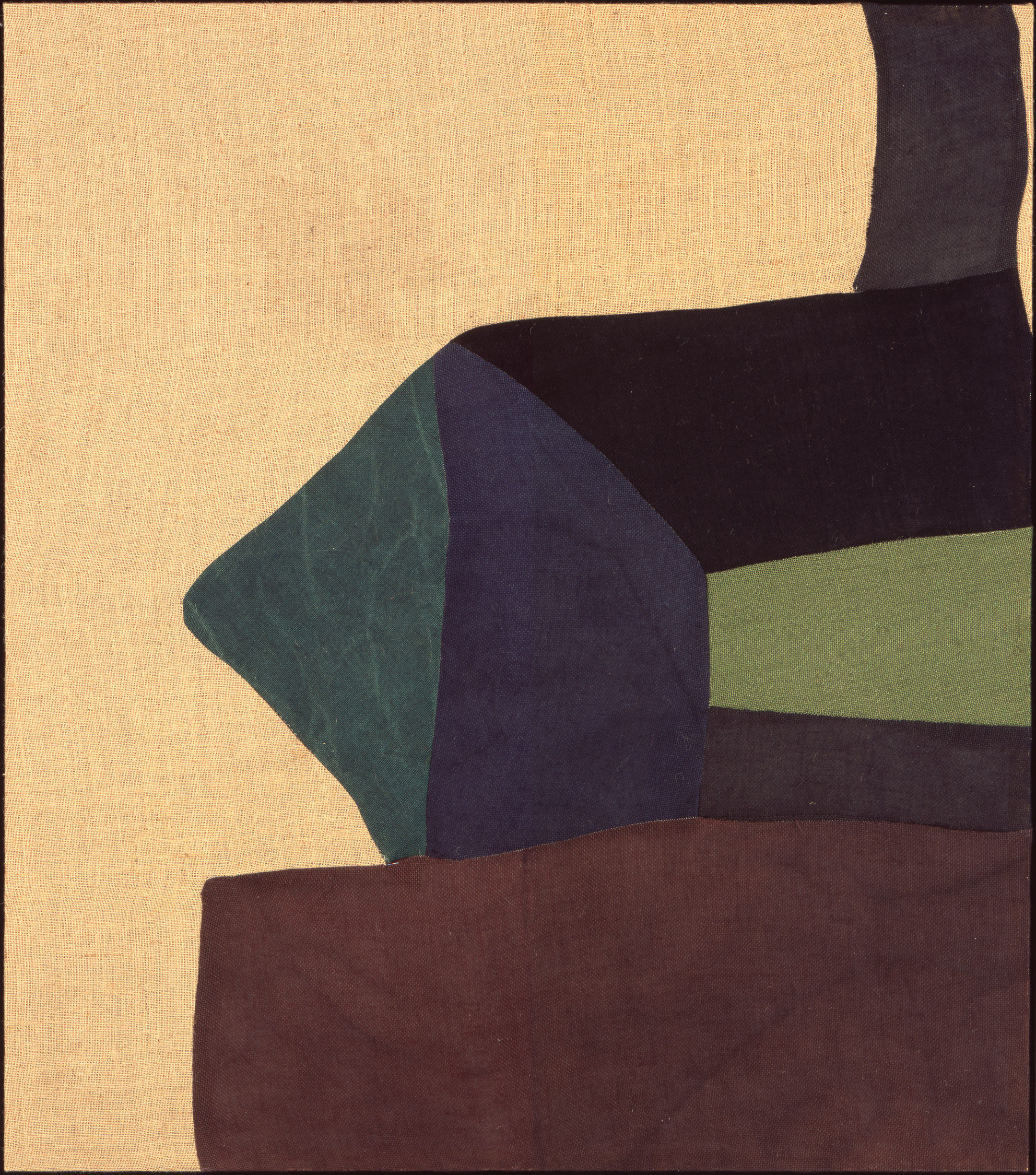
sewn jute, in artist's frame, 2005
Early works from the mid 2000s, including pieces made from sewn jute and linen, established his vocabulary clearly: seams become compositional elements, raw edges become statements, and the support itself becomes inseparable from the image. Among his most celebrated works, the pieces from 2004 and 2005 hold a particular place in the hearts of those who follow his career closely. "Since You Left" from 2004 and "1982 (nach Josef Strau)" from the same year, the latter made with acrylic on fabric, demonstrate how Jensen layers personal and cultural reference without ever becoming illustrative or anecdotal. The title "1982 (nach Josef Strau)" nods to his friendship and dialogue with the writer and artist Josef Strau, gesturing toward a collaborative intellectual world where painting, text, and friendship are mutually sustaining.
"End of Society 2008" from 2003 offers a similarly charged title attached to a work of great material delicacy, a combination that feels characteristic of his best thinking. "Werewolf," made with oil paint and saffron on linen, shows how far his palette can reach when he allows himself a moment of warmth and strangeness simultaneously. The market for Jensen's work has matured steadily and intelligently. His paintings are not acquired impulsively; they reward careful looking and a willingness to sit with ambiguity.
Sergej Jensen
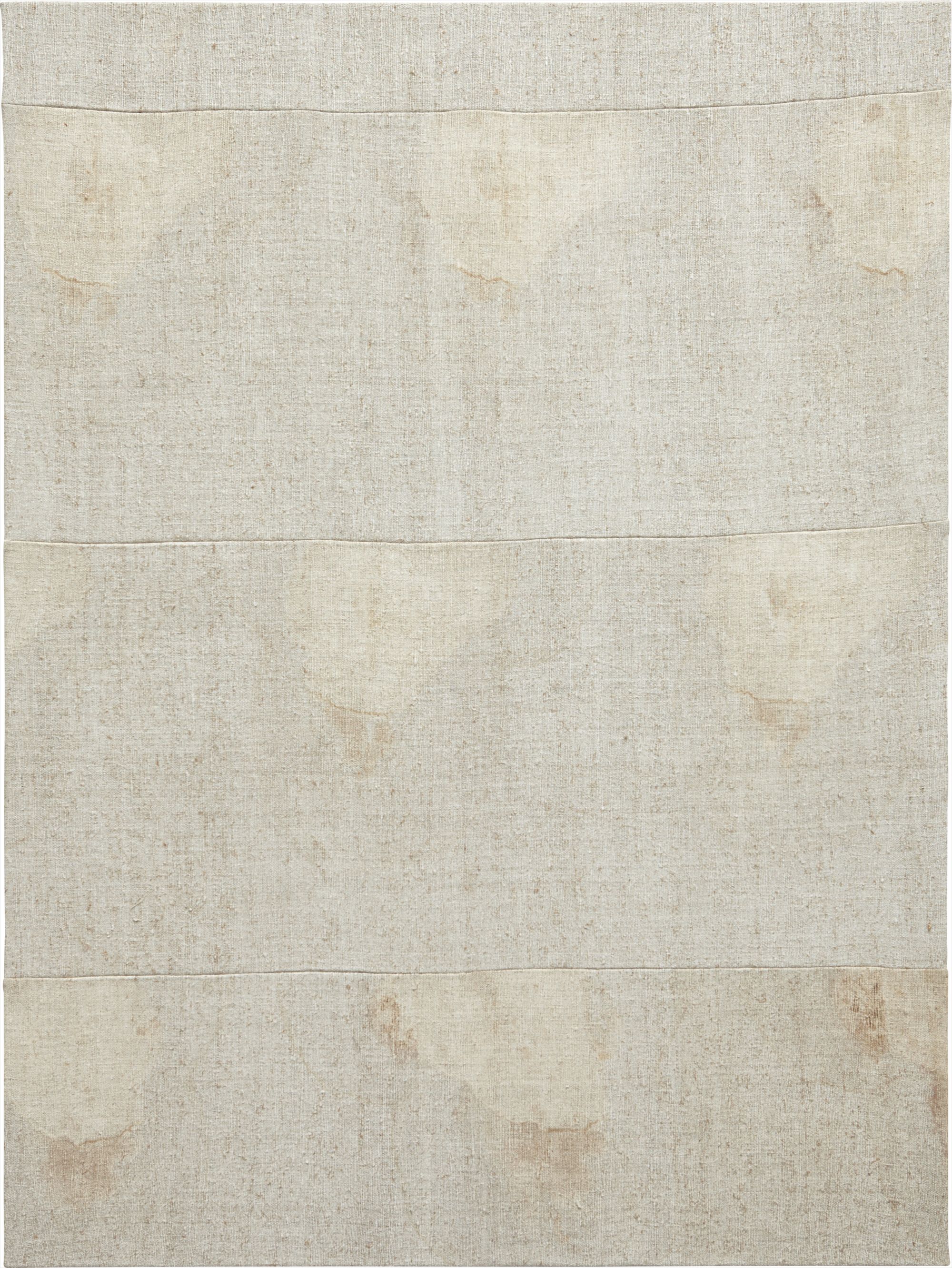
sewn linen
Collectors who have built meaningful holdings of his work tend to describe the experience of living with a Jensen as something that deepens over time, revealing new textures and relationships as the light changes across a room. Works on sewn fabric and linen on stretcher, such as the 2009 piece in his catalogue, exemplify this quality. They do not perform for the viewer on first encounter. They wait.
Collectors drawn to the trajectory of Minimalism and to artists who work at the intersection of painting and textile craft have found in Jensen a figure who synthesises those interests with rare intellectual honesty. His prices reflect sustained institutional validation rather than speculative heat, making his work an appealing proposition for collectors building for the long term. Within the broader landscape of contemporary art, Jensen sits comfortably alongside artists who have questioned the boundaries of painting through material experimentation and process. His work resonates with the legacy of Robert Rauschenberg's combines, with the textile sensibility of Alighiero Boetti, and with the reductive rigor of Agnes Martin, though his voice is entirely his own.
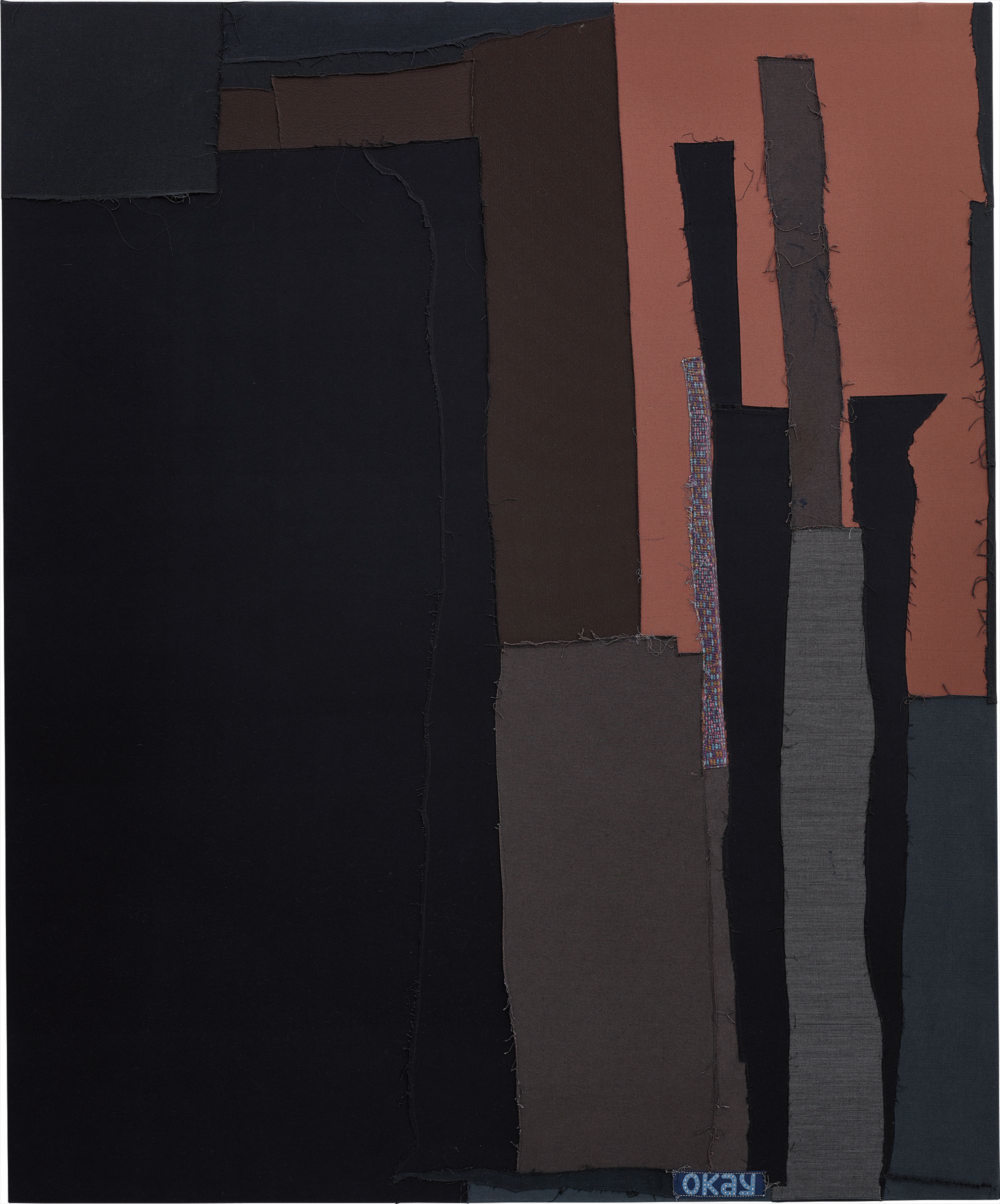
Sergej Jensen
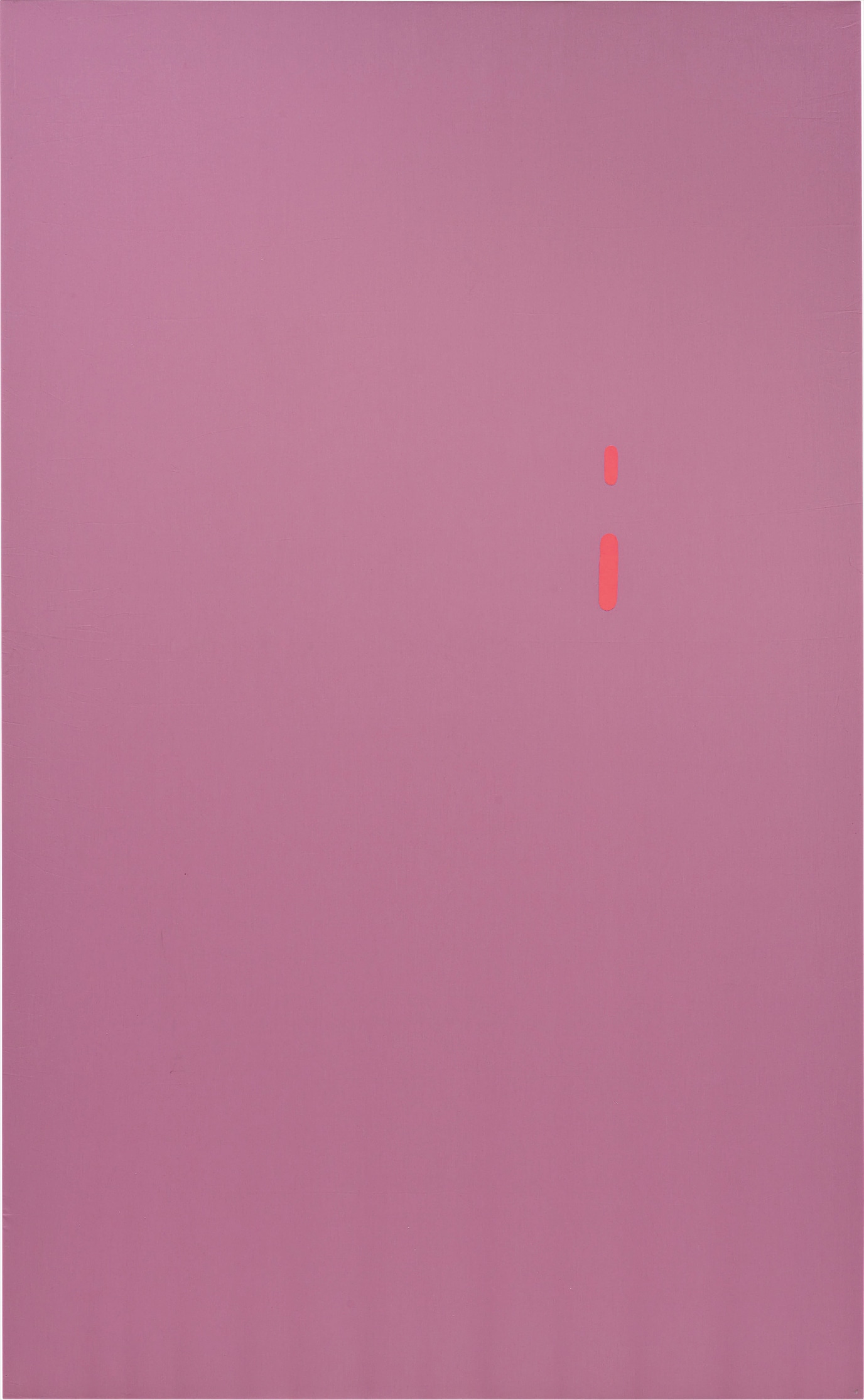
Okay, 2010
He shares with certain younger painters an interest in the social and emotional life of materials, in what fabric remembers and what bleach can reveal. His exhibitions at the Kunsthalle Zürich and the Museum of Contemporary Art Los Angeles placed him in an international conversation that spans continents and generations, confirming that his concerns are neither provincial nor narrowly disciplinary. What makes Jensen genuinely important at this moment is the quality of attention his work demands and rewards. In an art world that sometimes prizes spectacle and immediate legibility, he insists on slowness, on materiality, on the kind of beauty that asks something of the viewer.
His own words capture this orientation with disarming clarity: there can be some kind of beauty even in the most damaged or strange way, he has said, because it is like some kind of floating. That floating quality, that suspension between intention and accident, between the handmade and the conceptual, is precisely what his best works achieve. For collectors and institutions committed to the idea that painting still has unexplored territories, Sergej Jensen offers something rare and genuinely sustaining.