Sergei Ivanovich Lobanov
Russia's Quiet Light, Finally Seen
Artist Spotlight · The Collection Editorial
There is a particular quality of light that belongs to the Russian countryside in late summer, a golden, unhurried warmth that settles over fields and farmsteads as though time itself has agreed to slow down. It is precisely this quality that Sergei Ivanovich Lobanov understood with rare intimacy, and it is what draws collectors and scholars back to his work with renewed appreciation in an era hungry for sincerity and rootedness. Lobanov painted not to impress academies or courts, though he was shaped by academic tradition, but to record the world around him with honesty and care. In that honesty lives something that feels, against all odds, urgently contemporary.
Sergei Ivanovich Lobanov
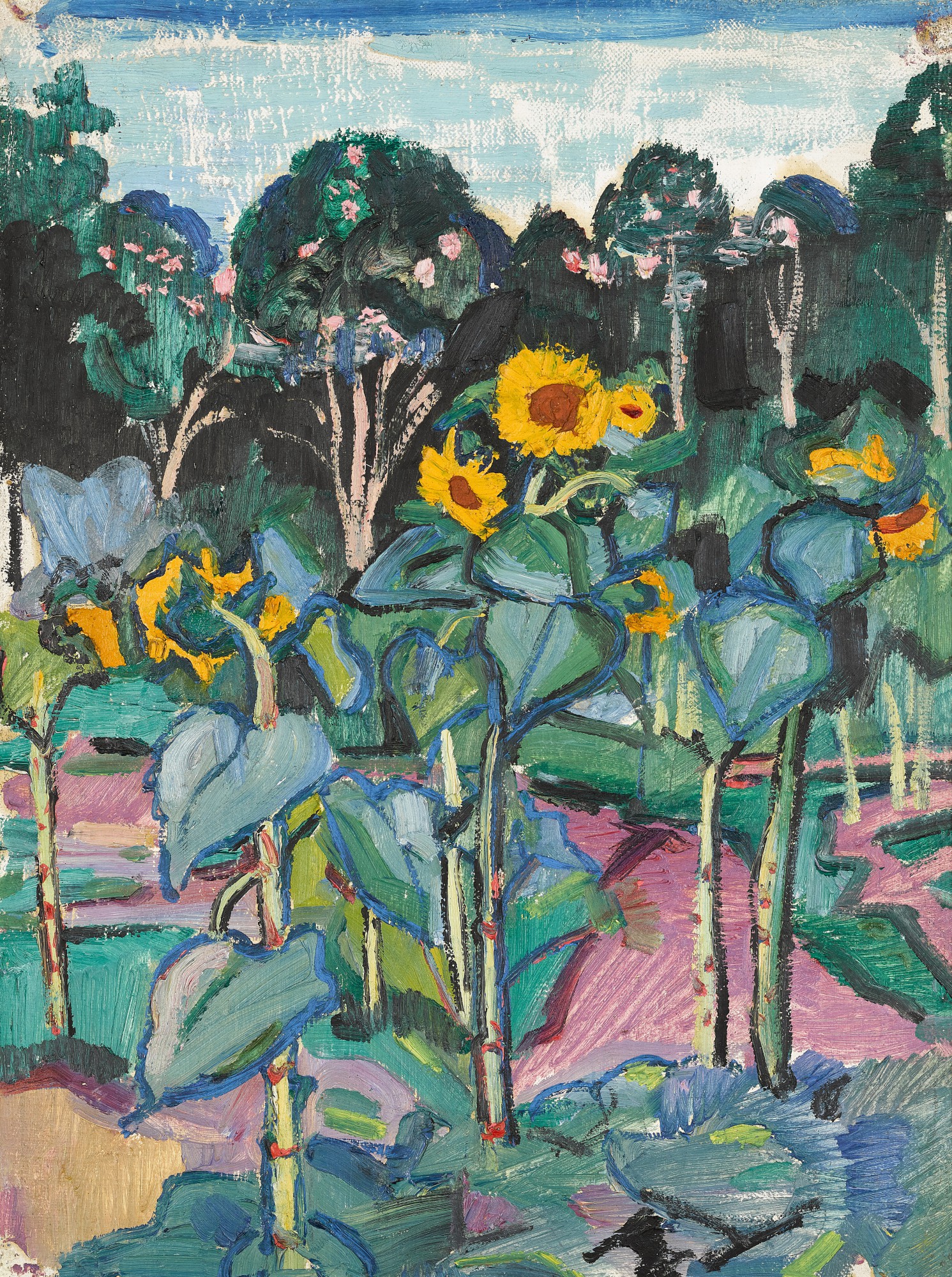
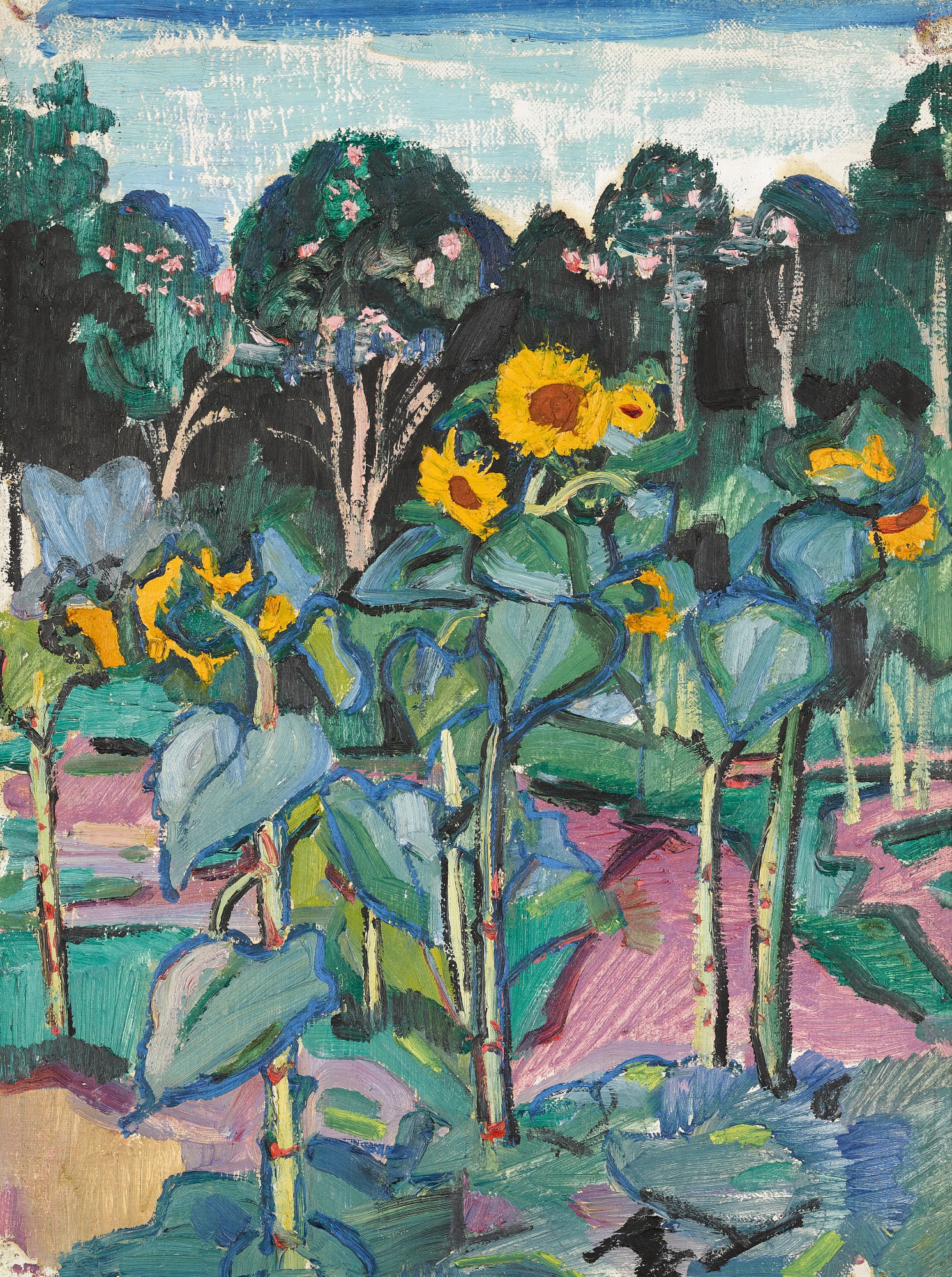
Sunflowers
Lobanov was a Russian painter and graphic artist working through the rich and tumultuous landscape of nineteenth century Russian art. This was a period of enormous cultural ferment in Russia, when the tension between European academic influence and a distinctly native artistic sensibility was pulling talented painters in competing directions. The great Peredvizhniki, or Wanderers, were reshaping what Russian painting could mean by the 1870s, insisting that art belong to the people and to the land rather than to the salon. Lobanov came of age artistically within this atmosphere, absorbing the academic rigor that formed the backbone of his draftsmanship while remaining deeply attentive to the textures and moods of Russian life.
The academic tradition in Russia during the nineteenth century was anchored by the Imperial Academy of Arts in Saint Petersburg, an institution that had shaped generations of painters since its founding in 1757. The Academy demanded technical excellence, an understanding of European masters, and a command of both portraiture and composition that left its graduates with formidable skills. Lobanov's training within this tradition is evident in the structural confidence of his work, the way a figure occupies space with authority, the way a landscape is organized so that the eye moves through it with pleasure and purpose. Yet what distinguishes him from a merely competent academician is the warmth he brings to his subjects, a genuine affection for the people and places he depicts.
Lobanov worked across two of the most enduring genres in Western art history: landscape and portraiture. These were not separate pursuits for him but complementary ways of understanding his world. A portrait, after all, is a kind of landscape of the self, and a landscape carries within it the character of the people who inhabit it. In his landscapes, Lobanov demonstrated a sensitivity to seasonal mood and atmospheric condition that allies him, in spirit if not always in direct influence, with the great plein air traditions developing simultaneously across Europe.
In his portraits, he revealed individuals with a directness that feels neither flattering nor harsh but simply true. Among the works associated with Lobanov, the oil on canvas piece known as Sunflowers stands as a particularly compelling example of his sensibility. Sunflowers as a subject occupied many painters of the nineteenth and early twentieth centuries, from Van Gogh's electrifying visions in the late 1880s to quieter domestic interpretations across Eastern Europe. Lobanov's approach to the subject is characteristically grounded.
The work, executed in oil on canvas laid on board, a support that gives the surface a particular intimacy and solidity, reflects the artist's interest in the natural world as a source of beauty that requires no theatrical elaboration. The choice of a modest, familiar flower as a subject is itself a statement: great painting does not require grand themes, only genuine attention. For collectors approaching Lobanov's work today, the appeal is layered. There is first the purely aesthetic pleasure of paintings that reward sustained looking, works built with craft and conviction that hold up beautifully in a domestic interior.
Then there is the historical dimension: nineteenth century Russian painting outside the most famous names of the Peredvizhniki movement remains an area where genuine discoveries are still possible, where a patient and discerning collector can acquire works of real quality and art historical significance without competing in the hyperactive auction market that surrounds more celebrated names. Artists who shared Lobanov's world and concerns, painters navigating the same tensions between academic form and Russian feeling, include figures such as Vasily Polenov, whose luminous landscapes redefined the relationship between Russian painting and natural light, and Ilya Repin, whose monumental portraits and historical canvases brought Russian art to international attention in the 1870s and beyond. Lobanov worked in a quieter register than either of these giants, but his work belongs in the same broad tradition. The market for nineteenth century Russian academic painting has shown consistent strength among collectors with a deep knowledge of the field.
Works on board or canvas from this period, particularly those in good condition with clear provenance, represent a category where scholarship is still actively expanding. Lobanov sits within a group of artists whose reputations have been shaped more by the devotion of specialists than by the machinery of major auction houses, and this is precisely the kind of artist that experienced collectors know to pay attention to. The window of opportunity to acquire work by painters of this caliber, before broader institutional and critical recognition consolidates, is one that serious collectors throughout history have learned to recognize and act upon. Lobanov's legacy is one of faithful witness.
He looked at Russia, at its fields and its faces, and he painted what he saw with skill, patience, and evident love. In an art world that sometimes prizes disruption and concept above all else, there is a countervailing hunger for work like his: work that asks only for your presence, your willingness to look, and rewards that willingness generously. To encounter a Lobanov is to be reminded that painting at its most essential is a conversation between a seeing eye and a feeling hand, and that this conversation, conducted honestly, produces something that time cannot diminish.