Senga Nengudi
Senga Nengudi, The Body Reimagined Forever
Artist Spotlight · The Collection Editorial
“I wanted to express the stress and distress of the body through the medium of nylon.”
Senga Nengudi, artist statement
When the Museum of Modern Art in New York acquired works from Senga Nengudi's legendary R.S.V.P.
Senga Nengudi
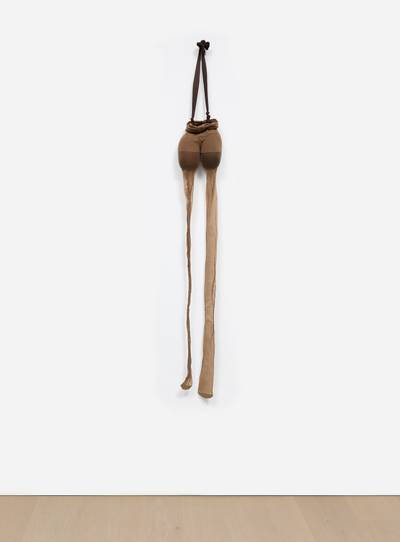
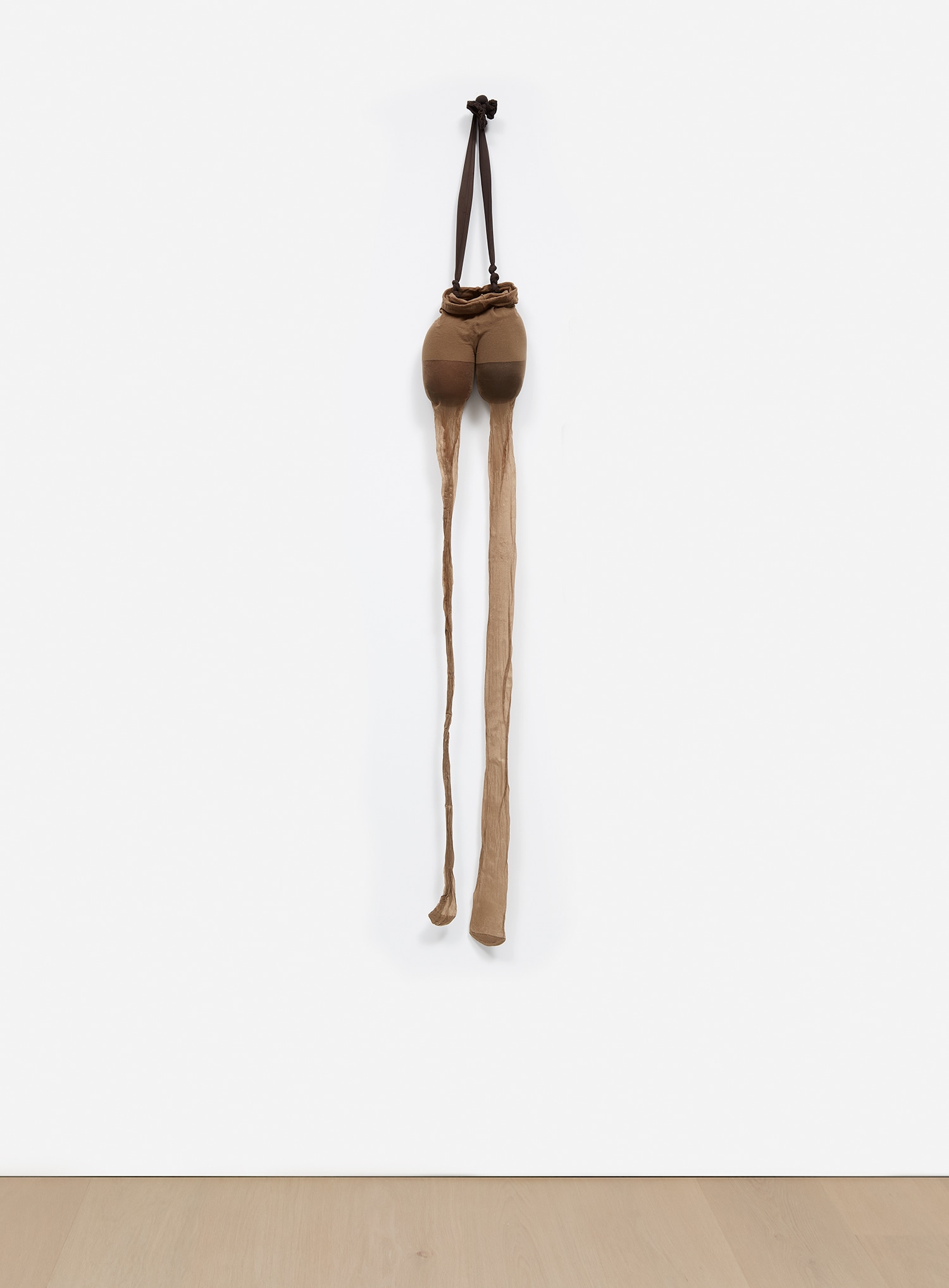
R.S.V.P. Reverie—Stale Mate, 2014
series, it was a moment that felt less like institutional recognition and more like a long overdue homecoming. Nengudi had been making radical, body conscious sculpture since the early 1970s, working largely outside the commercial gallery system, her practice threaded through with performance, ritual, and a profound attentiveness to the physical and emotional textures of Black womanhood. Today, with her work held by MoMA, the Tate, and the Hammer Museum, and with retrospectives continuing to introduce her to new generations of artists and collectors, it is clear that Nengudi has always been ahead of the conversation, not catching up to it. Born in Chicago in 1943 and raised in Los Angeles, Nengudi came of age in a city that was itself stretching and remaking its cultural identity.
She studied at California State University in Los Angeles, where she earned a master's degree in sculpture, and later spent time in Japan, an experience that deepened her engagement with Zen philosophy, the aesthetics of impermanence, and the spiritual dimensions of everyday objects. Los Angeles in the late 1960s and early 1970s was a crucible of experimental art, and Nengudi found herself embedded in a remarkable community of artists who were pushing hard against the boundaries of what art could look and feel like. That community included figures such as David Hammons, Maren Hassinger, and Houston Conwill, artists who were collectively redefining what it meant to make politically and spiritually engaged work outside the dominant white institutional frameworks of the time. Nengudi was a founding member of Studio Z, an artist collective in Los Angeles that served as a vital meeting ground for collaboration and experimentation.
These relationships were not incidental to her practice. They were constitutive of it. Her work has always understood that bodies exist in relation to other bodies, that art is made not just in solitude but in conversation. The R.
S.V.P. series, begun in 1975, is the work for which Nengudi is most celebrated, and it remains among the most original contributions to American sculpture in the twentieth century.
The series takes as its primary material the nylon mesh stocking, an object intimately associated with femininity, labor, and the social performance of the body. Nengudi stretches, ties, knotted, and weights these stockings with sand, attaching them to walls and floors in configurations that suggest limbs under strain, bodies in rest, muscles contracted in effort or fatigue. The results are at once abstract and viscerally human, calling to mind the pressures that accumulate on bodies across a lifetime, particularly the bodies of women and of people who carry histories of physical and social constraint. What makes the R.
S.V.P. series so enduring is precisely this quality of double vision.
The works operate as pure formal sculpture, with Nengudi demonstrating an extraordinary sensitivity to line, tension, and the behavior of materials under stress. But they are never merely formal. The sand that weights each piece is a reminder of duration, of accumulation, of gravity's patient insistence on all living things. The nylon, a synthetic skin, speaks to the mediated, constructed nature of the body in modern life.
When Nengudi performed with these works, as she did in documented performances of the late 1970s, the sculpture became a kind of second body, a responsive partner in a dialogue about vulnerability and endurance. The work R.S.V.
P. Reverie, Stale Mate, created in 2014, offers collectors a window into the mature phase of this practice. In this piece, Nengudi revisits and extends the language she developed four decades earlier, demonstrating that the R.S.
V.P. series is not a historical artifact but a living system of inquiry. The word reverie in the title is telling.
It suggests something meditative, suspended, hovering at the threshold between the conscious and the unconscious. Stale mate adds a note of arrested motion, a moment held, as in chess, at the point of equilibrium where forward movement has paused. Together these words describe a condition that feels both personal and universal, the body in stillness, thinking. For collectors, Nengudi's work presents a rare combination of formal beauty, intellectual substance, and historical significance.
She belongs to a generation of artists, including Ana Mendieta, Adrian Piper, and Carolee Schneemann, who fundamentally transformed the relationship between the body and the art object, and whose work continues to be reassessed as essential rather than marginal to the story of postwar art. The institutional embrace of Nengudi's practice, evidenced by acquisitions at some of the world's most significant museums, signals not just art historical importance but sustained collecting momentum. Works that entered private collections in the early years of her rediscovery have appreciated considerably, and demand from both institutional and private buyers remains strong. Context within art history places Nengudi in productive dialogue with artists across several traditions.
Her use of humble, everyday materials connects her to Arte Povera and to the process art of the late 1960s. Her engagement with performance and the ephemeral links her to figures like Yoko Ono and Trisha Brown. Her specific focus on the Black female body as both subject and medium situates her as a foundational figure in a lineage that runs through Kara Walker, Simone Leigh, and Theaster Gates, artists who have each, in their own way, wrestled with the weight of history as it is carried in and on the body. To collect Nengudi is to position oneself at an intersection of multiple vital conversations in contemporary art.
Nengudi's legacy is ultimately one of generosity and precision. She gave the art world a new way of thinking about sculpture, about performance, about the body as both material and metaphor. She did this quietly, collaboratively, and with extraordinary consistency over five decades. The retrospective attention she has received in recent years is a correction of the historical record, an acknowledgment that some of the most important work of the 1970s was made not in New York galleries but in Los Angeles studios, not for the market but for the sheer necessity of expression.
That work now has the audience it always deserved, and for collectors who understand the arc of art history, that is an invitation worth accepting.
Explore books about Senga Nengudi