Sean Scully
Sean Scully, Painting the Human Condition
Artist Spotlight · The Collection Editorial
“I want to make an art that relates to the greatest and most important things that human beings feel.”
Sean Scully, interview with Artstudio, 1989
In the autumn of 2023, the Städel Museum in Frankfurt mounted a sweeping survey of Sean Scully's work that drew thousands of visitors into rooms alive with stripes, bands, and fields of colour so charged with feeling they seemed to breathe. It was the kind of exhibition that reminds you why abstraction still matters, why paint on a surface can hold as much grief and joy and tenderness as any figure ever could. Scully, now in his late seventies and still painting with ferocious energy, stood at the centre of that cultural moment not as a relic to be celebrated but as a living force whose relevance feels more urgent than ever. Few artists of his generation have managed to sustain such critical and popular momentum across six decades of practice.
Sean Scully
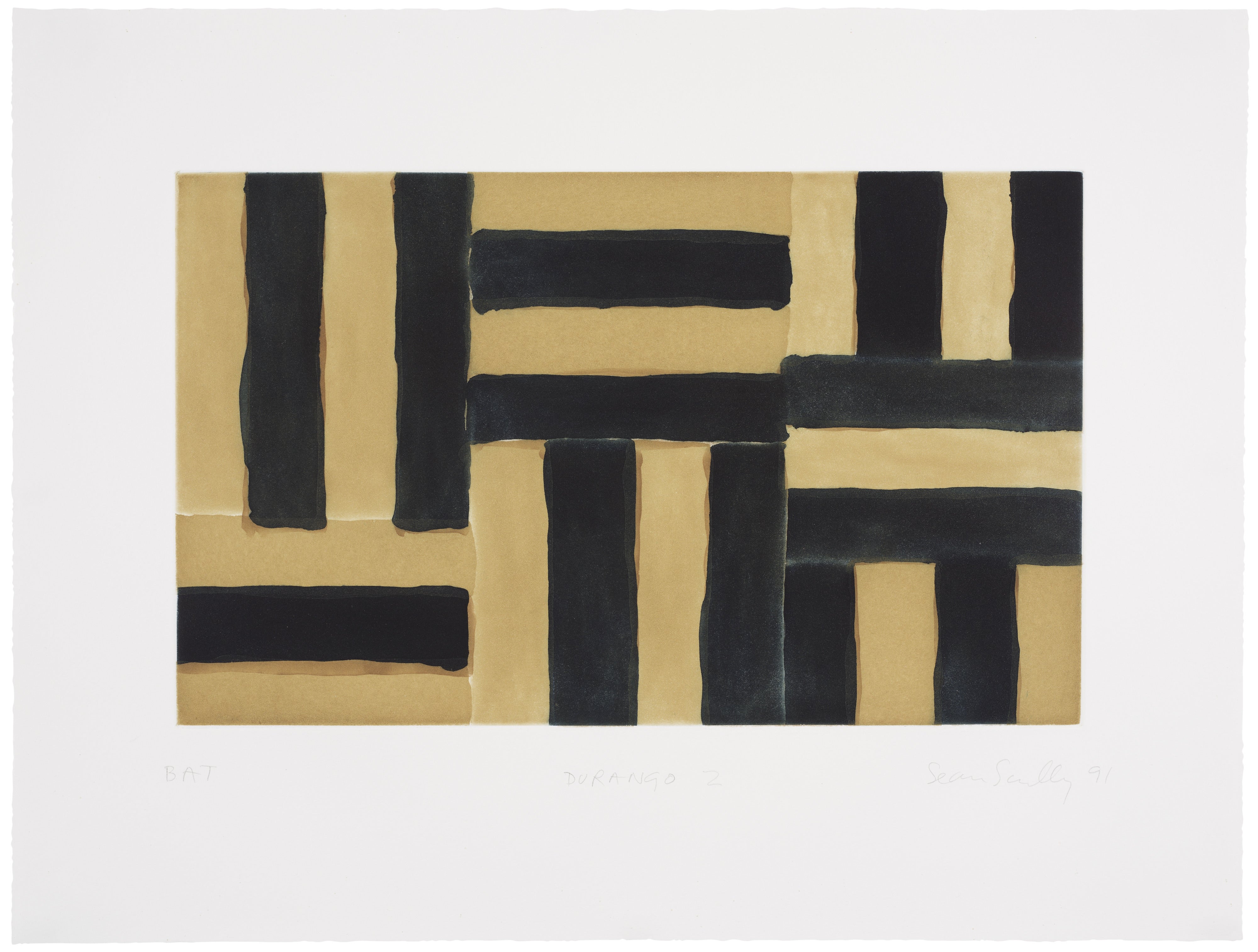
Durango 2 (G.S.A. 91009)
Scully was born in Dublin in 1945 and grew up in London, where his family had emigrated when he was a child. He was raised in working class South London, in the neighbourhood of Sydenham, and the textures of that world, its grit, its warmth, its stoic endurance, left a permanent impression on his sensibility. He studied at Croydon College of Art and later at Newcastle University, where he encountered the rigorous traditions of European modernism alongside the expansive ambitions of American abstraction. A pivotal scholarship took him to Harvard in the early 1970s, and he subsequently settled in New York, where the scale and intensity of the city's art world gave his emerging practice room to grow.
That movement between the Irish, the British, and the American fed a kind of creative restlessness that became the engine of his art. In New York during the 1970s Scully was initially drawn to hard edged geometric abstraction, producing canvases of strict, precise patterning that showed a clear dialogue with the work of artists such as Frank Stella and Brice Marden. But something began to shift in the late 1970s and into the 1980s, as Scully loosened the geometry, allowing the stripes that had always been his primary vocabulary to carry more visible paint, more texture, more evidence of the hand. A trip to Morocco in 1969 had already planted a seed: he encountered the light filtering through striped canvas doorways in the markets of Marrakech and recognised something universal in that simple structure of alternating dark and light.
Sean Scully
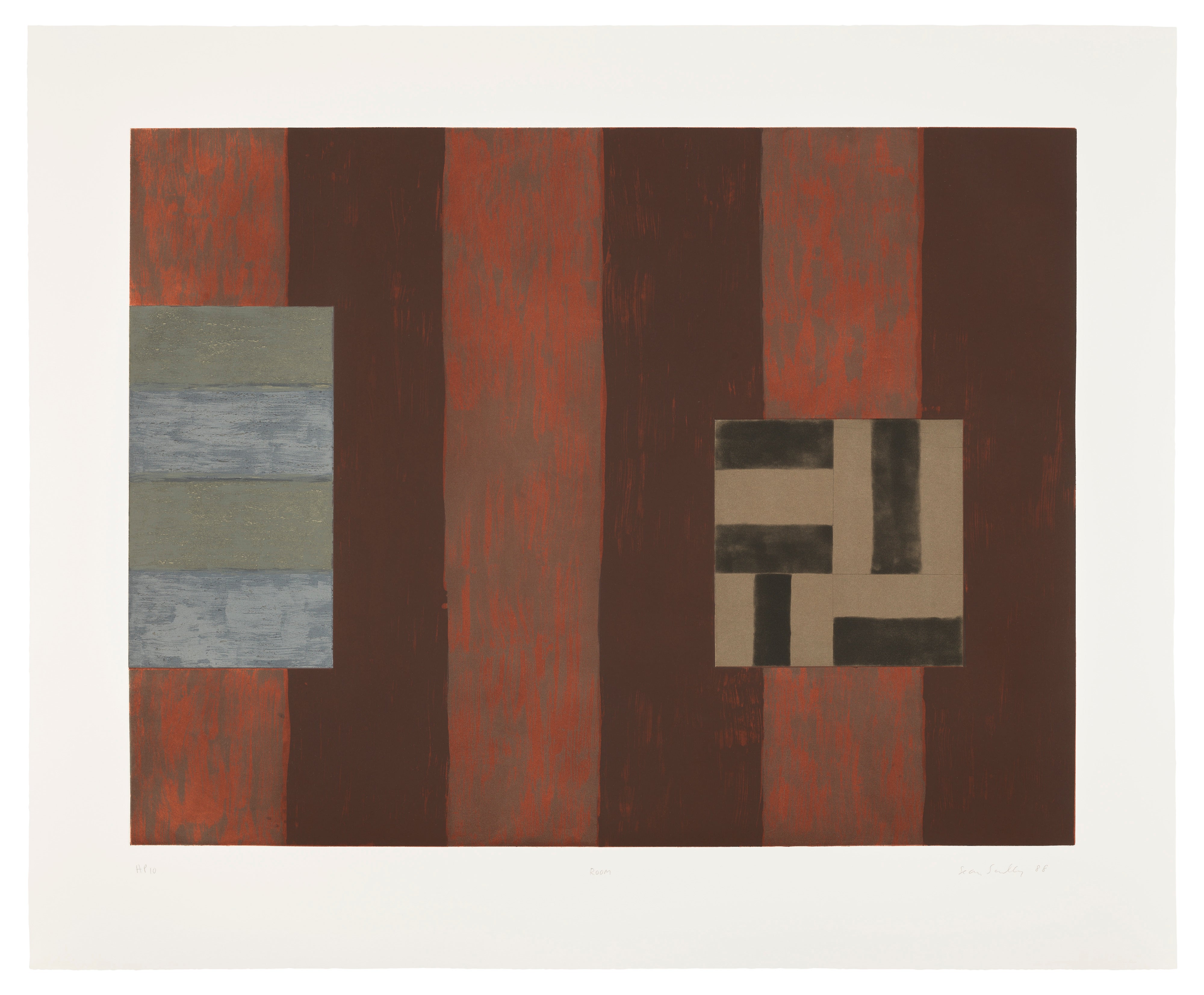
Room (G.S.A. 88002)
From that point forward, the stripe was not merely a formal device but a metaphor, a way of describing the rhythms of human experience, the way light and shadow, presence and absence, alternate through a life. The breakthrough came in the early 1980s with a series of large scale paintings that introduced the inset panel, a smaller canvas embedded within a larger one, disrupting the expected flow of bands with a kind of visual interruption that felt both jarring and deeply right. Works such as those in the Backs and Fronts series showed Scully developing a structural device that would become one of his signatures, the sense of a painting within a painting, of one voice speaking inside another. By the time his 1989 retrospective at the Whitechapel Gallery in London arrived, he had already been shortlisted for the Turner Prize, and the critical world had taken full note.
“The stripe is the most basic way of organizing a surface. It is the beginning of painting.”
Sean Scully, interview with Bomb Magazine
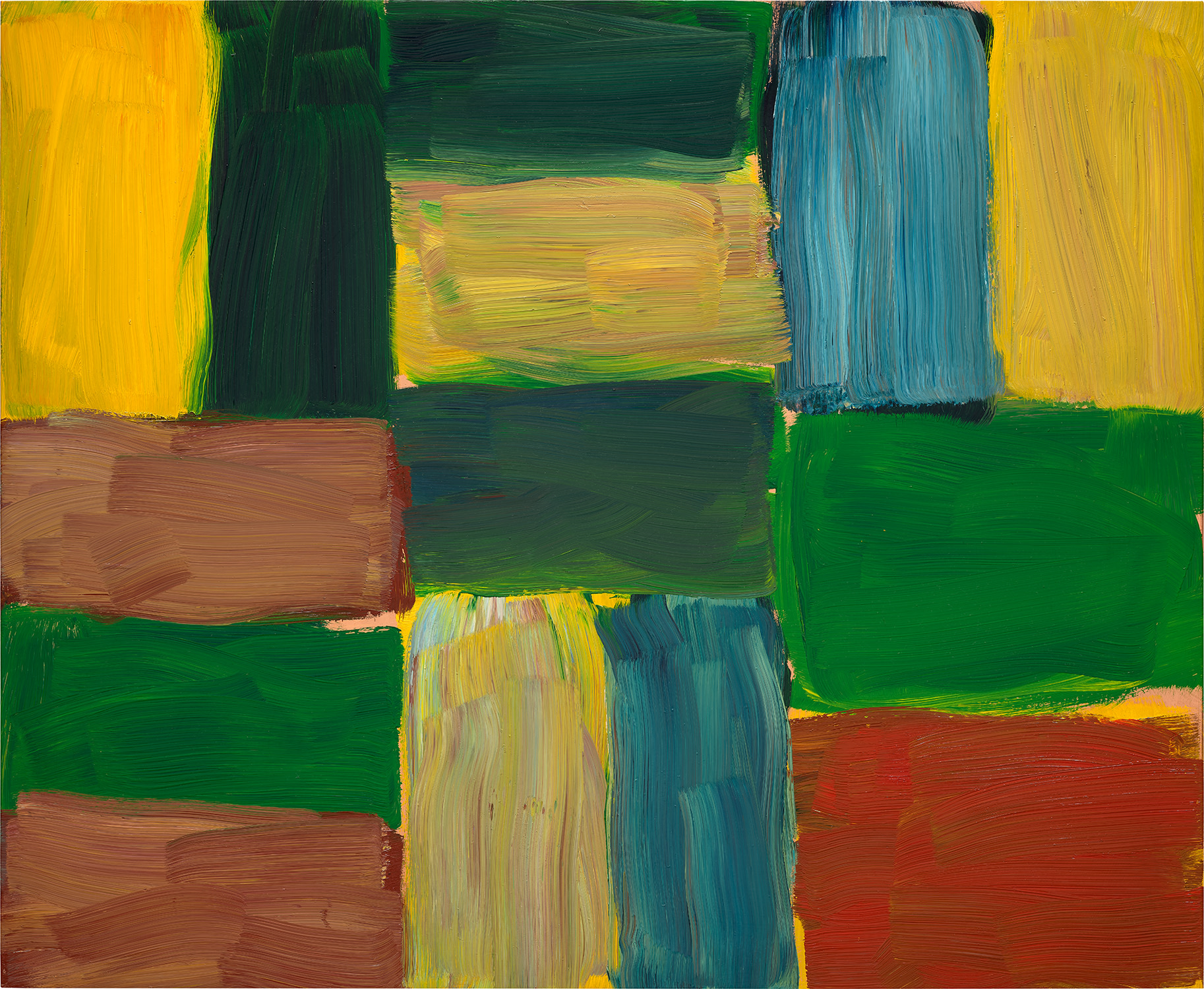
Museums and collections across Europe and the United States were acquiring his paintings with increasing seriousness. Among the works that define his achievement, the Wall of Light series holds a special place. Begun after travels to Mexico in 1983, these paintings take their cue from the ancient stone walls Scully encountered there, structures built by human hands and worn by time, each block of stone slightly different in hue and texture from the next. The Wall of Light paintings translate that experience into layered, luminous grids in which no two passages of colour are quite the same, where the surface rewards close looking with almost infinite variation.
Sean Scully
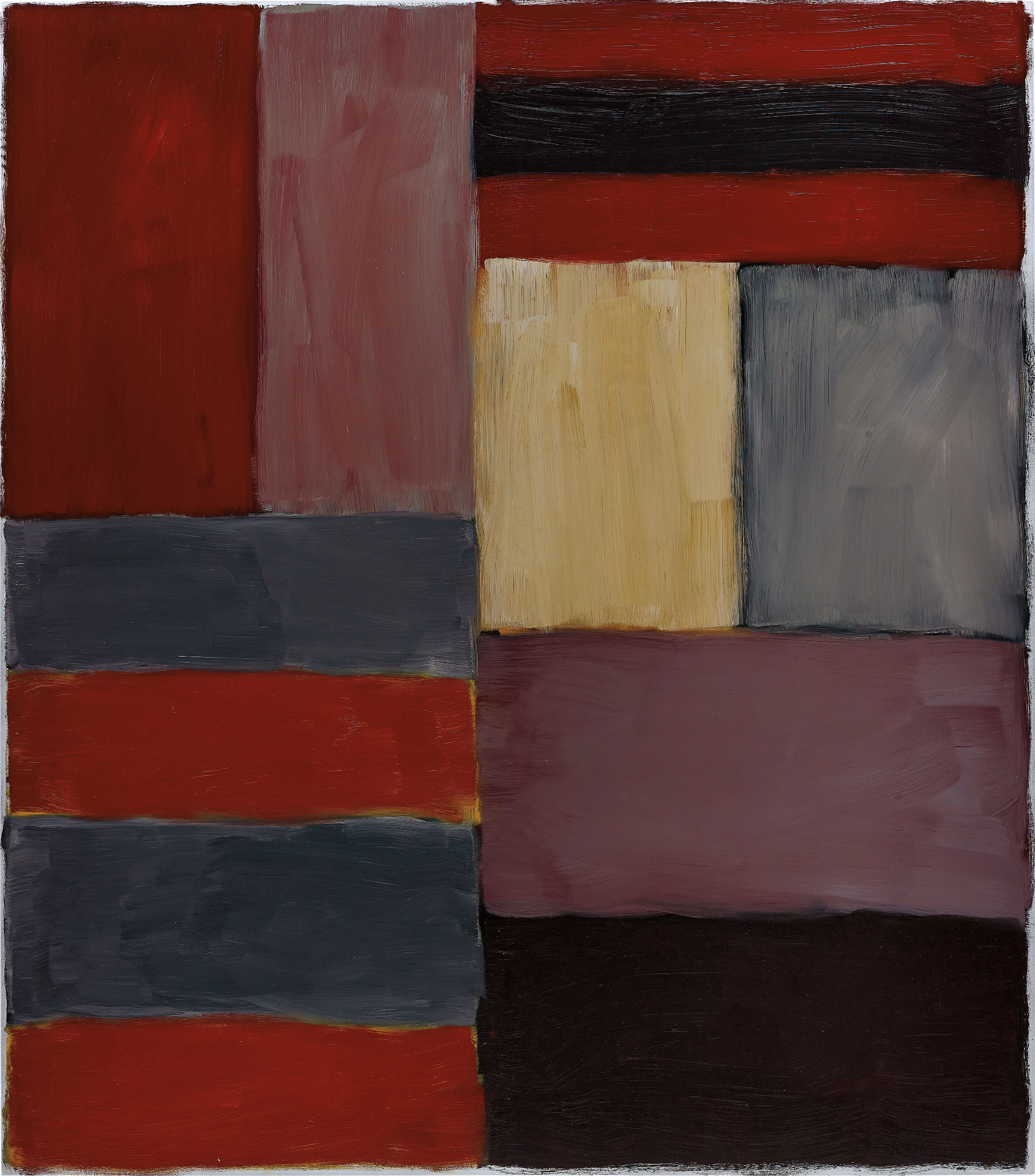
Grey Red, 2012
Works such as Wall of Light Green, in oil on linen, demonstrate how Scully transforms the most reduced formal vocabulary into something that feels almost geological in its depth and warmth. Similarly, the Landline series, inspired by the horizon lines where sea meets sky seen from his studio in Vico Maquansie on the coast of Catalonia, brought a new lyricism to his horizontal banding, paintings in which colour seems to float and vibrate against itself. For collectors, Scully offers something genuinely rare: an abstract practice that is simultaneously rigorous and emotionally accessible. His works on paper and prints, including the etchings and aquatints in colour that appear among his most sought after works, provide a point of entry into his world that carries all the formal intelligence of his large canvases in a more intimate register.
Pieces such as Durango 2 and Room, produced in collaboration with master printers and editioned with care, show his mastery of the print medium as a space for genuine exploration rather than mere reproduction. His paintings on aluminium, such as Floating Diptych Black White from 1997, demonstrate his willingness to push beyond conventional supports in pursuit of specific optical and physical effects, the way the metal ground gives the oil paint a quality of inner luminosity quite different from linen or canvas. At auction, major paintings have achieved significant prices at Sotheby's, Christie's, and Phillips, with his market remaining consistently strong across both Europe and the United States. Scully belongs to a generation and a tradition that includes artists such as Brice Marden, Robert Ryman, Agnes Martin, and Howard Hodgkin, painters who proved that abstraction could carry the full weight of human feeling without recourse to representation.
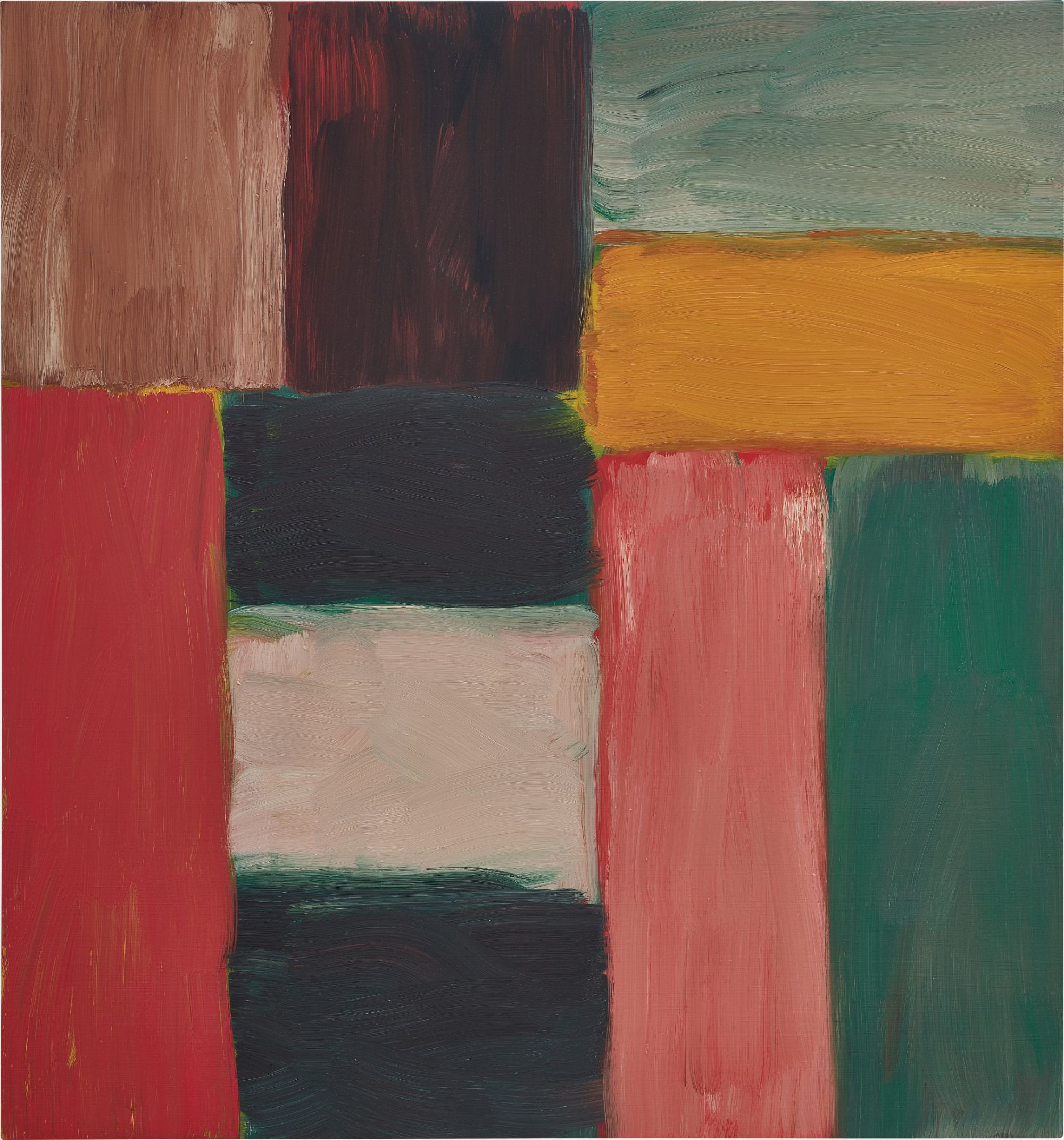
Sean Scully
Wall of Light Green, 2013
Yet his voice within that tradition is entirely his own. Where Martin sought a kind of silence and Ryman a pure investigation of white, Scully reaches for something more turbulent, more confessional, more willing to let the difficulty of being alive show in the surface of the paint. His Irish roots, with their long traditions of melancholy and resilience, run through his work in ways that are felt rather than seen. What makes Scully so important today is precisely what has always set him apart: his refusal to choose between intellectual rigour and emotional directness, between the demands of form and the needs of the human heart.
In an art world that cycles through movements with increasing speed, his commitment to a single fundamental question, what can paint do, what can a stripe mean, what can colour carry, feels not like limitation but like depth. To live with a Scully is to live with a painting that changes as you change, that offers something different depending on the light, the hour, your own state of mind. That is the mark of a truly great artist, and it is why collectors return to his work again and again.
Explore books about Sean Scully
Sean Scully: Twenty Years
Sean Scully, Michael Brenson
Sean Scully: A Retrospective
Sean Scully, Robert Storr
Sean Scully: Works on Paper
Sean Scully
Sean Scully
Michael Brenson
Sean Scully: Paintings and Works on Paper
Sean Scully