Sean Henry
Sean Henry, Sculptor of Our Shared Stillness
Artist Spotlight · The Collection Editorial
There is a particular kind of encounter that stops you mid stride. You are crossing a public square, moving through the ordinary rhythm of a day, when you notice a figure seated on a bench or lying quietly on a plinth, and for a fraction of a second, your brain insists it is a person. Then understanding catches up, and in that gap between confusion and recognition, something profound happens. You have been made to see a stranger, and through that stranger, yourself.
Sean Henry
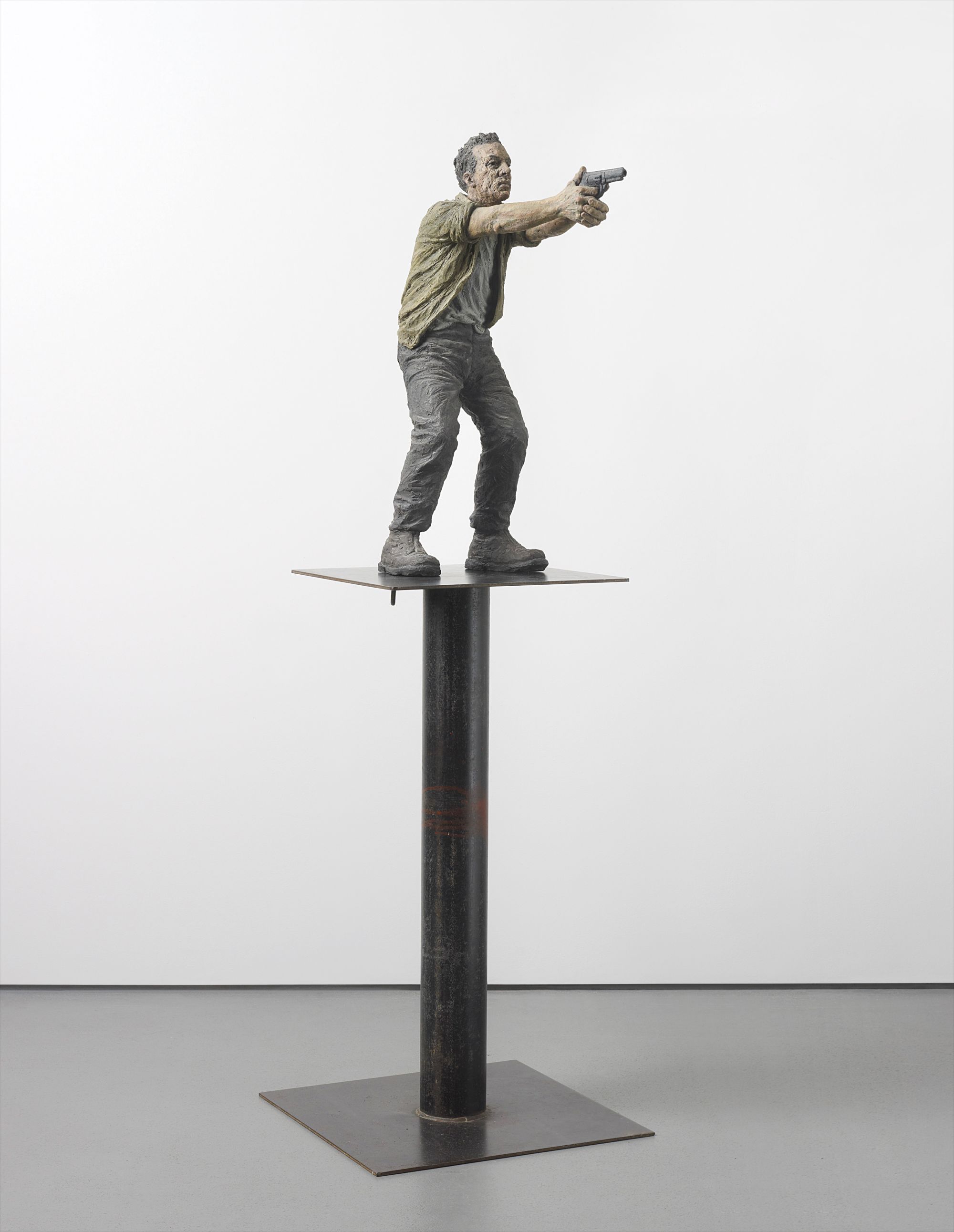
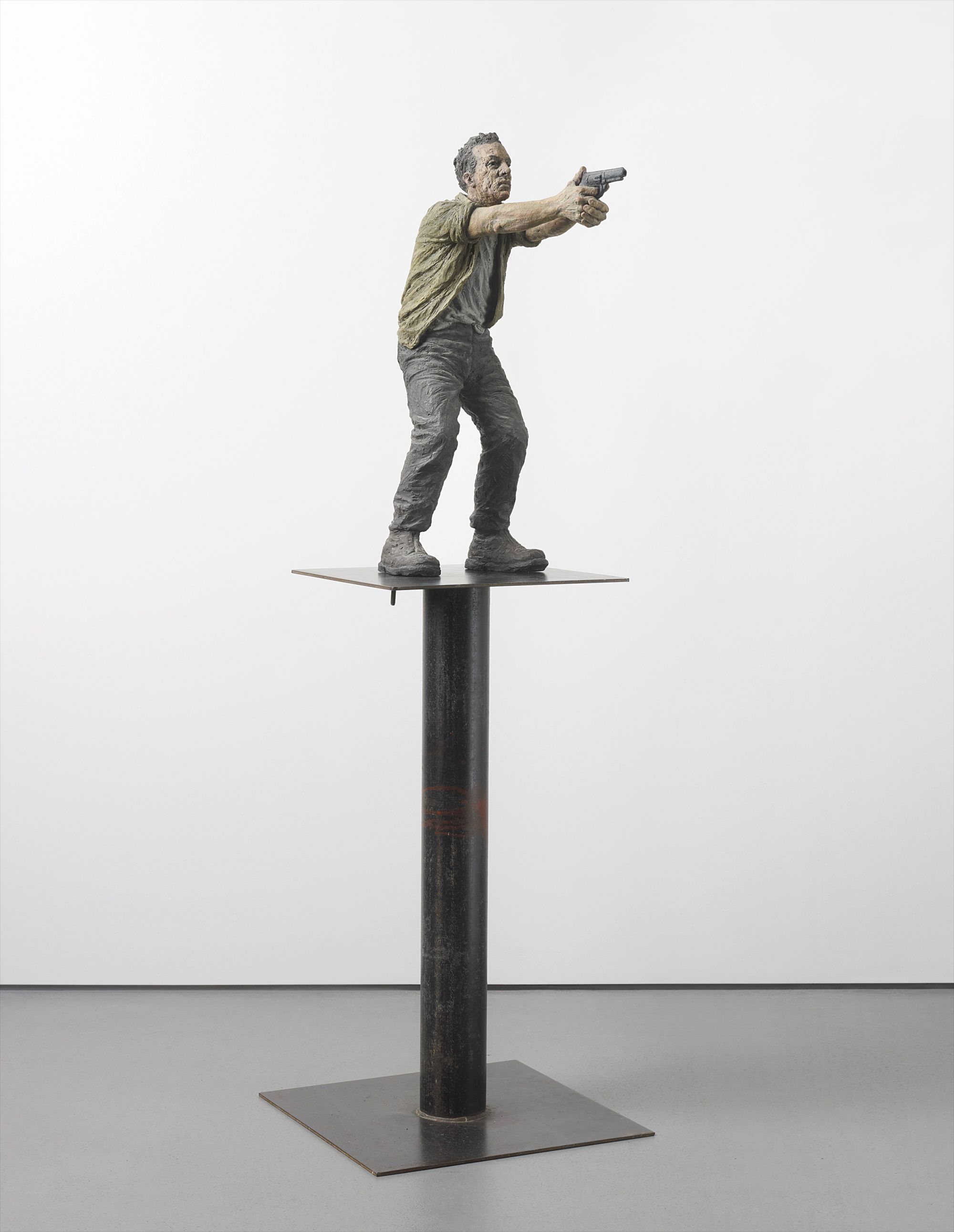
Mass Man
This is the signature gift of Sean Henry, the British sculptor whose painted bronze figures have been arresting passersby, gallery visitors, and seasoned collectors for three decades. Henry was born in 1965 and grew up in England during a period when British sculpture was undergoing one of its great generational shifts. The generation associated with the New British Sculpture movement, artists such as Tony Cragg, Richard Deacon, and Antony Gormley, were reshaping what a sculptural body could mean and where it could appear. Henry came of age absorbing these debates while remaining committed to something that was, at the time, decidedly unfashionable: the human figure rendered with painstaking, almost devotional realism.
He studied at the Bath Academy of Art, which gave him both a rigorous technical foundation and a certain independence of spirit, the confidence to pursue figuration at a moment when conceptual and abstract tendencies dominated critical conversation. His early practice centred on ceramic and fired clay works, materials that carry their own warmth and vulnerability, before he moved into bronze as his primary medium. What distinguished Henry from the outset was not merely his technical command but his insistence on colour. Where most sculptors working in bronze allowed the metal to speak in its own greenish or dark tonal register, Henry applied oil and exterior paint directly to the surface with the sensitivity of a portraitist.
Sean Henry
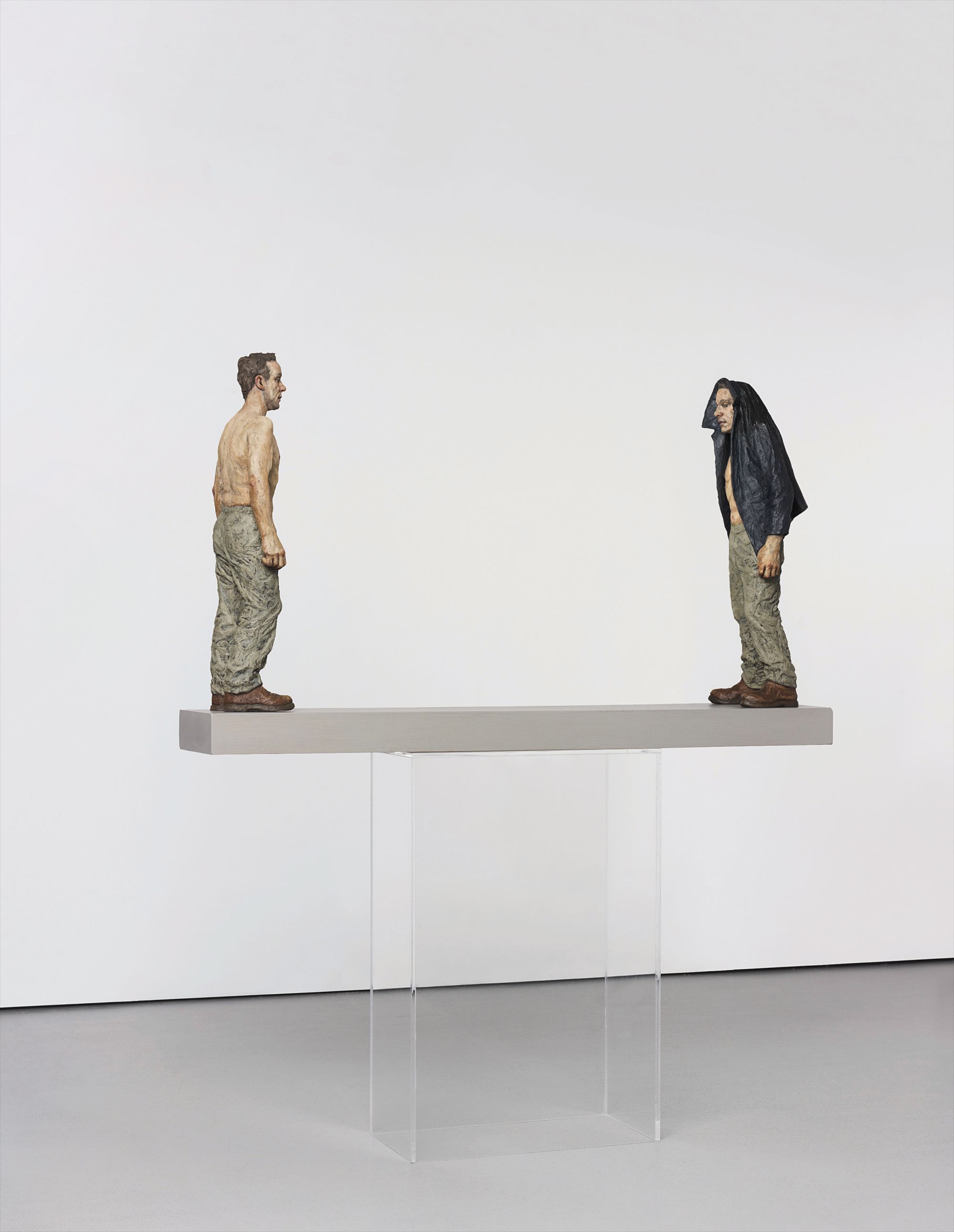
Man with Alter Ego
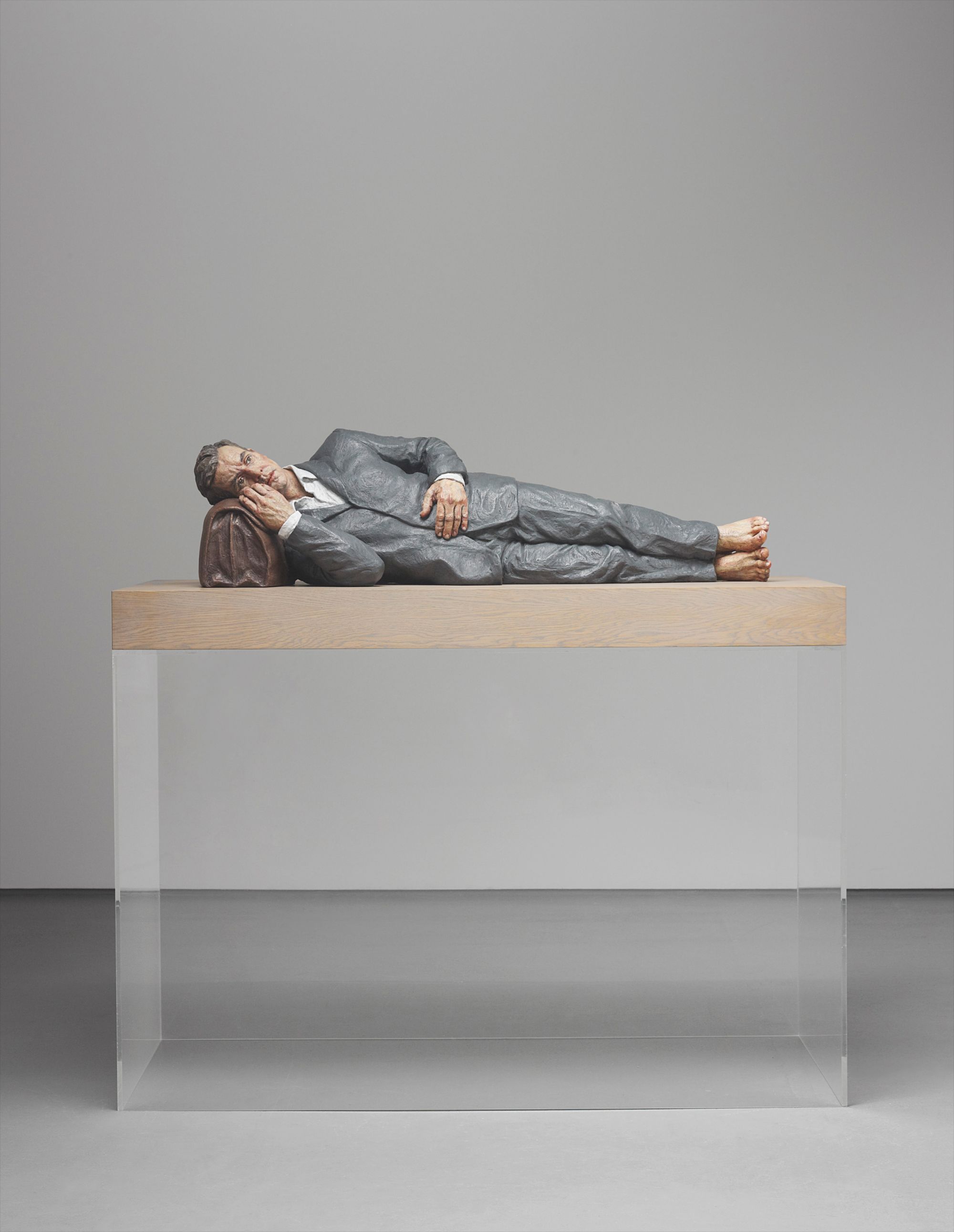
Each figure emerges not as a monument but as a presence, wearing clothes of a particular fabric, a face weathered by a specific kind of private weather. The effect is neither trompe l'oeil trickery nor clinical hyperrealism in the tradition of Duane Hanson. It is something more tender, closer to the way memory holds a person. Among his most celebrated works is Man Lying on His Side, a bronze figure rendered in oil and exterior paint, presented on a veneered wood and Plexiglas support.
The work exemplifies what Henry does better than almost anyone working today: he finds dignity and grandeur in repose. The figure is not performing for us. He is simply there, horizontal, lost in thought or rest, and his indifference to our gaze is precisely what compels it. Mass Man, worked in fired clay and oil paint, occupies a similarly contemplative register, a solitary figure whose physical presence carries an almost meditative weight.
Sean Henry
Man Lying on His Side
These are not works that demand intellectual decoding. They ask instead for presence, for the willingness to stand still and be with someone. Sic Transit Gloria Mundi, whose title borrows the famous Latin phrase meaning thus passes worldly glory, brings a more philosophical dimension to the surface. The bronze figure rests on a concrete resin base, and the title invites reflection on impermanence, legacy, and the passage of time.
Yet Henry never allows his work to tip into didacticism or melancholy. His figures feel alive, specific, and worthy of attention in themselves, not merely as vehicles for ideas. Man with Alter Ego extends this further still, pairing its bronze figure with a painted wooden and Plexiglas element that literalises the idea of an inner companion, the self that shadows and occasionally outpaces us. And 88, dated 2009, demonstrates Henry's gift for distilling emotional complexity into a single oil on bronze surface, the number itself hovering between the personal and the universal.
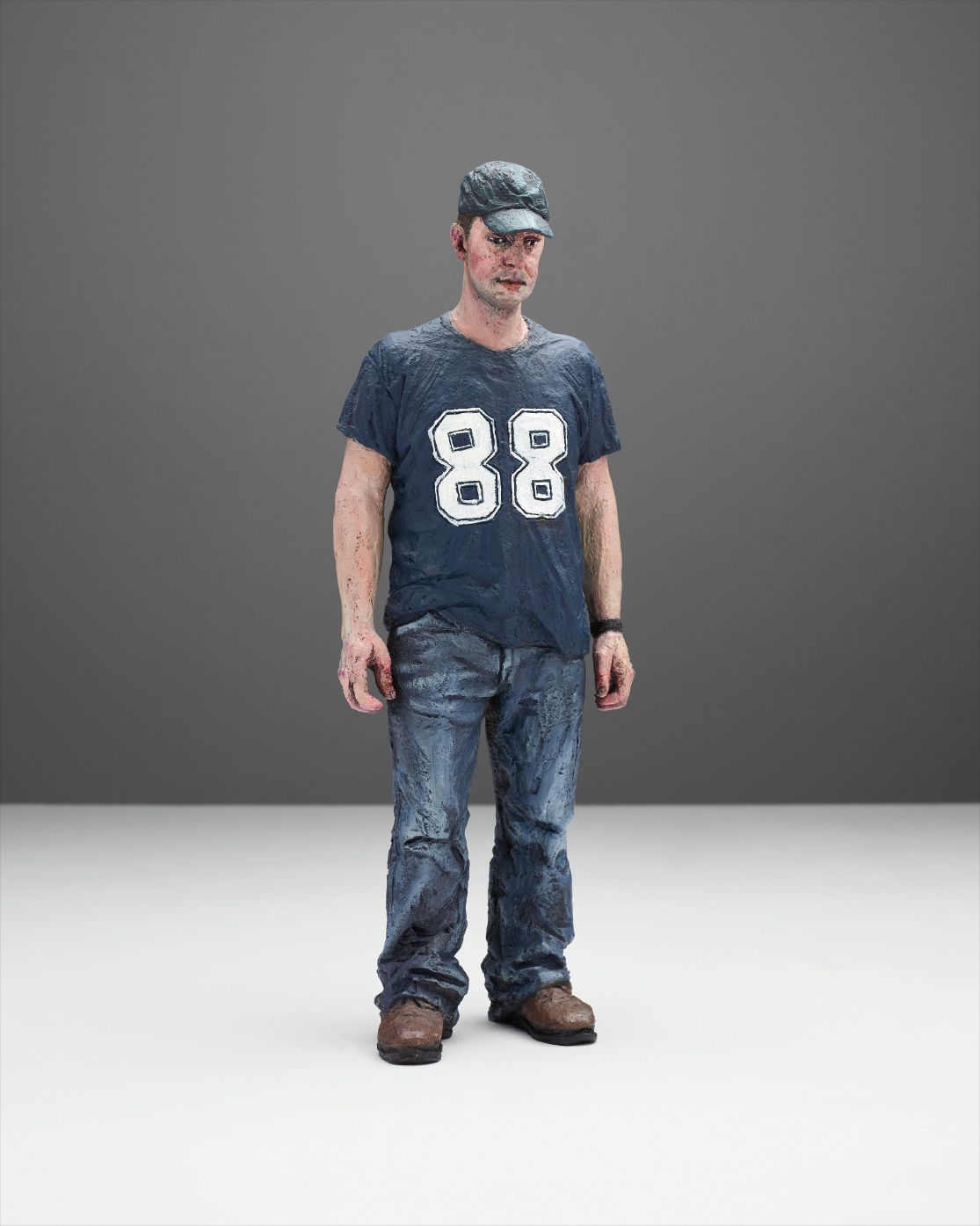
Sean Henry
88, 2009
In terms of placement and ambition, Henry has consistently pushed his work into the public realm. Large scale outdoor installations have appeared across Britain and internationally, figures placed in landscapes or urban settings where their encounter with the non art world is part of the work's meaning. This practice aligns him with a tradition of socially engaged public sculpture, though Henry's register is quieter and more inward than monumental public art often allows itself to be. He is less interested in the heroic or the declarative than in the accidental, the unexpected meeting between a stranger cast in bronze and a real stranger passing by.
His work has been acquired by both public institutions and private collections across Europe and North America, and his international exhibition record spans galleries and institutions that have long recognised his singular contribution to contemporary figurative sculpture. For collectors, Henry's work occupies a position that is both secure and genuinely exciting. His reputation has grown steadily rather than through the volatile peaks of art market spectacle, which means that works entering the secondary market carry real conviction behind them. The craftsmanship is irreproachable, and the emotional resonance of his figures ensures that they live comfortably in private spaces as well as institutional ones.
A Henry in a domestic setting does something remarkable: it introduces a sense of companionship without intrusion, a presence that shifts the atmosphere of a room. Collectors drawn to artists such as Antony Gormley, Kiki Smith, or the American sculptor George Segal will find in Henry a related sensibility expressed through a more intimate and painterly lens. What Henry ultimately offers, and what makes his work so valuable in a cultural moment saturated with noise and spectacle, is a sustained argument for slowness. His figures do not move, do not perform, do not compete for attention.
They simply occupy their corner of the world with quiet assurance, and in doing so, they remind us of something we are always in danger of forgetting: that the inner life is real, that solitude is not the same as loneliness, and that attention, genuine sustained attention, is among the most generous things one person can offer another. In the decades ahead, as the art world continues to reckon with what it means to be human in an accelerating age, Sean Henry's still, watching, painted figures will only become more essential.
Explore books about Sean Henry