Scott Kahn
Scott Kahn's World Is Pure Wonder
Artist Spotlight · The Collection Editorial
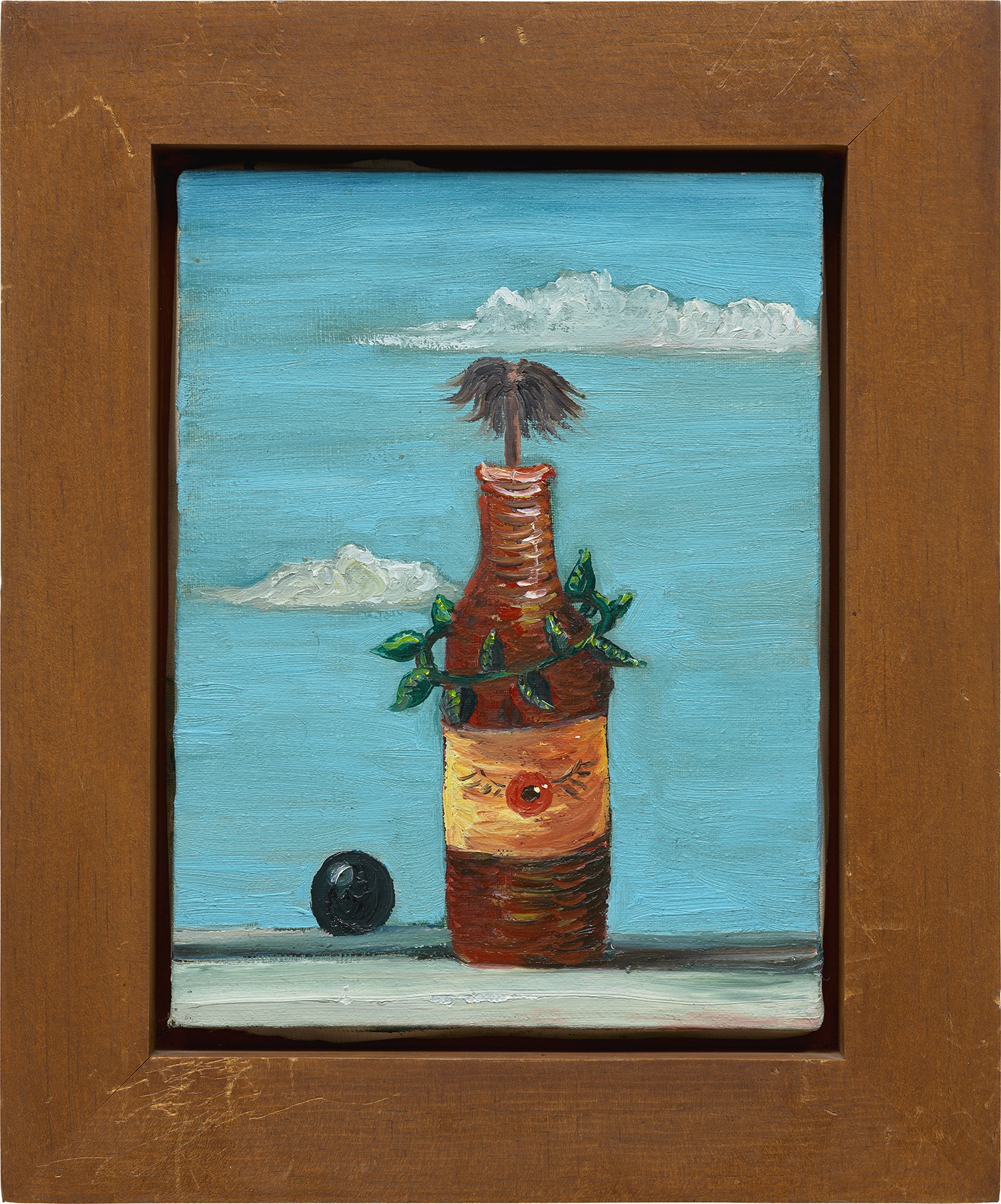
Something quietly extraordinary has been happening in the rooms where serious collectors gather. Over the past decade, Scott Kahn, a painter who spent much of his career working in patient, determined obscurity, has emerged as one of the most genuinely beloved figures in American art. Galleries in New York and London have presented his work to new audiences, auction results have climbed with striking consistency, and younger painters cite him openly as an influence. The story of how a man born in 1945 became a discovery of the twenty first century art market is, in truth, the story of what happens when a singular vision finally finds its moment.
Scott Kahn
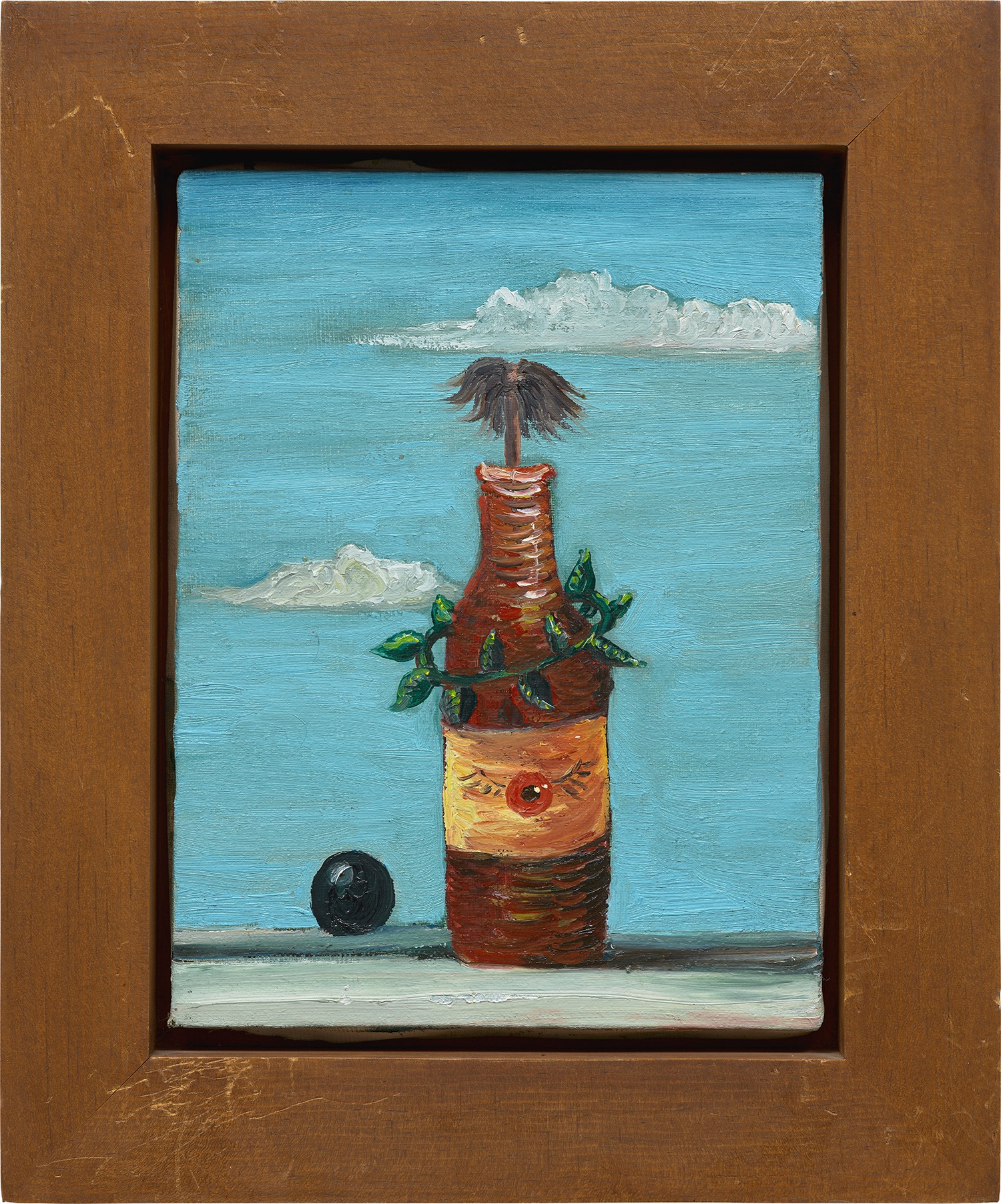
Still Life with Oranges, Geranium, Book, 1986
Kahn grew up shaped by the particular textures of American mid century life, and that formation left an indelible mark on his sensibility. There is in his paintings a quality of remembered experience, of afternoons that felt endless, of rooms full of warm light and accumulated objects, that speaks to something formed early and held tightly. He studied painting with the seriousness of someone who understood that craft was not separate from vision but inseparable from it. The influences he absorbed were wide and eclectic, reaching toward folk traditions and the intimate domestic scale of Northern European still life painting, as well as the luminous color sense of artists working outside official academy channels.
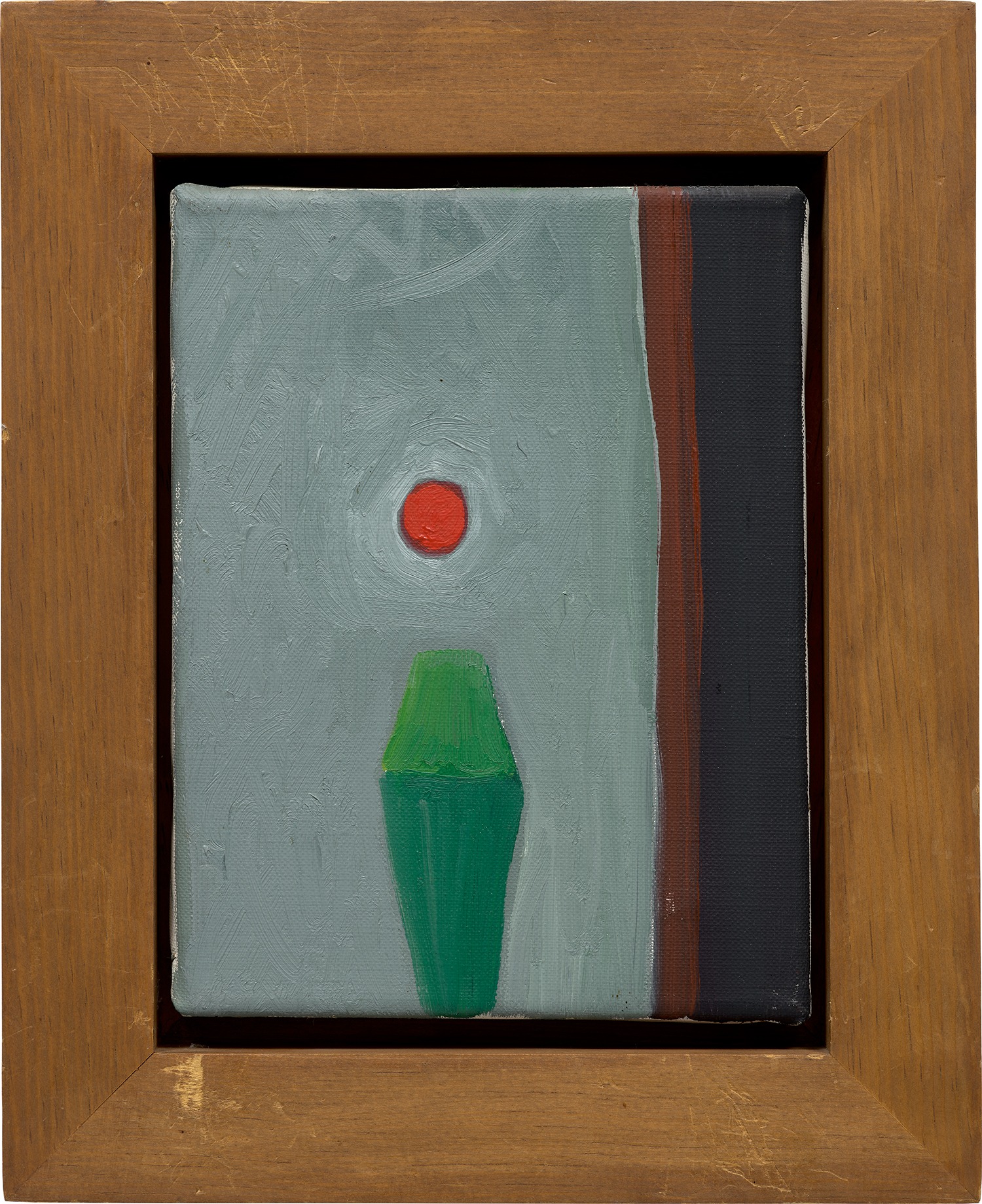
What he made of those influences was entirely and unmistakably his own. His artistic development unfolded slowly and deliberately, and the works from the 1980s and early 1990s that now appear on the market reveal an artist already in full possession of his voice. Paintings like Still Life with Pitcher from 1981 and Still Life with Roses and Cards from 1986 show the dense, jewel like surface quality and the almost obsessive attention to the poetry of ordinary objects that would define his entire practice. By the time he painted The Kipling Garden and Still Life with Onion and Pitcher in 1991, he had developed a fully realized language: vibrant and layered color, a patterning sensibility that gives every surface a kind of breathing energy, and a compositional approach that makes even simple subjects feel mythic and charged.
Scott Kahn
Still Life with Onion and Pitcher, 1991
These were not works made for a market or a trend. They were made because the artist could not help making them. What makes a Kahn painting immediately recognizable is the quality art writers have struggled productively to name. The word naive appears in many descriptions, as does the word dreamlike, and both are accurate but neither is sufficient.
His works exist in a register between waking and memory, between the observed and the imagined. A still life of oranges and a geranium beside a book becomes, in his hands, a meditation on abundance and light that carries the emotional weight of a landscape. A garden scene like The Kipling Garden holds within it the full sensory richness of a summer afternoon, rendered in color so warm and confident that it seems to push gently outward from the canvas. Later works on linen, including Soundview from 2008 and Reflecting in the Wilderness from 2005, show him moving with ease between scales and settings while maintaining the intimate, hand held quality that makes collectors feel a Kahn painting is addressed personally to them.
Scott Kahn
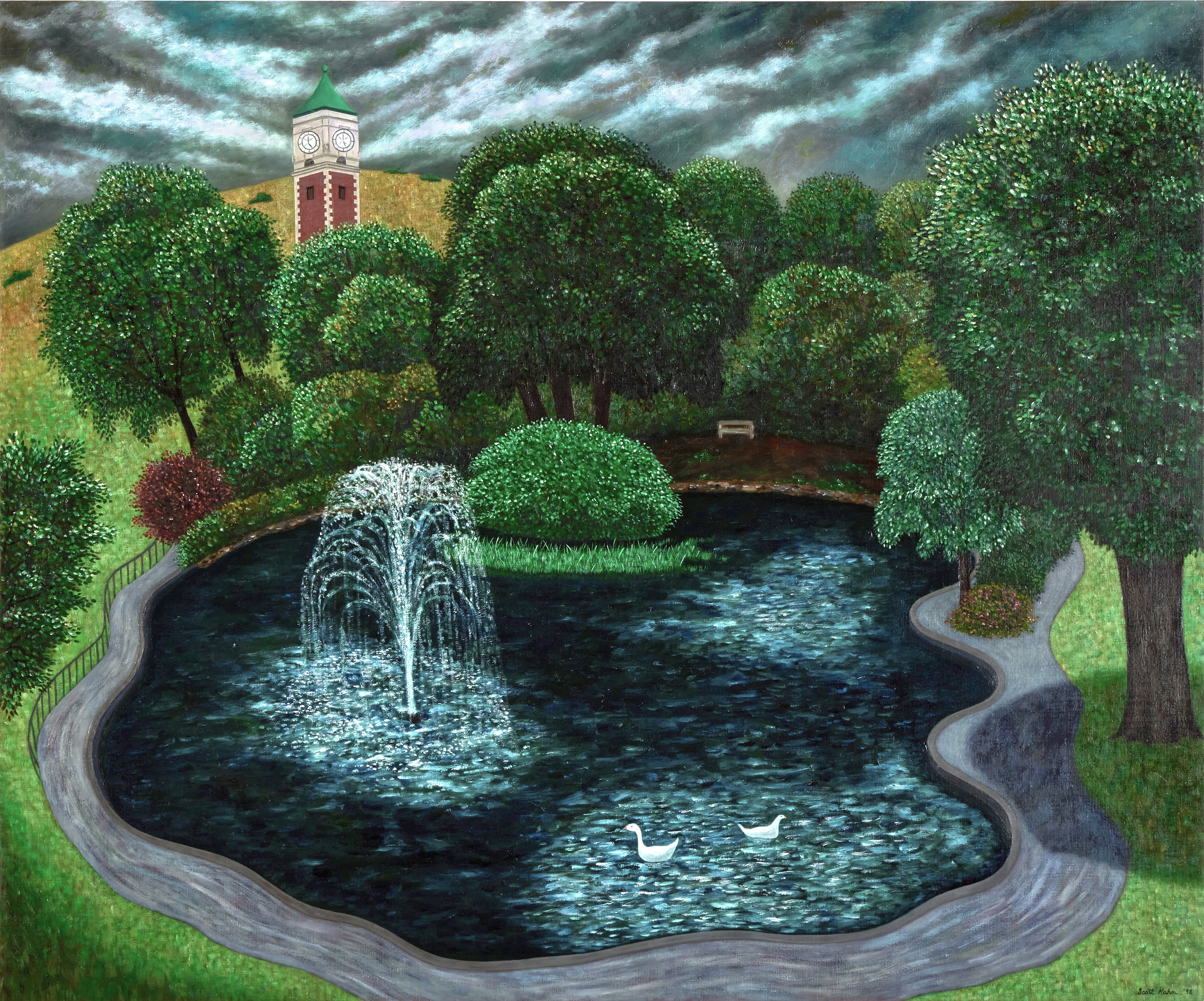
Queen's Park 皇后公園
His screenprint Spring Moon, Grant Street, hand colored in oil paint, demonstrates that even in editions his touch remains singular and present. The collecting story around Kahn is one of the more heartening narratives in recent art market history. For years he was known primarily to a small and devoted group who understood that they were in the presence of something genuinely rare. Then, as the broader conversation about American figurative painting expanded in the 2010s and 2020s, and as collectors began looking beyond the obvious canonical names for artists who had been working with equal rigor outside the spotlight, Kahn's name appeared with increasing frequency.
His relationship to traditions that include folk art and what critics call outsider art gave him a productive complexity: he was clearly a trained and technically accomplished painter, yet his work carried none of the cooled distance of academic painting. In the rooms of collectors who live with his paintings daily, they have the quality of old friends, patient and generous with continued looking. Works from his earlier decades, when found on the market, command serious attention, and pieces from the 1980s and 1990s in particular are regarded as foundational examples of his vision at its most concentrated. In the wider context of art history, Kahn occupies a genuinely interesting position.
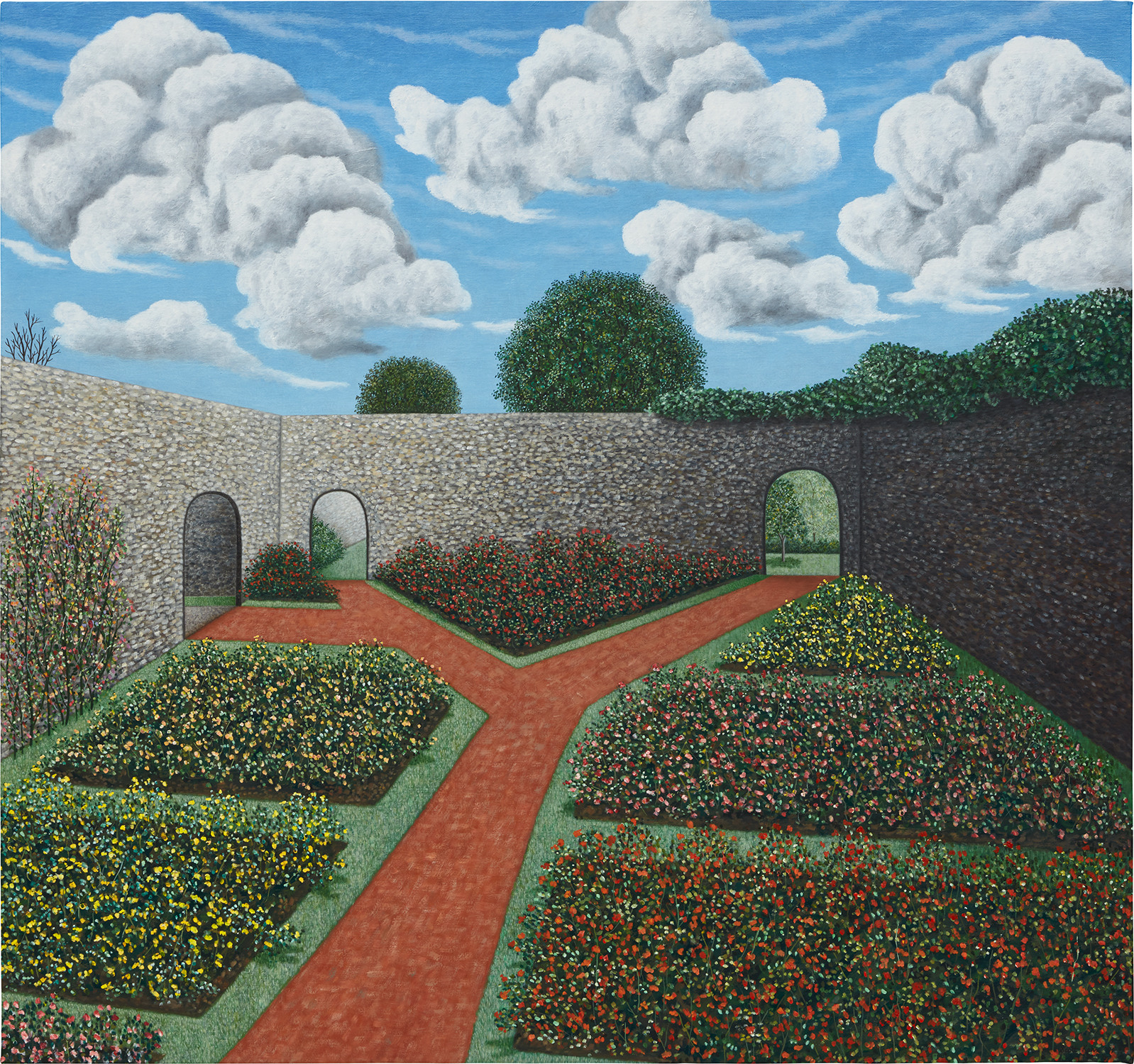
Scott Kahn
The Kipling Garden, 1991
He shares certain qualities with artists like Morris Hirshfield and Horace Pippin in his relationship to pattern and a kind of visionary directness, while his color sensibility and his devotion to the still life tradition connect him to painters working in the lineage of Chardin and the American intimists of the early twentieth century. Younger figurative painters who have cited enthusiasm for his work include artists exploring the boundaries between fine art and folk traditions, and his influence on a new generation of painters concerned with domesticity, color, and pattern is quietly substantial. He is not an artist who fits comfortably in a single drawer, and that resistance to easy categorization has, in the long run, served his reputation well. What Scott Kahn offers, ultimately, is something that serious collecting is always in search of: an utterly personal vision, executed with total commitment over a lifetime, that grows richer with time and attention.
His paintings do not explain themselves quickly. They reward return visits, and collectors who have lived with them for years report that they continue to yield new pleasures, new details, new emotional resonances. In an art world that often prizes the legible and the immediate, there is something quietly radical about a body of work that asks for patience and offers, in return, a lifetime of companionship. To discover Scott Kahn now, whether through an early still life, a luminous garden painting, or one of his tender hand colored prints, is to find an artist at the very center of what painting, at its most human and most durable, can be.